Face Of The Day

by Chris Bodenner

IRAQ-UNREST-MASS-GRAVE

A forensic expert holds up part of a human skull found in a mass grave some 10 kilometers from the Iraqi central shrine city of Najaf on May 19, 2014. The bones of 27 people, believed to be victims of the 1991 Shaaban Revolt, will have their DNA tested for identification purposes. The Shaaban Revolt was a series of popular rebellions in northern and southern Iraq in March and April 1991 after the Gulf War that was quashed by the regime of then president Saddam Hussein. By Haider Hamdani/AFP/Getty Images.

Face Of The Day

untitled-ultraviolet-60-copy

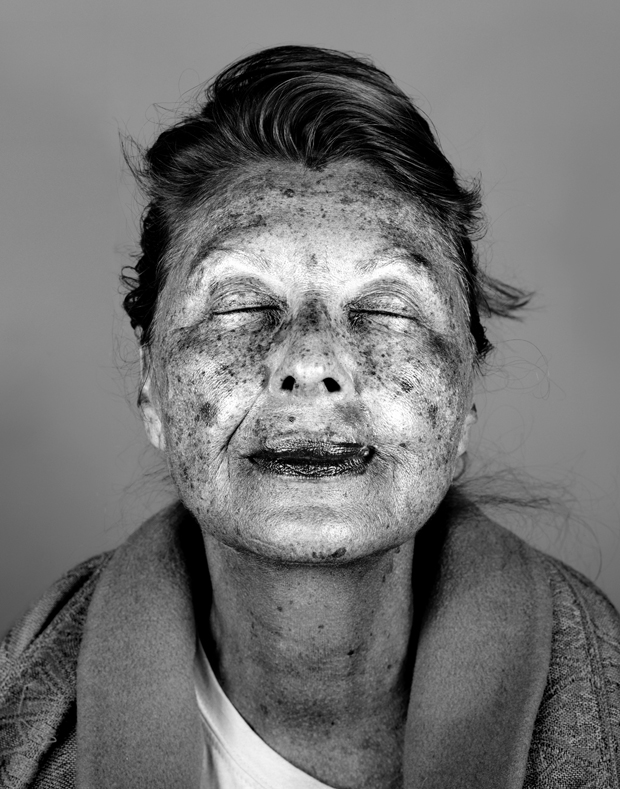
Cara Phillips’ ultraviolet portraits reveal beauty in blemishes:

When I was doing research for my first body of work, Singular Beauty, a series of interiors of cosmetic surgery offices, I came across B&W images of people with their eyes closed on doctors and medi-spa websites. I was immediately struck by the portraits, and discovered that they were made using a type of medical photography that reveals flaws beneath the skin that is invisible to the human eye.

My first thought was that the images reminded me of early post-mortem/memorial photographs, but they were also a kind of anti-portrait that was new to me. The aim of a portrait, in commercial and vernacular photography, is primarily to hide flaws — to present a two-dimensional “flawless” version of the person. Even before photoshop, photographers would hand paint negatives to enhance or improve the subject’s appearance. But these images’ function was to enhance and reveal flaws. However, the images themselves were beautiful, and I found that dichotomy intriguing and decided to push it even further.

See more of Phillips’s work here.

Face Of The Day

Screen Shot 2014-05-15 at 4.01.07 PM

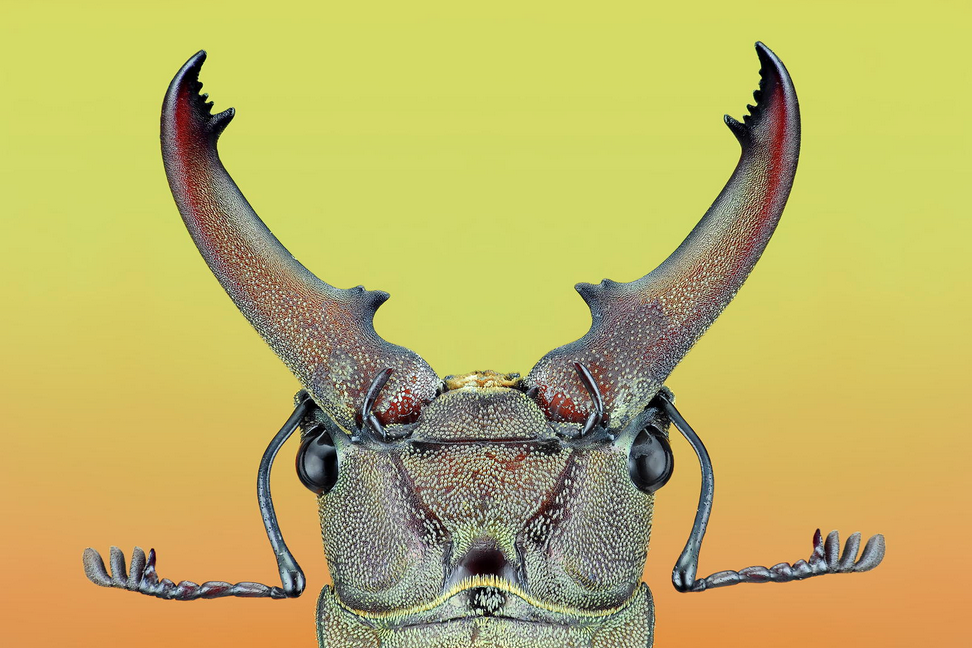
Photographer Donald Jusa brings us face-to-face with insects:

[W]ith his macro camera, the artist is able to capture the most minute details of the insect body. At times, the faces of these beings seem entirely foreign; as viewers, we search for marks of human feeling and features, but the multiple eyes and strange limbs transfix and confound our perceptive powers.

Unlike some macro photography cataloging the lives of insects, Jusa does not capture the  surrounding environment or even the entire body. Instead, his photographs read like strange portraits; against a colored backdrop, the miniature creatures seem absurdly to sit for the artist, proudly displaying their features.

See more of Jusa’s work here.

Face Of The Day

dourlen7-620x620

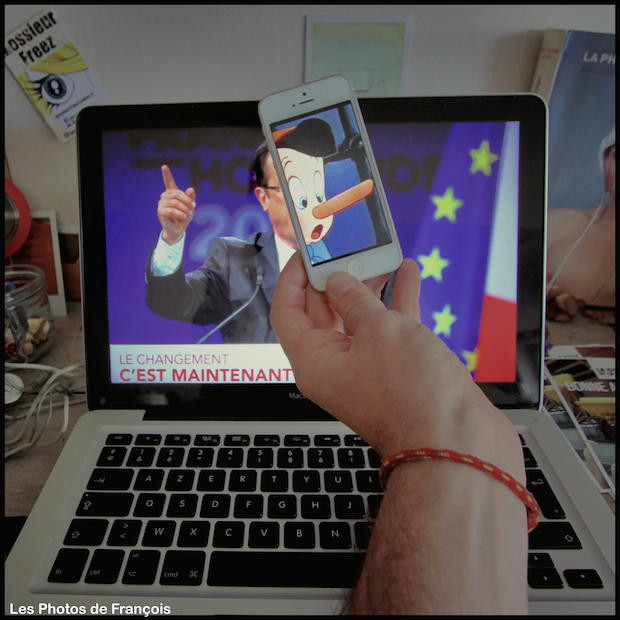
DL Cade finds a fun photo series:

French photographer Francois Dourlen gets creative using nothing more than his surroundings and an iPhone, but he’s not an iPhoneographer. No, his iPhone is a subject of every one of his images, a little window into the magical world of movies and television inserted creatively into drab scenes in the real world. A great set of forced perspective photographs that reminds us of the Newspaper and #mytoyplane series we’ve shared in the past, Dourlen’s images liven up the real world by turning a politician into Pinocchio or turning a green truck into a character from the Pixar movie Cars.

Check out more of Dourlen’s work on his Facebook page.

Faces Of The Day

9/11 Memorial Museum Officially Opens

People on the memorial plaza watch a video feed of the opening ceremony for the National September 11 Memorial Museum at Ground Zero on May 15, 2014. The museum spans seven stories, mostly underground, and contains artifacts from the attack on the World Trade Center Towers that include the 80 ft high tridents, the so-called ‘Ground Zero Cross,’ the destroyed remains of Company 21’s New York Fire Department Engine as well as smaller items such as letter that fell from the hijacked plane and posters of missing loved ones projected onto the wall of the museum. The museum will open to the public on May 21. By Allan Tannenbaum-Pool/Getty Images.

Face Of The Day

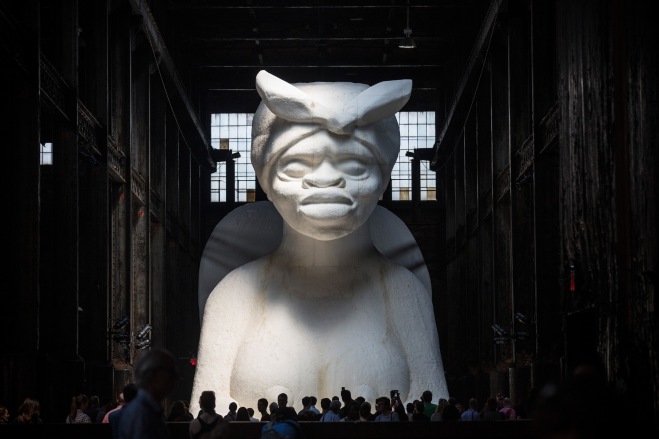
Large Scale Sugar-Coated Sculpture Displayed In Brooklyn's Former Domino Sugar Refinery

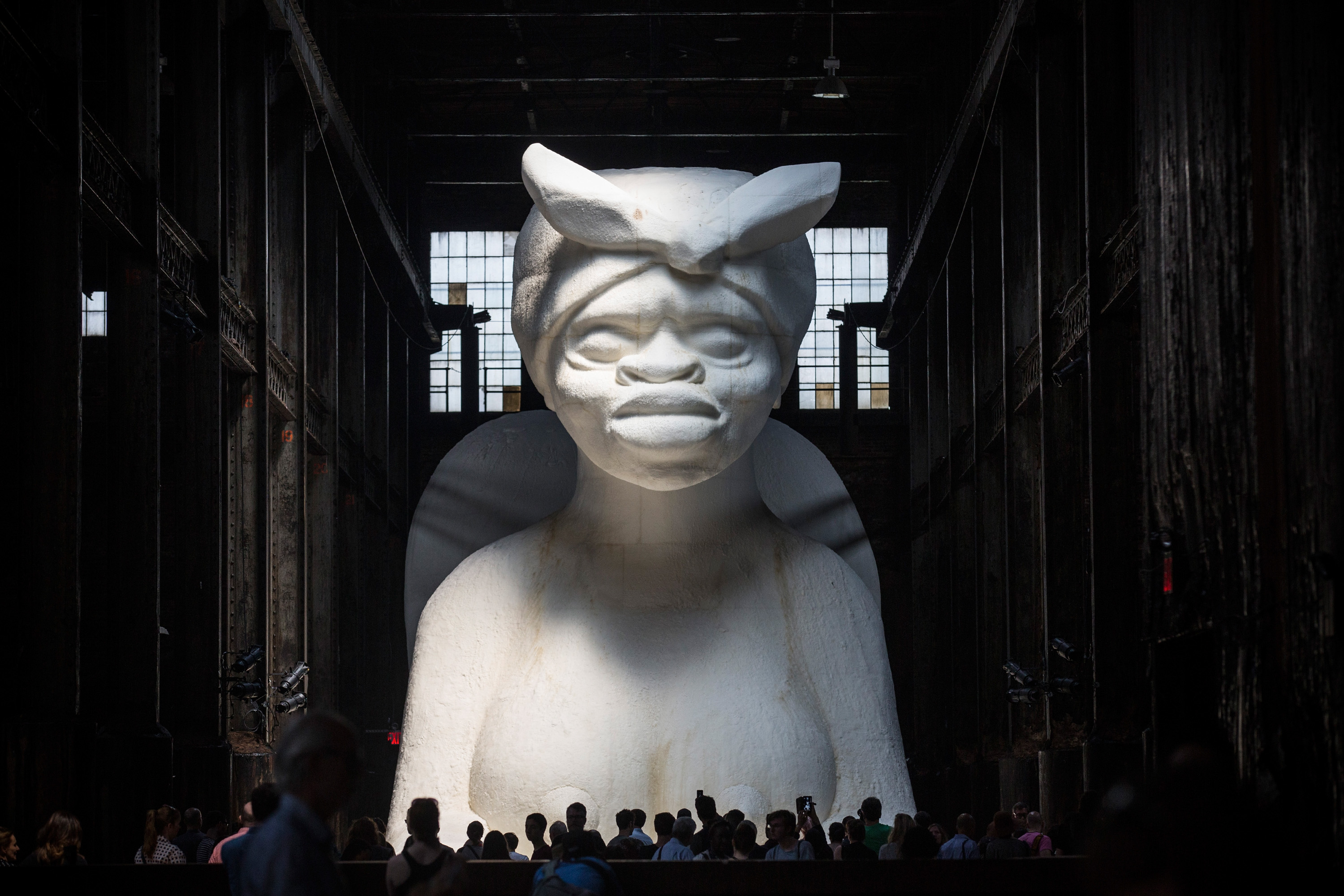
Kara Walker, whose work often deals with racial stereotypes, explains the thought process behind her 75-foot-long sugar sphinx, which is on display at the former Domino Sugar Refinery in Brooklyn:

I started with a lot of sketches; each sketch went from very minimal gestures to this maximal output with all kinds of moving parts. It came to embody something I would never want to see, something that was about slavery and industry and sugar and fat and wastelessness. It was a kind of finger-wagging gloom-and-doom kind of sketch that embodied all of the themes about industrialization that the space contains: post-industrial America, the grandiose gesture of the industrialists, and sugar as the first kind of agro-business.

For example, you can’t get sugar without heavy-duty processing; you don’t get refined sugar, you get other things. This desire for refined sugar and what it means to turn sugar from brown to white and how that dovetails into becoming an American were fascinating to me. Sugar is loaded with meaning, with stories about meaning.

Charlotte Burns provides more background on the artwork and significance of its location:

At its peak, the factory was the largest sugar refinery in the world. By 1870, it was producing more than half the sugar consumed in America, and in 1896, the American Sugar Refining Company, which operated the plant, was one of the first 12 companies listed on the Dow Jones.

The sugar trade created a triangular economy: slaves were sold from Africa to the Americas; sugar to New England; and then rum made from molasses was sold back to Africa. “Sugar brought about a new kind of world structure: diets changed, the way business was done changed, there was a rise of the importation of enslaved Africans,” Walker says. The full title of the installation makes this history explicit: A Subtlety, or the Marvelous Sugar Baby, an Homage to the unpaid and overworked Artisans who have refined our Sweet tastes from the cane fields to the Kitchens of the New World on the Occasion of the demolition of the Domino Sugar Refining Plant.

More images of the sculpture and how it was built here.

(Photo: People view Kara Walker’s ‘A Subtlety,’ a sphinx made partially of bleached sugar on display at the former Domino Sugar Refinery in the Williamsburg neighborhood of the Brooklyn on May 10, 2014. The show opened Saturday, is free to the public, and will run until July 6. By Andrew Burton/Getty Images)

Face Of The Day

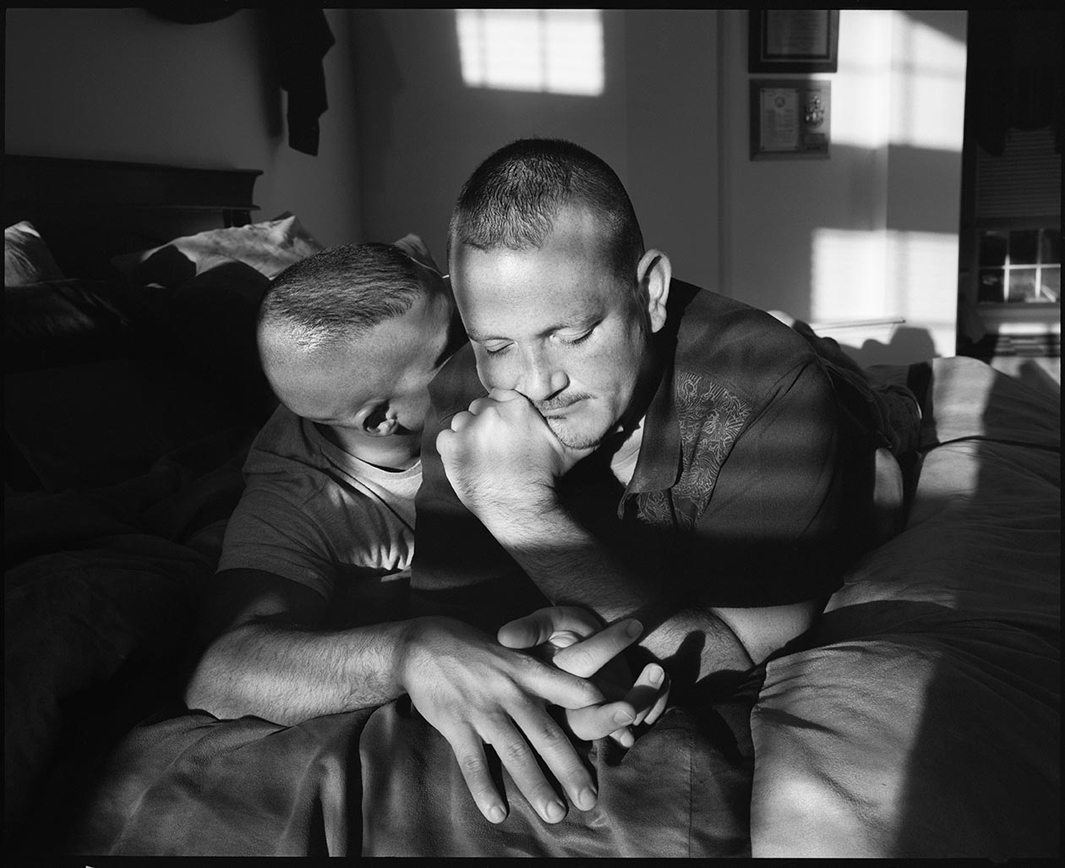
MATT MCCARY, ORANGE PARK, FL, 2011
AIRMAN FIRST CLASS E-3, U.S

Vincent Cianni photographs gays in the military:

In 2009, while listening to a radio interview, photographer Vincent Cianni was moved by the story of a mother whose son was in the Army and had been discharged under “don’t ask, don’t tell.” Although he wasn’t certain how he would create a series around the story, Cianni said the mother’s sense of love and pride prompted him to call her about contacting her son.

That initial call sparked a four-year project that took Cianni around the country interviewing and taking portraits of gay service members. His initial uncertainty about how he would develop the project eventually became a book, Gays in the Military, published by Daylight. Cianni began working on it while DADT was still policy, but the movement to repeal it was at its height, and he continued the project after the policy was lifted in 2011.

See more of Cianni’s work, and information about a book signing, here. Buy the book here.