Sarah Palin: Anti-Christian

Annual Conservative Political Action Conference (CPAC) Held In D.C.

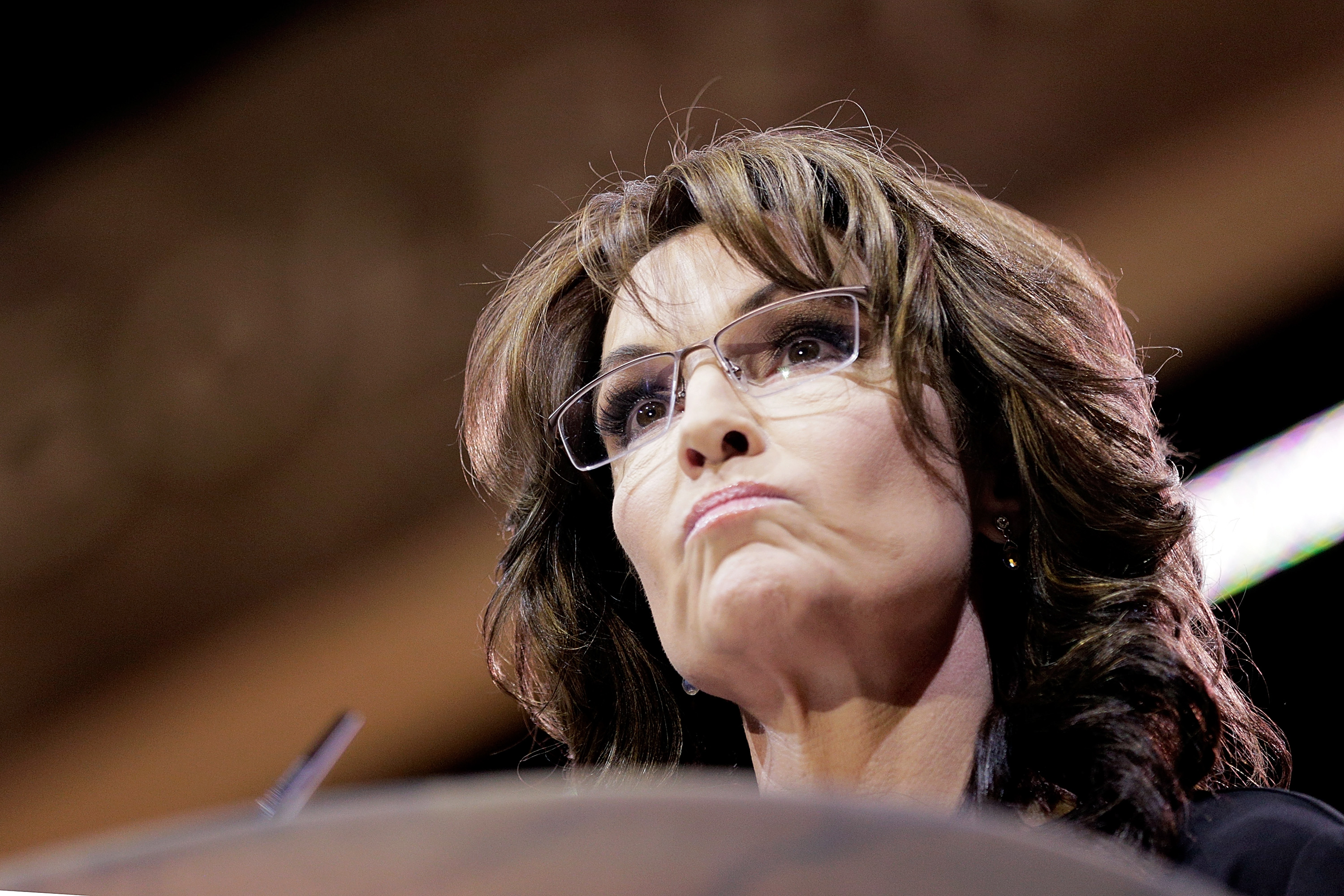
If you want a classic example of political Christianism – and its active hostility to spiritual Christianity – it’s hard to beat Sarah Palin’s remarks yesterday. I offered a brief response last night, but this obscenity needs to be unpacked some more. And the first thing to say is that a former US vice-presidential candidate did not just endorse a war crime; she endorsed it as routine for every human being suspected of terrorism. And she seems to endorse it as an introduction to captivity. “Waterboarding is how we baptize terrorists” is a glib statement but a revealing one. Screen Shot 2014-04-28 at 12.32.19 PMBaptism is the beginning of something, an introduction. And so torturing prisoners accused of terrorism is a signature of the America Palin believes in. It’s how we welcome them to our prison camps.
Now look how far we have come from the original notion – pioneered by Charles Krauthammer and popularized by “24” – that torture should only be used in the hypothetical ticking time-bomb case. That argument – only ever hypothetical – nonetheless assumes that torture is evil and should only be used in extremis to prevent imminent catastrophe. Palin, in contrast, like her party, has long since blown past such niceties. She believes that torture should be the first resort – a sign of how America treats its foes, a badge of honor.

What can one say but that this is a bona fide fascistic sentiment. It revels in violence against individuals tied down by their hands and feet Screen Shot 2014-04-28 at 12.33.10 PMand strapped to a terrifying board in order to be suffocated hundreds of times to near-death. It is the kind of statement you might expect from the Khmer Rouge, or from the Chinese Communists who perfected “stress positions”, or from the Nazis, whose Gestapo pioneered “enhanced interrogation”, i.e. brutal torture that would leave no physical traces. Except it’s worse than that. Even totalitarian regimes have publicly denied their torture. Their reticence and lies are some small concession of vice to the appearance of virtue. Not Palin – who wants to celebrate brutal torture as the American way.
And then she manages to go one step further. She invokes torture in the context of a Christian sacrament. Not since the Nazis’ Deutsche Christen have we seen something so disgusting and blasphemous in the morphing of Christianity into its polar opposite. Mercifully, some Christians on the right have managed to say something. Dreher rightly calls it sacrilege:

Not only is this woman, putatively a Christian, praising torture, but she is comparing it to a holy sacrament of the Christian faith. It’s disgusting — but even more disgusting, those NRA members, many of whom are no doubt Christians, cheered wildly for her … What does it say about the character of a person that they could make that joking comparison, and that so many people would cheer for it.

It says something quite clear to me.

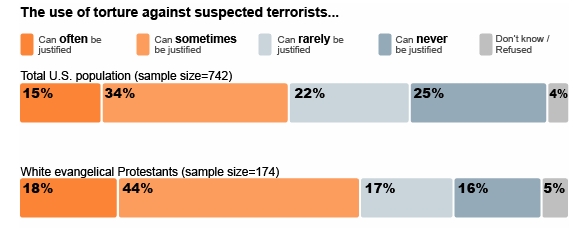
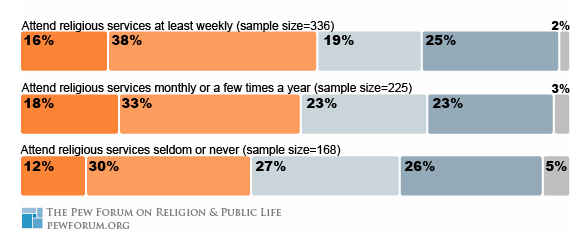
It reveals that vast swathes of American Christianity are objectively anti-Christian, even pagan, in their support for this barbarism. Rod should know this by now. In the best recent polling on the question, 62 percent of white evangelical “Christians” back torture as often or sometimes justified, with only 16 percent holding the orthodox position that it is never justified. Now compare those numbers with Americans who are unaffiliated with any religion: the number in that demographic is 40 percent in favor in some or many cases, and 26 percent against it in all circumstances. Is this a function of wayward and uncommitted Christians? Nope. Support for torture is highest among those who attend church at least weekly and lowest for those who rarely or never go to church. In America, torture is a Christian value. And some people wonder why I prefer to term “Christianist” to describe these people.

Joe Carter gets it right:

The truly Christian position is to never forget that evil comes not just from the actions of “terrorists” or “enemies” but from the heart of a fallen, sacred yet degraded, human beings. If we are to preserve our own humanity we must not forget that our enemy differs from us in degree, not in kind. Like us, our enemies need to accept Jesus and to be baptized by water and the Spirit. That is the Christian way, not as Palin would have it, to have our enemies fear a pagan god and have their spirit broken by water.

It seems to me, moreover, that torture is a far graver evil, even for orthodox theologians, than non-procreative or non-marital sex. And yet today’s Christianists are obsessed about the latter and not just indifferent to the former, but actually in favor of it. It’s this twisted set of priorities, this exquisitely misplaced set of fears, and this utter ignorance of even basic Christian teaching that reveals all that’s so terribly wrong with American Christianity. It has become its own nemesis.

(Photo: T.J. Kirkpatrick/Getty Images)
What Do Rahm Emmanuel And Chad Griffin Have In Common?

They’re both very adept at manufacturing reality.

We discover today that CNN’s documentary series on Chicago under Rahm was coordinated in ways big and small with the mayor’s office. And – surprise! – it turned into a major propaganda coup for the ambitious Democrat. What you see is how a public figure can effectively get the media to burnish his image by leveraging access. This access-journalism in a very competitive climate can become propaganda very easily griffinetal– and is a win-win for both parties. The media entity gets a high profile product which it can use for ratings and ad money; the politician gets the kind of coverage no ad campaign could ever deliver. The only loser is the viewer.

And the more you see the Becker book’s roll-out continue, you see how brilliantly Chad Griffin has leveraged access-journalism as well – with a special Hollywood twist.  Griffin, after all, is a product of Hollywood – a former agent and prodigious fundraiser. And so I’ve come to think that it’s best to see the Becker book and the coming HBO documentary as ways to manufacture a Hollywood-ready story that begins in 2008 and ends in 2013. That’s what Becker’s book is really about. It reads like a screenplay, packed full of emotional subplots, and quirky characters. In interviews, she has even referred to real people, like Dustin Lance Black, as “characters” in her story. In the big positive front page review in the New York Times (that’s two NYT cover-pieces on this book) Linda Hirshman sees the book and the HBO documentary for what they are:

Perry was more than a lawsuit; it was a Hollywood production. Griffin’s outfit, Americans for Equal Rights, was started by professional P.R. consultants — Griffin and his business partner, Kristina Schake — at lunch with the Hollywood actor, director and producer Rob Reiner. AFER was always about changing the culture; it even had its own writer and producer, Dustin Lance Black and Bruce Cohen, from the acclaimed gay-themed biopic “Milk.”

My sources tell me that the HBO documentary that Griffin also gave exclusive access to is as breathless, as fawning and as narrowly focused as Becker’s book. The entire movement for marriage equality is distilled into a five-year courtroom drama for perfect dramatic effect. Hirshman notes who the star of that future movie will be:

Supreme Court civil rights landmarks have an irresistible narrative arc. First, the protagonists are oppressed; in the marriage equality story, the protagonist who started the revolution was “a handsome, bespectacled 35-year old political consultant named Chad Griffin,” and he had spent most of his life “haunted by the fear that if he told anyone he was gay, his friends and everything he dreamed for his future would evaporate.”

“The protagonist who started the revolution.” Now, Hirshman is very well aware that this is a massive distortion, and she correctly notes that the Perry case was a failure and trivial compared with the Windsor case and that the book doesn’t just ignore the work of the real pioneers, like Evan Wolfson or Mary Bonauto, but actually sleights them in order to puff up Griffin’s role. But when even Hirshman finds herself echoing the tropes that Becker has used, you see how the truth in the end will not matter.

Griffin knows that for most people who have no grip on the history of  the movement, this five-year movie narrative will be it.

Critics can complain or devastate the claims of the book, but that will not matter. For the millions who see the HBO movie, and for those who absorb the Becker book, the entire movement will have begun in 2008 and Griffin will be Rosa Parks. It’s win-win. Becker gets a big advance for exclusive access; the exclusive access keeps other journalists away from the subject; the New York Times gets big spreads for its star reporter; Griffin manufactures a Hollywood reality in which marriage equality is only achieved because of his courage; HRC coopts the entire narrative by hiring Griffin; and Olson and Boies get to portray themselves as the central lawyers in the movement. It does not matter that the Perry case failed; it does not matter that the bulk of the progress came outside the contours of this narrow, failed case, and in the decades before. What matters is an easy cinematic narrative that obliterates reality in favor of propaganda.

And it will, I think, work. Check out Entertainment Weekly’s conclusion:

Forcing the Spring stands as … the definitive account of the battle for same-sex marriage rights.

Not one account; “the definitive account.” Not an account of one ultimately unsuccessful case, decided on a technicality, but “of the battle for same-sex marriage rights.” Then check out the promotional materials for Olson and Boies’ forthcoming book – and the p.r. campaign becomes clearer still:

As allies and not foes, they tell the fascinating story of the five-year struggle to win the right for gays to marry, from Proposition 8’s adoption by voters in 2008, to its defeat before the highest court in the land in Hollingsworth v. Perry in 2013. Boies and Olson guide readers through the legal framing of the case, making crystal clear the constitutional principles of due process and equal protection in support of marriage equality while explaining, with intricacy, the basic human truths they set out to prove when the duo put state-sanctioned discrimination on trial.

Redeeming the Dream offers readers an authoritative, dramatic, and up-close account of the most important civil rights issue — fought and won — since Brown v. Board of Education and Loving v. Virginia.

So Perry is now Brown v. Board of Education? Even though it failed? Even though another case succeeded? Even if there has been no definitive federal ruling from the Supreme Court yet? And notice the framing here as well: “the five-year struggle for the right for gays to marry.” That’s the “reality” that Griffin has successfully manufactured through the fawning screenplay of Jo Becker. The decades before – and the countless people, public and private, famous and unknown – are wiped from history. They don’t work so well as a movie, after all.

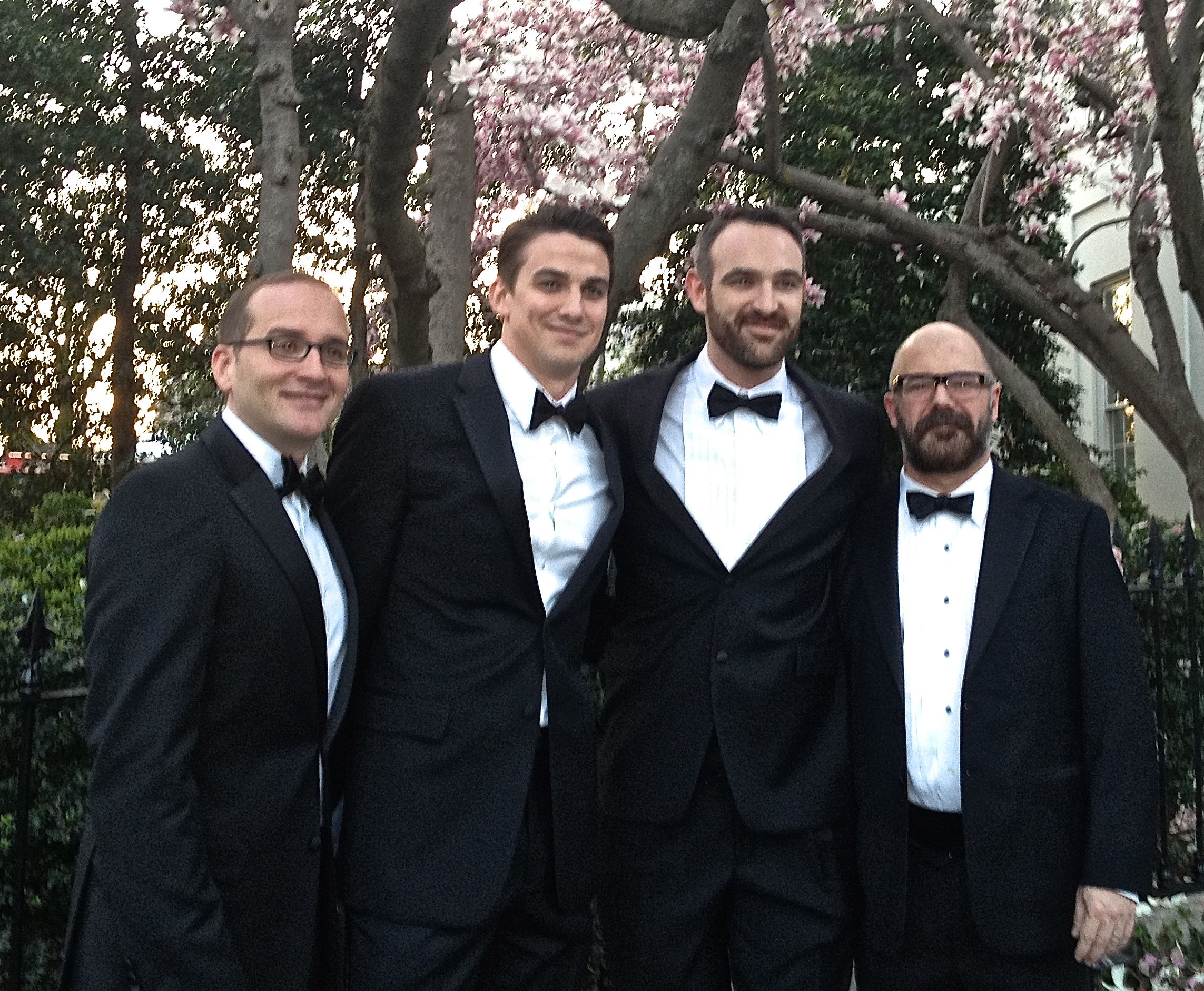
(Photo: Griffin and yours truly, with our spouses, in a happier time, at the White House state dinner for David Cameron, May 14, 2012.)

Meep Meep Watch In Foreign Policy

The neocons don’t want you to notice, but Obama’s attempt to disarm both Syria and Iran of WMDs is actually on track. On Syria, I remember being on the AC360 show last fall, when the overwhelming consensus was that Obama had been duped, that his pivot in asking Putin to enforce the removal of WMDs from Syria was a humiliation, and that Assad would never, ever give up any WMDs. Fast forward to now:

With its latest deadline days away, Syria is close to eliminating its stockpile of chemical weapons, monitors said Tuesday, an improbable accomplishment in the midst of civil war that is likely to diminish further the possibility of international intervention.

After a slow start that prompted U.S. accusations of stalling, the government of President Bashar Assad has shipped almost 90% of its chemical weapons materials out of the country, raising hope that it can finish the job by Sunday. A United Nations plan that averted punitive U.S. airstrikes last year sets June 30 as the deadline for all of Syria’s chemical weapons materials to be destroyed. But the first and hardest task has been shipping it out of the country through the Mediterranean port of Latakia…

The shipment Tuesday means that 86.5% of its toxic weapons material has been removed, according to a statement from the Organization for the Prohibition of Chemical Weapons, the Hague-based group overseeing the destruction of the stockpile. That includes 88.7% of the 700 metric tons of the most toxic chemicals, among them mustard gas and precursor materials for the nerve agents sarin and VX.

Then we come to the much more important interim agreement with Iran. And the news is encouraging there as well:

The IAEA report last week confirms that Iran cut its stock of medium enriched uranium by three-quarters. It has completely diluted half its stock down to low enriched uranium, and it has converted half of the remaining amount into reactor fuel, all ahead of schedule. It would be extraordinarily difficult and time-consuming to reverse these processes. In short, Netanyahu’s bomb has been drained. His red line has been implemented.  Even if Iran were to break the deal today, it would take it many months to make enough uranium for one bomb, and the world would see them doing it. Nor is there any indication that Iran is about to break off negotiations.

So Israel is safer today – because of Obama, not Netanyahu, who has been hoist, like so many Wile E Coyotes in the past six years, by his own canards. Now think of how Obama has operated to rid the Middle East of WMDs – a vital part of our collective security – and compare it with the “tough guys” who preceded him.

Bush and Cheney launched a ruinous, failed war that did nothing to increase our national security and failed to find and destroy any WMDs. Obama, by diplomatic maneuvering, managed to avoid getting sucked into the Syrian vortex, while successfully ridding the country of chemical weapons. Yes, there are reports of chlorine bombs being used. But they weren’t part of the agreement. Yes, the civil war remains horrifying in its human toll. But to have managed to achieve this in the midst of that civil war is a huge success. And if the successful implementation of the interim agreement with Iran continues, we could have a viable permanent agreement that reliably keeps nukes out of the hands of Tehran’s pseudo-democratic dictatorship.

At some point, this will be better understood, I suspect. But it’s worth pointing out now. If Obama leaves office with WMDs removed from the Middle East (barring, of course, Israel’s chemical, biological and nuclear weapons!), he will have done what Bush promised – at a fraction of the cost, and with no war. I don’t know about you, but that’s why I still proudly support this president. Last fall, I argued that two things would make him a liberal Reagan – the successful implementation of Obamacare, and a new era with Iran and the Middle East. And on those terms, it’s meep meep again, so far as I can see.

Update from a reader:

As a loyal but relatively new (since ~2010) Dish reader (and two-year subscriber!), I really appreciate the roadrunner image to go with your latest Meep Meep post.  At last, I’m in on the joke. For the longest time, I thought it was some weird British variation of “whomp whomp” or sad trombone … which was an entirely different meaning.

David Plouffe On Becker’s Book: “Decidedly Inaccurate”

The account Jo Becker gives of the Obama administration’s response to the issue of marriage equality is one of the few parts of the book that has not been demolished since it was published. Since her account did not square with my own memory, I asked David Plouffe to address some of the claims in the book and he was eager to do so. Plouffe ran Obama’s 2008 campaign and during the time in question was Senior Adviser To The President.

Below is a Q and A I had with Plouffe today on the events Becker purports to report. My questions are in italics. Plouffe’s answers follow:

AS:  Becker’s book argues that the president’s position seemed stalled on marriage equality in 2011 and 2012 and that he likely did not intend to evolve any further on marriage before his second term. Do you agree?

DP: Absolutely not. The President made a decision that he was ready to “fully evolve” and announce his support for marriage equality. As he put it, “If I get asked if I was still a state legislator in Illinois would I vote to recognize same sex marriages as New York State did, the answer will be yes.” So the only question was when and how to announce in 2012 he would be the first President to support marriage equality, not whether to.

AS: What were the major and minor influences that caused the president to embrace marriage equality when he did?

DP: His evolution was not contrived as some suggest, but real. He spoke powerfully to some of his reasons in the Robin Roberts interview, but also the decision not to defend DOMA was instrumental, as well as the increasing number of states that were recognizing marriage. However, his family and friends and the discussions they had were likely the single greatest influence. His ultimate support for marriage equality was arrived at in a way that while public, was not too dissimilar to the journey many of us in the country took. Also, the President believed his support for marriage equality could change the opinions of some in his electoral coalition – witness the striking change in support in the African-American community which was illustrated in the Maryland ballot initiative results in 2012.

Given the Democratic convention and the Debates, where this issue was sure to come up, and that he had personally decided to support marriage equality, the plan was to make sure the announcement was made by June.

AS: Did Biden force your hand on substance? Or just the timing? What was the president’s personal response to Biden’s public statement?

DP: Not even the timing really. We were planning to do so within a week or two. So it might have sped it up by a matter of days, if that. He was very calm about it. He understood that this would be a historic moment and years from now, if not months (which turned out to be the case for most) all that mattered would be the words he spoke, not the process to get there. I will confess to being exercised because this was a historic moment and I wanted that to be the focus, not why we were doing it or how the timing was forced. He was right, I was wrong.

AS: David Brooks argues today that judging from Becker’s book, this was a decision dominated by elite political strategists. Is that your recollection?

DP: Not all all.

DP: Once he made the decisions, it was a settled debate. All we did was help think thru the timing and some of the questions that would arise from his statement. I understand the Becker book may give people that sense. It is decidedly inaccurate. I sat beside him from his decision not to defend DOMA in early 2011 to his embrace of marriage equality on May 9, 2012. It was his call. And from my unique perch at the time, I can assure you there were no guarantees this would not cost us votes in some of the battleground states. It was one of my favorite days in the whole Obama experience. Doing something historic and right that had risk associated with it – I’m certain that’s how history will capture it, not some of the BS out there now.

AS: Was the president’s reluctance to embrace a federal right to marry a function of his caution or of his understanding that civil marriage has been a state issue in the US?

DP: The latter, exactly. Though I think he believes that ultimately the Courts and the states will move almost universally in the right direction and we certainly have seen progress on both fronts since his announcement. There really hasn’t been an issue at least in modern times that has seen this rapid support growth, and given support levels for marriage equality across the ideological spectrum of those under 35, the path is clear.

AS: Over the first term, the administration had successively endorsed the notion of heightened scrutiny for gay rights cases, had bowed out of defending DOMA in the courts and had ended DADT. How did these events change the debate about marriage equality within the administration? Or were they irrelevant?

DP: I believe that while you had to look at each individually and make decisions based on the unique core facts at hand – and any administration must – there is no doubt that each was a barrier that was overcome and the result of each pointed in the same direction towards progress. Surely some will disagree with this this, but I think the gradual progression on the issues you mention in the first three years leading up to his marriage equality statement helped ultimately build support broadly for the equality case. Some may get frustrated by this, but the President has always had a very good sense of timing, even when it seems slow or not how they would do it on The West Wing TV show. I think in this case, we will look back and understand that each chapter unfolding as it did was the right path for the overall cause.

AS: Was there a sell-by date by which time the administration believed it had to endorse marriage equality before the election?

DP: Yes – our internal clock was June. There was platform language for the convention that had to be agreed to and the debates looming and he would start doing a lot of local interviews as well as national. It would be impossible to imagine not getting the question – directly  (Are you still evolving?) or hypothetically (would you vote for it in the Illinois legislature?) We were actively working thru dates and options in the very near term when the VP made his statements on MTP.

When you read the book, you get the impression that Chad Griffin did almost all of this himself. Think about that claim for a moment. And what it says about his vision of the marriage equality movement and its hundreds of thousands of participants, gay and straight, over the last two and a half decades.

Obama’s Meep Meep On Healthcare

obamasmug

There are plenty of imponderables left on the fate of the ACA, Obama’s signature domestic policy achievement. Premiums could still spike later this year; the full data on the numbers with actual, paid-for health insurance via the exchanges is not yet known; the resistance on the right to it is still mighty; in many states, the lack of Medicaid expansion guts a key part of the law’s intent. If you want to read an attempt to argue that Obamacare is as big a liability for Obama this fall as the Iraq War was for Bush in 2006, well go read JPod. My reaction after reading his screed was: seriously?

There’s simply no denying that the law has been rescued by an impressive post-fiasco operation that did to ACA-opponents what the Obama campaign did to the Clintons in 2008 and to Romney in 2012. Obama out-muscled the nay-sayers on the ground. I have a feeling that this has yet to fully sink in with the public, and when it does, the politics of this might change. (Since the law was pummeled at the get-go as something beyond the skills of the federal government to implement, its subsequent successful implementation would seem to me to do a lot to reverse the damage.) There are some signs that this is happening. A new Reuters/Ipsos poll finds the following:

Nearly one-third of respondents in the online survey released on Tuesday said they prefer Democrats’ plan, policy or approach to healthcare, compared to just 18 percent for Republicans. This marks both an uptick in support for Democrats and a slide for Republicans since a similar poll in February.

That’s mainly because of renewed confidence and support from previously demoralized Democrats. But it’s also a reflection, it seems to me, of the political vulnerability of Republicans who have failed to present a viable alternative to the law, and indeed seem set, in the eyes of most voters, merely to repeal ACA provisions that are individually popular. And this bad position is very likely to endure because of the intensity of the loathing for Obama/Obamacare among the Medicare recipients in the GOP base. It seems to me that right now, the GOP cannot offer an alternative that keeps the more popular parts of Obamacare without the air fast leaking out of their mid-term election balloon. And so by the fall, the political dynamics of this may shift some more in Obama’s direction. By 2016, that could be even more dramatic. One party – the GOP – will be offering unnerving change back to the status quo ante, and the other will be proposing incremental reform of the ACA. The only thing more likely to propel Hillary Clinton’s candidacy would be a Republican House and Senate next January.

It’s that long game thing again, isn’t it? Like the civil rights revolution of the Obama years, it seemed a close-to-impossible effort to start with, and then was gradually, skillfully ground out. It also seems true to me that the non-event of the ACA for many, many people will likely undermine some of the hysteria on the right. The ACA-opponents may be in danger of seeming to cry wolf over something that isn’t that big a deal. Yes, they may have premium hikes to tout as evidence of the alleged disaster. And every single piece of bad news on the healthcare front will be attributed to the ACA, fairly or not. But the public will still want to know how premiums can go down without people with pre-existing conditions being kicked out of the system, or without kids being kicked off their parents’ plan, and so on. I think, in other words, that the GOP’s position made a lot of short-term political sense in 2010 and even 2012. But it’s a much tougher sell in 2014, let alone 2016. Once again, they have substituted tactics for strategy. Every time they have done that with Obama, they have failed.

Or maybe I’m biased because my own insurance situation has gotten better. Here’s what’s happened in my individual case.

I stayed on my Newsweek plan via COBRA for my first year as a new business-owner. But when I went on the exchanges this year before my COBRA ran out, I was pleasantly surprised. My old plan had a premium for me and my hubby of $1,535.59 per month, with an in-network out-of-pocket maximum of $2,500 per person. So in 2013 I had total out-of-pocket costs (premiums plus my out-of-pocket maximum of $2,500) of $20,927.08. This year, my ACA plan – a Platinum DC-based one – has a monthly premium of $1,106.33 for the two of us, with an in-network out-of-pocket maximum of $1,800 per person. My out of pocket medical costs this year will therefore be $15,075.96. (One small note: my previous plan was slated for a reduction in premiums this year as well. Not by as much as my current plan – but a significant one nonetheless. But since my COBRA option ran out this June, it wasn’t really a choice.)

So I’m a lot better off with Obamacare this year. I’m also buoyed by the fact that DC’s exchanges have a high number of the young and healthy in them – balancing out my aging AIDSy ass. So I’m reasonably confident my plan won’t go down the toilet any time soon, or face big hikes in premiums. And this new insurance means a lot more to me than the old one – because it cannot be taken away, even if the Dish goes belly-up. When you are a long-term HIV survivor, that kind of health security and independence is, well, priceless. Obamacare affected me in another critical way as well. Its assurance of a stable insurance market that does not screen out someone with a pre-existing condition made me far more comfortable starting my own business. It gave me a baseline of security that simply didn’t exist before. It helped make entrepreneurialism possible.

Yes, I am just one tiny, and rare example. But for me, at least, Obamacare has over-delivered and over-performed. If my experience is replicated more widely, then I suspect the polling and politics will shift yet again.

Meep motherfucking meep.

(Photo: Dennis Brack/Black Star/Getty Images)

The Neocons Lose Their Shit Over Rand Paul

Senators Gather To Caucus Over Hagel Nomination

And so we begin to get into – finally! – a real debate about foreign policy within the GOP. With Ron Paul, the neocon stranglehold on Republican foreign policy was easily maintained. With Rand Paul? Not so much. And so we have three sallies against him this week from three classic sources: Bret Stephens, Rich Lowry and Jennifer Rubin. Bret Stephens is a very gifted writer, and his cri de coeur today is quite something.

So let me concede up-front: I fully agree with Stephens that Paul’s theory that Dick Cheney decided to invade Iraq in order to burnish the bottom line of Halliburton is foolish as well as stupid. Occam’s razor does all the work. We know that in the wake of 9/11, Cheney panicked. He was terrified of another attack and his fetid imagination ran wild. One way in which he could manage to recover was by seizing the initiative – and Iraq was sitting right there, as it had been for years. Along with instituting torture – another panic move – Cheney’s pursuit of war needed no underhand motive. And it is asinine and completely fruitless to make unprovable slurs.

But on containing Iran’s potential nuclear capacity? Paul is perfectly sane, and in line with US strategy against far more formidable nuclear adversaries during the Cold War. If he is completely out of the mainstream so was George Kennan and every president from Truman to Reagan. To describe the strategy that won the Cold War as somehow extremist is simply bizarre. Here’s Paul’s basic position:

“I’ve repeatedly voted for sanctions against Iran. And I think all options should be on the table to prevent them from having nuclear weapons,” Paul said on “This Week” Sunday. But he said those who oppose the idea of containment — or living with an Iran with nuclear weapons — ignore that such an outcome has been necessary in the past.

“They said containment will never ever, ever be our policy,” Paul said of those who oppose Iran getting nuclear weapons at any cost. “We woke up one day and Pakistan had nuclear weapons. If that would have been our policy toward Pakistan, we would be at war with Pakistan. We woke up one day and China had nuclear weapons. We woke up one day and Russia had them … The people who say ‘by golly, we will never stand for that,’ they are voting for war,” he added.

Well, they are, aren’t they? And you can tell by the failure to address this core point. Stephens doesn’t address it, preferring to mock Paul’s alleged electability and pick the low-hanging fruit of Halliburton. Lowry doesn’t go there, either. And Rubin of course simply flaps her arms up and down:

It has been the position of three presidents that a nuclear-armed Iran is intolerable. It is an existential threat to Israel. It is not simply that it is “not a good idea” for Iran to get the bomb. He is far, far outside the mainstream on this — and far to the left of President Obama.

But of course insisting that an Iranian nuke is intolerable is the only viable negotiating strategy to prevent it. Paul agrees with the “all options on the table” mantra. His cardinal sin is in asking what happens if the strategy fails, as it might – and as the neocons devoutly wish. What then? Rubin makes further points: Paul’s remark

reveals extreme naivete about how enemies read signals.

But he’s not the president. And containment of the nukes with even more crippling sanctions is obviously not something the Iranian regime would like. Why are they in these negotiations in the first place? In some ways, the threat of sanctioned containment is more troubling for Tehran than threats of another religious war in the Middle East. The former hurts Iran alone. The latter hurts both of us. Then this:

It reveals that he listens to no competent adviser.

Pardon my smacked gob, but an unreconstructed believer in the Iraq War is now claiming competence as a virtue?

Only in the hermetically sealed universe of the Washington Post op-ed page does that still fly. Then this:

He apparently is tone deaf, not understanding how this will strike average voters. Former ambassador to the United Nations and potential 2016 candidate John Bolton observes, “One wonders if he understands what he is saying.”

Again, someone citing John Bolton in a case for reaching average voters somewhat undermines her point. And I’d say the average voter, when asked to pick between another Middle East war and even tighter sanctions on Iran, may not fall into the camp Rubin expects. As for de-Reaganizing Paul – yes, that is now a verb – well, again, mentioning arms and Iran may not be the best rhetorical strategy in that context. Paul is not as naive as the man who thought he could placate the ayatollahs by trading arms for hostages. (Chait has a hilarious line on this as well.)

What do we make of this? I’d say it’s a sign that the neoconservative wing of the GOP is deeply alarmed by the traction Paul has on foreign policy with a base that remembers Iraq and Afghanistan more vividly than Bret Stephens. And the combination of the ferocious attacks with an inability to rebut its core point – isn’t containment preferable to war? – suggests a bit of a bluff. Paul should avoid the conspiracy theories and focus on the argument. And on that ground, he’s winning.

(Photo: Alex Wong/Getty)

“This Is God’s Plant”

Matt Melema finds that evangelicals are starting to come around on marijuana:

No one has done a poll of where evangelicals in particular stand on pot, but talking to a dozen or so of them makes me think that the feelings of young evangelicals are shifting as fast as many others of their generation. Given the history of churches decrying marijuana as a “demon weed” which could threaten society, the new attitude represents a generational divide.

weeed1.jpgAnd, increasingly, churches and leading Christian groups aren’t trying to stop this. In the 2006 election, Focus on the Family, then led by culture war veteran James Dobson, was a major force in the anti-marijuana campaign, making large donations and publicly opposing it. By 2012, the younger Jim Daly had replaced Dobson, and Focus mostly stood to the side during the election, contributing a mere $25,000.

Daly has started building relationships with everyone from progressive newspapers to gay activists to Bono. This new approach is reflected in his attitude toward marijuana. He is against legalizing recreational marijuana. But he may be more open toward medical marijuana, remarking that there could be “some medical benefits derived from it.”

What I found most striking in the piece was this from a profile of the Stanleys in OnFaith:

“Satan didn’t create this plant,” says Jesse [Stanley]. “Satan doesn’t create anything. This is God’s plant. And God is moving in the hearts of men and women and children around the world about this plant in ways that I never would’ve imagined five years ago.”

What Stanley is referring to is the potential of the plant to alleviate pain and suffering in ways no prescription drug can. And I do think that the experience of medical marijuana has shifted this debate perhaps more deeply than we truly understand. If you have watched marijuana keep another human being alive and nourished in the worst throes of AIDS, as I have, and then watched them get their life back, it changes you. If you have ever met a child with seizures who, thanks to this plant, can begin to construct a calmer, saner life, it will affect you deeply. To call a plant that can do this a “demon weed” simply becomes nonsensical.

But what’s interesting is how this discovery also leads inexorably to a different approach to responsible, recreational marijuana use.

There is a reason the plant has, throughout the aeons of human history, been related to religion and spirituality. There’s a reason that it’s a sacrament in Rastafarianism. Countless people testify to spiritual insights, intellectual breakthroughs and emotional healing through use of the plant. For many, it works on the human brain very differently than alcohol. For some, it allows for calmer thought, or a heightened aesthetic sense, or just relief from the ordeal of consciousness that speaks to the soul more deeply than many other drugs, barring, of course, other psychotropic, like psilocybin or Ketamine. Of course, this is not a substitute for prayer, or meditation, or doctrine. But it can jog people toward a deeper appreciation of the world, its beauty and its goodness. It acts as a cultural check on the frantic, over-sharing, constantly-updating, overwhelmed life so many of us now share. It has a religious and spiritual aspect that cannot be denied – even as it has been smothered by Cheech and Chong and Seth Rogen (peace be upon him).

It will indeed be a marvel if members of organized religion begin to shift their attitudes to this drug. But, the more you think about it, it shouldn’t surprise. We may well be under-estimating the cultural impact of widespread and legal marijuana use. The human mind is a beautiful thing. And when it unfolds a little, a little more may be possible for the enrichment of our lives

The Burgeoning Israel-Russia Alliance

Meeting of Vladimir Putin with Benjamin Netanyahu in Kremlin

The Jewish state’s decision to abstain in the UN on the question of Russia’s annexation of Crimea did not go unnoticed in Washington:

“We have good and trusting relations with the Americans and the Russians, and our experience has been very positive with both sides. So I don’t understand the idea that Israel has to get mired in this,” Lieberman told Israel’s Channel 9 television when asked about the Ukraine crisis.

When White House and State Department officials read these comments, they nearly went crazy. They were particularly incensed by Lieberman’s mentioning Israel’s relations with the United States and with Russia in the same breath, giving them equal weight. The United States gives Israel $3 billion a year in military aid, in addition to its constant diplomatic support in the UN and other international forums. Russia, on the other hand, supplies arms to Israel’s enemies and votes against it regularly in the UN.

The White House is disappointed, but it surely cannot be surprised. Israel has treated the US with contempt since Obama came to office, humiliating the president whenever it could, sabotaging any conceivable progress toward a two-state solution, while pocketing all the aid it can and trying to stymie Washington’s key diplomatic initiative in the Middle East. I cannot think of an alliance quite this perverse: the US gives Israel vital protection at the UN, vast amounts of intelligence and military assistance, $3 billion a year in aid and in return is opposed in most of its foreign policy initiatives, and its officials routinely slimed and attacked by members of the Israeli government. Name any other “ally” that behaves this way.

A much more plausible alliance for Israel in the future is surely with Putin’s Russia.

Russia could enable Israel’s annexation of its neighbors at the UN, since it is bent on exactly the same strategy of territorial expansion, based on ancient land claims and the ethnic composition of its borderlands. Larison:

Even if a significant number of the current government’s supporters weren’t Russian-speakers with connections to Russia and other former Soviet republics, Israel has no particular interest in upholding the sanctity of other states’ sovereignty and territorial integrity. Israel has violated both on more than a few occasions over the decades and reserves the right to do so in the future, so why exactly is it going to denounce Russia for doing things that are in some ways less egregious than its own past actions?

Russia, like Israel, has no real commitment to diplomacy unless it can act as a cover for military expansionism or as a delaying tactic while it entrenches its grip on the West Bank and makes it permanent. Large swathes of the Israeli corporate and political establishment have extremely close ties to Russia, in the wake of the post-Soviet influx, and the Russian immigrants are among the most hardline with respect to the Palestinians. And you can see the rapport between Netanyahu and Putin as clearly as you can see the lack of chemistry between Netanyahu and Obama.

This is unlikely to happen formally in the near future. But informally, it has been gathering momentum. As Putin preps for what may well be an invasion of Ukraine proper, Israel’s increasingly close ties to Russia may face a moment of reckoning:

Officials in Jerusalem attribute Israel’s cautious behavior over the Ukrainian crisis to Netanyahu and Lieberman’s desire to preserve what they see is a good and close relationship with Putin. In fact, fear is a significant motivation. “Russia’s ability to cause damage with regard to issues that are important to us, such as Iran and Syria, is very great,” a senior Israeli official noted, stressing that Israel did not want to get into a confrontation with Russia over an issue that did not directly concern it.

Or to put it another way, Russia’s ability to impound Syria’s chemical weapons still matters, if only to leave Jerusalem as the sole Middle East power with WMDs, and  Russia’s ability to derail the talks with Iran may also be a real life-line for those in Israel seeking military conflict. So the Israelis, as is their right of course, are treating Russia and the US as equal forces in their foreign policy, pivoting between one and the other in order to maximize their national interests in attacking Iran and preventing a Palestinian state. The question is not why Israel would act this way, but why the US cannot get as good and as cheap a relationship with Israel as Moscow has. Why do the Israelis regard Moscow with fear and Washington with contempt?

(Photo: Israeli Prime Minister Benjamin Netanyahu and Russian president Vladimir Putin appear during the Security Council meeting in the Kremlin on November 20, 2013. Netanyahu was on a one-day visit to Russia. By Dmitri Azarov/Kommersant via Getty Images.)

Where The Hard Left Says No

The rescinding of an honorary degree to Ayaan Hirsi Ali is not exactly an act of punishment. No one has a right to any such degree and Brandeis is fully within its rights to breach basic manners and fail to do basic research about an 372px-Ayaan-Hirsi-Ali-VVD.NL-1200x1600honoree’s past work. And Ayaan has indeed said some intemperate and extreme things at times about Islam as a whole. But to judge Ayaan’s enormous body of work and her terrifying, pioneering life as a Somali refugee by a few quotes is, I’m afraid to say, all-too-familiar as an exercise in the public shaming of an intellectual for having provocative ideas. There seems to be an assumption that public speech must seek above all else to be “sensitive” rather than provocative, and must never hurt any feelings rather than tell uncomfortable truths. This is a terrible thing for liberal society as a whole and particularly terrible for a university campus, where freedom of thought should be paramount (although, of course, the hard academic left every day attempts to restrict that freedom).

The “outrage” at heterodoxy applies particularly to any members of an “oppressed” group who try and challenge the smelly little orthodoxies they are supposed to uphold. The venom and hatred seems to ramp up if the heretic is also a woman or African-American or gay or Latino or Jewish. For a woman of color like Hirsi Ali to challenge the religion of Islam is far more threatening to the p.c. left than, say, a Sam Harris or a Christopher Hitchens. The latter can be dismissed as white males (there’s no prejudice like p.c. prejudice); Hirsi Ali not so much.

Here, after all, is the biography of a woman the left wanted Brandeis to dishonor: a young Somali girl forced to endure genital mutilation at the age of five and who was going to be forced into an arranged marriage if she did not flee her country; a refugee from brutal misogyny whose attempts to expose Islam’s treatment of girls and women led to death threats because of a documentary she wrote, and whose director was subsequently murdered. She runs a foundation that aims to protect girls and women in America from being abused at the hands of Islamic traditionalists. It’s worth noting that for the hard left, none of this really matters. Or perhaps it matters more. Because her credentials are so strong, the attempt to mark her as a bigot is that much more strenuous.

This double standard goes both ways, of course.

The Fox News right is always desperate to get a member of a minority to challenge p.c. orthodoxy just because they’re a minority – giving some individuals far more weight than the cogency of their arguments might otherwise deserve. It is as if both sides cannot acknowledge that ideas are ideas – and that the human mind can entertain them, regardless of gender or skin color or sexual orientation.

So, unlike Bill Kristol, I have no objection to Brandeis’ awarding Tony Kushner an honorary degree. I find Kushner’s politics drearily socialist and some of his work agitprop. But he provokes; he’s a really gifted playwright; he makes enemies; and engages the world of ideas forthrightly from the farthest reaches of the left. Why can we not debate if establishing the state of Israel was a mistake, for example? Why, for Kristol, is that topic out of bounds? Why on earth would a university choose not to give a man an honor just because he once dared to make that argument? Kushner was challenging his own ethnic group just as powerfully as Hirsi Ali is challenging her own. But here is the question: why is he lionized and Hirsi Ali disinvited? Why are provocative ideas on the “right” less legitimate than provocative ideas on the left?

That’s why this is dismaying. Not just because Brandeis has, within its rights, behaved shabbily; but because it wants to rig the public debate in favor of one set of arguments over another. There are many places that one might expect that to happen – but not a university.

[Update: as I disclosed last night, Ayaan is a friend of mine; and also the wife of a dear and old friend of mine, Niall Ferguson. So, as always, I have a bias. Sorry not to have disclosed it a second time for those just coming to the controversy.]

[Update: dissents from readers here]

Why Aren’t Gay Men On The Pill?

The Associated Press – about as mainstream as you can get – has an article out this week about a very marginalized medication:

It’s the Truvada conundrum: A drug hailed as a lifesaver for many people infected by HIV is at the truvadaheart of a rancorous debate among gay men, AIDS activists and health professionals over its potential for protecting uninfected men who engage in gay sex without using condoms.

Many doctors and activists see immense promise for such preventive use of Truvada, and are campaigning hard to raise awareness of it as a crucial step toward reducing new HIV infections, which now total about 50,000 a year in the U.S. Recent efforts range from think-tank forums and informational websites to a festive event at a New York City bar featuring popular drag queens.

Yet others — despite mounting evidence of Truvada’s effectiveness — say such efforts are reckless, tempting some condom users to abandon that layer of protection and exposing them to an array of other sexually transmitted infections aside from HIV. “If something comes along that’s better than condoms, I’m all for it, but Truvada is not that,” said Michael Weinstein, president of the AIDS Healthcare Foundation. “Let’s be honest: It’s a party drug.”

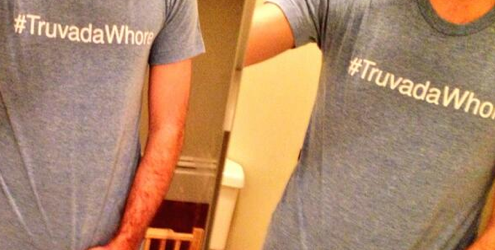
I have to say I’m aghast by that attempt to stigmatize – yes, stigmatize – a medication that could prevent countless men from being infected with HIV. Think about it: if it were 1990 and the news emerged that – just by taking one pill a day – you could avoid ever getting infected with HIV, do you think there would be any debate at all? There would be lines around the block for it, huge publicity campaigns to get the amazing news out, celebrations in the streets, and huge relief for anyone not infected with the virus. Fast forward a quarter century, and those taking this medication are actually demonized as “Truvada Whores“.

Whore? Why are some now channeling Rush Limbaugh’s sex-phobia? I mean: are women who are on the contraceptive pill “whores” as well? All they’re doing is protecting themselves from the consequences of sex in terms of pregnancy. And all gay men on Truvada are doing is protecting themselves from HIV. Why on earth would we want to prevent or marginalize that? As Peter Staley, one of the true heroes of ACT-UP, has put it:

It breaks my heart that the worst of HIV stigma comes from my own community: gay men.

Mine too. The reason, it appears, is that being free from the fear of HIV infection could lead gay men to have lots of sex again with lots of partners. (One study we have examining this did not bear this out.) But here’s some breaking news: for vast numbers of gay men, lots of sex is already the case. Now that HIV is not a death sentence but a chronic disease like diabetes, the terror is long gone. But the virus isn’t. And rates of infection remain stubbornly high, especially in this demographic. Because, well, men are men. Betting against their testosterone in a sub-population without women is a mug’s game. Add to this that fact that for many men – spoiler alert – condoms make sex less pleasurable, less intimate and less intense, and you have the current high rates of infection. Given where we are, we have a choice, it seems to me. We can either use our medical knowledge to prevent infections, or we can allow them to continue.

Screen Shot 2014-04-09 at 11.29.56 AMWhat about side-effects? Yes, they exist with Truvada, as with any drug. But this pill must be prescribed by a doctor who can monitor quickly for any early adverse reaction in the liver and end the drug if necessary. One possible effect on bone-density takes a very long time to occur and again can be monitored and the drug ended if that’s the case. And compared with the side-effects of getting infected and having to take the full spectrum of anti-HIV drugs? Let’s just say your liver prefers Truvada. What about getting people to take it every day? Yes, that’s vital – just like contraception. If you are not taking it regularly, and you get infected, there’s a chance that the virus could mutate in the presence of Truvada to foil similar drugs in a future cocktail. But since the Truvada regimen requires blood work every three months, the resistance is unlikely to go on for long. And there are, mercifully, plenty of other classes of anti-HIV drugs that can replace it in a cocktail if you go on to get infected. So, yes, it might not be the best option for a tiny minority. But for the vast majority? It’s a complete no-brainer.

Can gay men be relied upon to take a pill once a day? Please. Why would they be regarded as less capable of protecting themselves than millions of women? And the cost we have already incurred by not aggressively promoting this drug as a preventative is huge. I wrote about this option as far back as 2006, when it first appeared on the horizon. 400,000 people have been infected since then. Back in 2010, in a thread called “A Massive HIV Breakthrough“, I noted that the trials concluded that the pill was more than 90 percent effective. Truvada was subsequently approved by the FDA in 2012 and continued to have high rates of success in clinical trials. From another Dish thread last summer:

According to the C.D.C., when study results are adjusted to include only participants who took their pills most of the time, the protective effects are 92 percent for gay men, nearly 90 percent for couples in which only one partner is infected, 84 percent for heterosexual men and women, and about 70 percent for drug injectors.

Think of how that can change the dynamic in a sero-discordant couple where one man is negative and the other positive. Think of how it can also help end the barriers between HIV-positive and HIV-negative gay men, with far, far less chance of infecting one another. But, in a felicitous medical coincidence, it also raises the tantalizing prospect of wiping HIV out of the gay community in our lifetime.

If you’re my age and remember the horror and the trauma and the paralyzing terror of the plague, that is not something you can feel indifferent about.

Here’s why it is now perhaps possible in ways that have never existed before. If all HIV-negative gay men are on Truvada, they cannot get infected with the virus. And if all HIV-positive gay men are on retrovirals, then they cannot effectively transmit the virus. Bingo! Epidemiologically, HIV is facing extinction. But is it true that those of us on anti-retrovirals with undetectable levels of virus in our blood and semen cannot infect others? Well, we just got pretty amazing news on that front. A two-year PARTNER study – with more than a thousand sero-different couples, gay and straight – found that no-one was infected with HIV.  (The results are available on aidsmap here.)

The bottom line: if we can get a critical mass of gay men on either Truvada or retrovirals, we could soon reach a tipping point in which this virus could be wiped out in a generation.

When we are still having 50,000 infections a year – and gay men remain a resiliently vulnerable population – this should be an urgent goal. We have a chance our predecessors long dreamed of: to have great and enjoyable sex lives without this paralyzing fear and this dehumanizing stigma. We owe it to them and to ourselves to do all we can to make this scenario possible.

Why on earth are we hesitating?


Update: This post prompted a thread, which you can read here.