Sticks And Stones And “Homosexual”

The NYT just ran a piece on the apparent disfavor the word now has among some homosexuals. I have a pretty good guide to figuring out what to do with such a question which is to check out what GLAAD is saying and believe the opposite. As a writer, there are few things that piss me off more than being told which words I can and cannot use. Fuck that shit. (See? It’s good to have a blog.)

The impulse, sigh, is political:

The Gay and Lesbian Alliance Against Defamation, or Glaad, has put “homosexual” on its list of offensive terms and in 2006 persuaded The Associated Press, whose stylebook is the widely used by many news organizations, to restrict use of the word. George P. Lakoff, a professor of cognitive science and linguistics at the University of California, Berkeley, has looked at the way the term is used by those who try to portray gays and lesbians as deviant. What is most telling about substituting it for gay or lesbian are the images that homosexual tends to activate in the brain, he said. “Gay doesn’t use the word sex,” he said. “Lesbian doesn’t use the word sex. Homosexual does.”

“It also contains ‘homo,’ which is an old derogatory,” he added.

But I like the term “homo”! I use it all the time – about myself and others, although I also often use “fag” as well. The gay thought-police would be aghast, but the intent is what matters. Mine is mostly benign. Mostly. But mainly, one great legacy of the gay community has been our love of freedom, especially of speech. For centuries and decades, the right to free speech was our only truly secure constitutional right. We were always about enlarging what was sayable, rather than restricting it. Banning “homosexual” also reeks of insecurity. We are not so tender we cannot handle a clinical, neutral term, or even a slur or the re-appropriation of a slur. “Queer” was one such reclamation, although that’s much more pointed than “homosexual” and certainly doesn’t reflect how I feel about my orientation. There’s nothing queer about being horny and falling in love or lust or getting married. They’re among the most common activities known to humankind. But I sure don’t mind others using it – and more and more heteros want to call themselves “queer” too. But my main objection to getting rid of “homosexual” is that we would lose a not-too-easily replaced non-euphemism.

We have too many euphemisms about our orientation and they bespeak the weak-kneed lameness that’s the real thing that should be fading away:

While the Times article notes that “scholars expect the use of the term to eventually fall away entirely,” it doesn’t really consider the problems that loss could cause. It’s worth noting that gay has contested meanings as well, and by my definition of that word—which, very generally, has far more to do with a historically and geographically specific constellation of aesthetic tastes, artistic styles and modes of relating than with genitals—there are far fewer gay people around these days than there are homosexuals.

One of Slate’s commenters went all Stoppard on us:

AE Housman: “Homosexuals”? Who is responsible for this barbarity?

Chamberlain: What’s wrong with it?

AE Housman: It’s half Greek and half Latin!

Chamberlain: That sounds about right.

When I wrote Virtually Normal, I had to decide on a unifying adjective. “Homosexual” seemed to me to be a way of reaching those who would read and hear the term as an indicator that I was not rigging the argument with pro-gay rhetoric. I’m fine with “gay”, and use it all the time. But persuasion is best done on neutral ground. Maybe the word has become less neutral since 1995. But I cannot think of a better one.

Still, while I’m at it, there is a “word” that seems to me worth retiring. Not by fiat, just by trying to avoid or ignore it. It’s the unpronounceable p.c. acronym: LGBT. God I hate that “word”. It describes no single person; it cannot be spoken easily; it reeks of bullshit.  No one started using that word of their own accord as a way to describe herself. It was created by leftists who believe that all oppressed groups are primarily defined by their oppression and that the very different lives and identities of gay men, lesbians, bisexuals and transgender are somehow all one. I know it’s an effort at inclusion. I appreciate the good intent. And if it had any wit or originality, instead of sounding like a town in Croatia, I could live with it. But it doesn’t.

So fuck that shit.
Religious Belief And Bigotry

Supreme Court Hears First Amendment Case On Protests At Military Funerals

One of the many great things about blogcations is they take you away for a while from the frenetic day-to-day pace of opinion. You get to see some of the debates with a little more clarity a few steps out of the fray. So here’s a small addendum to the argument about whether all those opposed to marriage equality are ipso facto bigots, which seems to be the position of various writers out there.

One obvious objection is that the word bigotry is far too crude to define the vast array of feelings, ideas, arguments or mere ignorance that can lie behind opposition to gays getting married. Using the term “bigotry” or, even worse, the hideous propaganda term “hate”, just doesn’t do justice to the range of human reaction to profound social change. To make an obvious point – around a third of Americans have changed their minds on the subject in the last decade and a half. Bigots, by definition, are not open to such shifts in opinion. You can’t reason someone out of something they didn’t use reason to get into. So a third of previous opponents were persuaded. Not harangued, persuaded. Of course, as time goes by, that makes the remaining residue of opponents more likely to be bigoted overall. So how to tell if that’s truly the case with those who are left?

There are two basic reasons behind religious objections to marriage equality. The fundamentalist Protestant one is simply Biblical. Gay sex is outlawed in Leviticus and Romans. The test for bigotry here, it seems to me, is consistency. The fundamentalist has to account for her choices about which Biblical verses she takes seriously today. Does she follow all of Leviticus? So why not the death penalty for gays? And why is she eating shrimp? Does she regard marriage as a realistic, short-term concession to human nature before the End Times, as Paul did? It’s not hard to see if consistency is at work here. If the only sins a fundamentalist wants outlawed relate to gay people, then we’re talking prejudice. If a fundamentalist has no objection to divorce, but wants gays outside of marriage, we’re talking very selective sins. True Biblical consistency – not politicized cafeteria fundamentalism – is quite hard to sustain in modernity.

Equally, the Catholic position – that all sex outside procreative marital monogamy  is immoral –  requires consistency.

If gay marriage should be illegal, so should divorce. If a Catholic is campaigning against gay equality while doing nothing and saying nothing about civil divorce, my alarm bells go off. If a Catholic insists on the immorality of gay sex and yet uses contraception, the same point applies. Or if a baker is happy to make a cake for a Satanist gathering, a re-marriage or an IVF child, but not for a gay couple, then, hell yes, they’re bigots (even though I wouldn’t sue them).

This leads to a remnant of principled, non-bigoted opposition to civil marriage equality. The first and most defensible variety, it seems to me, is a pure and minimalist conservatism that distrusts such a big change in a core social institution, and just says no. (Of course this may change as the landscape alters, and no obvious harm seems to be happening.) The second is a consistent religious position – either Biblical or in natural law. To conflate these sincere people with hateful bigots is as empirically false as it is politically counter-productive.

Twenty years ago, I was confidently told by my leftist gay friends that Americans were all anti-gay bigots and would never, ever back marriage rights so I should stop trying to reason them out of their opposition. My friends were wrong. Americans are not all bigots. Not even close. They can be persuaded rather than attacked. And if we behave magnanimously and give maximal space for those who sincerely oppose us, then eventual persuasion will be more likely. And our victory more moral and more enduring.

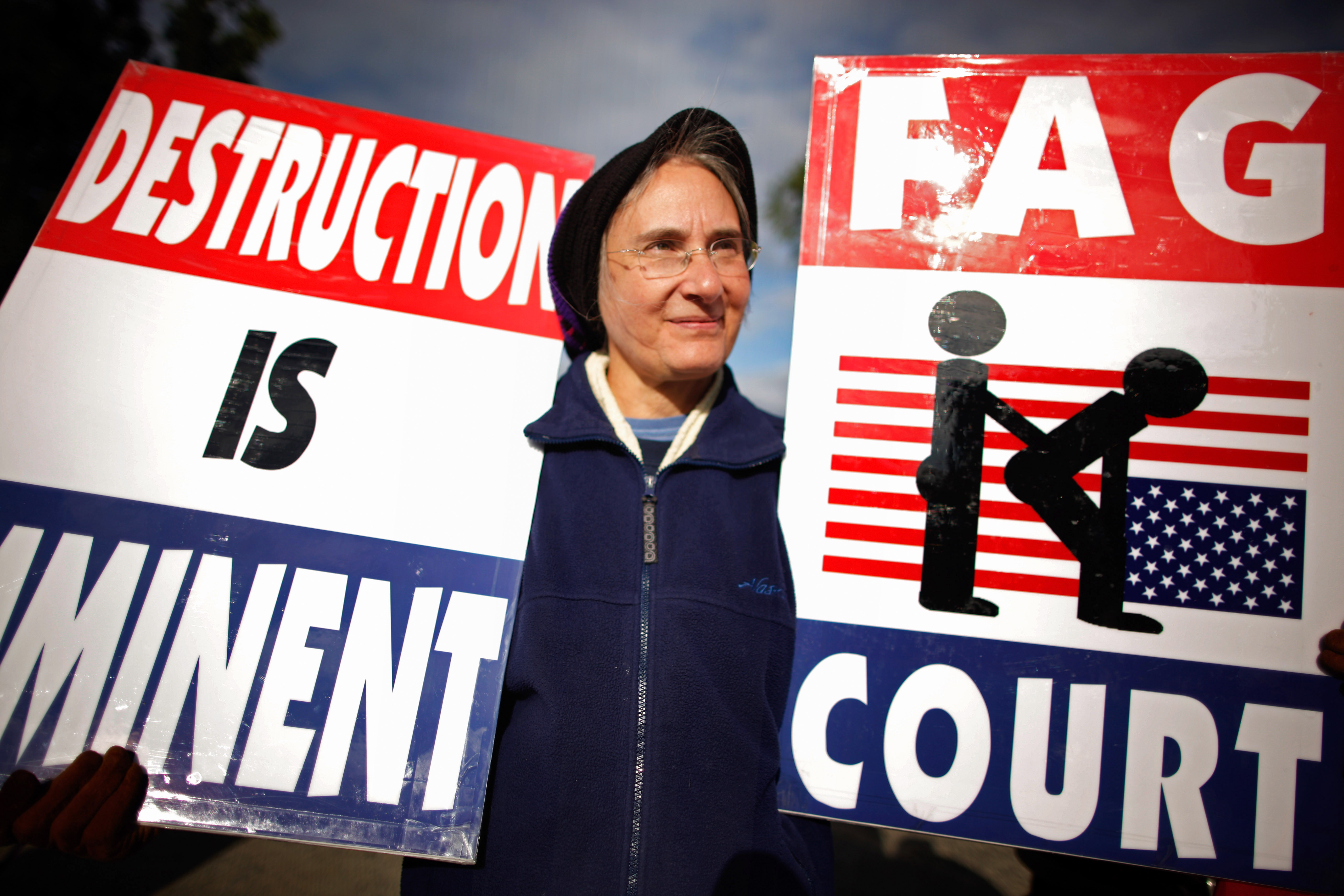
(Photo: Betty Phelps, daughter-in-law of pastor Fred Phelps and a member of the Westboro Baptist Church, demonstrates outside the Supreme Court while justices hear oral arguements in Snyder v. Phelps, which tests the limits of the First Amendment, October 6, 2010 in Washington, DC. By Chip Somodevilla/Getty.)

The Smearing Of Ryan As A Racist

One of the worst traits of some left-liberals is their easy resort to calling those who disagree with them bigots or racists or worse. There are some sites on the web that seem almost entirely devoted to patrolling the discourse for any sign of sin. This one’s a homophobe; this one’s a racist; so-and-so said this and that could be – shock! – prejudiced. It can sometimes be a way to avoid engaging arguments rather than tackling them. And so, on cue, Paul Ryan is taking heat for these remarks:

We have got this tailspin of culture, in our inner cities in particular, of men not working and just generations of men not even thinking about working or learning the value and the culture of work, and so there is a real culture problem here that has to be dealt with.

He noted that “Charles Murray or Bob Putnam over at Harvard – those guys have written books on this.” Cue liberal freakout. Josh Marshall focuses on the citation of Murray:

When you start off by basing your arguments around the work of Charles Murray you just lose your credibility from the start as someone actually interested in addressing poverty or joblessness or really doing anything other than coming up with reasons to cut off what little assistance society provides for its most marginalized members or, alternatively, pumping up people with racial resentments against black people and giving them ersatz ‘scholarship’ to justify their racial antipathies.

That’s because Murray’s public career has been based on pushing the idea that black urban poverty is primarily the fault of black people and their diseased ‘culture.’ Relatedly, and more controversially, he has argued that black people are genetically inferior to white people and other notional races with regards to intelligence. Yes, that last part should be crystal clear: Murray is best known for attempting to marshal social science evidence to argue that black people are genetically not as smart as white people.

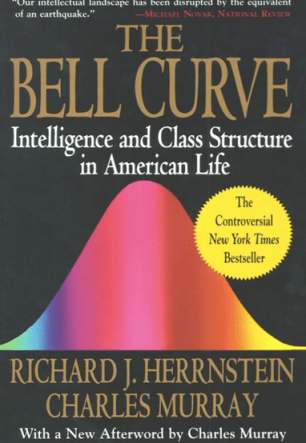
Sigh. Josh seems to be arguing that Murray blames all resilient urban black poverty on culture …. and then blames it all on genes! Pick one canard, would be my advice. And the truth is: in The Bell Curve, Murray was concerned about the role of genes and environment in the resilient IQ differentials among different ethnic groups, as anyone who actually read his book (I did, most liberals wouldn’t) would know. As Screen Shot 2014-03-14 at 11.32.05 AMfor the notion that Murray is useless in actually attempting to help urban poverty, has Josh ever heard of the book Losing Ground? It was the key text for the Clinton welfare reforms of the 1990s – which even Obama now concedes he dismissed too easily.

And it is simply untrue that Murray has argued that “black people are genetically inferior to white people and other notional races with regards to intelligence.” Murray’s work specifically insists that there are countless African-Americans with higher IQs than countless whites and Asians and Hispanics. (He has recently focused his efforts on white poverty as well – which would seem to disprove some of Josh’s claims.) It’s just that the bell curve (which was the title of the whole fricking book) starts at a slightly different place for different racial groupings – something that drives blank slate liberals nuts with cognitive dissonance. Years later, the differentials still exist. Why do you think there are de facto quotas to prevent brainy Asians from dominating the Ivy League? But of course, nothing drives ideologues nuts like reality.

One more thing: I’m sure Murray has gotten used to this distortion of his work. But it still strikes me as outrageous that a scholar like Murray is subjected to being called a racist of the worst sort and a dishonest scholar – simply because the resilient data support his core point, and because he dares to cite genetics. (It’s an old and great line that liberals believe nothing is genetic but homosexuality, while conservatives believe everything is genetic except homosexuality. For my part, it seems pretty damn obvious that almost all human behavior is a function of both – and the interaction between them.)

Josh goes another round:

Weigel notes that it’s not necessarily clear that Ryan was referencing The Bell Curve. He might just as well have been talking about Losing Ground, the critique of liberal social policies, particularly welfare, which put Murray on the map in the 1980s or his more recent work on the ‘white underclass’. To which I would say, maybe? Who knows? And really, who cares? At the risk of sounding wrenchingly corny, The Bell Curve is a bell you simply cannot un-ring.

As Joan Walsh notes here, in the years since publishing The Bell Curve, Murray has slightly softened his argument. He now refers to IQ and what he believes is the mental inferiority of African-Americans not as ‘genetic’ but rather as ‘intractable.’ By this Murray seems to mean that there are too many factors playing into intelligence to definitively say genetics are behind what he claims are the mental/intellectual shortcomings of black people. The deficit is simply ‘intractable’ – by which he means that whatever mix of genetics, culture and circumstance create it, nothing can be done to change it in any meaningful way.

But if Josh had read the original book, he would have seen that that was Murray’s argument all along! “Intractable” means a function of both culture and genes. Now I should make clear that I’m not entirely persuaded by Charles’ thesis. I think it’s too fatalist and gloomy. The plasticity of IQ is obvious, and culture may matter far more in the long run. If Murray’s thesis requires no government action to help the poor, I’m as opposed to it as David Frum. But Murray is an intellectual adventurer. He speaks things we only talk about in our own heads. And his original prediction – that modern, SAT-based, liberal economies will, over time, lead to greater and greater inequality has not exactly been proven unfounded, has it? And referencing Murray – along with Bob Putnam, one should add – is perfectly appropriate when talking about arguments about poverty and how to tackle it.

Michael Sean Winters gives Ryan the benefit of the doubt:

First, we on the left have been complaining that Republicans like don’t give a hoot about the poor, and not without cause. I remember Cong. Ryan speaking at Georgetown in 2012 and talking about subsidiarity and federalism and how the federal government should not be the lead actor in anti-poverty efforts. I thought at the time: That would be credible if he could point to any single Republican governor or mayor who was actually attempting some innovative anti-poverty efforts, but he can’t, so the invocation of subsidiarity in this regard is a smokescreen. It is obvious that Ryan has been trying to wrestle with the issue of poverty since then, and I think we have an obligation not to throw his words back in his teeth the second they are uttered. That is not the way to create a bipartisan consensus on the need for our nation to confront lingering poverty in our midst.

By the way, check out Murray’s responses in our Ask Anything series to get his recent take on the Bell Curve criticism. A long thread on race and IQ is here.

The Boring, Relentless Advance Of Obama’s Agenda

If there has been one consistent feature of the Obama years, it has been the resilience of a ferocious opposition and its simultaneous, accumulating irrelevance. That can always change, of course. Another shellacking in the mid-terms and a bungled presidential race, and we could be looking at serious attempts at rollback. But so far, even as critics and opponents have thrown wrench after wrench into the administrative and legislative churn, some core changes look set to endure. The drawdown in “defense” has not produced the kind of popular revolt the neocons would prefer – and has support among key factions of the Republican party. A slightly higher tax hit for the rich was effectively endorsed in Dave Camp’s tax reform proposal. The massive increase of investment in solar and wind energy will not be soon undone – alongside the fracking revolution. And, as we’ve seen in Crimea and Syria, public appetite for a hegemonic, interventionist foreign policy is close to non-existent.

But obviously the core domestic achievement of the president – the expansion of healthcare to the working poor – is the main event. The repeal of it has been the prime cause for the GOP since 2010. They hope to win the mid-terms on it. And yet, as a new Bloomberg poll reveals, the actual key elements of the law garner widespread popular support:

Screen Shot 2014-03-13 at 12.20.48 PM

Even on the mandate, the verdict is pretty even.

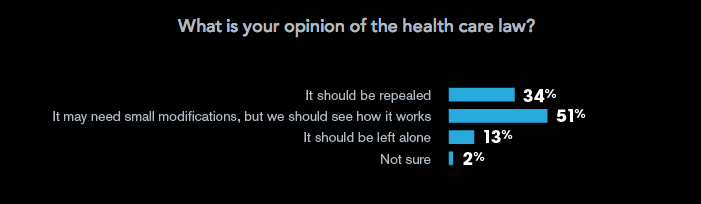
Now it may be that a Republican alternative, which does its best to meet these same goals, could be fashioned. But if it is, and if it is somehow wrestled into law, aren’t the key reforms above still in place? And isn’t that a victory for Obama after all? Added to this is a majority emerging that wants to see the current law as the basis for further reforms:

Screen Shot 2014-03-13 at 12.37.15 PM

When 64 percent of Americans want to see the law fixed or left alone, you have the recipe for long-term resilience.

Has this dented in any way Republican fury at the law? Not so far as you can see from the messaging being unveiled for the midterms, where repealing the law is front and center in the campaign. Karl Rove may be prescient in noting that Obamacare may not be sufficient to win back the Senate – in part because it’s not as potent an electoral ploy as populist hostility to big banks. But his party doesn’t seem inclined to listen.

My own view is that this entire debate over the last few years reveals a core truth about our current politics. One party has taken a ruthlessly pragmatic approach to governing, while the other has taken a ruthlessly rhetorical approach to opposition.

It is as if the Republicans had decided that their opposition to the president would become a kind of performance art version of all their previous tricks. Obamacare is a function of a tyrant! The president is a mom-jeans-wearing weakling compared with Putin! He’s coming to take away your guns! He’s robbing white seniors to pay for poor blacks! And almost none of their critiques has carried the kind of decisive bite that could actually arrest Obama’s relentless chugging forward. In a war of attrition, one side is all histrionics, and the other all action. It reminds me a bit of the 2008 primary race. One side was crusading for the first woman president; the other was quietly counting delegates.

Some of this is inherent, of course, in one side being the government and the other the opposition. But the absence (until very recently) of any Republican legislative proposal that might attract serious, bipartisan support on the budget or climate change or immigration, and the absence in particular (until very recently) of even a modestly practical and palatable alternative to Obamacare reveals the core disparity. 50 votes to repeal Obamacare is not smart politics; it’s entertainment. One side is theater – and often rather compelling theater, if you like your news blonde, buxom and propagandized. The other side is boring, relentless implementation. At any one time, you can be forgiven for thinking that the theatrics have worked. The botched roll-out of healthcare.gov, to take an obvious example, created a spectacular weapon for the GOP to hurl back at the president. But since then, in undemonstrative fashion, the Obama peeps have rather impressively fixed the site’s problems and signed up millions more to the program. As the numbers tick up, the forces of inertia – always paramount in healthcare reform – will kick in in defense of Obamacare, and not against it. Again, the pattern is great Republican political theater, followed by steady and relentless Democratic advance.

Until the theater really does create a new majority around Republican policies and a Republican candidate, Obama has the edge. Which is to say: he has had that edge now for nearly six years. Even if he loses the entire Congress this fall, he has a veto. And then, all he has to do is find a successor able to entrench his legacy and the final meep-meep is upon us. And that, perhaps, is how best to see Clinton. She may not have the stomach for eight years in the White House, and the barrage of bullshit she will have to endure. But if you see her as being to Barack Obama what George H.W. Bush was to Reagan, four years could easily be enough. At which point, the GOP may finally have to abandon theater for government, and performance art for coalition-building.

Is Obama A Phony On Torture?

US-POLITICS-OBAMA-WOMEN

I’m dismayed – and somewhat sickened – by the continuing passivity of the president on one of the most important issues the country faces: accountability for the gravest crimes under international law in the first decade of the 21st Century. This is a president who was propelled to two victories in part by those of us who saw the Cheney torture program as an indelible stain on this country that had to be exposed and expunged. And many of us were sympathetic to the difficulty a newly-elected president would be in – if he truly attempted to do right by history. To launch a gut-wrenching investigation into a government agency that remains responsible for our collective security is not something a president should do lightly when assuming the office. As so many presidents have noted over the years, the CIA is powerful enough to wreck a presidency if it tries hard enough – and the rancor may have consumed an administration as it was confronting the worst economic crisis in almost a century. And Obama desperately needed good intelligence to prevent another terror attack, which would have given the pro-torture right yet one more rhetorical point in favor of their disgusting and useless form of prisoner abuse.

But it’s now 2014. The one sliver of hope we have that the war crimes of the past can be accounted for and recovered from is the Senate Intelligence Committee’s thorough investigation of the matter. And yet the very possibility of the report being made public is now in jeopardy, as a result of the CIA’s stonewalling, harassment and obstruction of the Senate’s vital work. And yet the president still sits there, like a potted plant, refusing to put any serious pressure on the CIA to stop its stonewalling and get the report out. Yesterday, he gave the same spiel about his revulsion at torture and his desire to get the report declassified:

He said he was “absolutely committed” to the Senate investigation of the Bush-era practices, and planed to declassify the report as soon as it was finished. “In fact, I would urge them to go ahead and complete the report and send it to us and we will declassify those findings so that the American people can understand what happened in the past and that can help guide us as we move forward,” Obama said.

Wha-wha-wha-what? The Senate Committee completed the report fifteen fricking months ago! The only reason it has not been declassified and published is because the CIA has been engaged in aggressive stonewalling and obstruction – to the point at which Diane Feinstein was forced to denounce her beloved spies on the Senate floor this week. The president should not be telling the Senate Committee to finish their report (which they did over a year ago), but the CIA to quit the harassment of a committee’s vital work.

Then we discover that the White House has not actually fully cooperated with the Senate Committee:

The White House has been withholding for five years more than 9,000 top-secret documents sought by the Senate Select Committee on Intelligence for its investigation into the now-defunct CIA detention and interrogation program, even though President Barack Obama hasn’t exercised a claim of executive privilege. In contrast to public assertions that it supports the committee’s work, the White House has ignored or rejected offers in multiple meetings and in letters to find ways for the committee to review the records, a McClatchy investigation has found.

We’re told this has to do with sorting out executive branch privileges. Please. No executive branch privileges should be used to conceal the truth of what happened in such a grave matter. Obama has already refused to hold anyone accountable for the torture of the past – violating what’s left of the Geneva Conventions which he is constitutionally required to enforce. Now he’s so milque-toast about even accountability he’s withheld over 9,000 documents from the committee whose work he allegedly supports.

For a long time, I’ve given Obama the benefit of the doubt on this issue. It seems to me that that now has to end.

Because of his passivity and unseriousness with respect to the committee’s vital work, because of his elevation of John Brennan to the head of CIA (a man far more concerned with the agency’s reputation than with accounting for the torture he never protested or opposed at the time), and because of his continuing bullshit about what is truly delaying the report – he must now be considered an objective accomplice to the cover-up.

If his pusillanimity continues until the GOP captures the Senate and bottles up this report for ever, he will have failed one of the most important tests of his presidency. He will have lost the one key moment the United States has in confronting and dealing with some of the most serious crimes its highest officials have ever committed. He will be telling the world that, when push comes to shove, the United States cares more about keeping up appearances than with doing the hard work of truth, accountability and reconciliation. He will be ensuring that the one clear chance we had of finally accounting for these horrors was bungled or deliberately crippled by the government itself, in order to protect its own posterior. He will make it almost certain that torture will return.

That’s not just objectionable. It’s unforgivable.

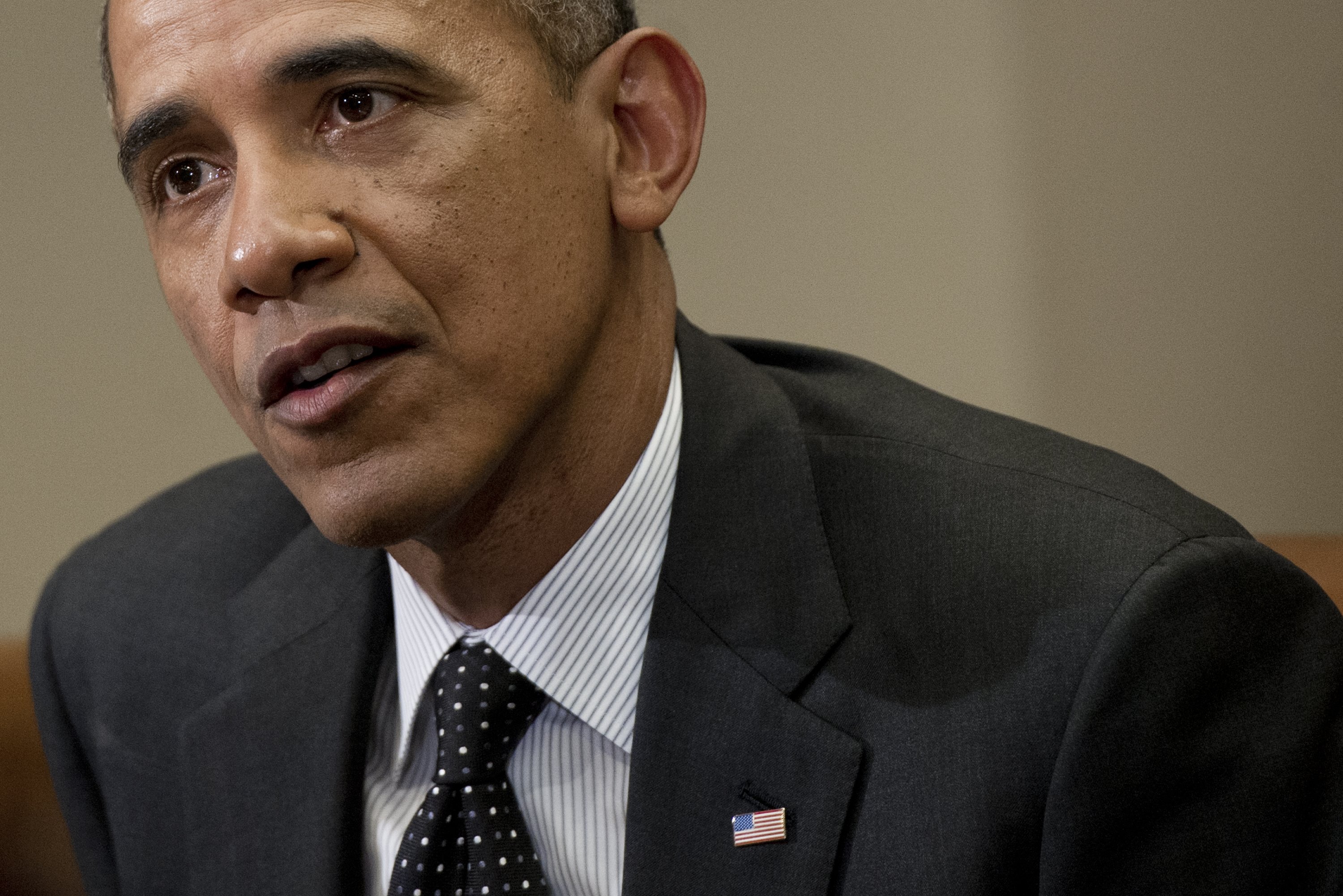
(Photo: US President Barack Obama speaks during a meeting with women members of the US Congress in the Roosevelt Room of the White House in Washington, DC, March 12, 2014. By Saul Loeb/AFP/Getty Images.)

The Marriage Equality End Game

I confess once again to being a little sideswiped by the sudden uptick of momentum in national support for marriage equality. I shouldn’t be. It was perfectly clear three decades ago that the arguments for equality were much stronger than the arguments against. And key debating points have been seriously and consecutively won, culminating in the logical devastation of the case against marriage equality in the Prop 8 trial.

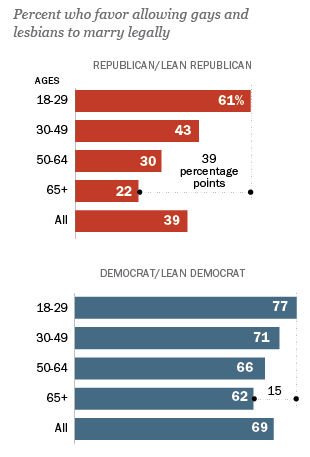
But what I under-estimated, I think, was Pew Marriagethe personal dynamic. Simply put: it’s extremely hard to oppose marriage equality when you know someone who is gay. It requires you to hold a position that clearly treats the human being in front of you as inferior – or at least it sure can feel that way. This doesn’t mean there isn’t a reasoned, theological argument that gays should be denied equal treatment under the law. It simply means that even if you hold that principled position, you will increasingly feel like an isolated asshole with gay friends, family members and colleagues. And few actively want to be an asshole. I think that’s in part what fuels Rod Dreher’s passion. He’s a decent guy, and it anguishes him to think others will think he isn’t. He’s a humane person who nonetheless has to come off as inhumane to almost any gay person and many straight ones.

But when people resolve the struggle between theory and the human person – and it’s only resolved by embracing the whole person, including her sexual orientation – the denial of equality can seem increasingly outrageous. No straight person would ever acquiesce to the idea that he or she does not have a right to marry. Such a denial seems redolent only of slavery’s evil treatment of African-Americans. And who can really demand that another human being never experience love, commitment and intimacy? And so, over time, the country is sorting itself into two camps: most everyone in one camp, and older, white evangelicals – who have often never met a gay person – in the other. Which means a huge headache for the GOP.

Nora Caplan-Bricker summarizes the latest from Pew:

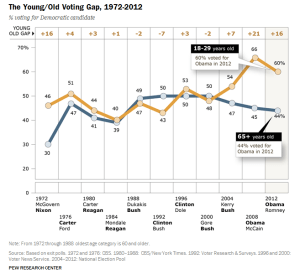
The study found 69 percent of 18- to 29-year-olds support same-sex marriage, versus 54 percent of people overall. Unsurprisingly, young people who lean Democrat favor gay marriage the most heavily; 77 percent are pro. But the most interesting data is on the other side of the aisle, where 61 percent of 18- to 29-year-old Republicans say they support legal marriage for same-sex couples—a 39-point gap over Republicans 65-and-over.

So we’re wrong to focus on seniors as such. In fact, senior support for marriage equality has recently seen some of the sharpest increases of any age cohort. It’s the old and Republican who increasingly seem isolated. Allahpundit notices the Democratic generational convergence:

The most striking numbers there, actually, are how small the differences are between various Democratic age groups. It’s an astounding consensus to have 18-year-old and 65-year-old Dems both above 60 percent support and within 15 points of each other on a practice that was barely on the cultural radar 20 years ago. Makes me wonder how many senior-citizen votes the GOP picked up over the last decade as the 65+ demographic sorted itself out. And how many younger votes it lost.

Elizabeth Nolan Brown wonders why young, gay-friendly Republicans stay with the party:

People say that young adults outgrow liberalism, which may be frequently true on economic issues. But it seems less likely that this generation will eventually “grow into” social intolerance. Certain liberal cultural ideas—like tolerance toward homosexuality and marijuana use—aren’t going anywhere. As the Times puts it: “This youthful libertarianism is not fading when the Republicans of tomorrow graduate from college.”

Right now, the Republican party is losing young independents because of its insistence on making culture war issues preeminent. But they could soon start losing more young Republicans, too. The Times suggests that GOP politicians embrace more libertarian attitudes or pay the price in upcoming elections. But as someone with no vested interest in whether Republicans win elections, I think the more interesting question is why all these socially-liberal young folks still self-identify as Republicans?

Jonathan Martin’s NYT piece suggests we may be hitting a tipping point within the GOP. Leah Libresco watched a panel on social issues at CPAC:

Throughout the panel, the social conservatives seemed to be soliciting the help of the libertarians, trying to speak their language, while the libertarians seemed indifferent to the idea of converting social conservatives. The libertarians answered the questions that were posed to them but made no parallel attempts to appeal to socially conservative tenets in order to attract their fellow panelists to libertarian positions.

Because they’re living in the 21st Century!

The CIA Forces A Constitutional Crisis

Finally, Dianne Feinstein – not exactly a radical critic of the surveillance state – is pushed to the Senate floor to expose the CIA’s unauthorized obstruction of the Senate’s inquiry into their torture program:

She nails the CIA under John Brennan as being contemptuous of Congress and demands to know why they haven’t responded to her inquiries:

This is a remarkable, unprecedented speech – an open accusation from a respected Senator that the CIA has illegally spied on the Congress, done its utmost to prevent the truth about the torture program coming out, and has been engaged in stone-walling and misinformation and deliberate “intimidation” of Senate staffers tasked with the huge task of finding out what happened. The full text of DiFi’s remarks are below. They’re meticulous and damning about the CIA’s actions under director John Brennan – so damning, I’d argue, that the president has to ask himself if this man can be trusted to follow the constitution and the law. I urge you to read the entire speech. It’s one for the history books.

Feinstein reminds us that the Senate investigation began after the news broke that the CIA had destroyed tapes of its torture sessions – over the objections of the Bush White House Counsel and the Director of National Intelligence. The CIA insisted that the tapes’ destruction was not obstruction of justice because there were countless other records of the torture sessions. So the Senate Committee convened an inquiry into those other cables and documents. Here’s what they found:

The resulting staff report was chilling. The interrogations and the conditions of confinement at the CIA detention sites were far different and far more harsh than the way the CIA had described them to us. As result of the staff’s initial report, I proposed, and then-Vice Chairman Bond agreed, and the committee overwhelmingly approved, that the committee conduct an expansive and full review of CIA’s detention and interrogation program.

At the very beginning, then, the CIA – in the person of Jose Rodriguez – was destroying video evidence of its war crimes. Brennan’s subsequent shenanigans with the Committee – and attempt to sue back in retaliation after being exposed as spies on their very over-seers – is utterly of a piece with this pattern of concealment. Through all the details of this battle, that has to be kept in mind. The CIA’s actions are bizarre – unless you understand the gravity of the war crimes they committed and illegally and unconstitutionally concealed from the Congress. And it seems they sure do, as their own internal Panetta report – the smoking gun Feinstein says the CIA itself provided to the Senate – confirmed. Hence the bottom line from DiFi:

I have grave concerns that the CIA’s search may well have violated the separation of powers principles embodied in the United States Constitution, including the speech and debate clause. It may have undermined the constitutional framework essential to effective congressional oversight of intelligence activities or any other government function. … The CIA’s search may also have violated the Fourth Amendment, the Computer Fraud and Abuse Act as well as Executive Order 120003, which prohibits the CIA from conducting domestic searches or surveillance.

Brennan this morning said that “nothing could be further from the truth.” And yet this is how Feinstein says she found out about the illicit spying on the committee’s staffers:

On January 15, 2014, CIA Director Brennan requested an emergency meeting to inform me and Vice Chairman Chambliss that without prior notification or approval, CIA personnel had conducted a “search” — that was John Brennan’s word — of the committee computers at the offsite facility. This search involved not only a search of documents provided to the committee by the CIA, but also a search of the ”stand alone” and “walled-off” committee network drive containing the committee’s own internal work product and communications.

According to Brennan, the computer search was conducted in response to indications that some members of the committee staff might already have had access to the Internal Panetta Review. The CIA did not ask the committee or its staff if the committee had access to the Internal Review, or how we obtained it.

Instead, the CIA just went and searched the committee’s computers.

So either Brennan or Feinstein isn’t telling the truth. Then there’s this passage from the speech that got me to sit up straight:

As I mentioned before, our staff involved in this matter have the appropriate clearances, handled this sensitive material according to established procedures and practice to protect classified information, and were provided access to the Panetta Review by the CIA itself. As a result, there is no legitimate reason to allege to the Justice Department that Senate staff may have committed a crime. I view the acting general counsel’s referral as a potential effort to intimidate this staff—and I am not taking it lightly.

I should note that for most, if not all, of the CIA’s Detention and Interrogation Program, the now acting general counsel was a lawyer in the CIA’s Counterterrorism Center—the unit within which the CIA managed and carried out this program. From mid-2004 until the official termination of the detention and interrogation program in January 2009, he was the unit’s chief lawyer. He is mentioned by name more than 1,600 times in our study.

Think about that for a moment. A man who was once the lawyer for the torture unit is now the lawyer for the CIA as a whole! A man deeply invested in war crimes is now the designated point man for “intimidating” the Senate staff. If that alone doesn’t tell you how utterly unrepentant the CIA is over its past, and how determined it is to keep its actions concealed, as well as immune to prosecution, what would?

And how do we know that the lawyer is not just protecting his own posterior, because the report could lead to consequences for those who enabled such war crimes?

We don’t. The evidence is mounting that the CIA committed horrific war crimes, destroyed the evidence, and subsequently obstructed the Senate’s inquiry and intimidated Senate staffers with a spurious counter-suit. We still cannot read the Senate report on a vital matter for this country’s historical record and the rule of law. The CIA is obviously trying to stonewall the truth about this as long as is possible – perhaps in the hope that a GOP Senate victory this fall could bottle up the report for ever.

The president must make sure this doesn’t happen. He needs to hold Brennan fully accountable for the unconstitutional crimes he is accused of. He needs to ensure that if he doesn’t have the stomach to investigate and prosecute war crimes from a previous administration, which is his legal obligation under the Geneva Convention, he at least won’t prevent the full and awful truth from seeing the light of day. So far, I have not seen any clear sign that Obama is on the side of transparency and constitutionalism in this. And many of us are sick and tired of waiting.

I’m with David Corn on this:

What Feinstein didn’t say—but it’s surely implied—is that without effective monitoring, secret government cannot be justified in a democracy. This is indeed a defining moment. It’s a big deal for President Barack Obama, who, as is often noted in these situations, once upon a time taught constitutional law. Feinstein has ripped open a scab to reveal a deep wound that has been festering for decades. The president needs to respond in a way that demonstrates he is serious about making the system work and restoring faith in the oversight of the intelligence establishment. This is more than a spies-versus-pols DC turf battle. It is a constitutional crisis.

And it must be resolved in favor of the rule of law.

Here’s the full transcript:

Statement on Intel Commi…Enator Dianne Feinstein

This embed is invalid

Joe McGinniss, RIP


Joe McGinnis was responsible not only for several books that are rightly understood as landmarks of journalism – he was also the case study of arguably the most famous essay about journalism, Janet Malcolm’s “The Journalist and the Murderer.” He was a deeply curious and ferociously independent writer, compelled by the minutiae of the human comedy and riveted by the depths  of human tragedy. I think of him as some kind of eternal, unstoppable foe for Roger Ailes, whose media campaign for Nixon in 1968 presaged so much of what was to come – and still reins supreme – at Fox News. And yet Ailes and Joe were extremely close friends their entire lives and Joe would defend him – if not his network or politics – tenaciously as the years went by. That was how Joe was. Once he loved you, he loved you. And I was blessed by some of that love.

SellingofthePresident-resiz

It’s not an exaggeration to say that Joe – at the tender age of 26! – transformed political journalism with The Selling Of The President, the legendary expose of the cynicism of media optics in presidential campaigns – and, by the by, a lovely, ornery rebuke to the magisterial tomes of Theodore H White, as Ann Althouse notes. And the first thing to say is that the man could write. He couldn’t write a bad sentence. His narratives powered along; his prose as clear as it was vivid; his innate skill at telling a story sometimes reaching rare moments in non-fiction when you’re lost in what is, in effect, a factual novel.

But what I truly treasured about Joe – and I came to love him even though we only met a couple of times – was his dogged imperviousness to his peers or to establishment opinion. If he smelled a story, he would dig in, obsessively recovering its human truth. If others thought the story was irrelevant or non-existent, it wouldn’t affect him. His motivation, as it was with his first book, was to peel back the layers of image and propaganda and spin to reveal the reality. He did this with Jeffrey McDonald. And he did it with Sarah Palin.

Of course, we bonded over the former half-term governor. He reached out to me when I was wildly exposed among journalists for refusing to believe her stories at face value. And what we bonded over was not a mutual revulsion at her politics. What we bonded over was the abject failure of the American press to say what had to be said about this preposterous, delusional maniac plucked from deserved obscurity by John McCain to be a heartbeat away from a potential presidency.

Her candidacy was a total farce; a disgrace; an outrage to American democracy; an appalling act of cynicism. Joe saw the creation of this media figure as a continuation of the Ailes recipe for optic politics, and he was appalled as so many mainstream outlets nonetheless insisted on taking this joke seriously.

So he went to do what others wouldn’t: to find the real truth about Palin, and he came closer than almost anyone.

I don’t see his last book as some kind of aberration, though it was obviously not in the same league as The Selling Of The President or Fatal Vision. I saw them all as a continuing crusade for a journalism that takes a stand, that welcomes obloquy if that’s what it takes to get to the truth, and that cares about our democracy. He would never have aimed for the “view from nowhere” or the facile mantra that one leading Washington journalist gave me when asked to explain why they hadn’t sought any proof for the fantastic Trig story that Palin spun: “Why ask questions when you know you won’t get an answer?” For Joe that was pathetic. As indeed it was.

One email I got from him that captures his tenacity and his humor:

My shrink asked me this afternoon if I thought my book was a factor in Palin’s decision not to run. I said, “It might have been. It certainly didn’t tip her toward running. She may well have seen what one lone reporter turned up in four months and realized what teams from MSM outlets might learn in twelve, as they would have done over the next year, if she’d run.”

She said, “In that case, the people of the United States will be eternally in your debt.”

I said, “Great: let’s work out a payment plan, like the ones I have with the IRS, the federal student loan agency, and American Express.”

She said, “By the way, you owe me $375: did you bring a check?”

Another, responding to this aside from me – “My cd4 count just plummeted to 350. But I’m fine”:

If I were an irreverent bastard, I’d note that this coincides with your endorsement of Ron Paul.

Romney will be the GOP nominee. If all the media energy expended on chasing phantoms were put to good use, we could stop importing foreign oil.

And Obama will trounce Romney in November. As he deserves to.

And Sarah is finished. Forever.

I’ll miss him – but not as much as we will.

The Christianist Closet?

Screen Shot 2014-03-10 at 1.30.08 PM

In an angry rant, Dreher accuses me of being “smug and naive” when talking about the crosses that marriage equality opponents have to bear under the “new McCarthyism”:

It’s very, very easy for the self-employed Andrew, who is on the power-holding side of this cultural equation, to demean as “delicate and insensitive” people who face real and significant professional consequences for their religious dissent.

What I find so fascinating about Rod’s deployment of the “you’re too privileged to have a say” argument is that it’s exactly the same debating point once leveled at me by gay leftists. When I basically told gay people to stop thinking of themselves as victims and start thinking of themselves as equal citizens – one part of the case for putting military service and the right to marry at the forefront of the movement – there were howls of derision. But I remain convinced that the only way to escape the victim-trap was to transcend it. And that’s really my advice to Christianists: Get over yourselves and get on with your lives. Rod claims I am blind to terrible discrimination:

Sullivan’s complaint is disingenuous. I hear all the time from religious conservatives in various fields — in particular media and academia — who are afraid to disclose their own beliefs about same-sex marriage because most people within those fields consider opposition to SSM to be driven solely by hatred.

Earlier this year, I had a conversation with a man who is probably the most accomplished and credentialed legal scholar I’ve ever met, someone who is part of this country’s law elite. The fact that I can’t identify him here, or get into specifics of what he told me, indicates something important about the climate within law circles around this issue. On this issue, he lives in the closet, so to speak, within his professional circles, and explained to me why it has become too dangerous to take a traditionalist stand in law circles, unless one is prepared to sabotage one’s career.

Hand me the world’s tiniest violin. If someone is fired for his religious beliefs, he can sue (which is more than can be said for gay people fired for their orientation in many states). The rest is truly spectacular whining. There are always going to be social pressures that favor or disfavor certain views. What about a gun control enthusiast in rural Texas? Or a pro-choicer in Mississippi?

In a polarized polity, this may get worse for both sides. My view – and I don’t see how Rod can have ignored it – is maximal respect for sincerely held opinions. Just as many conservatives over the years have politely acknowledged without endorsing my marriage, so I politely acknowledge the convictions of Christianists, and seek dialogue with them. That’s how I’d like this to shake out. Only recently, for example, I defended Erick Erickson’s point in this debate. And insofar as there is gay intolerance or fanaticism, I oppose it as strongly now as I always have (including opposing outing).

But the hysteria and self-pity among those who, for centuries, enjoyed widespread endorsement for the horrible mistreatment of gay people really is too much. The victimology that was born on the left is now alive and whining on the right. It’s a self-defeating position and a thoroughly unattractive one. In the end, one begins to wonder about the strength of these people’s religious convictions if they are so afraid to voice them, and need the state to reinforce them. Which is one more reason why the decline of Christianism makes the rebirth of Christianity a more exciting prospect. Liberated from the state and social support, Christians may have to become what they once were: outsiders, prophets, the salt of the earth.

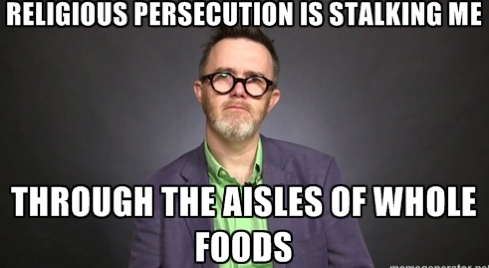
(Illustration: Memegenerator)

Rand Paul, The GOP, And The Young

Molly Ball captures the atmosphere at CPAC during Rand Paul’s speech:

Though CPAC draws right-wingers of all stripes, from Oliver North to Santorum to a guy on stilts in a Ronald Reagan costume, it is increasingly dominated by libertarians, a combined result of their passionate engagement in movement politics and the discount rates the conference offers to college students. That makes it, for Paul, something of a hometown crowd. On Saturday, he won the conference’s straw poll in a landslide. The enormous ballroom at the convention center in the Washington suburbs was crammed with an audience of thousands for his speech on Friday, which Paul devoted exclusively to civil-liberties issues.

Jonathan Coppage recaps the speech:

Paul castigated a progressive majoritarianism run amok, whose free-floating definition of legitimacy puts all minorities at risk, whether the racial minorities persecuted in generations past, or minorities of ideas at risk in the present day. He made frequent reference to his fight against the security state’s overreaches, and insisted upon the imperative importance of specific warrants and open, free trials instead of general warrants and secret determinations of guilt. Finally, Paul closed on a muscular message rejecting the gradualist’s insistence on a hesitant program of changes, telling the CPAC crowd that their job is not to minimize liberty lost, but to maximize liberty.

I find myself wanting Paul to go the distance in the 2016 primaries. No, that’s not because I want Clinton to win (if she’s the Democratic nominee). It’s because Paul would facilitate a younger demographic for Republicans, and that can only be good – for the GOP and the rest of us.

Perhaps the most crippling disadvantage the GOP now has is its dependence on seniors for political clout. We know just how divergent Screen Shot 2014-03-10 at 12.38.49 PMtoday’s generations are – to such an extent that they are effectively foreign countries to each other. 61 percent of Millennials are white, compared with over 80 percent for the pre-boomers – creating an entirely different rite of passage into adulthood. 26 percent are married, compared with 65 percent of pre-boomers and 48 percent of boomers. Millennials have far less trust in institutions, including political parties, and on social issues, Millennials are far more libertarian than their elders: marriage equality is simply a given for them, and legalizing weed a no-brainer.

On current trends, the GOP has close to no chance of winning over this demographic unless it loses its discomfort with non-whites and gays, if it pledges a re-run of George W Bush’s foreign policy, if it keeps championing the war on drugs, or the surveillance state. The widening generational gap between the parties is already unprecedented in modern times. And one segment of the voters is dying, and the other is gaining strength. Unless the GOP manages to find a way to re-brand itself with the next generation, it is facing an existence on life-support – and each pandering message to the Fox News demo will only serve to alienate Millennials.

Rand Paul is one answer to this. If he were to run against the archetypal boomer, Hillary Clinton, around the themes of individual liberty at home and non-interventionism abroad, he could immediately put the GOP on the Millennial side of this generational struggle. Even if he were crushed by Clinton, the GOP’s image would be re-made in a way much more attractive to the under-30s.

His main problem, it seems to me, is racial.

The libertarian position on the Civil Rights Act, while bracing as an intellectual critique of expansive government, is nonetheless toxic to the next generation. Ditto the Republican base’s view on immigration. And there is the problem of the unbearable whiteness of the Libertarian coalition:

A poll released by the Public Religion Research Institute in October 2013 showed that 22 percent of Americans consider themselves libertarian or lean libertarian. Forty-five percent of libertarians side with Republicans, while 5 percent identify as Democrats. Fifty-three percent of libertarians consider themselves reliable primary voters. … As Claire Thompson noted in February 2012, self-described libertarians trend “white, male, and financially secure.” Which happens to be how much of the party writ large trends. If they can only keep the twentysomethings that look like them on board, the Republican Party is going to continue to attract fewer and fewer members of the electorate. Libertarians may grow, but right now, trending toward the Rand model doesn’t seem the safest outreach.

Here’s Michelle Cottle’s take on Paul’s speech:

Ironically, despite all the love, Rand didn’t bring his A game. He was hoarse, he looked tired, and his speech (basic theme: government tyranny is bad) wasn’t particularly soaring. Not that he is ever a really electrifying orator. He tends toward the wonky, goes heavy on historical references, and likes to quote folks like Montesquieu.

But nobody cared. The crowd loved him. These were his people, and they were whooping and hollering and chanting and fist-pumping like it was Saturday night at the roller derby. By the time Rand wrapped it all up by calling on the crowd to “Stand with me! Stand together for liberty!” at least half the room would have followed him down to the gates of hell if he’d asked.

If I were among the conservative movement’s values voters or hawks, I’d be getting mighty nervous right about now.

And if I were a Republican, I’d be feeling a few twinges of hope.