It’s Hard Out There For A Writer

327939900_a752bcfdc5_o

In a much-discussed NYT essay, Tim Kreider beseeches his fellow writers to stop working for free:

A familiar figure in one’s 20s is the club owner or event promoter who explains to your band that they won’t be paying you in money, man, because you’re getting paid in the far more valuable currency of exposure. This same figure reappears over the years, like the devil, in different guises — with shorter hair, a better suit – as the editor of a Web site or magazine, dismissing the issue of payment as an irrelevant quibble and impressing upon you how many hits they get per day, how many eyeballs, what great exposure it’ll offer. “Artist Dies of Exposure” goes the rueful joke.

Harlan Ellison has a great, if somewhat excessive, rant on this:

Development economist Chris Blattman pushes back:

I feel for Kreider, but he tells only his side of the story. Writers were, to a degree, protected by costs of entry and distance and communication. That protection is falling away. This is painful and disruptive, especially because it is so abrupt. But the other sides must be told.

One is that more people get a shot at an audience than ever before, from academic development economists to North African activists to precocious 20-year olds with talent. Another side is that more people get more information and ideas at a lower price than ever before. If good writing and ideas are valuable, surely making it cheaper and more widely available is a good thing? Especially for the people in the world who before could least afford it.

I’m pinioned between these two conflicting forces. Magazine writers were coddled in luxurious greenhouses for years and in some ways, the new desert we are struggling in is a tonic against some of the mediocre crap that used to be run at endless length in what were effectively gilded guilds. And yet, the new landscape is also more of a desert than a plain. There’s almost nothing to eat unless you do something other than writing as well. Some new media patrons seem to be filling in the gaps – in nonfiction, we have Bezos and Omidyar and Hughes coming to the rescue. Others may follow. But that would be – yes, I will retire this metaphor in this sentence – a bunch of precious, gilded oases, in a still-vast wasteland, rather than a viable, renewable ecology.

What interests me is finding a way to pay writers with money that comes from readers.

It’s that simple really. The end of paper and print as the delivery system should make that feasible in principle. After all, what the old media barons used to have on their side was their unique ability to pay for all that industrial-sized printing and mailing. Now, all those costs have disappeared. So where are the new journals and magazines and blogazines, founded by writers and aimed at readers? There are many online, and at the Dish we do all we can to find and promote them. But there is as yet no viable, sustained model for them to stand on their own two feet.

But we’re trying to innovate one. I’m not saying this to ask you to [tinypass_offer text=”subscribe”] if you haven’t (but I’ll take a new subscription any time). I’m saying it because the Dish model of small, renewable subscription payments is an obvious way forward.

Companies like Tinypass have begun to make this technologically feasible. Affiliate revenue – like the Amazon revenue a blog like Brain Pickings relies on for a great deal of its income – can also help. Banner ads can also be useful – but it’s hard (and ethically tenuous) for a lone writer to both do her job and also persuade companies to sponsor her. Remnant advertizing – breakthroughs in testosterone! – can work too. Put some or all of this together and you have a model that might provide more writers with a way to make a living as writers.

In other words, what makes my own job so exhilarating – and nerve-wracking – is the chance not just to create and constantly evolve an online blogazine, but to pioneer a bit of this new writing economy. Dish subscribers already pay six full-time writers and researchers (including interns) and give everyone health insurance; in the future, we’d really like to start using this still-new model to commission and pay good money for long-form journalism. We won’t be able to help book-writers (except for promoting, examining and talking about), but we hope to be able to help nonfiction writers more generally – and not just with eyeballs. That’s why subscribing to the Dish is not just about the Dish. It’s about trying to create a new economy for writing. Think of us as an ice-breaker ship. If we can find a new passage to viable new media, many many others can follow. So, yes, I’m not going to be coy. If you care about the future of writers in this economy and want to empower them rather than potential new corporate overlords, [tinypass_offer text=”subscribe here”].

(Photo by Hamed Saber)

A Little Perspective

President Obama Visits Boston To Talk About Health Care

This morning I watched the president’s speech in Boston yesterday. It felt like a campaign rally. At first, it seemed off-key, although the combination with Sebelius’ dogged endurance of the deserved brickbats by Republican members was, I’d say, a relatively good day for the White House, which is not saying much these days.

But as I listened to the speech, it seemed to me that the president made some points that really do need to be re-made. Nothing makes me madder than a technical problem I cannot understand, let alone solve. Last night, as we were thrashing out various technical issues for the Dish, I got real testy and frustrated. So I can perfectly understand not just the frustration but the rage at healthcare.gov. I can also see why the cancellation notices for individual insurance policies because they don’t cover enough and perpetuate the free-rider problem would be maddening. Obama’s relentless repetition that if you like your plan, you can keep it, period, was bullshit, and he must have known it at the back of his mind. Trust is a very dangerous thing for a president to risk. And he deserves some shellacking for it.

At the same time, look. I’m running a small business now – and we are talking to our insurance broker about what the ACA means for us. We’re not panicking, and we may well pay less. As we go through the process, I’m going to keep you informed as to what happens. As for me, with the mother of all pre-existing conditions, I cannot express how relieved I am that having HIV will no longer carry the risk of bankrupting me, if I have to seek insurance one day on the individual market. I wonder if I would have risked going independent with the Dish without the security that, even if it all fell apart, I wouldn’t be left to the ravages of the individual market for insurance for those with chronic conditions. At a small level, it gave me some sense of security to take an entrepreneurial risk. It may be a huge boon for business for people to switch jobs or try new ventures knowing that the health insurance caveat against risk-taking is now gone.

But I’m extremely lucky and privileged. How can you put a price on the relief of struggling middle-class families whose current insurance policies can be abruptly canceled, or amended with little recourse, or those who simply cannot afford insurance at all and face not just the pain of sickness but bankruptcy as well?

I tend to agree with John Kasich who urged sympathy for “the lady working down here in the doughnut shop that doesn’t have any health insurance — think about that, if you put yourself in their shoes.” Yes, put yourself in her shoes. She’s not on TV like I am, making points. She is waiting for medical support and help for all the trials that flesh is heir to.

The ACA also offers a real chance to bend the cost curve in healthcare. At its worst, it’s a start – and something that can be worked on as time goes by. Every law can be amended. But what the ACA does at its core is bring everyone into the same boat – and a bigger pool is always better for insurance purposes. That’s both a moral and a fiscal gain. I can see how it could be amended. At some point, we might be able to get rid of the employer subsidies and expand the individual market considerably. Or we could move to a single payer. But it will force all of us to grapple with this question more directly and more practically. If you don’t see it as a panacea but as a baseline for the future, it looks better.

What I’m saying, I guess, is that we should not miss the forest for a few rotten trees. If they get the website working, if more people get to sign up, if premiums remain below what was expected … then we will have a very different debate than we are having right now. And look: this is the law. It’s not a project we can simply ignore. But it is a project we should see in perspective – which our current partisan brouhaha is obscuring.

(Photo: President Obama spoke at Faneuil Hall to bolster support for his national health care law in Boston on October 30, 2013. Cathey Park, of Cambridge, displayed a cast on her broken wrist with ‘I (heart) Obamacare’ written on it. When U.S. President Barack Obama finished his speech, he shook hands with the crowd and signed her cast, next to the heart. By Yoon S. Byun/The Boston Globe via Getty Images.)

Can American Conservatism Be Saved?

The best part of Wilfred McClay’s new essay on what Michael Oakeshott could contribute to today’s American Republicanism is a gem from George Santayana, perhaps the most under-rated conservative writer I know. In thinking of America, Santayana was struck by the vastness of its wildernesses, its gigantic mountain ranges and deserts, its inherent difference from the genteel English conservatism of what Tolkien called the Shire.

But he didn’t draw from this any sense of American exceptionalism, in which this country’s sheer might could empower it to run the world, or to unleash the animal spirits of capitalism. He saw something else in those mountains:

A Californian whom I had recently the pleasure of 428px-Michael_Oakeshott meeting observed that, if the philosophers had lived among your mountains, their systems would have been different from what they are. Certainly, I should say, very different from what those systems are which the European genteel tradition has handed down since Socrates; for these systems are egotistical; directly or indirectly they are anthropocentric, and inspired by the conceited notion that man, or human reason, or the human distinction between good and evil, is the centre and pivot of the universe. That is what the mountains and the woods should make you at last ashamed to assert…

It is the yoke of this genteel tradition itself that these primeval solitudes lift from your shoulders. They suspend your forced sense of your own importance not merely as individuals, but even as men. They allow you, in one happy moment, at once to play and to worship, to take yourselves simply, humbly, for what you are, and to salute the wild, indifferent, non-censorious infinity of nature. You are admonished that what you can do avails little materially, and in the end nothing. At the same time, through wonder and pleasure, you are taught speculation. You learn what you are really fitted to do, and where lie your natural dignity and joy, namely, in representing many things, without being them, and in letting your imagination, through sympathy, celebrate and echo their life.

There is a Whitmanesque celebration of America here – but in the service of emphasizing the limits of human activity, the insignificance of so much that rivets us day by day, and the more fruitful option of mere enjoyment of these wildernesses, a giving over to them. And this uniquely American sense of the promising yonder and awe-inspiring West will – and should – shape an indigenous conservatism. Why such an emphasis on contingent space and place? Because conservatism in its best sense is about the constant situating of the individual within a cultural and historical context. Indeed, the very idea of the individual, an Oakeshottian would insist, is a contingent and unlikely achievement of the modern European and American mind, forged first by Augustine from the moral kindling of Christianity, and elaborated ever since. Individualism can never therefore be an ideology. “I built that” is an excrescent simplification, a form of contempt for tradition and society.

McClay asks the obvious yet overlooked question in our politics today: what is it that American conservatives want to conserve? It’s a great question. I am sympathetic, for example, to some conservatives’ dismay at the decline of unifying cultural events like Christmas or Easter. I am sympathetic to conservative resistance to changes in, say, marriage law, or the cultural impact of mass Latino immigration. There is real loss for many here as well as real gain for many more in the future. But the key to a more productively conservative defense of tradition is, it seems to me, a civility in making the case and an alertness to the occasional, contingent need for genuine reform, as social problems emerge in a changing society.

Today’s Republicanism is, in contrast, absolutist, ideological, fundamentalist and angry. It has ceased to be a voice among others in a genuine conversation about our country and become a rigid, absolutist ideology fueled by the worst aspects of the right – from racism to Randian indifference to the many others who made – and make – our lives possible. A lot of the time, it is quite simply philistine. Here’s what McClay gleans from Oakeshott’s writing that could help the cause of conservative reform:

First, the idea of conversation as the model for civilized life.

Second, the need to create and preserve appropriate scale in our communities, for the sake of fostering just such conversation.

Third, the profound human need for release from the burden of purposefulness, which is perhaps another way of expressing the enduring need for transcendence, an avenue that Rationalism tends to foreclose to us.

And fourth, the irreplaceable mission of liberal learning.

To translate: civility in public discourse, maximal federalism and subsidiarity, a sense of transcendence to overcome the delusions of materialism and individualism, and a relentless defense of universities as the core places where our society learns to breathe and grow in the light of knowledge and understanding.

Is this an agenda? Not in any sense of the word. And that is the point. There is no fixed set of policies that an Oakeshottian conservative will embrace. It will all depend on the time and the place and the problem. He will question change and reform as a constant necessity – which is what makes him (and me) allergic to the bromides of progressivism. But he will also try and judge when reform is necessary to preserve the coherence of a society. So, for example, I favor immigration reform, legalized cannabis and gay marriage because they are contingent and creative responses to emergent social facts: the existence of millions of undocumented immigrants, widespread illegal use of cannabis, and the arrival of a self-conscious minority denied the dignity of equal citizenship. There are Oakeshottian conservative critiques of all three reforms, as well. The issue, in the end, is one of prudential judgment about all these questions, a skill and virtue that can never be reduced to an ideology or “ism”.

Understanding the limits of one’s own understanding makes a political conversation natural. It’s what I’ve tried to foster here on the Dish and failed to live by during the more emotional period after 9/11. It’s not just a blogging formula. It’s a way of thinking. And until we revive that manner of thinking, American conservatism will remain defined by its ugliest and dumbest protagonists.

Recent Dish on Oakeshott here. My own book on Oakeshott’s thought (my doctoral dissertation) can be bought here. My more accessible book, The Conservative Soul, deeply influenced by Oakeshott’s thought can be bought here.

Keller vs Greenwald: Why Not Both?

BRAZIL-US-ESPIONAGE-GREENWALD

Their exchange is one of the high moments of debate as journalism evolves in the digital era. If you haven’t, do yourself a favor and read it. I come down in favor of both approaches, i.e. alleged “objectivity” or an attempt at impartiality in competition with a press more open about its own biases and point of view. I think readers deserve both. In Britain – though it is far from working perfectly – the biases of the papers make more sense because of the massive resources of the BBC aspiring to impartiality.

But on the basis of this exchange, I think Glenn has the advantage. And that’s because his idea of journalism is inherently more honest – declaring your biases is always more transparent than concealing them. That’s why, I think, the web has rewarded individual stars who report and write but make no bones about where they are coming from. In the end, they seem more reliable and accountable because of their biases than institutions pretending to be above it all. In the NYT, the hidden biases are pretty obvious: an embedded liberal mindset in choosing what to cover, and how; and a self-understanding as a responsible and deeply connected institution in an American system of governance. These things sometimes coexist easily – as a liberal paper covering the Obama administration, for example, with sympathetic toughness. And sometimes, they don’t – as a liberal paper covering the Bush administration, for example, and becoming implicit with its newspeak.

On the latter, Glenn’s strongest point is about the NYT’s decision not to call torture torture when reporting on the torture regime of Bush and Cheney.  Keller still has no good answer here – except, quite obviously, his desire not to burn bridges with an administration and not become a lightning rod for right-wing press critics. Trying to appear objective, in other words, by appeasing both sides in a dispute, is not actually being objective or impartial. It’s enabling war crimes – which I think the New York Times did under Bill Keller’s leadership. No one ever hesitated to use the word torture to describe waterboarding in the past, and the NYT itself did so when other countries were guilty. So hiding your biases, and trying to appear objective, can mean the opposite of honest. That’s why, up there, the Dish has a simple motto: biased and balanced. You know where I’m coming from; and you can also judge if we fairly provide counter-points and dissent. The Dish evolved toward the “biased and balanced” mindset out of a desire to get things right, after I had proven myself all-too able to get things wrong.

Of course, I’m not running (as of yet) original reporting. But reporting, to me, is about finding stuff out, and publishing it without fear, and being accountable for it.

That means publishing without fear of being called leftist by the right, or of being called fascist by the left; publishing without fear of unsettling and even enraging governments; without fear of upsetting, offending, or even boring, readers because some difficult truths need to be gotten out there; and without fear of being called unpatriotic, or biased. That requires enormous discipline, constant tough judgment calls, brass balls, and discriminating restraint. Withholding the truth – unless for fear of risking others’ lives – is something you only do in extraordinarily rare circumstances. So, to take an obvious example, reporting about Iran’s nuclear program without noting Israel’s nuclear and chemical weapons – a key piece of context the NYT routinely refuses to note – is not impartial. And bias is best concealed within an allegedly unbiased news outlet.

Equally, it means matching revelations from democratic societies with revelations from autocracies. A press that constantly make the US government unable to keep secrets reliably needs to put in a lot of effort to do the same with far less porous regimes. It means careful consideration of internal government documents before publishing; it means eschewing excess zeal in revealing secrets, in favor of measured and responsible explanation of the broader issues involved. That’s called balance.

We have yet to see what Glenn and his future colleagues will produce under much more strenuous institutional boundaries. But we need him. And with any luck, the competition will sharpen the NYT as well. There is a golden mean here – one which the NYT aspires to but often fails to achieve. It will only do better with Glenn nipping at their heels.

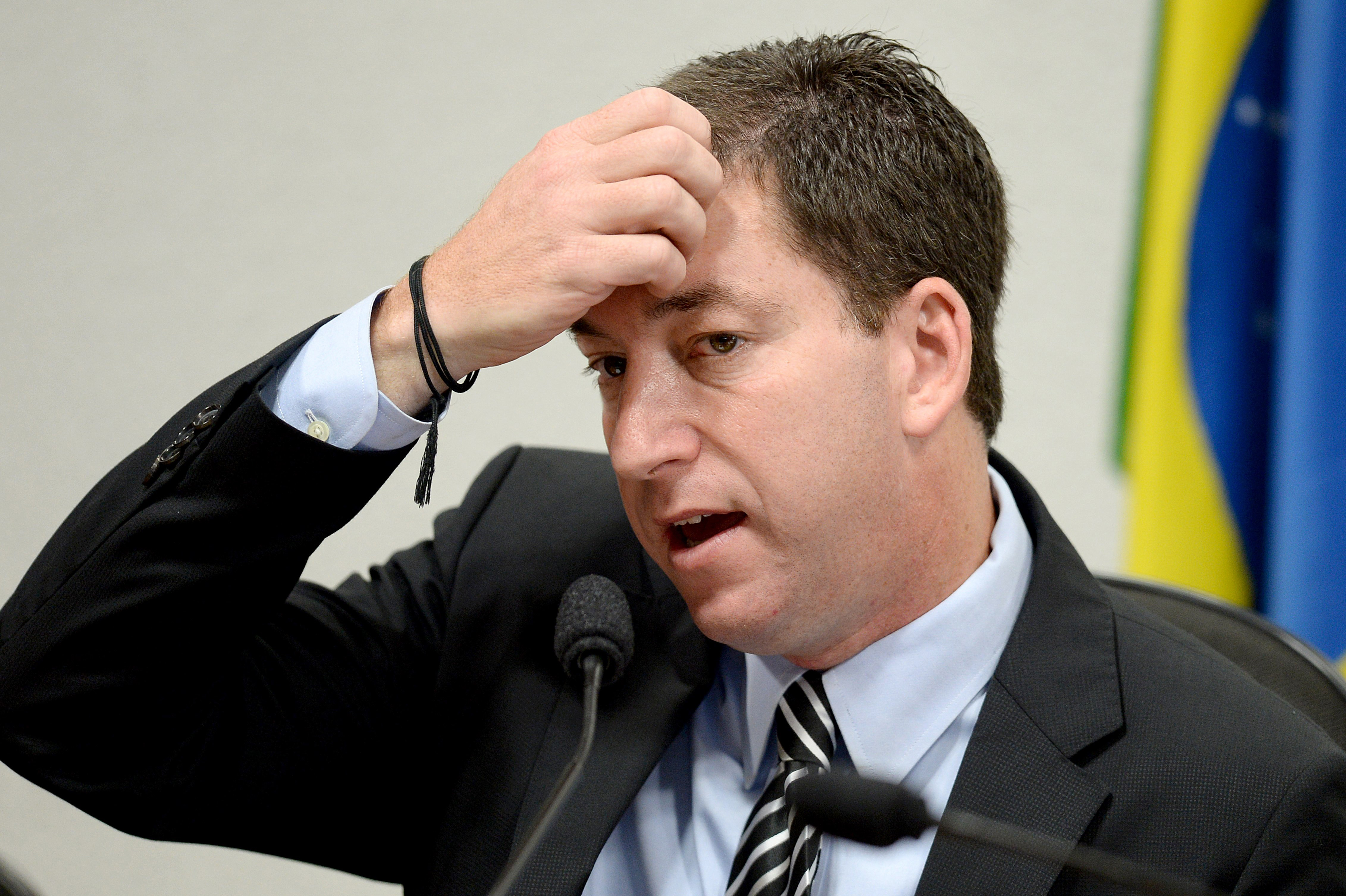
(Photo: The Guardian’s Brazil-based reporter Glenn Greenwald, who was among the first to reveal Washington’s vast electronic surveillance program, testifies before the investigative committee of the Brazilian Senate that examines charges of espionage by the United States in Brasilia on October 9, 2013. By Evaristo Sa, AFP/Getty Images.)

The Decline And Fall Of Christianism

.jpg

The fusion of politics and religion – most prominently the fusion of the evangelical movement and the Republican party – has been one of the most damaging developments in recent American history. It has made Republicanism not the creed of realists, pragmatists and compromise but of fundamentalists – on social and foreign policy, and even fiscal matters. And once maintaining inerrant doctrine becomes more important than, you know, governing a complicated, divided society, you end up with the extremism we saw in the debt ceiling crisis. When doctrine matters more than actually doing anything practical you end up with Cruz cray-cray. How does one disagree with a Taft:

Watching the Republican Party use the full faith and credit of the United States to try to roll back Obamacare, watching its members threaten not to raise the debt limit — which Warren Buffett rightly called a “political weapon of mass destruction” — to repeal a tax on medical devices, I so wanted to ask a similar question: “Have you no sense of responsibility? At long last, have you left no sense of responsibility?”

But there is some light on the horizon. The Catholic hierarchy has been knocked sideways by the emergence of Pope Francis and his eschewal of their fixation on homosexuality, contraception and abortion. That fixation – essentially a Christianist and de facto Republican alliance among Protestants and Catholic leaders – has now been rendered a far lower priority than, say, preaching the Gospel or serving the poor and the sick. Francis has also endorsed secularism as the proper modern context for religious faith:

I say that politics is the most important of the civil activities and has its own field of action, which is not that of religion. Political institutions are secular by definition and operate in independent spheres.

But perhaps a more powerful shift against Christianism is now taking place among evangelicals, especially the younger generation. Check out this terrific profile of the Southern Baptist Convention’s new public voice, Russell Moore. Money quote:

“We are involved in the political process, but we must always be wary of being co-opted by it,” Mr. Moore said in an interview in his Washington office, a short walk from Congress. “Christianity thrives when it is clearest about what distinguishes it from the outside culture.”

Moore, moreover, is not alone. At 42, he is more in touch with the next generation of evangelical Christians who do not share or support the harsh political agenda of their elders:

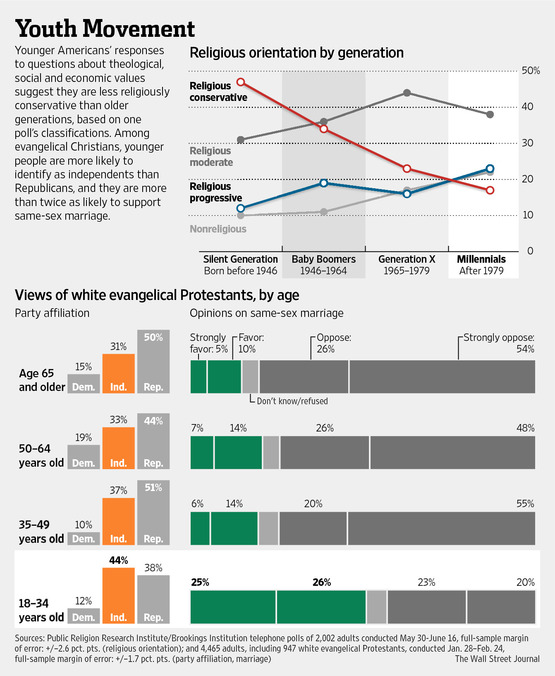
A March survey of nearly 1,000 white evangelicals by the Public Religion Research Institute, a nonpartisan polling organization, found half of those under 35 favored same-sex marriage, compared with just 15% of those over 65. The younger evangelicals were more likely to be independents over Republicans, while the opposite was true of their elders.

“The religious right was born on the theology of numerical expansion: the belief that conservative churches grow while liberal ones die. That conceit is gone now,” says David Key, director of Baptist Studies at Emory University’s Candler School of Theology.

And that conceit was very much behind the stance of a Catholic like Ross Douthat, who, despite his youth, sounds at times more like a theocon of the 1990s than a Millennial Catholic or evangelical. What Ross and others got wrong, I’d suggest, was being too utilitarian in a context where truth still matters. No one should support a church’s doctrine because it is more effective in the short run at putting bottoms on pews, as they P1-BN650_EVANGE_G_20131021185409say in England. A doctrine or moral position can only be defended as true, not useful. And the Christianist positions on gay people – they can be cured or should be required to be celibate their entire lives, without even masturbation – is so ludicrous as an example of what God would want for a small proportion of his Creation that it has rightly evaporated among the next generation.

Ditto the silly notion that contraception somehow violates the order of nature in ways so grave it must be outlawed. Evangelicals never had to deal with this transparent nonsense, but Catholics still labor under its staggering lack of persuasiveness. The idea that universal healthcare should be opposed because of a tiny detail about contraception coverage is as theologically ass-backwards as the notion that the church might shut down its services for abandoned children or the homeless for fear of employing one spouse of a married gay couple. Perhaps a strong dose of the old medicine could firm up the older generations – but clinging to arguments that no one under 40 finds even vaguely plausible, let alone humane, is not a long-term strategy for the health of Christianity.

The exception to this is abortion, where the moral arguments against it remain powerful and coherent, if impractical as a political project. So it’s no surprise that it’s that issue the younger generation have not shifted on. But the political program to criminalize it may not be as appealing to this generation as a prophetic call against abortion’s dehumanization of human life, and violence against the most vulnerable. To oppose contraception as well as abortion strikes many, rightly, as morally contemptible as a practical question.

And so the pendulum swings back. We do not yet know what a more apolitical, Gospel-centered, life-centered Christianity will achieve, how popular it may be, or whether it will lead to higher levels of commitment to God than at present. But I suspect even Pope Benedict finally realized it is the only way forward – hence his resignation in the face of his papacy’s near-total failure. What matters now and always is truth, not usefulness, faith, not politics. The next generation gets this.

Know hope.

(Chart: from the WSJ. Photo: A visitor inspects a light installation by British-born artist Anthony McCall during a preview of the exhibition “Anthoy McCall. Five Minutes of Pure Sculpture” at the Hamburger Bahnhof museum in Berlin on April 19, 2012. By Stephanie Pilick/AFP/Getty Images.)

Our Memory (And Selves) Will Belong To The Cloud

cloud1

In a review of Permanent Present Tense by Suzanne Corkin, Steven Shapin reflects on the life of Corkin’s famous patient, Henry Molaison, whose ability to form new memories was destroyed by a brain operation when he was 27. How Molaison’s sense of memory relates to our own:

In everyday life, we don’t much care whether what we remember is contained between our ears or resides on a piece of paper. We rely on our partners, colleagues, and friends to remind us of obligations; we stick Post-its on computers and fridge doors to cue us to buy milk or have the car serviced; our cell phones ping to announce coming appointments and remember all our phone numbers for us. Increasingly, our memories are distributed across a landscape populated by things and other people, and, in that respect, it’s possible to see Molaison as standing merely at a pathological extreme of memory’s normalcy: after the operation, all of Molaison’s declarative memory lived outside his own body, while only some of ours does.

Shapin imagines a future in which “technology will banish forgetting”:

The Quantified Self movement encourages everyone to follow Silicon Valley utopians in forming a personal digital register of every item of food consumed and every measurable bodily state. A camera worn on the neck of a “lifelogger” records everything seen, and a digital recorder captures everything heard. It’s all there—nothing filtered, nothing lost, nothing distorted by the messiness of internal memory. Wearable computers like Google Glass hold out the promise of still more powerful modes of self-archiving. We shall be as gods, and about ourselves we shall know all things. Technology will banish forgetting, and the stores of undeformed memory will live forever in the cloud, retrievable at will. The name for our remaining problems will be “search”: all we’ll have to do is remember what we’re looking for, master a few tricks for finding it, and, finally, offload the initiation of search onto external prompts that will remind us to remember.

Last Saturday I spent a relatively harmless and hugely enjoyable few hours with some friends and the conversation got a little 3 am college dormy. My friend elaborated an epiphany about eternity.

As the years go by, and our lives are digitally recorded in more and more ways, he argued, there will be digital versions of ourselves – from selfies to web trails, from precise consumer preferences to social networks, from thousands of emails and texts to videos and Facebook likes – that will have more data embedded in them than even the most industrious biographer could have used on the most famous person in the past. We will also come, inevitably, to refer to these digital summaries of ourselves, to remind us of our past, to get digital proof of previous loves or ideas or events or friends. We will therefore need to remember less and less, even as the imprint we make on the world becomes more and more indelible and eternal. We can just look them up, the way we reach for Google when we cannot remember the answer to a trivia question or need to resolve an empirical debate.

Writing a blog every day for thirteen years and counting brings that home rather firmly. So many feelings, thoughts, asides, facts, wishes, errors, home-runs, and massive fails are all there for anyone to see and for me to flinch from. But just as surely, I do not need to remember much of my life any more. It is remembered for me and exists in something we call the cloud. The cloud is eternal. It reaches into the depths of the past and makes it instantly accessible to the present and to any non-apocalyptic future.

The concept of a personal trail that makes a life eternal isn’t new, of course. I think of Emily Dickinson’s vast trove of scribbles or Pascal’s unfinished scraps of paper we now know as the Pensees. But in the past, only a few managed to achieve anything like the record we are currently assembling of our own lives every day. For most, there was the Parish register or, if you were really lucky, a mention in government or church records. A gravestone here; a family genealogist there. Far, far more human beings ended their lives with no lasting memory of them remaining among those still living. We were almost all unknown soldiers once.

Now, we are all so known. And the key aspect of the cloud, it seems to me, is not just its powerful storage, but its instant accessibility to anyone with an Internet connection. Just like the seventeenth century poems we publish afresh here on the Dish alongside the written-a-few-minutes-ago blog-posts, the old and the new exist as equals, because they will increasingly become equally available to us. And so time itself disappears as an experience online. It truly is an eternal now, that connects past and future to a perpetual present.

And in some ways, our personal digital records are very much the summation of ourselves. Not our physical, intimate, human selves – the selves we eat with and run with and fall in love with – but our abstracted selves, the conglomeration of every detail, feeling, idea, thought, impulse, and friend that tells the story of me. Long after I am dead, will that not be the most accessible incarnation of me – alongside all the published words I have written in part to live past my physical expiration date? Will I not continue to exist in some form that is available to all of humankind for ever?

Ambitious types in the past performed all sorts of amazing and horrifying things to become immortal, to leave a legacy, to be remembered by history. But increasingly, that form of immortality is available to to more and more people in principle. In the future the scale of the recording – the Big Data Of Humanity – will only increase and deepen. In practice, of course, our lives will exist only in so far as others care to find us. And that is how it has always been. But now, more and more of us will never fully die. We will always be available for rebooting.

Is it a purely etymological accident that we call this collective memory a cloud?

Was it also purely by accident that for aeons, humankind looked up past the clouds to see Heaven?

The Beverly Hills Divorcee Saint

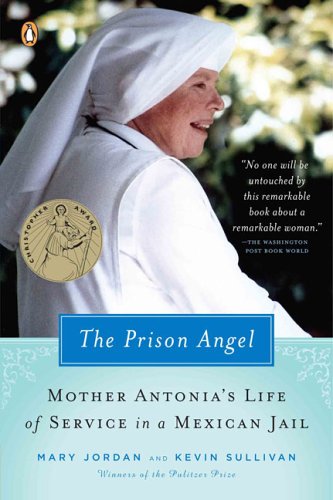
Mary Clarke was raised by a very wealthy father in Beverly Hills, whose business she ran for a while after his death. She married twice and divorced twice, with eight children. Always interested in charity work, Clarke, then Brenner, started to help a priest minister to the hardcore inmates of Tijuana’s La Mesa prison. It changed her life. From her obituary this week:

Ms. Brenner began providing for inmates’ basic needs, giving them aspirin, blankets, toiletries and prescription eyeglasses. She sang in worship services. She received a prison contract to sell soda to prisoners and used the proceeds to bail out low-level offenders. If a prisoner died, of illness or in a gang fight, she prepared him for burial. Inmates told how Mother Antonia once walked into the middle of a prison riot while bullets flew and tear gas filled the air. When the inmates saw her, fearless in her habit, the fighting stopped. She never seemed to stop smiling.

In due course, she decided to move into the prison itself, in a 10′ by 10′ cell in the women’s section:

“It’s different to live among people than it is to visit them,” she told The Washington Post in 2002. “I have to be here with them in the middle of the night in case someone is stabbed, in case someone has an appendix [attack], in case someone dies.”

What makes her ministry even more remarkable is that as a twice-divorced woman, the church hierarchy could never accept her into a religious order. So she simply, like Saint Francis, invented her own. She made her own nun’s habit, and simply did what she believed was God’s work. In the end, the hierarchy – just as with Saint Francis – relented and blessed her new order, The Eudist Servants of the Eleventh Hour. If you are a mature woman and are interested in their work, check out this page. The criterion for joining them is simple:

Members must, in their hearts and in their lives, bear the pain of the poor, the imprisoned, the sick, the rejected, the forgotten and the abandoned children of God.

We have been used to reading such terrible things about religion – from the fanatics who murdered so many on that September morning to the death threats against young girls seeking an education and the burning of schools and massacring of sectarian enemies. No one should deny the unique power of religion turned into an instrument of earthly power and violence. But equally, the countless moments of mercy, tenderness, self-sacrifice and courage that occur every day and that spring from the same religious impulse must always be considered alongside the bad. It was a religious vision that propelled Mary Clarke and a priest called Anthony who inspired her to call herself Sister and then Mother Antonia:

She has said that in 1969 she had a dream that she was a prisoner at Calvary and about to be executed, when Jesus appeared to her and offered to take her place. She refused his offer, touched him on the cheek, and told him she would never leave him, no matter what happens to her.

No, Christopher, religion does not poison everything. It can be used in a poisonous way, but it can also be the most powerful force for human 51X2YX9WYSLsalvation – in the present moment – that we have at our disposal.

What I love about Mother Antonia, above all, however, is her demonstration of the power of women in creating a future for Christianity. She refused to let rules about such things as divorce prevent her from ministering to those she felt need ministry. She refused to let her gender limit her in any way. She – not the male hierarchy – is the church. And she reminds us of the appalling, morally crippling, un-Christian subjugation of women in the Catholic Church.

It must end as a matter or moral urgency, and when it does, the power of women as spiritual leaders and healers may shock and surprise many but elevate us all. In the words of Mother Antonia, from inside a prison where rapists, murderers, gang-lords and hit-men resided:

Pleasure depends on where you are, who you are with, what you are eating. Happiness is different. Happiness does not depend on where you are. I live in prison. And I have not had a day of depression in 25 years. I have been upset, angry. I have been sad. But never depressed. I have a reason for my being.

(Photograph: the biography of Mother Antonia, The Prison Angel, which can be bought here.)

Go Big, Mr President

President Obama Delivers A Statement

Tomasky is highly skeptical that new negotations over the budget can result in any different outcome next time:

The position of the chaos caucus is going to be: Okay Obama, you give us entitlement cuts, and we’ll give you…uh, what? No revenues. They’re inflexible on that point. No programs (outside maybe of defense, and even that’s a maybe) funded at levels above sequestration. So actually, they’ll give nothing.

Beutler’s view:

[T]here’s a high likelihood that these negotiations will end the same way as all the others that preceded them did: no agreement. An agreement is only compatible with the GOP’s anti-tax absolutism if Democrats drop their demand for tax parity and agree to pay down sequestration with other spending cuts. Possible, but unlikely.

One way out of this would be for Obama to go big, to propose in these new talks a Bowles-Simpson-style deal in which major tax reform and entitlement cuts are exchanged for much higher revenues. If the GOP were a genuinely conservative party, actually interested in long-term government solvency and reform within our current system of government, they would jump at this. They could claim to have reduced tax rates, even if the net result were higher taxes. And the brutal fact is that, given simply our demographics, higher taxes are going to be necessary if we are to avoid gutting our commitments to the seniors of tomorrow. They could concede that and climb down from this impossibly long limb they have constructed for themselves.

I’ve long favored a Grand Bargain, but recognize its huge political liabilities without the leadership of both parties genuinely wanting to get there. But for Obama, it seems to me, re-stating such a possibility and embracing it more than he has ever done, is a win-win.

He may alienate Democrats – but after his cold-steel resistance to Tea Party blackmail, he has surely won some chips to his left. With independents and moderate Republicans, now reeling from the last month’s brinksmanship, it would signal centrist leadership that could bolster his political standing, even if the GOP turns him down. If his political standing improves, then the chances for a Democratic wave in 2014 increase.

But it means taking a real risk now. And this president has shown in his second term a much greater propensity to risk than in his first.

Think of the boldness of his response to Assad’s chemical weapons attack and agility in roping in Putin to deal with it (so far successfully). Think of his steadfast refusal to budge right up against the threat of default. He has earned new cred and could bolster it some more with a new, bold reach for the political center he can still represent. I believe it would be the most politically effective domestic policy agenda the president can plausibly move forward, if the GOP maintains its rigidity against immigration reform past the next Congressional elections. It would also help bring back the core coalition that gave him such a huge victory in 2008. It would mean the president has not given up on the long-term fiscal health of the country. And it is vital that no president gives up on that, especially one elected on the principle of hope as well as change.

Resignation to gridlock is perfectly rational. But changing that dynamic is never impossible. It’s what we elect presidents to do. And this one still could, if he swiftly exploits the opening this near-catastrophe has presented to him.

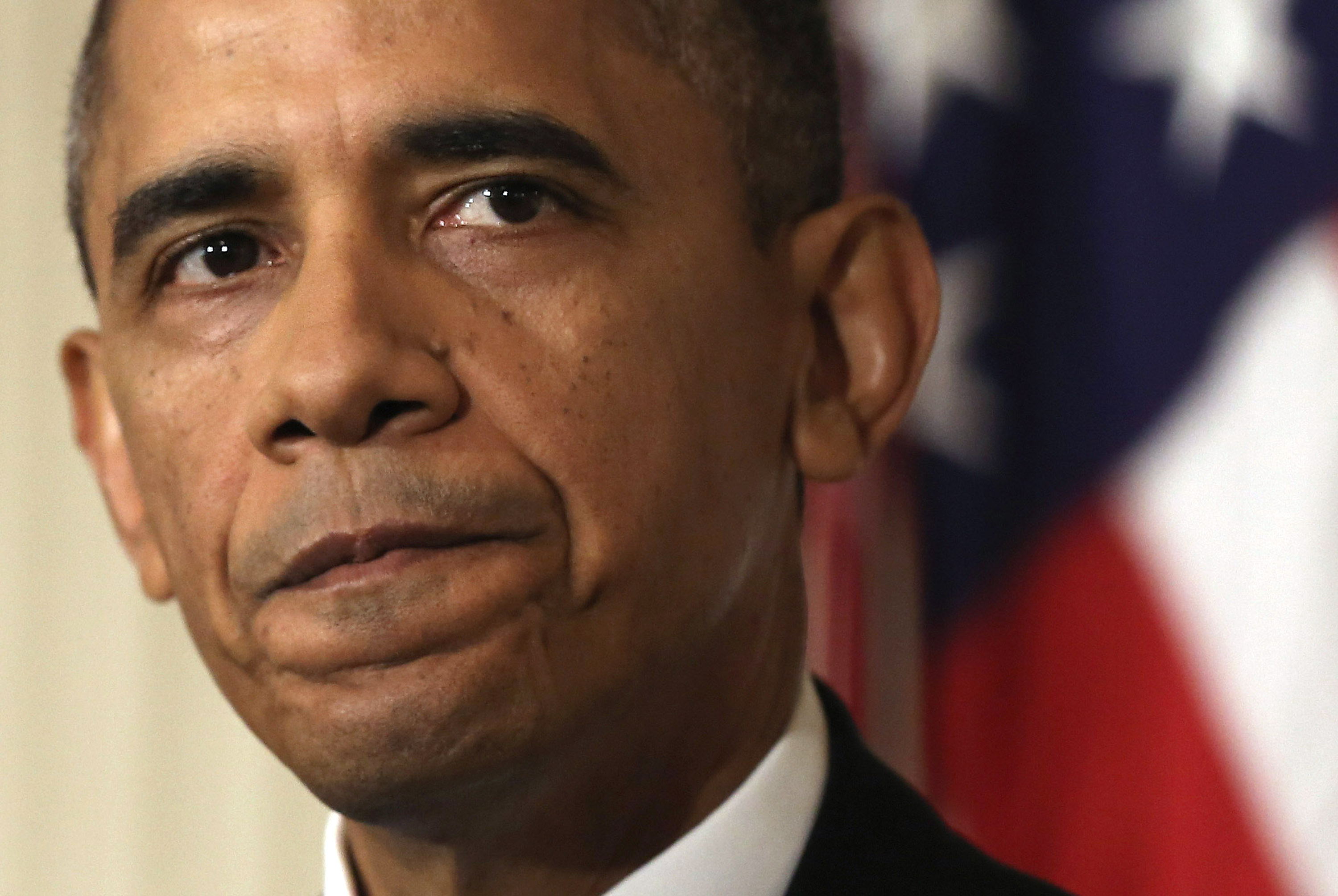
(Photo: U.S. President Barack Obama makes a statement at the State Dining Room of the White House October 17, 2013 in Washington, DC. Obama said the American people are completely fed up with Washington and called on cooperation to work things out. By Alex Wong/Getty Images.)

The Sabotage Of American Democracy

Negotiations Continue On Capitol Hill One Day Before Debt Limit Deadline

I suppose I shouldn’t in any way be shocked by the extraordinarily vehement attitude of Tea Party Republicans after they nearly destroyed the US and global economy. And yet I am somewhat grateful I can still be shocked by a column on Fox News’ website. Here’s how it starts:

American taxpayers have once again been trampled by establishment Republicans – a thundering herd of chicken-hearted Republicans in Name Only (RINOs) galloping to the Left. The debt ceiling deal struck between Senate Majority Leader Harry Reid and Senate Minority Leader Mitch McConnell is a victory for President Obama and Democrats. ObamaCare is still the law of the land. The government is still spending money it does not have. And thousands of government workers just got a two-week vacation courtesy of the taxpayers.

Let’s take the last three disappointments/wishes from the non-chicken-hearted.

“ObamaCare is still the law of the land.”

Yes, it is. But that’s because the president who proposed it and the Senate that voted for it were re-elected in 2012. That’s how our system works. Is it possible Todd Starnes doesn’t know this? No, it isn’t. So it is fair, I think, to infer that he believes that because his party regards this centrist, private-sector-dependent reform as an “abomination”, the federal government should be shut down permanently and the country’s credit destroyed, prompting a global depression. And that’s why this episode has been so disturbing. It is not that the GOP doesn’t have a perfect right to vote against Obamacare a zillion times; it’s that they responded to their electoral loss in 2012 by threatening to destroy the entire polity and economy. That is not a tactic or a strategy; it’s a declaration of war against the system of American government.

“The government is still spending money it does not have.”

Yes, it is. But almost all the current debt is a function of massive tax cuts in 2001 that were never paid for (by the GOP), two bank-breaking wars that were never paid for (by the GOP), a big new entitlement for seniors, Medicare D, that was never paid for (by the GOP), and the usgs_line.phprevenue sinkhole provided by the worst recession since the 1930s (begun before Obama took office.). The scale of the debt thus acquired is vast. I think Starnes is absolutely right to make its reduction a priority. The question is a pragmatic one – how do we cut entitlement and defense spending along with raising revenues to get there?

One side is prepared to consider cuts in entitlement programs it cherishes; the other side is resolutely opposed to any net revenue increases at all. One side could begin to negotiate a debt deal that was 2-1 spending cuts to tax hikes; the other side refuses to negotiate even a 10-1 deal. What, for example, does the GOP offer the Democrats on fiscal matters right now? I see nothing. If one side is prepared to give nothing, no deal can be done. And if the Tea Party is right about the urgency of cutting the debt, no deal is very bad fiscal news.

And part of the pragmatic solution is recognizing that immediately ending the government’s current deficit by spending cuts alone would so vitiate economic growth that it would be counter-productive. Starnes is therefore not actually serious about the debt, and neither is the Tea Party.

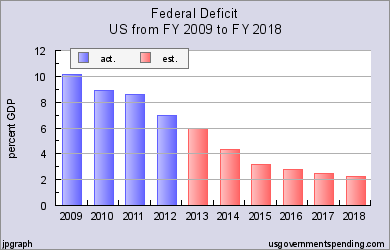
Their proposal for an immediate balancing of the budget would deepen the debt; and their absolute refusal to countenance any net new revenues to the federal government means they will never get an actual compromise that would actually cut the debt in a meaningful long-term way. In other words, their absolutism on taxes essentially destroys their debt-reduction position … as long as we remain in a constitutional democracy with two parties trying to represent all the people. If the president were saying that he does not care about the debt at all, it would be one thing. But, this president, on current trends, will have brought the deficit down from more than 10 percent of GDP when he took office to around 3 percent when he leaves, during a still tepid recovery (see graph above). What more can these people demand – except, of course, his resignation?

And again, that’s why this episode should not be regarded as anything but a deeply serious political and constitutional crisis. One party is refusing to accept that the other one exists, that not all of America agrees with them, and that democratic norms require compromise in that context.

“Thousands of government workers just got a two-week vacation courtesy of the taxpayers.”

This demonization of government itself, and generalized slur against all those who work for it (and who are also tax-payers) is not just an insult added to injury.

It is another attack on the entire system. As we found out in the fiasco, even Ted Cruz likes government sometimes. For him, it is about keeping monuments open. For other Republicans, it is about scientific research.  And the broader point is that government is the point of politics. There has to be a governing authority that commands universal assent in any functioning democracy. Yes, it should be solvent and run surpluses in peacetime. But it must exist. And conservatism in its proper sense is about governing firmly, securing the rule of law, and sustaining the legitimacy of the democratic system.

What the Tea Party represents, in stark contrast to conservatism, is a radical attack on the very framework of our governing system. It is not right or left within our democratic system. It is a form of secession from it and a de facto abandonment of the notion of one country under one rule of law. It is about sabotage rather than opposition. It is bad enough when one party will seek to sabotage the law of the land – by attempting to rally the public to spurn the new healthcare law, in the hopes of causing it to collapse. But when the dominant faction of one party is bent on sabotaging our democracy, it must not simply be tolerated or appeased the way John Boehner shamefully did. It must be defeated. Anything less is a form of appeasement of forces and ideas that are truly antithetical to the democratic way of life and to constitutional governance.

Yes, in my view, the situation is that grim. If the Republican right’s fanaticism still blinds them to the error of their ways after they nearly destroyed the global economy (and brutally damaged the American one), it becomes clear that only a total collapse of the American government and economy could truly teach them the futility of their deluded aspirations. The rest of us cannot and must not tolerate that. We must draw a line. That line, for those who still believe in the regular order of our democracy, is November 2014.

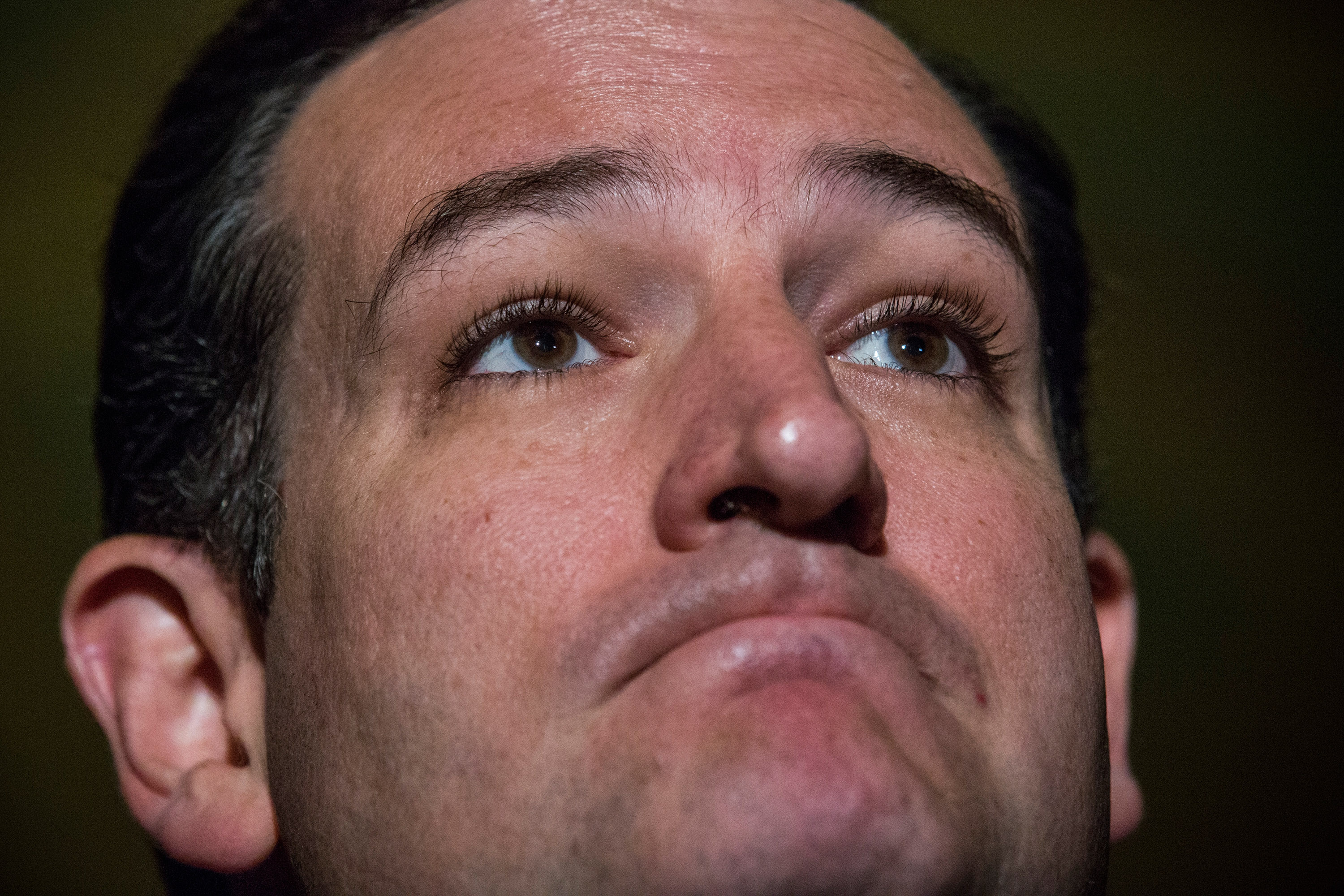
(Photo: U.S. Sen. Ted Cruz (R-TX) answers questions from the media after meeting with Republican senators regarding a bipartisan solution for the pending budget and debt limit impasse at the U.S. Capitol October 16, 2013 in Washington, DC. By Andrew Burton/Getty.)

The Tea Party As A Religion

Mitt Romney Attends Tea Party Rally In New Hampshire

Dishheads know I believe that you cannot understand the current GOP without also grasping how bewildered so many people are by the dizzying onset of modernity. The 21st Century has brought Islamist war to America, the worst recession since the 1930s, a debt-ridden federal government, a majority-minority future, gay marriage, universal healthcare and legal weed. If you were still seething from the eruption of the 1960s, and thought that Reagan had ended all that, then the resilience of a pluralistic, multi-racial, fast-miscegenating, post-gay America, whose president looks like the future, not the past, you would indeed, at this point, be in a world-class, meshugganah, cultural panic.

When you add in the fact that the American dream stopped working for most working-class folks at some point in the mid 1970s, and when you see the national debt soaring from the Reagan years onward, made much worse by the Bush-Cheney years, and then exploded by the recession Bush bequeathed, you have a combustible mixture. It’s very easy to lump all this together into a paranoid fantasy of an American apocalypse that must somehow be stopped at all cost. In trying to understand the far-right mindset – which accounts for around a quarter of the country – I think you have to zoom out and see all of this in context.

Many of us found in Barack Obama a very post-ideological president, a pragmatist, a Christian, and a traditional family man, and naively NEGATIVE# josephm 210524--SLUG-ME-VA-AG-1-DATE--11/03/2009--LOCAbelieved that he could both repair the enormous damage done by the Bush-Cheney administration and simultaneously reach out to the red states as well. I refuse to say the failure is his. Because he tried. For years, he was lambasted by the left for being far too accommodating, far too reasonable, aloof, not scrappy enough, weak … you know the drill by now. In fact, he was just trying to bring as much of the country along as he could in tackling the huge recession and massive debt he inherited at one and the same time, and in unwinding the 9/11 emergency, and in ending two wars and the morally and legally crippling legacy of torture (about which the GOP is simply in rigid denial).

Obama got zero votes from House Republicans for a desperately needed stimulus in his first weeks in office. So I cannot believe he could have maintained any sort of detente with the Republican right, dominated by the legacy of Palin, rather than McCain. But the healthcare reform clearly ended any sort of possibility of coexistence – and the cold civil war took off again. The first black president could, perhaps, clean up some of the mess of his predecessor, but as soon as he moved on an actual substantive change that he wanted and campaigned on, he was deemed illegitimate. Even though that change was, by any standards, a moderate one, catering to private interests, such as drug and insurance companies; even though it had no public option; even though its outline was the same as the GOP’s 2012 nominee’s in GOP Candidates Rick Perry And Michelle Bachmann Appear At Columbia, SC Veterans Day ParadeMassachusetts, this inching toward a more liberal America was the casus belli. It still is – which is why it looms so large for the Republican right in ways that can easily befuddle the rest of us.

But it is emphatically not the real reason for the revolt. It is the symptom, not the cause. My rule of thumb is pretty simple: whenever you hear a quote about Obamacare, it’s more illuminating to remove the “care” part. And Obama is a symbol of change people cannot understand, are frightened by, and seek refuge from.

That desperate need for certainty and security is what I focused on in my book about all this, The Conservative Soul. What the understandably beleaguered citizens of this new modern order want is a pristine variety of America that feels like the one they grew up in. They want truths that ring without any timbre of doubt. They want root-and-branch reform – to the days of the American Revolution. And they want all of this as a pre-packaged ideology, preferably aligned with re-written American history, and reiterated as a theater of comfort and nostalgia. They want their presidents white and their budget balanced now. That balancing it now would tip the whole world into a second depression sounds like elite cant to them; that America is, as a matter of fact, a coffee-colored country – and stronger for it – does not remove their desire for it not to be so; indeed it intensifies their futile effort to stop immigration reform. And given the apocalyptic nature of their view of what is going on, it is only natural that they would seek a totalist, radical, revolutionary halt to all of it, even if it creates economic chaos, even if it destroys millions of jobs, even though it keeps millions in immigration limbo, even if it means an unprecedented default on the debt.

This is a religion – but a particularly modern, extreme and unthinking fundamentalist religion. And such a form of religion is the antithesis of the mainline Protestantism that once dominated the Republican party as well, to a lesser extent, the Democratic party.

It also brooks no distinction between religion and politics, seeing them as fused in the same cultural and religious battle. Much of the GOP hails from that new purist, apocalyptic sect right now – and certainly no one else is attacking that kind of religious organization. But it will do to institutional political parties what entrepreneurial fundamentalism does to mainline churches: its appeal to absolute truth, total rectitude and simplicity of worldview instantly trumps tradition, reason, moderation, compromise.

Francis Wilkinson has studied the scholarship of Roger Finke and Rodney Stark, authors of The Churching of America 1776-1990. He wrote a passage yesterday that resonated with me:

An important thesis of the book is that as religious organizations grow powerful and complacent, and their adherents do likewise, they make themselves vulnerable to challenges from upstart sects that “impose significant costs in terms of sacrifice and even stigma upon their members.” For insurgent groups, fervor and discipline are their own rewards.

Right now, the Republican Party is an object of contempt to many on the far right, whose adamant convictions threaten what they perceive as Republican complacency. The Tea Party is akin to a rowdy evangelical storefront beckoning down the road from the staid Episcopal cathedral. Writing of insurgent congregations, Finke and Stark said that “sectarian members are either in or out; they must follow the demands of the group or withdraw. The ‘seductive middle ground’ is lost.”

In other words, this is not just a cold civil war. It is also a religious war – between fundamentalism and faith, between totalism and tradition, between certainty and reasoned doubt. It may need to burn itself out – with all the social and economic and human damage that entails. Or it can be defeated, as Lincoln reluctantly did to his fanatical enemies, or absorbed and coopted, as Elizabeth I did hers over decades. But it will take time. The question is what will be left of America once it subsides, and how great a cost it will have imposed.

(Photos: from a Tea Party rally, Ken Cucinnelli, far right candidate for governor of Virginia, and Michele Bachmann, apocalyptic prophet, by Getty Images.)