The Rebirth Of Catholicism

K43692CARAVAG 1

I am, I must confess, still reeling from Pope Francis’ new, lengthy and remarkable interview. I can barely believe that these words – so redolent of Jesus’ – are coming from the new Bishop of Rome, after so long an absence. Although the Pope is unfailingly respectful of his predecessor, let no one doubt the sharpness of Francis’ turn away from the dead end of Benedict. His message is as different as the context. Where Benedict, draped in ornate vestments, spoke from the grand edifice of the Vatican, Francis is in the same simple hostel in which he was ensconced during the Papal Conclave. Why?

Community. I was always looking for a community. I did not see myself as a priest on my own. I need a community. And you can tell this by the fact that I am here in Santa Marta. At the time of the conclave I lived in Room 207. (The rooms were assigned by drawing lots.) This room where we are now was a guest room. I chose to live here, in Room 201, because when I took possession of the papal apartment, inside myself I distinctly heard a ‘no.’ The papal apartment in the Apostolic Palace is not luxurious. It is old, tastefully decorated and large, but not luxurious. But in the end it is like an inverted funnel. It is big and spacious, but the entrance is really tight. People can come only in dribs and drabs, and I cannot live without people. I need to live my life with others.

An inverted funnel, which he now wants open to the world and to his fellow human beings. And there is throughout a premise of humility, doubt, mystery, openness to new things. How many times have you heard a Pope be as self-critical in retrospect as this:

My authoritarian and quick manner of making decisions led me to have serious problems and to be accused of being ultraconservative. I lived a time of great interior crisis when I was in Cordova. To be sure, I have never been like Blessed Imelda [a goody-goody], but I have never been a right-winger. It was my authoritarian way of making decisions that created problems.

And when at the outset of the interviews he is asked simply who he is, he replies

I am a sinner. This is the most accurate definition. It is not a figure of speech, a literary genre. I am a sinner.

He speaks of Carravagio’s painting ‘The Calling of St. Matthew” (see above):

That finger of Jesus, pointing at Matthew. That’s me. I feel like him. Like Matthew. It is the gesture of Matthew that strikes me: he holds on to his money as if to say, ‘No, not me! No, this money is mine.’ Here, this is me, a sinner on whom the Lord has turned his gaze.

But, for me, the most powerful argument Francis makes is about what Christianity is. It is not, in the end, about certainty. It is about faith as alive and open in doubt:

In this quest to seek and find God in all things there is still an area of uncertainty. There must be. If a person says that he met God with total certainty and is not touched by a margin of uncertainty, then this is not good. For me, this is an important key. If one has the answers to all the questions—that is the proof that God is not with him. It means that he is a false prophet using religion for himself. The great leaders of the people of God, like Moses, have always left room for doubt. You must leave room for the Lord, not for our certainties; we must be humble. Uncertainty is in every true discernment that is open to finding confirmation in spiritual consolation.

Our life is not given to us like an opera libretto, in which all is written down; but it means going, walking, doing, searching, seeing … We must enter into the adventure of the quest for meeting God; we must let God search and encounter us.

This profound mystery – that as soon as we claim certainty about the nature of God, we have lost the meaning of the nature of God – is at the heart of a Christian’s openness to the divine. Now think of this in contrast to the unrelenting fixation of John Paul II and Benedict XVI on enforcing total uniformity in even the tiniest details of sometimes esoteric doctrine, to banish debate entirely, to assert with more and more rigidity the impermissibility of dissent or doubt among the people of God. In the end, that rigidity is a neurosis, not a living faith. And to those who argue that a more open view of faith-in-doubt is tantamount to anarchy, to relativism, even to nihilism, Francis has a simple answer. No, it is not necessarily about these things, although they remain dangers. What makes all this work is what the Jesuits have long called “discernment.”

The wisdom of discernment redeems the necessary ambiguity of life and helps us find the most appropriate means, which do not always coincide with what looks great and strong. The Society of Jesus can be described only in narrative form. Only in narrative form do you discern, not in a philosophical or theological explanation, which allows you rather to discuss … The mystical dimension of discernment never defines its edges and does not complete the thought. The Jesuit must be a person whose thought is incomplete, in the sense of open-ended thinking.

Faith is not in the head; it is in the soul and heart and body. It is our acting in the world, not our debating the finer parts of infallible doctrine in an “inverted funnel”. And look how Francis uses the term “infallible.” He uses it not to refer to the papacy, but to the people of God, you and me, and not in terms of possession of the truth, but rather the open search for it:

The church is the people of God on the journey through history, with joys and sorrows. Thinking with the church, therefore, is my way of being a part of this people. And all the faithful, considered as a whole, are infallible in matters of belief, and the people display this infallibilitas in credendo, this infallibility in believing, through a supernatural sense of the faith of all the people walking together. This is what I understand today as the ‘thinking with the church’ of which St. Ignatius speaks. When the dialogue among the people and the bishops and the pope goes down this road and is genuine, then it is assisted by the Holy Spirit. So this thinking with the church does not concern theologians only.

This is the core message of the Second Vatican Council that John Paul II and Benedict XVI did their utmost to turn back in favor of papal authority. The hierarchy is not the whole church, just a part of it, in community with all the faithful. And he uses the example of the Blessed Virgin to buttress his point:

This is how it is with Mary: If you want to know who she is, you ask theologians; if you want to know how to love her, you have to ask the people. In turn, Mary loved Jesus with the heart of the people, as we read in the Magnificat. We should not even think, therefore, that ‘thinking with the church’ means only thinking with the hierarchy of the church.

And how we live is the only true expression of what we believe. Here is the rebuke to the theocons and their project:

If the Christian is a restorationist, a legalist, if he wants everything clear and safe, then he will find nothing. Tradition and memory of the past must help us to have the courage to open up new areas to God. Those who today always look for disciplinarian solutions, those who long for an exaggerated doctrinal ‘security,’ those who stubbornly try to recover a past that no longer exists­—they have a static and inward-directed view of things. In this way, faith becomes an ideology among other ideologies.

And where is real faith?

I see the holiness in the patience of the people of God: a woman who is raising children, a man who works to bring home the bread, the sick, the elderly priests who have so many wounds but have a smile on their faces because they served the Lord, the sisters who work hard and live a hidden sanctity. This is for me the common sanctity. I often associate sanctity with patience: not only patience as hypomoné [the New Testament Greek word], taking charge of the events and circumstances of life, but also as a constancy in going forward, day by day. This is the sanctity of the militant church also mentioned by St. Ignatius. This was the sanctity of my parents: my dad, my mom, my grandmother Rosa who loved ​​me so much. In my breviary I have the last will of my grandmother Rosa, and I read it often. For me it is like a prayer. She is a saint who has suffered so much, also spiritually, and yet always went forward with courage.

My own beloved grandmother was a saint of a similar kind. I learned so much about Jesus from simply observing her. She lived a hard life, the seventh of thirteen children raising four of her own with no formal education and earning money cleaning the houses of priests. I can never forget her reaching down on the sidewalks to pick up cigarette butts and teasing the last tobacco out of them to make a new one for her disabled husband. I remember her simple warmth and love for me. I recall watching her get lost in the Rosary at Mass – and realizing that however much education I ever got – more than she could comprehend – none of it could give me the faith she had and lived so effortlessly.

I hear her faith in the words of this new Pope: a faith of simplicity and openness, a faith that caused her not to live in the past or future, but now. As Francis says:

There is a temptation to seek God in the past or in a possible future. God is certainly in the past because we can see the footprints. And God is also in the future as a promise. But the ‘concrete’ God, so to speak, is today … We must not focus on occupying the spaces where power is exercised, but rather on starting long-run historical processes. We must initiate processes rather than occupy spaces…  Our life is not given to us like an opera libretto, in which all is written down; but it means going, walking, doing, searching, seeing…. We must enter into the adventure of the quest for meeting God; we must let God search and encounter us. Because God is first; God is always first and makes the first move.

And it seems that God has again made His move in a world that desperately needs Him; and His new servant, his new prophet, is Francis.
McCain First, Country Last

US-SYRIA-CONFLICT-CONGRESS

The man who crashed in the 2000 primaries, the man who acquiesced to CIA torture (the same methods once used on him) in 2006, the man who claimed to put country first in 2008 and then impetuously picked an unstable half-wit as a veep candidate, the man who wanted to launch a war with Russia over Georgia, and the man who has spent the last five years actively trying to undermine the president’s foreign policy when visiting Israel … well, we should expect stupid amateurish displays of ego like an op-ed in the wrong Pravda.

Yes, it was the wrong Pravda, one founded online in 1999 and not connected to the other Pravda founded in 1912. But McCain is not exactly known for his precision, is he? And at a moment when the US needs to keep relations with Russia stable – because Russia is critical to controlling and destroying Assad’s chemical weapons – McCain lobs a rhetorical hand-grenade at the Kremlin.

What on earth is the point of it? One assumes a riposte to Putin’s op-ed in the New York Times (unlike McCain, Putin didn’t mistakenly put his op-ed on Newsmax). And then you read it and you see the fathomless parochialism that has always clung to this vain, impetuous grandstander. He actually claims he has long been pro-Russia, something so transparently false it is perhaps appropriate it appears in an online outlet with the name of a paper, “Truth”, that became a synonym for its opposite. McCain has been itching for a war with Russia ever since the Cold War ended. But then he itches for war three times before lunch most days.

But this pointlessly provocative op-ed is also obviously serving a purpose. McCain wants the US to go to war in Syria in order to achieve regime change. For him, remember, Iraq was a huge success. Now that he has been stymied in this effort – stymied by the president and the Congress and a huge majority of the American people, 79 percent of whom back the US-Russia agreement – he has decided to try and sabotage it. Think for a minute how important it is right now to retain decent relations with Putin and Lavrov in the attempt to secure and destroy Assad’s chemical weapons. Now read these words:

How has [Putin] strengthened Russia’s international stature? By allying Russia with some of the world’s most offensive and threatening tyrannies. By supporting a Syrian regime that is murdering tens of thousands of its own people to remain in power and by blocking the United Nations from even condemning its atrocities. By refusing to consider the massacre of innocents, the plight of millions of refugees, the growing prospect of a conflagration that engulfs other countries in its flames an appropriate subject for the world’s attention. He is not enhancing Russia’s global reputation. He is destroying it. He has made her a friend to tyrants and an enemy to the oppressed, and untrusted by nations that seek to build a safer, more peaceful and prosperous world.

These sentences could have been written a month ago. There is truth to them – but as a matter of simple pragmatic judgment in this tricky period, could any such rant be more reckless? Directly and personally impugning the president of Russia in a Russian media outlet is the act of an impulsive ego-maniac who is perfectly willing to sabotage his own country’s recent deal with Putin to get some publicity for himself.

McCain First, Country Last, War Forever. That’s his motto. After the last ten years, it isn’t just repellent. It’s recklessly dangerous.

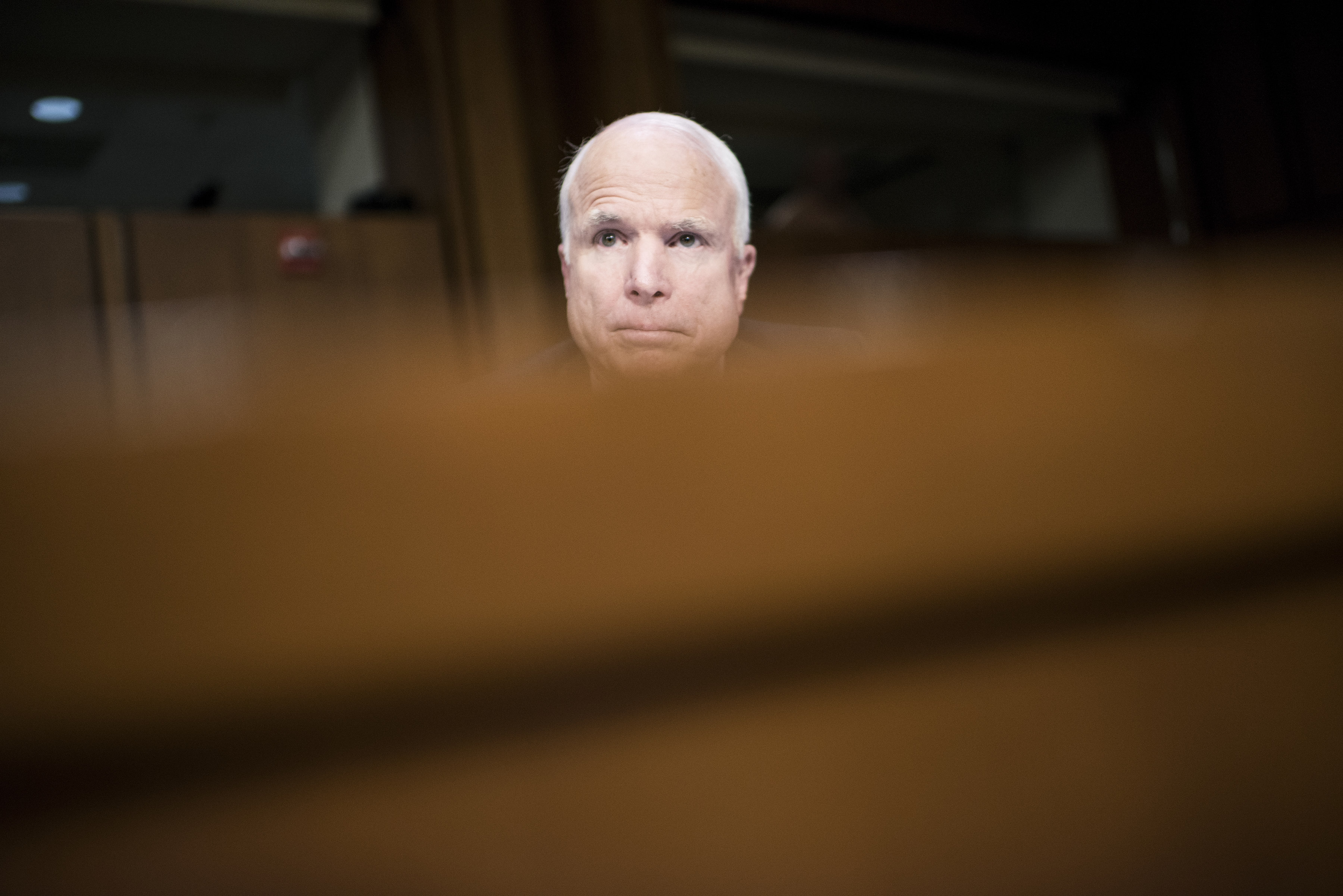
(Photo: Senator John McCain listens during a hearing of the Senate Foreign Relations Committee on Capitol Hill September 3, 2013 in Washington, DC. By Brendan Smialowski/Getty.)

And Then There Were Six

President Obama's Official Visit To Israel And The West Bank Day One

Given Syria’s public agreement to sign the Chemical Weapons Convention, it’s worth looking at the rogue countries who remain outside this norm. There are six of them, many highly predictable: Angola, North Korea, South Sudan, and Burma. Then we come across two startling exceptions: US allies, Egypt and Israel. As president Obama has said, almost 98 percent of the world’s population live in countries who have signed the Convention. But of the six countries representing 2 percent of the world’s population, two continue to receive military aid from the US.

How credible is it for the US to take such a strong stand against the possession and use of chemical weapons – even threatening war – while actually sending aid to two non-compliant countries? Could not further military aid to those countries be premised on full acknowledgment of their stockpiles and a commitment to their destruction? If not, why not? And I do not mean with respect to the interests of Israel; I mean with respect to the interests of the United States.

And if we are also about to go head-to-head with Iran over its nuclear program, how bizarre is it that Israel’s arsenal of nuclear warheads be completely ignored as well?

After all, one of Iran’s strongest arguments for developing nuclear weapons is deterrence against Israel. If we could insist on Israel’s decommissioning of its nukes, wouldn’t our case be much, much stronger with Iran? And wouldn’t a successful outcome render Israel’s multiple nukes redundant?

There is, of course, no way the Israelis will give up their nukes or chemical weapons (the Israelis treat such international conventions as definitionally not applying to them) – but the US president has every right to note and criticize the possession of such stockpiles, especially as we are decommissioning them right next door in Syria.

Or to put it another way: Why are the standards for Israel so much lower than for Assad?

(Photo by Marc Israel Sellem-Pool/Getty Images)

Meep Meep, Motherfuckers

obamasmug

“Had we rolled out something that was very smooth and disciplined and linear, they would have graded it well, even if it was a disastrous policy. We know that, because that’s exactly how they graded the Iraq war,” – president Obama.

Oh, snap!

It’s been awesome to watch today as all the jerking knees quieted a little and all the instant judgments of the past month ceded to a deeper acknowledgment (even among Republicans) of what had actually been substantively achieved: something that, if it pans out, might be truly called a breakthrough – not just in terms of Syria, but also in terms of a better international system, and in terms of Iran.

Obama has managed to insist on his red line on Syria’s chemical weapons, forcing the world to grapple with a new breach of international law, while also avoiding being dragged into Syria’s civil war. But he has also strengthened the impression that he will risk a great deal to stop the advance of WMDs (which presumably includes Iran’s nukes). After all, his announcement of an intent to strike Assad was a real risk to him and to the US. Now, there’s a chance that he can use that basic understanding of his Syria policy – and existing agreement on chemical weapons – to forge a potential grand bargain with Iran’s regime. If that is the eventual end-game, it would be historic.

To put it plainly: Syria is the proof of principle for an agreement with Iran. And an agreement with Iran – that keeps its nuclear program reliably civil and lifts sanctions – is the Holy Grail for this administration, and for American foreign policy in the 21st Century.

As for the role of Putin, I argued last week that it was the Russian leader who had blinked, the Russian leader who had agreed to enforce Washington’s policy, and that the best response was to welcome it with open arms. So it was another treat to hear the president say, in tones that are unmistakable:

“I welcome him being involved. I welcome him saying, ‘I will take responsibility for pushing my client, the Assad regime, to deal with these chemical weapons.’ ”

Meep meep.

(Photo: President Barack Obama in the Oval Office on September 13, 2013. By Dennis Brack-Pool/Getty Images.)

“Syria Is Not A Country”

That phrase passed my lips last night on “AC360 Later”, in a heated and, I thought, really interesting discussion. I was pounced on as prejudiced or misinformed or even channeling neoconservatism. So I thought I’d take this opportunity to explain what I mean by that.

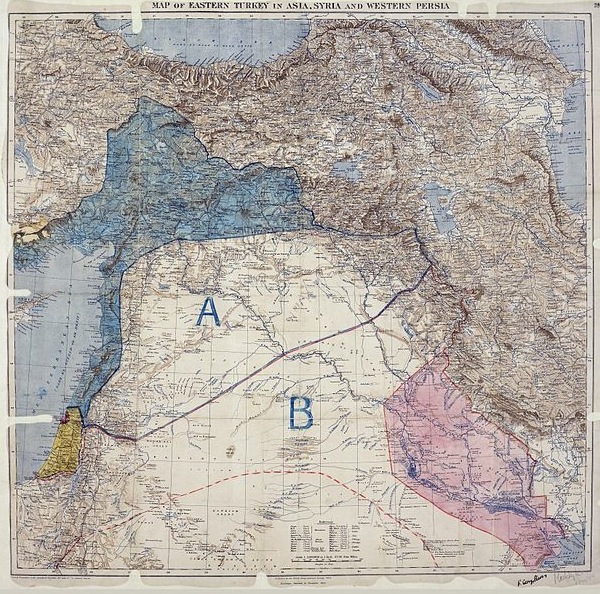
Syria as we now know it was created by one Brit, Mark Sykes, and one Frenchman, Francois Georges-Picot in 1920. Originally, it included a chunk of Iraq (another non-country), but when oil was discovered there (in Mosul), the Brits wanted and got it. With that detail alone, you can see how valid the idea is of a Syrian “nation” is. Certainly no one living in Syria ever called the shots on the creation of the modern 655px-mpk1-426_sykes_picot_agreement_map_signed_8_may_1916state. More to the point, it was precisely constructed to pit a minority group, the Shiite Alawites, against the majority, Sunni Arabs, with the Christians and the Druze and Kurds (also Sunnis) as side-shows. Exactly the same divide-and-rule principle applied to the way the Brits constructed Iraq. But there they used the Sunni minority to control the Shiite majority, with the poor Kurds as side-kicks again.

You can see why colonial powers did this. How do they get a pliant elite of the inhabitants of their constructed states to do their bidding? They appeal to the minority that is terrified of the majority. They give that minority privileges, protection and military training. That minority, in turn, controls the majority. It’s a cynical policy that still reverberates today: the use of sectarianism as a means to maintain power. Over time, the Alawites in Syria and the Sunnis in Iraq entrenched their grip on the state and, as resentment of them by the majority grew, used increasingly brutal methods of oppression to keep the whole show on the road. You can see how, over time, this elevates sectarian and ethnic loyalties over “national” ones. Worse, it gives each group an operational state apparatus to fight over.

The only time of relative long-term stability in the area we now call Syria was under the Ottoman empire which effectively devolved government to local religious authorities. The empire was the neutral ground that kept the whole thing coherent – a monopoly of external force that also gave the Shia and the Sunnis and the Christians their own little pools of self-governance.

Remove that external force and create a unitary state and you have the recipe for permanent warfare or brutal, horrifying repression. It is no accident that two of the most brutal, disgusting dictators emerged in both countries under this rubric: Saddam and Assad.

Now check out Syria’s history after it gained formal independence from the French in 1936 and operational independence after the Second World War in 1946:

There were three coups in the first ten years and with each one, the power of the military (dominated by Alawites) grew. Then in 1958 Syria merged with Egypt – to create the United Arab Republic. One test for how viable and deeply rooted Syria is as a nation? It dissolved itself as such as recently as six decades ago.

When Syria quit the merger with Egypt in 1961, yet another coup soon followed, later followed by another coup in 1970 that brought the Assad dynasty to power. The brutality of that dynasty kept the Sunnis under control, but not without a serious revolt from the 1970s on that eventually resulted in the 1982 massacre in Hama – a bloodletting of unimaginable proportions. Assad killed up to 40,000 Syrians in that bloody rout.

The point I’m making is a simple one. The reason we have such a brutal civil war right now is the same reason we still have a brutal civil war still going on in Iraq. The decades’ long, brutal oppression of a majority group has finally broken with the Arab Spring. All the tensions and hatreds and suspicions that built up in that long period of division and destruction are suddenly finding expression. Inevitably, this will mean much more sectarian bloodletting in the short, medium, and long run. It may mean an endless cycle of violence. The idea that these parties can reach a political agreement  to end the civil war in the foreseeable future is as plausible in Syria as it was in Iraq. It still hasn’t happened in Iraq – after over 100,000 sectarian murders and an exhausting civil conflict – and after we occupied it for a decade and poured trillions of dollars down the drain.

Any political solution to Syria is more than a heavy lift. It’s an impossible one. Only the parties involved can make it happen and none of them is anywhere close to that right now. For the US to take responsibility for this mess, to take on the task of finding a negotiated settlement, would be as quixotic as it would be bankrupting – of both money and human resources. By luck or design, Obama has now handed that responsibility to Putin. He’s welcome to it.

America, the anti-imperial nation, has no business trying to make British colonial experiments endure into the 21st Century. No business at all. It’s a mug’s game – and no one in the region will ever, ever give the US credit or any tangible benefits for the Sisyphean task. We will be blamed for trying and blamed for not trying. We will be blamed for succeeding and blamed for failing.

Which is why, absent the threat to the US of the chemical weapons stockpiled in that “country”, the United States must resist any inclination to get involved or take responsibility. That’s why the CIA’s arming of the rebels is so self-destructive to this nation. Once you arm and train a foreign force, you are responsible in part for its fate. And that kind of responsibility – for a bankrupt America, with enormous challenges at home – is one we should pass to others. Which we have. What we need to do now is grasp the Russian offer with both hands and slap the CIA down. No responsibility doesn’t just mean no war. It also means no covert war.

Is that something the president truly grasps? I sure hope so.

(Illustration: Map of Sykes–Picot Agreement showing Eastern Turkey in Asia, Syria and Western Persia, and areas of control and influence agreed between the British and the French. Signed by Mark Sykes and François Georges-Picot, 8 May 1916.)

Vladimir Putin, Meet Niccolo Machiavelli

RUSSIA-PUTIN-SECURITY-COUNCIL

President Putin’s op-ed in the NYT today is fantastic. It’s a virtual end-zone twerk, as this botoxed former KGB hack brags about restoring a more peaceful world order, basks in the relatively new concept of Russia’s global stature, asserts obvious untruths – such as the idea that the rebels were behind the chemical attack of August 21 or that they are now targeting Israel – and generally preens.

Good. And whatever the American president can do to keep Putin in this triumphant mood the better. Roger Ailes was right. If the end-result is that Putin effectively gains responsibility and control over the civil war in Syria, then we should be willing to praise him to the skies. Praise him, just as the far right praises him, for his mastery of power politics – compared with that ninny weakling Obama. Encourage him to think this is a personal and national triumph even more than he does today. Don’t just allow him to seize the limelight – keep that light focused directly on him. If that also requires dumping all over the American president, calling him weak and useless and incapable of matching the chess master from Russia, so be it. Obama can take it. He’s gotten used to being a pinata.

All this apparent national humiliation is worth it. The price Russia will pay for this triumph is ownership of the problem. At some point, it may dawn on him that he hasn’t played Obama. Obama has played him.

Which brings me to Machiavelli, the great intellectual master of power-politics. Most pundits use the term “Machiavellian” to mean whoever in the arena seems more successful at scheming, plotting, double-crossing, intimidating, and maneuvering. But Machiavelli himself had a different idea of what a true Machiavellian looks like: a kind, simple, virtuous naif.

Here’s the master making the point in The Prince:

Pope Alexander VI had no care or thought but how to deceive, and always found material to work on. No man ever had a more effective manner of asseverating, or made promises with more solemn protestations, or observed them less. And yet, because he understood this side of human nature, his frauds always succeeded.

It is not essential, then, that a Prince should have all the good qualities which I have enumerated above, but it is most essential that he should seem to have them; I will even venture to affirm that if he has and invariably practices them all, they are hurtful, whereas the appearance of having them is useful. Thus, it is well to seem merciful, faithful, humane, religious, and upright, and also to be so; but the mind should remain so balanced that were it needful not to be so, you should be able and know how to change to the contrary.

Notice the characteristic wit in praising true deception … in a Pope! Old Nick was funny – in fact, the only consistently funny political theorist. But notice too that the individual who seems the least Machiavellian is often the most. What you need to do is get past appearances and look coldly at the result of any course of action, and whose interests it really advances.

My view is that the US’s core interest is in not owning the Syria conflict, while making sure its chemical stockpiles are secure or destroyed. I think Obama’s worst mistake was not the WMD “red lines” comment (though that was unwise). It was his original public statement that Assad must go. Given that he runs the most powerful military machine ever assembled on planet Earth, that statement gave him some responsibility for what would happen next in Syria, without any core idea of where that conflict might lead. And the goal of the US in this conflict right now is not to own it. That is more important than the question of “boots on the ground” or not.

The core question is:

Are we seeking responsibility for resolving this ghastly sectarian bloodbath? I believe we have to have the steely resolve to act on our core interests – after bankrupting ourselves fiscally and morally next door in Iraq – to say no.

And the moments when Obama has risked owning this conflict have always been his low points. From that early high-minded and unnecessary statement on Assad to his impulsive declaration of intent to use force in August, he deeply worried the American people and Portrait_of_Niccolò_Machiavelli_by_Santi_di_Titothe world that the US could be getting into more responsibility for yet another Middle East sectarian bloodbath. But he has nimbly pivoted back from these positions – finding his way back to a more GHW Bush posture rather than a GW Bush one.

But the upshot right now – so far as I can see – is that Russia and not America now owns this conflict. It is Putin who is on the hook now – and the more Putin brags about his diplomatic achievement the more entrenched his responsibility for its success will become. And that is perfectly in line with Russia’s core interests: Putin is much closer to Syria than we are; he must be scared shitless of Sunni Jihadists who now loathe him and Russia more than even the Great Satan getting control of WMDs. Those chemical weapons could show up in Dagestan or Chechnya or the Moscow subway. It is Putin – and not Obama – who is therefore much more firmly stuck between the Sunnis and the Shia in Syria – not to speak of the Christians.

Of course, this argument only makes sense if you don’t believe the US is best served by being responsible for the entire Middle East, and by being the only major power seriously invested there. If your goal is US global hegemony, this was a very bad week. But if your goal is to avoid the catastrophe that occurred in Iraq, to focus on the much more important foreign policy area, Asia, and to execute vital domestic goals such as immigration reform and entrenching universal healthcare … then the result looks pretty damn good. Or at least perfectly good enough.

So when the inevitable cries of “Who lost the Middle East?” are raised by the neocon chorus, one obvious retort remains. Of all the regions in the world, wouldn’t the Middle East be a wonderful one to lose? You want it, Vladimir? Be our guest.

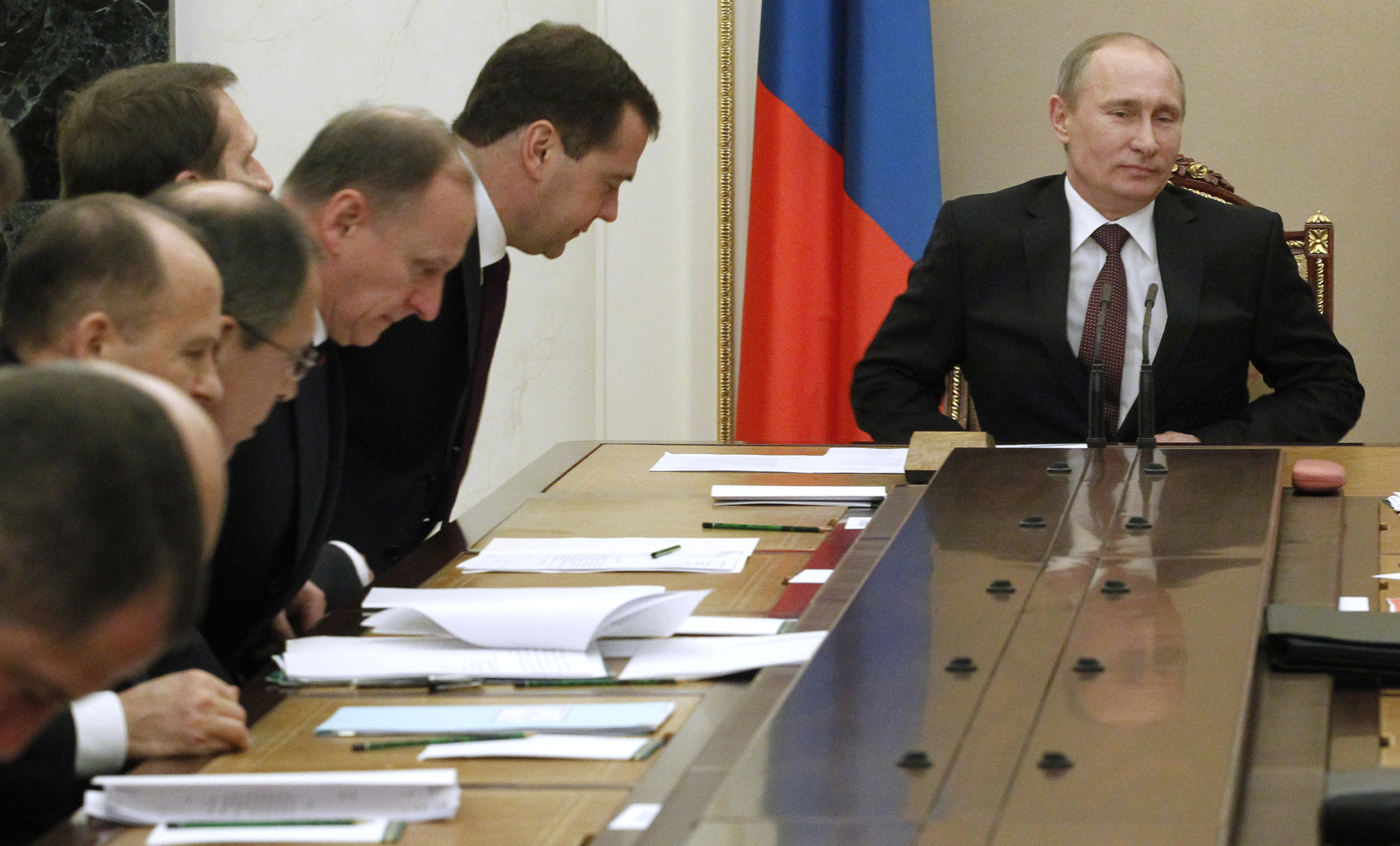
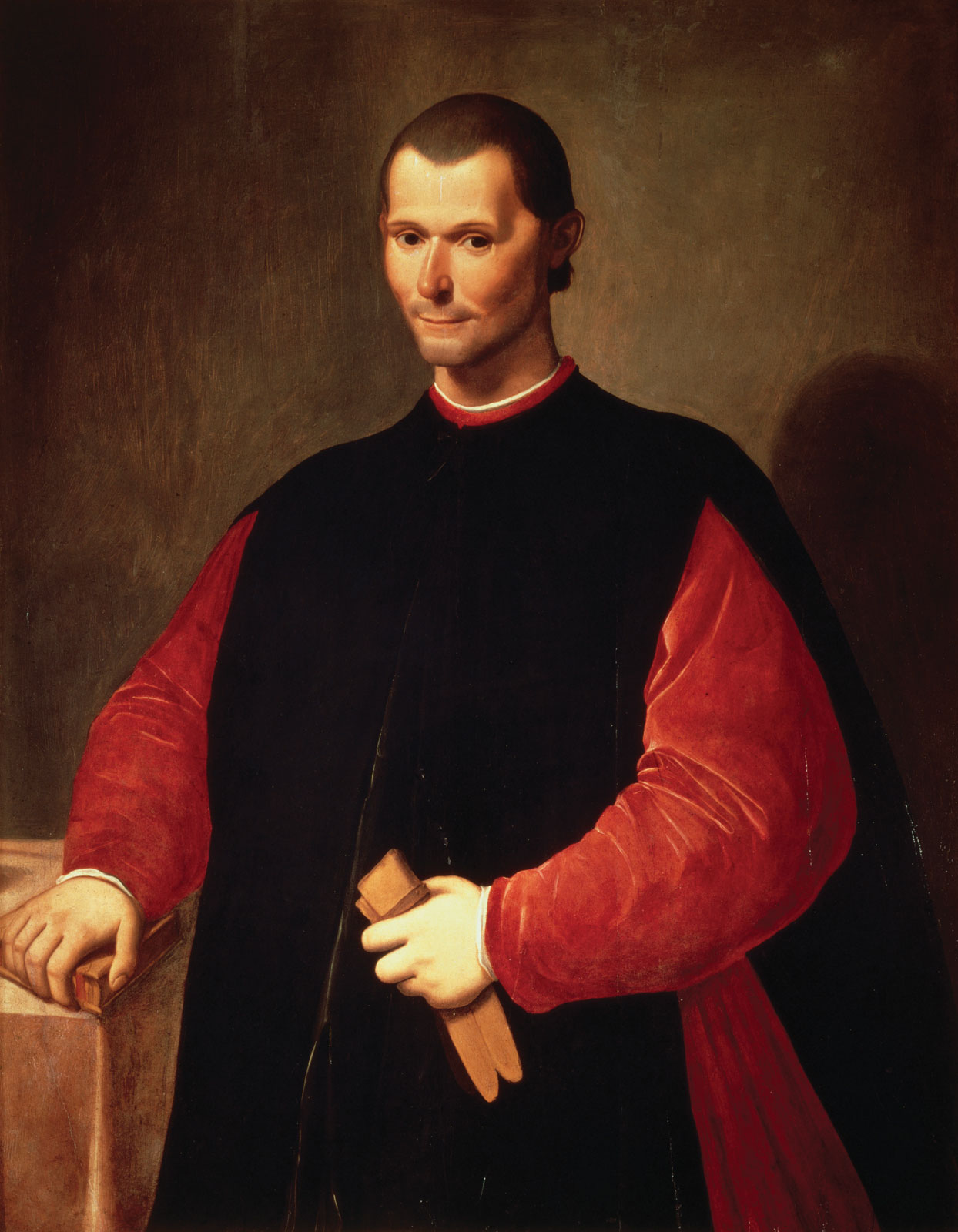
(Photo: Russian President Vladimir Putin chairs a Security Council meeting at the Kremlin in Moscow, on November 21, 2012. By Mikhail Metzel/AFP/Getty. Painting: Niccolo Machiavelli by Santi Ti Dito.)

The President Makes The Case

That was one of the clearest, simplest and most moving presidential speeches to the nation I can imagine. It explained and it argued, point after point. Everything the president said extemporaneously at the post-G20 presser was touched on, made terser, more elegant and more persuasive.

The key points: it is an abdication of America’s exceptional role in the world to look away from the horrific use of poison gas to wipe out civilian populations and kill rebels in a civil war. Given that the world would have ignored August 21 or engaged in meaningless blather about it, Obama took the decision to say he would strike. Since such a strike was not in response to an imminent threat to our national security, Obama felt he should go to the Congress, and reverse some of the strong currents toward the imperial presidency that took hold under Dick Cheney.

As that moment of truth loomed, the Russians gave way on defending or denying Assad’s use and possession of chemical weapons. Putin only did so if it could be seen as his initiative and if he could take the credit for it. Kerry’s gaffe provided the opening. And we now have a diplomatic process that could avert war if it succeeds. And of course, Obama is prepared to give such a proposal a chance. Any president would be deeply foolish not to. There is no urgency as long as Assad has formally agreed to give the weapons up, doesn’t use them again, and the process can be practically managed as well as verified at every stage.

I’m tired of the eye-rolling and the easy nit-picking of the president’s leadership on this over the last few weeks. The truth is: his threat of war galvanized the world and America, raised the profile of the issue of chemical weapons more powerfully than ever before, ensured that this atrocity would not be easily ignored and fostered a diplomatic initiative to resolve the issue without use of arms. All the objectives he has said he wanted from the get-go are now within reach, and the threat of military force – even if implicit – remains.

Yes, it’s been messy. A more cautious president would have ducked it. Knowing full well it could scramble his presidency, Obama nonetheless believed that stopping chemical weapons use is worth it – for the long run, and for Americans as well as Syrians. Putin understands this as well. Those chemical weapons, if uncontrolled, could easily slip into the hands of rebels whose second target, after Assad and the Alawites and the Christians, would be Russia.

This emphatically does not solve the Syria implosion. But Obama has never promised to.

What it does offer is a nonviolent way toward taking the chemical weapons issue off the table. Just because we cannot solve everything does not mean we cannot solve something. And the core truth is that without Obama’s willingness to go out on a precarious limb, we would not have that opportunity.

The money quote for me, apart from the deeply moving passage about poison gas use at the end, was his description of a letter from a service-member who told him, “We should not be the world’s policeman.” President Obama said, quite simply: “I agree.” And those on the far right who are accusing him of ceding the Middle East to Russia are half-right and yet completely wrong. What this remarkable breakthrough has brought about is a possible end to the dynamic in which America is both blamed for all the evils in the world and then also blamed for not stopping all of them. We desperately need to rebuild international cooperation to relieve us of that impossible burden in a cycle that can only hurt us and the West again and again.

If the Russians can more effectively enforce what the US wants, it is a huge step forward to give them that global responsibility, and credit. That inclination – deep in Obama’s bones in domestic and foreign policy – is at the root of his community organizing background. Stake your ground, flush out your partner’s cards, take a step back and see what would make a desired result more likely without you, and seize it if it emerges. The result is one less dependent on US might or presidential power, and thereby more easily entrenched in the habits and institutions of the world.

Yes, he’s still a community organizer. It’s just that now, the community he is so effectively organizing is the world.

Patience, Mr President. Patience.

RUSSIA-G20-SUMMIT

I have to say I found myself shifting a little – not a lot, but a little – after reading the transcript of the president’s press conference at the end of the G20 Summit. Do yourself a favor and read it. It will disappoint those who still believe the man cannot speak without a Teleprompter, but it’s a deep, nuanced, sober and earnest case for a limited military strike to make sure the world does not simply look away when hundreds of children are gassed by a dictator. That seems to me to be Obama’s strongest point:

My goal is to maintain the international norm on banning chemical weapons.  I want that enforcement to be real.  I want it to be serious.  I want people to understand that gassing innocent people, delivering chemical weapons against children is not something we do.  It’s prohibited in active wars between countries.  We certainly don’t do it against kids.  And we’ve got to stand up for that principle.

Yes, we’ve got to. And none of us are happy with this kind of atrocity being allowed to stand. But the point is: even with Obama’s proposed strike, it would still stand. If the war is restricted to a few strikes as a symbolic act, it may degrade Assad’s ability to use those weapons in the future. But he’d still have them; and he could still use them. Using them after an attack would prove the intervention essentially toothless, and even give Assad the anti-American victim card to play. Obama addresses the point explicitly here:

Is it possible that Assad doubles down in the face of our action and uses chemical weapons more widely?  I suppose anything is possible, but it wouldn’t be wise.  I think at that point, mobilizing the international community would be easier, not harder.  I think it would be pretty hard for the U.N. Security Council at that point to continue to resist the requirement for action, and we would gladly join with an international coalition to make sure that it stops.

There‘s the weak link in the logic. He seems to think it would be crazy for Assad to continue using those weapons. But Assad is a crazy motherfucker with everything to lose. Of course, he could try again as an act of defiance. But he may be less predisposed to do that if we don’t launch a war, but fence him in. And if Obama wants to take a stand against Assad’s breaking of a long-held international norm with respect to using chemical weapons, then he has already. He came close at one point to bragging of it:

Frankly, if we weren’t talking about the need for an international response right now, this wouldn’t be what everybody would be asking about.  There would be some resolutions that were being proffered in the United Nations and the usual hocus-pocus, but the world and the country would have moved on. So trying to impart a sense of urgency about this — why we can’t have an environment in which over time people start thinking we can get away with chemical weapons use — it’s a hard sell, but it’s something I believe in.

And by using the G-20 Summit to insist that this breach of core human morality and decency not be ignored, Obama has already done a lot of what a military strike would do to protect this norm, without any of the bad consequences of intervening in the Syrian civil war. The world is intently watching – and Putin and Iran would be increasingly embarrassed if their client were to use these weapons again.

Another major incident and Russia would be using up a lot of capital to protect the murderous Alawite. Ditto Iran, whose more moderate elements are clearly sending a message that here is perhaps some smidgen of a basis to talk to the Americans again.

The good news is that there was unanimity at the G20 that chemical weapons were indeed used; the forthcoming UN Report will doubtless underline the core facts; and there is also a clear consensus that the use of chemical weapons is anathema. This entire debate has helped buttress these international norms even as Assad has breached them.

Why is that not enough for now? Why does reinforcing this breach of norms have to be executed militarily? Why cannot we have some kind of probation period for Assad, as the world watches more closely? If Assad were to use those weapons again, in Obama’s own words, that would make “mobilizing the international community … easier, not harder.” But it would be harder if America had muddied the waters by previously entering the civil war while there was no international consensus.

In other words, there is a sweet spot here that we could yet reach – a reinforcement of the norm, a gathering of evidence at the UN, a probation period for Assad, and the US guiding the rest of the world to keep on life-support this norm against using chemical weapons. Military action would be deferred and predicated on a clear violation in the future by Assad or, indeed, his opponents, if they get their hands on the stuff. The achievement of threatening to strike was getting the entire international community to wake up and pay attention.

Patience, in other words, is not the same as doing nothing. Sometimes, it is the only way to do something in a way that actually works.

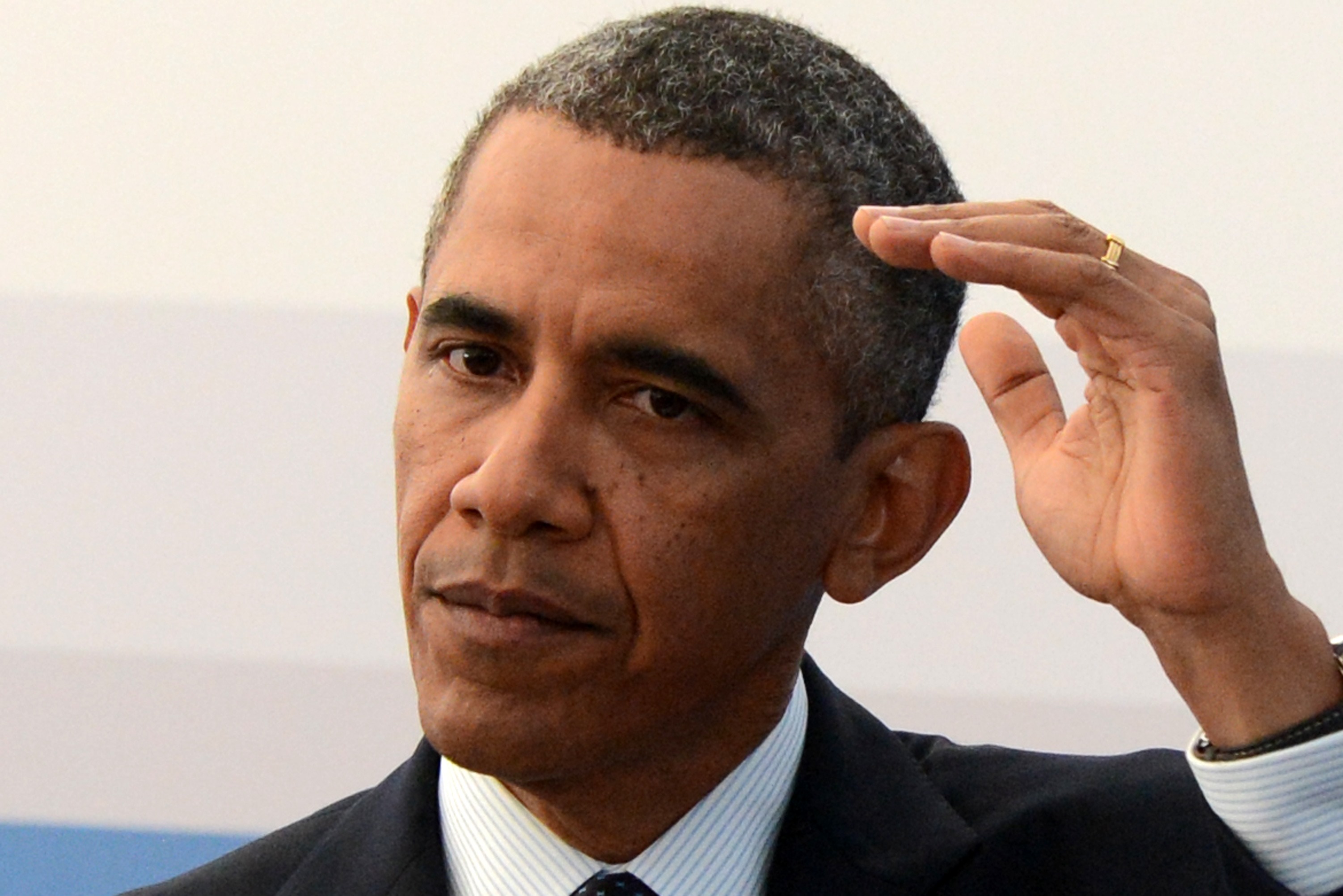
(Photo: US President Barack Obama gestures during a press conference in Saint Petersburg on September 6, 2013 on the sideline of the G20 summit. By Kirill Kudryavtsev/AFP/Getty.)

Saving Obama From Himself

The next couple of weeks will be full of surprises, twists and turns, as this country debates in its Congress and media and living rooms whether to launch another war in the Middle East. But I think it’s fair to offer a preliminary assessment of where the wind is blowing. Obama’s case for war is disintegrating fast. And his insistence on a new war – against much of the world and 60 percent of Americans – is easily his biggest misjudgment since taking office. His options now are not whether to go to war or not, but simply whether he has the strength and sense to stand down and save his second term before it is too late.

Here’s what we know now for sure already: even if the president were somehow to get a majority in House and Senate for entering into RUSSIA-G20-SUMMITSyria’s vortex of sectarian violence, it will be a profoundly divided one. The 10-7 vote in the most elite body – the Senate Foreign Relations committee – is an awful omen. To make matters worse, there is currently a clear national majority against war in the polls and the signs from the Congress suggest a nail-biter at best for the president. Under these circumstances, no president of any party has any right or standing to take this country to war. He is not a dictator. He is a president. Wars are extremely hazardous exercises with unknown consequences that require fortitude and constancy from the public paying for them. Even with huge initial public support for war, as we discovered in the nightmare years of Bush-Cheney, that can quickly turn to ashes, as reality emerges. To go to war like this would be an act of extreme presidential irresponsibility.

And on one thing, McCain is right. To launch strikes to make a point is not a military or political strategy. It will likely strengthen Assad as he brazenly withstands an attack from the “super-power” and it would not stop him using chemical weapons again to prove his triumph. We either lose face by not striking now or we will lose face by not striking later again and again – after the initial campaign has subsided and Assad uses chemical weapons again. McCain’s response, as always, is to jump into the fight with guns blazing and undertake a grueling mission for regime change. Let him make that case if he wants – it is as coherent as it is quite mad. It’s as mad as picking a former half-term delusional governor as his vice-president. There is a reason he lost the election to Obama. So why is Obama now ceding foreign policy to this hot-headed buffoon?

The only conceivable way to truly punish Assad and assert international norms would be to get a UN Resolution authorizing it. That is, by definition, the venue for the enforcement of international norms. The US Congress cannot speak for China or Russia, Germany or Britain. And in Britain’s case, the people – through their representatives  – have spoken for themselves. That means that, if we go through the proper route, nothing will be done. But that is the world’s responsibility, not ours’. And we are not the world.

The US has no vital interests at stake in the outcome of a brutal struggle between Sunni Jihadists and Alawite thugs. None. Increasingly, as we gain energy independence, we will be able to leave that region to its own insane devices. Our only true interest is Saudi oil. And they will keep selling it whatever happens. Israel is a burden and certainly not an asset in our foreign policy. The obsession with the Middle East is increasingly a deranged one. Taking it upon ourselves to ensure that international norms of decency are enforced in that hell-hole is an act of both hubris and delusion. We can wish democrats and secularists well. But we can control nothing of their struggle, as the last few years have definitively shown. And when we try, we create as many problems as we may solve. Look at Libya.

My own fervent hope is that this is the moment when the people of America stand up and tell their president no.

I support and admire this president and understand that this impulsive, foolish, reckless decision was motivated by deep and justified moral concern. But the proposal is so riddled with danger, so ineffective in any tangible way (even if it succeeds!), and so divorced from the broader reality of an America beset by a deep fiscal crisis, a huge new experiment in universal healthcare, and a potential landmark change in immigration reform, that it simply must not be allowed to happen.

We can stop it. And if Obama is as smart as we all think he is, he should respond to Congress’s refusal to support him by acquiescing to their request. That would damage him some more – but that damage has been done already. It pales compared with the damage caused by prosecuting an unwinnable war while forfeiting much of your domestic agenda.

This is not about Obama. It’s about America, and America’s pressing needs at home. It’s also about re-balancing the presidency away from imperialism. If a president proposes a war and gets a vote in Congress and loses, then we have truly made a first, proud step in reining in the too-powerful executive branch and its intelligence, surveillance and military complex.

In other words, much good can still come from this.

If Congress turns Obama down – as it should – Obama can still go to the UN and present evidence again and again of what Assad is doing. Putin is then put on the defensive, as he should be. You haven’t abandoned the core position against the use of chemical arms, and you have repeatedly urged the UN to do something. Isn’t that kind of thing what Samantha Power longs for? Make her use her post to cajole, embarrass, and shame Russia and China in their easy enabling of these vile weapons. Regain the initiative. And set a UN path to control Iran’s WMD program as well.

Obama once said his model in foreign policy was George H W Bush. And that president, in the first Gulf War, offers a sterling example of how the US should act: not as a bully or a leader, but a cajoler, a facilitator and, with strong domestic and international support, enabler of resistance to these tin-pot Arab lunatics. Obama, in a very rare moment, panicked. What he needs to do now is take a deep breath, and let the people of this country have their say.

Democracy is coming to the U.S.A.

Washington vs The American People

Kerry And Hagel Testify At Senate Hearing On Use Of Force Against Syria

One of the most astringent events of the last fortnight was the decision of prime minister David Cameron to allow a parliamentary vote on the possibility of a new war in the Middle East. He lost. He lost because the people of Britain absolutely, positively do not want another bank-breaking, inconclusive, morally fraught war in the Middle East. A new poll in the Independent this morning confirms the depth of the popular opposition:

Only 29 per cent agree that the US, without Britain, should launch air strikes against the Assad regime to deter it from using chemical weapons in future, while 57 per cent disagree. 80 per cent believe that any military strikes against Syria should first be sanctioned by the United Nations, while 15 per cent disagree with this statement.

So around 80 percent of the British people – the country closest to the US – oppose what Obama is now so foolishly proposing. 80 percent. How about Americans – those who actually pay for their president’s wars in money or blood or both? The WaPo-ABC poll reveals that

nearly six in 10 oppose missile strikes in light of the U.S. government’s determination that Syria used chemical weapons against its own people. Democrats and Republicans alike oppose strikes by double digit margins, and there is deep opposition among every political and demographic group in the survey. Political independents are among the most clearly opposed, with 66 percent saying they are against military action.

I cannot remember a war in which the public in the most affected countries is so opposed. And that opposition is not likely to melt in a week or so – certainly not if many people listened to John Kerry yesterday. And that poll is about the abstraction of “strikes” – and not about the open-ended war to depose Assad that the administration actually proposed in its own resolution. Mercifully, Americans are not as dumb as many think:

Only 32 percent said Obama had explained clearly why the U.S. should launch strikes. Back in March 2003, as the Iraq War started, 49 percent said that President George W. Bush had compellingly made his case for what was then at stake.

So Obama has much less domestic support than Bush, no backing from the Brits, open hostility by the UN for immediate war, and an obviously conflicted administration. This is a war even less likely to succeed than Iraq and even less popular. It is as if Obama decided to turn himself into Bush – and throw his second term down a rat-hole in the Middle East.

And yes, this is a proposal for an open-ended involvement in a sectarian civil war in the Middle East. Read it:

Senate Foreign Relations Committee – Syria AUMF

This embed is invalid


What we have here is a commitment to degrading the military resources of Assad and an utterly unenforceable attempt to limit that campaign only to prevent the use of chemical arms. If you have never seen a loophole that big before, gaze into it some more. It is so vast you could fit Iraq into it.

The prohibition on “boots on the ground” is also an obvious lie. Even the Senate can’t honestly echo the deceptive propaganda from the White House. So its formulation says:

The authority granted in section 2 does not authorize the use of the United States Armed Forces on the ground in Syria for the purpose of combat operations.

Another loophole you could drive a battalion through. They could be there for intelligence, for training the rebels, for arming them, for providing air cover, and for guiding them politically. So can we get real and admit that the US already has boots on the ground, and probably a lot? The president has already slipped and told us of the covert war he is already waging. This is part of the undemocratic madness of the military-industrial complex. It does what it wants to do. And every president, it seems, acquiesces. Even this one.

But the White House has given us a chance to make our voices heard. The Congress is the best place for such things, and the House is the most responsive to popular opinion. We can still stop this new war. But time is running out.

(Photo: U.S. Secretary of State John Kerry testifies before the Senate Foreign Relations Committee on the topic of ‘The Authorization of Use of Force in Syria’ September 3, 2013 in Washington, DC. By Win McNamee/Getty Images)