How The Democrats Ran From Their Own Success

Screen Shot 2014-11-07 at 11.35.59 AM

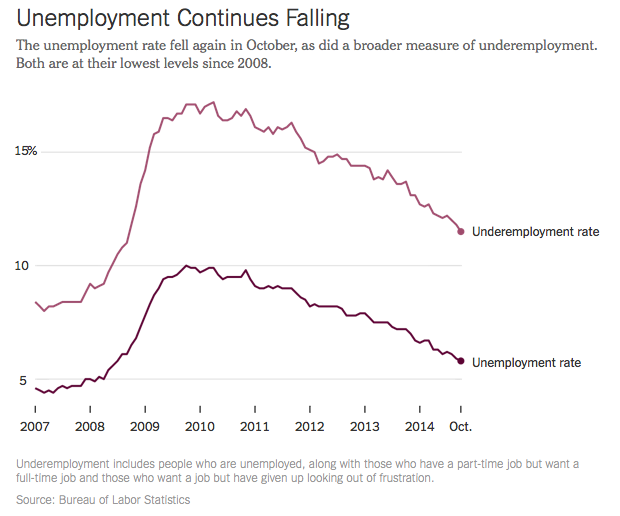
So the number one issue in the midterms was the economy. And a Democratic president has managed to halve the unemployment rate in the wake of a historically grim near-depression, and his own party decided never to mention this – or him – in the campaign. I wish I were surprised. He also managed to slash the deficit at the same time. But shhh … just tell women the GOP is out to get them.

Voters do not always have access to all the relevant data – but they sure can detect political fear. And fear, after all, is what the Democrats have wallowed in for decades since Reagan. Many of them privately believe that their ideas or proposals, however sensible, can never win majority support. So they hide them, or argue for them only before certain constituencies, or play the usual defensive crouch on foreign policy, and bob and weave until the voters are offered a choice between a decisive extremist from the GOP and a quivering pile of jello from the Democrats. The one figure who broke this cycle was Obama in 2008. He managed to do so again in 2012. And yet the default DNA of the Dems is to go back into a defensive crouch, the masters of which are, of course, the Clintons.

You can see it again with the ACA. You couldn’t have a stronger argument: we have given everyone more security in their health, and removed some of the cruelest aspects of the previous system. We have gotten huge numbers of people insured for the first time. And we have managed to halt the rise in healthcare costs in ways that could truly make a dent on future debt. These are huge achievements, but the Democrats couldn’t bring themselves to utter them, let alone craft a narrative of success to contrast with the fear-mongering and nihilism of the Fox News right.

And here’s my point: the defensive crouch doesn’t even work. Waldman marshals some evidence:

Democratic candidates gave Democrats lots of reasons to stay home, particularly those most loyal to Obama. Now let me take a counter-example. The one Democratic Senate candidate in a close race who won on Tuesday was New Hampshire’s Jeanne Shaheen. How did she avoid the fate that befell so many others?

While Shaheen wasn’t exactly begging for Obama to come campaign for her, she didn’t try to “distance” herself from him either. She also didn’t try to execute some double-twisting salchow when it came to the Affordable Care Act, channelling voter displeasure and pretending she shared whatever ill-informed opinion whoever she was talking to happened to have. When she got asked whether she was still proud of it, she said, “Absolutely.” To be sure, she was critical of things that didn’t go well (like the web site roll-out), but no Democratic voter would think she was turning her back on the most important Democratic domestic policy achievement in decades, or dissing their party’s leader.

And for whatever combination of reasons, while turnout was down from 2010 in most places in the country, New Hampshire was one of the few places where it actually increased this year.

A GOP strategist argues along the same lines:

“They sidelined the president,” Rob Collins, the Executive Director of the National Republican Senatorial Committee (NRSC) told reporters at a backslapping post-election briefing. Instead, Collins argued, Democrats shouldn’t have been scared off by Republican attempts to tie Obama to their candidates.

Collins said NRSC polling had long identified the economy as the issues voters cared about most, and one where Democrats stood to gain. “We felt that that was their best message and they sidelined their best messenger,” he said. Collins added that in many states, Democratic candidates had positive stories to tell. “In Colorado, unemployment is 5.1 percent and they never talked about it,” he added.

“They were so focused on independents that they forgot they had a base,” Collins said of Democratic Senate candidates. “They left their base behind. They became Republican-lite.”

They’re a bunch of clueless cowards, as far as I can see. And they have reaped the dividends of fear.

(Chart: the Upshot.)

No, Mr President: Wait Some More On Immigration Reform

US-VOTE-MIDTERMS-OBAMA

On the whole, I found the president’s presser yesterday reassuring. First off, it upset Ron Fournier and the usual Washington establishment types, which is a good sign. Second, his very affect – calm, upbeat, confident – is classic Obama. Third, his basic stance of asking the GOP to put up or shut up now they have majorities in both Senate and House is exactly the right move. It forces some kind of constructive proposal out of them and puts the onus on them to say – at long last – what they might be for instead of whom they are against. Or, more likely, it reveals the emptiness of their opposition and lack of a constructive policy agenda.

But it seems to me that this effective strategy is immediately undermined by his continuing to threaten unilateral executive action on immigration. The threat makes sense as a way to bring the GOP to the table, but not if he fully intends to follow through before the end of the year regardless. Instead of forcing the GOP to come up with a compromise bill – which if it can, great, and if it cannot, will split the GOP in two – he’d merely recast the debate around whether he is a “lawless dictator”, etc etc. rather than whether it is humane or rational to keep millions of people in illegal limbo indefinitely. It would strengthen those dead-ender factions in the House that are looking for an excuse to impeach. It would unify the GOP on an issue where it is, in fact, deeply divided. And it would not guarantee a real or durable solution to the clusterfuck.

Yes, he’s out on a limb with his supporters on this – and they punished him for it with low turnout on Tuesday. But he punted before the election and he could punt again. And the truth is: no real progress on this can be made without legislation, and the looming demographic challenges for the GOP in 2016 without any action on the issue makes some movement on this a sane move in the next six months, especially from the point of view of the donor class and business lobby.

In other words, it makes much more sense to me for Obama to ask the GOP for a major legislative proposal before he takes any unilateral action. If they fail to do so – and it’s perfectly possible they do, given intense divisions within their ranks – then Obama’s executive action makes much more sense and can be defended much more easily, as a response to Congressional failure. But to pre-empt this with a divisive act that would polarize the country still further would make no long-term progress likely and put the blame for gridlock on his shoulders, rather than the GOP’s. And what good would that do?

What I’m saying is that he should precisely “wait” some more before acting on this. He’s waited long enough to make another six months’ delay, while he demands a bill to sign, a perfectly palatable option. If he accepts another bucketload of efforts to secure the border as part of the deal, his position remains more popular than the GOP’s with the center and the Latino population. And the real goal of all this is legislation that can guarantee citizenship, better immigration criteria and a secure border beyond any president’s executive orders or revised regulations. Unilateralism can make that less likely rather than more.

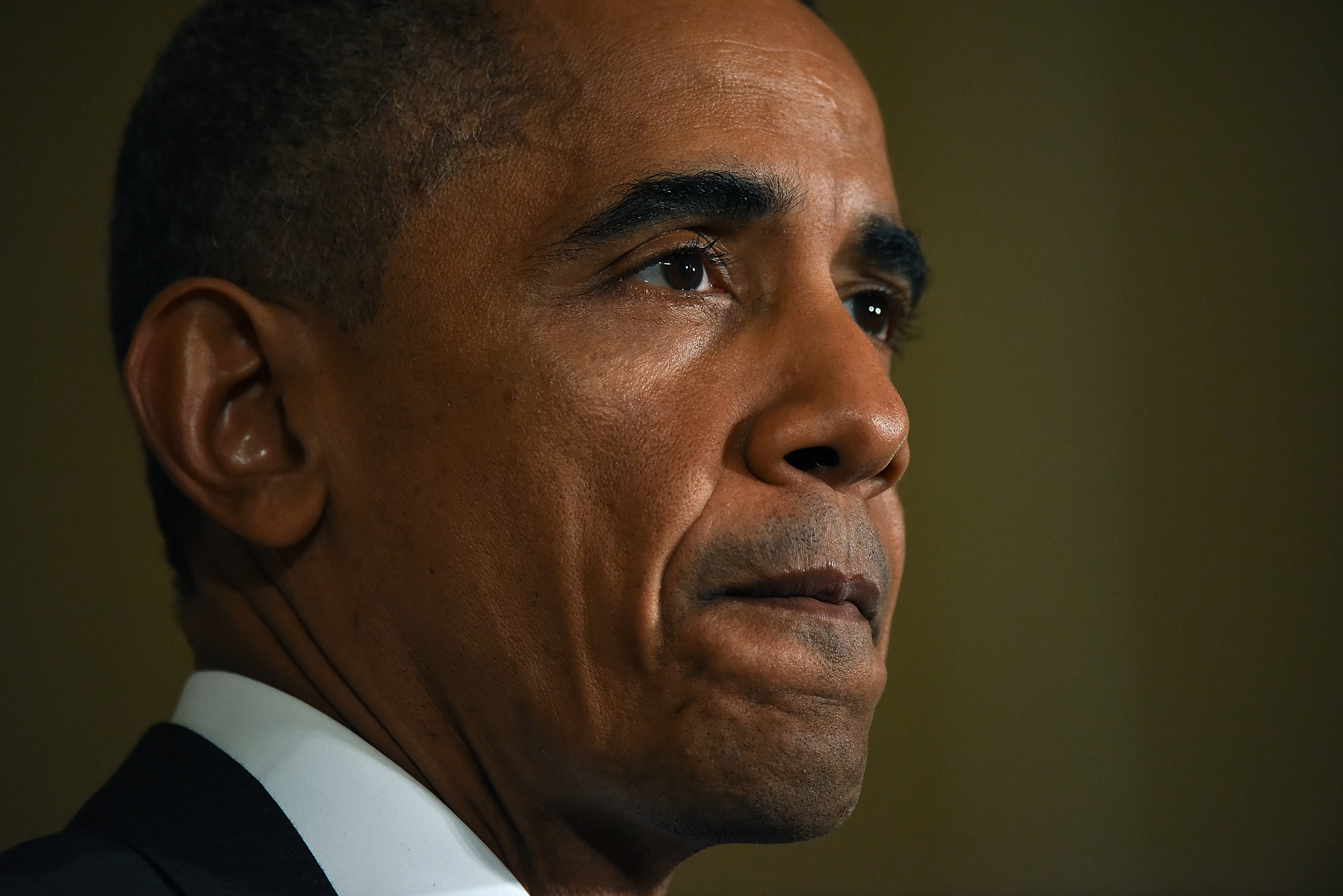
(Photo: US President Barack Obama pauses during a press conference in the East Room of the White House November 5, 2014 in Washington, DC. By Brendan Smialowski/AFP/Getty Images.)

A Victory For What?

That’s my question after this relentlessly negative and vacuous campaign. And the striking thing about it is that it’s hard to detect an issue or platform around which the GOP constructed a victory. I watched Kevin McCarthy on Fox last night attempt to describe what his party now wants to do with its majority in both House and Senate – and it was so pathetic even the Fox News crowd could barely hide their dismay. He said he wanted to kickstart the economy. No serious ideas as to how, except  the same tired 1980s boilerplate. Tax reform? I’m all for it – but we shouldn’t kid ourselves it was an issue of even faint relevance in this campaign. Immigration? Again, it’s much much easier to say what they don’t want to do, rather than what they do.

Foreign policy? It will be fascinating to see if the Republican party really wants to fight another Iraq War – and what would happen to its unity if it tried. On Iran, they simply want to scupper the only conceivable way forward absent another war. Obamacare? McConnell seems to be arguing against an attempt at repeal – merely a series of nitpicks to try and unravel it. If I could see any constructive policy agenda, I could have a serious opinion about it. But I don’t. I see pure negativity and bile against the president. And it seems to me that that is not a strategy to win over a majority for the presidency in 2016.

National Review today actually urges the GOP majority to do nothing for the next two years but prep for 2016. I kid you not. They worry about the “governing trap.” Here you see the cynicism that has pulsed through the right for the last six years, in which everything is about politics and nothing is about governance:

A prove-you-can-govern strategy will inevitably divide the party on the same tea-party-vs.-establishment lines that Republicans have just succeeded in overcoming. The media will in particular take any refusal to pass a foolish immigration bill that immediately legalizes millions of illegal immigrants as a failure to “govern.”

Fourth: Even if Republicans passed this foolish test, it would do little for them. If voters come to believe that a Republican Congress and a Democratic president are doing a fine job of governing together, why wouldn’t they vote to continue the arrangement in 2016?

And that would be just terrible, wouldn’t it?

In some ways, this election also strikes me as a vote by the elderly almost entirely against the Obama coalition and what it represents for America, rather than for anything. You can see it in this screenshot from NBC News:

us_age_trend_cc_561_1_1ecd2d7c1de506201727d540941b9e50.nbcnews-ux-720-440

That’s a staggeringly high percentage of the vote for the over-60s. If anyone doubts the potency of Fox News’ relentless campaign to remind anyone over 50 that the world is coming undone and Obama is entirely the reason, then those numbers should be definitive. So what this represents is a backlash against a change that is coming anyway – a vote by the older generation against the America that the younger generation seems to represent and want. Or a rising up of white America against the browns and blacks. This is too crude, of course. But it captures something important about this moment of vacuous retrenchment.

Sane conservative pundits remind us that 2016 will be different. And it will. The Clintons remain the favorites to recapture the White House next time around, with a coalition that was still in place this year but representing a much smaller a slice of the electorate. But this only means that the polarized paralysis of the last four years is likely to become a durable fixture of our politics for quite some time. The GOP’s dominance in the House means any Democratic president will be constrained and harassed and pilloried. And I don’t see any Republican candidate on the horizon capable of putting together the kind of triumph that Obama secured in 2008.

So this is a victory in favor of more governing paralysis. Most voters don’t really want that; but their actions belie it. History twists and turns, of course, and any number of events or surprises could upend our expectations for the better. But yesterday, it seems to me, was the definitive moment when Obama’s promise to forge a pragmatic purple center ceded to the grim, polarized reality of a deeply and evenly divided country. This was the GOP’s strategy from the start; but it leaves them with a strangely ill-defined, if emphatic, victory.

Live-Blogging The Mid-Terms 2014

US - VOTE - MIDTERMS - EMPIRE STATE BLDG

11.45 pm. I direct you now to Comedy Central, where the Internet has obviously been working, but don’t tell anyone. See you on the tube.

11.43 pm. It’s a wave. Nate:

The GOP could finish with as many as 55 seats. Alaska has yet to close its polls. Louisiana will go to a runoff on Dec. 6, and Republicans will be favored there — unless Democrat Mary Landrieu’s campaign benefits from the fact that control of the Senate is no longer at stake. Virginia Democrat Mark Warner still looks more likely than not to hold his seat, but the fact that his race was so close speaks to how awful a night it has been for Democrats. Jeanne Shaheen’s win in New Hampshire looks like a minor miracle now.

11.39 pm. Perfectly timed: Oregon votes for legal weed by 55 – 45 (with over 50 percent of the vote in.)

11.29 pm. It’s over:

Thom Tillis has won the race for Senate in North Carolina, clinching Republican control of the body.

Kay Hagan ran a strong campaign. She used the powerful Democratic voter-turnout machine. She successfully linked Thom Tillis to a conservative, unpopular state legislature. And in the end, Kay Hagan lost.

And the denouement: Ernst wins in Iowa.

11.24 pm. Scott wins in Florida; medical marijuana lost. Bad night for stoner Dems. Ben Jacobs’ take:

Scott, a former hospital CEO whose company was fined over $1.7 billion by the federal government over a massive Medicare fraud scheme, had eked out a victory in 2010 in a Republican wave, relying heavily on his own personal wealth. His good will with Floridians evaporated quickly with his support for strict voter ID regulation and his opposition to Medicaid expansion. Scott made matters worse when he pushed back against environmental protections to the Everglades supported by Jeb Bush; his record in office was labeled an environmental disasterby the Tampa Bay Tribune’s editorial board.

Crist, for his part, was viewed even by many supporters as an amoral professional politician, uninterested in any ideology or political party save his own personal advancement. Butterflies emerging from cocoons underwent metamorphoses far less dramatic than the political one Crist underwent in the past four years. Crist, who was once a pro-life and anti-gay marriage Republican, now claims to be a socially liberal Democrat who supported a woman’s right to choose and same-sex unions.

Stuck trying to choose between the lesser of two evils, Florida voters narrowly backed the socially distant Republican who bore a resemblance to Skeletor than warm, sociable orange-colored Democrat of convenience.

11.22 pm. This is the weirdest election night I can remember. I’m trying to concentrate and live-blog while the Colbert studio audience is going wild.

11.21 pm. Even truer:

10.53 pm. So true:

10.49 pm. Georgia looks like Perdue has it; North Carolina and Virginia remain extremely tight – but the GOP seems to have a good chance in both. We’re headed to a 52 – 54 Republican majority.

10.47 pm. Well, the Independent hope in Kansas just faltered in the final stretch. That’s actually a surprise.

10.43 pm. Chuck Todd, running the math, says the Dems won’t have a shot at winning the House until 2022. So that’s a permanent veto an anything any Democratic president might ever want to do. How is our system so fixed and our country so polarized that this has come to pass?

10.40 pm. So far, the results seem pretty blah to me. It looks like a deeply normal swing away from the president’s party. There are a few outlier results – Virginia, for example. But so far: no huge shift, no clear message, except widespread discontent.

10.38 pm. This graphic really does expose what’s going on in this country:

One political party is simply peddling mass delusion – and the media echoes it.

10.35 pm. Ezra’s take on Udall’s loss:

The Colorado race had two unique features. One was that Udall focused like a laser on the “war on women” theme. He argued, almost endlessly, that Gardner wanted to ban over-the-counter sales of birth control — a charge that Gardner denied, and countered by releasing a proposal for birth control to be sold over-the-counter (which is, for the record, an excellent idea). If Udall loses what was clearly a winnable race, it suggests that perhaps the war-on-women theme wasn’t such a good move.

The other interesting wrinkle in the Colorado race was that the state had recently moved to a vote-by-mail system. The Democrats who passed the plan thought it would help them hold the younger, more diverse voters who show up for presidential elections but tend to melt away during midterms. But it looks like it really boosted voting among senior citizens, who tend to vote Republican.

10.30 pm. Because we need some light relief:

https://twitter.com/j_fuller/status/529837378803105792

For shame!

10.28 pm. Udall’s loss means we have one fewer Senator able to challenge the CIA on the torture program.

10.27 pm. Heh:

10.24 pm. Scott Walker’s victory is another real result, it seems to me. Not that he is, to my mind, even the slightest bit presidential. And the same goes for Kasich.

10.20 pm. Karl Rove is disappearing into his own neck. And yes, I’m watching Fox. Couldn’t take any more drums and Wolf Blitzer.

10.15 pm. An important thing to know about Tom Cotton: he’s a completely unreconstructed neocon. Tim Murphy on this Kristol protegé:

[I]t’s foreign policy where Cotton could make his biggest impact in the Senate. “Groups like the Islamic State collaborate with drug cartels in Mexico who have clearly shown they’re willing to expand outside the drug trade into human trafficking and potentially even terrorism,” Cotton said during a September tele-town hall. “They could infiltrate our defenseless border and attack us right here in places like Arkansas.” Three weeks later, he put his money where his mouth was, airing an ad featuring footage pulled straight from an ISIS propaganda film called Flames of War.

This is what you can expect more of from Cotton, an Army veteran who first rose to fame after writing a letter to the editor of the New York Times demanding that everyone who worked on a story on a top-secret terrorist tracking program be tried for treason. During his brief tenure in the House of Representatives, he was one of the few House Republicans to vocally back an intervention in Syria.

10.09 pm. I have to say I’m surprised by how well Roberts is doing. Warner looks as if he could pull it out. So far: an underwhelming night after an underwhelming campaign. And we may not even know the final result tonight.

10.07 pm. On his way to hang with yours truly, a certain Seattle resident tweets:

10.03 pm. Why I still love Ron Paul:

10.01 pm. It’s crazy tight in Florida. Ambers’ take:

10 pm. Fox just called Colorado for Cory Gardner. That’s the first real news of the night, if you don’t count Shaheen in New Hampshire. It looks as if medical marijuana has failed to make the 60 percent margin to win.

9.29 pm. Weird stat – did it have something to do with medical marijuana on the ballot? – but here it is:

Legal weed is leading by big margins in DC, but the Florida vote is still shy of the crucial 60 percent.

9.24 pm. The Obama coalition lives, but is slightly weaker. The exit polls show that 12 percent of the vote was African American – and the Dems won 90 percent of them. Latinos split for the Democrats by 64 – 34. But white men voted Republican by a whopping 63 – 35 percent.

9.20 pm. The demographics look familiar. The under-30s almost perfectly mirror the over-65s: the young vote Democrat by 55 to 42 percent; the old vote Republican by 56 – 43 percent. But there are many more older voters than young ones.

9.09 pm. One small historical nugget from this evening: the first popularly elected black Senator from South Carolina, Tim Scott. In fact, he’s now the first African-American ever elected to the Senate in the South. Yes, he did once was campaign co-chairman for Strom Thurmond. But you can’t win ’em all.

9.05 pm. If you wonder, as I do, why Democrats never actually defend their policies or even achievements in power, and run solely on some poll-tested social issues, then your bafflement will likely only increase tonight, as mine has:

9.04 pm. And Cotton beats Pryor – not a huge surprise, but Cotton really is a darling of the neocon intellectual right. A little goofy but thoroughly uncomplicatedly orthodox on every GOP position. Yes, Harvey Mansfield still produces more Straussian politicians.

9.03 pm. So Scott Brown didn’t make it. Hard to beat this for a tweet:

9 pm. Never quite done it like this before. I’m still rehearsing some comic bits for Colbert as I blog. So bear with me for a bit – and see you on the TV at 11.30 tonight.

(Photo: A vertical LED illuminated meter located atop the spire of the Empire State Building in New York shows the preliminary results of the midterm US Senate elections on November 04, 2014. By Mladen Antonov/AFP/Getty Images.)
Where Did Obama Go Wrong?

President Obama Attends Rally For The Re-Election Of Connecticut Gov. Malloy

[Re-posted from earlier today]

That’s the headline for a Washington Post piece today trying to come up with an answer for the president’s drag on the Democratic fortunes tonight. And, to my mind, it really doesn’t come up with a decent answer. It offers a mere chronology of events and never quite shows what Obama could have done that he didn’t, or what the alternatives truly were. Maybe you’ll find it otherwise. But I found it oddly empty of meaning.

For me, the most persuasive answer to the question was the botched roll-out of healthcare.gov. No one else can be blamed for this, and it hit the president’s ratings like a ten-ton truck, as well it might. October 2013 is when his disapproval rating first clearly topped the approval rating with some daylight and stayed there. And the fall of 2013 was also when he pivoted away from striking Syria – which brought a chorus of disapproval from the Washington bigwigs and, of course, the GOP.

These two events dented his image of competence. Both seemed amateurish to most people. And when an image is altered like that with clearly understandable and very public fuck-ups, it’s hard to regain momentum. Both also followed another nightmarish confrontation with the GOP over the debt limit and a very public failure to pass any gun control legislation even after Sandy Hook.

But what this superficial version of events misses is what happened next. The truth is: the Obama team subsequently achieved a near-miraculous rescue of Obamacare, achieved real success in enrollment, and have seen core healthcare costs slow down in such a way that could yet shift our long-term fiscal liabilities for the better. Obamacare is almost certainly here to stay – surviving one pitched battle after the next. As for Syria, Obama turned that crisis into opportunity, by seizing a compromise brokered by Russia which managed to locate, transport and destroy all but a few traces of Assad’s chemical stockpile. This remains a huge, and hugely under-appreciated achievement – and if you think I’m exaggerating, imagine what the stakes would now be in that region (and the world) if ISIS had a chance to get its hands on that stuff.

The same can be said of the economy. No other developed country has achieved the growth that the US has after the stimulus – including austerity-bound Germany. No other administration has presided over a steeper fall in the deficit. The brutal facts of the twenty-first century global economy has meant this has not been felt very much among the beleaguered middle class. But who is offering on either side a real solution to that by-product of globalization, trade and technology? Again, on the actual substance, Obama has a strong record – dented by the avalanche of hostility from the right and disgruntlement from everyone but the very rich.

Crisis-management? Well, what would the GOP have done with respect to Russia? As it is, that country is more isolated internationally than ever and is being punished economically by sanctions and a tumbling oil price. Ebola? Tell me when we have an outbreak in this country. IS? Again, I dispute the idea that this could have been avoided if the US had entered the Syrian civil war earlier – by funneling arms to rebels who have recently folded or joined al Qaeda. And Obama’s pragmatic response has been a form of containment at IS’ borders – again the least worst option available.

Behind all this has been a fanatically obstructionist and increasingly extreme GOP.

They judged early on that the real promise of Obama – his ambition to transcend the old politics in favor of pragmatic reform – could be killed if they simply refused to play along. That they denied an incoming president any support for a stimulus package in the middle of a spiraling economy was eloquent enough – but we now know of course that this was the strategy hatched privately before Obama even took office.

Then there is the disillusionment of some on the left who regard any use of surveillance against Jihadist terrorism as outrageous (even as they also oppose all other means of fighting the menace), who see Obamacare as a sell-out to the insurance lobby, who wanted much more populism against Wall Street, and who loathe drone warfare and the new campaign against IS. They have the right to object on all these grounds, and I’m sympathetic to some. But they have too often missed the tough reality of protecting American security in the age of global jihad, and no one gives him credit for the remarkable absence of major terror attacks on his watch. They also tend to miss substantive shifts Obama has made in other areas – the toughest emissions standards ever imposed by the federal government, for example, or the astonishing acceptance of marriage equality or openly gay servicemembers – and under-estimated the difficulty of governing in such a deeply polarized electorate.

And so, while I can easily find fault in many areas, I cannot see any substantive reason why Obama has lost altitude. And this – rather than endless accounts of how his popularity has fallen – is what should matter. And I say that particularly to those who supported him with such fervor in 2008 and grit in 2012. If you have real substantive disagreements with his policies, fine. But if this presidency was worth fighting for six years ago, it is worth fighting for again today. He never promised us perfection – merely endurance and persistence in substantively changing the nation and the world for the better. He has easily demonstrated that persistence against truly vitriolic demonization. The easy cynicism and cheap piling on are not, in my view, what he deserves. What he deserves is our support – while we are still lucky to have him in the White House. And that support should not end as the GOP wins tonight and as the Clintons hover in the wings. It should begin again in earnest – and make his actual substantive achievements as durable as they possibly can be.

(Photo:  U.S. President Barack Obama speaks in support of Connecticut Governor Dan Malloy on November 2, 2014 in Bridgeport, Connecticut. By Spencer Platt/Getty Images.)

Who’s The Real Chickenshit?

President Obama Meets With Israeli Prime Minister Netanyahu At The White House

The White House, answers Stephen Walt, for lobbing childish insults at Netanyahu via anonymous officials rather than acknowledging the real problems with our relationship with Israel. Indeed, in his view, chickenshit-gate itself demonstrates just how messed up that relationship is:

Netanyahu’s decision not to attack Iran wasn’t a show of cowardice (or being a “chickenshit”); it was a sensible strategic choice. The war talk from Israel was intended to distract attention from the settlements issue, keep Iran in the crosshairs as Public Enemy No. 1, and convince the United States to impose stiffer sanctions in the hopes of securing a better deal from Tehran over its nuclear program. But an actual attack was never a serious possibility. Bibi’s bluster might have fooled journalists like Goldberg — who has raised bogus alarms about an imminent Israeli attack on more than one occasion — but sensible observers should not have been taken in by all this folderol.

In the end, this minor incident mostly confirms the unhealthy effects of the “special relationship” itself. The sad truth is that top U.S. officials still can’t say openly what they really think about Israel’s behavior, or what they really think about the relationship itself. The mildest criticism invites automatic abuse from the lobby, and of course, anyone aspiring to a top foreign-policy position still has to mouth embarrassing platitudes and repudiate any previous criticisms in order to get appointed and confirmed. Just ask Samantha Power and Chuck Hagel how this process works. Ironically, it is U.S. leaders who mostly lack courage on these issues, not Netanyahu.

Walt is right so far as he goes – but what administration would want to directly confront the Greater Israel lobby, when it could manage to make some progress by other means?

And look at the long game with Israel – which, beyond the daily headlines, really has been fruitful. Not so long ago, we were warned (by Jeffrey Goldberg among others) that Israel was determined to attack Iran’s nuclear program unless the US intervened and did so itself. This was an existential issue, we were told. The task of the United States was, as ever, to fall in line behind the policy of the state of Israel. The Obama team handled this bluff – and what kind of government bluffs about what it calls an existential threat? – with varying levels of equanimity and exasperation. But they also constructed truly potent sanctions against Iran to prod Tehran to come to a deal.

The sanctions worked. Netanyahu railed against the policy, holding up his famous cartoon bomb at the UN, which measured the Iranian progress. But as the Iranians agreed to talk, and temporarily suspended parts of its program, the threat receded.

We’re now in the critical stages of a negotiation that could provide a breakthrough, relieve the sanctions and enable a reliable inspections process to ensure that the West gets a year’s notice if the Iranians decide to renege on their commitment against a nuclear bomb. If an agreement is reached, Netanyahu will be on the opposite side of all the major international powers, and Israel isolated as never before – but also more secure than before.

This maneuvering – around rather than against the Israel lobby – puts the US in a much stronger position vis-a-vis the two state solution. With the Iran threat neutralized, Netanyahu’s constant provocations on the West Bank will appear more egregious than ever. And as Matt Duss argues,

the U.S. might then be less energetic about providing diplomatic cover for Israel in various international venues, especially as the Palestinians consider a new strategy to put pressure on Israel in organizations like the United Nations, possibly through another resolution condemning settlement activities, and the International Criminal Court.

Netanyahu will then look for salvation from the Clintons (but he royally pissed them off a long time ago) and, of course, from the GOP’s neocons. But his preferred policy – a US-led attack on Iran’s nuclear facilities – is hardly likely to play well in American public opinion, fearful (and rightly so) of yet another lurch into the unknown in the Middle East, with incalculable and unknowable consequences for the entire region and the world.

Well, and I guess I haven’t been saying this very often lately: meep meep.

(Photo: U.S. President Barack Obama, left, looks on as Benjamin Netanyahu, Israel’s prime minister, speaks in the Oval Office of the White House in Washington, D.C., U.S., on Monday, March 3, 2014. By Andrew Harrer/Bloomberg via Getty images.)

The Emotions Behind This Election

There are a few last-minute unknowables in what still looks like a GOP victory on Tuesday. But perhaps the biggest unknowable is still what this election is about. I made my own stab at an answer last week, and I recommend Ross Douthat’s musings on the same subject. But one thing that is hard to measure is the shift in political atmosphere this summer and fall. The news that has penetrated most deeply has all been Cole-Ebola-ISIS-2-690 (1) 2about threats from the outside, threats that make anyone want to pull up the drawbridge against an invasive world. This is an emotional environment tailor-made for conservative success.

The Fox Media Industrial Complex has worked these stories with its usual assiduity, and combined, they pack a big punch. You have the flood of illegal immigrants – aka, desperate children seeking refuge from mass violence – at the border. You have Putin posturing around his near-abroad, reminding us of past dangers. You have the rise of the Islamic State in Iraq – an almost text-book case of images and memes likely to trigger atavism and paranoia. And then, like some last sign of the apocalypse, you have the Ebola virus – seeping onto our shores, and turning even the most mild-mannered folks into quarantine enthusiasts. That all of these threats seem temporarily checked or calmed or over-rated hasn’t penetrated the national frontal cortex. What’s still there is fear. Or rather, a series of issues that prompt disgust and revulsion at the other – which is an extremely potent weapon in an election season.

And I’m not just blah blah blahing about this, while we all quietly scan the electoral polling data for the actual news. In a newly published study, neuroscientists found that they could predict people’s political leanings with surprising accuracy based on how their brains reacted to repulsive images:

In the experiment, subjects sat in a brain scanner while being shown a mix of images. Some of them were downright nasty, Ebola Virusshowing filth, rot, and decay. Others were neutral or pleasant — like landscape shots, or pictures of babies. The researchers noted the neural response to each. Afterward, the study subjects took a political survey that asked them about their thoughts on issues, such as having prayer in public schools and same-sex marriage legalization.

The researchers, led by Virginia Tech professor Read Montague, found that patterns of brain activity after viewing the gross images could be grouped together based on political leanings. In other words, conservatives reacted one way to the images (at least on a neurological level) and liberals reacted another way. When asked to rate the disgusting pictures, one group wasn’t more grossed out than the other. But the subconscious reactions varied enough for the researchers to tell conservatives and liberals apart.

Rick Nauert discusses the study with Montague in more detail:

Responses to disgusting images could predict, with 95 percent to 98 percent accuracy, how a person would answer questions on the political survey.

“The results suggest political ideologies are mapped onto established neural responses that may have served to protect our ancestors against environmental threats,” Montague said. Those neural responses could be passed down family lines — it’s likely that disgust reactions are inherited.

“We pursued this research because previous work in a twin registry showed that political ideology — literally the degree to which someone is liberal or conservative — was highly heritable, almost as heritable as height,” said Montague. “Conservatives tend to have more magnified responses to disgusting images, but scientists don’t know exactly why,” Montague said. Investigators believe the responses could be a callback to the deep, adverse reactions primitive ancestors needed to avoid contamination and disease.

Judis is skeptical of this sort of research:

Academics in the social sciences are always on the look out for ways in which they can ground their squishy subjective speculations in the hard terrain of science. The more mathematical symbols and complicated flow-charts or arcane graphs a journal article contains the better. Even literature professors have looked toward obscurantist continental philosophers to turn novels and poems into “texts” that can be analyzed and charted. Twentieth century philosophy is littered with attempts to reduce language to mathematic formulations. The drive to reduce human behavior to neurons and genes is only the latest expression of this drive to turn social scientists into real scientists.

Jon Green pushes back on Judis:

Long story short, research into how political attitudes and behaviors are affected by our biology — especially our genes — is very new and very clunky, but that doesn’t mean we should ignore it. Judis is right to be skeptical, but it isn’t fair for him to be as dismissive as he is.

I too see the new knowledge of our genetics an important addition to our understanding of the world, including politics. They cannot replace all the other tools of analysis we have – history, ideology, demography, and human agency. But they can supplement them, and tell us, as in this election, a little more about what we already kind of know.

The US vs The IS

I watched two decent documentaries on the Islamic State this weekend – long overdue. The Frontline version is pretty tough on the Obama administration – in part because they start the story the day US forces formally left the country, rather than when the US first arrived. And so you see only half the picture. The implication is that Obama squandered the multi-sectarian “success” of the surge, took his eye off the ball, and allowed sectarianism a comeback.

But if your core analysis of the clusterfuck is that we removed a Sunni government of a majority Shia country after decades of Sunni brutality, then surely, Shiite revenge, in various forms, was always inevitable. Some occurred in the horrific sectarian cleansing under the US occupation – but it was met with just as savage Sunni violence and, of course, a resilient, murderous Sunni insurgency as well. In the aftermath, it would have taken a miracle of Mandela-like magnitude for a Shiite majority government, once in power and free of foreign occupation, not to exact some kind of revenge or act out of a deep sense of paranoia about the Sunnis; and it would have taken another miracle for such acts not to have been answered in turn.

And they weren’t. The idea that a few more urgent phone calls or threats would have made a difference doesn’t pass the smell test to me. If we could barely contain the sectarian forces unleashed by the war with 150,000 troops, what hope when we had no troops left at all, or even a couple thousand? The last few years were for the Iraqis to finally make their choice as to what their future could be; and they could not overcome the past, or the entire history of the region. The only real alternative – a US occupation for decades – was simply not there. Maybe at some point Iraqis will be able to overcome their past. I sure hope so. But the only thing I’m sure of is that it won’t happen because America wants it to happen. Au contraire.

And the same sectarian history informs Vice‘s inside look at the IS. What I took from it was the totalizing coherence of the Caliphate’s vision. While the secular dictatorships of Saddam and Assad lie in smoldering ruins, and “democracy” in Iraq is empowering the infidel Shiites, of course a radically idealized theocratic invocation of the ancient Caliphate would have huge appeal (at least for the moment). It has erased the Sykes-Picot borders; it favors the most austere and ascetic form of Sunni Islam, and adds to these elements a kind of preternatural savagery toward its enemies or even its own population. That’s a very potent formula when fused with the Iraqi and Syrian Sunni populations seeking to defend themselves against Shiite regimes. So that’s what we have here – a well-trained, lethal, fanatical Sunni-state in embryonic form. And what Vice explains is how that is the real difference. Al Qaeda never ran a state or sought to. But IS is about a new political entity, attracting every frustrated, alienated young Muslim male left behind by the Arab Spring and yearning for meaning and direction.

How solid is this new “state”? Could they, for example, over-run Kurdistan or take Baghdad?

It seems unlikely right now. Their territory is currently very Sunni. And although the Potemkin Iraqi Army – did any of them ever expect really to fight? – is a slough of corruption and incompetence, there are plenty of nasty Shiite militias and dogged pesh merga who would put up one hell of a fight on their own territory. And it’s worth recalling how these extremist movements have crested and crashed in the past as their savagery and religious purism have alienated the very people they need to control. They could as easily implode at some point as they could explode.

Running an actual state – as opposed to territory being milked to finance and support a sectarian war – has not historically been in the Jihadist skill-set. It requires all sorts of compromises and pragmatism and good government that fanatics tend not to be interested in. All of which leads one to see the prudence of Obama’s very limited pseudo-war. I’d have preferred no intervention at all – because that alone would force the regional powers to reckon with the IS in a way that might actually lead to a resolution. But given that we have intervened, it makes sense for it to be about policing the borders of the IS – and, say, acting to protect Baghdad’s airport – rather than anything more drastic. Fred Kaplan is right to be tart:

Figures released by U.S. Central Command show that the airstrikes over Syria and Iraq, combined, rarely exceed 25 per day. That’s not nothing, but it’s close. A joke recently circulating among Kurds was that they couldn’t tell whether the Americans were not fighting while pretending to fight—or fighting while pretending not to fight.

We would have been better leaving it alone – if only to prevent the huge propaganda and recruiting tool that US intervention has created. (You want Iraq’s and Syria’s Sunnis to resist the fanatics? Don’t make them choose between the IS and the US.) But given Obama’s moment of weakness/panic this summer, what we’ve got is arguably the least worst of most of the alternatives. If the GOP wants to defeat the IS with combat forces, let them make that argument. If they want us to ally with Assad or Iran, ditto. Until then, we are stuck again in a quagmire in which, as yet, only our tippy-toes have gotten swamped. For which small mercies we should remain temporarily thankful.

What Do These Midterms Mean?

President Obama Delivers Statement In East Room Of White House

It seems safe to say that the GOP will pick up the Senate this year. No one can quite know the details yet, and the scale and extent of the wave (or not) remains again up in the air. But what this actually means – for policy and this presidency – is a more complicated question.

Here’s what we know empirically. The public is underwhelmed by these elections and engagement is low; the average Senate seat gain for a midterm in a second presidential term is six seats for the opposing party (which is a highly likely scenario right now); the president is unpopular and many Republican candidates have made this election about him, while most Democrats (as is their wont) are running fast away; the GOP itself remains, however, also deeply unpopular; wrong-direction numbers are at a high. No great policy debate has defined these races, and when such issues have risen – such as illegal immigration or the ACA – they tend to be virulent reactions to existing law or proposed changes, rather than a constructive, positive agenda. I see no triumph for conservative or liberal ideas here, no positive coalition forming, no set of policies that will be vindicated by this election.

So these midterms mean nothing? That can’t be right either. They seem to me to be reflecting at the very least a sour and dyspeptic mood in the country at large, a well of deepening discontent and concern, and a national funk that remains very potent as a narrative, even if it has become, in my view, close to circular and more than a little hysterical. So what is the reason for this mood – and why has Obama taken the biggest dive because of it?

Here’s my stab at an answer. Even though the economic signals in the US are stronger than anywhere else in the developed world, even as unemployment has fallen, and as energy independence has come closer than anyone recently expected, the underlying structure of the economy remains punishing for the middle class. This, in some ways, can be just as dispiriting as lower levels of growth – because it appears that even when we have a recovery, it will not make things any better for most people. This shoe falling in the public psyche  – a sense that we are in a deep structural impasse for the middle class, rather than a temporary recessionary hit – means a profound disillusionment with the future. And the fact that neither party seems to have a workable answer to this problem intensifies the sense of drift.

Events overseas have had another, deeply depressing effect.

The last great triumph of the US – the end of the Cold War, the liberation of Central Europe, the emergence of a democratic Russia – is now revealed as something more complicated. If Americans thought that the days were long gone that they had to worry about Russian military power, they’ve been disabused of that fact this past year. Then the other recent success: getting out of Iraq and defeating al Qaeda. For many of us, this was one of Obama’s greatest achievements: to cauterize the catastrophe of the Iraq War, to decimate al Qaeda’s forces in Af-Pak, and to enable us to move forward toward a more normal world. The emergence of ISIS has dimmed that hope as well. It does two things at once: it calls into question whether our departure from Iraq can be sustained, and it presents the threat of Jihadist terror as once again real and imminent. So ISIS is a reminder of the worst of 9/11 and the worst of Iraq. Any sense that we have moved beyond those traumas has been unsettled, at the very least.

So the core narrative of the Obama presidency – rescuing us from a second Great Depression and extricating us from a doomed strategy in response to Jihadism – has been eclipsed by events. And that’s why Obama has lost the thread. He has lost the clear story-line that defined his presidency. And he has, as yet, been unable to construct another, consumed, as he has been, by the pragmatism of the moment.

You can argue, and I would, that Obama is not really responsible for the events behind this narrative-collapse. The forces that have suppressed the median wage in this country for decades now are beyond his or any president’s power to change – and his economic record is about as impressive as it gets under the brutal circumstances he inherited. Putin, for that matter, was emerging as a neo-fascist dictator in the Bush years, and the roots of his rage lie, in many ways, in events in the 1990s. As for Iraq, another bout of sectarian warfare was utterly predictable, given the inevitable failure to construct a multi-sectarian government in the wake of our decapitation of the Iraqi state in 2003. The Sunni insurgency that we fought for ten years has just bided its time and is now back again in our absence. Did anyone but fantastists like McCain ever really doubt this would happen?

But most Americans are not going to parse these trends and events and come to some nuanced view. They see the economy as still punishing, Jihadist terror just as frightening, and they are increasingly unable to avoid the fact that we lost – repeat, lost – the Iraq War. They’re also aware that the US, after Iraq, simply has historically low leverage and power in the world at large, as the near-uselessness of our massive military in shaping the world as we would like has been exposed in the deserts of Iraq and mountains of Afghanistan. Now throw in a big bucket of Ebola, and what on earth is there to be cheerful about? And who else do you hold responsible if not the president?

All of this has been exacerbated by the natural inclination of the opposition party to pile on and use this to promote their favorite themes, if not their actual policies. They want to create a Carter-like narrative that can bring down the Democrats and turn the Obama presidency into an asterisk. But the difference between now and the late 1970s is that Obama is not a Carter and the GOP have no Reagan, or, more importantly, no persuasive critique of Obama that is supplemented by a viable alternative policy agenda that isn’t just a warmed-over version of the 1980s. Rand Paul’s foreign policy vision is the exception to this rule – which is why he probably has no chance in the primaries against the Jacksonian blowhards who command a belligerent majority of the base.

Hence the mood, I’d argue. And the depression behind it. The future as yet seems to contain no new or rallying figure to chart a different course. Ever-greater gridlock seems the likeliest result of the mid-terms; polarization continues to deepen geographically and on-line; the Democrats have only an exhausted, conventional dynasty to offer in 2016; and the Republicans either have dangerous demagogues, like Christie or Cruz, or lightweights, like Walker or Rubio or Paul, or, even another fricking Bush.

So I see this election as more of a primal moan than anything else. Its core meaning is both hard to pin down and yet all around us. Maybe venting will make the atmosphere a little less gloomy. That’s one function of elections, after all. But after that, the harder but more vital task of deciding how to address that gloom with policy and direction is up for grabs. And it is not too late for Obama to lead the way, to construct a new narrative that is as honest and as realist as it is, beneath it all, optimistic. It’s a hard task – but since his likeliest successors are failing to do so, he has as good a shot as any. In these circumstances, treating the last two years of a presidency as irrelevant could not be more wrong. They could, with the right policies and the right message, be the most relevant of them all.

(Photo: U.S. President Barack Obama delivers remarks on the U.S. government’s response to the Ebola virus during an event in the East Room of the White House October 29, 2014 in Washington, DC. Obama praised efforts by members of the American medical community in the fight against Ebola during his remarks. By Win McNamee/Getty Images.)

New Feminism; Old Moralism

timthumb.php

Anita Sarkeesian had a lovely piece in the NYT yesterday, explaining why she is happy that “gamer culture” as it once was is a much diluted phenomenon. Its points are as valid as the foul attacks on her (and so many others) are indefensible in any shape or form. Money quote:

The time for invisible boundaries that guard the “purity” of gaming as a niche subculture is over. The violent macho power fantasy will no longer define what gaming is all about. Those who police the borders of our hobby, the ones who try to shame and threaten women like me into silence, have already lost. The new reality is that video games are maturing, evolving and becoming more diverse.

Those of us who critique the industry are simply saying that games matter. We know games can tell different, broader stories, be quirky and emotional, and give us more ways to win and have fun. As others have recently suggested, the term “gamer” is no longer useful as an identity because games are for everyone.

This is basically an echo of my “let a thousand nerds bloom”. But then you come across some recent tweets of hers:

Reading right along, you realize she’s actually not that interested in letting a thousand nerds bloom. She’s interested in suppressing a certain subculture because of her contention that it leads to violence, rape and murder. That subculture is what she regards as “toxic masculinity”:

This agenda leads her to see a school shooting thus:

Her op-ed is, I’d say, in this broader context, a little disingenuous. In one version of her argument, gamer culture is simply dying out as it is supplanted and complemented by a new diversity. On the other hand:

Women are being driven out, they’re being driven offline; this isn’t just in gaming, this is happening across the board online, especially with women who participate in or work in male-dominated industries.

So which is it: women are being drummed out of games and male-dominated industries (on Democracy Now)? Or are they so triumphant that even her mom is playing games now? In the NYT, she’s proclaiming a great, diverse future for games and gamers; in her Twitter feed, she clearly wants to see this very male subculture “addressed” as a matter of urgency.

I’m not pointing this out to defend the gamergaters. After reading all your emails, and diving further into the virtual vortex of madness that has come to define this eruption, I’ve been convinced I’ve been a little too even-handed in sympathizing with the plight of the angry white nerd. I can’t see a world in which their version of gamer culture is truly under threat. But Sarkeesian clearly wishes it were:

Underlying this belief in the importance of changing other people’s subculture is an argument. For Sarkeesian, it seems that all differences between men and women, or between masculine or feminine identities, are entirely a function of culture, and can only be understood within a paradigm of patriarchy. All I can say is that I disagree. Of course culture matters a lot – but it doesn’t go all the way down. To deny the power of testosterone, or the stark difference it makes in all species on planet earth, can therefore lead you to misread what can and cannot be changed. My view is that there are certain aspects of testosterone that will always make men and male culture different: it’s gonna be inherently more aggressive, more physical, and more sexual in an objectifying way, and more promiscuous. The task of a mature society is not to abolish this difference (which is impossible), but to harness it to more constructive ends.

And so , in advanced Western cultures, we divert male physical aggression and in-group loyalty away from militias and gang warfare toward the spectacle of the NFL or professional wrestling or recreational hunting; we create a culture of sports that can channel a lot of what men want to do in peaceful and socially integrative ways; we allow safe spaces for this kind of culture to exist – and that includes things like violent video games and objectifying porn. And we attempt to offer a model of masculinity that can coopt the pride and ego of a testosteroned will to power into something more gentle. We praise good fathers and diligent husbands.

What a mature society does not seek to do is expunge human nature itself. All such projects backfire, or result in new forms of oppression. And there is a tendency – certainly in Sarkeesian’s work – to problematize maleness itself, to seek to expunge it, to remove all differences between the sexes for the sake of justice and fairness. Her defense will be that she is not attacking men as such – just a “toxic culture of masculinity.” And yet her prose often slips into generalizations that would never be tolerated if used against another group; and it’s hard to see what characteristics of maleness she believes are innate or at least unchangeable.

What worries me in this new era of “checking your privilege” is that men may be punished merely for being men. When liberals actually defend the conviction of the innocent in a murky world of “affirmative consent” pour décourager les autres, you see exactly where this can lead. And my concern is not just that it will not work, but that it may well provoke a backlash that compounds the problem. And that backlash, in turn, will only encourage well-intentioned people to double down on the project.

A little moderation can go a long way. And a little realism even further. Leave Kenny McCormick alone.