No Drama Obama

US-POLITICS-OBAMA

Former Obama speechwriter Jon Favreau describes how Obama handles scandals:

The handwringers and bed wetters in the D.C. punditocracy should know that Barack Obama will never be on their timeline. He does not value being first over being right. He will not spend his presidency chasing news cycles. He will not shake up his White House staff just because of some offhand advice offered to Politico by a longtime Washingtonian or a nameless Democrat who’s desperately trying to stay relevant. And if that means Dana Milbank thinks he’s too passive; if it means that Jim VandeHei will keep calling him arrogant and petulant; if it means that Chris Matthews will whine about him not enjoying the presidency, then so be it. He’ll live.

Favreau knows him as well as anyone – and that rings true. It’s also a deep political strength. Most mortals cannot manage that no-drama glide – I sure can’t. Hillary is more easily provoked into hunkering down rather than sailing through. What troubles me, though, is not that the IRS clusterfuck and the VA backlog are signs of malevolence, but rather that they are indications of a government that doesn’t work right. And no president should glide past that.

We’ve been at war for over a decade. The imminence of vast numbers of disability and pension claims can have been no surprise for the VA. And yet they are two years’ behind schedule. And the more I read about the IRS scandal, the more it seems to me less a political campaign than complete mismanagement:

Over three years, as the office struggled with a growing caseload of advocacy groups seeking tax exemptions, responsibility for the cases moved from one group of specialists to another, and the Determinations Unit, which handles all nonprofit applications, was reorganized. One batch of cases sat ignored for months. Few if any of the employees were experts on tax law, contributing to waves of questionnaires about groups’ political activity and donors that top officials acknowledge were improper.

“The I.R.S. is pretty dysfunctional to begin with, and this case brought all those dysfunctions to their worst,” said Paul Streckfus, a former I.R.S. employee who runs a newsletter devoted to tax-exempt organizations. “People were coming and going, asking for advice and not getting it, and sometimes forgetting the cases existed.”

Much of this arises from the Supreme Court’s unleashing of so much money into the electoral process via groups that were not easy to assess as legit. But the IRS had plenty of advance notice, and yet no one seemed to foresee the challenge or the dangers of getting things wrong. If you want to know why Americans remain leery of government, it’s because of this combination of power and incompetence. All bureaucracies – private and public – are susceptible to this, but when it comes to veterans being denied benefits or political groups being effectively hazed to get the right tax designation, we have a right to question government’s expansion.

That’s the real problem here, it seems to me. The right is paranoid and delusional enough to turn all of this in their minds to a Nixonian war on them. You can’t do much about that, except note that it will likely improve their chances in 2014. But the reasonable center worries simply that government is incompetent and expensive and too complex. If liberals want to restore an activist government, this is the core area they need to focus on – especially when it comes to implementing universal healthcare.

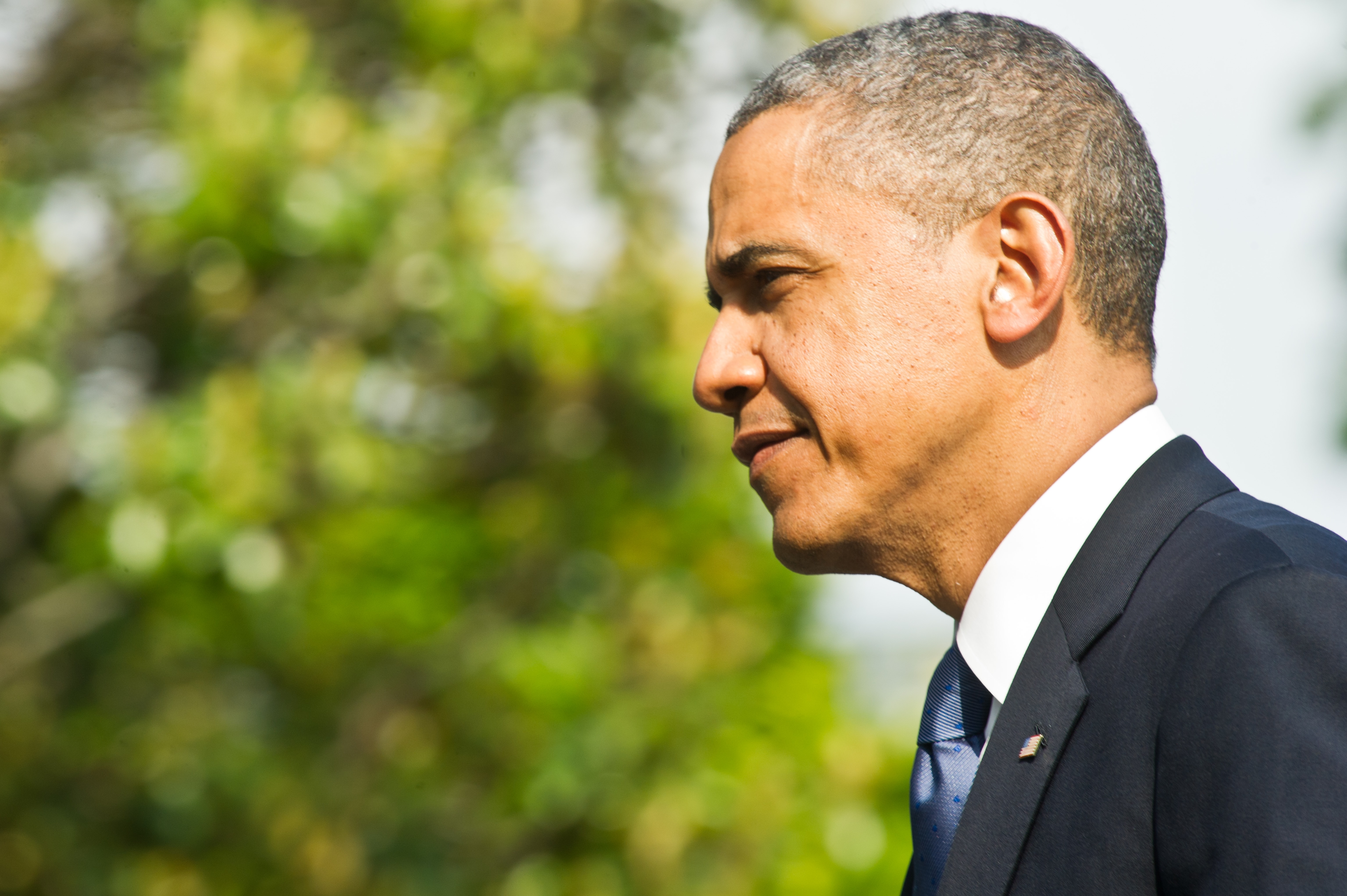
(Photo: Nicholas Kamm/AFP/Getty.)
Obama At Morehouse

Every now and again, an event happens that makes you see much more clearly how divorced from its previous ideals the GOP has become. Obama’s speech at Morehouse was something every conservative has always asked of African-American public figures. We have in Obama a black man raised by a single mother who is now, as even his critics acknowledge, a dedicated father to two daughters, whom he obviously adores. If the right is concerned about the black family, they should be falling over themselves to celebrate what Obama’s family is, and means. But they don’t. It would kill them to say anything gracious about this president.

Drudge yesterday cherry-picked only those parts of the speech that could divide people racially, only those moments when Obama dared to recognize the discrimination and difficulties of young black men – before urging them to overcome them. There’s a racial nastiness here that decent voters still hear and that Republicans have deployed constantly. Their historic refusal to cooperate even one iota with the first black president betrays, it seems to me, a staggering lack of grace and historical sense.

But as with everything Obama says, the speech balanced calls for equality with an admonition that personal responsibility is the inextricable complement to equality. And he did something more in the interstices. A member of the Morehouse faculty writes:

Morehouse is a college dedicated to African American men, the only one of its type in the country.  To hear the first African-American male U.S. president address a class of 500+ African-American men was moving, especially as he touched on his personal struggles of not having a father in the home.

But the reason I’m writing to you though is because he gave two shout-outs to gays.  He encouraged the young men to be a better husband to their wife but then added “or to your husband or partner”.  Later, he told them that their experiences as African-American men should make them more empathetic to others who feel left out, such as Hispanics because of their immigration status, gays and lesbians because of who they love, and Muslims because of how they worship. The ease with which he address gay issues now is striking to me.  Just like with the second inaugural address, it’s just a part of his normal speaking.  It is even more noteworthy because Morehouse once had a reputation as a homophobic place due to several factors, including a student beating about ten years back.

This speech reminded me once again why I supported this man and continue to do so.

Me too. While Washington obsesses over scandals that so far have no connection to him, the president stays calm and carries on.

Noonan Just Loses It

Her column today is simply unhinged from the first sentence:

We are in the midst of the worst Washington scandal since Watergate.

Can she actually believe this? Has this president broken the law, lied under oath, or authorized war crimes? Has he traded arms for hostages with Iran? Has he knowingly sent his cabinet out to tell lies about his sex life? Has he sat by idly as an American city was destroyed by a hurricane? Has he started a war with no planning for an occupation? Has he started a war based on a lie, and destroyed the US’ credibility and moral standing while he was at it, leaving nothing but a smoldering and now rekindled civil sectarian war?

So far as I can tell, this president has done nothing illegal, unethical or even wrong.

You have to bend yourself into several pretzels to even understand what the Benghazi thing is about. All the emails Obama And Turkish PM Erdogan Meet At The White Housereleased show what amounts to a classic inter-agency conflict, resolved dispassionately by Ben Rhodes, in a period of considerable confusion. For the half-baked talking points, someone has been already fired. On the DOJ’s aggressive pursuit of a leaker who might have endangered national security, I thought Republicans like Noonan approved of that. But not when it’s Obama, when it suddenly becomes an “assault”.

The IRS story is a different matter and an entirely legitimate scandal at a lower level. I want those responsible to be fired or prosecuted.  But there is no proof whatever of any connection to the president, his campaign or anyone near the administration itself.  Sarah Hall Ingram, who was in charge of the office scrutinizing 501 (c) 4s has no business still working in the IRS, let alone on healthcare reform. She should be fired as well as her then-deputy, who is out the door June 3.

But how exactly is all this a crippling scandal for the president? He is not involved in any of these issues directly. In fact, it would be highly inappropriate for the president to be micro-managing the IRS or, for that matter, the DOJ. If he were, Noonan would be calling him Carter. At some very distant level, he is formally responsible – but not in the way that Reagan was directly responsible for Iran-Contra, or Clinton for lying under oath about his sex life, or Bush for making brutal torture his central strategy in the war on terror. That’s what makes a scandal a real scandal: the political involvement of a president or a key member of his administration in a cover-up or criminal offense or lie. That simply isn’t here – with the caveat that something may emerge later.

So what on earth is she banging on about? She cannot connect the president directly to this scandal – the first in his four and a half years in office (which must be a record). So she simply assigns blame to him because he is the president. Or this higher bullshit:

A president sets a mood, a tone. He establishes an atmosphere. If he is arrogant, arrogance spreads. If he is to too partisan, too disrespecting of political adversaries, that spreads too. Presidents always undo themselves and then blame it on the third guy in the last row in the sleepy agency across town.

I would say, especially after the catastrophic consequences of the last president, and the continuous siege of the Clinton White House, Obama’s record is extraordinarily clean and remains so. And this president is not partisan, as many Democrats will tell you. He’d love to do a deal with the GOP – if only they were capable of compromise.

I guess what I’m saying is that my own confidence in this president’s integrity and abilities is completely unfazed by these unconnected stories. I have seen no evidence of his involvement in any of them. Noonan hasn’t either. She just invents a conspiracy to audit conservatives with two anecdotes. She writes that “it is not even remotely possible that only one IRS office was involved,” even though we have no evidence that any other one was. The Washington response, moreover, was to tell Cincinnati to cut it out. She then writes:

And why — in the matters of the Associated Press and Benghazi too — does no one in this administration ever take responsibility?

How about this on the DOJ’s leak investigation from today from the president:

“I make no apologies and I don’t think the American people would expect me as commander-in-chief not to be concerned about information that might compromise their missions or might get them killed.”

Yes this is no ordinary scandal, Peggy. Because, as far as the president is concerned, there is as yet no scandal at all.

(Photo: Obama today by Mark Wilson/Getty Images.)

Obama In The Storm

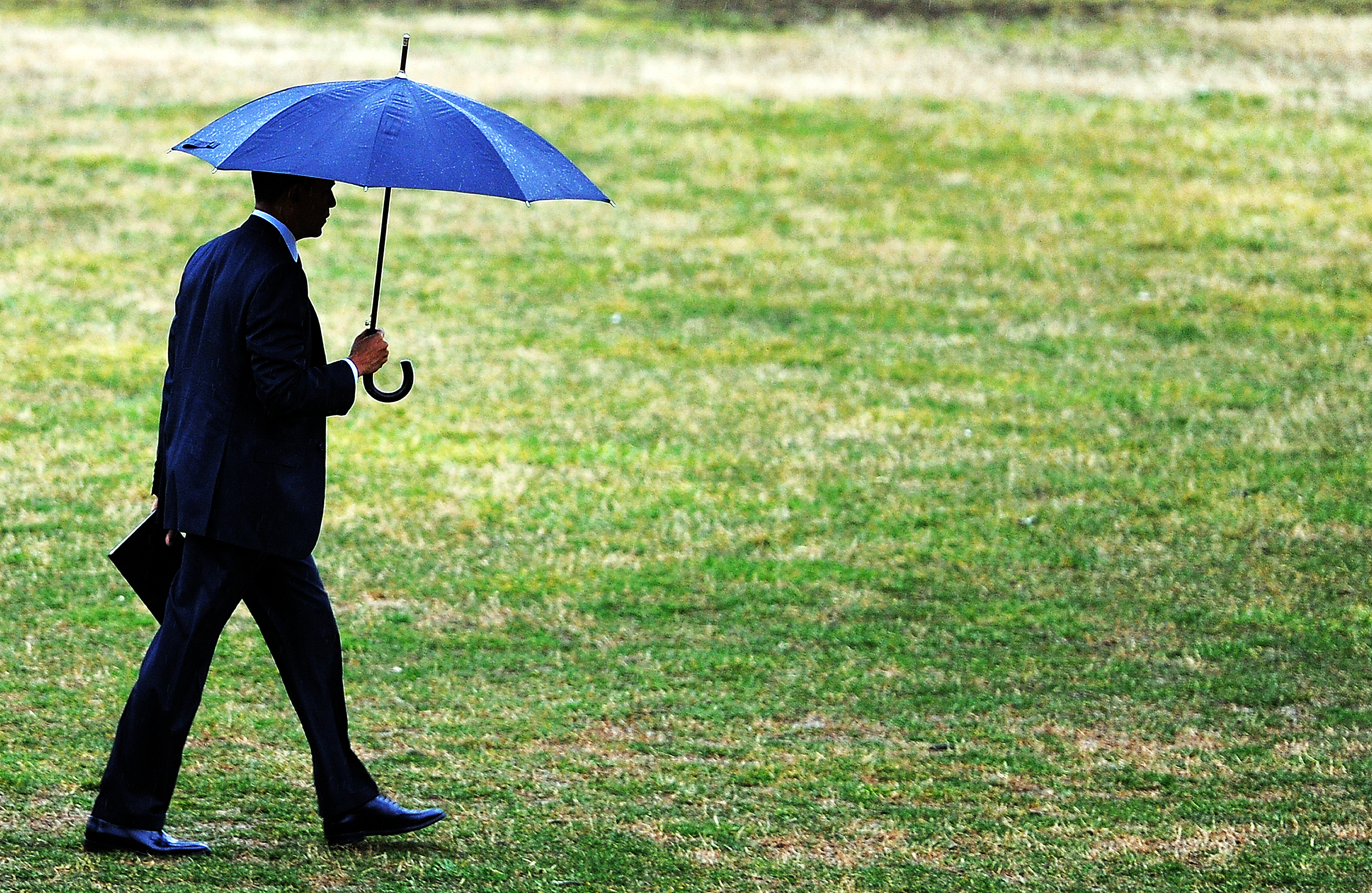
US President Barack Obama uses an umbrel

What would normally be seen as good news for the president is now being spun into bad news. Given our current state of knowledge, it does not appear that the president had any direct role in the inter-agency tussle over how to describe chaotic events in Benghazi. Equally, there doesn’t seem to be – so far – any indication that the IRS Cincinnati office shenanigans reach to the Treasury, let alone the president. On the broad subpoenas for the AP in a leak investigation, the DOJ was being egged on by Congressional Republicans, although it is perfectly fair to say that the Obama administration has been far more focused on pursuing espionage charges than any recent administration.

The Watergate analogy, deployed rather cavalierly by George Will today, is the reverse of what we are seeing. The president was not directing any of this. The attorney general recused himself from the AP investigation. The IRS outrage came after repeated calls from Congressional Democrats for the IRS to give 501(c)4s extra scrutiny because they were – pretty obviously – campaign appendages. A flavor of one letter:

We strongly urge you to fully enforce the law and related court rulings that clearly reserve 501(c)(4) tax status for legitimate nonprofit organizations. And we urge you to investigate and stop any abuse of the tax code by groups whose true mission is to influence the outcome of federal elections.

On Benghazi, it seems to me we have a classic inter-agency tussle over how to present the facts – but also a reasonable process to hammer out a consensus. The Benghazi emails released yesterday do not seem that scandalous to me.

So the critique now is that the president is not sufficiently in charge, that he is a bystander to his own administration. I have to say this has some appeal as a general critique, but it isn’t borne out by these scandals. The IRS is rigorously independent of the White House – and the Cincinnati office was picked as a place to investigate the 501(c)4s because it was far away from Washington and therefore seen as more neutral. The reason to look closely at those new groups was perfectly legitimate, even if the partisan implementation is abhorrent. On the AP subpoenas, the decision was rightly made by the DOJ, independently of the president.

If we are to blame the president, are we really saying that we want a president involved in or directly monitoring these procedures?

Should he make a call on subpoenaing AP phone records? Nope. Should he be in the middle of an inter-agency fight over whom to blame for the Benghazi attack? Nope. Should he have known about and stopped partisan bias at the IRS? On that last question, arguably yes. It was in the news; there were vocal complaints about disparate treatment; there were calls to investigate. It’s not unreasonable to think that a president concerned about this should have instructed the acting head of the IRS to make sure no politics was involved.

But even that last one is a stretch. And if Obama had been that involved in the minutiae of all this, here is what the GOP would now be saying: 1. He’s another micro-managing Jimmy Carter; and 2. He’s a control freak out to persecute us. Hovering above all this, as David Ignatius notes, is the context of a Washington where everyone is so terrified of scandal, they ensure they do not have direct knowledge of what’s going on below them. Holder recused himself; Obama must now be relieved his fingerprints are nowhere near the IRS; on Benghazi, Clinton was hassled because of what a civil servant, Victoria Nuland, said in defending her turf and agency.

And hovering above it still is the media lull after Obama’s re-election. Ratings are down. This is the first blood in the water since Obama took office four and a half years ago – a record you might think would be relevant to our current discussion. So we have the frenzy; and the hyperboles; and then the slow discovery of the actual detail. All of this is part of our system. And it’s better than any alternative. But it’s a distortive lens to view politics through, when we have a still-critical long-term fiscal crisis, a climate emergency, implementation of healthcare reform, and immigration reform to focus on.

Obama has made the right call in firing the interim IRS head, releasing all the Benghazi emails, and pledging a full investigation in the IRS matter. The rest is Washington’s need for conflict and partisan advantage. But this too, I suspect, will pass, unless there really is something in there that we do not yet know.

(Photo: US President Barack Obama uses an umbrella as he walks under rain to board Marine One after visiting wounded service members at the Walter Reed National Military Medical Center in Bethesda, Maryland, on March 2, 2012. By Jewel Samad/Getty.)

Blaming America The Most

Perhaps it’s unfair, since this was said in the heat of a debate with Bill Maher. But this is how my friend Glenn Greenwald described the US last Friday night:

It’s amazing for you to say “Look at all these Muslims. The minute you give them a little freedom, they go wild and they start being all violent” … How can you be a citizen of the United States, the country that has generated more violence and militarism in the world over the last five or six decades and say “Look at those people over there? They are incredibly violent”?

I’m very much with Glenn on American denial about the consequences of our own actions. I’m with him in believing that we have a very dangerous capacity to whitewash our own sins and highlight those of others. I do think the US – mainly since 9/11 – has been generating violence on a large scale, most recently by invading and occupying Iraq and not providing minimal security for its inhabitants, leading to a sectarian bloodbath bigger even that Syria’s current horror.

But really: the US has generated more violence and militarism in the last sixty years than any other country? Has Glenn heard of the Cultural Revolution? Or the reign of Pol Pot? Or the brutal legacy of Stalin?

Or the invasion and suppression of Central Europe by the Soviets? Or the Chinese campaign to immiserate Tibet? Or the Rwandan civil war? Or the Balkan atrocities (which the US helped stop)? Or the civil war in Congo? Or Bashir Assad in Syria? Or Saddam Hussein in the Iran-Iraq war? Or the brutal repression of the Iranian regime in 2009?

Yes, we need to look our own recent militarism and war crimes with a clear eye. But America has not been the most violent and militaristic country on the planet over the last six decades. We are not inherently a force for good – no country can be. We are all humans prone to human failings and crimes. But I’m not going to stand by and have the US equated with the Soviet Union and Mao’s China and Saddam’s Iraq and Assad’s Syria without a protest.

The Queerness Of Keynes

[Re-posted from earlier today]

“I think I shall have to give up teaching females after this year. The nervous irritation caused by two hours’ contact with them is intense. I seem to hate every movement of their minds. The minds of the men, even when they are stupid and ugly, never appear to me so repellent” – John Maynard Keynes.

It seems to me that we can readily acknowledge and accept many unpleasant features of Keynes’ life (like his misogyny) without thereby impugning his economic arguments. If you want to read the ur-smear-job, check out the latest from Forbes, which manages to compile every little thing that could possibly alienate a reader about Keynes, without any serious attempt to relate it to his economic ideas. (The accusation of pedophilia is based on nothing but use of the term “boys” to mean tricks. The youngest man Keynes slept with was 16, which is the current age of consent in the UK.) Yes, his broad argument for the economy was culturally counter-intuitive (which “moralist” in the early 20th century would think that there are times when thrift is collectively self-defeating?) – but it remains supported by the data, even now. Perhaps especially now. That’s how I view Keynes’ “immoralism”. It was about rejecting conventional morality if the real world showed its empirical futility. And, of course, I think he was absolutely right to dismiss any moral difference between heterosexuality and homosexuality. He was just way ahead of his time.

I have no doubt that Keynes sexual orientation might have given him an outsider’s view of what “morality” was deemed to be, and he was understandably and bravely skeptical about it. That may have given him the impulse to challenge conventional wisdom, but the products of his prodigious mind seem to me to be best analyzed by economists on their merits. On sexual matters and economic ones, in the long run, Keynes is very much alive – and helping future generations in ways most of us would dream about.

Desperately Seeking An Enemy

David Barash reflects on our primate need for foes and our tendency to be “especially prone to exaggerating them”:

“Whoever lives for the sake of combating an enemy,” wrote Nietzsche, “has an interest in the enemy’s staying alive.” It is reported that at the end of the Third Punic War, after Carthage had finally been destroyed and pillaged, her people killed or enslaved, her land sown with salt, a kind of sadness came over the victorious citizens of Rome, an awareness that with their defining struggle behind them, they would never be the same.

All too often, nationhood, or even selfhood, is defined by one’s opponents. Imagine: Ahab without Moby Dick, the Hatfields without the McCoys. As each has been defined by the other, enmity has subtly been transformed into dependence. If Moby Dick had died of old age, or in the sweet embrace of a giant squid, or by someone else’s harpoon, Ahab would probably have mourned rather than celebrated. But Ahab was a fictional character, while the rest of us­—and our enemies—are very real. Equally real is the fact that sometimes these enemies go away, leaving us frustrated, empty, and strangely alone.

This is especially true about Americans and terrorism. The reaction to the home-grown pressure-cooker bombs by two losers in Boston reveals the degree of the 9/11 PTSD the country is still reeling from. And the panic and hysteria doesn’t actually help the war on Jihadist terror. We gave the Tsarnaev brothers what they craved: full metal media orgasm. They may have killed three people in a horrifying attack – but it led to saturation coverage (yes, we joined in) and to the publicity post-Qaeda Jihadists live for.

In that sense, Pete King is as big an unwitting recruiter for Jihadist terrorism as he was a very witting supporter of Irish terrorism against innocent civilians. He once gave mass-murderers money; now he gives them publicity. What we haven’t yet figured out is that once we have disabled the organized terror groups like al Qaeda, the best thing we can do with rogue Jihadists is to treat them with withering contempt.

At times, many Republicans like King almost seem unconsciously to want there to be another 9/11 – to justify their inability to move past that event.

And so they unwittingly go apeshit over any hint of terrorism – from Fort Hood to Benghazi – as if merely calling it that will do anything but help the terrorists gain publicity and attention. I’m not saying we shouldn’t cover these attempts at mass murder or fail to call them what they are; I’m saying we should also put them in better perspective. Take what happened over the weekend in New Orleans. A Mother’s Day parade, of all things, was assaulted by three men with guns. Nineteen people were injured including two children. If there’s a definition of terror, it would be attending something as routine as a parade and find it turning into a potential bloodbath. And yet, this news is nothing compared to what it would be if the perpetrators were Jihadists.

It’s that disproportion that troubles me – because it gives terrorists more incentives. Sometimes the best way to defeat terrorists is both to prevent them by law enforcement, surveillance, etc, as we are doing, but also to ignore them when necessary, to refuse to change our way of life (like putting an entire city under curfew), and to be less afraid of the boogeyman.

And the point of this kind of strategy is to hit terrorists where it truly hurts: the oxygen supply of hysterical reaction and coverage. I have not changed my mind about the seriousness of the threat of religiously-inspired terror. But I have changed my mind about how best to defeat them. As a country, we began the journey back from Cheneyism in the last years of Bush. Obama has done a huge amount to both defeat the Jihadists and to defuse their message. But the rest of us need to do more.

Whitewater Round II

US-LIBYA-ATTACKS-CONGRESS-CLINTON

Well, they finally have something. The talking points provided by the CIA were pushed back against and effectively edited by the State Department’s spokesperson, Victoria Nuland. The key emails, it seems to me, are the following. Nuland showed classic bureaucratic in-fighting as the CIA sought to highlight its own warnings, ignored by State. The reference to elements of al Qaeda in the country, highlighted by the CIA:

“could be abused by members (of Congress) to beat up the State Department for not paying attention to warnings, so why would we want to feed that either? Concerned …”

That’s prima facie evidence of politically spinning the facts. The “either”, however, refers to previously mentioned legitimate wariness of tipping off the Jihadists that the US was onto them. Notice how the second statement was utterly unnecessary – and purely political, defending State and Clinton. And even when the specific reference to Jihadist elements in Libya was removed, Nuland still cavilled:

“These changes don’t resolve all of my issues or those of my buildings (sic) leadership.”

My building’s leadership? Who can that mean but Clinton?

As Joe Klein has noted, these are venial sins, not mortal ones. And the premise of the Republican argument that immediately including the possibility of a pre-planned Jihadist attack would have deeply wounded the Obama campaign seems ludicrous to me. He decimated al Qaeda in Af-Pak and killed bin Laden, but a minor, if foolish, attempt at unnecessary spin after an embassy siege would have undone this legacy in the eyes of voters? Come off it.

All of this is a grotesque over-reaction – for transparently political purposes. The GOP does not know any more how to propose constructive policies that actually might improve the lives of Americans. But they sure know how to construct a “scandal” into a mountain when it is only a bump in the tarmac.

It all reminds me of Whitewater.

At its core, there really was nothing of anything there. God knows we tried to find something – and as editor of a pro-Clinton magazine, I probably went too far in proving our independence. But it is also true – as we discovered in the 1990s – that the Clintons cannot resist giving their enemies a slim reed of fact upon which to build their demonization machine. In the end, all perspective is lost altogether – and you end up impeaching a president.

I think this is the context in which to understand this. The Obama administration has been remarkably scandal-free. Former Secretary of State and possible presidential nominee, Hillary Clinton, is now Fox News’ path to even more money, and GOP’s path to appearing relevant and destructive to an Obama second term. An opposition legitimately exists to find venial sins like Nuland’s, but when they are then transformed by a massive media campaign into something that is worse than Watergate and Iran-Contra combined, it becomes a farce.

Compared with the Republicans’ pure partisanship and politicking, Nuland’s is pretty minor. But it still exists. As does the pattern of the Clintonistas’ giving their enemies a sword to plunge into them. The thing about Hillary is that, unlike Obama, these persistent, delusional, political creeps get under her skin. She then makes mistakes. Which gives them more fodder … and it’s back to the 1990s we go.

This time, however, the GOP has nothing positive to propose after they have slimed their bete noire. So their nihilism is even starker. They need to recall, for their own good, where over-reaching led them to in the late 1990s. But Clinton needs to recall, for her own good, why she endured so much hazing in the 1990s. She emerged from the State Department seemingly free of it – as the GOP tried to leverage her against Obama. Now she is alone – and they will not rest until they have destroyed her.

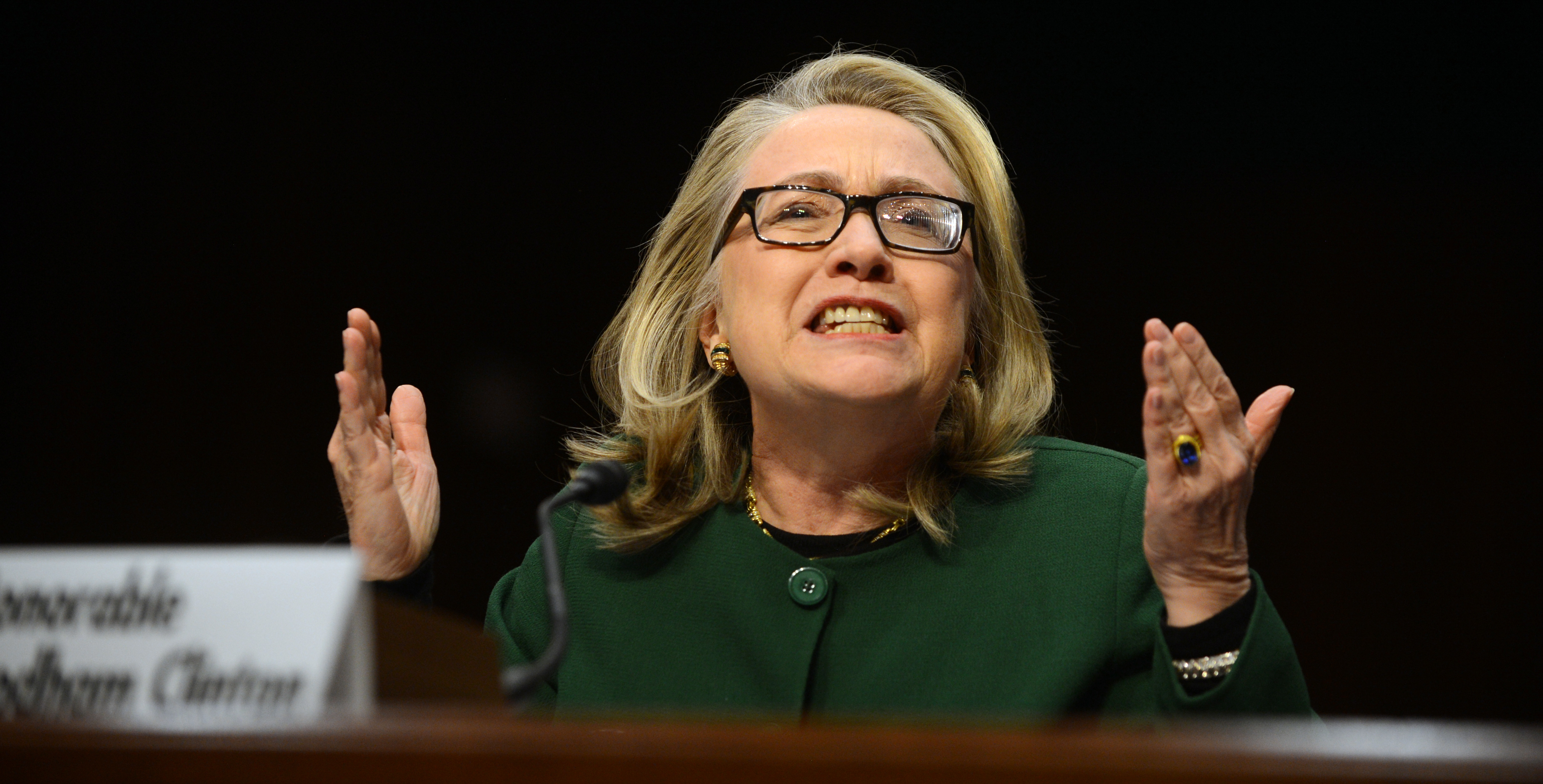
(Photo: US Secretary of State Hillary Clinton testifies before the Senate Foreign Relations Committee on the September 11, 2012 attack on the US mission in Benghazi, Libya, during a hearing on Capitol Hill in Washington, DC, on January 23, 2013. By Saul Loeb/AFP/Getty.)

Intervene In Syria? Just Say No, Ctd

ISRAEL-SYRIA-CONFLICT

Fareed Zakaria is, as usual, a sane voice in the escalating crisis:

Would U.S. intervention–no-fly zones, arms, aid to the opposition forces–make things better? It depends on what one means by better. It would certainly intensify the civil war. It would also make the regime of Bashar Assad more desperate. Perhaps Assad has already used chemical weapons; with his back against the wall, he might use them on a larger scale. As for external instability, Landis points out that if U.S. intervention tipped the balance against the Alawites, they might flee Syria into Lebanon, destabilizing that country for decades. Again, this pattern is not unprecedented. Large numbers on the losing side have fled wars in the Middle East, from Palestinians in 1948 to Iraq’s Sunnis in the past decade.

If the objective is actually to reduce the atrocities and minimize potential instability, the key will be a political settlement that gives each side an assurance that it has a place in the new Syria. That was never achieved in Iraq, which is why, despite U.S. troops and arms and influence, the situation turned into a violent free-for-all. If some kind of political pact can be reached, there’s hope for Syria. If it cannot, U.S. assistance to the rebels or even direct military intervention won’t change much: Syria will follow the pattern of Lebanon and Iraq–a long, bloody civil war. And America will be in the middle of it.

Anyone who wants to insert the US into such a bloody, violent, increasingly sectarian civil war needs his or her head examined. We couldn’t control or even understand one while we were occupying Iraq – and, as Fareed notes, scores of thousands were murdered under our very noses, with millions of refugees. An entire country is afflicted with communal PTSD of the most severe kind. Last month, the deaths in Iraq’s continuing civil war reached a post-occupation record of 700. And that’s after we invaded, occupied and tried to set up a non-sectarian government.  What are the odds we can guide yet another sectarian civil war from the skies?

Brent Sasley claims that the recent Israeli strikes on Syria can succeed where the US can’t because their goals are pragmatic and limited:

[Israel’s] goal is to prevent weapons and technology from reaching its primary enemy in this specific arena, namely, Hezbollah (the Syrian military is no match for Israel). It doesn’t see itself as responsible for everything else, including interfering in the succession process being played out so violently, protecting civilians from the horrific atrocities being committed against them, and influencing the outcome of the civil war and, from there, the region. All this is reserved for later consideration or others to deal with. Jerusalem defines its responsibilities, rather, as its immediate security needs and the near-term future effects of its actions. Washington’s abilities are much greater, its goals are much broader, and its responsibilities are much bigger. Comparing Israel to the US under these conditions isn’t helpful for understanding America’s actions thus far or its capabilities for doing more.

Michael Koplow agrees – and goes further:

[T]o those who incessantly insist that Israel is of absolutely no strategic worth to American interests and is nothing but an albatross around the neck of the U.S., I’d submit that having the Israeli military around to prevent transfers of Iranian-furnished weapons to Hizballah and to make sure that Assad’s delivery systems for chemical weapons also stay right where they are, all while battlefield-testing American weapons in the process, is pretty useful right about now.

Justin Logan adds that “only a terrifically secure country could have as poor and astrategic a debate about war as the one we’re having” on Syria:

In fairness to [liberal hawks], they are carrying the torch of a time-honored American tradition of foreign policy thinking. Historically, debates over foreign intervention in the United States have featured liberal analysts against realists and the military. In the 1950s, President Eisenhower reportedly had to admonish his activist Secretary of State John Foster Dulles to calm down: “Don’t do something, Foster, just stand there!”

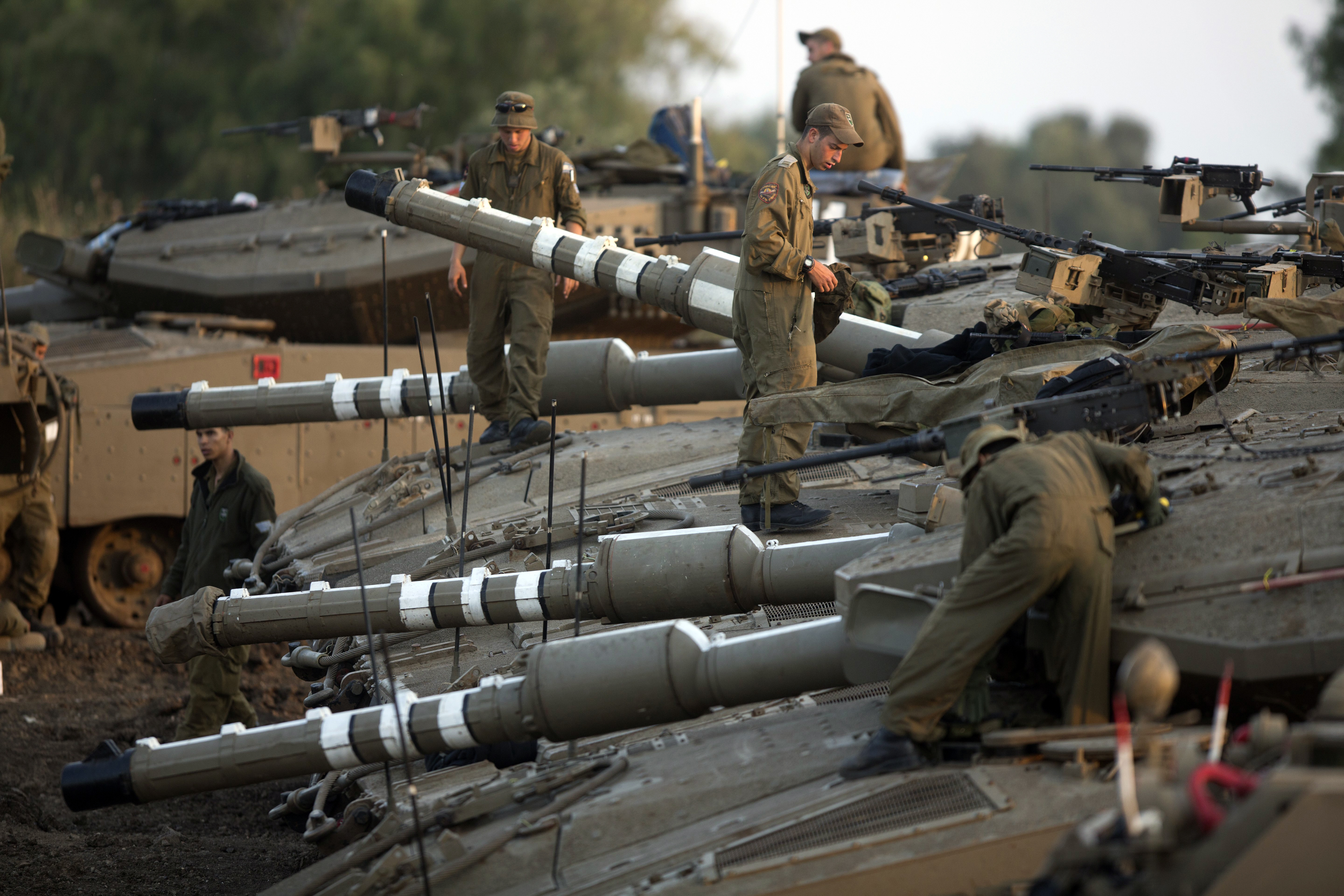
(Photo: Israeli soldiers walk on the top of their Merkava tanks deployed in the Israeli annexed Golan Heights near the border with Syria, on May 6, 2013. UN chief Ban Ki-moon has appealed for restraint after Israeli air strikes on targets near Damascus which prompted Syrian officials to warn ‘missiles are ready’ to retaliate. By Menahem Kahana/AFP/Getty Images)

A Keynesian For Now

The economics debate in this country these past few years is almost a microcosm of the problem with John_Maynard_Keynesideological politics. In response to the worst recession since the 1930s, the right immediately rejected Keynes’ core analysis of the Great Depression and turned any idea of stimulus or spending and borrowing to tackle the recession into a gloom-ridden, terrifying harbinger of hyper-inflation and insurmountable debt. The zero House votes for the Obama stimulus reflect that rigid lockdown of the mind. We know where this aversion comes from – the misappropriation of Keynesian emergency economic management as a general theory of full employment and growth in the 1960s and 1970s. And there is a strong argument that misreading Keynes in that era of hubristic liberalism was indeed an error that needed a correction.

But that doesn’t rebut Keynes’ central claim about our current predicament: that in a liquidity trap, austerity is counter-productive and fears of inflation are over-blown. Bartlett:

The core insight of Keynesian economics is that there are very special economic circumstances in which the general rules of economics don’t apply and are, in fact, counterproductive.

This happens when interest rates and inflation are so low that there is no essential difference between money and bonds; money, after all, is simply a bond that pays no interest. When this happens, monetary policy becomes impotent; an increase in the money supply has no stimulative effect because it does not lead to additional spending by consumers or businesses.

This is not an eternal ideology – determined as “on the left” and therefore impermissible on the right or center. It’s a specific analysis of a specific problem, which happens to be where we are now. A true conservative would throw ideology aside and look at the real world. Which is the difference between today’s GOP and a genuine conservative, like Bruce. I’m not a Keynesian for ever. But I am a Keynesian for now.