Who Won The Argument?

US-JUSTICE-GAY-MARRIAGE

As we know, it’s foolish to predict a decision based on oral arguments (pdf). So I won’t. But since I’ve been arguing this question most of my adult life, I figured it would make sense to see who I think got the better of the case. Some of the issues are beyond my skill-set: I’m not qualified to answer on the somewhat esoteric issue of standing – except that it is clearly at issue here and may give a deadlocked court a way out.

This exchange was the most clarifying on that matter:

JUSTICE SOTOMAYOR: — Justice Scalia proffered the question of the Attorney General. The Attorney General has no personal interest.

MR. COOPER: True.

JUSTICE SOTOMAYOR: He has a fiduciary obligation.

But no such obligation exists for the five (now four) individuals claiming to be harmed by the striking down of Proposition 8. Here is how Olson responded to that argument:

TED OLSON: What is missing here, because you’re not an officer of the State of California, you don’t have a fiduciary duty to the State of California, you’re not bound by the ethical standards of an officer of the State of California to represent the State of California, you could have conflicts of interest. And as I said, you’d be — could be incurring enormous legal fees on behalf of the State when the State hasn’t decided to go that route.

But if a state’s elected leadership refuses to intervene to defend a popular initiative, doesn’t that make a mockery of the entire system? Solicitor General Verrilli gave this response:

VERILLI: We do think that with respect to standing, that at this point with the initiative process over, that Petitioners really have what is more in the nature of a generalized grievance and because they’re not an agent of the State of California or don’t have any other official tie to the State that would — would result in any official control of their litigation, that the better conclusion is that there’s not Article III standing here.

I found myself oddly persuaded that there is standing here, simply because if there isn’t, I don’t see how any initiative would matter if the executive branch simply refused to defend it if it were subsequently struck down. It seems an affront to democracy not to defend a popularly successful initiative. But that is obviously not a legal argument – just an intuitive inference from the to-and-fro.

Next up, the core argument of those defending Proposition 8 remains … yes, procreation. Here’s the part of the argument I thought came closest to the nub of it:

JUSTICE BREYER: What precisely is the way in which allowing gay couples to marry would interfere with the vision of marriage as procreation of children that allowing sterile couples of different sexes to marry would not? I mean, there are lots of people who get married who can’t have children …

JUSTICE KAGAN: Well, suppose a State said, Mr. Cooper, suppose a State said that, because we think that the focus of marriage really should be on procreation, we are not going to give marriage licenses anymore to any couple where both people are over the age of 55. Would that be constitutional?

MR. COOPER: No, Your Honor, it would not be constitutional.

JUSTICE KAGAN: Because that’s the same State interest, I would think, you know. If you are over the age of 55, you don’t help us serve the Government’s interest in regulating procreation through marriage. So why is that different?

MR. COOPER: Your Honor, even with respect to couples over the age of 55, it is very rare that both couples — both parties to the couple are infertile, and the traditional -­ (Laughter.)

JUSTICE KAGAN: No, really, because if the couple — I can just assure you, if both the woman and the man are over the age of 55, there are not a lot of children coming out of that marriage…

I’d say that Cooper was destroyed in that exchange. So he tries a different tack:

MR. COOPER: It’s designed, Your Honor, to make it less likely that either party to that — to that marriage will engage in irresponsible procreative conduct outside of that marriage. Outside of that marriage. That’s the marital — that’s the marital norm.

The procreation argument then becomes an argument that civil marriage should be restricted to heterosexuals because only heterosexuals can commit adultery and thereby create children. So monogamy is more important to them than to homosexuals, and sexual monogamy is the core definition of civil marriage. This argument might have made sense before contraception, but it’s a pretty thin reed thereafter. You can see how the pill changed everything. It made adultery much safer. It made marriage non-procreative, if that’s what the couple wanted. Again, the case collapses.

We then arrive at the question of how including gay couples in civil marriage would harm the institution as a whole:

JUSTICE KAGAN: What harm you see happening and when and how and — what — what harm to the institution of marriage or to opposite-sex couples, how does this cause and effect work?

MR. COOPER: Once again, I — I would reiterate that we don’t believe that’s the correct legal
question before the Court, and that the correct question is whether or not redefining marriage to include same-sex couples would advance the interests of marriage as a -­

JUSTICE KENNEDY: Well, then are — are you conceding the point that there is no harm or denigration to traditional opposite-sex marriage couples? So you’re conceding that….

MR COOPER: No, your Honor, no. I’m not conceding that … Consider the California voter, in 2008, in the ballot booth, with the question before her whether or not this age-old bedrock social institution should be fundamentally redefined, and knowing that there’s no way that she or anyone else could possibly know what the long-term implications of — of profound redefinition of a bedrock social institution would be.

That is reason enough, Your Honor, that would hardly be irrational for that voter to say, I believe that this experiment, which is now only fairly four years old, even in Massachusetts, the oldest State that is conducting it, to say, I think it better for California to hit the pause button and await additional information from the jurisdictions where this experiment is still maturing…

The point I am trying to make, and it is the Respondents’ responsibility to prove, under rational
basis review, not only that — that there clearly will be no harm, but that it’s beyond debate that there will be no harm.

I would simply notice the slipperiness of Cooper’s point. He goes from arguing that allowing gay couples to marry would harm the institution – but because he cannot really find an argument for that, he ups the ante. He doesn’t have to prove a positive; his opponents have to prove a negative “beyond debate.” That’s simply impossible. What is reasonable, it seems to me, is to argue that given the relatively new nature of this institution, some patience may be prudent – but may also be directly harmful. Here the common sense of one Justice sticks out like a new crocus budding in the earth:

JUSTICE KENNEDY: We have five years of information to weigh against 2,000 years of history or more. On the other hand, there is an immediate legal injury or legal — what could be a legal injury, and that’s the voice of these children. There are some 40,000 children in California, according to the Red Brief, that live with same-sex parents, and they want their parents to have full recognition and full status. The voice of those children is important in this case, don’t you think?

Maybe Kennedy is more concerned about the status of the children – and their stigmatization by being denied the stability of married parents – than the rights of the adults. It was an interesting digression. Then we arrive at the Scalia view that we shouldn’t be talking about this at all, because the Founders didn’t:

JUSTICE SCALIA: You — you’ve led me right into a question I was going to ask. The California Supreme Court decides what the law is. That’s what we decide, right? We don’t prescribe law for the future. We — we decide what the law is. I’m curious, when -­ when did — when did it become unconstitutional to exclude homosexual couples from marriage? 1791? 1868, when the Fourteenth Amendment was adopted? Sometimes — some time after Baker, where we said it didn’t even raise a substantial Federal question? When — when — when did the law become this?

MR. OLSON: When — may I answer this in the form of a rhetorical question? When did it become unconstitutional to prohibit interracial marriages? When did it become unconstitutional to assign children to separate schools.

JUSTICE SCALIA: It’s an easy question, I think, for that one. At — at the time that the Equal Protection Clause was adopted. That’s absolutely true. But don’t give me a question to my question. (Laughter.)

JUSTICE SCALIA: When do you think it became unconstitutional? Has it always been unconstitutional?

MR. OLSON: When the — when the California Supreme Court faced the decision, which it had never faced before, is — does excluding gay and lesbian citizens, who are a class based upon their status as homosexuals — is it — is it constitutional –

JUSTICE SCALIA: Okay. So I want to know how long it has been unconstitutional in those -­

MR. OLSON: I don’t — when — it seems to me, Justice Scalia, that -­

JUSTICE SCALIA: It seems to me you ought to be able to tell me when. Otherwise, I don’t know how to decide the case.

MR. OLSON: I — I submit you’ve never required that before. When you decided that — that individuals — after having decided that separate but equal schools were permissible, a decision by this Court, when you decided that that was unconstitutional, when did that become unconstitutional?

JUSTICE SCALIA: 50 years ago, it was okay?

MR. OLSON: I — I can’t answer that question, and I don’t think this Court has ever phrased the question in that way.

JUSTICE SCALIA: I can’t either. That’s the problem. That’s exactly the problem.

But the answer is surely that these forms of discrimination became unconstitutional once the collective consciousness of Americans recognized that the discrimination was unjust – and sometimes before. When Loving vs Virginia was decided, there was far more popular support for maintaining anti-miscegenation laws than there is now from keeping gays out of legal marriage. And once you’ve opened up equal protection beyond race, your only reliable guide is public consciousness and consensus. This is anathema to Scalia. But a constitution that cannot adapt to the constantly-changing society it regulates is, in the words of Scalia himself, “dead, dead, dead.” There was a more interesting exchange with Verrilli, representing Obama:

JUSTICE SCALIA: So your — your position is only if a State allows civil unions does it become unconstitutional to forbid same-sex marriage, right? …

GENERAL VERRILLI: Our position is — I would just take out a red pen and take the word “only” out of that sentence. When that is true, then the Equal Protection Clause forbids the exclusion of same-sex marriage, and it’s an open question otherwise.

For what it’s worth, I thought that the Obama argument that providing all the substantive benefits of civil marriage, while withholding the name, was less constitutional than banning all of the substance entirely, fared poorly in the exchanges. It seemed “a very odd rationale” to Kennedy and counter-intuitive to Sotomayor. But Roberts got to the heart of it:

CHIEF JUSTICE ROBERTS: So it’s just about — it’s just about the label in this case.

MR. OLSON: The label is -­

CHIEF JUSTICE ROBERTS: Same-sex couples have every other right, it’s just about the label.

MR. OLSON: The label “marriage” means something. Even our opponents -­

CHIEF JUSTICE ROBERTS: Sure. If you tell — if you tell a child that somebody has to be
their friend, I suppose you can force the child to say, this is my friend, but it changes the definition of what it means to be a friend. And that’s it seems to me what the — what supporters of Proposition 8 are saying here. You’re -­ all you’re interested in is the label and you insist on changing the definition of the label.

MR. OLSON: It is like you were to say you can vote, you can travel, but you may not be a citizen. There are certain labels in this country that are very, very critical. You could have said in the Loving case, what — you can’t get married, but you can have an interracial union. Everyone would know that that was wrong, that the — marriage has a status, recognition, support, and you — if you read the test, you know … this Court is the one that has said over and over again that marriage means something to the individual: The privacy, intimacy, and that it is a matter of status and recognition …

I think Olson wins that one. I don’t get Roberts’ “friend” analogy. No one is saying that those who oppose married gay couples must be forced to accept that, or to believe that their marriage is now different than it once was, no more than a devout Catholic is required in his or her life to recognize the morality of a second marriage, following a civil divorce. What it’s about is the state‘s legal description of the arrangements of couples under its jurisdiction, and carving out a separate but equal category for people who qualify for the right in every respect except their sexual orientation. And the history of the Court on the importance of that term “marriage” is unequivocal and deep and strong.

Lastly, we get the inevitable polygamy argument. And Olson nails it:

TED OLSON: [I]f a State prohibits polygamy, it’s prohibiting conduct. If it prohibits gay and lesbian citizens from getting married, it is prohibiting their exercise of a right based upon their status. It’s selecting them as a class, as you described in the Romer case and as you described in the Lawrence case and in other cases, you’re picking out a group of individuals to deny them the freedom that you’ve said is fundamental, important and vital in this society, and it has status and stature, as you pointed out in the VMI case.

All in all, a very interesting exchange of some of the core issues. My sense is that SCOTUS will try to find a way to rule in as narrow a way as possible – but I have no idea what form that could take. Which suits me just fine. Either Prop 8 falls and its implications do not extend beyond that state, or SCOTUS narrowly upholds Prop 8, and Californian voters get to vote again soon. For my part, I’d like to win this in the most enduringly legitimate way – in the democratic process, where we are winning more quickly than some of us ever dreamed of.

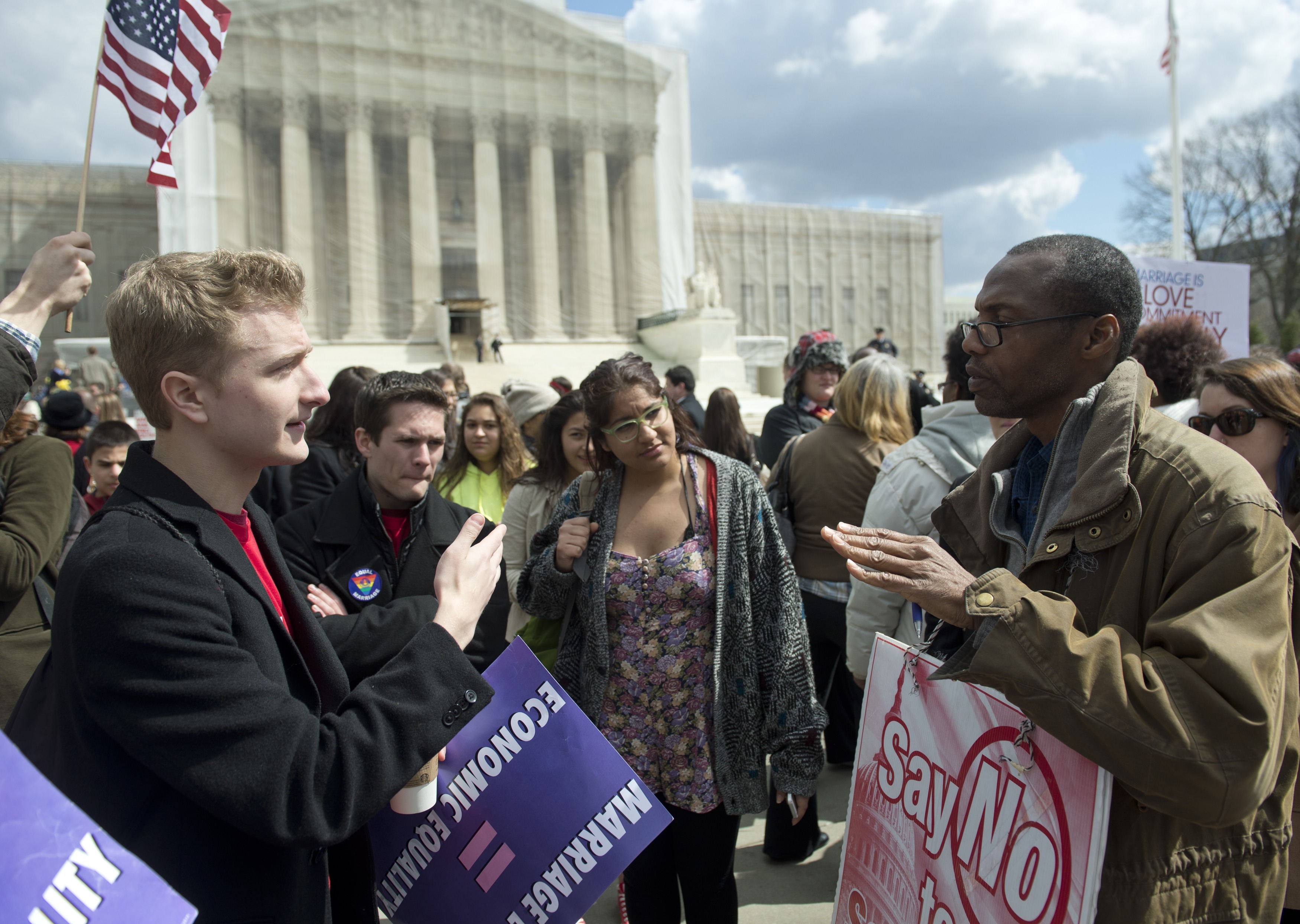
(Photo: Same-sex marriage supporters and same-sex marriage opponents argue their points in front of the US Supreme Court on March 26, 2013 in Washington, DC, as the Court takes up the issue of gay marriage. By Saul Loeb/Getty.)

Flies Collecting On A Wound

This embed is invalid

My friend and former colleague, Conor Friedersdorf, takes me to task for my demonization and dismissal of anti-war protesters a decade ago. He is right to, and I certainly don’t take it personally. I would have been disappointed if he had left me out – because it would not be consonant with Conor’s integrity as a writer.

I could quibble. But I simply do not have the standing to do so at this point. Still, here are a few salient issues that I think have been missed in this necessary reflection.

The first is the 2000 election. In some ways, 9/11 wiped that vivid, searing, deeply divisive event from the public consciousness. But it played a part, I think, in the polarized climate that made the post-9/11 debate so poisonous. In the summer of 2000, when I foolishly found myself wanting Al Gore to lose (Excelsior!), it was not a strong emotion. In the campaign, Gore was the advocate for a larger defense budget and Bush was all about being a “humble” nation. I figured there wasn’t much difference between them (and I still think Gore would have launched the Iraq War as well). But when the vote ended up a statistical tie in a key state, Florida, stances hardened.

I was a lonely Bush supporter in TNR offices back then, and I felt something I’d never felt before, even in the polarized, back-biting, ego-colliding of that era’s TNR. My colleagues felt that the election was being stolen in front of their eyes – and there was almost a cold civil war mood emerging. They also knew, as I did, that Bush would be a president without a majority of the national popular vote. Worse, Bush, instead of governing in a way that calmed the waters, and acknowledging his weak position, acted from the get-go as if he had won a landslide. America was in a constitutional crisis months before it was embroiled in a second Pearl Harbor. The very legitimacy of the entire democracy was in the air. It was in that profoundly polarized atmosphere that the catastrophe happened.

I succumbed to the polarization, and had become far more attached to the new president than I ever expected to a year before. Others also got carried away:

It may have seemed meaningless at the time, but now we know why 7,000 people [sic] sacrificed their lives — so that we’d all forget how Bush stole a presidential election.

My horror at 9/11, combined with crippling fear, compounded by personal polarization was a fatal combination. This is not an excuse. It’s an attempt at an explanation. And my loathing of the left had been intensified earlier that year by a traumatizing exposure of my own sex life by gay leftists determined to destroy my reputation and career because of my mere existence as a gay conservative.

I had spent much of the 1990s at war with the gay left, and I think it had embittered me. That those battles were over my campaign for marriage equality and military service as the two biggest priorities of the gay rights movement makes for a strange irony today. Nonetheless, when you have been smeared, physically threatened, picketed and despised by the gay left, you dig in and begin to see nothing but bad in that political faction. And earlier that same year, I had been publicly humiliated by parts of the gay left for being HIV-positive, and trying to find other HIV-positive men online for sex and love. That made my embitterment deeper. When I really examine my emotional state that year, I can see better now why my anger at the left in general came out so forcefully in the wake of such a massacre. It was a foolish extrapolation from a handful of haters to an entire political tradition. Again, this is not an excuse. But if I am to understand my own personal anger at the anti-war left, it is part of the story.

Second, I was marinated in the knowledge of Saddam Hussein’s unique evil. At TNR in the 1990s, the consensus was that this dictator truly was another Hitler type (and in many ways, he was). My moral umbrage was exacerbated, I think, by this previous history. You can see it in the blog – as early as September 11, the day the mass murder occurred. Here’s the post:

Check out this 1995/1996 Public Interest essay on the first World Trade Center bombing. Some of it sends chills down your spine with its prescience. But its most important suggestion is that Iraq might have been behind the bombing. Ditto today. Saddam is not only capable but willing – especially against a nemesis like the son of the first George Bush. More evidence that Colin Powell’s tragic abandonment of the war against Saddam might well be one of the biggest blunders in recent history. If this coordinated massacre needed real state-sponsored support, which nation would you pick as the prime suspect?

This was an instinctual response, not a rational one. Notice I am not stating that Saddam had WMDs or had any connection to al Qaeda. I’m just raising the question. But by merely doing that on the day of the attacks, I’m revealing something important about the neoconservative mind. I had been prepped for something like this – prepped to see Iraq behind it. And so the pivot to Iraq for me was not a surprise. It felt like the obvious response. And it took me three more years to even thoroughly doubt the necessity for taking him out. That epistemic closure, that surrender of the mind to the gut, that replacement of analysis with anger: this was part of it.

This was the mother of all confirmation biases. It was also the very beginning of the blogosphere, and I had not yet learned the brutal lessons of writing instantly with reason-crushing emotion pulsing through my brain. The one silver lining was this blog – and the necessity to write every day in real time for the years that followed. That effectively denied me cover for my massive misjudgment and bias. You forced me to confront a reality I had never wanted to see, or had blinded myself to.

I cannot undo the damage and do not seek to put this behind me. Instead it is in front of me, a constant reminder that fixed convictions are dangerous, that premises should not be mistaken for conclusions, that confirmation bias is real … and can play a part in the murder of tens of thousands and even today, the birth of babies allegedly deformed horrifically by the depleted uranium we left behind. I cannot take responsibility for all of this; but I must take responsibility for some of it, for the pain and evil it fomented:

Trust your wound to a teacher’s surgery.
Flies collect on a wound. They cover it,
those flies of your self-protecting feelings,
your love for what you think is yours.

Let a teacher wave away the flies
and put a plaster on the wound.

Don’t turn your head. Keep looking
at the bandaged place.

That’s where the light enters you.
And don’t believe for a moment
that you’re healing yourself.

— Rumi

Barack Obama vs George Washington, Ctd

President Obama's State Visit To Israel And The West Bank Day Three

Just how “eternal” and “unbreakable” is our alliance with Israel? Rashid Khalidi explores as much in his new book Brokers of Deceit: How the U.S. Has Undermined Peace in the Middle East. Scott Horton asked Khalidi “what, precisely, was dishonest about the American role” in the peace process:

The United States claimed not only to be an honest broker between Palestinians and Israelis — Condoleezza Rice uses precisely these words in a document I quote in the book — it also claimed to be working for peace between them. Neither claim was true. The United States has been bound by a 1975 memorandum of understanding to the prior coordination of its positions on this issue with Israel, which it has faithfully done ever since then. This has been interpreted in practice to mean that Israel has effective veto power on what the United States can propose regarding the Palestine issue.

And since Camp David in 1978, the United States has allowed Israel to dictate the low ceiling for what the Palestinians can aspire to. This ceiling was established by Menachem Begin in 1978, as laid out in documents I cite in the book, and that has not changed since: Israel will never accept a fully sovereign Palestinian state; it will never stop expanding its settlements or give up control of land, water, or Jerusalem. And every deal brokered by the United States since then, and indeed the status quo that emerged from the Oslo Accords and that we are living with today, is completely consonant with Begin’s schema. That is neither honest, nor for that matter brokering: It is acting as “Israel’s lawyer,” as Aaron David Miller accurately put it, quoting Henry Kissinger.

There was a moment when Obama first took office when the US regaining the role of an actual honest broker seemed possible again. For the first time, a West Bank Palestinian leadership really had emerged that helped Israel’s security and governed with relative efficiency. For the first time, we had an American president with real and new credibility to reset relations with the Arab and Muslim world, after a decade of dangerous polarization. Netanyahu and the American Jewish Establishment, Democrats and Republicans, deliberately and strategically killed that moment and if it had been possible, would have ended Obama’s presidency in four years to send a message that no US president dare do such a thing in future. They sure spent enough money trying to accomplish that. But having failed to end his presidency, they still managed to neuter it on this question.

And that, it seems to me, became the premise of the visit to Israel.

An American president, having tried to meet the Palestinians and Israelis at the mid-point, is now doing what he actually has to do, given that Israel controls US foreign policy in the Middle East. He has to beg, flatter, charm and seduce the Israeli people as his only way of having any impact on that part of the world. He has to accede to Netanyahu’s conditions for talks, which is the continuation and acceleration of settlements in ways that make a two-state solution impossible. He has to give up reaching out to the Muslim world in a new way in a new era. Israel and its lobby succeeded in spectacular fashion, out-maneuvering and humiliating the US president, and erasing any credibility he had with the Arab and Muslim world. In the last four years, despite an historic opportunity for proactive change, they made sure no US president could jeopardize, or do more than mildly delay, the permanent establishment of the real project: a Jewish state in line with fundamentalist principles rather than present realities, a Jewish state that in practice is wiping Palestine – and its Arab inhabitants – off the map.

Obama’s rhetorical skills are all he has left. That he has used them to such effect in Israel is a testament, it seems to me, that he has not given up and feels a core duty to his own country not to give up on the single most important issue rendering the US’s relationship with the Muslim and Arab world eternally toxic. This is a president, re-capitalized by a re-election, trying again, knowing, as he surely must, that he will fail again. His role now will be to act as cover for another pre-emptive war against alleged weapons of mass destruction.

I admire Obama’s perseverance. I admire the audacity of his hope. I admire those Israelis and Americans, Jewish and Gentile, who understand why he is right about the settlements and right about a two-state solution. I share his admiration for the state of Israel, its extraordinary achievements, its raucous democracy, its economic renaissance. I supported Israel for as long as I felt it had no real partner for peace. But I have learned the hard way that none of this really means anything or can lead to anything. As long as the settler movement has rock-solid overwhelming support in the US Congress, which, whatever platitudes are uttered, it de facto does, and the project of Greater Israel is also backed by a large swathe of fundamentalist America, we are past the point of no return. The facts on the ground have achieved what they were designed to achieve: wiping the entire idea of Palestine off the map.

Maybe secretary of state Kerry believes he can thread this needle. My view, arrived at through exhaustion and despair these last four years, is that the needle has already been threaded. And Greater Israel will be as “unbreakable” as America’s support for it; and the president who ran against dumb wars will be forced to start a new one because of it. He has now done what his conscience and unfathomable optimism requires of him, and mercifully erased the smear that he is somehow hostile to Zionism or to the Jewish people. He is sane enough not to try much more. If someone is intent on hanging himself, even the best of friends cannot prevent it.

(Photo: In this handout photograph supplied by the Government Press Office of Israel (GPO), U.S. President Barack Obama and Israel’s Prime Minister Benjamin Netanyahu place their arms around each other during a visit to Mount Herzl on March 22, 2013 in Jerusalem, Israel. By Kobi Gideon/GPO via Getty Images)

Francis Emerges, Ctd

The Inauguration Mass For Pope Francis

Where Benedict was a withdrawn absolutist, Francis is an engaged pragmatist. Here are two illuminating examples. The first is that he backed – as a last resort – civil unions for gay couples in Argentina as an alternative to full marriage equality. It’s extremely hard to imagine the mind of Ratzinger being capable of such a nuanced and practical stance in a specific situation:

Faced with the near certain passage of the gay marriage bill, Cardinal Bergoglio offered the civil union compromise as the “lesser of two evils,” said Sergio Rubin, his authorized biographer. “He wagered on a position of greater dialogue with society.”

In the end, though, a majority of the bishops voted to overrule him, his only such loss in his six-year tenure as head of Argentina’s bishops’ conference. But throughout the contentious political debate, he acted as both the public face of the opposition to the law and as a bridge-builder, sometimes reaching out to his critics.

“He listened to my views with a great deal of respect,” said Marcelo Márquez, a gay rights leader and theologian who wrote a tough letter to Cardinal Bergoglio and, to his surprise, received a call from him less than an hour after it was delivered. “He told me that homosexuals need to have recognized rights and that he supported civil unions, but not same-sex marriage.”

Here’s what impresses me: the call back to a gay rights activist. Dialogue. Empathy. I do not expect the Magisterium to change switly on homosexuality – but if we could only have a dialgoe, a discussion, some kind of glasnost on the subject, what an amazing change that would be! If Berguglio had succeeded in persuading the Argentine church to back civil unions, can you imagine how he would have been seen at the Conclave? Can you imagine Benedict’s conniption? Sometimes you need a straight Pope to deal honestly with gay issues.

Then this striking flexibility on priestly celibacy, in an interview last year, after retelling a story of falling head over heels in love as a young man:

Bergoglio admits he was able to choose his path as a priest over the girl but realizes that not all priests can do this. Bergoglio added, “When something like this happens to a seminarian, I help him go in peace to be a good Christian and not a bad priest.

“In the Western Church to which I belong, priests cannot be married as in the Byzantine, Ukrainian, Russian or Greek Catholic Churches. In those Churches, the priests can be married, but the bishops have to be celibate. They are very good priests. In Western Catholicism, some organizations are pushing for more discussion about the issue. For now, the discipline of celibacy stands firm. Some say, with a certain pragmatism, that we are losing manpower. If, hypothetically, Western Catholicism were to review the issue of celibacy, I think it would do so for cultural reasons (as in the East), not so much as a universal option.”

He continued, “If a priest tells me he got excited and that he had a fall, I help him to get on track again. There are priests who get on track again and others who do not…The double life is no good for us. I don’t like it because it means building on falsehood. Sometimes I say: ‘If you can not overcome it, make your decision’.”

Yes, yes, yes: confirmation bias, wishful thinking, you name it. But there is nothing unchangeable about the celibacy requirement. Half of Catholic Christendom has married priests. My old parish in England, where I first received Holy Communion, now has a married priest – a former Anglican. These are management, not doctrinal decisions. Francis understands that, it seems. These procedures can change. For the sake of the survival of the church in the West, they must.

(Photo: Franciscan friars ariive in St. Peter’s Square attend the Inauguration Mass of Pope Francis on March 19, 2013 in Vatican City, Vatican. By Franco Origlia/Getty Images.)

Barack Obama vs George Washington

President Obama's Official Visit To Israel And The West Bank Day One

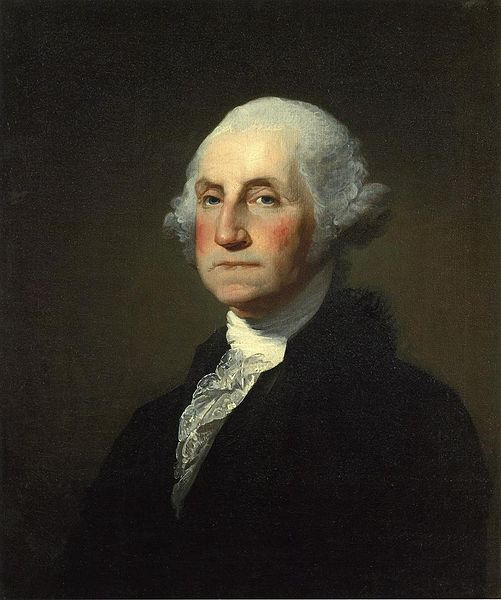
A reminder of the words of the first American president, George Washington, in his Farewell Address:

“The Nation, which indulges towards another an habitual hatred, or an habitual fondness, is in some degree a slave. It is a slave to its animosity or to its affection, either of which is sufficient to lead it astray from its duty and its interest …

501px-Gilbert_Stuart_Williamstown_Portrait_of_George_WashingtonA passionate attachment of one Nation for another produces a variety of evils. Sympathy for the favorite Nation, facilitating the illusion of an imaginary common interest, in cases where no real common interest exists, and infusing into one the enmities of the other, betrays the former into a participation in the quarrels and wars of the latter, without adequate inducement or justification.

It leads also to concessions to the favorite Nation of privileges denied to others, which is apt doubly to injure the Nation making the concessions; by unnecessarily parting with what ought to have been retained; and by exciting jealousy, ill-will, and a disposition to retaliate, in the parties from whom equal privileges are withheld. And it gives to ambitious, corrupted, or deluded citizens, (who devote themselves to the favorite nation,) facility to betray or sacrifice the interests of their own country, without odium, sometimes even with popularity; gilding, with the appearances of a virtuous sense of obligation, a commendable deference for public opinion, or a laudable zeal for public good, the base or foolish compliances of ambition, corruption, or infatuation,” – George Washington, in his Farewell Address.

And now, Barack Obama, as he arrives in Israel:

“So as I begin this visit, let me say as clearly as I can –the United States of America stands with the State of Israel because it is in our fundamental national security interest to stand with Israel. It makes us both stronger. It makes us both more prosperous. And it makes the world a better place. That’s why the United States was the very first nation to recognize the State of Israel 65 years ago. That’s why the Star of David and the Stars and Stripes fly together today. And that is why I’m confident in declaring that our alliance is eternal, it is forever – lanetzach.”

The concept of an “eternal”, and “unbreakable” alliance with any other single country is a statement George Washington would have regarded as deeply corrosive of foreign policy and domestic governance. To declare it in the language of the foreign country has even deeper resonance. It is now the governing principle of both political parties – and the primary reason we may once again be headed to war with unforeseeable consequences in the Middle East.

If anyone ever believed Obama was able to change that, or that any president can change that, they have been taught an important lesson. We’ve come a long, long way from George Washington’s vision of America. We have defined another, decades-old country half way across the world as integral to our own.

(Photo: President Barack Obama is greeted by Israeli Prime Minister Benjamin Netanyahu during an official welcoming ceremony on his arrival at Ben Gurion International Airport on March, 20, 2013 near Tel Aviv, Israel. By Marc Israel Sellem-Pool/Getty Images.)

How Activist Judges Could Save The GOP

Screen shot 2013-03-19 at 12.15.46 PM

Barro claims a SCOTUS ruling establishing a federal right to marriage in all 50 states would be best for the GOP:

A Supreme Court decision imposing gay marriage nationwide will not only make this problem go away, but it will also give Republican politicians a useful scapegoat to impotently shake their fists at. They can say they wish they could continue the fight against gay marriage, but alas, those judicial activists at the Supreme Court have made it impossible. And then, gradually, everyone who cares about stopping gay marriage will grow old and die, and we can stop talking about the issue.

When Republicans argue that a sweeping decision for gay marriage would sow longstanding division, they are comparing it to Roe v. Wade. But this analysis is wrong. Abortion remains a divisive political issue 40 years after Roe, but not because it was decided judicially. Abortion is a different kind of moral question than same-sex marriage, about what a life is, not what kinds of sexual morality the government ought to encourage; abortion supporters and opponents would not have reached consensus absent the Roe decision.

They may not have reached consensus but they might have had a chance at reaching compromise, as in most other Western democracies.

But Barro is onto something: for the purely cynical GOP elites, SCOTUS could indeed save them from an increasingly unpopular political position they cannot change – because it is God’s law and their base sees no distinction between politics and religion. But the evangelical faction? If there’s one thing that could resurrect their anti-gay passion and deepen their sense of victimhood would be SCOTUS over-reach. That’s why I still favor the federalist, slower path to equality – by changing consciousness, consciences and thereby votes in the states, which are, in the end, the core political unit for legal marriage in the US.

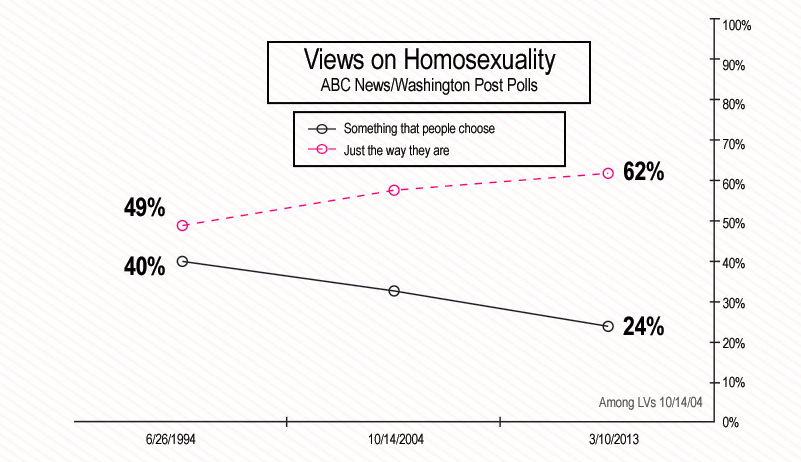
The one reservation that has struck me recently is whether I have become too attached to my own experience in this struggle over a quarter of a century and am under-estimating the current scale of the public shift – a shift that would make a clear SCOTUS position far less likely to provoke meaningful backlash. One surprise for me in the recent ABC/WaPo poll was that a clear majority of both pro-marriage equality and anti-marriage equality forces wanted to the Supreme Court to have the final say nationally:

Americans by nearly 2-1, 64-33 percent, say the legality of gay marriage “should be decided for all states on the basis of the U.S. Constitution” rather than by each state making its own law on the issue. That view, interestingly, is not much impacted by attitudes on the issue itself: Among supporters of gay marriage, 68 percent say the Constitution should rule; among opponents of gay marriage, 62 percent say the same.

Preference for a Constitution-based determination encompasses two-thirds or more of Democrats and independents, liberals and moderates alike; it’s lower, but still a majority, among conservatives (56 percent) and Republicans (54 percent).

This may mean that both sides simply want a swift and total victory. But that will mean swift and total defeat for one side, with no democratic recourse. So it doesn’t rule out backlash. But the sudden shift in support for equality and the staggering 81 percent of the under-30s supporting it, along with nearly 60 percent of all Americans, may be changing this issue faster than even I can quite absorb – and give the court considerably more lee-way in going big.

Of course, one could argue that one reason for limiting the reach of the court ruling is to make the GOP increasingly isolated, giving yet another tolerant generation a permanent attachment to the Democrats, as anti-gay forces fight furiously in state after state, branding the GOP indelibly as intolerant and anti-modern. Since they lived by the wedge issue for so long, why not make them slowly die on it for a few more election cycles? But this is a step too cynical for my taste. It is to out-Rove Rove – a sure sign that one has lost one’s moral bearings.

But still, if the argument against too sweeping a ruling is a conservative one, fearful of the court getting too far out in front of the popular will … then dramatically rising public support for equality weakens the case. I still hold the federalist position – but have to concede that I may be fighting an old battle rather than the new one. Perhaps it’s hard for an old warrior not to misread the new battlefield. But I’d rather do it the old-fashioned way. Because we’re winning in the best way possible: by actually changing minds and hearts of the people, not of one Justice.

Francis Emerges, Ctd

Pope Francis Gives His First Angelus Blessing To The Faithful

At mass yesterday, you could feel something intangible in the air. Not to go all Peggy Noonan on you, but I sensed both hope and apprehension about the new Pope – as well as a certain distance. Under Benedict, many of us had continued with our faith as if underground, seeing little to connect to in his fastidious liturgy and tone-deafness and weak authoritarianism. Traumatized by the hierarchy’s response to the child-rape epidemic, we clung to our pews with whiter knuckles than usual, reminding ourselves that the church is not its hierarchy, but the people of God seeking the love Jesus promised and the freedom Christianity can unleash in the soul. But we would look up at times to the public leadership, wincing mostly, but still gleaning some nourishment (Deus Caritas Est, for example), before succumbing to anger at the crimes not acknowledged let alone brought to justice, at the hypocrisy and wealth and corruption, at the scandal of a creature like Maciel and a coward named Law.

But now, more heads are poking up a little, like the stubs of new tulips in the softening ground. In the last few days, we’ve found out some more about Francis, and much of it, to my mind, is reassuring. This piece by the usually judicious Thomas Reese relieved me of many worries about his time under the junta. There is no question that Francis was not a profile in courage or an aggressive dissenter in those times, but neither, I think, is it fair to see him as in any fundamental way a collaborator or betrayer of his own priests. Reese goes through the charges methodically. One worth noting:

It is said there is written evidence in the Argentine foreign ministry files that Bergoglio gave information on the Jesuits to the military. The alleged conversation took place when Bergoglio was trying to get the passport of one of the Jesuits extended. Not only did this take place after they were arrested and after they were released, it was after they were safely out of the country. Nothing he could say would endanger them, nor was he telling the government anything it did not already know. He was simply trying to convince a bureaucrat that it was a good idea to extend the passport of this man so he could stay in Germany and not have to return to Argentina.

More recently, Cardinal Bergoglio was involved in getting the Argentine bishops to ask forgiveness for not having done enough during the dirty war, as it was called in Argentina.

How hostile was this man to liberation theology? Again, this is a more complicated question than might at first appear:

What do we mean when we use a hegemonic and singular umbrella term like “liberation theology?” Are we referring to the particular texts that arose in the 1960s and 1970s from the academic and professional theologians like Gustavo Gutiérrez and Leonardo Boff? Both of whose work, by the way, varies in style, method, and outcome. Do we mean the pastoral legacy of the slain Archbishop of San Salvador, Oscar Romero? Do we mean the Jesuits and diocesan priests who took up arms in El Salvador against the will of Romero who, according to the critiques of now-Pope Francis, might also be labeled “opposed to liberation theology” in this context? What exactly do we mean?

If we mean the importation of the materialist arguments of Marxism into Catholic theology, then it seems perfectly clear to me that any Archbishop would oppose it. And should oppose it. But if we mean by it an aggressive posture always in favor of the poor, then we have simple orthodoxy, of the kind Jesus clearly taught. In that respect we have these new words from this new Pope to understand where he is coming from:

And those words came to me: the poor, the poor. Then, right away, thinking of the poor, I thought of Francis of Assisi. Then I thought of all the wars, as the votes were still being counted, till the end. Francis is also the man of peace. That is how the name came into my heart: Francis of Assisi. For me, he is the man of poverty, the man of peace, the man who loves and protects creation; these days we do not have a very good relationship with creation, do we? He is the man who gives us this spirit of peace, the poor man … How I would like a Church which is poor and for the poor!

I know I have a serious confirmation bias at work here. I desperately want reform in the church and although I remain of the conviction that this has to start with us, its ordinary members, the signals and signs of the hierarchy do convey the faith to millions – and that matters.

And so in yesterday’s Gospel, we found ourselves with Jesus and the adulteress again. The gospel passage is one of the most disarming – because it is about disarmament of the ego, openness to the other, and forgiveness. “Neither do I condemn you,” Jesus says, in an astonishing embrace of humanity in all its flaws, left finally alone with a woman facing imminent death by stoning.

His move is a lateral, not hierarchical one – the mysterious, ineffable, sudden crouch that Jesus goes into when questioned by other rabbis. He writes in the sand – words or signs we will never know. The forgiveness is overwhelming – too overwhelming for us to accept it most of the time. And so the Holy Father yesterday spoke directly to me when he called so many Catholics out for not feeling worthy of forgiveness:

Meditating on the Gospel passage (John 8: 1-11 — “Let he who is without sin cast the first stone”), Francis said, “This is Jesus’ message: mercy. On my part, I say it with humility; this is the the Lord’s strongest message: mercy. He himself said: ‘I did not come for the righteous.’ The righteous can justify themselves.… Jesus came for the sinners.”

“‘Oh, Father,’” Pope Francis continued, relating what people often say to priests, “‘if you knew my life you wouldn’t say that.’”

“Why? What have you done?”

“Oh, I’ve done bad things.”

“Good! Go to Jesus; He likes you to tell him these things. He forgets. He has the special ability to forget. He forgets them, kisses you, embraces you, and tells you only, ‘Neither do I condemn you. Go and sin no more.’ He only gives you this counsel. A month later we are the same.… We return to the Lord. The Lord never tires of forgiving us, never! We are the ones who get tired of asking forgiveness. Let us ask for the grace to never tire of asking forgiveness, because he never tires of forgiving us.”

This incomprehensibly comprehensive forgiveness is God in the Christian sense. It allows us to start anew, to see, as Saint Francis did, the forgetfulness of nature itself, its capacity for regrowth, for healing, to look into the buds on the trees in spring:

Last year is dead, they seem to say,
Begin afresh, afresh, afresh.

(Photo: People gather in St Peter’s Square ahead of the arrival of Pope Francis who will give his first Angelus Blessing to the faithful from the window of his private residence on March 17, 2013 in Vatican City, Vatican. The Vatican is preparing for the inauguration of Pope Francis on March 19, 2013 in St Peter’s Square. By Dan Kitwood/Getty Images.)

Francis Emerges

Pope Francis Holds An Audience With Journalists And The Media

[Re-posted from yesterday]

If we leave legitimate questions about his past for a moment, can I pause to marvel at his present?

The reports of his press conference today suggest a radically new symbolism for the church. This kind of understanding of the diverse and multi-faith and multi-cultural modernity is something you would never have heard from Benedict XVI:

“Given that many of you do not belong to the Catholic Church, and others are not believers, I give this blessing from my heart, in silence, to each one of you, respecting the conscience of each one of you, but knowing that each one of you is a child of God. May God bless you.”

Respecting the conscience of each of you. That might seem to be the bleeding obvious – but it isn’t in the context of Benedict’s theological reign, which was far longer than his pontifical one. Benedict wanted to place conscience below revelation as authoritatively adjudicated by … himself. The central place of individual conscience established at the Second Council was left to wither in favor of a public, uniform religion. He seemed to me to want ultimately to restore the seamless cultural-political-religious unity of the Bavaria of his youth; and if the public square were empty, it had to be filled with religious authority. He tried. In the West, the public square moved in the opposite direction. He hunkered down, hoping for a smaller, purer church. What he got was a smaller one, but beset by scandal and internal division and a legacy of the most horrendous of crimes.

Francis seems to me to be taking the world as it is, but showing us a different way of living in it. These are first impressions, but there seems much less fear there of the modern world, much greater ease with humanity. And human beings like narratives – not opaque and ornate theologies. Jesus always spoke in simple stories and parables. And so today:

“Let me tell you a story,” [Pope Francis] said. He then recounted how during the conclave he had sat next to Cardinal Cláudio Hummes of Brazil, whom he called “a great friend.” After the voting, Cardinal Hummes “hugged me, he kissed me and he said, ‘Don’t forget the poor!’ And that word entered here,” the pope said, pointing to his heart.

“I thought of wars, while the voting continued, through all the votes,” he said as he sat on the stage in a hall inside the Vatican. “And Francis is the man of peace. And that way the name came about, came into my heart: Francis of Assisi.”

To see our two huge temptations today as war and massive inequality is, it seems to me, the Holy Spirit at work. We should remember St Francis’ pilgrimage to the Muslim authorities of his day. We should recall Saint Francis’ direct experience of the horror of war which changed his life. And then how that epiphany on the battlefield and as a prisoner of war led to Francis’ embrace of lepers as his most beloved, of a shack as the place he’d call home, and the giving away of his entire worldly goods – indeed even his own clothes – in order to be free in the spirit of Jesus’ true freedom.

Then this:

He had a couple of other thoughts for journalists, too. Reporting on the church is different from other contemporary matters, he said, because the church is essentially a spiritual organization that does “not fit into worldly categories.” “The church does not have a political nature,” he said.

We’ll see exactly what he means by that phrase in due course – he certainly involved himself in the political and social debates in his home country. But an emphasis on the centrally apolitical stance of Christianity, indeed on the fact that in core ways, Christianity is the antidote to the pursuit of power over others  … well, count me quietly elated. Again, of course, Saint Francis’ renunciation of power comes to mind. And his simplicity:

Instead of the usual formal blessing – standard practice at papal audiences – he said quietly, “God bless you,” and walked off the stage.

And didn’t get into his limo, preferring to walk on foot to his Vatican residence. In my own thoughts and prayers in this crisis of Christianity, I found myself returning to Saint Francis, as readers know. I think he is the saint the church turns to when it has truly lost its way, when it needs to be rebuilt humbly, painfully, from the current ruins.

If that is what happened in the heart of Bergoglio in the conclave, if the spirit of Francis entered his heart as a man of peace and tolerance and humility, as he says, then we have more than cause for optimism.

We have cause for real hope.

(Photo: A detail of the shoes of newly elected Pope Francis as he attends his first audience with journalists and media inside the Paul VI hall on March 16, 2013 in Vatican City, Vatican. The pope thanked the media for their coverage during the historic transition of the papacy and explained his vision of the future for the Catholic Church. By Franco Origlia/Getty Images.)

The Pope On The Bus

Giotto_-_Scrovegni_-_-26-_-_Entry_into_Jerusalem2

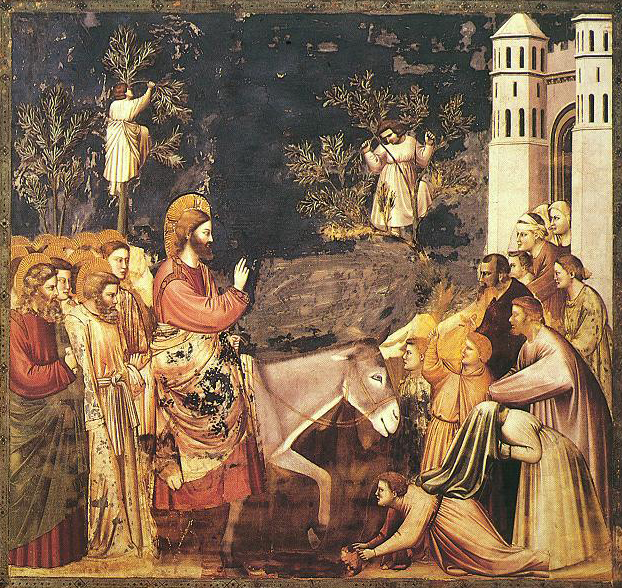
Of course that detail has resonance. The implicit rebuke to the Liberace of Popes, Benedict XVI, is somehow not disrespectful, yet obvious. Saint Francis refused to ride on a horse. It gave him, as far as he was concerned, too much haughtiness, too much power over others, too much visibility. He would walk, and if he needed a way to transport things with him, he used a donkey. For a while, Franciscans followed this stricture carefully, while eventually the norm became that Franciscans could ride on donkeys, never horses, if they really couldn’t walk. And the legend has it that on his death-bed, Francis thanked his donkey for his long service and that the donkey wept.

Jesus’ celebrated arrival in Jerusalem, when the crowds that would soon call for him to be tortured to death were throwing palm fronds at his feet, was on a donkey. Here we had the Son of God insisting on making a paradoxical entrance – on the lowliest creature. “Lowly Yet Chosen” as Pope Francis put it in his first statement. And so we hear more and more stories of his insistence on an absence of pomp, of not placing the priesthood or even the papacy on a lofty pedestal, getting on the same bus as is fellow cardinals, paying his own bills at a local hotel, telling his fellow Cardinals to wear black rather than Benedict’s fabulous scarlet near-burlesque.

For much of my time in high school, I rode the public bus every day. I went to what Americans would call a “magnet school” which was a long way, in an English sense, from my home. For close to seven years, I spent two and a half hours a day on that lumbering vehicle, wending its way with painful slowness through the darkness of the English winter or the absurd green orgasm of every spring. And I think there is something valuable about that simple public exposure, day after day, that reminder that you are not better than anyone else, that if there’s no seat available, you stand, that if an old or infirm or pregnant person gets on the bus, you offer them your seat, that the strangers you stare at have lives you will never fully know – unless a conversation happens to begin, or a stranger on the same bus every day becomes a kind of unknowable friend. I can still close my eyes and see faces I would see at various stops along the way. We were English so mere nods of recognition sufficed.

This is one reason I love Catholicism: its human and cultural catholicity.

The parishes I’m drawn toward are sprawling, diverse, different congregations. I never wanted to go to a gay mass, although I respect those who choose to. For me, it was the lack of uniformity that grabbed me. To walk to communion behind a student or a construction worker or a Latino immigrant or a pregnant mother or a gay senior or an old lady in a veil is to experience the sheer, glorious wounded mess of humanity – walking to be healed by the Body of Christ. I deeply believe this is integral to Christianity – a lack of hierarchy, an insistence that what the world elevates is not what matters, that the first shall be last, and the last first. Letting go of the notion that you are worth more or less than anyone else, accepting your physical fate as dust, and embracing humanity without borders or labels – as the Samaritan did in the parable, as Francis did with lepers, as Mychal Judge and Jorge Bergoglio did in washing the feet of people with AIDS – this is Christianity.

It wounds me to see so many young people think of it as the opposite (and not without reason). A hierarchy determined to defend its privilege and prestige even at the expense of raped children, a Pope almost disappeared in his own regalia, a stream of statements ostracizing a group of human beings – gays – and refusing even to listen to the perspective of half of humanity, women: this is what Francis inherited, and he was not free of it. But the new name gives new hope and points in a new direction.

Perhaps the answer is to get back on the bus again. And in one of her most poignant posts yet, Judith O’Reilly responded to the new Pope by doing just that:

Why did I feel I had to ride this bus this morning? Because I wanted to know why a cardinal did not ride in a leather-seated, tinted-windowed limo though the streets of Buenos Aires, but chose instead to travel among the faithful and less-than-faithful, bumping and swaying, the wheels on the bus going round and round. What did Jorge Mario Bergoglio get from those bus-rides around the city? Stories? Comfort? Warmth? An understanding what it is to work hard, to be tired, to be lonely, to have to stand when you want to sit, to know you are going home or going far away? Maybe too, I wanted to get on the bus, any bus, because we are on our own journeys and right now at least so far as faith goes, I don’t know where I am heading. Maybe, I thought, if I catch a bus like a Pope, I’ll arrive at a destination called Faith.

And maybe we will.

(Painting: Jesus’ arrival in Jerusalem, Giotto).

It Gets Better

Senator Rob Portman, prompted to rethink the issue after finding out that his son is gay, has announced that he supports marriage equality:

British Prime Minister David Cameron has said he supports allowing gay couples to marry because he is a conservative, not in spite of it. I feel the same way. We conservatives believe in personal liberty and minimal government interference in people’s lives. We also consider the family unit to be the fundamental building block of society. We should encourage people to make long-term commitments to each other and build families, so as to foster strong, stable communities and promote personal responsibility.

One way to look at it is that gay couples’ desire to marry doesn’t amount to a threat but rather a tribute to marriage, and a potential source of renewed strength for the institution.

Weigel puts this in perspective:

Up to now, a lot of the Republicans making bold strides toward gay marriage were consultants (whose corporate work would benefit from the stance) or retired pols. Portman is one of the acknowledged thought leaders of the congressional party.

Timothy Kincaid thinks Portman’s change of heart “is a bit risky”:

Ohio Republicans are a different breed from the New Hampshire strain. But I’m going to hazard a guess that this wont much hurt Portman. It might even help him.

For my part, I’m thrilled by his acknowledgment of the equal humanity and citizenship of his own son. We hear a lot about “family values” from the GOP, but we rarely see them in action as clearly as we do in Portman’s reversal. And the clarity of his essentially conservative argument for marriage equality – the same one I made two and a half decades ago – has to resonate. No conservative not in thrall to religious fundamentalism can regard this reform as somehow anti-family. It is pro-family; it is socially integrative; it heals wounds, rather than opening them; it helps create more marriages that act as a critical civil society that keeps government at bay. Now I have a husband, I have a First Responder to all the crises of life. I have less need of government help, if I have a spouse’s help first.

Some will wonder why Republicans only seem to get this question when they have a gay member of their family.

And you can indeed argue that conservatives tend to embrace social justice only when they are directly affected. I’d prefer to look at it the other way round. These Republicans, unlike some others, have actually confronted the issue face to face – and the good ones immediately become some of the strongest supporters of marriage equality. Once they see us as them, they realize the hurt and pain and cruelty of ostracizing from civil society core members of that society and full members of their own families. Ask yourself: how many out gay Republicans actually oppose marriage equality? Almost none that I know of. When a community’s entire right wing and entire left wing back a reform, when their families back it, it becomes not a matter of left and right. It’s really a matter of right and wrong.

Sometimes, reforms threaten conservatives, as they should. Conservatism, properly understood, remains an important restraint on our utopian impulses or our certainty about anything. It asks us of to consider unforeseen consequences of reform, to consider carefully the pluses and minuses, to prefer federalism to sudden, national decisions. As this process has taken place, even as religious fundamentalism has swept the GOP, those capable of adjustment, those who understand that to preserve the vitality of a social institution, you sometimes have to change it a little: they are coming around.