The Saddest Map In America

ZI-1175-2013-J-F00-IDSI-76-1

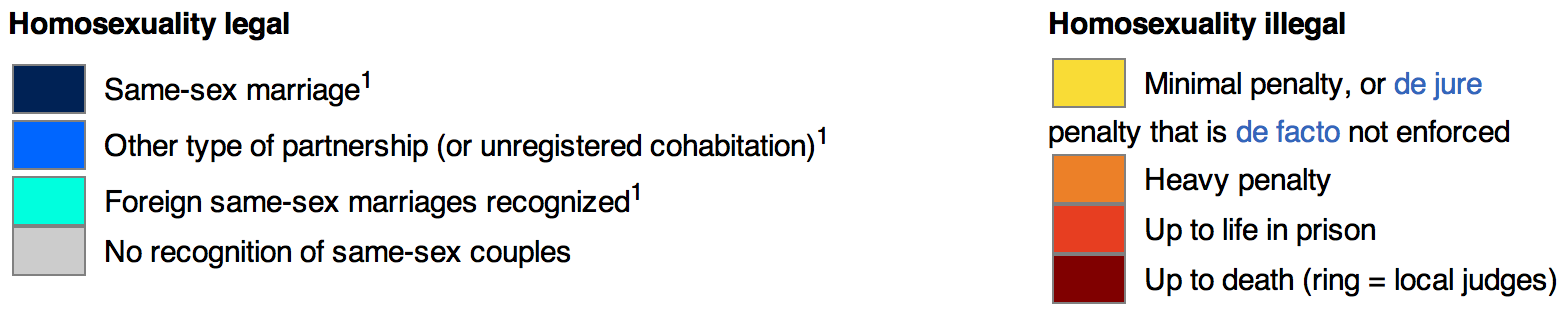
Yep, there it is: the result of a scholarly study by Dorothy Gambrell of the “missed connections” section of Craigslist. This is where you thought you saw your future spouse or date or hook-up, state by state. It is, in some ways, a sign of where we are now most likely to see people we don’t know in various parts of the country. It’s also a sign of male loneliness or romance: men seeking to find a possible love-mate outnumber women 86 – 14.

Nationally, the chart shows that great arc of life. In your twenties, you are most likely to think you’ve caught the eye of someone in an ice cream shop; in your thirties, in a bar; in your forties, a strip club or adult bookstore (those still exist?).  That sounds like the trajectory of the single male to me, doesn’t it? With almost the precision of a novel.

Now look at the South – more people spy love at Wal-Mart than anywhere else, from Florida all the way to New Mexico. And that thread runs all the way through deep red America. Only Oklahoma cites the state fair as a mixer. The rest see each other under the merciless lighting of the giant super-store. This is how we fall in love or lust, where we flirt and look back: when we’re shopping. The big cities – like NYC and DC – showcase the random human interaction on the subway or metro. The Northwest has it all going on on buses.

A few more gems: California is an actual self-parody (as is Nevada). Rhode Island does not disappoint in sketchiness: parking lots are where love is suspected most often there. But the saddest state of all has to be Indiana. There, the majority of “missed connections” were “at home”.

I say saddest. Maybe they’re just the most honest. Or trapped in a Pinter play.

(Hat tip: Psychology Today)

How Capitalism Creates The Welfare State

SKOREA-SOCIETY-SUICIDE

The two concepts are usually seen in complete opposition in our political discourse. The more capitalism and wealth, the familiar argument goes, the better able we are to do without a safety net for the poor, elderly, sick and young. And that’s true so far as it goes. What it doesn’t get at is that the forces that free market capitalism unleashes are precisely the forces that undermine traditional forms of community and family that once served as a traditional safety net, free from government control. In the West, it happened slowly – with the welfare state emerging in 19th century Germany and spreading elsewhere, as individuals uprooted themselves from their home towns and forged new careers, lives and families in the big cities, with all the broken homes, deserted villages, and bewildered families they left behind. But in South Korea, the shift has been so sudden and so incomplete that you see just how powerfully anti-family capitalism can be:

[The] nation’s runaway economic success … has worn away at the Confucian social contract that formed the bedrock of Korean culture for centuries. That contract was built on the premise that parents would do almost anything to care for their children — in recent times, depleting their life savings to pay for a good education — and then would end their lives in their children’s care. No Social Security system was needed. Nursing homes were rare.

But as South Korea’s hard-charging younger generations joined an exodus from farms to cities in recent decades, or simply found themselves working harder in the hypercompetitive environment that helped drive the nation’s economic miracle, their parents were often left behind. Many elderly people now live out their final years poor, in rural areas with the melancholy feel of ghost towns.

The result is a generation of the elderly committing suicide at historic rates: from 1,161 in 2000 to 4,378 in 2010. The Korean government requires the elderly to ask their families for resources if they can pay for retirement funding – forcing parents to beg children to pay for their living alone – a fate they never anticipated and that violates their sense of dignity. Hence the suicides.

We can forget this but the cultural contradictions of capitalism, brilliantly explained in Daniel Bell’s classic volume, are indeed contradictions. The turbulence of a growing wealth-creating free market disrupts traditional ways of life like no other. Even in a culture like ours used to relying from its very origins on entrepreneurial spirit, the dislocations are manifold. People have to move; their choices of partners for love and sex multiply; families disaggregate on their own virtual devices; grandparents are assigned to assisted living; second marriages are as familiar as first ones; and whole industries – and all the learned skills that went with them – can just disappear overnight (I think of my own profession as a journalist, but it is one of countless).

Capitalism is in this sense anti-conservative. It is a disruptive, culturally revolutionary force through human society. It has changed the world in three centuries more than at any time in the two hundred millennia that humans have lived on the earth. This must leave – and has surely left – victims behind. Which is why the welfare state emerged. The sheer cruelty of the market, the way it dispenses brutally with inefficiency (i.e. human beings and their jobs), the manner in which it encourages constant travel and communication: these, as Bell noted, are not ways to strengthen existing social norms, buttress the family, allow the civil society to do what it once did: take care of people within smaller familial units according to generational justice and respect. That kind of social order – the ultimate conservative utopia – is inimical to the capitalist enterprise.

Which is why many leaders in the nineteenth and twentieth centuries, conservatives as well as liberals, attached a safety net to such an unsafe, bewildering, constantly shifting web of human demand and supply. They did so in part for humane reasons – but also because they realized that unless capitalism red in tooth and claw were complemented by some collective cushioning, it would soon fall prey to more revolutionary movements. The safety net was created to save capitalism from itself, not to attack capitalism.

This is not to argue against the conservative notion that it is precisely because of capitalism that we have to foster greater family bonds, keep marriage alive, communities together. It is simply to argue that to argue for this and the kind of capitalism that Paul Ryan favors is a tall order. And it isn’t working. The forces of global capitalism – now unleashed on an unprecedented global scale with China, Russia, Brazil and India – are destroying the kind of society which allows and encourages stability, traditional families, and self-sufficient community.

One reason, I think, that Obama’s move toward a slightly more effective welfare state has not met strong resistance – and is clearly winning the American argument – is that the sheer force of this global capitalism is coming to bear down on America more fiercely than ever before. People know this and they look for some kind of security. In other words, it is precisely capitalism’s post-1980s triumph that has helped create the social dependency so many conservatives bemoan today. And this time, there is even a sense that whole industries are disappearing faster than ever before – not simply because of outsourcing but because of technology itself, tearing through old ways of life like acid through iron.

It is unstoppable. I fear its power – given that it relies on emitting carbon in vast quantities – will soon make the world less habitable for large numbers of people. I fear it may kill so many species we will have become God on our own earth. And I think an understanding that the state will have to step in to blunt the sharper edges of this newly creative extra-destruction is emerging slowly in the public at large.

Bell was right. Capitalism destroys the very structure of the societies it enriches. But I doubt even he would have anticipated the sheer speed at which this is now happening. It makes the conservative project all but impossible, if still necessary. It does require a defense of the family, of marriage, of personal responsibility. But it also demands a compassion toward the victims of this economic and social change, an understanding of their bewilderment – which can often express itself neurotically in fundamentalist forms of religion or culture.

All I know is that it is a core conservative idea that revolutions can end in nightmares. But we conservatives also long supported and indeed recently breathed new life into the industrial and post-industrial revolution. We see the consequences far beyond the suicides of elderly Koreans. And in my bleaker moments, I wonder whether humankind will come to see this great capitalist leap forward as a huge error in human history – the moment we undid ourselves and our very environment, reaching untold material wealth as well as building societies in which loneliness, dislocation, displacement and radical insecurity cannot but increase. It seems to me this is not the moment for Randian purism.

Do we not as conservatives have a duty to tend to the world we helped make?

(Photo: This photo taken on January 11, 2013 shows an anti-suicide monitoring device (L) installed by the government at Mapo Bridge -a common site for suicides- over Seoul’s Han river. The South Korean capital has installed anti-suicide monitoring devices on bridges over the city after 196 people jumped to their deaths on 2012 according to South Korean officials. The new initiative — in a country with the highest suicide rate among leading developed nations — incorporates closed-circuit television cameras programmed to recognize motions that suggest somebody might be preparing to jump from a bridge. By Pedro Ugarte/AFP PHOTO/Getty Images.)

Benedict’s Radical Precedent

Pope Benedict XVI Delivers Angelus Blessing - February 17, 2013

In a rather brutal review of Benedict’s failed papacy, theocon Joseph Bottum worries about it:

[T]he modern world doesn’t really need to see in the pope a model of competent administration, nice as that would be. It does need, however, a public reminder that we are not incapacitated as human beings when we age and prepare to die. We are not to be tucked away or compelled by moral pressure to remove our lives and deaths from public view. The older vision of life is the more complete one, and in today’s world, perhaps uniquely, we are in special need of remembering that.

Besides, there remains the problem of political theory that the aftermath of San Celestino’s abdication taught us. If popes can resign, then popes can be forced to resign, notwithstanding the fact that the church believes they are chosen with guidance from the Holy Spirit. And after they resign, what then? What are we to do with them? The sheer presence of a retired pope in a Vatican monastery may prove a burden and distraction for his successor. And if, with Benedict in 2013, a retired pope does not seem to pose a direct political threat, that hardly insures that no future retired pope will prove so. The political portions are part of the pope’s job, too.

I have to say that, as the days go by, the radicalism of this traditionalist Pope’s resignation continues to befuddle me. Like Bottum, I don’t see why he could not have appointed a few capable administrators, cut down on global travel (Wojtila’s peregrinations were unprecedented and unwise), focus on his writing and core papal duties, like celebrating mass on important occasions in Saint Peter’s, but otherwise simply being the Pope.

Maybe his illness is more pronounced than we know; maybe that bump on the head in Mexico was a reminder of his age; maybe the loss of mystery amid social media exposed him more than he ever anticipated; maybe he’s just dead tired (and who could blame him?). But I don’t think the current Queen of England would ever abdicate from old age – even if she were less capable of doing a far more demanding job. Why? Because she understands that she is an institution as well as a human being; and that institution requires careful maintenance. Throwing the rulebook of centuries out of the window – thus changing overnight the entire political nature and context of the papacy – would never occur to her.

So why to Benedict? Was watching John Paul II waste away deter him? Or does he sense or understand, in fact, that what he presided over is and was one of the darkest eras in the church, that the crimes he enabled are so horrifying when viewed in their entirety and his record of negligence and cover-up before and after he became Pope has rendered him morally incapable of leading such an institution – indeed in need of withdrawal, reflection and penitence? He prefaced his resignation with the words: “After having repeatedly examined my conscience before God,  . . . ” A reader notes:

If the reason for the Pope’s resignation was physical inability to do the job, the relevant thing for him to have examined would have been his medical records.  I don’t see where his conscience, before God or otherwise, really fits in — unless he’s referring to something else? Later, the Pope says:  “Dear Brothers, I thank you most sincerely for all the love and work with which you have supported me in my ministry and I ask pardon for all my defects.” (emphasis mine)

Is there an implicit admission of guilt here, an acknowledgment that his “defects” in dealing with “rapid changes” have actually led to the condition he cites, i.e., the church being “shaken by questions of deep relevance for the life of faith”?

I would like to think so. I don’t doubt that Benedict was and is horrified by the ubiquity of child-rape in the institution he effectively ran or co-ran for thirty years or so. And I simply cannot believe that he does not understand his own role in it. John Paul II could sustain some sort of denial. Not Benedict who, since 2001, had every single case of alleged child-rape in the world on his desk. He knows more about the criminal conspiracy the Church was engaged in for decades than any other human being on earth. He knows the darkness within better than anyone else. Maybe he is withdrawing out of fear, trying to ensure his successor doesn’t open up the full files to the world. Or maybe he is doing this radical act to shake the system he knows by now is rotten to its core. I do not know. But to give up hope that someone in the hierarchy of the Catholic Church might actually respond to this massive legacy of child-rape would be to give up on the hope of the Holy Spirit.

We need to let the sunlight in again. We need penitence from the very top. We need more transparency from the Vatican in history. We need to see all the files on all the rapes of children the Church has in its possession. Or rather, the criminal authorities need to see them. It’s odd that defenders of this papacy have always said that at least Benedict did something, unlike John Paul II. And yet they do not see any connection between the worst crisis the Catholic Church has known in modern times and the most radical move by a Pope in seven centuries.

They couldn’t possibly be connected, could they? I don’t know. And we may never know. But go watch Alex Gibney’s earth-shaking HBO documentary Mea Maxima Culpa and think about it. To see what is in front of one’s nose …

(Photo: Faithful hold a banner reading ‘You are Peter, stay’ as they attend Pope Benedict XVI Angelus Blessing at St. Peter’s Square on February 17, 2013 in Vatican City, Vatican. The Pontiff will hold his last weekly public audience on February 27 at St Peter’s Square after announcing his resignation last week. By Giorgio Cosulich/Getty Images.)

Holy Father, Holy Mothers

561px-Leonardo_da_Vinci_-_study_of_a_woman's_head

There are many reasons Western women are having a harder time belonging to the Catholic church under this hierarchy than ever. One is motherhood:

The Catholic Church is so busy absorbing the shock of the Holy Father’s decision to quit, it is missing the point. Holy mothers are quitting too.

I’m a Catholic. Was a Catholic. Am a sort of Catholic. Am hardly a Catholic? Is there a word for what I am anymore? I’d like to be a better Catholic but it is just not cutting it for me. And why is that? Because the Catholic Church has nothing to say to an educated woman with socially liberal views – nothing, except “Please give us your children.”

I have so far – given them my children. Two of them – the boys, have taken their First Communion in red ties and polyester sashes, in part to keep my elderly and very Catholic parents happy. Now the Church wants my daughter. She is seven, and somehow, I am more reluctant to put her through the whole fandango of instruction.

The wonderful blogger Judith O’Reilly unpacks her new reservations further here.

I think of three generations of mothers in my family. My Irish grandmother – the seventh of thirteen kids – wearing her veil to mass and rattling through the Rosary like a freight train of higher consciousness; my mother, devoutly bringing her children up in the Church, but finding it over the years less and less accessible. “Is it a sin that I just don’t like this Pope?” she asked me a while back. Then my sister who began to bring up her kids as devout Catholics in the 1990s and then lost heart after the revelations of the epidemic of child-rape, the treatment of women, and the constant condemnation of gay marriage. My niece and nephew were just baffled that their priest would be so harsh about their uncle Andrew, whose wedding was the first either had attended. My niece – now as brilliant a teen girl as you can imagine – memorized the vows and was a ring-bearer. My sister could not explain or defend. To hear the shameless protectors of child-rapists mount a campaign against her own brother’s chance to love and be loved was too much. They have all drifted away.

Without women, the Church will die. One of the more obviously radical things Jesus does in the Gospels is to treat women as complete equals. Yet the Church that was constructed after Him was based on male supremacy and eventually male segregation in the priesthood – forbidding by celibacy even the influence of wives and daughters. Of course this creates a circular, hermetically sealed worldview. But I’ll tell you this: if women had been priests or priests had ever had kids, the child-rape scandal would have been stopped in its tracks. The criminals would have been busted, not protected.

If the hierarchy still refuses to get this, if it does not shift on women and married priests, it will, in the West, lose the mothers. And once you lose them, the church is all but over. They are, in so many ways, the church. Two women – my grandmother and my mother – taught me to love my faith, cherish it, protect it. They both gave me life, but they also gave me faith. For so long they have been taken for granted – and even, as with the American nuns, persecuted and investigated for doing God’s work.

When the church gives holy mothers the same respect it gives one Holy Father, it will begin to regain its moral authority. It will begin to turn back towards the one so many seem to have forgotten: Jesus.

(Painting: study of a woman’s head by Leonardo Da Vinci, c. 1490.)

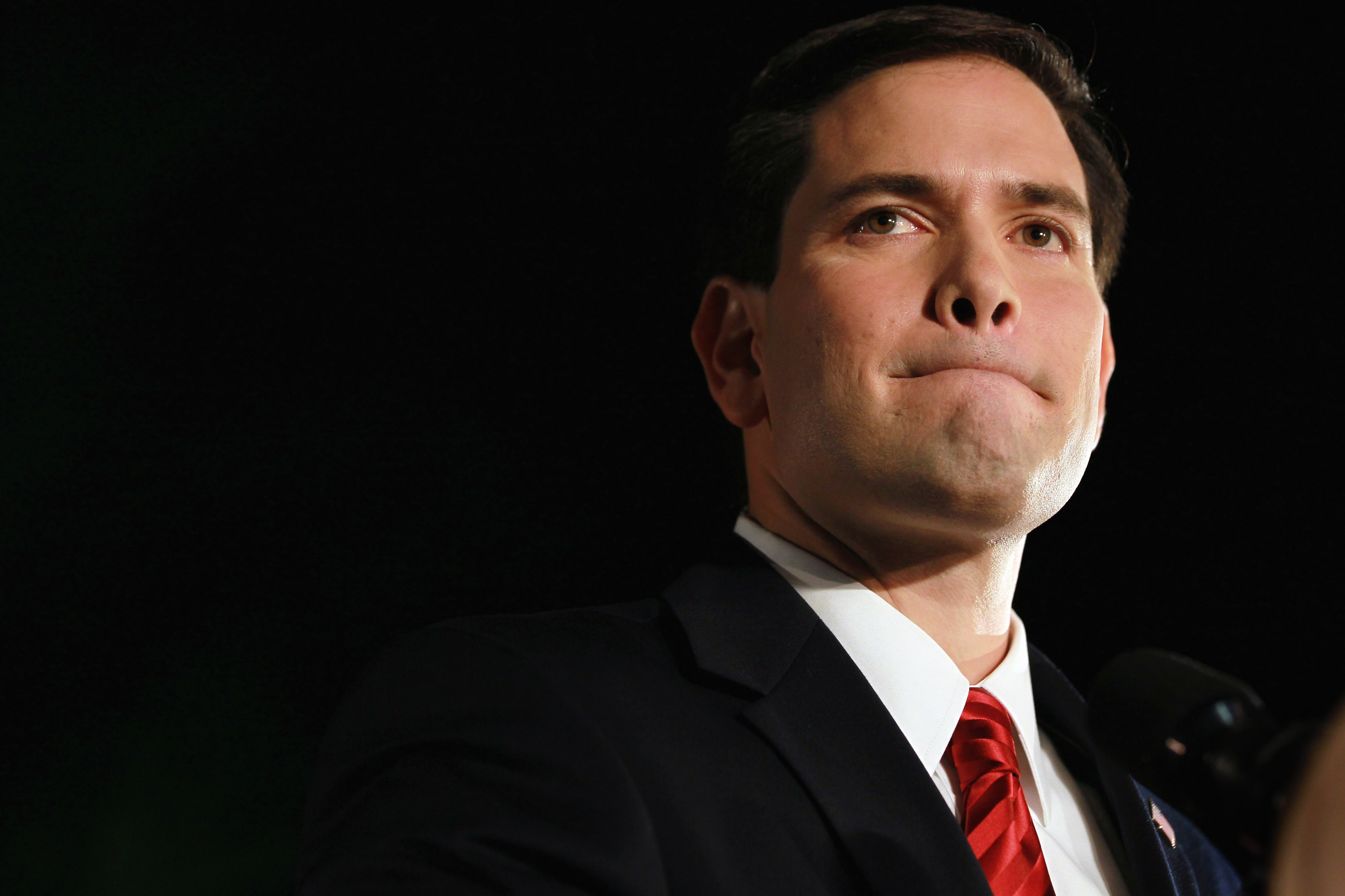
Rubio’s Pathetic, Exhausted, Vapid Response

Senate Candidate Marco Rubio Attends Election Night Event

In the reax below, I have to say I think Conor has it right. The question I have to ask is a simple one: could this speech have been given thirty years ago? Of course it could have. It was not a political speech; it was a recitation of doctrine, dedicated to Saint Ronald, guardian saint of airports. Here is an article of faith which is now so banal it does indeed sound, as Conor notes, like a song whose lyrics have become meaningless by repetition:

More government isn’t going to help you get ahead.  It’s going to hold you back. More government isn’t going to create more opportunities.  It’s going to limit them. And more government isn’t going to inspire new ideas, new businesses and new private sector jobs.  It’s going to create uncertainty.

Then this truism from the 1980s:

In order to balance our budget, the choice doesn’t have to be either higher taxes or dramatic benefit cuts for those in need.  Instead we should grow our economy so that we create new taxpayers, not new taxes, and so our government can afford to help those who truly cannot help themselves.

Wow. Never heard that before. And this utopian, Randian future:

If we can get the economy to grow at just 4 percent a year, it would create millions of middle class jobs. And it could reduce our deficits by almost $4 trillion dollars over the next decade. Tax increases can’t do this. Raising taxes won’t create private sector jobs.

They did in the 1990s. And cutting taxes irresponsibly in the 2000s reduced the rate of job growth. Nonetheless the dogma is in place, like some Animal Farm slogan: “Big government” is bad. “Small business” is good. And yet, Rubio, in the few instances when he mentioned specifics that might tackle actual problems, was in favor government action:

Helping the middle class grow will also require an education system that gives people the skills today’s jobs entail and the knowledge that tomorrow’s world will require. We need to incentivize local school districts to offer more advanced placement courses and more vocational and career training. We need to give all parents, especially the parents of children with special needs, the opportunity to send their children to the school of their choice. And because tuition costs have grown so fast, we need to change the way we pay for higher education. I believe in federal financial aid.

Is that not government? Yes, there were things that were dead-on and I’d prefer them to what Obama is offering. A simplified tax system? There are few indications Obama is interested. This I profoundly believe:

The truth is every problem can’t be solved by government. Many are caused by the moral breakdown in our society. And the answers to those challenges lie primarily in our families and our faiths, not our politicians.

But sadly, the speech was also full of lies, avoidance and misdirection. This one really pissed me off:

The President loves to blame the debt on President Bush. But President Obama created more debt in four years than his predecessor did in eight. The real cause of our debt is that our government has been spending 1 trillion dollars more than it takes in every year. That’s why we need a balanced budget amendment.

Seriously? A president who gave us two unfunded wars, massive tax cuts, and unfunded new entitlement in our biggest spending program, Medicare, in a period of growth was more fiscally prudent than a president who inherited a collapse in revenues to 60 year-lows because of the worst recession since the 1930s? And a balanced budget amendment, which in general I favor, would have been catastrophic in the last four years as demand was wiped out of the economy. For these statements to be true, you have to live in a sealed ideological universe that hasn’t changed since 1979.

On policies? No compromise on gun control. Immigration? Secure borders first. Growth? Drill, baby, drill – as if we haven’t. Climate change? “No matter how many job-killing laws we pass, our government can’t control the weather.” Please. Gay equality? Not a word. Foreign policy? Nothing on Afghanistan; nothing on what the last decade has taught us; nothing on drone warfare; nothing. No wonder the GOP has the lost its historical advantage on this topic.

Then this:

Presidents in both parties – from John F. Kennedy to Ronald Reagan – have known that our free enterprise economy is the source of our middle class prosperity.

But President Obama? He believes it’s the cause of our problems. That the economic downturn happened because our government didn’t tax enough, spend enough and control enough. And, therefore, as you heard tonight, his solution to virtually every problem we face is for Washington to tax more, borrow more and spend more.

This idea – that our problems were caused by a government that was too small – it’s just not true. In fact, a major cause of our recent downturn was a housing crisis created by reckless government policies.

This is unhinged. Obama has never said this, never given any indication that he believes this and has repeatedly said that the private sector is the engine of growth. And the recession was caused by government support for mortgages for low-income home-owners? Wall Street was a by-stander? This is a talk-radio talking point, not an analysis. And the sequester is now apparently an Obama policy, not just a short-term attempt to keep the government from a self-imposed credit crisis caused by nutball Republicans in 2011 that Obama wants to avoid.

We don’t have to raise taxes to avoid the President’s devastating cuts to our military.

Then there is this simple and obvious contradiction:

More government isn’t going to help you get ahead. It’s going to hold you back. More government isn’t going to create more opportunities. It’s going to limit them.

Only minutes later, he said this:

I believe in federal financial aid. I couldn’t have gone to college without it.

So does government help people get ahead? Or does it hold them back? Which one is it, Senator?

This was an intellectually exhausted speech that represents the intellectual bankruptcy of contemporary Republicanism. It was a series of Reaganite truisms that had a role to play in reinvigorating America after liberal over-reach in the 1960s and 1970s. It had precious little new in it. If reciting these platitudes in Spanish is what the GOP thinks will bring it back to anything faintly resembling political or intellectual relevance, they are more deluded than even I imagined.

(Photo: Photo by Joe Raedle/Getty Images.)

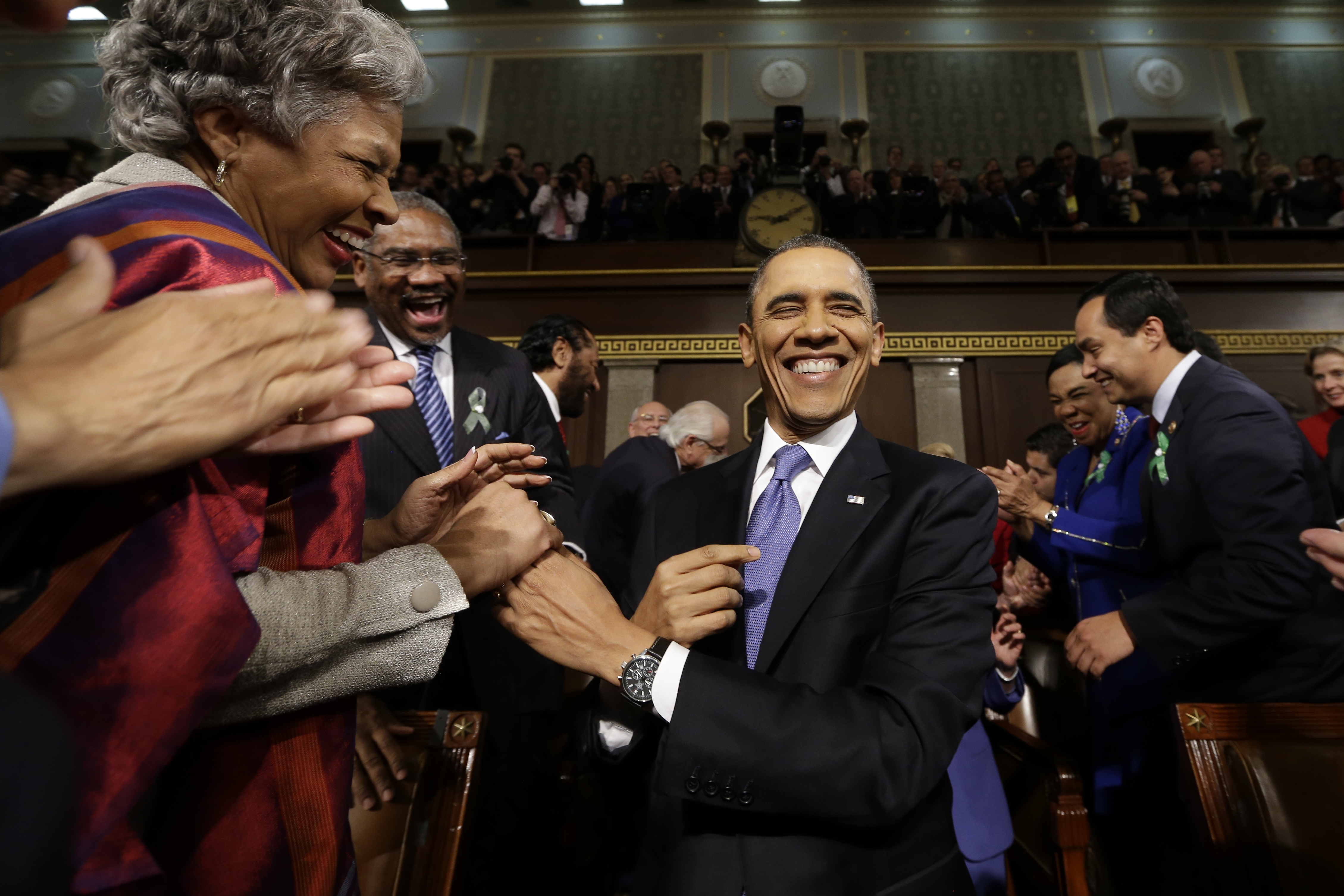
Live-Blogging The State Of The Union

President Obama Delivers State Of The Union Address

10.12 pm. Now we’re really into Reagan territory. The 102 year-old is pretty damn amazing. And, yes, it is a national scandal that she had to wait six hours to vote. Then a heroic cop. “That’s just the way we’re made.” I have to say that even to these jaundiced ears, that peroration moved me. The passion, the reason, the sincerity: this was an invigorated president, trying to shift the mood away from zero-sum partisanship to non-zero-sum citizenship. It’s what we always hoped from him, and I think it places the Republicans in a horrible bind. Are they going to prevent a vote on guns? Are they going to refuse Bowles-Simpson Medicare reform? Are they willing to force a sequester rather than cooperate with this popular president? Does the Speaker not appreciate a 102 year-old getting to vote? Why did he stay seated? I have a feeling that moment will strike people.

Meep meep.

10.08 pm. He’s ending on Newtown. Ticking off the majority’s support for background checks, citing the support of the police for ending weapons of grotesque destruction. A thousand gun-deaths since Newtown. And then the emotional power/blackmail of the parents of a little girl culled by a gun. “They deserve a vote” is a great line.

10.05 pm. “Families, gay and straight.” The confidence with which he now routinely includes gay people among his public statements is truly remarkable. It’s as if he’s been liberated to champion this civil rights movement, which he has done more than any president to advance and legitimize.

10.02 pm. A personal note of thanks for using the words Rangoon and Burma. Then the Arab Spring: it will be messy, we cannot control events, but we should back freedom. Pretty much: stay out of the way. A minor note on Israel: emphasizing security and a “just peace.”

9.54 pm. This is now the goal of the Afghanistan war: destroying the “core of al Qaeda.” But the promise is the withdrawal. The leaked 34,000 troop withdrawal was correct. Again, this was, remember, why he was elected – because he resisted the pro-war consensus in Washington. He’s ruling out ground invasions. And then a vague commitment for greater Congressional control and scrutiny – with no judicial element. Somewhat disappointing. And he sure sounds like he’s not backing down on drone warfare – or unilateral presidential war-making.

9.51 pm. I wasn’t aware – and should have been – that the minimum wage for a family of four is $14,000. But I’m surprised by the unapologetic liberalism there. Does he believe that raising the minimum wage would have no impact on jobs growth? Does he believe it would actually increase employment and growth?

9.48 pm. A tough line on immigration reform. But the real ovation came from expanding legal immigration. Still, the rhetoric again was not partisan, and included GOP talking points.

9.41 pm. People have been talking about Obama’s new swagger and self-confidence. I can see that in this speech, but I don’t see an aggressive partisan attack. He has consistently mentioned bipartisan initiatives; he has endorsed major tax reform as a way to avoid the sequester; he’s now onto one of the most critical issues in America today: the lack of good pre-K education.

9.38 pm. So he’s for more energy investment but with added research into cleaner emissions. And then what strikes me as pretty banal but has become somewhat partisan: rebuilding bridges and roads and infrastructure and Internet.

9.35 pm. I’m genuinely surprised that he’s put climate change so early and so emphatically. Tow valentines to McCain, I note. One a handshake at the start and now a tip to McCain’s previous proposal for cap and trade. I wish I believed it could truly work.

9.34 pm. Now he’s emphasizing investments in science. He’s speaking as if the crisis is over and morning in America is coming. By the way, the green ribbons are in honor of Sandy Hook. Lame.

9.33 pm. This is an optimistic speech, gaining momentum as it goes along. Then a nod to Clinton: not a bigger government, but a smarter one.

9.30 pm. Deficit reduction is important – just not as important as investing in the middle class. Krugman must be happy.

9.28 pm. He’s on a roll now, lambasting the fiscal brinksmanship of the last several years.

9.24 pm. He’s backing the Bowles-Simpson commission’s goals on Medicare over the next decade – that strikes me as a big concession.

And then he says “we must keep the promises we’ve already made.” I’m getting a little whiplash. But now we’re getting to comprehensive, bipartisan tax reform. Is this a late modification of Bowles-Simpson – with more populism and energy?

9.22 pm. And we’re right into the sequester – “a really bad idea”. But he prefers it to cutting entitlements while leaving the Pentagon alone. A pretty lame adjective for the fiscal crisis in Medicare: modest adjustments.

9.20 pm. Biden stands up for “country before party”. Boehner stays in his chair.

9.19 pm. “A rising, thriving middle class”: that’s becoming the theme of his presidency. Notice too the little inclusion of gay love.

9.16 pm. A unifying start, quoting Kennedy, and then a reminder of why he became president in the first place: ending the Bush-Cheney wars.

9.15 pm. What is that weird ribbon on Biden’s lapel?

The Lost Promise Of Joseph Ratzinger

Pope Benedict XVI Visits Erfurt

In an essay on Pope Benedict’s legacy in America, Michael Sean Winters highlights these words from his World Day of Peace message just six weeks ago:

It is alarming to see hotbeds of tension and conflict caused by growing instances of inequality between rich and poor, by the prevalence of a selfish and individualistic mindset which also finds expression in an unregulated financial capitalism. In addition to the varied forms of terrorism and international crime, peace is also endangered by those forms of fundamentalism and fanaticism which distort the true nature of religion, which is called to foster fellowship and reconciliation among people.

That’s an authentic Catholic message – and it’s what lies behind my own concern with fundamentalism (which is not faith – but a form of neurosis) and with the moral limits we must impose on capitalism to remind ourselves that human beings are always ends in Christianity. They are never means. Winters adds:

Imagine, for a moment, the outcry if President Barack Obama had lumped “unregulated financial capitalism” with “terrorism” and “international crime” in the same paragraph as threats to world peace! But because many of Pope Benedict’s American fans do not share his clear, unequivocal suspicion of markets, these teachings tend to be ignored …

In another mark of his distance from what Americans consider conservative orthodoxy, Benedict has earned the title of “Green Pope.” He is the first pontiff to articulate a clear theology surrounding the moral obligation to care for the environment, and to link that teaching to the Church’s traditional concern for the poor. In an environmental catastrophe, the poor are usually hit the hardest. Many make light of the Vatican becoming a “carbon neutral” state, seeing it as mere symbolism. Of course, Catholics do not ever qualify the noun “symbolism” with the adjective “mere.”

Indeed. And you can see in his handling of these matters the rudiments of what could have been a transformative, prophetic papacy, one that responded with urgency and grace to the most pressing issues of our day. For a Church that is dying in Europe and for an American religious landscape increasingly marked by the rise of agnostics and the “nones,” the ability to speak to young people about environmental catastrophe and a financial collapse that came into being just as they reached adulthood held much promise.

And yet when it came to his brutal enforcement of rigid theological orthodoxy, his callous treatment of women, his unstinting opposition to the aspirations of gay and lesbian Christians, and his weak, corrupt handling of the child rape scandal, Benedict squandered this opportunity. This is all the more tragic given Benedict’s prodigious learning and theological acumen – he could have been a messenger not just for the continued relevance of the love Jesus witnessed to on every page of the Gospels, but a sophisticated, erudite, intellectually credible messenger for that vision.

I’ve already noted the false hopes of his brilliant encyclical, Deus Caritas Est. Sadness at what might have been is given further impetus when you read his early theological works, and realize how much of his thinking was forged by the reformist and incredibly innovative work that helped spur the Second Vatican Council.

Here’s one anecdote that sticks in the mind, taken from his memoir Milestones, about the symbols he chose to mark his appointment as Archbishop of Munich and Freising:

The first of [these symbols] was the shell, which first of all is simply a sign of our pilgrimage, of our being on the road: “We have here no lasting city.” But it also reminded me of the legend according to which one day Augustine, pondering the mystery of the Trinity, saw a child at the seashore playing with a shell, trying to put the water of the ocean into a little hole. Then he heard the words: This hole can no more contain the waters of the ocean than your intellect can comprehend the mystery of God. Thus, for me the shell points to my great master, Augustine, to my own theological work, and to the greatness of the mystery that extends farther than all our knowledge.

And then there’s this, from his relatively early work, Introduction to Christianity:

[B]oth the believer and the unbeliever share, each in his own way, doubt and belief, if they do not hide from themselves and from the truth of their being. Neither can quite escape either doubt or belief; for the one, faith is present against doubt; for the other, through and in the form of doubt. It is the basic pattern of man’s destiny only to be allowed to find the finality of his existence in this unceasing rivalry between doubt and belief, temptation and certainty. Perhaps in precisely this way doubt, which saves both sides from being shut up in their own worlds, could become the avenue of communication.

These words, read from the present day, are haunting. Could there be a more wrenching image of a man “shut up in his own world” than the aging Benedict in the Vatican? Somehow, the young theologian who praised doubt as an “avenue of communication” between believer and unbeliever became the “Vicar of Orthodoxy” and “God’s Rottweiler.” My own view is that the tragic moment in Ratzinger’s career was his elevation from theologian to the enforcer of orthodoxy. His austere Augustinianism – his deep sense of the way in which God enters our lives and has entered our world regardless of our will or desires – created a beautiful, if perhaps too beautiful – theology. But with a catch, when truth became allied with ecclesiastical power:

His bleakness, while theologically a way in which the extremity of grace can be radically described, is — once in power — a recipe for authoritarianism. The same view that holds that man is hopeless and needs the mystery of God holds that man is hopeless and needs the discipline of authority. For these reasons, the elevation of Ratzinger to the prefect of the Sacred Congregation for the Doctrine of the Faith was a particularly fateful decision. The very same theology that could describe the mystery of God, His unknowability, His radical gift of grace, could be used to justify the lack of any trust in the work of the Church below, and the necessity to maintain absolute conformity to the mysterious dictates received from above. What Ratzinger’s elevation unleashed—the wild card in Ratzinger’s development—was the factor of power. His theology did not change. But its new context was to transform the purity of its intent.

Somehow, the prelate who compared the mysteries of God to the vastness of the ocean aided and abetted the forces of reaction in the Church. Somehow, the thinker who urged readers to recognize “the truth of their being” became the foe of gay and lesbian Christians who wanted to do just that. There was equally a blindness to the revolution in women’s freedom that occurred in his lifetime. You will notice that his abdication begins, “Dear Brothers …” Sisters are not among those he addresses as equals:

Ratzinger describes women, in The Ratzinger Report, as the receptacles “of motherhood, of gratitude, of contemplation, of beauty.” His challenge to women in the 1980s is to live up to the virtues of the Virgin Mary. In itself, that is hardly objectionable to a Catholic. But what is remarkable is how much is left out. No other avenue of achievement or self-fulfillment is countenanced. The implication is that there is nothing of value for the Christian view of women in the work, creativity, or independence that women in the West now partly enjoy. On the contrary, women have paid

“the highest price to the new society and its values. . . . What is the woman to do when the roles inscribed in her biology have been denied and perhaps even ridiculed? If her wonderful capacity to give love, help, solace, warmth, solidarity has been replaced by the economistic and trade union mentality of the “profession,” by this typical masculine concern?”

Is Ratzinger really saying that any form of “professional” work is destructive of the “roles inscribed in [female] biology”? And does the massive moral experience of working women, who have also struggled to lead Catholic lives, have nothing to say to this judgment? Is “solace” incompatible with a mother who devotes herself in part to a world other than the family? Is love a capacity necessarily destroyed by work? Has Ratzinger any evidence to support such claims?

Of course he didn’t. By that point – and further on – he asserted and demanded obedience. He was meticulous in his scrutiny of the church’s theologians and helped stamp out the very debate he once helped pioneer. The slightest scintilla of heresy could be detected from Rome, publicized and disciplined. Thousands of cases of child rapes – all of which he saw from 2001 onwards? Not so much. He insisted on total and utter secrecy within the church and no cooperation with civil authorities. He allowed a monster like Maciel to carry on.

Perhaps once he abdicates the papacy the full extent of Joseph Ratzinger’s transformation can be understood and, if not explained, then more fully grasped. And then, maybe, a Church that so desperately needs renewal, and a world that needs Jesus’ message of love and grace more than ever, finally can move forward and speak with credibility to the modern world. It is difficult to know how that can happen apart from coming to terms with the forces, within and without the Church, that are personified by the brilliant young German theologian who became Pope. A Pope who, in the end, gave up, when faced with the enormity of the corruption and degeneracy his papacy did so little to counter and the Western faithless he failed to engage.

(Photo: Pope Benedict XVI leads morning mass at Domplatz square in front of the Erfurter Dom cathedral on September 24, 2011 in Erfurt, Germany. By Carsten Koall/Getty Images. My entire 1988 essay on Ratzinger is now online at The New Republic. )

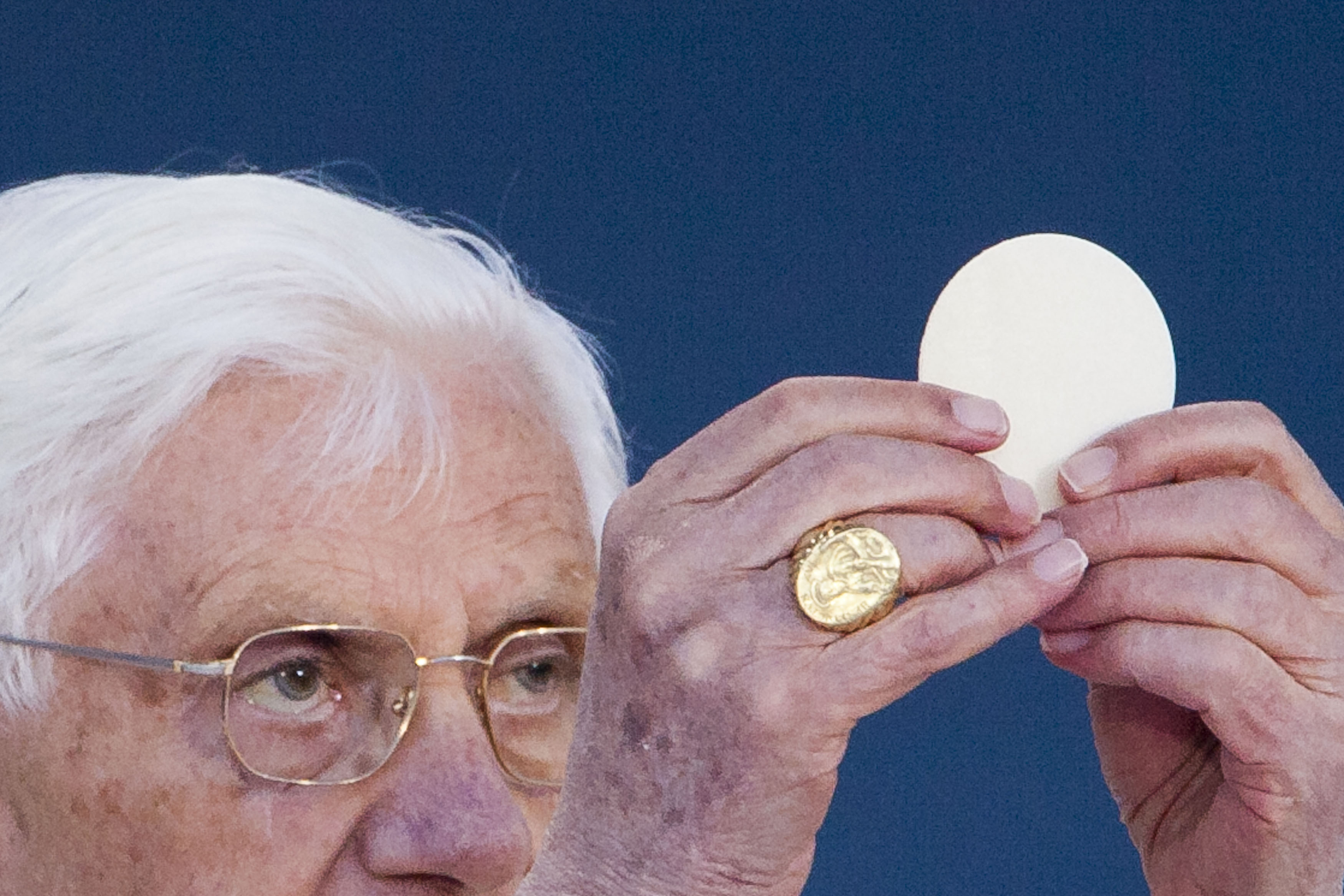
Benedict’s Radical End

[Re-posted from earlier today]

A resignation is truly a big deal. Since it hasn’t happened in 600 years, it changes the institution. It’s not outside the rules. The last Benedict to resign was Benedict IX (1032-45), “after selling the papacy to his godfather Gregory VI.” I’m unaware of any evidence of that kind this time around. John Paul II drew up contingency plans to resign if he became incapable of performing his functions – and yet he hung on for a very long time indeed.  Tom Reese:

In Light of the World, Pope Benedict responded unambiguously to a question about whether a pope could resign: “Yes. If a Pope clearly realizes that he is no longer physically, psychologically, and spiritually capable of handling the duties of his office, then he has a right and, under some circumstances, also an obligation to resign.”

On the other hand, he did not favor resignation simply because the burden of the papacy is great. “When the danger is great one must not run away. For that reason, now is certainly not the time to resign. Precisely at a time like this one must stand fast and endure the situation. That is my view. One can resign at a peaceful moment or when one simply cannot go on. But one must not run away from danger and say someone else should do it.”

That was published a little over two years ago. And yet in his resignation letter, this is the rationale:

In today’s world, subject to so many rapid changes and shaken by questions of deep relevance for the life of faith, in order to govern the bark of Saint Peter and proclaim the Gospel, both strength of mind and body are necessary, strength which in the last few months, has deteriorated in me to the extent that I have had to recognize my incapacity to adequately fulfill the ministry entrusted to me.

I do think his reference to the world “being shaken by questions of deep relevance for the life of faith” is a critical qualifier here. He seems to recognize that the challenges the Catholic church now faces – its intellectual collapse in the West, the stench of moral corruption revealed by the decades of child-rape and cover-ups, and the resort to the crudest forms of authority and reactionaryism in response to new ideas, discoveries and truths about human nature – have now overwhelmed his physical and mental strength. At some point, the sheer human energy required to try and impose a moral authority already lost must have seemed hopeless.

And the damage has been enormous.

Look at Benedict’s legacy in Germany, his home country:

Since Benedict’s election in 2005, the number of people leaving the Catholic Church in Germany has more than doubled, and it’s been the highest most recently in Ratzinger’s former Archdiocese of Munich and Freising. Only 30 percent of Germans are still Catholic today.

In Ireland, the collapse has been close to total. At the start of his papacy, Benedict declared his intent to bring Catholicism back to intellectual life in Europe. He didn’t just fail; he failed catastrophically, accelerating the Church’s demographic, spiritual and moral decline in the West. Key pillars of the Wojtila-Ratzinger counter-reformation – like the Legion of Christ, the creation of the repeat child rapist and drug trafficker, Marcial Maciel  – crumbled to dust. Key enablers of abuse were given rewards – Boston’s Cardinal Law springs to mind; other minor figures – including the monster who raped over 200 deaf children, Father Lawrence Murphy – were allowed a quiet retirement with no serious punishment;  I called for the Pope’s resignation two years ago, as the full extent of his complicity in the child-rape crisis came into closer view:

Ratzinger can no more be separated from John Paul II than Bush can from Cheney. And the cult of authority was John Paul II’s and Benedict XVI’s key contribution to the modern church. Now we see how this cult of authority was directly connected to enabling the church to enable, hide and defend the rapists of children … there is no escaping the verdict of history.

The Pope must resign. He has no moral authority left. And a new Pope needs to be selected who represents an end to the euphemisms, an end to any tolerance for this, and who will seek to restore the balance of authority achieved by the Second Vatican Council.

For me, the great tragedy of Benedict was his panic after the Second Council. There is no disputing the elegance of his mind or the exquisite meticulousness of his perfect, orderly German theology – and his work alongside the more consistently modernist Hans Kung will stand the test of time. But his post-1960s theology had as much relationship to the real challenges of the 21st Century as the effete, secluded German scholar, embalmed in clerical privilege for his entire adult life. And his early promise as a theologian calcified into the purest form of reaction and fear when given the power to enforce orthodoxy, which is what he essentially did for well over two decades. It was excruciating to watch such a careful, often illuminating scholar turn into a Grand Inquisitor. It was revealing that a bureaucrat who never missed even a scintilla of heresy was able to turn such a blind eye to the monstrous rapes of so many children. I wrote once:

Reading Benedict for a struggling gay Catholic like me is like reading a completely circular, self-enclosed system that is as beautiful at times as it is maddeningly immune to reasoned query. The dogmatism is astonishing. If your conscience demands that you dissent from some teachings, then it is not really your conscience. It is sin. And if all this circular dogmatism forces many to leave the church they once thought of as home? So be it.

When he was actually elected Pope, I was horrified by what it implied about the future. Back in 2005, I wrote:

I was trying to explain last night to a non-Catholic just how dumb-struck many reformist Catholics are by the elevation of Ratzinger. And then I found a way to explain. This is the religious equivalent of having had four terms of George W. Bush only to find that his successor as president is Karl Rove. Get it now?

I read much of Ratzinger’s theology back in the 1980s, as he assumed the power of Papal enforcer of orthodoxy. Here’s an extract from my 1988 TNR review of Ratzinger’s thought (alas, not online):

The metamorphosis of Joseph Ratzinger from Augustinian theologian to Augustinian policeman, and finally to policeman, may in part be due to the metamorphosis of the Church itself. The forces of change have been so great in the Church during the past two decades that some form of simple assertion of authority may have a prudential justification. John Paul II, however, has balanced Ratzinger’s zeal with a more humane approach. Together, they have played a “good cop, bad cop” routine with recalcitrant faithful. Ratzinger’s great gift to a Church all too easily distracted by the world is to call the faithful back to the fundamentals. But it is difficult not to feel dismayed by the way in which his earlier inspiration has ceded to the dictates of coercion, and his theological distrust of fallen man has translated so easily into disdain for Christians trying to live obediently in modernity. The man who might have guided the Church through reason has resorted to governing by force.

Ed Kilgore summarized the piece:

Sullivan’s take on Ratzinger back then was that he represented the marriage of the German Augustinian tradition (the same tradition that produced great Protestant theologians from Martin Luther to Karl Barth) with papal power, along with an unhealthy attitude about sex and gender. It’s a very toxic combination, producing a very political agenda in the guise of the non-political sovereignty of the Church. That’s why Andrew ultimately compared Cardinal Ratzinger then, and compares Benedict XVI now, to Dostoevsky’s Grand Inquisitor: a man driven by the logic of theology to, and perhaps beyond, the limits of Christianity itself.I hope Sullivan is wrong about the new pope, but there are unsettling analogies in his Catholic analysis of Ratzinger to the strangely un-Christian tendencies recently apparent in so many conspicuously Christian U.S. religious and political leaders.

I don’t think, alas, that I was wrong. And the desert in which the church has wandered since has been bleak but not without oases of new thought and eruptions of real grace and persistence of real faith. Those of us who have hung in must now pray for a new direction, a return to the spirit of the Second Council, a Pope of reform after an era of often irrational reaction and concealment of some of the worst evil imaginable. It can happen. Perhaps Benedict XVI finally grasped that. And finally did what he was never ever capable of doing before: let go and let God take over.

May the sunlight now come in; may accountability be taken; may a new fearlessness, guided by the Holy Spirit, give the church new life when its strength and vitality are in such profound crisis. May we see real punishment for the enablers of child rape; may we see more married priests and a serious discussion about women priests. May we see a return to the core truths of our faith: that God exists, that God is love; that this love became incarnate to rid us of the dead-end of worldliness into the wonderment of caritas. This is a chance for renewal. And repentance … as Lent inexorably approaches and Easter finally beckons.

Know hope.

Where Have You Gone, Barack Obama?

US President Barack Obama speaks from th

This was going to be the most transparent administration in history. It was going to roll back executive over-reach and put warfare against terrorism within a constitutional framework that could defend the country against Jihadist mass murder without sacrificing our values. And yet on a critical issue – the killing of allegedly treasonous citizens who have joined forces with al Qaeda to kill and threaten Americans – we were first given a memo that isn’t actually the real memo which contains no meaningful due process at all.

Now, the administration has given the Congress the actual memo, which, one hopes, does less damage to the Constitution and the English language. But why can “we the people” not see the actual memo? That phrase came up a lot in his recent Inaugural address. Funny how in practice in this respect, Obama is showing such contempt for the concept. And the “memo” Mike Isikoff procured is so legally shoddy and its corruption of the English language so perverse it almost demands we all see the real thing. To use the word “imminent” to describe something that is in the indefinite unknowable future is like calling torture “enhanced interrogation.” To lean on the word “infeasible” without any serious definition of what feasible would be is surreal. Underneath its absurd language and twisted rationales, the memo comes perilously close to the equivalent of “Because I said so.” And the core message of the policy is: trust me.

No, Mr president. It is not our job to trust you; it is our duty to distrust you.

This isn’t personal. I don’t doubt that sincere reflection and careful decision-making went behind the decision to kill Anwar al-Awlaki. And I defended the action, and still would. But, with all due respect, that’s irrelevant.

The issue here could not be more profound in principle, or more basic to American democracy. It is about the government having the right to kill a citizen without any due process even in America. (Before I go any further, may I just rebut the phony comparison with the Bush policy of torture of terror suspects? Killing an enemy in wartime is permissible and legal under the laws of war. Torture is illegal and immoral in all circumstances under every law of war.) More to the point, it is utterly uncontroversial that the military can kill a US citizen abroad if he is waging a treasonous war against the United States (see: Ex parte Quirin [1942]). Killing an enemy is routine on a battlefield in wartime or, domestically, in a hostage situation. If a cop had had a chance to kill Adam Lanza in the middle of his rampage, not only could he have done so; he should have. And if an American traitor is embedded in an al Qaeda terror training camp and that camp is targeted, there’s no way to read him his Miranda rights separately before we engage the enemy. Treason, in other words, is not the government’s fault. It is the traitor’s. And make no mistake: Anwar al-Awlaki was a traitor.

And I do believe that in a global war against Jihadists, like Awlaki, who have made clear threats of death against other Americans, are in al Qaeda camps, and propagating enemy propaganda to encourage even more violence, the executive branch does need to kill our enemies. I believe, for example, that the US had every right to invade another country’s airspace and kill Osama bin Laden as swiftly as possible. He posed no “imminent threat”. But he was an integral, central part of a network actively planning such attacks. Moreover, capturing him was entirely feasible. But we killed him in cold blood in his own home. Were we wrong to do so? Of course not. If we are at war with al Qaeda, which wears no uniform and treats homes and sky-scrapers as the battlefield, and if US soldiers are in a compound/bunker at night full of unforeseen dangers, they have to retain a capacity to defend themselves – and the right to approve that is assigned, especially in urgent, emergency, narrow-window opportunities, to the executive branch.

But the equation obviously shifts when it comes to an American citizen fighting for the enemy and not in an emergency. And it shifts again when the battlefield remains defined as anywhere in the world, including the US, and when the window of opportunity is much, much wider because the war has been defined as permanent. This means that there is no time-limit on this power – say, the conclusion of hostilities with a treaty. And look: treasonous citizens can and have been executed (the Communist traitors, the Rosenbergs rightly were). But even suspected traitors are entitled to due process. And due process seems to have gone out the window in this case.

One way to improve this power would be to limit it legislatively, by the Congress passing a new version of the 2001 AUMF in 2001 to mean merely al Qaeda in Afghanistan and its neighbors. It may, in other words, be time to declare an end to formal hostilities when the last troops return home in 2014, and return to a more criminal-based campaign against terrorism with less blowback. I have long felt that a permanent state of war against an amorphous enemy – anyone who wants to call himself a member of al Qaeda – is incompatible with the survival of a democratic republic. At the very least – now that bin Laden and much of the operational leadership of al Qaeda in Afghanistan and Pakistan have been eliminated – the Congress could narrow the boundaries of this war-without-end.

But more vital, it seems to me, is the establishment of a genuine judicial check on the selection of terror suspect targets – a secret FISA-type court that has real power to veto, and real access to the intelligence being used. The awesome power to kill an American citizen cannot be entrusted to one person alone, with no constitutional check, and no legal transparency. If we are defining “imminent threat” as the existence of a terror cell that could at some point in the future attack Americans, then at the very least, there must be a check on how that definition is implemented, and push-back against the rationale for killing a US citizen without any due process of law.

Obama always promised to fight the war against al Qaeda with energy, vigor and relentlessness. In my view, his policies have been immensely more successful than his predecessor’s clumsy, crude and incompetent management of national security. But Obama also promised real change in the war on terror, especially with respect to Iraq, torture and the laws of warfare. He promised much more transparency. He promised to unravel the unlimited powers granted to the executive by the legal hacks who did Cheney’s criminal bidding.

If this Obama still resides in the White House, he must release the full memo to the full public, now. Just as DiFi should release the full Senate Intelligence Committee’s report on torture now. We have a right to know and see what our government is doing and has done with respect to core constitutional rights and the rule of law. Yes, we have to fight a war that was initiated by an enemy. But we have to fight that war as Americans, under our Constitution, with prudence and as much transparency as possible.

Come back, Mr Obama. The nation turns its lonely eyes to you.

(Photo: Brendan Smialowski/Getty.)

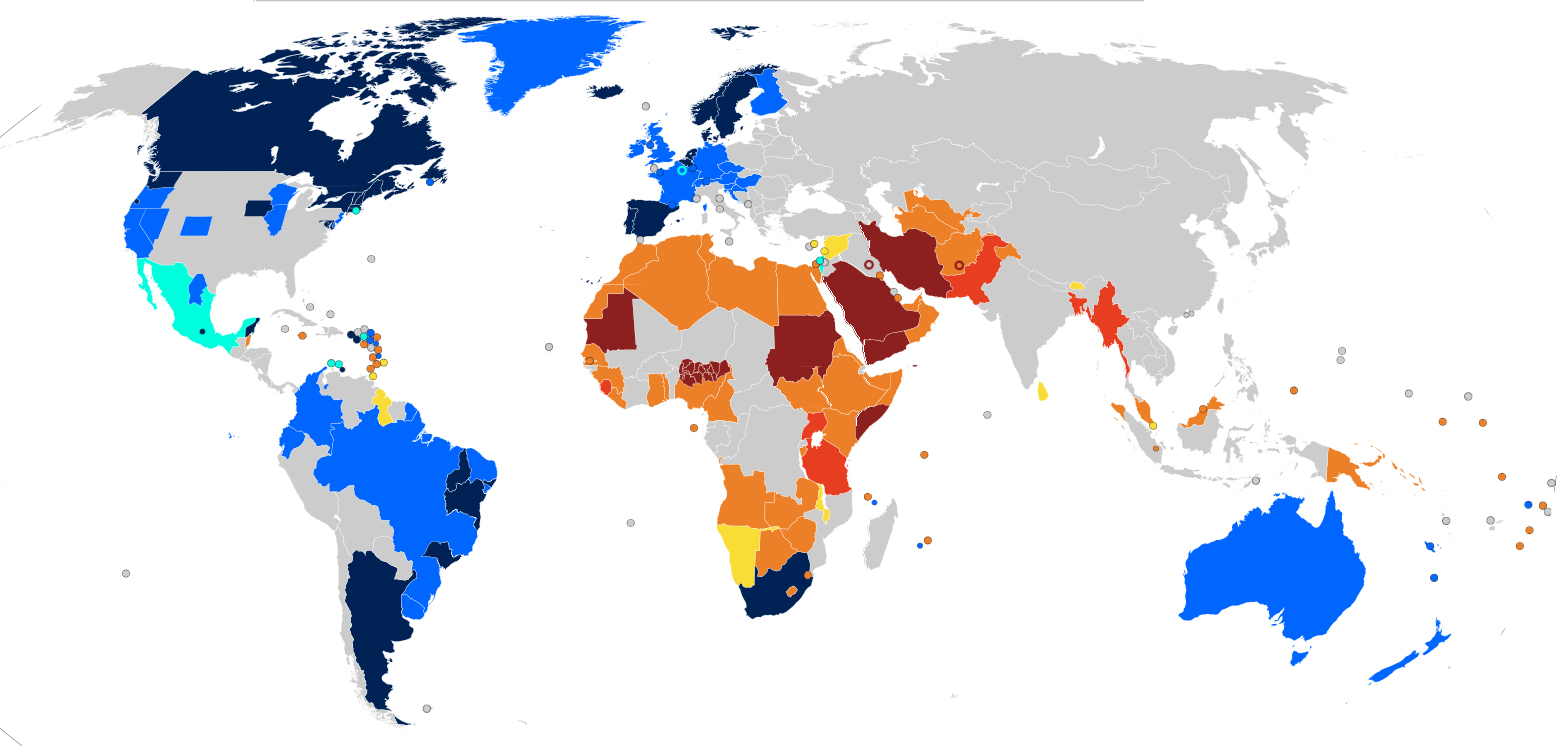
Britain, France, And SCOTUS

Marriage Globe

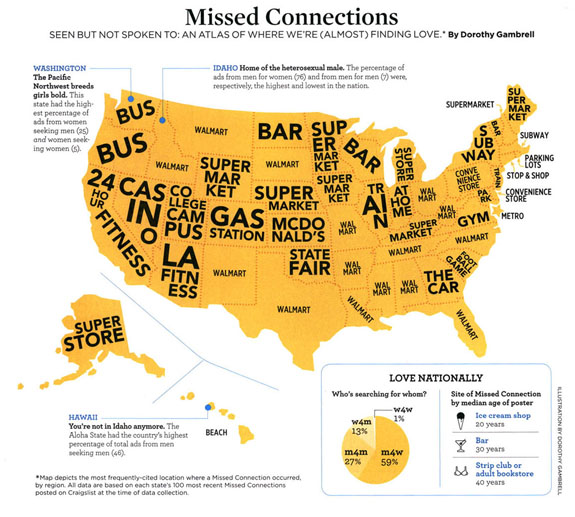
Two of the wealthiest Western democracies are now on the verge of having full marriage equality: Britain and France. The vote yesterday in the Commons – 400 – 175 – was echoed in the French National Assembly five days ago – 249 – 97. These were not close votes. Yes, they have divided the British right – with a slim majority of Tory MPs in Britain deciding not to follow David Cameron’s modernizing lead. But those dissenters should not be confused with the Christianist opposition in the GOP. In the UK, gay couples in civil partnerships have almost all the rights of heterosexual married partners, including immigration rights, which John McCain just dismissed as utterly unimportant to him. The Conservative opposition in Britain was nonetheless in favor of consigning gays to a separate but equal category of civil partnerships. The Christianist opposition in America is in favor of denying gay couples any civil recognition or protection of any kind.

The difference is that between a conservative party seeking to govern a country and a religious party seeking an eternal culture war. But when the Supreme Court comes to weigh the issue next month, I think the fast-growing support for equality in America, especially among the young, the growing number of states in the US with marriage equality, and the overwhelming embrace of equality by many countries both physically close – Canada and Mexico – and historically close – Britain and France – will have an effect. That’s why you can scour the conservative media today and find nary a mention of the epochal shifts in America’s oldest ally and its mother-country.

Justices do not rule in a cultural or historical vacuum. They could still vote narrowly and duck a big national resolution (as I hope they do). But Kennedy in particular could also see the emerging future in the West as a decisive factor, believe he has played a critical judicial role in this civil rights movement in America (as he has), and decide to go big. It’s his legacy. And it will last.

Image from Wiki. Very soon, Britain and France will be dark blue too.

Key