The Republican Party Cardinal

Dolan

The de facto endorsement of the Romney-Ryan ticket by the Catholic hierarchy became close to authoritative yesterday, as the Cardinal Archbishop of New York accepted – in unprecedented fashion – an invitation to offer a benediction on the last day of the RNC, having gone out of his way to praise Paul Ryan as a "great public servant" whom he is "anxious to see in action." The usual practice is the local bishop for a benediction in his diocese. But the Romney-Ryan ticket persisted for obvious political reasons, argued for a big name Catholic, and Dolan, astonishingly, said yes.

The reason this is a big problem is that Dolan is in many ways the national leader of the Benedict XVI hierarchy. His stature turns a benediction into political act. It may just be a prayer – but it is one offered by one of the most recognizable Catholic leaders in the country, at a party political convention. It just can't get more partisan than that – to up-end protocol to inject himself into the political scene. 

The other problem is that he has already all but endorsed Paul Ryan:

"I came to know and admire him immensely," Cardinal Dolan added. "And I would consider him a friend. He and his wife Janna and their three kids have been guests in my house; I’ve been a guest at their house. They’re remarkably upright, refreshing people. And he’s a great public servant." Stating he was "speaking personally and not from a partisan point of view" and "not trying to be an apologist" for Ryan, Cardinal Dolan praised Ryan’s "call for financial accountability and restraint and a balanced budget” as well as his "obvious solicitude for the poor."

Noting that there may be differences in "prudential judgment" over how to assist the poor, Cardinal Dolan added that “I admire him. He’s honest. He’s refreshing. Do I agree with everything? No, but . . . I’m anxious to see him in action."

Ryan, an enthusiast of Ayn Rand, wants to drastically gut Medicaid and Medicare, deny 30 million people impending access to health insurance and Dolan interprets this as his "obvious solicitude for the poor." He praises a man who voted for an unfunded Medicare D entitlement, two disastrously expensive wars, and now pledges to balance the budget only over three decades is a model of accountability and restraint and a balanced budget! Dolan argues that slashing funds for the poor while slashing taxes for the rich is simply a "prudential judgment" with respect to how to help the poor. I don't think that preventing the old from getting home care is about helping them. More to the point: "I'm anxious to see him in action" is not a neutral statement. It's an endorsement.

And make no mistake: Dolan is an old-school Catholic pol – a figure who approved payments to molesting priests to expedite their firing, brazenly lied about it, then ran away abroad when the press demanded an explanation. His most important issues are criminalizing abortion, stripping gay couples of any civil legal protection, and making sure that non-Catholic employees of Catholic hospitals and schools be denied access to insured contraception. That he is saying the benediction for a ticket that explicitly endorses a priority for the super-rich over the working poor and views illegal immigrants as beneath contempt also tells you a lot about Dolan's priorities.

The Cardinal's spokesman insists it's just a prayer – but as Michael O'Loughlin of the Jesuit magazine America has noted, the leading Catholic Archbishop in the country traveling all the way to Florida to big-foot the local bishop and finish up the GOP Convention is such a staggeringly partisan act, especially given the politics around contraception and religious freedom, it's deeply reckless:

The cozy relationship between a sizable portion of U.S. bishops and the Republican Party should be cause for concern, and not just among progressive Catholics. For the church to be able to live out its role as prophet, it cannot be tied to one political party. Cardinal Dolan’s appearance in Tampa will damage the church’s ability to be a moral and legitimate voice for voiceless, as those who view the Catholic Church as being a shill for the GOP have just a bit more evidence to prove their case.

The Ryan pick was designed in part to appeal to the Catholic hierarchy, to get their implicit and quiet endorsement.

And, even though he is that oxymoronic creature, the Ayn Rand Catholic, it worked.

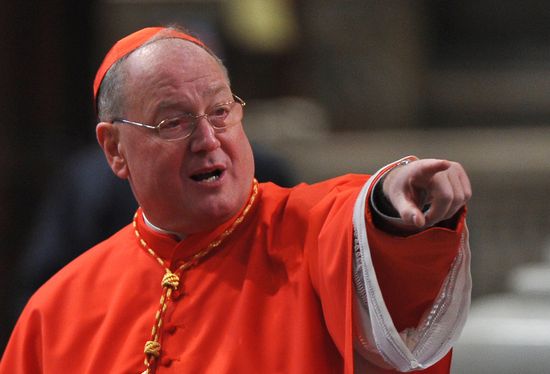
(Photo: US cardinal Timothy Michael Dolan gestures prior to the mass led by Pope Benedict XVI with new Cardinals in St. Peter's basilica at the Vatican on February 19, 2012. By Alberto Pizzoli/AFP/Getty Images)

Akin’s Position Is The GOP’s

That's the truth whatever Romney now wants to say. 150 Republican congressman voted for a bill that would allow abortions only for "forcible rape", as if there were some other kind. (Mercifully, the language was later stripped from the bill.) The distinction is designed to prevent women citing rape as a reason for abortion when there is no sign of physical trauma. It's a disgusting form of contempt for women's autonomy and integrity – and a truly despicable soft tolerance of all other kinds of sexual coercion. Remember the words of the mainstream pro-life figure John C Willke:

When pro-lifers speak of rape pregnancies, we should commonly use the phrase "forcible rape" or "assault rape," for that specifies what we're talking about. Rape can also be statutory. Depending upon your state law, statutory rape can be consensual, but we're not addressing that here.

Here's what Romney said about Willke in 2007: "I am proud to have the support of a man who has meant so much to the pro-life movement in our country." Someone should ask Mitt: is he still proud that his party platform is basing its social policy on the views of a man who thinks "statutory rape can be consensual"?

But in many ways, these nuances are just helpful signs of how the fundamentalist psyche thinks – it is always trying to tidy up the messy realities of human experience to conform to its eternal diktats. The real point is that the GOP platform would make all abortions, including those caused by rape and incest, illegal in every state by constitutional amendment. It would not just allow the states to decide, but insist on a national ban. As on gay rights, and medical marijuana, the GOP has total contempt for federalism.

Until this incarnation of the Republican party is destroyed at the polls, we live in its thrall. We have in this election an opportunity not just to re-elect a president capable of making the Grand Bargain we all need; but to punish and humiliate the most extreme, irrational, hateful version of Republicanism that now stalks the land, led by a brazen liar and fathomless cynic.

It's an opportunity of a lifetime: to use this election to try and destroy the fundamentalist insanity that has effectively destroyed any American conservatism worthy of the name. Former Republicans, Independents and all non-fundamentalists, Christians and Jews and Muslims, have a chance to excise this metastasizing cancer from our politics.

From 2004’s “Defining Marriage” To 2012’s “Defining Rape”

The parallels between the two elections have been often cited. But one that is emerging strongly this time as last is a cultural-social issue ginned up by the incumbent party to discredit the opponent. In 2004, it was John Kerry and the "war on marriage". This time it is Mitt Romney and the "war on women." And the wedge issue is hurting him.

And there is a solid defense of Akin's staying in the race, as MoDo points out today. He said what he evidently believes and something that has been a staple on the pro-life fringe for a while. It's obvious where this myth comes from. If you are pro-life, i.e. if you hold that a newly fertilized egg just attached to the uterus has all the constitutional rights of an adult or a newborn, then an exception for rape makes no sense. I actually find that position more coherent than saying that a newly fertilized egg created by rape or incest is less of a person somehow. The sane and past Christian view is that it's a mystery when a human "person" emerges from human "life" but Aquinas figured it probably occurred in the first trimester. Abortions were still always morally wrong – but this modern neurotic fixation on full human personhood beginning at the zygote stage is absent from previous Christianity. And yes, it's a function of fundamentalism – pioneered by John Paul II and orchestrated by Benedict XVI.

This fundamentalism hasn't changed since 2004; it has merely spread and intensified as each last non-Christianist element of the GOP has been purged. Religious fanatics are very talented and interested in purging heretics, which is why, for example, Akin emerged in Missouri in the first place. This is not John Danforth's Missouri.

In 2004, this new fundamentalism could command enough mainstream discomfort to win a major victory against a tiny "sinful" minority.

In 2012, they're still trying to keep this minority in its place but public opinion has changed dramatically against them. (Support for marriage equality was at only 32 percent in 2004, compared with 47 percent now in the Pew poll). But now, the crusade is inevitably focused on women, because of renewed opposition to contraception among Christianists – the popular front between evangelicals and Ratzingerian Catholics made this essential – and, of course, abortion.

There is a difference between a culture war where you have majority support and are persecuting a minority of around 2 percent of the population … and a culture war where you have very little non-Christianist support (and shock among those not exposed to what is mainstream thought in the GOP base) and are targeting more than half the population.

Karma, as they say …

“A Vast Left-Wing Conspiracy”

Niall Ferguson responds to critics once again. Read it and make your own mind up. Here's his summary:

My central critique of the President is not that the economy has under-performed, but that he has not been an effective leader of the executive branch. I go on to detail his well-documented difficulties in managing his team of economic advisers and his disastrous decision to leave it to his own party in Congress to define the terms of his stimulus, financial reform and healthcare reform. I also argue that he has consistently failed to address the crucial issue of long-term fiscal balance, with the result that the nation is now hurtling towards a fiscal cliff of tax hikes and drastic spending cuts.

Niall is surely aware that the Congress writes laws, not presidents. This is not Westminster. And Niall's preferred top-down approach was indeed pursued by the Clintons in 1994. Healthcare reform failed that time spectacularly precisely because it didn't flatter Congress' prerogatives; under Obama's "failed" executive leadership, universal healthcare passed for the first time in history. It's very close to Romneycare. Was that as big a mess as well?

The well-documented difficulties on economic policy come from Ron Suskind's book, which was subject to strong pushback from the people it quoted. I'm sure there were divisions and fights in the greatest economic crisis since the 1930s. But the results are pretty clear: the economy under Obama has performed much better than the British economy under Osborne, or Europe or Japan. The private sector has recovered at Reagan-like rates. It's the slashing of public sector jobs that has kept employment so subdued – but far less subdued than anywhere else in the developed world. If this is executive mismanagement, more, please.

Then the notion that Obama "has consistently failed to address the crucial issue of long-term fiscal balance." What, then, was the Bowles-Simpson Commission about? Ryan didn't create it – he merely torpedoed it because it dared to raise revenues in order to cut the deficit! Obama actually created it and if the necessary majority in Congress had backed it, he would have gone a long way to sign it. Why not? It would give him credit for the biggest deal since 1993. And that's precisely why the GOP – spearheaded by Ryan – killed it.

Yes, Obama deserves a shellacking for not owning Bowles-Simpson – in what was, in my view, the biggest error of his presidency. But I have no doubt he wanted and wants a Grand Bargain – and revealed how far he would go by cutting $700 billion from Medicare in the ACA (which Ryan is now exploiting on the campaign trail). But how do you get a Grand Bargain between the two parties when one party refuses to bargain on its central priority, no tax increases? Given Obama's record of Medicare cuts (never before imposed by a Democratic president), it's clear who the culprit is for the fiscal cliff: a Republican party that wanted the US to default rather than agree to even a tiny revenue increase, and that pledged in the primaries to refuse a budget deal that was 10-1 spending cuts to revenue increases.

As for the executive banch, the commander-in-chief role is part of the job. Niall doesn't mention the extremely successful attack on al Qaeda in Afghanistan and Pakistan, the end of torture, the killing of Osama bin Laden and capture of mounds of intelligence, or the fact that, unlike his predecessor, Obama has not presided over a major terror attack in this country or authorized grotesque torture that effectively destroyed America's moral standing. As for Iraq, Niall says the exit was premature. It was negotiated by Bush. Maliki didn't want us there any more. Niall thinks we should occupy a country with all the massive expense that entails – against its will? Seriously? And it's Obama who is unserious on the debt?

Fisking Ferguson I

My old and good friend Niall Ferguson has written an essay arguing against re-electing Obama. So for the second time in four years, we will be backing separate candidates. One reason is that I believe that the Bush-Cheney wars turned out to be disastrous and a second war against Iran could be catastrophic. Niall has had no such change of heart and remains an advocate of American imperial power. Another is that I do not share Niall's view of the Obama administration's record, which I think he massively – and rather self-evidently – distorts.

Lets start with one sleight of hand noted many many times on this blog. Niall uses a February 2009 rough draft from the Obamaites in transition on the outlook for the next four years as a way to prove that their "promises" fell short. It does nothing of the sort:

Back then, the consensus was that the economy had shrunk some 3 percent in the last quarter of 2008. That was the data on which Romer at el based their predictions. We now know the recession was far worse – with a decline in the fourth quarter of close to 9 percent – three times the contemporaneous assumption.

Niall concedes this at one point:

It was pretty hard to foresee what was going to happen to the economy in the years after 2008.

But that doesn't prevent him from writing something as clearly propagandistic as this:

Unemployment was supposed to be 6 percent by now. It has averaged 8.2 percent this year so far.

By Niall's own admission, that proves nothing except the vagaries of prediction. But he still wants to use it to indict Obama. I cry intellectual foul. Even more amazing, this is his assessment of Obama's record on jobs:

The total number of private-sector jobs is still 4.3 million below the January 2008 peak.

Er … but Obama didn't become president in January 2009? Or did that fact also elude the fact-checkers? Most fair assessments of Obama's employment record give the guy some slack for his first twelve months because of the enormity of the crisis he inherited. But Niall insists not only on judging him by job growth after February 2009 but after January 2008! Almost the entire recession is on Obama's watch, including Bush's last year! And that, alas, is roughly the quality of the entire piece.

To judge Obama's record on jobs, you need a better benchmark. Lets try two. The first is the last administration's first term. Here's a graph comparing the two presidents on private and public sector job growth – and remember Bush had nothing remotely like the recession that Obama had to cope with:

BUSHvOBAMA_jobsREV

If you removed the blue and red labels, you'd assume that Obama was the conservative and Bush the leftist, wouldn't you? And that Obama was therefore far more successful. Yet Niall manages to argue exactly the opposite. Under Obama, there has been a serious reduction in public sector jobs – largely by state governments. But I'd say Obama's record in private job creation easily defeats his predecessor, even when dealing with the worst recession since the 1930s.

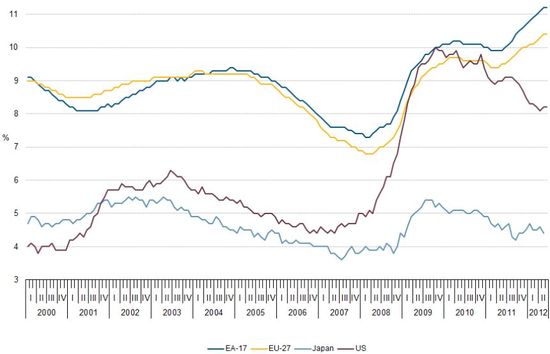
Or look at other countries, including Britain, where the Coalition government has followed Niall's advice that our main problem right now is the threat of soaring inflation. Here's the unemployment record globally for the past four years:

UnemplChart

Under Obama, the US has recovered more strongly than Europe or Japan. It's not dispositive proof of the superiority of Obama's policies but when compared with his predecessor and his global advanced economy competitors, he's doing pretty well. Good enough? Nope. But the task of drawing down such massive debt was bound to lead to a slow recovery. In America, it's been a lot faster than Europe or Japan. In 2008, unemployment was at 10 percent in Europe and the US. In Europe it's now over 11 and rising. In Britain, after following Niall's directives, half a million more people are unemployed than in February 2009, and all the predictions are for more unemployment ahead. Here, it's close to 8 and declining slowly.

Then there are the glaring omissions. Niall simply pretends the cost-control pilot schemes in the ACA do not exist at all. This is Simply. Not. True:

The Patient Protection and Affordable Care Act (ACA) of 2010 did nothing to address the core defects of the system: the long-run explosion of Medicare costs as the baby boomers retire, the “fee for service” model that drives health-care inflation, the link from employment to insurance that explains why so many Americans lack coverage, and the excessive costs of the liability insurance that our doctors need to protect them from our lawyers.

Agreed on the last two – but the idea that there is no attempt to unravel fee for service or try to get cost control in the ACA is something even the lowliest fact-checker should have caught. This is absurd propaganda, not journalism. It may be that the cost-controls fail. Fine. Make that case. But don't pretend there wasn't the most ambitious effort to control healthcare costs in decades.

More to come. The piece is sadly so ridden with errors and elisions and non-sequiturs it will require a few more posts.

Paul Ryan’s Zombie Reaganomics

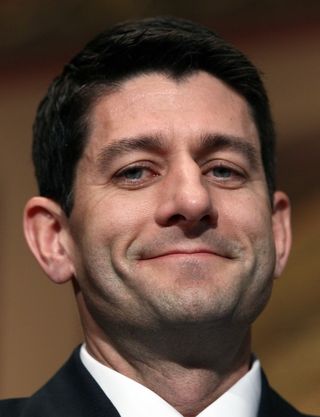
I don't share some Obama-supporters' contempt for Paul Ryan. That's in part because he comes across as a sincere, decent, fine fellow – whose Randian worldview has produced a reformist zeal known most intimately to an adolescent male. Indeed, he reminds me most of all of myself in my teens – dreaming of how to cut government in half, relishing schemes to slash taxes and slash spending and unleash revolutionary growth which, in itself, would render all other problems more manageable. There is no libertarian quite as convinced as a teenage libertarian. And it's the adolescent conviction of Ryan that shines so brightly.

One can call it courage or arrested development. But he is, in some ways, a pellucidly bright plant bred in the conservative movement's hydroponic greenhouse. Barely exposed to natural light, these young fertile saplings are fed with a constant drip of Koch money, sprayed with SMUGRYANanti-liberal pesticides and brought eventually into the political marketplace with joyful children, a lovely wife and a set of abs Aaron Schock would die for (and probably has). He has no life or experience outside the greenhouse – which is why he glows with its certainties. Most important, he has that quintessential characteristic of the modern conservative – total denial of the recent past. Ryan was instrumental and supportive of the most fiscally reckless administration in modern times. He gave us a massive new unfunded entitlement, two off-budget wars and was key to ensuring that the Bowles-Simpson plan was dead-on-arrival. This alleged fire-fighter – whose credentials are perceived as impeccable in Washington – just quit being an arsonist.

But on one key subject, the ineluctably rising costs of healthcare for the elderly, Ryan has in the past proffered a real solution. At some point, seniors would be cut off from the funds they would require for the kind of comprehensive treatment many now expect. This is a rather blunt way of putting it – and Ryan may hope somehow to bring costs down with some kind of competition among private plans for Medicare recipients to ease the pain. But that hope is no more credible at this point than Obama's ACA hope for lower costs – except Obama has initiated several specific cost-control pilot projects, while Ryan is relying on the increasingly tenuous hope that competition within Medicare really will lower costs – i.e. that the sick elderly will act like twenty-somethings seeking a bargain on a smartphone. I doubt it – probably more than I do the ACA experiments. In the latest iteration of his plan, however, Ryan has made the premium support option voluntary – thereby effectively tabling its fiscal potential, and shunted off all the pain onto the post-boomers. Ryan doesn't reverse this generational warfare; he intensifies it by siding with today's seniors over tomorrow's.

I'll be frank, though, and say that some kind of premium support in Medicare seems to me the only solid way I can see right now to save us from fiscal catastrophe. If I had my druthers, I'd give the ACA a decade to make real progress on cost-cutting and then, if it failed, I'd move to premium support. Ryan's right on the unsustainability of the current program and has made cutting it a campaign promise. We owe him thanks for that.

But, no, he is not a serious fiscal conservative. Not even close. In 2012, decades after supply-side economics was proven not to add more revenues than it gave back, Ryan is still a true-believer. His view is that if you cut taxes massively, you will decrease the debt. But this is the primary reason we currently have the massive debt that began its ascent under Reagan, was arrested by Bush and Clinton and then exploded under Bush and Ryan. Worse, Ryan believes that you can cut taxes drastically, increase defense spending massively and still cut the debt. This, to put it mildly, is Zombie-Reaganomics. Tax rates are already far lower than they were in 1980 – and can't be cut still further and have the same impact. Besides, our problem right now is obviously lack of demand, rather than enervated supply. Companies are sitting on piles of cash. Interest rates are very very low. And yet we struggle under a debt burden Ryan would immediately drastically increase, with a promise to get to a balanced budget somewhere near the middle of the century. It makes zero sense to me.

But in many ways, it helps frame this election constructively. We all know we have a debt and a growth problem. Obama favors raising taxes on the wealthy, cutting defense and controlling costs in the ACA. He's also open to serious Medicare reforms if the GOP would join in. Bowles-Simpson was much more of a reach for a Democrat than for a Republican on entitlement reform. And I firmly believe that Obama would sign a Bowles-Simpson type deal in his second term if the GOP were to cooperate. I think he'd sign one this December if he could. Ryan never ever would. Obama's reason for ducking Bowles-Simpson was that the GOP wouldn't bite. Ryan's reason for ducking Bowles-Simson is that he is still a supply side fanatic.

On the Republican side, we now have a debt-reduction plan that actually cuts tax rates for the very rich along with everyone else, vastly increases defense spending, and "balances" the entire thing on gutting care for the old, the poor and the sick (the Medicaid proposal is truly Darwinian) and ending loopholes (which Ryan refuses to specify). I'm all for ending loopholes but even then, we wouldn't get a balanced budget for three decades because of all the defense spending and tax cutting.

This isn't conservatism. It's rightist theology. In a fiscal emergency, the Republicans are proposing not clear remedies but ideological fantasies that were already disproven in 1990. They have learned nothing. And the immense damage they inflicted on this country's fiscal health in the last decade would be nothing compared to what would come under a Ryan-Romney administration.

Because it compounds the errors that came before it.

Vidal

My only real interaction with the man was a review I wrote of his awful 2000 novel, The Golden Age, where he accuses FDR of setting up Pearl Harbor in a conspiracy to go to war with Nazi Germany. Yes, he was not just a 9/11 skeptic but a Pearl Harbor truther:

It is difficult to make a solid argument about America's imperial temptation when you willfully discount the darkening world that greeted the fledgling superpower in the 1930's and 40's. It is difficult to make an argument about American history when you write a novelistic account that makes grand claims about the American past, but then neither defends them by accountable historical methods nor disowns them as mere fiction.

Vidal wants it every which way. In fact, he wants to be Shakespeare (Vidal draws the analogy himself). ''Why do you keep letting Shakespeare leak in upon us?'' Peter asks late in the novel. ''Why not?'' is the answer. ''He gives names to things, real and unreal. He understands how the actors — the Roosevelts and the Trumans — are simply spirits and once their scenes are acted out, they melt into air, into thin air, as we shall presently do, still hankering after what was not meant to be, ever.'' But Roosevelt and Truman didn't melt into thin air. They were not invented; and they didn't live long enough ago to be turned into enduring myths. They lived lives and made choices that deserve fearless scrutiny, not snooty, cynical attack. And, by any reckoning, they helped make the world what it now is — a far freer, brighter place than anything concocted on the strange, orbiting planet called Gore Vidal.

He subsequently dismissed me as a foreigner and therefore unqualified to review his book (the most baldly nativist comment directed against me in a quarter century of living here). Vidal was also a fierce opponent of the gay rights movement in America, denying that homosexuality exists at all, a tic of his generation that he typically refused to relinquish in the face of overwhelming evidence. Then this, of course:

But I must say that his extreme hostility to the American Empire – sustained relentlessly through the decades – looks much less repellent to me than it did before Bush-Cheney. He ruined his case by exaggeration, and absurd moral equivalence. But he was surely onto something from the perspective of the 21st Century. And his willingness to court public outrage and disdain in defense of his ideas is a model for a public intellectual, it seems to me. As a historical novelist of the Roman past, he was superb – even peerless. No one can or would dispute his profound erudition. And his astonishing memoir, Palimpsest, is better than any writer has any business aiming for.

But he also, it seems to me, let his passions outweigh his reason more than a thinker as gifted as he was should. This emotionally turbulent quality seemed to me to be related to his woundedness as a brilliant scion forced by his homosexuality into a marginalization he learned to adorn with enormous style. He never, perhaps understandably, learned to let go of resentment. But this very rebelliousness was, in some ways, the flipside of a deep and romantic patriotism. You can never be that angry if you have never been that naive.

And that combination of love of country – and vein-bulging disgust with it – strikes me as related to his homosexuality, lived bravely in an era of cowardice. The displacement of being gay in a very straight world created a dynamic of rejection and longing that extended to more than a family. It extended to a country. And it was a bit of a show. He returned to the country he loved to die. And he will be buried, we are informed, in a grave next to his partner of many decades, whom he would doggedly refuse to call his husband:

The stone fidelity

They hardly meant has come to be  
Their final blazon, and to prove  
Our almost-instinct almost true:  
What will survive of us is love.

The Conservative Case For Obama – Again

Michael Brendan Dougherty recently checked in on the Obamacons and found them a little chastened, but still adamant about the degeneration of the GOP and salvaging the term "conservative" from religious fanatics, supply-side fantasists and foreign policy utopians. The eyes roll, I know, when I cling to the word "conservative" like others cling to their, er, Second Amendment rights. But I'd be dissembling if I did not argue that on a whole array of issues, Obama is simply and unequivocally the more conservative candidate. One commenter on the piece put it pretty simply:

What do you call:

1. Nationalism, without the interventionist foreign policy.

2. Taxation equal to public spending, rather than just cutting taxes without making the hard choices to spend less.

3. Slow and careful to adopt change, but realizing that change is necessary sometimes.

I view conservatism as the practical engagement with policy and political institutions to adapt modestly and incrementally to social and economic change with the goal of maintaining the coherence and stability of a polity and a culture. It is a philosophy of moderation and balance, constantly alert to the manifold ways in which societies can, over time, lose their equilibrium. It is defined, along Burke's foundational lines, as an opposition to ideological and theological politics in every form. And so it is a perfectly admirable conservative idea to respond to capitalism's modern mercilessness by trying to support, encourage and help the traditional family structure and traditional religious practice. The point is a pragmatic response to contingent events that threaten social coherence. But it is equally conservative to note that a group in society – openly gay people – have emerged as a EdmundBurke1771force and are best integrated within an existing institution – civil marriage – than by continued ostracism or new institutions like "civil unions" that have not stood the test of time.

On that pragmatic, non-ideological definition of conservatism, on a wide array of issues, Obama wins hands down. Let me enumerate the ways.

First the obvious contingent problems. The economy has been shell-shocked by the aftermath of a giant debt bubble and reckless financial gambling, all occurring a couple of decades after a bipartisan decision to take off the protections imposed on Wall Street in 1933. America is simultaneously experiencing a dramatic and widening economic inequality and declining social mobility. Its private healthcare system is by far the least efficient in the world, adding a massive burden to businesses and government with spiraling costs. We are clearly facing a climate crisis in which the very goods of industrialization are undermining the earth's own equilibrium. At the same time, the economic elites, empowered by radical new moves by the Supreme Court, appear to have rigged the Congressional game through an insanely complex tax code, which both cripples the free market and keeps us insolvent. Above all, the debt is a huge threat to future prosperity, just as premature austerity is a huge threat to the recovery. All of these are combining not just to lower American growth and vitality but also to threaten the very legitimacy of the system which, to increasing numbers of middle class Americans, looks like a game stacked against them.

On almost every front, on almost every issue, in this crisis, Obama is more conservative than Romney. Like Romney, he seeks a long-term debt solution. But unlike Romney, he seeks to do so using all traditional means available without drastically altering the American system. He'll cut spending and raise taxes, while Romney will only do the former, even as tax revenues are at 60 year lows. Obama will first attempt to bend the curve on healthcare costs before turning Medicare into a premium support system. Romney would reverse those priorities and end Medicare as it has been known for decades. The first is a more conservative option, the latter – doubling down on what has gone wrong these past thirty years and gutting one of the most popular entitlements around – is far more radical.

On the financial sector, Obama has sought a modest re-regulation after the chaos of 2008. Romney seeks to do nothing to prevent the next financial panic, and wants to roll back what few rules have been re-imposed. On access to health insurance, Romney wants to return to the free-rider model of the past couple of decades, in which soaring costs are linked with the worst general outcomes in health and wellness in the West. Obama attempted a reform that sought – as Romney did in Massachusetts – to keep the system primarily private, while offering government subsidies to help Obamaverticalthe working poor stay healthy and stop their ultimate healthcare costs from soaring beyond their (and our collective) reach. Romney simply wants to abolish that and has no plan at all to deal with the millions of uninsured, and their role in raising healthcare costs. 
On the climate, Obama has steered some stimulus money to non-carbon energy, while presiding over a revolution in American self-sufficiency via fracking. Romney would simply double-down on carbon energy alone. On the critical issue of economic inequality, Romney wants to accelerate the pace at which the one percent is leaving the rest of America behind, by lowering their tax rates still further. Obama would have us return … to the Clinton era, accepting the post-Reagan settlement but adjusting it so we don't go broke. On every issue, Obama is effectively an old-style moderate Republican. And Romney is playing the part of a revolutionary Randian.

On foreign policy, as Jon Rauch notes in a must-read, Obama is even more obviously conservative than Romney. His lesson from the Iraq war was extreme caution in military intervention in the Middle East. Romney's lesson is that we should launch another religiously polarizing war on Iran to little long-term effect but insuring a permanent war, with incalculable economic consequences. Obama sought to rebalance the US on the global stage by defusing the Bush-Cheney polarization, while still waging a lethal war on al Qaeda. In four years, we have seen the decimation of al Qaeda in Af-Pak, the killing of Osama bin Laden, withdrawal from Iraq and a timeline for leaving Afghanistan. Romney would reverse this with a new polarization against the emerging Arab democracies – because their inevitable Islamist phase worries the Israelis. Romney would also ramp up Pentagon spending at a moment of deep debt and few serious global rivals, and bless increased settlement on the West Bank, isolating the US still further. 

On social issues, Obama favors moderate federalism on questions such as marriage equality and medical marijuana (with an exception for the DEA in California, where, it could be argued, the state system has gotten out of control). Romney favors a radical attempt to impose one marriage policy on every state through a constitutional amendment and stark opposition to medical marijuana everywhere. Obama has made outreach to Hispanics real and supports a balanced McCain-style reform to integrate illegal aliens into the legal system, while toughening the border still further. Romney wants 12 million to "self-deport." Obama has sought to integrate the growing numbers of gay couples into their own families and society. Romney seeks to keep this emergent community marginalized outside mainstream institutions.

On  issue after issue, Burke would be with Obama and against Rommey's theo-political radicalism. The idea that Obama has somehow let down those conservatives who supported him over the McCain-Palin ticket therefore seems absurd to me. Obama has done all he said he intended to do, and almost all of it is a pragmatic response to America's emergent and growing problems. On almost every question – a stimulus one-third tax cuts, a healthcare reform based on the Heritage Foundation model, cap-and-trade for carbon, and solid support for Israel while trying to nudge it away from self-destruction – Obama is in a right-of-center consensus as of a decade ago. It is his opponent who has twisted himself into a screaming radical dedicated to changing America much more profoundly – largely because Fox Nation is experiencing a cultural panic. As for temperament, the GOP is too consumed with cultural hatred to acknowledge the grace and calm of a man forced to grapple with the worst economic crisis since the Great Depression with no help whatsoever from his opponents, a black man who has buried identity politics and remains a family man Republicans would fawn over if he were one of them.

Alas, the GOP is stuck in the 1984 of its own fetid imagination, incapable of acknowledging the real failures of the last Republican administration or the new, actual, vital questions we have to answer in this millennium: How do we make our healthcare system much more efficient? How do we best mitigate climate change? How do we tackle the problem of economic hyper-inequality? How do we advance US interests in a time of upheaval and revolution in the Arab world? How do we make government solvent?

The reason Romney's campaign is vague on so many of these questions is that it has little to offer on these practical issues but ideological stridency. It is brain-dead. And zombie-conservatism is not conservatism. It is the violent twitching of a political corpse. This election is a chance to bury that corpse and start over. We should be grateful a de facto moderate Republican is president while conservatism has a chance to regroup.
Romney In Israel: How High To Jump?

149487385

Haaretz's Barak Ravid goes over the speech:

The speech itself sounded as if it could have been written by Netanyahu's bureau. So it's no surprise that when the two met later for dinner, Netanyahu thanked him for his "support for Israel and Jerusalem." In general, Netanyahu embraced Romney as no Israeli prime minister has ever before embraced a candidate running against an incumbent U.S. president: Aside from their working meeting in the morning, Netanyahu also hosted Romney and his wife and sons for dinner at his official residence.

The crowd told you everything you need to know:

Religious American immigrants dominated the crowd; secular Jews and native-born Israelis were few and far between. Those present included Jewish-American millionaires, settler leaders like the former chairman of the Yesha Council of settlements Israel Harel, and former Netanyahu aides such as Dore Gold, Naftali Bennett, Ayelet Shaked and Yoaz Hendel.

Settlers and religious fanatics: it's striking how the entire foreign policy position of the GOP in the Middle East has essentially been out-sourced to the Likud. The reasons for that, one senses, are multiple. The most powerful way that Romney can win over the religious right, given his past wobbliness on such issues as abortion and gay equality, is to back the Likud and its associated religious parties in their twin goals: permanent occupation of the West Bank and a war against Iran. That's what the Christianists passionately believe in. Moreover, adopting wholesale the Israeli position – that Iran cannot enrich uranium even for peaceful and inspected purposes – is tantamount to declaring war, either by Israel or the US. In office, how will Romney not back Netanyahu in whatever he wants? And not because he has made an assessment of the realities of America's interests in the region, but because any daylight between Romney and Netanyahu would produce a revolt among the pro-settler, end-times Christianist right that now runs the GOP. 

Notice how often Romney cited "providence" for Israel's establishment and prosperity. Notice how for Romney, there is no more glowing characteristic of a nation than its economic wealth (a sign of its holiness). Note how the democratic revolutions in the Arab world, wished-for by Bush, encouraged by Obama, are now dark forces for Romney, because they might elevate Islamism in the Middle East in the short or medium term, and if you are Israel (but not necessarily America) that must be countered immediately.

I honestly don't know whether Romney in office would follow the logic of this long campaign – he spoke platitudes about "a two-state solution" which his chief funder, billionaire fanatic Sheldon Adelson, has contempt for. But I do think his cartoonishly neocon posture in the Middle East is a huge liability and makes a return to Bush-Cheney global polarization more likely. Then there's the tone-deaf issue:

Mitt Romney told Jewish donors Monday that their culture is part of what has allowed them to be more economically successful than the Palestinians, outraging Palestinian leaders who suggested his comments were racist and out of touch with the realities of the Middle East…

"It is a racist statement and this man doesn't realize that the Palestinian economy cannot reach its potential because there is an Israeli occupation," said Saeb Erekat, a senior aide to Palestinian President Mahmoud Abbas. "It seems to me this man lacks information, knowledge, vision and understanding of this region and its people," Erekat added. "He also lacks knowledge about the Israelis themselves. I have not heard any Israeli official speak about cultural superiority."

More pro-Israel than many Israelis; and too jejune to know you keep these sentiments quiet. Frum applauds the speech and says it helps Obama, because Romney was acting "as 'bad cop' to the administration's 'good cop,' intensifying pressure on the Iranian regime to do a deal now—before the next administration offers yet tougher terms." Oookaay. What strikes me as more significant is that Romney is the first presidential candidate not to endorse a two-state solution along 1967 lines with land-swaps. That's a huge victory for the Israeli far right.

Shifting focus, Goldblog calls the timing of Romney's photo-op at the Western Wall "vulgar". Beinart elaborates:

In his Jerusalem speech, Romney went on to insist that "we cannot stand silent as those who seek to undermine Israel voice their criticisms. And we certainly should not join in that criticism." But Tisha B’Av [the fast day that commemorates the destruction of the First and Second Temples] is all about the importance of criticizing Jewish behavior; that’s why, on the Sabbath before it, we read a portion of the Torah in which Moses rebukes the Jewish people before they enter the land of Israel. Obviously, some criticism truly is destructive and unfair. But to use Tisha B’Av to suggest that the country that most clearly wishes Israel well—the United States—should never publicly disagree with Israel’s actions isn’t just bad foreign policy. It’s bad Judaism.

Relatedly, Juan Cole lists the "Top Ten Most Distasteful things about Romney Trip to Israel." One obvious one:

It is distasteful the Romney will not commit to a two-state solution within 1967 borders or demand Israel cease illegal squatting on and unilateral annexation of Palestinian land. If he is going to this Middle East hot spot, why doesn’t he visit a Palestinian refugee camp so as to understand the nub of the dispute, instead of hobnobbing with the uber-rich in Jerusalem.

Because understanding the nub of the dispute would mean empathizing with Muslim Arabs and getting outside his comfort zone. Romney, alas, can barely empathize with his own dog.

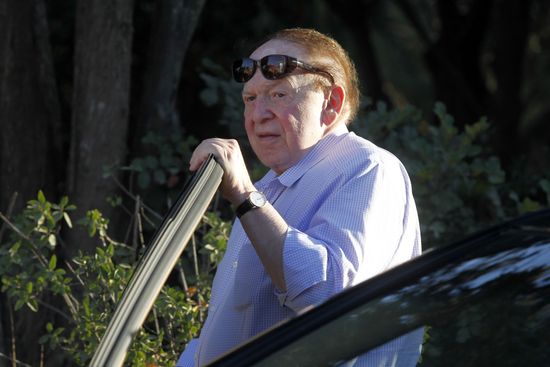
(Photo: US gaming tycoon Sheldon Adelson arrives to hear Republican presidential candidate, former Massachusetts Gov. Mitt Romney delivers foreign policy remarks on July 29, 2012 in Jerusalem, Israel. Romney is in Israel as part of a three-nation foreign diplomatic tour which also includes visits to Poland and Great Britain. By Lior Mizrahi/Getty Images.)

The First American Woman In Space Was A Lesbian, Ctd

When readers ask me sincerely to stop for a minute and re-read posts written in real time and to reconsider, I try to listen. This blog has long been a conversation, rather than a monologue. So let me briefly say what I take away from this, having slept and prayed on it. My tone was increasingly off as BayardRustinAug1963-LibraryOfCongress_cropthe debate proceeded. I don’t think it was off in the first post, which I stand by in full. But as the debate quickened, my defensiveness segued into an appearance of disrespect for someone recently dead whose immense achievements, as I said at the start, overwhelm any flaws. For that, I apologize. I got carried away by the argument and forgot the person and those who loved her. That is against what I know I believe in.

And I could have made my positive point better. I just wished she had been with us because of the immense good she could have done. I would never have violated her right to self-disclosure, but it would have been dishonest not to express my sadness at her decision.

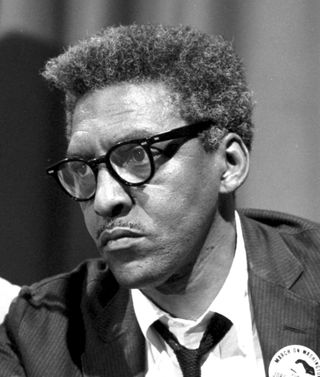
Perhaps a better way of putting this is to point to another American icon, Bayard Rustin.

Rustin was both black and gay and was integral to the organization behind the civil rights movement. But because he was gay, and had been arrested for public sex, he chose to be in the background of the movement and not be a spokesman, in case it would do more harm than good. But in his later life, he became a towering figure for many of us looking for role models as out gay men. He was a pragmatist but also deeply principled, like the late Frank Kameny. He faced, like Ride, several layers of discrimination, but he found the strength to break through all of them.

He was utterly unafraid – his spouse was white – and his politics were at odds with the New Left’s cooptation of gay rights in the 1970s. But he spoke out as a gay man after he had marched as a black man. He broke taboos in his own movement:

Today, blacks are no longer the litmus paper or the barometer of social change. Blacks are in every segment of society and there are laws that help to protect them from racial discrimination. The new “niggers” are gays. . . . It is in this sense that gay people are the new barometer for social change. . . . The question of social change should be framed with the most vulnerable group in mind: gay people.

No one is required to be a hero. But no one either should be judged too weak or oppressed for heroism. Sally Ride had a choice, as did Bayard Rustin. They are both heroes to my mind in many ways – and far more distinguished human beings than I could ever be. But Rustin’s shoulders are higher and broader. You can see the future from them.