Here's a new tack: instead of whispering about secret cabals, insider code, and conspiracy theories about Straussians, Kenneth McIntyre simply reviews the man's work (by way of a new treatment by Paul Gottfried), and comes away underwhelmed:
Strauss was at best a mediocre scholar whose thought expressed a confused bipolarity between a very German and ahistorical Grecophilia on the one hand and a scattered, dogmatic, and unsophisticated apology for an American version of liberal universalism on the other. Amongst prominent European philosophers, Strauss was taken seriously only by Hans-Georg Gadamer, until Gadamer concluded that Strauss was a crank, and by Alexandre Kojève, whose work reads today as if it were a parody of trendy French Marxism. In Britain, neither Strauss nor the Straussians have ever been taken seriously.
Gottfried is a real scholar and this book is not, by all accounts, a hatchet job. I might add that it was strange arriving at Harvard to discover that the only non-left-liberals in the faculty were Straussians. The concept of a conservatism that was not dogmatic, that did not rest on eternal truths to be found in Plato and Aristotle but on the prudential management of contingent liberal societies … well, I realized I had left it all behind in Britain. I just had my Oakeshott in the Widener library for succor.
 Nonetheless, I'd argue that Strauss's often idiosyncratic takes on the great philosophers are often stimulating, and full of insight. Straussians were much more fun to study with because they believed they were dealing with live issues, not the dry residue of dead historicism. Yes, there's also a lot of nonsense (numerology and the like).
But the real trouble, I'd argue, is with Strauss's 1930s-driven lack of faith in modernity, his insistence that unimpeachable truths (not insights, eternal truths) about human nature could be gleaned by close reading of ancient texts by a few in the elite, and his followers' need to disguise their disdain for democracy and religion (making them insufferable cynics). It was hard to find a Straussian scholar who wasn't obsessed with domestic politics and who wasn't a neoconservative, itching for a new war for freedom somewhere.
America, alas, didn't have a Burke or an Oakeshott to craft its conservative philosophy. It ended up with the work of a German Jewish exile, whose political didacticism was as pronounced as his philosophical inscrutability. The failure of American conservatism to come up with more than fundamentalist religion and gloriously noble foreign interventionism as its core policies (along with making government insolvent by pretending that lowering taxes increases revenue) might be seen as a consequence of this strange admixture. Or as McIntyre tersely puts it:
[T]he primary effect that both neoconservatives and Straussians have had on the American conservative movement is to suck all the air out of it and ensure that there is no one to the right of them, while their primary effect on American politics generally has been to reinforce the ideologically charged notion that America is some sort of propositional nation constituted like a vast pseudo-religion by a set of tenets needing constant promulgation. It is a story of America as armed doctrine, and Gottfried is assuredly right in arguing that there is nothing conservative about it.
So why did the "cult of Straussianism" succeed?
"It took hold here for the same reasons that cults generally succeed in the U.S.: ignorance, inexperience, and a desire to have a simple answer to complex problems."
 program began in August, 2002, Abu Zubaydah provided intelligence that prevented
 spending on entitlements matters. Everything else can and should actually add to the debt. More Pentagon spending and more tax cuts for everyone, including the 1 percent (even below the Bush era rates), are fine. That kind of debt is somehow not debt for Romney because he assumes that if you slash taxes, revenues will increase. This was an interesting theory in 1981. It is a failed experiment today. (Why we need to drastically increase defense spending in a period of necessary austerity is beyond me.)
 decided federally for the entire country as a whole. I have always taken the first position – because I take seriously the argument that you do not change such a fundamental institution without some experience of what its effects might be. Federalism is able to test things out: "laboratory of the states" blah blah blah. And that's why federalism is, or should be, a conservative position (in the Manzi sense).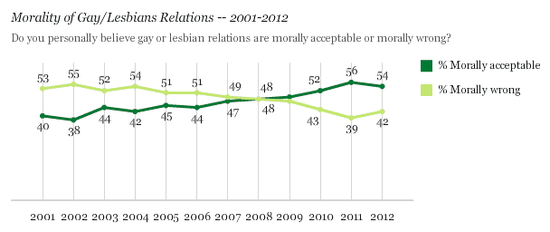

 The Dish