60 Minutes Producer: “The Nazis Did A Lot Of This”

This embed is invalid

There are a couple of things worth knowing about Jose Rodriguez: that he is a war criminal and that he destroyed the evidence that would prove it without a doubt. The third thing you need to know is that he has no shame about any of this, and intends to make money off it.

This man personally oversaw the use of torture techniques known for centuries, universally regarded as torture under domestic and international law, and describes his destruction of critical evidence that would have been invaluable in prosecuting such war crimes as “just getting rid of some ugly visuals.” Another term for it is “obstruction of justice,” which is not a crime in America if you head the CIA. But the “ugly visuals” were destroyed not for aesthetic reasons:

It was later revealed that the deputy to Kyle “Dusty” Foggo, then Executive Director of the CIA, wrote in an e-mail that Rodriguez thought “the heat from destroying is nothing compared to what it would be if the tapes ever got into public domain – he said that out of context they would make us look terrible; it would be ‘devastating’ to us.”

“Out of context?” You mean “out of the context that all this had been approved by the president”? One president who broke the law and tried to destroy evidence was impeached and resigned. Then there’s the small question of the Big Lie, created by the Cheney faction, that outrageously claims that Rodriguez’s war crimes helped catch Osama bin Laden many years and one administration later. The Senate investigation into the CIA Torture program – as exhaustive as one can get – comes to the opposite conclusion [PDF]. Money quote:

The roots of the UBL operation stretch back nearly a decade and involve hundreds, perhaps thousands, of intelligence professionals who worked non-stop to connect and analyze many fragments of information, eventually leading the United States to Usama Bin Laden’s location in Abbottabad, Pakistan. The suggestion that the operation was carried out based on information gained through the harsh treatment of CIA detainees is not only inaccurate, it trivializes the work of individuals across multiple U.S. agencies that led to UBL and the eventual operation.

We are also troubled by Mr. Rodriguez’s statements justifying the destruction of video tapes documenting the use of coercive interrogation techniques as “just getting rid of some ugly visuals.” His decision to order the destruction of the tapes was in violation of instructions from CIA and White House lawyers, illustrates a blatant disregard for the law, and unnecessarily caused damage to the CIA’s reputation.

More to the point, if Rodriguez has no regrets, if he believes the torture sessions he oversaw gave us critical valuable information, and that the Senate committee is lying, then why destroy the critical evidence that would allegedly vindicate him?

If this wasn’t torture, why didn’t he prove it by showing us the tapes? The question is farcical. This is a man who knew precisely what he was doing, committed war crimes anyway, and then, fully aware of how appalling the torture sessions would look on tape, destroyed them in order to go around the country spreading lies about their alleged effectiveness. One way we have of clearing this up would be for the Senate to publish the full report on the CIA’s torture program as soon as possible. I’m with the Los Angeles Times:

The Senate Intelligence Committee, which began its investigation of detention and interrogation policies in early 2008 and has sifted through millions of pages of documents, is in a position to provide the public with a comprehensive narrative of how torture insinuated itself into U.S. policy — along with the committee’s conclusions about whether enhanced interrogation produced useful information that couldn’t have been obtained in other ways.

That information is of more than historical interest. During his confirmation process, CIA Director David H. Petraeus told the panel that “a holistic and comprehensive review of the U.S. government’s detention and interrogation programs can lead to valuable lessons that might inform future policies.” Policymakers shouldn’t be the only ones to have the advantage of those lessons; so should the public.

He doesn’t need to be interviewed by a fawning Leslie Stahl, whose report was as supine as it was selective. But at least here, you have the producer simply stating about the torture techniques embraced by Rodriguez: “The Nazis did a lot of this, the Khmer Rouge did a lot of this.” So the producer realizes that he is featuring someone guilty of war crimes as bad as the Nazis and the Khmer Rouge, but wants him to give his side of the story. How about – you know – arresting him first? If this were a torturer from Iran, do you think he would have been treated so deferently? A reader writes:

The narrative by the CBS team was at points worse than Rodriguez himself. “We used to think waterboarding was a war crime” says Stahl–yes, as if John Yoo and Jay Bybee had changed all that forever. And indeed the DOJ memos are put up without any indication that these had been withdrawn by the Bush team before it even left and had been labeled by DOJ ethics people as failing to meet minimum professional standards … Not a hint. You’d think we still embrace waterboarding. Sickening.

And troubling. We know Romney has no problem with illegal torture. It could return – and if it does, Sixty Minutes can add that achievement to its roster of honors.

Caritas – Above All, Caritas

Stirring words from Dale Martin:

Any interpretation of Scripture that hurts people, oppresses people, or destroys people cannot be the right interpretation, no matter how traditional, historical, or exegetically respectable. There can be no debate about the fact that the church's stand on Adulteresshomosexuality has caused oppression, loneliness, self-hatred, violence, sickness, and suicide for millions of people. If the church wishes to continue with its traditional interpretation it must demonstrate, not just claim, that it is more loving to condemn homosexuality than to affirm homosexuals. Can the church show that same-sex loving relationships damage those involved in them? Can the church give compelling reasons to believe that it really would be better for all lesbian and gay Christians to live alone, without the joy of intimate touch, without hearing a lover's voice when they go to sleep or awake? Is it really better for lesbian and gay teenagers to despise themselves and endlessly pray that their very personalities be reconstructed so that they may experience romance like their straight friends?…
All appeals to "what the Bible says" are ideological and problematic. But in the end, all appeals, whether to the Bible or anything else, must submit to the test of love. To people who say this is simplistic, I say, far from it. There are no easy answers. "Love" will not work as a foundation for ethics in a prescriptive or predictable fashion either — as can be seen by all the injustices, imperialisms, and violence committed in the name of love. But rather than expecting the answer to come from a particular method of reading the Bible, we at least push the discussion to where it ought to be: into the realm of debates about Christian love, rather than into either fundamentalism or modernist historicism.

We ask the question that must be asked: "What is the loving thing to do?"

That's from Martin's book, "Sex And The Single Savior." What I love about the passage above is that it forces doctrine to confront the challenge of experience. My view is that even if you cannot abandon the view that homosexual sex is wrong because it is not procreative, you can still see the broader Christian good of homosexual relationships in civil marriage and mutual commitment, compared with the practical alternative for these children of God.

In practice, in other words, the total proscription of homosexual acts fails the caritas test. Ask yourself a simple question: how many celibate Christian homosexuals manage to avoid masturbating? It answers itself. The homosexual person cannot divest him or herself from her own body and the body has a sexuality, whose total repression will only come at a great cost: a warped, slowly distorting and often lonely psyche, depression, anger, the adoption of some kind of public mask, the constant necessity of deception if you are closeted, the recourse to acting out sexually because it is the only way you know to express sexuality (outside of love and intimacy) … and on and on.

In my early twenties, I came to a simple conclusion in my conscience. If I did what the Church wanted, and turned myself into a repressed, wounded, sexually-maladjusted character, I would – practically speaking – become far less Christian in my whole life than if I surrendered to what God made me; and tried, in honesty and sincerity, to live as good a life as I could. I was worried about what I was becoming after 23 years living under the weight of dogma: someone whose internal repression prompted me to want to control others, a creature of euphemism and deception with all the soul-corruption that constant dishonesty brings, and, frankly, the bitterness and anger that permanent lack of bodily intimacy will surely encourage and foster. I've seen it. I lived among the walking wounded of the generations older than me. No one should feel forced to live that way. And the cruelty it requires is not something one can find even a glimmer of in the Gospels.

At some point, the critical mass of tortured repressed gay hierarchs who cling to this doctrine with white knuckles and crippled hearts will give way to caritas and perspective and healing. And even as the hierarchy darkens, you can see, if you look closely, where the light is creeping in.

Surrendering On Marriage

Marriage equality opponent Daniel McCarthy waves the white flag:

For the better part of 2,000 years the meaning of marriage was stable because the authority of Christianity was constant. In an age when the Church no longer supplies the institutional framework for family life, the definition of marriage has become radically uncertain. Into this fluid environment—in which individualism or atomism is once again rising to the fore, as in the Roman Empire—the new fact of homosexuality was gradually introduced. The result, same-sex marriage, has shocked conservatives. But this innovation has moved so far so quickly only because it is not at all out of step with the institutions and ideas of our time.

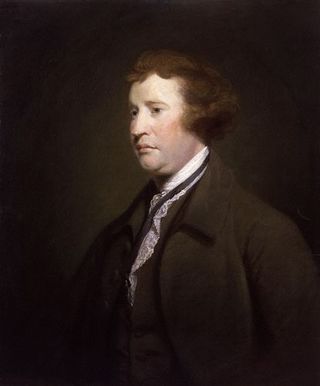
The whole piece is worth reading because it is an unflinching conservative reckoning with the forces of modernity. Much of its core argument I made in the third chapter of "EdmundBurke1771subject of how to integrate them was not a long-term conservative proposition; and the alternative – more religiously-based repression against a minority rapidly gaining acceptance – was reactionary and spiteful. The point was simply that marriage was the obvious conservative solution: bring gays into this architectonic institution under the Burkean banner of conservative reform. That's what I tried to argue for on conservative and libertarian grounds. Sadly, the neocons and theocons decided to ratchet conservative policy back to the 1950s. It was Bill Kristol who attempted to bring reparative therapy into the conservative mainstream in response to our progress in integration. It was as disgusting a move as it was utterly cynical.

How a reform that "is not at all out of step with the institutions and ideas of our time", in McCarthy's words, should shock "conservatives" is an interesting insight into the intellectual collapse of the right. Reforming institutions to keep them in step with reality is Burke's definition of conservatism. That's why the real social conservatives are not those intent on marginalizing fast-integrating gay people, but those managing that integration by harnessing it to existing institutions, that strengthen the family, encourage responsibility, teach sacrifice and keep the welfare state at bay. A truly conservative party would be pushing marriage equality, as the Tories are in Britain. What the GOP is, in stark contrast, is not a conservative party governing a modern society. It's a radical fundamentalist and anti-government religious movement, dedicated to a core rejection of almost everything modernity brings but money.

(Painting: Edmund Burke.)

Cannabis, Obama, And The Rule Of Law

On medical marijuana, Obama says he can't ask the DOJ to "Ignore completely a federal law that’s on the books." Greenwald asks why not:

The same person who directed the DOJ to shield torturers and illegal government eavesdroppers from criminal investigation, and who voted to retroactively immunize the nation’s largest telecom giants when they got caught enabling criminal spying on Americans, and whose DOJ has failed to indict a single Wall Street executive in connection with the 2008 financial crisis or mortgage fraud scandal, suddenly discovers the imperatives of The Rule of Law when it comes to those, in accordance with state law, providing medical marijuana to sick people with a prescription.

To be fair to Obama, he specifically said the policy was against those abusing the medical marijuana law to sell illegally. And some blame can be attached to the disorderly way in which medical marijana laws have been enforced.

But Glenn is absolutely right in one clear respect: if you do not enforce the rule of law on torture, when your own executive branch officials have brazenly broken domestic and international Kush-trichome-closeuplaw, on what possible grounds do you take a stand on federal enforcement of federal law against state enforcement of state law on medical marijuana? Weak, Mr president. Weak.
I'm glad Rolling Stone asked that question. But the question I'd like to ask Obama is: why do you think alcohol should be legal and cannabis not? So far, I've failed to find anyone who can make a credible argument on those grounds for prohibition of pot. Maybe the president is the one genius who has a coherent answer.

Or maybe he just reeks of fear.

The Mormon Card

Douthat expects it to be played:

The Obama White House may not make Mormonism an issue directly, but that doesn’t mean that the incumbent won’t benefit from the coverage that Romney’s religion will inevitably receive. And it’s possible that Romney would stand to gain if he spoke more directly and in more detail about a worldview that’s clearly at the heart of his identity, and that provides one of the most authentic and deeply-felt influences on his often inauthentic-seeming personality. In one form or another, there will be plenty of attempts to define Romney’s religion for him, and he might be better off doing his own defining first.

But he can't, because even talking about it will send chills up Christianists' spines. And yet questions will emerge: why were his in-laws barred from his Temple wedding service? Why was his dad born Parley_P_Prattin Mexico? Could it be he was there because that's where many of the older hard-core polygamists sought refuge after being hounded by the US government?

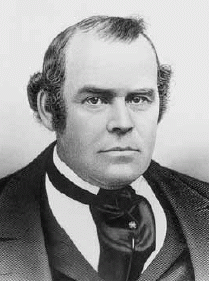
Romney's grandparents were monogamous, but polygamy is a big feature of the family tree before that: one of Romney's great-grandfathers had five wives, and one of his great-great grandfathers – the "Apostle Paul of Mormonism" – had twelve wives (he was murdered by the former husband of one of them), thirty children, and 266 grandchildren.

Romney really is LDS monarchy, his family going back deep into the heart of the religion's history. I don't see how he manages to avoid talking about this, about whether Mormonism is, as Ross has called it, a "heresy", whether his view of God is as a human, whether humans can become gods, etc. The reason I think he has to find a way to address it is that it is such a profound influence on him that, unless people see a little of how his faith helped form his character and judgment, they will not be able to relate to him at all. For these reasons, I think the taboo on talking about the LDS could hurt more just as much as airing it all could. It's close to lose-lose unless he can manage a speech as great as Obama's on Wright.

I should add and underline that I don't regard any of this as faintly relevant to his capacity to be president. I think it is an amazing and very American thing for this race to be between a black man and a Mormon, given this country's history. It's an astounding achievement in both racial and religious progress. But then I'm not the one insisting that people's religious faith be placed firmly in the public square on the same level as secular argument – and that candidates be judged by that. That's the party Romney leads.

(Photo: Parley Pratt, major Mormon figure and great-great grandfather of Mitt Romney.)

An Anti-Abortion Frenzy In The States

I hate the term "war on women". It's so hackish and echoes with the kind of liberal screechiness that backfires with everyone else. But the fact that there is a wave of laws in GOP controlled states, making abortion harder and harder and more humiliating to obtain, and what can reasonably be described as a full-bore assault on Planned Parenthood, is simply undeniable. And women surely take this personally – hence the extraordinary gender gap this time around. But the Christianist GOP is undeterred. While Oklahoma House Republicans temporarily shelve a personhood bill (similar to the initiative defeated by Mississippi voters in November), the Tennessee House and Senate have moved to authorize prosecution for harming an embryo: 

The Senate approved and sent to Gov. Bill Haslam on Monday legislation that allows criminal prosecution for causing the death of "a human embryo or fetus at any stage of gestation in utero." The bill (HB3517) marks the second change in two years to a law that since 1989 had it a crime to cause the death of a "viable fetus." That was changed last year to eliminate the word "viable."

Many in the state are worried about the implications for miscarriage:

[T]his bill goes further than covering, say, a violent attacker harming an expectant mother who then, unfortunately, miscarries. This bill, House Bill 3517 and the Senate’s companion, makes anyone’s actions that presumably cause a miscarriage murder. Opponents of the bill question how law enforcement would actually enforce this law or determine if someone’s action was a direct cause of a miscarriage.

Memphis, Tennessee makes Jezebel's "Ten Scariest Places to Have Ladyparts in America" (but Mississippi wins). Meanwhile, Planned Parenthood Wisconsin is suspending non-surgical abortion services because of a new state law which "requires women visit a doctor at least three times before having a drug-induced abortion, forces physicians to determine whether women are being coerced into having an abortion and prohibits women and doctors from using web cams during the procedure":

Teri Huyck, president and chief executive of Planned Parenthood of Wisconsin, said the law was "ambiguous and difficult to interpret," interfered with the doctor-patient relationship and posed significant risks to doctors. "The added risks of felony penalties for physicians who provide medication abortion are unnecessary and intended to threaten a physician's ability to provide women with medication abortion," Huyck said in a statement from the family planning and reproductive health organization on Friday. About a quarter of abortions in Wisconsin are induced using medication, which can be prescribed by a doctor during the first nine weeks of pregnancy. 

Arizona also recently implemented a law making it much more difficult to access medication abortions.

The Pope vs The President

They barely protested when the last president authorized torture, but the Catholic hierarchy is now determined to use what's left of its authority to BENEDICTHANDS2JoeKlamar:AFP:GettyThis will be their cause – not saving universal healthcare from repeal, not bringing illegal immigrants out of the shadows, not protecting the poor, but affirming that religious liberty is at stake if they cannot keep the pill from their female employees' insurance, 98 percent of whom use it at some point in their lives anyway.

They are not without a genuine concern. I thought the original Obama proposal was too much. But the compromise was a reasonable fig leaf that would have allowed the Catholic hierarchs some pragmatic face-saving if they chose it – especially given the fact that universal access to healthcare is a longstanding Catholic goal. But they have chosen political warfare instead – and partisan political warfare at that. They would rather keep their power over their female employees than bring acces to healthcare to millions.

It's a risky strategy. I know few Catholics in the pews who share these absurd priorities, and for the hierarchy to become so closely identified with the Christianists among the evangelical right could split the church more profoundly. And that, I suspect, is partly the intent. If your goal is to purify the Church, to deter all the faithful that do not share the reactionary priorities now increasingly preached from the pulpit, then this will help. A smaller, purer Catholic church, reduced to the Santora and the Donohues, is what these dim-witted Vatican apparatchiks have been told to encourage. I cannot believe it will help the faith.

As Europe Turns

Screen shot 2012-04-23 at 11.46.24 AM

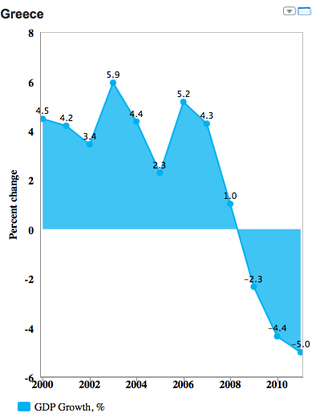
The French election and the collapse of the Dutch government might be seen as just more events reverberating from the long, dark tunnel of Europe's post-2008 financial collapse. But one senses something more. Voters are not just revolting against incumbents; they are turning decisively against German-imposed austerity. The Netherlands, after all, was not a profligate state before the crisis. It was a well-run, budget-balanced, free market economy. And the collapse of its government over budget cuts was caused by a revolt on the far right:

Rutte's hopes to clinch a deal to cut the target below the EU's 3 percent target evaporated on Saturday, when his most important political ally, populist euroskeptic Geert Wilders walked out of the talks, saying a slavish adherence to European rules was foolish and would harm the Dutch economy.

That view is shared by some, such as the government's own Central Plan Bureau, and opposed by others, such as Dutch Central Bank President Klaas Knot. "We don't want our pensioners to suffer for the sake of the dictators in Brussels," Wilders said.

When Geert Wilders is protesting the debt spiral – in which cutting debt leads to lower growth which leads to deeper debt – it's no wonder that even Holland, a pioneer of fiscal rectitude, is likely to break the 3 percent of GDP EU rule for budget deficits in the coming year; and not worry too much. As for Britain, where the Tory government I support embraced immediate fiscal austerity to avoid a pummeling by the financial markets, the best that can now be said is that a double-dip recession has been narrowly avoided – because growth in the first quarter of 2012 is forecast to be … 0.1 percent. The country's AAA rating is also increasingly at risk, after a full-bore austerity regime. The future?

A leading think tank has warned that growth will be at an annual average of just over 1pc until 2016, hitting George Osborne’s plan to tackle the country’s debts because of the impact of slow growth on tax revenues. The Centre for Economics and Business Research (CEBR) said unemployment, currently at 2.65m, will rise to around 3m and stay there for at least three years.

The target for structural budget balance has been set back past the Coalition's original five year goal. The Tories will have to seek re-election after brutal austerity without having made a real dent on the actual debt problem. And if US political deadlock continues past the November election, the impact of sudden sweeping austerity in the US will likely tip Europe into an even deeper crisis.

Are there any lessons for the US? There are two. The first is that what we are seeing is Screen shot 2012-04-23 at 12.06.55 PManti-incumbent rage and Obama could be in for a shock this November. The second is that what we are seeing is anti-austerity rage, because it isn't just forcing people out of jobs, but because it isn't even helping to bring down the debt. I wish this weren't true, because the inherited debt has to be tackled. But the evidence pouring in would suggest that Romney would import European policies into the US, and would thereby tip the US into a second recession, perhaps worse than the first, given the continuing collapse of Europe.

I don't like this conclusion. I start from the belief that government should run surpluses in good times so that they can have some fiscal lee-way for stimulus in bad times. Readers know I deeply oppose government debt outside of structural investment, i.e. unsustainable entitlements and unsustainable empire. But if premature or excessive austerity actually deepens debt, as seems to be happening in Europe, then the equation changes.

I guess what I'm saying is that if this US election is fought around amnesiac discontent at an incumbent during tough economic times, then Obama will lose. Which is why Romney's strategy appears to be entirely that argument. But if the choice is between drastic European-style austerity on Romney lines, with the burden carried primarily by the poor and working poor, and Obama's emphasis on more long-term structural cost-cutting, infrastructure investment and more revenue from the rich now, then the equation shifts.

I may be wrong, and it doesn't thrill me, but my bet is that the West is moving leftwards for pragmatic reasons. And that America will not be immune. Pendulums swing, and the long free market period of 1979 – 2007 is giving way to a more government-based management of the unintended consequences of the right's initial success and subsequent over-reach. And if Obama doesn't use Europe as a warning sign for what Romney would bring to America, he'd be missing out on an important opportunity.

(Graphs from Knoema.)

The Hitch Has Landed

I was honored to be an usher at my old friend's Memorial Service today in New York, and frankly relieved not to read anything because the quality of the presentations – from James Fenton's astonishing opening poem to Martin Amis's brilliantly brief eulogy of Christopher in all his contradictory genius – were close to flawless.

The evangelical scientist Francis Collins played piano; Peter Hitchens read from Saint Paul; but most of the material was Hitch's writing itself. And it was some of his most vivid, powerful prose. I particularly admired his evisceration of Bill Clinton, a reminder of what a complete tool that man Bluebellswas, and his heart-breaking take-down of the North Korean totalitarian dynasty.

I remain in awe of his energy, his human force, his impatience with cant, his great gift of insult, his inimitable courage, his deep enjoyment of living. And two things surprised.

Amis spoke of Christopher's private struggle with his embrace of the Iraq war. He never recanted as I did. Indeed, one of our more heated recent chats was over his enthusiasm for a new war against Iran. But the idea that he did not feel the pain of isolation, of misjudgment, that this humane man was immune to the suffering that this horrifying war entailed for so many innocents, and took no personal responsibility for it, is untrue. He told Martin that in the period when the war was at its worst, he was in a "world of pain." Being a contrary public writer, being prepared to lose friends over principle, challenging one's own "side", and forever braced for battle, takes a toll. Hitch bore it with great aplomb. That does not mean he had nothing to bear.

And then his last words. As he lay dying, he asked for a pen and paper and tried to write on it. After a while, he finished, held it up, looked at it and saw that it was an illegible assemblage of scribbled, meaningless hieroglyphics. "What's the use?" he said to Steve Wasserman. Then he dozed a little, and then roused himself and uttered a couple of words that were close to inaudible. Steve asked him to repeat them. There were two:

"Capitalism."

"Downfall."

In his end was his beginning.

I've been very down lately, and I feared a Memorial Service would not help much. But as we walked outside afterwards to the hilarious tune of the Internationale, I felt fortified, re-energized, inspired, almost buoyant. There is no competition, as Eliot noted. But there is always the struggle to expose lies, dispense with cant, tell the truth and just bloody well get on with it.

Of course, I do not believe Hitch has disappeared from reality. But even if he has, his example raises all our standards, and begs for us to follow him in slaying sacred cows with wit and merciless accuracy. He inspired love in so many for one reason. He was true to himself, and he loved the world. And what was so truly moving about his final years – especially in his campaign against religion – was how much, how overwhelmingly, so many who never even met him loved him, and I mean loved him, back.

4/20 In Washington

2012-04-05.chemp-thumb-620xauto-38639

The perfectly named Carol Joynt celebrates the joy of marijuana on today's festive occasion in her city – and mine – of DC. It may not be Portland, but Prohibition hasn't worked here just as it hasn't worked anywhere else. In fact, DC may be one of the least noticed 4/20 cities in America, right under the Christianist Congressional noses. But that, of course, is the rub. Living in a city which remains a colony run by white men from rural states, a city where there is less democracy than in Baghdad, means that self-government in such matters is regarded as anathema. Nonetheless, we did finally pass a medical marijuana law that should come into effect in August.

But because the City Council is so terrified of their colonial Congressional masters, the law will be so restrictive almost no one will be able to participate – it's almost a reverse parody of what has happened in, say, Colorado. The hypocrisy, cant and thuggery is thick even by Washington standards, as this Washingtonian cover-story revealed. And small businesses that simply sell hemp products and water pipes and other paraphernalia – like the profitable, job-creating Capitol Hemp stores – have been brutally raided by thuggish cops and now forced now into extinction. They sold no pot. You can read an interview with the owners by Carol here.

I became friends with the owners and regard the raids as an outrage. And the medical marijuana law seems to have been pre-emptively sabotaged by the DC City Council and their cowardice. Adam Eidenger notes:

The distributors who get licenses from the city are going to fail. I hope I'm wrong. But the economics of this city and the limitations on quantity and the absurd fees are setting it up to fail. The license fees are three times what they charge for liquor licenses.

Part of this is pure racism, part cowardice from our elected city leaders, and part pure irrationalism, like the entire anti-marijuana apparatus, now essentially a way to target minorities for arrest as in Bloomberg's New York City.

I know I sound cranky on this. But I believe in personal liberty and I believe the sick should not be prevented from trying anything they want to make themselves better. These things are not worth giggling about. They are worth fighting for. I watched a generation of my peers die who desperately needed relief from nausea and couldn't get it. And all of this – all of it – is driven by pure fear and hatred of the idea of anyone else actually bypassing the pharmaceutical lobby, reducing liquor sales, or even, God forbid, enjoying an evening at home.

We need a new vote on total legalization in the district. And we need to take the Puritans in the Congress face on.