My First Gay Bar

June Thomas begins a six-part series on the history and decline of the gay bar:

In 2007, Entrepreneur magazine put gay bars on its list of businesses facing extinction, along with record stores and pay phones. And it's not just that gays are hanging out in straight bars; some are eschewing bars altogether and finding partners online or via location-based smartphone apps like Grindr, Qrushr, and Scruff. Between 2005 and 2011, the number of gay and lesbian bars and clubs in gay-travel-guide publisher Damron's database decreased by 12.5 percent, from 1,605 to 1,405. Could the double whammy of mainstreaming and technology mean that gay bars are doomed?

In her second installment, Thomas asks a variety of writers about their first experience in a gay bar. I missed the deadline. So here's my recollection, for what it's worth.

The first gay bar I entered was actually a mixed bar. It was called Campus-Man-Ray in Cambridge. One part of it was 1980s straight hipsters getting down to Depeche Mode, and it was with my straight friends that I went. But it was attached to another part, a more conventional gay disco called Campus. You got to Campus by a downstairs hallway where the toilets were. One night, after taking a piss, I decided not to return to my straight friends, but to venture through the swinging doors into the gay one. (One of the few straight guys who eventually came with me through those doors ended up as a high-level Opus Dei functionary in Rome. That in itself makes me wonder how straight he really was.)

If it were a movie, it would shift from black-and-white into 3D color as I entered the bar. I was staggered and more than a little thrilled at how normal everyone looked, how attractive, diverse and mellow. I edged up to the bar and managed to blurt out, "A gin and tonic please." The bartender picked up my vibe. "Get that stick out of your ass, honey. This is a gay bar." And so my first impression of gayness was actually removing something from my butthole rather than violating its tightly-puckered virginity.

23 years of repression unwound in that bar. I am grateful for the kind condescension that must have greeted my spirited spinning to "You Turn Me Round (Like A Record, Baby)" or the latest Whitney. It was there that a man pulled his shirt off in front of me on the dance floor for the first time and I nearly fainted with desire. It was there that I returned Friday night after Friday night to discover who I really was.

One more thing. It reminded me of church. The colored lights; the smoke; the synthesizers; and the legions of men. And I distinctly recall as I watched the scene a premonition that one of my tasks in life would be, in whatever way I could, to convey this benign hidden world to the wider universe beyond it. I believe it was God speaking to me. He appears where Jesus would have. And it is a scene of revelry and hope.

Here's Dan Savage:

[The Bushes] was dark, it was dirty. But it was a public place—the first public place where I ever kissed a guy, my first boyfriend, who was wrong for me in more ways than I could possibly cover in this space. But I was glad to be there and glad to be with him that summer. …

The Bushes was named for the infamous bushes in nearby Lincoln Park where gay men—and straight-identified closet cases—had anonymous sex. This was a time when all gay bars had names that winked—Nobody's Business, the Hideaway, the Closet—so that gay men could spot them in the phone book. There's still a gay bar on the site of the old Bushes, but I'm not sure what it's called. I'm pretty sure there are no high-school juniors making out with their 29-year-old boyfriends in whatever that bar is called now.


A President, Not A Governor

GT_OBAMA_110519

There have been many times over the past two years when I have whacked the Obama administration on their “fierce urgency of whenever” on gay equality. And I regret not a single one. The job of loyal opposition is to push and corral and complain and inveigh and pound the bloggy table a few times to get a point across. But look: it worked. Here’s what they have done, and it ain’t nothing.

They have removed the ban on openly gay servicemembers. Soooo yesterday, I know. But it is also so tomorrow. The emergence of openly gay soldiers – many of them heroes – will indelibly change the image and self-image of gays in America, in ways that expand the possibilities of being human and being noble. When the first military funeral takes place in which the folded flag is handed to the legal husband of a deceased male servicemember, the folds of the flag will reflect the folds of inclusion. It will be much harder to demonize gays when they are openly defending our country in uniform. The impact on the South in particular could be huge in the long run. Yes, Obama took his own sweet time; yes, it nearly slipped out of our grasp. But so did equality in New York State a few times. What matters is: he got it done.

They ended the HIV travel ban. I have a huge stake in this and the ban was repealed under Bush who admirably signed it into law. But Obama implemented it; and my trip home soon to see my family was made possible by that law. Yes, it was a long, long time coming. But what matters is: he got it done.

They withdrew legal support for DOMA. Again, a critical factor, along with moves in the states, to get the Supreme Court at some point to acknowledge that equal protection means equal protection; and that the logic of banning marriage for two percent of the population evaporates upon close rational inspection. Again, this was in the presidential bound of authority. And Obama did the right thing in the end.

Some now want this president to be Andrew Cuomo, a heroically gifted advocate of marriage equality who used all his skills to make it the law in his state. But the truth is that a governor is integral to this issue in a way a president can never be. Civil marriage has always been a state matter in the US. That tradition goes all the way back; it was how the country managed to have a patchwork of varying laws on miscegenation for a century before Loving vs Virginia. The attack on this legal regime was made by Republicans who violated every conservative principle in the book when they passed DOMA, and seized federal control over the subject by refusing for the first time ever not to recognize possible legal civil marriages in a state like Hawaii or Massachusetts. Defending this tradition is not, as some would have it, a kind of de facto nod to racial segregation; it is a defense of the norm in US history. And by defending that norm, the Obama administration has a much stronger and more coherent case in knocking down DOMA than if it had echoed Clinton in declaring that the feds could dictate a national marriage strategy.

More to the point, until very recently, if we had had to resolve this issue at a federal level, marriage equality would have failed. The genius of federalism is that it allowed us to prove that marriage equality would not lead to catastrophe, that it has in fact coincided with a strengthening of straight marriage, that in many states now, the sky has not fallen. That is why a man like David Frum has changed his mind – for the right conservative reason. Because there is evidence that this is not a big deal and yet unleashes a new universe of equality and dignity and integration for a once-despised minority. Obama’s defense of federalism in this instance is not a regressive throw-back; it is a pragmatic strategy.

The president has no actual political authority over this issue. He does have moral authority. But what close observers know about Obama is that he does not think of the presidency the way he thinks of a campaign. He knows he is president of all the people, including those who voted against him and those who conscientiously oppose marriage equality. He does not seek to divide as his predecessor did. By staying ever so slightly above on this issue, Obama is doing the right presidential thing – while presiding over what may well be the most seismic period for gay equality in history. I do not despise his restraint in his office. I wish more presidents exhibited it (and I wish he exhibited it a little more in cases like the Libya war).

One more thing. A civil rights movement does not get its legitimacy from any president. I repeat: he does not legitimize us; we legitimize him. As gays and lesbians, we should stop looking for saviors at the top and start looking for them within. We won this fight alongside our countless straight family members, friends, associates and fellow citizens. As long as Obama has done due diligence in the office he holds – and he has – he is not necessary to have as a Grand Marshall for our parade.

This is not about him. So instead of treating him with anger or disappointment, give him a little touch of his own trademarked mild condescension at the White House reception today.

And wink back.

(Photo: Getty.)

Why New York Matters

The fact that New York State has just become the sixth (plus DC!) to grant gay citizens the civil right to marry is a BFD. I say that having observed and participated in this process for two decades.

It's a BFD because a Republican-led State Senate passed this law. Yes, the partisanship is massively lop-sided, but the conversion of a few Republicans is what will have made this possible. Weddingaisle The credit for that goes to one of the most determined, consistent, professional and impassioned campaigns we have ever fought for marriage equality. Going outside traditional Democratic party lobbies to appeal to those on the other side who are open to our arguments was essential. Yes, Tim Gill, take a bow, wherever you are. Bill Smith, you remain my hero. Governor Cuomo, by all accounts was magnificent at the politics and Mayor Bloomberg and critical Republicans and Democrats and all factions and groups in the gay movement – even HRC! – pulled together. That the most passionate opponent was a Democrat and the most powerful were Republicans helps scramble the attempt by the Christianist right to coopt conservatism for their reactionary theology.

It's a BFD because it also insists on maximal religious liberty for those who conscientiously oppose marriage equality. A gay rights movement that seeks to restrict any religious freedom is not worthy of the name. And it makes me glad that we largely avoided anything that looks like that strategy, and that last-minute negotiations were flexible enough to strengthen the protections for religious groups, churches, mosques, synagogues and the like. The gay rights movement is about expanding the boundaries of human freedom – and that must include religious freedom if it is to mean anything. We have come such a long way from the 1980s when religious groups were always seen as enemies, rather than as potential allies.

It's a BFD because the public leadership of this campaign was heterosexual.

By all accounts, governor Cuomo has been a magnificently crafty, determined, clear and decisive supporter. Mayor Bloomberg, who just lost his beloved mother, also used his influence with Republicans to move the needle. Cuomo's national reputation and potential career in national politics will be enhanced by this – a sign of how radically the political landscape has changed.

It's a BFD because it doubles the number of Americans with the right to marry the person they love, even if they are gay. That is one hell of a fact on the ground. It will almost certainly help in California. It will reveal even more profoundly that this does not mean the end of civilization, but is, more prosaically, a modest reform to strengthen the family, integrate the marginalized and enlarge our moral universe. And it cannot now be undone.

(Re-written from the original post from last Monday.)

Cantor’s Cant

117105755

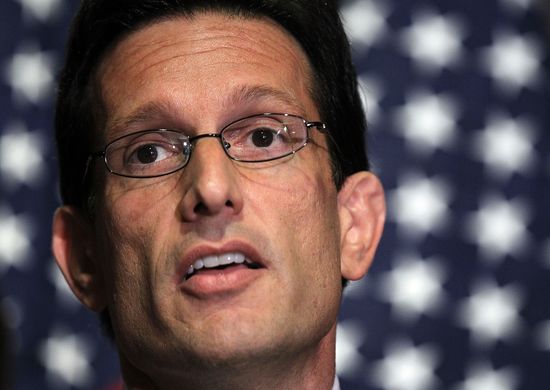
Increasingly, Americans and the markets have every reason to feel scared shitless. The controlling faction in the Republican House is a faction that is not so much anti-debt as anti-government. If they have to choose between tackling the debt and raising even some revenues (while cutting spending dramtically), they will choose to push the US into default. Such a default would risk destroying the savings of Americans, make the debt far far worse, spark a double-dip recession, and throw countless people out of work and make those in work radically less financially secure. Even those of us who have saved for retirement by buying unglamorous bonds could see our financial future wiped out by these maniacs on a mission. That is the kind of small-c conservatism these Savonarolans want to penalize.

They see this ideologically, i.e. not politically. But the political facts are these. Federal tax revenues are at a 50-year low; marginal rates are lower for many than they were when Reagan was president. In a divided government, any achievement requires some sacrifice from both sides. And yet the GOP is insisting that its side offers no sacrifice, even as the other party controls the Senate and the White House. Their own party, moreover, contributed dramatically to the debt we now face. And there is no clear evidence that raising revenues will lead to economic decline. Ronald Reagan's tax hike to deal with a much smaller debt in 1982, as Bruce Bartlett shows, preceded a burst in growth. The tough budget calls, including tax hikes, of GHW Bush and Bill Clinton led the way to economic growth far outpassing that after George W. Bush's bankrupting tax cut.

The notion that no revenues can be raised in the current crisis is, quite simply, nuts. You can even do it without raising rates, by eliminating tax expenditures/breaks. But even that golden Bowles-Simpson compromise is too much for these fanatics – even if the president coaxes his side into swallowing big spending cuts.

This is brinksmanship with all of our lives, our money, our core financial stability and future growth. It is an outrageously reckless way to run a government. And Cantor's refusal to take any personal responsibility for the result of these talks is of a piece with the record of this shallow, callow fanatic who has the gall to call himself a conservative, even as he launches a wrecking ball at the very fabric of the American and global economy.

These current Republicans would rather destroy the US economy than sacrifice one scintilla of ideological purity. They are an imminent threat to the stability of this country's economy and the world's. And they must be stopped before the damage is irreversible.

(Photo: Alex Wong/Getty.)

Jews In America And Israel, Ctd

Goldblog has responded to my contribution to the debate about Jewishness, Americans, Israel and Greater Israel. I ended my post with a question:

Benedikt notes that her position in the end is not that much different from Goldblog’s stated position: “I bet I land, uncomfortably, about where you land: If the decision comes down to brutal occupation forever to maintain the Jewishness of the state or true democracy, which would mean no Jewish state, I would have to choose the latter–but there is nothing easy or wishful in me writing that, and I hope it never comes to that (though more and more it seems like it will).” She’s right, isn’t she? So why the outrage?

Jeffrey’s answer:

The outrage comes from the fact that many of us — I would dare say most American Jews — believe that you just don’t get to walk away. I believe — not just me, this is one of the messages of the Passover seder — that all Jews are responsible for each other. This means when you believe a Jew (or, say, a Jewish state) is going astray, you are duty-bound to intervene. Abandoning Israel, abandoning the Jewish people, is abandoning your own family. As Andy Bachman noted, it is a rabbinic dictum that, “all of Israel (read, ‘the Jewish people’) are responsible for one another.” Nearly half of the world’s Jews live in Israel. They are the descendants of refugees from the pogroms; from the great Arab expulsions; and from the Shoah. They are our brothers and sisters. We may not like what they do. We may find them, as Allison Benedikt clearly does, aesthetically displeasing. But they are ours. We don’t abandon them.

This strikes me as odd, in the context of Benedikt’s essay. It’s a pretty lame account of a conversion but it sure doesn’t read to me like a “walking away”. If she had walked away, why would she write the essay at all? Why would she feel the need to express her angst? Why wouldn’t she just disappear into the great miscegenated mass of modern America and just stop caring? No, she has very much not walked away. But what she has said is that there could come a time when Israel betrays so many of its core principles, is so hostile and contemptous toward its American ally, so indifferent to the suffering of others under its control, and so determined to retain and demographically alter swathes of land gained in war … that she and others with a conscience informed by Jewish values will have to walk away. And this stance, held by increasing numbers of American Jews, especially in the younger generation, strikes me as more responsibly engaged with Israel than the more traditional position Jeffrey holds.

If no American Jew can conceive of a situation in which they would walk away from Israel, then there is no leverage at all to persuade Israel to act responsibly to save Zionism’s soul, or to behave as a constructive ally of the United States. If the tie is “unbreakable”, as Obama insists, it is no wonder he has no leverage to do anything to get Israel back to sanity. And the knee-jerk response of the American Jewish Establishment – to find excuses for Netanyahu’s manuevering and constant suspicion of Obama’s motives  – has only deepened the problem. 

When I read Jeffrey on all this, I keep reading two different people. There’s the Cassandra Goldblog admirably telling Israelis that their current strategy is doomed and they need to change quickly. Then there’s the AIPAC Jeffrey who, at any moment when the US government might have a chance of exerting real pressure on Israel to do what Jeffrey wants, jumps instinctively to Israel’s defense. There is no problem with internal tension on this, and Goldblog is an admirable forum for exploring this internal anxiety. But in so far as trying to get Israel to change – Jeffrey’s goal – it seems to me that Benedikt’s position – however odd and personal her journey to it – is the stronger option.

This is especially true given the lurch toward religious fundamentalism and polarization in Israel itself. The increasing power of the settler lobby, the influx of so many Russian emigres, the impact of the most extreme, and often American, Greater Israel Zionists, on the West Bank, the emergence of possible democracies in the Arab world with whom the US has more strategic interests than with a country that lost much of its strategic significance with the end of the Cold War: all these mean that time is short. Indeed, it may already be too late.

In this context, the position of Benedikt’s parents is a problem. The position is genuinely held, for good reasons, and the passion for Israel among many American Jews is totally understandable in the perpective of history. But it cannot suffice for the present moment, let alone the future:

What he doesn’t realize is that my parents don’t do facts on this issue. They do feelings. Israel is who they are.

While Israel self-destructs, Benedikt, it seems to me, for all her naivete and strange family dynamics, is taking a stand. Goldberg, meanwhile, is finessing a position, and policing the discourse, declaring who is or is not “anti-Israel” and who is or is not properly Jewish. I have little doubt whom history will eventually look more kindly upon.

Jews In America And Israel

GT_SETTLERS_110608

"Of course, I do think we all have a responsibility to make the world better – but specifically Israel, because I am Jewish? No," – Alison Benedikt, whose essay has kicked up an online ruckus.

Jeffrey launched a punchy attack on this provocative but obviously heartfelt and over-sharing piece. Then he admirably posted Benedikt's full response to it here, while less admirably describing it as "anti-Israel"; and has followed up with an accusation that Benedikt's personalized version of the Seder service is "un-Jewish". Phil Weiss, who highlighted the sentence above, argues that the piece:

crystallizes the Jewish moment. Beautifully and sincerely written, with wrenching confessions about her family's blindness and the important influence of her non-Jewish husband (yes just as my mother-in-law who smuggled sheets into a Bethlehem hospital gave me a path on the issue), it signifies a crisis inside American Jewish consciousness that Peter Beinart and J Street and the New York Review of Books are going to have trouble catching up with.

This is not a fight I can engage with respect to who or what is authentically Jewish, although, like much of Jeffrey's work, it prompted me to educate myself better about the Seder (where I think I can see his point). But I can say that it should be possible for an adult to have a loss of innocence, without being decried as naive or jejune. What matters, it seems to me, is the underlying argument, not the "authority" or history of the person making it. Is Benedikt wrong that the occupation is destroying Israel's soul and its future? More to the point: isn't that what Jeffrey says he believes as well?

It also seems to me that the thoughtful rebuttal posted by Jeffrey from liberal rabbi Andy Bachman gets to the nub of the underlying matter here:

It may best be summed up by the rabbinic dictum, "All of Israel (read, "the Jewish people") are responsible for one another." How you respond to that idea from the Sages places you on one side or the other of the debate … A Jewish people without all its voices is not a people. It's an American denominationalist religion where land, history and language gather dust.

I stopped short at the dictum rendered thus by Bachman: "All of Israel (read, "the Jewish people) are responsible for one another". And not for those outside the faith, including those they may injure or oppress? Moreover, in a world of Diaspora Jews, can there really not be a distinction between being part of the Jewish people and being in favor of the policies of all Israeli governments? Or, more precisely, can there not be a distinction between being part of the Jewish people and being in favor of the policies of a Greater Israel government, an expansionist, occupying force, deliberately designed for the long-term annexation of neighboring territory, with all the attendant compromises of forcing an entire people into subjugation? At what point, in other words, is one expelled from the community because one's interpretation of a tradition leads one to oppose its current political manifestation?

Again, I cannot speak to this as a Jew, of course. But I can say that a tug between one's conscience and the current instantiation of a religion's authoritative institutions is very much not new to me.

I have struggled with it much of my life as a gay Catholic. Am I a "wicked son" for dissenting? Or an essential part of the sensus fidelium for the same reason? Is my position an expression of loyal dissent or am I un-Catholic or even anti-Catholic when I vent about sex abuse, the subjugation of women or the stigmatization of gays? The peril for a Jewish-American dissident seems even more parlous to me. I am not required to defend a sovereign state as part of my religion, and all its attendant moral compromises and evils. Defending a faith from an institution that became a global child-abuse ring was hard enough.

My own view is that the interests of the US require pressuring Israel to agree to a reasonable two-state solution soon. Maybe I'm wrong. But could a Jewish person convinced of the same argument remain a Jew in good standing? I suspect that's where the issue hinges. Is a commitment to Zionism in defense of Greater Israel a disqualifier from being part of the Jewish people? Benedikt notes that her position in the end is not that much different from Goldblog's stated position:

I bet I land, uncomfortably, about where you land: If the decision comes down to brutal occupation forever to maintain the Jewishness of the state or true democracy, which would mean no Jewish state, I would have to choose the latter–but there is nothing easy or wishful in me writing that, and I hope it never comes to that (though more and more it seems like it will).

She's right, isn't she? So why the outrage?

“We Stand Not For Empire”

Obama's speech:

This embed is invalid

There is, as with the Iraq withdrawal, no triumphalism. But destroying half of al Qaeda's leadership, including Osama bin Laden, as Americans struggle in a stubbornly sluggish economy, is good enough. The longest war in the history of America will come to an end … in three years' time. It will have lasted thirteen years. And Obama's pragmatism – his refusal to embrace either the Full McCain Jacket or the impulse to just get the hell out of there ASAP – has helped him. His moderation on this has allowed the pro-surge forces to have had their moment and their say, has scattered al Qaeda, and has provoked conservative voices of skepticism to emerge in the GOP to reshape the national debate. I see no groundswell against this sentiment:

We must chart a more centered course. Like generations before, we must embrace America's singular role in the course of human events. But we must be as pragmatic as we are passionate; as strategic as we are resolute.

The unknowable question is whether we have so inflamed the enemy that we cannot afford to withdraw without some risk to security. I would support taking that risk. Because the alternative to that risk is the corruption of unending and essentially un-American occupation. And, yes, perspective is necessary. When the nation is in desperate need of investment at home, it simply is not right to focus it, with dubious results, abroad. To continue in that vein would turn legitimate anti-interventionism into a more dangerous isolationism.

For more than 200 years, the United States would not have dreamed of occupying Afghanistan, the graveyard of empires. We intervened in a just cause, and, thanks to Obama's callibrated resilience and new focus on al Qaeda, and the brilliance and bravery of the armed forces, we have done our job. We can never care more about a country's future security than the people of that country care about it themselves. That much we have learned. And the core goals of that original impulse have been achieved. The perpetrator of 9/11 is dead, and, more to the point, discredited. And the neoconservative dream of a democratizing Arab world as the only ultimate solution to the threat of Islamism has come true.

Because the United States did not impose it.

Of Gods And Men

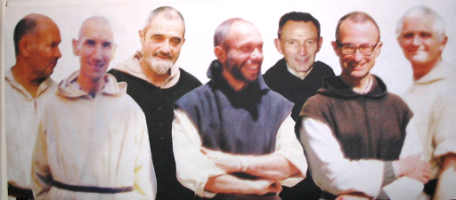
I finally managed to see the Cannes Grand Prix winner, about a small group of monks serving an impoverished local community as Jihadists slowly approach. It is not a spoiler to say it does not end with the physical survival of most (but not all) of the monks. And this farewell letter by the head of the Order, Frere Christian, captures the film’s core message:

Should it ever befall me, and it could happen today, to be a victim of the terrorism swallowing up all foreigners here, I would like my community, my church, my family, to remember that my life was given to God and to this country. That the Unique Master of all life was no stranger to this brutal departure. And that my death is the same as so many other violent ones, consigned to the apathy of oblivion. I’ve lived enough to know, I am complicit in the evil that, alas, prevails over the world and the evil that will smite me blindly.

I could never desire such a death. I could never feel gladdened that these people I love be accused randomly of my murder. I know the contempt felt for the people here, indiscriminately. And I know how Islam is distorted by a certain Islamism.

This country, and Islam, for me are something different. They’re a body and a soul.

My death, of course, will quickly vindicate those who call me naïve or idealistic, but they must know that I will be freed of a burning curiosity and, God willing, will immerse my gaze in the Father’s and contemplate with him his children of Islam as he sees them. This thank you which encompasses my entire life includes you, of course, friends of yesterday and today, and you too, friend of last minute, who knew not what you were doing. Yes, to you as well I address this thank you and this farewell which you envisaged. May we meet again, happy thieves in Paradise, if it pleases God the Father of us both. Amen. Insha’Allah.

The story is a true one, based on the assassination of the monks of Tibhirine in Algeria in 1996, by a Jihadist gang. The film, directed by Xavier Beauvoix, is about how one confronts and defeats evil, in a fallen world. It reminded me powerfully of Camus’ The Plague, especially the spiritual evolutions of Camus’ Pere Paneloux and Beauvoix’s Frere Christian and their brutal educations in the ways of love and death and responsibility. The other obvious parallel is between Camus’ Dr Rieux and Beauvois’ Frere Luc, two doctors who continue to “fight the plague” one band-aid after another. Camus, an existentialist, gave his opponent, the man of faith, a spiritual growth in his novel. And in this movie, we also see the rigid authoritarianism of an abbot evolve into the humbler, more Christ-like, leader from behind. It is rare that a film can credibly reveal faith germinating in and transforming a human soul, and also the dark night of despair and faithlessness that is always never far away.

100_0012-h200

The movie, moreover, is about our religious war, which is why I hope more Americans see it, even though its factual origins lie long before the conflict tore through the sky in Manhattan. We see the choice between a corrupt government and a resistance of twisted, wicked, murdering theocrats. We see the need to oppose evil, not to mistake it – and yet, crucially, the necessity not to empower it by adopting its own logic of fear. Once you fight Jihadism with Jihadism, religious violence with religious violence, you have merely entered a vortex of self-destruction. You cannot “win” the war that way in the end, although you can snag a few Pyrrhic battles along the way.

What Christian says in the quote above – which is verbatim the note he specifically left behind to be read in case he were murdered – is that only hope conquers fear, and that only true faith can conquer false faith. There is a Christmas scene in which local Jihadists assault the monastery and demand medicines (the Midnight Mass in the Youtube above immediately follows that confrontation). Christian insists that he will not speak with anyone with weapons inside the monastery walls. This is a place of peace he insists. He is unarmed and defenseless but his manifest integrity disarms the thugs temporarily.

And outside, he calls the Jihadist leader’s bluff by knowing the real Koran as well as he does. The name of Jesus literally defuses the conflict. This is the moment of hope here – before darkness descends again: a mutual Muslim and Christian reverence for Jesus. From that moment on, the monks’ faltering, doubt-riddled, fear-ridden, gradual decision to risk martyrdom rather than compromise their faith seems to come from almost outside of them, beyond them.

Like many, I reacted to the outrage of 9/11 with anger, grief, and a righteous desire to do something to defeat this evil. I did not yet see that responding with more violence could not solve the problem and might even worsen it. I can still see the justice and necessity of warfare against theocratic terrorists – against al Qaeda in Afghanistan and Yemen, for example, as long as it is conducted with constitutional checks and balances, acute concern for civilian casualties, and within the laws of war. And one thing Of Gods And Men does not disguise is the wickedness and depravity of religiously motivated mass murder. At one point, even Pascal is cited:

“Men never commit evil so fully and joyfully as when they do it for religious convictions.”

But I also learned that believing that something is evil does not necessarily make you good. I learned that the Iraq war was an appalling lapse into anarchy and mass murder, paved with good intentions as well as, let’s face it, a desire for revenge. I also saw the country I love adopt and legitimize an absolute evil, torture, to fight back. I have been changed by this decade. I worry about anyone, on any side of the debate, who hasn’t been.

Over this decade, I have learned never to conflate Islamism with Islam, and never to equate the West with unalloyed goodness, and yet I have also never doubted the need to fight Jihadism as well. I have learned that there are many ways to defuse Islamist terror – including the amazing democratic revolutions these past few months, or the unsung triumphs of patient intelligence gathering, or a more careful security apparatus – which avoid the trap of mere violence.

I have retained my core belief that the war we are in is, at root, not that of Islam and Christianity, or Jew vs Arab, or Sunni vs Shia, but of secularism (which cherishes freedom of religion) against theocracy (which seeks to extirpate all but one heretical version of one religion). But I also see the increasing danger of war in an age of technological means of mass destruction, and the terrible danger of creating more Jihadists by fighting them too crudely. If we embrace a war of civilizations, we guarantee the risk of ending all civilization.

The only answer to this dark place is love and forgiveness. The only answer to fear is hope. The only workable response to twisting religion into murderousness is patiently unfolding it back into love. Amen. Insha’Allah.

(Photo: the actual martyrs of the Atlas monastery.)

“Conservatism Is True.”

[Re-posted from earlier today].

It's funny that Fareed Zakaria and I are now seen as beyond the conservative pale. We were both Harvard immigrants at the same time and definitely right of center (although I always had more libertarian impulses). The core reason I became a conservative was government over-reach in my native land – try a 98 percent top tax rate and direct government ownership of entire industries and nearly every hospital. I thought this violated a core fact about human nature: that collectivism fails to generate the dynamism that individual freedom and ownership do.

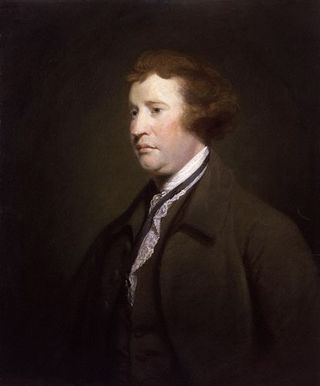
But as I studied political philosophy more deeply, the core argument for conservatism was indeed that it was truer to humankind's crooked timber; that it was more closely tethered to earth rather  than heaven; that it accepted the nature of fallen man and did not try to permanently correct it, but to mitigate EdmundBurke1771 our worst instincts and encourage the best, with as light a touch as possible. Religion was for bishops, not presidents. Utopias were for liberals; progress was not inevitable; history did not lead in one obvious direction; we are all limited by epistemological failure and cultural bias.

So on taxes today, a conservative would ask: what have we learned about the impact of lower rates over the last two decades – now the lowest as a percentage of GDP since the 1950s? In healthcare, what have we learned about the largely private system the GOP wants to preserve? A conservative would look at home and abroad for empirical answers, acknowledging no ultimate solution but the need for constant reform because society is always changing. On gay rights, a classic social change, he'd ask what a society should do in integrating the emergence of so many openly gay people, couples and families. On foreign policy, he'd move on a case by case basis, not by way of a "doctrine."

On these terms, today's GOP could not be less conservative. I'd insist it's less conservative than Obama. It does not present reality-based reform for emergent problems. It simply reiterates dogma and ruthlessly polices dissent or debate.

So no tax increases are allowed, period. Why? Because they "kill jobs". So why do we have record unemployment after a period of unprecedentedly low taxation? No answer. If lower taxes have led to stagnation, the answer must always be: lower taxes some more. Why not end them all together?

On gays, we hear actually nothing about gays, our existence or our lives. We hear a tautological irrelevance: "I believe marriage is between a man and a woman." What do they propose positively for this emergent social reality that men like Burke or Lincoln or Disraeli would have seen as an opportunity for conservative reform? Nothing. No civil unions, no civil marriage, no military service … just nothing, but a piece of doctrine: gay is bad. On healthcare, have you yet heard a single practical proposal to help the uninsured? Or assist seniors with health needs in ways that don't break the bank? Nope. But in a society that won't let people die on the street, these are real and tough problems we cannot just wish away. The Ryan plan solves the problem the way leftists used to: by a radical ideological shift. It just cuts off aid at a certain level and says government is not responsible for the rest. This will never get past the public and would never actually cut costs. It simply places an arbitrary marker on when the government tells you you are on your own. Again, this works as dogma but not as politics.

Fareed is particularly sharp on this:

When considering health care, for example, Republicans confidently assert that their ideas will lower costs, when we simply do not have much evidence for this. What we do know is that of the world's richest countries, the U.S. has by far the greatest involvement of free markets and the private sector in health care. It also consumes the largest share of GDP, with no significant gains in health on any measurable outcome. We need more market mechanisms to cut medical costs, but Republicans don't bother to study existing health care systems anywhere else in the world. They resemble the old Marxists, who refused to look around at actual experience. "I know it works in practice," the old saw goes, "but does it work in theory?"

Back in the 1980s, conservatism was a thrilling empirical, reality-based challenge to overweening government power and omniscient liberal utopianism. Today, alas, it has become a victim of its own success, reliving past glories rather than tackling current problems. It is part secular dogma – no taxes, no debt, more war – and part religious dogma – no Muslims need apply; amend the federal constitution to keep gays in their place; no abortions even for rape and incest; more settlements on the West Bank to prepare for the End-Times. Although there were inklings back then – Stockman was right; Iran-Contra should have been a warning – they were still balanced by empiricism. Reagan raised taxes, withdrew from Lebanon, hated war, and tried to abolish all nuclear weapons on earth. The first Bush was an under-rated deficit-cutter and diplomat, a legacy doubly squandered by his son.

Now it's Levin-land: either total freedom or complete slavery and a rhetorical war based entirely on that binary ideological spectrum. In other words, ideological performance art: brain-dead, unaware of history, uninterested in policy detail, bored by empiricism, motivated primarily by sophistry, Manicheanism, and factional hatred. This is not without exceptions. Douthat, Brooks, Zakaria, Bacevich, Bartlett, Frum, Manzi, Salam, Lomborg, Mac Donald, et al. are still thinking. It's just that many of them are now deemed – absurdly – to be liberals. And none will have or does have any real impact on the base of the party.

Why? Because these thinkers are prepared to believe that the conservatism of the 1980s might have run its course, that new times might require new ideas, that we have been wrong in some areas, while right in others, that it is not a crime to reverse course when events encourage it, that we have to live in the world as it is, rather than as we would like it to be, that we can learn from mistakes and base policy on shifting reality.

In contrast, today's unconservative "conservatism" is a movement held together by cultural resentment and xenophobic panic. Until it wrests free of this trap, it deserves its Palinesque fate: an ideology wrapped in anachronism, and laced with venom.

Obama’s Two New Illegal Wars

84155725

Adam Serwer is confused by my position:

I find Andrew Sullivan's contention that "Obama is now engaged in two illegal wars – in Libya and in Yemen," particularly odd. Sullivan defended the administration's authority to target radical cleric and American citizen Anwar al-Awlaki, but those strikes were being undertaken by JSOC under authority claimed under the [Authorization for Use of Military Force Against Terrorists (AUMF)]. It doesn't make sense to argue that when the military was targeting him, it was legal, but the CIA's increased involvement makes U.S. operations in Yemen an "illegal war." If JSOC can legally target al-Awlaki, then there's little legal basis to argue that the CIA can't. If, on the other hand, you believe that operations in Yemen represent an expansion of the "war on terror" that isn't authorized by the AUMF, then the CIA's involvement is legally troublesome. But at the time Sullivan wrote that "Yemen surely is a "declared battlefield" – at least as far as al Qaeda is concerned." As far as the administration and most of Congress seem to be concerned too.

These are good points to which I would clarify thus. I do believe that in the matter of a potential battlefield like Yemen, strikes against known terrorists trying to kill Americans are warranted, if we are sure we can kill or capture the enemy with accuracy and minimal civilian casualties. Sending in a SEAL team to capture or kill bin Laden is not at the level of a full-scale war with Pakistan -  although we should note that does not seem that way to Pakistanis, hence the huge wave of anti-Americanism that has resulted.

There must come a point, however, when you are not targeting a one-off specific figure or cell, but launching round after round of drone missiles into a country, as into the Af-Pak border. The drone 115221978attacks into Pakistan are mighty close to warfare, it seems to me. There comes a point, in other words, at which a military kinetic action becomes a war. Drones are particularly dangerous instruments in this respect. They allow a president to pick war at will, and placate the public with no military casualties. This is precisely what the Founders were scared of. We have created a King with an automated army, and no Congressional or public check outside of elections, when the damage may have already been done.

Maybe the line between targeted anti-terror strikes and de facto, ongoing warfare is hard to define. Sometimes, the executive may need to act urgently and unilaterally to counter an imminent military threat. But we are so far away from that now it's almost irrelevant. I guess ongoing, routine military attacks constitute war in my book. (One good test is: if it were happening to us, would we consider it an act of war? If a foreign power dropped a drone missile on your block, would you call it a military kinetic action?) But my point is that it is this inherent lack of clarity is what guided the Founders to do what they did. They set the standard for warfare very high. They wanted to restrain the Prince. And that restraint on presidential power is at the core of the American experiment of divided powers. Which is why, the Bush-Cheney position was not only, in my view, imprudent, but deeply hostile to the core founding values of this country.

The thing about war, as the Founders understood, is that you rarely end up with anything like the state of affairs you started with.

You can begin with a few "military advisers" in South Vietnam and end up in years of brutal, counter-productive warfare. You can start with Wolfowitz's fantasy of a quick and cheap Iraq intervention and end up a decade later a trillion dollars short and with a real anxiety that the whole place will go to hell when and if the US really does pull out. You can help some Afghan rebels defeat the Soviets and set in train a war that is now at its most intensive decades later.

But at least we did have a debate and vote with respect to Iraq and Afghanistan. There was no Congressional debate over Libya or now the escalation in Yemen. The administration's argument on Libya, as revealed yesterday, is that the conflict is too constrained and limited to be called a war. Please. Tell that to those hearing shells and missiles explode in military installations around their neighborhoods in Tripoli. Thousands of air raids and sorties have occurred since this not-war was not-declared.

Second: mission creep is not some lefty fantasy. It's a historic reality. The deployment of violence wreaks its own consequences that are often uncontrollable except through more force.  And the notion that we are not trying to install regime change in Libya through military action is ludicrous. What was justifed as a one-off attempt to prevent an alleged massacre of "tens of thousands" is now an on-going, soon to be billion-dollar war that's going nowhere slowly, but clearly trying to kill and traumatize a dictator and destroy the physical components of his regime. On what grounds does an American president in a fiscal hole like ours borrow another billion dollars to finance an intervention in a civil war in … Libya?

And I do think the military/CIA distinction matters. One thing I've learned this past decade is that the CIA is pretty much its own judge, jury and executioner. It is much less accountable to the public, more likely to break the laws of war and destroy the evidence, more likely to do things that could escalate rather than ameliorate a conflict. To read that the CIA has been given a green light to do what it wants to do in Yemen with drones seems to me easily over the trip-wire for war that requires Congressional buy-in.

Technology has made this more problematic. If the CIA, based on its own intelligence, can launch a war or wars with weapons that can incur no US fatalities, the propensity to be permanently at war, permanently making America enemies, permanently requiring more wars to put out the flames previous wars started, then the Founders' vision is essentially over. I think it's a duty to make sure their vision survives this twenty-first century test.

(Top photo: A US 'Predator' drone passes overhead at a forward operating base near Kandahar on January 1, 2009. By Joel Saget/AFP/Getty Images. Side photo: Jamaat-e-Islami Pakistan activists gather for a protest rally in Karachi on June 4, 2011, against US drone attacks in the country. A drone attack June 3 was the ninth reported in Pakistan's border area with Afghanistan, branded by Washington the global headquarters of Al-Qaeda, since US commandos killed bin Laden in the garrison city of Abbottabad on May 2. By Asif Hassan AFP/Getty Images.)