A Poem For Thursday

poem-thurs

“Martha Yarnoz Bidart Hall” by Frank Bidart:

Though she whom you had so let
in, the desire for survival will not

allow you ever to admit
another so deeply in again

Though she, in, went crazy
vengeful-crazy

so that, as in Dante, there she ate your heart

Though her house that she despised but
spent her life constructing

still cannot, thirty-nine years after
her death, by your ratiocination or rage

be uncon-
structed

you think, We had an encounter on the earth

each of us
hungry beyond belief

As long as you are alive
she is alive

You are the leaping
dog

capricious on the grass, lunging
at something only it can see.

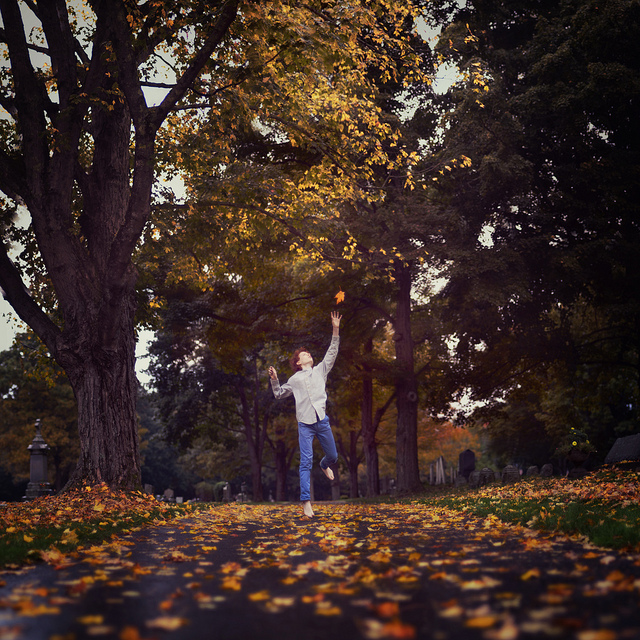
(From Metaphysical Dog by Frank Bidart © 2013 by Frank Bidart. Used by permission of Farrar, Straus and Giroux, LLC. Photo by Joshua Veitch-Michaelis)

A Poem For Sunday

absolute

“Hunger for the Absolute” by Frank Bidart:

Earth you know is round but seems flat.

You can’t trust
your senses.

You thought you had seen every variety of creature
but not

this creature.

When I met him, I knew I had
weaned myself from God, not

hunger for the absolute. O unquenched
mouth, tonguing what is and must

remain inapprehensible—
saying You are not finite. You are not finite.

(From Metaphysical Dog by Frank Bidart © 2013 by Frank Bidart. Used by permission of Farrar, Straus and Giroux, LLC. Photo by Tristan Bowersox)

A Poem For Saturday

dark waters

Dish poetry editor Alice Quinn writes in about this weekend’s poems:

Frank Bidart, the author of seven previous and highly regarded collections of poems and the co-editor of the monumental edition of The Collected Poems of Robert Lowell, has just published a new book of poems, Metaphysical Dog, nominated this week for the National Book Award. His work has a visceral power and gravitas that summons up George Herbert’s poems addressed to God (“Now I am here, what thou wilt do with me/ None of my books will show.”)

In an interview from 1999, he addressed the nature of his artistic values, saying “There has come to be astonishing sophistication in producing an armored self on paper—in a way that makes the poems that were ‘armored’ twenty years ago look positively candid and naïve. And I think it’s a trap…Frost says, quoting Horace, ‘No tears in the writer, no tears in the reader.’…The fact is, you cannot get through life without putting your life on the line! There’s no other, no ‘safe’ way to live.”

Today and over the weekend, we’ll feature poems from his arresting and very moving new book, beginning with “Against Rage”:

He had not been denied the world. Terrible
scenes that he clung to because they taught him

the world will at last be buried with him.
As well as the exhilarations. Now,

he thinks each new one will be the last one.
The last new page. The last sex. Each human

being’s story, he tells nobody, is a boat
cutting through the night. As starless blackness

approaches, the soul reverses itself, in
the eerie acceptance of finitude.

(From Metaphysical Dog by Frank Bidart © 2013 by Frank Bidart. Used by permission of Farrar, Straus and Giroux, LLC. Photo by Janos Csongor Kerekes)

A Poem For Sunday

eddyeyes.jpg

“How It Is With Us, And How It Is With Them” by Mary Oliver:

We become religious,
then we turn from it,
then we are in need and maybe we turn back.
We turn to making money,
then we turn to the moral life,
then we think about making money again.
We meet wonderful people, but lose them
in our busyness.
We’re, as the saying goes, all over the place.
Steadfastness, it seems,
is more about dogs than about us.
One of the reasons we love them so much.

(From Dog Songs by Mary Oliver. Reprinted by arrangement of Penguin Press, a member of Penguin Random House LLC. © 2013 by Mary Oliver.)

A Poem For Saturday

daisy

“The Storm (Bear)” by Mary Oliver:

Now through the white orchard my little dog
romps, breaking the new snow
with wild feet.
Running here running there, excited,
hardly able to stop, he leaps, he spins

until the white snow is written upon
in large, exuberant letters,
a long sentence, expressing
the pleasures of the body in this world.

Oh, I could not have said it better
myself.

(From Dog Songs by Mary Oliver. Reprinted by arrangement of Penguin Press, a member of Penguin Random House LLC. © 2013 by Mary Oliver. Photo of Daisy, Alice Quinn’s pal and the Poetry Society of America‘s office mascot.)

A Poem For Friday

Dish poetry editor Alice Quinn introduces this weekend’s poems:

The Pulitzer-Prize winning poet Mary Oliver has just published a new collection, Dog Songs, celebrating the love we feel for our faithful canine friends and the joy thMary Oliver_credit Anne Taylorey bring to our lives. A New York Times feature by Dana Jennings this past Tuesday began, “Mary Oliver has spent most of her life with a mind ripe with poems —and with at least one steadfast dog by her side.” Mary is the author of more than twenty collections of poems as well as two books on the art of writing verse, A Poetry Handbook and Rules for the Dance: A Handbook for Writing and Reading Metrical Verse.

Today and over the weekend, we’ll run poems from Mary Oliver’s splendid new book alongside photographs of dogs cherished by Mary, Andrew, and myself.

The first selection is “Little Dog’s Rhapsody In The Night”:

He puts his cheek against mine
and makes small, expressive sounds.
And when I’m awake, or awake enough

he turns upside down, his four paws
in the air
and his eyes dark and fervent.

“Tell me you love me,” he says.
“Tell me again.”

Could there be a sweeter arrangement? Over and over
he gets to ask.
I get to tell.

(From Dog Songs by Mary Oliver. Reprinted by arrangement of Penguin Press, a member of Penguin Random House LLC. © 2013 by Mary Oliver. Photo of Mary and her Havanese, Ricky)

A Poem For Sunday

photo (26)

From “The Children’s Hour” by Henry Wadsworth Longfellow (1824—1884):

Between the dark and the daylight,
When the night is beginning to lower,
Comes a pause in the day’s occupations,
That is known as the Children’s Hour.

I hear in the chamber above me
The patter of little feet,
The sound of a door that is opened,
And voices soft and sweet.

From my study I see in the lamplight,
Descending the broad hall stair,
Grave Alice and laughing Allegra,
And Edith with golden hair.

A whisper, and then a silence:
Yet I know by their merry eyes
They are plotting and planning together
To take me by surprise.

A sudden rush from the stairway,
A sudden raid from the hall!
By three doors left unguarded
They enter my castle wall!

(Photo from a reader)

A Poem For Saturday

8049717030_3f8e6d5e1b_z (1)

Dish poetry editor Alice Quinn writes:

The first poems I read and loved were in Volume Nine of a set of books called The Children’s Hour given to me by my mother when I was about five. I can summon up the opening lines of all of them – Longfellow’s “The Children’s Hour,” itself, naturally,  “The Barefoot Boy” by John Greenleaf Whittier, Robert Browning’s “The Pied Piper of Hamelin,” Edward Lear’s “The Owl and the Pussy-Cat,” and “The Things I Miss,” attributed by me to Emily Bronte for most of my life but actually the work of Thomas Wentworth Higginson, most widely known now as an encourager and correspondent of Emily Dickinson.

Today and over the weekend, we’ll feature a few of these poems in tribute to my mother and to all parents who instill in their children a sustaining love of poetry because they love it themselves.

We begin with “The Barefoot Boy” by John Greenleaf Whittier (1807-1982):

Blessings on thee, little man,
Barefoot boy, with cheek of tan!
With thy turned-up pantaloons,
And thy merry whistled tunes;
With thy red lip, redder still
Kissed by strawberries on the hill;
With the sunshine on thy face,
Through thy torn brim’s jaunty grace;
From my heart I give thee joy,–
I was once a barefoot boy!
Prince thou art,–the grown-up man
Only is republican.
Let the million-dollared ride!
Barefoot, trudging at his side,
Thou hast more than he can buy
In the reach of ear and eye,–
Outward sunshine, inward joy:
Blessings on thee, barefoot boy!

(Photo by Zev, aka Fiddle Oak)

A Poem For Thursday

dish_joy

“Joy” by Denise Levertov:

You must love the crust of the earth
on which you dwell. You must be
able to extract nutriment out of a
sandheap. You must have so good
an appetite as this, else you will live
in vain.                                — Thoreau

Joy, the ‘well … joyfulness of
joy’—‘many years
I had not known it,’ the woman of eighty
said, ‘only remembered, till now.’

Traherne
in dark fields.
On Tremont Street,
on the Common, a raw dusk, Emerson
‘glad to the brink of fear.’
It is objective,

stands founded, a roofed gateway;
we cloud-wander

away from it, stumble
again towards it not seeing it,

enter cast-down, discover ourselves
‘in joy’ as ‘in love.’

(POEMS 1960-1967, copyright ©1966 by Denise Levertov. Reprinted by permission of New Directions Publishing Corp. Levertov’s work is available in ebook format.  Photo by Flickr user rainerstropek)

A Poem For Sunday

dish_tulips

“The Tulips,” by Denise Levertov:

Red tulips
living into their death
flushed with a wild blue

tulips
becoming wings
ears of the wind
jackrabbits rolling their eyes

west wind
shaking the loose pane

some petals fall
with that sound one
listens for

(POEMS 1960-1967, copyright ©1966 by Denise Levertov. Reprinted by permission of New Directions Publishing Corp. Levertov’s work is available in ebook format.  Photo by Flickr user erikwestrum)