A Poem For Sunday

by Alice Quinn

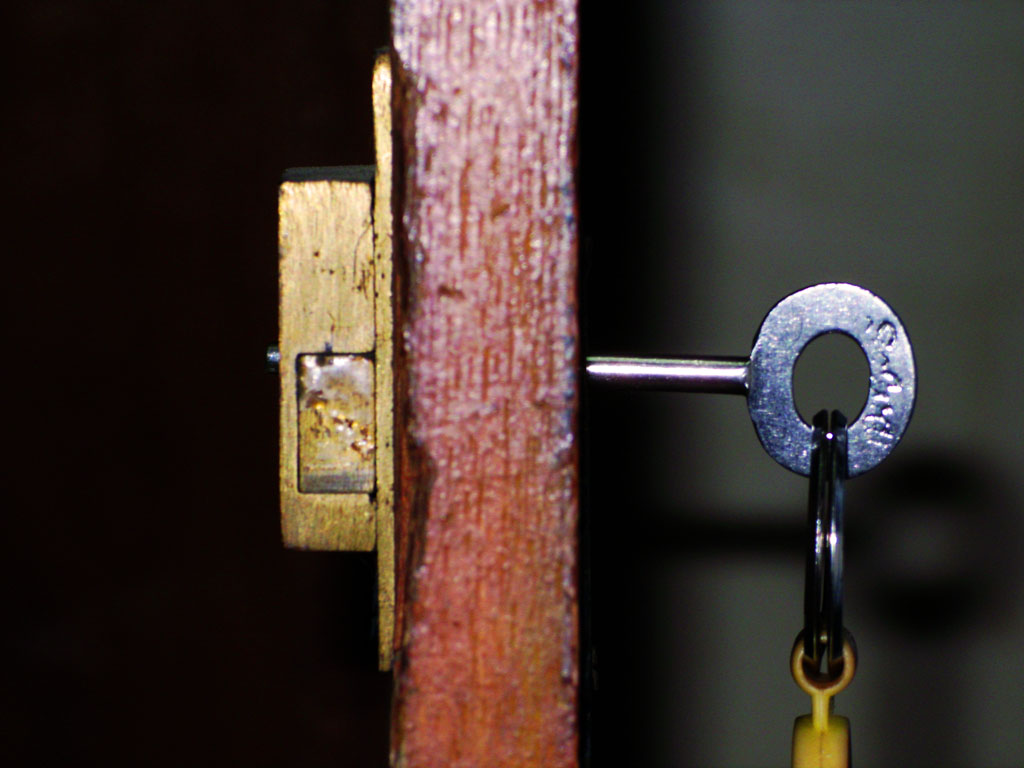
zachspoem

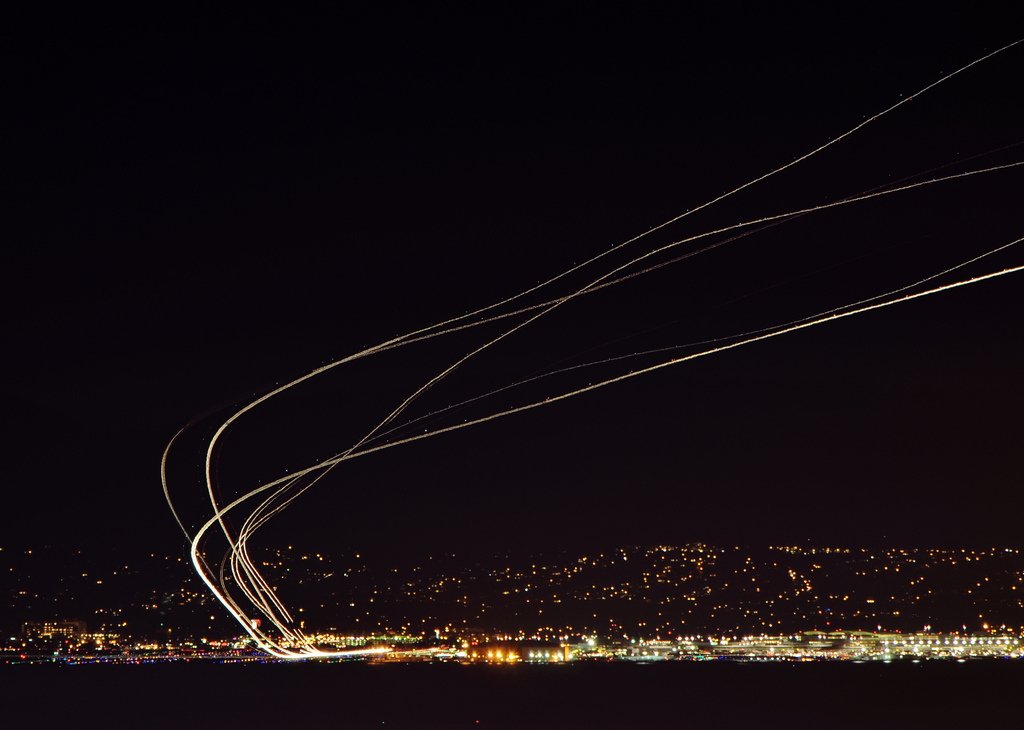
“This Slow Unearthly Spell” by Natan Zach:

This slow, unearthly spell of standing
still.
Not to trade places with, or envy
those flying overhead at night, passing
in a shriek of polished and cold metal,
jostling each other in a mysterious
light.

Not to set out again. To spend each
evening
among familiar tokens, making
a barren speech before the stars.
Keeping close watch
over Time’s steps. To bring to an end
all that is loved and rare
with an unhurried hand and a shattered
heart.

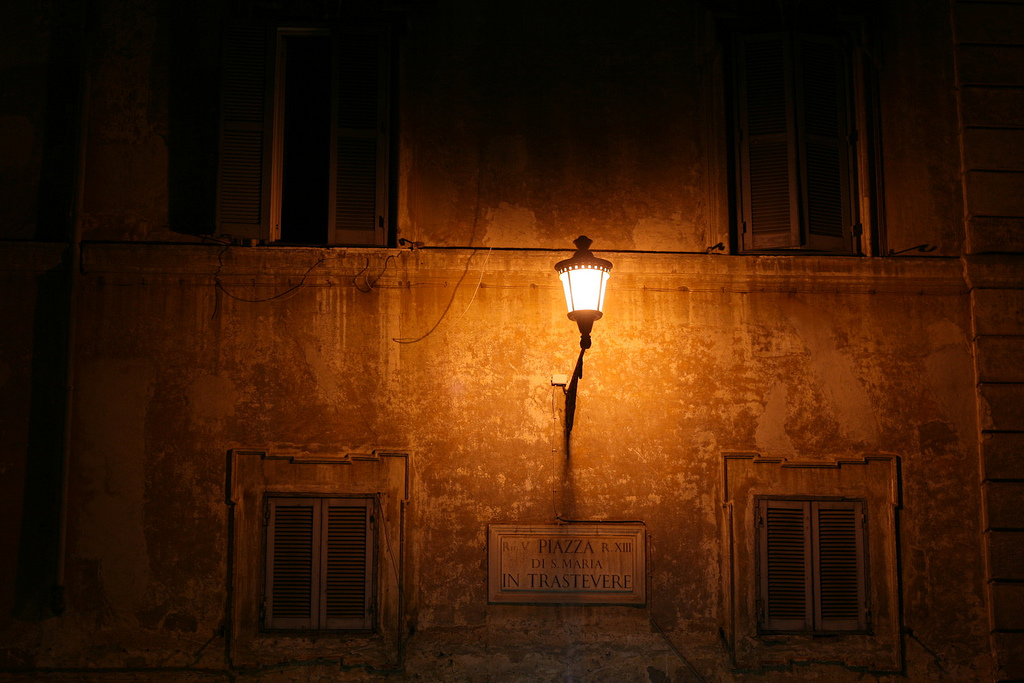
(From The Countries We Live In: Selected Poems Natan Zach 1955-1979, translated, from the Hebrew, by Peter Everwine. Used by kind permission of Tavern Books. Photo by D.H. Parks)

A Poem For Saturday

by Alice Quinn

piazza

This week, we’re excited to hold aloft poems from beautiful volumes brought out by Tavern Books of Portland, Oregon and Salt Lake City with this mission:

In addition to reviving books that have fallen out of print, we seek to build a catalog of poetry in translation from the finest writers of our modern era.

Out of appreciation for these goals and the unerring taste embodied in the books published thus far, we are posting three poems this week from the Tavern list and direct readers of The Dish to the Tavern Books site to learn more about their efforts. The first selection is “I’ll Protect Myself” by Leonardo Sinisgalli:

I’ll protect myself from the quick wind
Dusting the piazza light
On the tops of the poplars.
In the quivering pause a swarm
Of leaves climbs the brow of the wall
And thrashes there, a voice
Aching in me all night long.
Again I feel the sad
Vocation to exist,
Dying to seek myself in every place.

(From Night of Shooting Stars: The Selected Poems of Leonardo Sinisgalli, translated, from the Italian, by W.S.Di Piero. Used by kind permission of Tavern Books. Photo by Flickr user Paolo)

A Poem For Sunday

everwine2

“Night” by Peter Everwine:

In the lamplight falling
on the white tablecloth
my plate,
my shining loaf of quietness.

I sit down.
Through the open door
all the absent I love enter
and we eat.

From From the Meadow: Selected and New Poemsby Peter Everwine © 2004. Used by kind permission of the University of Pittsburgh Press. Photo by Tawheed Manzoor)

A Poem For Saturday

oceanpoem

“Sometimes I walk where the deep water dips” by Frederick Goddard Tuckerman (1821-1873):

Sometimes I walk where the deep water dips
Against the land. Or on where fancy drives
I walk and muse aloud, like one who strives
To tell his half-shaped thought with stumbling lips,
And view the ocean sea, the ocean ships,
With joyless heart: still but myself I find
And restless phantoms of my restless mind:
Only the moaning of my wandering words,
Only the wailing of the wheeling plover,
And this high rock beneath whose base the sea
Has wormed long caverns, like my tears in me:
And hard like this I stand, and beaten and blind,
This desolate rock with lichens rusted over,
Hoar with salt-sleet and chalking of the birds.

(Photo by Flickr user Crunchy Footsteps)

A Poem For Friday

Harlem Holds Vigil For Trayvon Martin

Matthew Kelty is a playwright living in Hawaii whose plays, including “Flood,” “The Clay Pot Bloom,” and “When a Storm Comes” have been performed in New York and regionally. He is currently updating one called “Black and Blue.” Kelty hasn’t published poetry since his college days, but he took pen to paper on the night that the Zimmerman verdict was announced. “The poem was my attempt to translate what I think the country should be feeling–rage and regret at the loss of so many young lives like Trayvon’s–into the words of one sorrowful and vengeful father who’s lost his son.” Here’s “Father”:

Flame. Bring me.
Bring me torches, matches, candles, lanterns:
I can’t see.
Bring me kindling: branches, twigs.
Bring switches like my father used to tan my hide when I’d done wrong.
I want switches to tan hides.

Bring me spruce, pine, dogwood.
Bring me slow-burning oak: I want this fire to last.
Bring me conifers; bring me cones. Bring me rods and cones, eyes,
I want eyes, I can’t see, bring me eyes I can’t see.
Bring me limbs, trunks and limbs, torsos and limbs,
bring me bodies bring me my son’s body, my son my son where is
my son bring me bodies ‘til they bring me my son.
Bring me wood and bark, the bark, the harsh cough of command to
bring me forests, bring me jungles, bring me nations to burn as a
funeral pyre. Burn forests to the ground burn this city to the ground
smoke is everywhere I can’t see
no fire so strong as my son no fire so bright as his face
bring me the past to burn bring me my son for his funeral pyre
my son my son where is my son all I taste is ashes I want ashes I want
my son bring me my son.

Bring me.

(Photo: Mourners participate in a candlelight vigil for Trayvon Martin on July 15, 2013 in New York City. By Andrew Burton/Getty Images)
A Poem For Sunday

“Nighttime Begins with a Line by Pablo Neruda” by Yusef Komunyakaa:

So my body went on growing, by night,
went on pleading & singing to the earth
I was born to be woven back into: Love,
let me see if I can’t sink my roots
deeper into you, your minerals & water,
your leaf rot & gold, your telling and un-
telling of the oldest tales inscribed
on wind-carved rocks, silt & grass,
your songs & prayers, your oaths & myths,
your nights & days in one unending lament,
your luminous swarm of wet kisses
& stings, your spleen & mind,
your outrageous forgetting & remembrance,
your ghosts & rebirths, your thunderstones
& mushrooms, & your kind loss of memory.

(From The Chameleon Couch: Poems © 2011 by Yusef Komunyakaa. Used by kind permission of Farrar, Straus and Giroux)

A Poem For Saturday

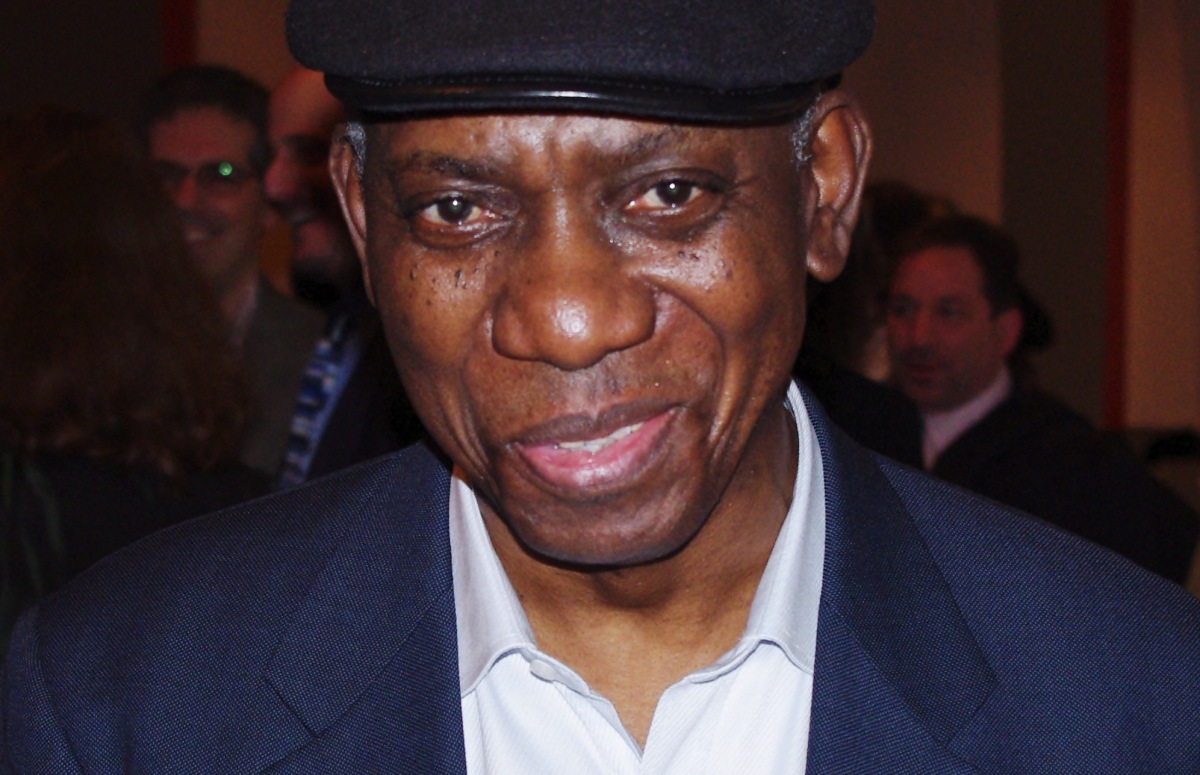
yusef_komunyakaa_2011_nbcc_awards_2012_shankbone

This weekend we’re featuring poems from The Chameleon Couch, the eighth and newest collection by the Pulitzer Prize-winning poet Yusef Komunyakaa. His many awards during his distinguished career include the Wallace Stevens Award from the Academy of American Poets and the Shelley Memorial Award from the Poetry Society of America. In Poetry Magazine, David Wojahn praised him as a poet with “a near-revelatory capacity to give himself over to his subject matter and to the taut concision of his free verse.” Here’s Komunyakaa’s “A Voice on an Answering Machine”:

I can’t erase her voice. If I opened the door to the cage & tossed
the magpie into the air, a part of me would fly away, leaving only
the memory of a plucked string trembling in the night. The voice
unwinds breath, soldered wires, chance, loss, & digitalized im-
pulse. She’s telling me how light pushed darkness till her father
stood at the bedroom door dressed in a white tunic. Sometimes
we all wish we could put words back into our mouths.

I have a plant of hers that has died many times, only to be revived
with less water & more light, always reminding me of the voice
caught inside the little black machine. She lives between the Vale
of Kashmir & nirvana, beneath a bipolar sky. The voice speaks of
an atlas & a mask, a map of Punjab, an ugly scar from college days
on her abdomen, the unsaid credo, but I still can’t make the voice
say, Look, I’m sorry. I’ve been dead for a long time.

(From The Chameleon Couch: Poems © 2011 by Yusef Komunyakaa. Used by kind permission of Farrar, Straus and Giroux. Photo by David Shankbone)

A Poem For Sunday

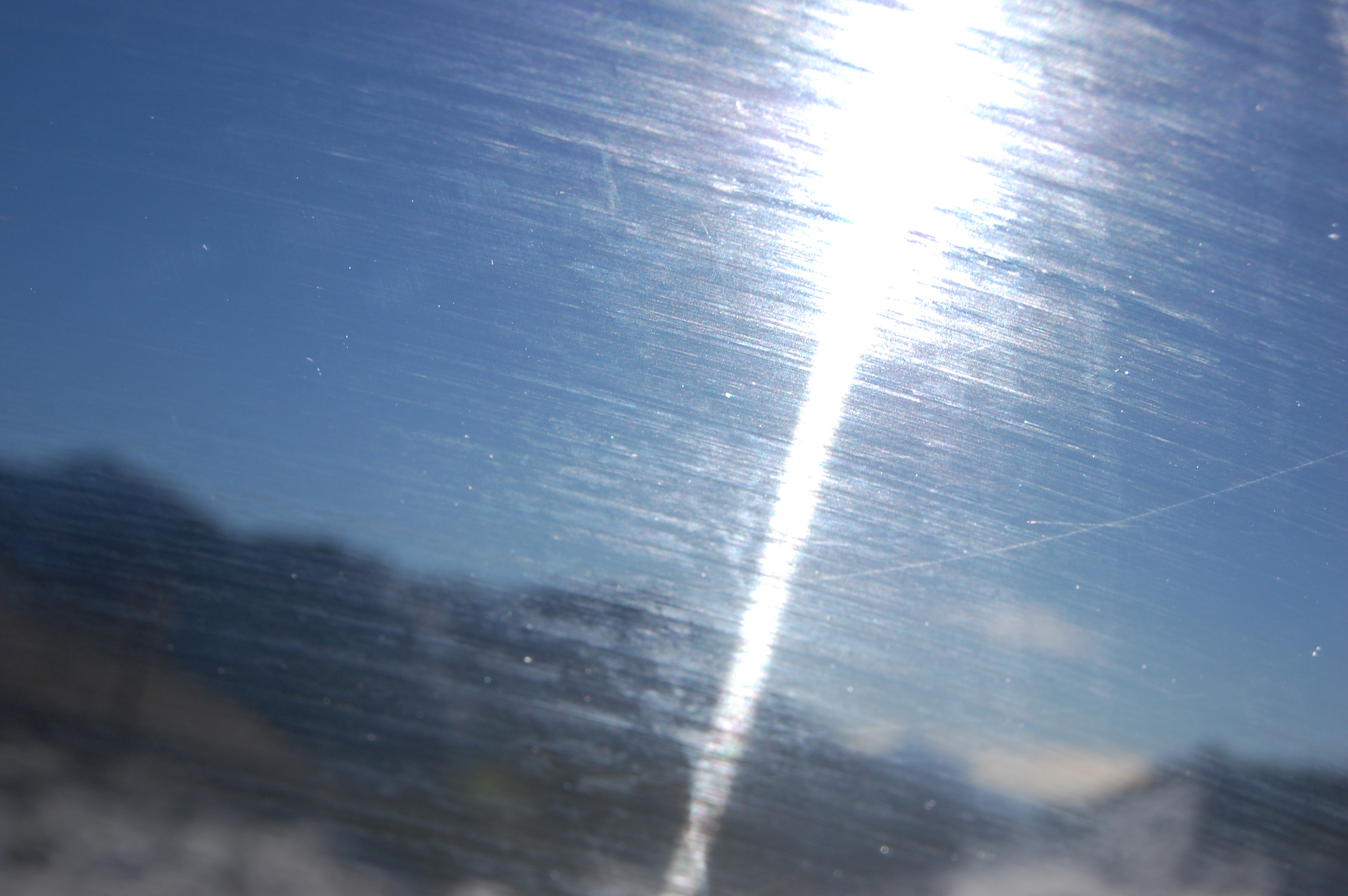
windshield-eternity

“Little Eternities” by Mary Ruefle:

When are we happiest? he asked her.
Not one of them could get the seats
to go back, not one of them really knew
what was in the glove box, though
everything there was theirs.

When they got to where they were going,
a park, a gray squirrel came jumping along.
Childhood! It was in one of the houses nearby.
Money! Every day it seemed to loose itself
from its lurking-place and drift away.

So he smelled the underside
of his own arm. And the squirrel
paused, one of those little eternities
never mentioned again.

(From Trances of the Blast © 2013 by Mary Ruefle. Used by kind permission of Wave Books, Seattle & New York. Photo by Grant Loy)

A Poem For Saturday

bour-2689-recto-web

When Alice Quinn started with the Dish as poetry editor last July, we began our collaboration by posting “All the Activity There Is,” from Mary Ruefle’s Selected Poems. So this weekend, the Dish commemorates the year with three poems from Mary’s new volume Trances of the Blast, just published by Wave Books. Here’s “Spider”:

The spider can barely walk, his legs are so scared—
he’s got to get from the bar of soap to the uppermost
showerstall tile that is his home, and he has suffered
a betrayal so great he’s lost in his own neighborhood,
crawling on his hands and knees, so to speak, in and out
of the shadows of other tiles he’s passed before but
barely recognizes, given his state of shock and disbelief.
Spiders don’t hear very well—he can’t hear the rain
as it falls and cools his flaming legs, the distant screams
of another’s crisis mean nothing to him, he can’t hear
his own heartbeat, an alarm casting his skeleton straight
into hell, his blood ignited by the bellows of loss.
If the gods implore him to hold his saliva, he doesn’t
hear them, he goes on crawling toward the one safe spot,
which has become, in his mind, the destination of his life
and this night rolled into one, a wet bag at the bottom
of which, were it to fall, would lie his demise—
too awful to discuss.

From Trances of the Blast. Copyright © 2013 by Mary Ruefle. Used by kind permission of Wave Books (Seattle & New York).

(Image: Louise Bourgeois’s REPROACHE: THE SPIDER IS HIGH (ON SUGAR), 1995 © The Easton Foundation/Licensed by VAGA, NY)

A Poem For Monday

GEDSC DIGITAL CAMERA

“Night” by Peter Everwine:

In the lamplight falling
on the white tablecloth
my plate,
my shining loaf of quietness.

I sit down.
Through the open door
all the absent I love enter
and we eat.

(Reprinted from From the Meadow, Selected and New Poems, by Peter Everwine, Copyright © 2004. Used by kind permission of the University of Pittsburgh Press. Photo by Nicholas_T)