A Poem For Sunday

dish_poem3

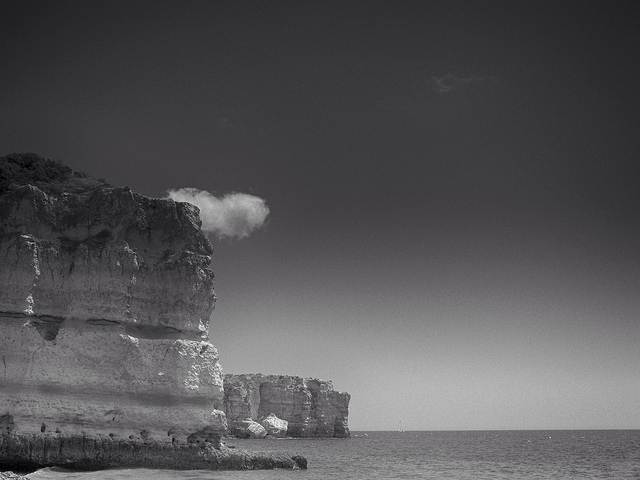
“Sometimes I walk where the deep water dips,” by Frederick Goddard Tuckerman:

Sometimes I walk where the deep water dips
Against the land. Or on where fancy drives
I walk and muse aloud, like one who strives
To tell his half-shaped thought with stumbling lips,
And view the ocean sea, the ocean ships,
With joyless heart: still but myself I find
And restless phantoms of my restless mind:
Only the moaning of my wandering words,
Only the wailing of the wheeling plover,
And this high rock beneath whose base the sea
Has wormed long caverns, like my tears in me:
And hard like this I stand, and beaten and blind,
This desolate rock with lichens rusted over,
Hoar with salt-sleet and chalking of the birds.

(Photo by A Guy Taking Pictures)

A Poem For Saturday

Monica A. Hand’s “dear Nina”:

I want vengeance
an eye for an eye
a dish served cold
two wrongs
a tale of two cities
contrapasso
ill will
a settling

not with a grain of salt
with a heavy hand

a slow burn
boiling point
a huff and a puff
blow the mother-fucking house down

no cage forestalls
no age forgets
no gene forgives
I cane those who give me
this fury

a hundred lashes
acrimony and dander
needle and tizzy
umbrage
ruckus

(From me and Nina. Copyright © 2012 by Monica C.Hand. Used by kind permission of Alice James Books. Video: Nina Simone sings “Ain’t Got No/I Got Life”:)

A Poem For Sunday

sonnet2

Shakespeare’s Sonnet 87:

Farewell! thou art too dear for my possessing,
And like enough thou know’st thy estimate:
The charter of thy worth gives thee releasing;
My bonds in thee are all determinate.
For how do I hold thee but by thy granting?
And for that riches where is my deserving?
The cause of this fair gift in me is wanting,
And so my patent back again is swerving.
Thyself thou gav’st, thy own worth then not knowing,
Or me, to whom thou gav’st it, else mistaking;
So thy great gift, upon misprision growing,
Comes home again, on better judgment making.
Thus have I had thee, as a dream doth flatter,
In sleep a king; but, waking, no such matter.

(Photo by Jan Krömer)

A Poem For Saturday

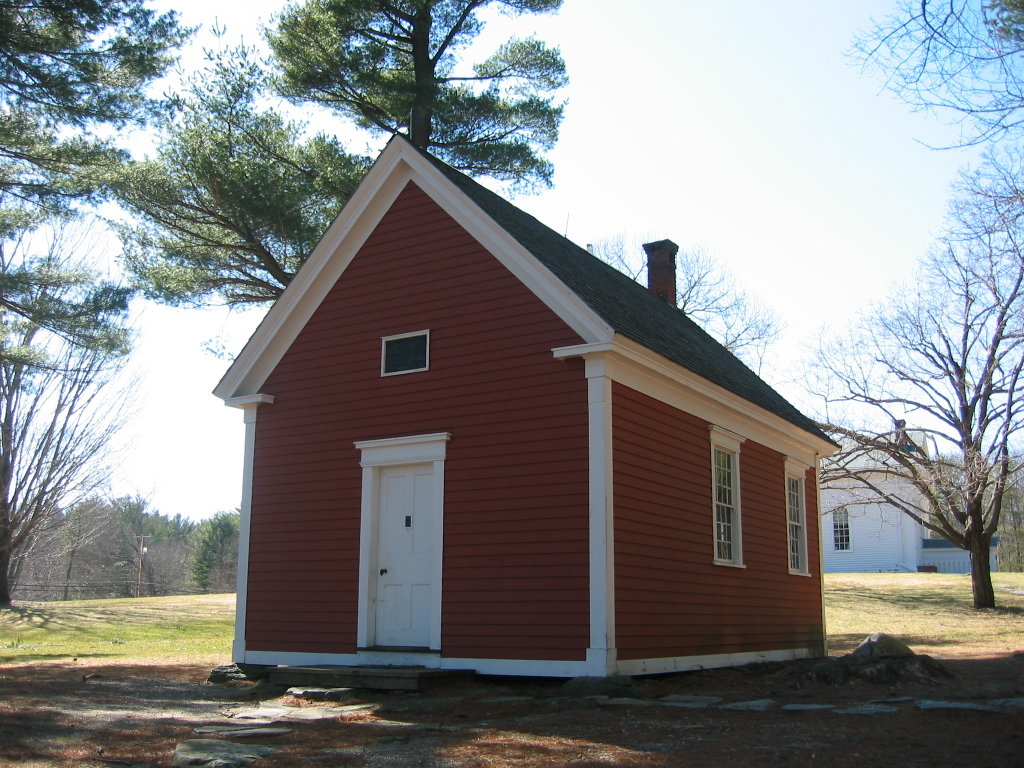
Redstone_School

“Mary’s Lamb” by Sarah Josepha Hale (1788-1879):

Mary had a little lamb,
Its fleece was white as snow,
And everywhere that Mary went
The lamb was sure to go;
He followed her to school one day—
That was against the rule,
It made the children laugh and play
To see a lamb at school.

And so the teacher turned him out,
But still he lingered near,
And waited patiently about,
Till Mary did appear.
And then he ran to her and laid
His head upon her arm,
As if he said, “I’m not afraid—
You’ll shield me from all harm.”

“What makes the lamb love Mary so?”
The little children cry;
“Oh, Mary loves the lamb, you know,”
The teacher did reply,
“And you each gentle animal
In confidence may bind,
And make it follow at your call,
If you are always kind.”

(Photo of the Redstone School, now in Sudbury, Massachusetts, believed to be the school mentioned in the poem, via Wikimedia Commons)

A Poem For Sunday

stillwater

“The Peace of Wild Things” by Wendell Berry:

When despair for the world grows in me
and I wake in the night at the least sound
in fear of what my life and my children’s lives may be,
I go and lie down where the wood drake
rests in his beauty on the water, and the great heron feeds.
I come into the peace of wild things
who do not tax their lives with forethought
of grief. I come into the presence of still water.
And I feel above me the day-blind stars
waiting with their light. For a time
I rest in the grace of the world, and am free.

(From Collected Poems, 1957-1982 © 1984 by Wendell Berry. Reprinted with kind permission of North Point Press. Photo by Flickr user blinkingidiot)

A Poem For Saturday

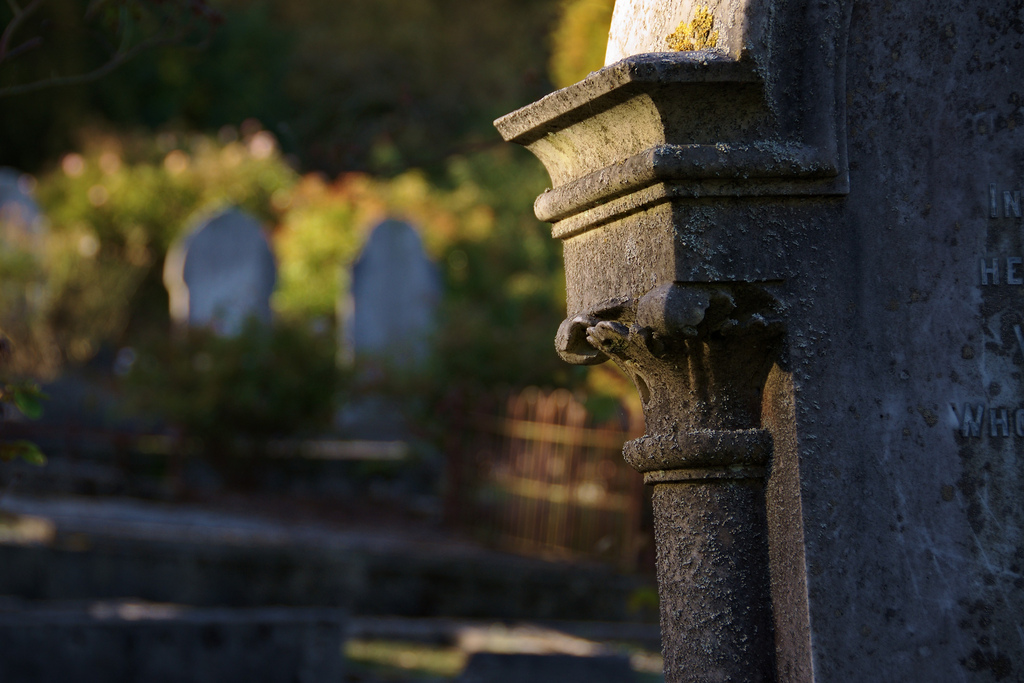
Old Tombstone

Wendell Berry, prolific and versatile poet, essayist, and fiction writer, and a dedicated activist, has lived for decades as a writer and small scale farmer on seventy-five acres in Henry County, Kentucky where his ancestors settled in the early 19th century.

Berry has written novels set there, including Hannah Coulter (2004) and A Place on Earth (1967). Along with his many books of poems – among them, Given: New Poems (2005) and The Selected Poems of Wendell Berry (1998) – he is the author, as well, of many collections of essays, including The Art of the Commonplace: Agrarian Essays of Wendell Berry (2002) and What Are People For? (1990). His many books of stories include That Distant Land: The Collected Stories of Wendell Berry (2002).

In 2010, he was awarded a National Humanities Medal. Today and in the days ahead, we will post several characteristically beautiful poems of his, beginning with “The Meadow”:

In the town’s graveyard the oldest plot now frees itself
of sorrow, the myrtle of the graves grown wild. The last
who knew the faces who had these names are dead.
and now the names fade, dumb on the stones, wild
as shadows in the grass, clear to the rabbit and the wren.
Ungrieved, the town’s ancestry fits the earth. They become
a meadow, their alien marble grown native as maple.

(From Collected Poems, 1957-1982 © 1984 by Wendell Berry. Reprinted with kind permission of North Point Press. Photo by Tomas Sobek.)

A Poem For Sunday

lincolnfuneral

From “Song of Myself” (1867) by Walt Whitman:

I have said that the soul is not more than the body,
And I have said that the body is not more than the soul,
And nothing, not God, is greater to one than one’s self is,
And whoever walks a furlong without sympathy walks to his own funeral
drest in his shroud,
And I or you pocketless of a dime may purchase the pick of the earth,
And to glance with an eye or show a bean in its pod confounds the learning
of all times,
And there is no trade or employment but the young man following it may
become a hero,
And there is no object so soft but it makes a hub for the wheel’d universe,
And I say to any man or woman, Let your soul stand cool
Composed before a million universes.
And I say to mankind, Be not curious about God,
For I am who am curious about each am not curious about God,
(No array of terms can say how much I am at peace about God
And about death.)

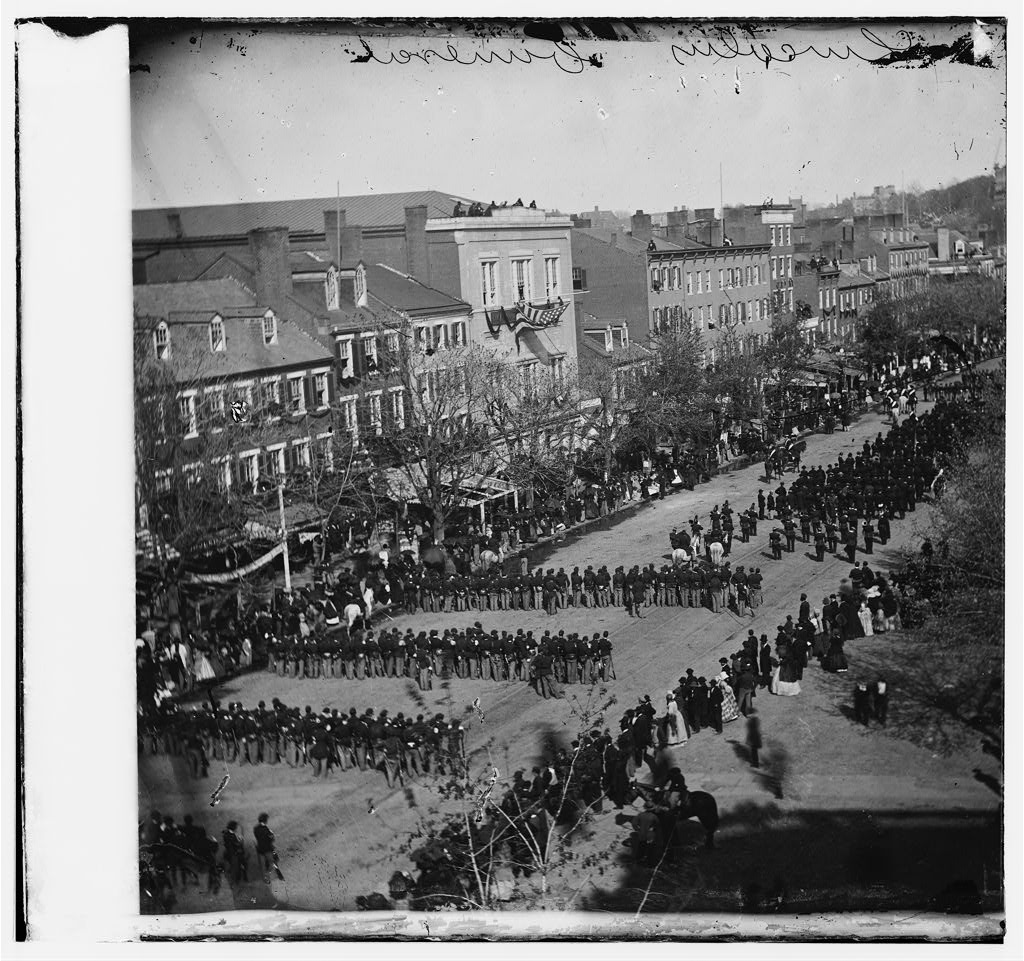
(Photo of Abraham Lincoln’s funeral procession on Pennsylvania Avenue, Washington, DC, via the Library of Congress)

A Poem For Saturday

section_header

From “Song of Myself” (1867) by Walt Whitman:

I think I could turn and live with animals, they are so placid and
self-contain’d;
I stand and look at them long and long.

They do not sweat and whine about their condition,
They do not lie awake in the dark and weep for their sins,
They do not make me sick discussing their duty to God:
Not one is dissatisfied, not one is demented with the mania of owning
things,
Not one kneels to another, nor to his kind that lived thousands of years ago,
Not one is respectable or unhappy over the whole earth.

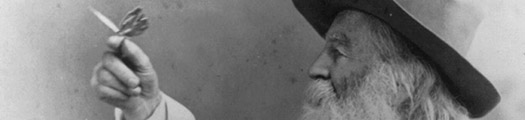
(Photo of Whitman holding a butterfly from the 1889 edition of Leaves of Grass)

A Poem For Independence Day

The Supreme Court struck down a key part of DOMA on Wednesday June 26, 2013 leaving behind a victory for gay marriage.

From Leaves of Grass, by Walt Whitman:

I hear America singing, the varied carols I hear;
Those of mechanics—each one singing his as it should be blithe and strong,
The carpenter singing his as he measures his plank or beam,
The mason singing his as he makes ready for work, or leaves off work,
The boatman singing what belongs to him in his boat, the deckhand singing on the
steamboat deck,
The shoemaker singing as he sits on his bench, the hatter singing as he stands,
The woodcutter’s song, the ploughboy’s on his way in the morning, or at noon
intermission or at sundown,
The delicious singing of the mother, or of the young wife at work, or of the girl
sewing or washing,
Each singing what belongs to him or her and to none else,
The day what belongs to the day—at night, the party of young
fellows, robust, friendly,
Singing with open mouths their strong melodious songs.

(Photo: The Gay Men’s Chorus of Washington, DC, including, Tim Allmond, 57, of Silver Spring, sings the National Anthem in front of the Supreme Court. The Supreme Court struck down a key part of DOMA on Wednesday June 26, 2013 leaving behind a victory for gay marriage. By Sarah L. Voisin/The Washington Post via Getty Images.)

A Poem For Sunday

oldbible

“Mood” by Countee Cullen:

I think an impulse stronger than my mind
May some day grasp a knife, unloose a vial,
Or with a little leaden ball unbind
The cords that tie me to the rank and file.
My hands grow quarrelsome with bitterness,
And darkly bent upon the final fray;
Night with its stars upon a grave seems less
Indecent than the too complacent day.

God knows I would be kind, let live, speak fair,
Requite an honest debt with more than just,
And love for Christ’s dear sake these shapes that wear
A pride that had its genesis in dust,–
The meek are promised much in a book I know
But one grows weary turning cheek to blow.

(From Countee Cullen: Collected Poems, The Library of America, 2013, ed. Major Jackson. Poems © Amistad Research Center, Tulane University. Reprinted by permission. Photo by Patrick Keller)