A Poem For Saturday

by Matthew Sitman

auntclara

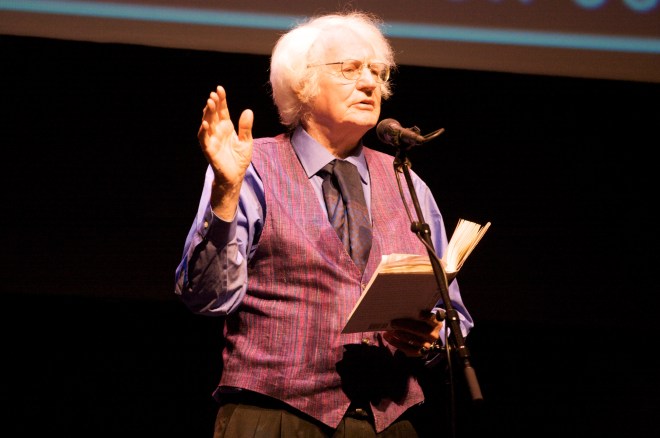
Here’s our second poem from Robert Bly, “Something to Do for Aunt Clara”:

There’s something we hold to in the morning. Maybe
It’s just the light, or the way the clock by the bed
Changes slowly, or how wall paintings gradually
Become clear, or the good weight of the eiderdown.
Maybe it’s all the books here in this room.
And the sound of dishes rattling, and the teenagers
Waking up, and a child muttering to herself. Now we have time
For the last few sips of coffee before we go to the funeral.

(From Talking into the Ear of a Donkey © 2011 by Robert Bly. Reprinted with permission of W.W.Norton & Company. Photo by Flickr user oveth)

A Poem For Friday

by Matthew Sitman

Poetry_Out_Loud_MN_finals_27

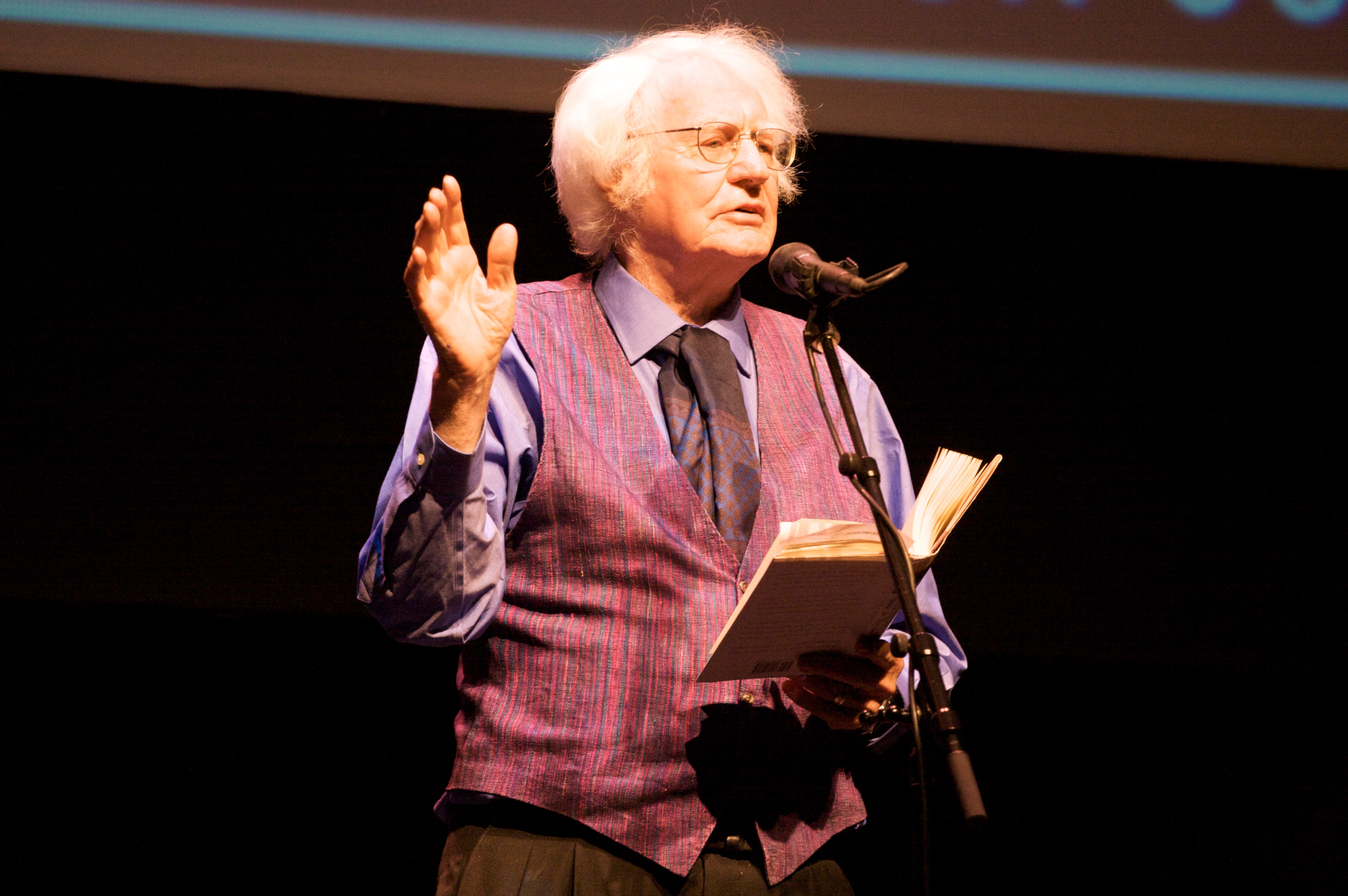
Alice Quinn, executive director of the Poetry Society of America and the Dish’s amazing poetry editor – she brings you the poems we feature every week – has shared the news that Robert Bly will be presented with the Poetry Society’s highest award, the Frost Medal, at the Society’s annual awards ceremony in their home at the National Arts Club on Gramercy Park in New York City tonight. Details about the ceremony, which is open to the public, can be found here.

To celebrate, we’ve decided to highlight Bly’s poetry this weekend. All three poems will be taken from his most recent book, Talking into the Ear of a Donkey, published by W.W.Norton & Company. Here’s the first of Bly’s poems we’ll be sharing, “The Teapot”:

That morning I heard water being poured into a teapot.
The sound was an ordinary, daily, cluffy sound.
But all at once, I knew you loved me.
An unheard-of-thing, love audible in water falling.

The citation for Bly’s award was written by his fellow poet, Billy Collins, and should provide a sense of the man and his work:

From rural Minnesota to the U.S.Navy, to Harvard, to Iowa, then to Norway on a Fullbright, then New York and back to Minnesota—these were a few of the stops in the travels of the younger Robert Bly, and whatever else he discovered along the way, he learned then to listen to poetic voices not yet clearly heard in America such as Vallejo, Trakl, Kabir, and Rumi. Thus began Bly’s mission to expand the vocabulary, the tonal range, and the imaginative freedom of American poetry by mixing into it the sounds and techniques of other countries and cultures. Jiminez, Neruda, Machado and others would not be so commonly recognized here today were it not for Bly’s enthusiasm for the good these writers could do to enrich our poetry, to correct “the wrong turn,” as he put it, our native poetry had taken before it found itself in a bloodless dead end.

But Bly’s  most persuasive urgings for a more exciting and direct poetry are found in his own poems, beginning in 1962 with Silence in the Snowy Fields. By example, he showed so many poets how to jump from the small into a mystery, how to shuttle quickly between the inner and outer world, how to leap over the fence of logic into strange new fields. So many of us watched with our reading lips moving and our mouths open as he hopped from a teapot to the assurance of love, from the touch of a son’s or daughter’s hand on his shoulder to ‘shining fish turning in the deep sea.’

The Frost Medal celebrates the many roles of Robert Bly—protester, anthologist, translator, myth-maker, story-teller, chimer, image-maker, champion of the father, and citizen of the world inside this world. But what gladdens every alert poet is the good news that their teacher, their liberator is being honored once again.

(From Talking into the Ear of a Donkey © 2011 by Robert Bly. Reprinted with permission of W.W.Norton & Company. Photo of Bly in 2009 by Nic McPhee, via Wikimedia Commons)

A Poem For Sunday

Caravaggio_-_The_Incredulity_of_Saint_Thomas

“Pied Beauty” by Gerard Manley Hopkins (1844-1889):

GLORY be to God for dappled things—
For skies of couple-colour as a brinded cow;
For rose-moles all in stipple upon trout that swim;
Fresh-firecoal chestnut-falls; finches’ wings;
Landscape plotted and pieced—fold, fallow, and plough;
And áll trádes, their gear and tackle and trim.

All things counter, original, spare, strange;
Whatever is fickle, freckled (who knows how?)
With swift, slow; sweet, sour; adazzle, dim;
He fathers-forth whose beauty is past change:
Praise him.

(“The Incredulity of Saint Thomas” by Caravaggio, via Wikimedia Commons)

A Poem For Saturday

horse2night

“Bluegrass” by Carl Phillips:

And he told me nowhere was a lake that,
any day now, he’d surely drown in. What’s the right
answer to a thing like that?

*

So we just stood there,
the two of us—shaking a bit in the cold,
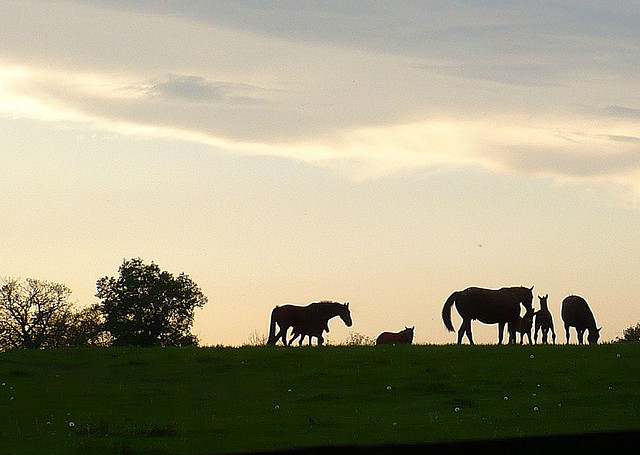
but pretty still, mostly. Horses in a field of moonlight.

(Forthcoming in Silverchest: Poems by Carl Phillips, to be published April 2nd by Farrar, Straus and Giroux, LLC. Copyright © 2013 by Carl Phillips. All rights reserved. Photo by Flickr user zenera)

A Poem For Good Friday

Eccehomo1

“Petition” by Franz Wright:

Kneeling
at the foot of the universe

I ask

from this body
in confusion

and pain (a condition

which You
may recall)

Clothed now in light
clothed in abyss, at the prow
of the desert
killed
Into everywhereness—

have mercy

Mercy on us all

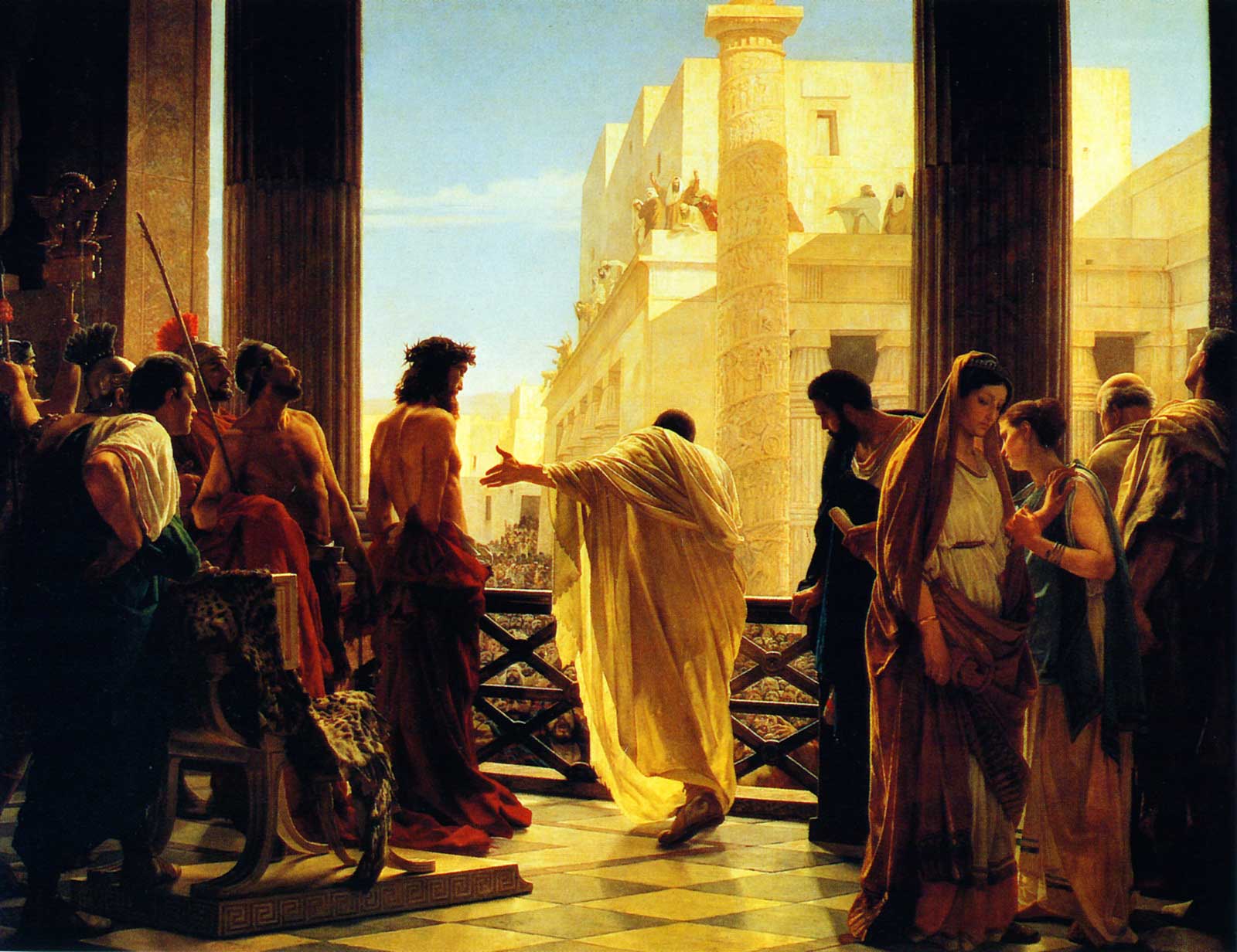
(From God’s Silence by Franz Wright © 2006 by Franz Wright. Reprinted with permission of Alfred A. Knopf, Publishers. Image: Antonio Ciseri’s depiction of Pontius Pilate presenting a scourged Christ to the people, 1871, via Wikimedia Commons)

A Poem For Sunday

Mallard Drake & Hen, no watermark

“Spring Uncovered” by May Swenson:

Gone the scab of ice that kept it snug,
the lake is naked.

Skins of cloud on torn blue:
sky is thin.

A cruelty, the ribs of trees
ribboned by sun’s organdy.

Forsythia’s yellow, delicate rags,
flip in the wind.

Wind buckles the face of the lake;
it flinches under a smack of shot.

Robbed of stoic frost, grass
bleeds from gaffs of the wind.

Rock, ridging the lake,
unchapped of its snowcloth, quakes.

But autumn fruits upon the water,
Plumage of plum, and grape, and pumpkin bills:

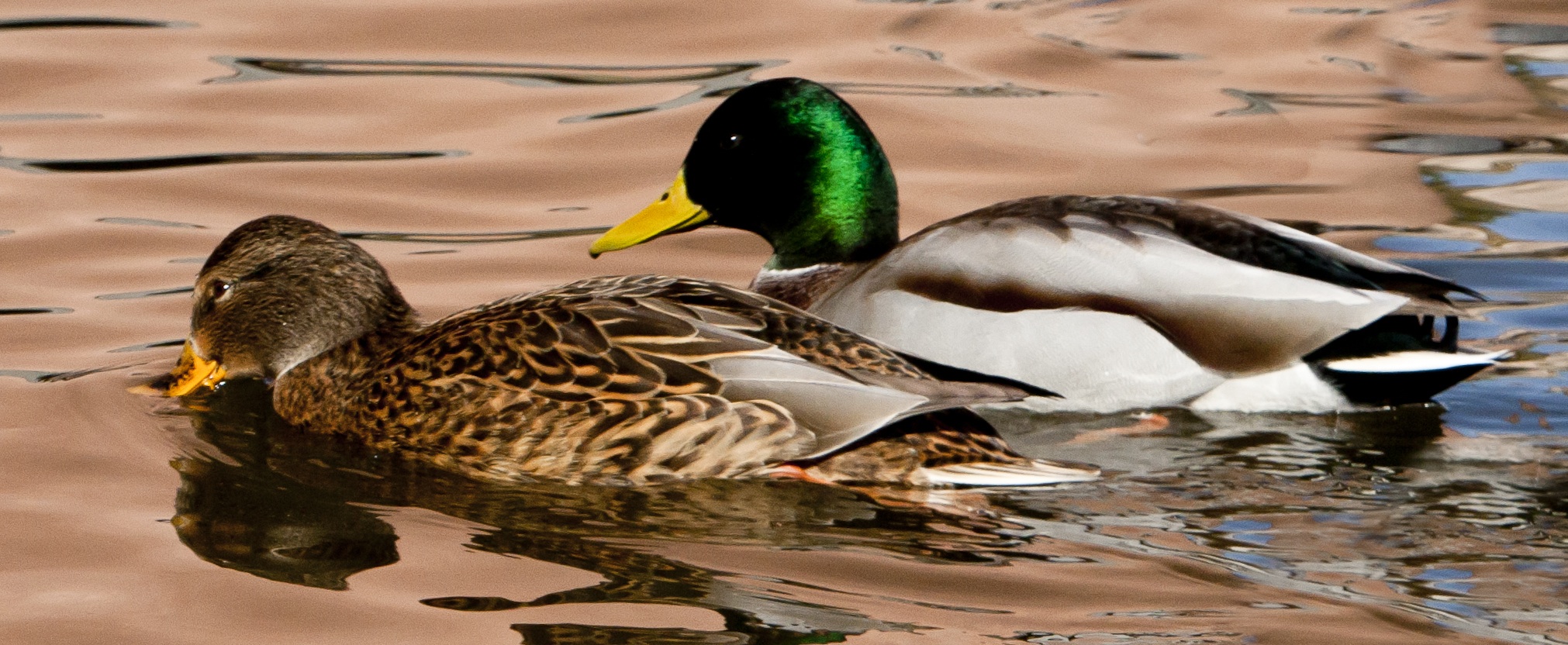
Two mallards ride, are sunny baskets;
they bear ripe light.

And a grackle, fat as burgundy,
gurgles on a limb.

His bottle-glossy feathers
shrug off the wind.

(From May Swenson: Collected Poems, Library of America © 2013. Reprinted with the permission of  The Literary Estate of May Swenson. All rights reserved. Photograph © 2013 Mark Seth Lender)

A Poem For Saturday

daisy

“Shudder of a Daisy” by Gennady Aygi (1934-2006):

little cloud! –

would once the moment
(invisibility-visibility)
of my death thus be shaken –

(what then
shall I choose
more dear):

wind – jewel-like – fleeting! –

as in flight
awakened in me – first of all:

freshness! –

of absence of memory

(Translated, from the Russian, by Peter France. Reprinted from Field-Russia: Poems by Gennady Aygi © 2001 by Gennady Aygi. Translation © 2007 by Peter France. Reprinted with permission of New Directions Publishing Corporation. Photo by Flickr user peter pearson)

A Poem For Sunday

“A Glass of Beer” by James Stephens:

The lanky hank of a she in the inn over there
Nearly killed me for asking the loan of a glass of beer;
May the devil grip the whey-faced slut by the hair,
And beat bad manners out of her skin for a year.

That parboiled ape, with the toughest jaw you will see
On virtue’s path, and a voice that would rasp the dead,
Came roaring and raging the minute she looked at me,
And threw me out of the house on the back of my head!

If I asked her master he’d give me a cask a day;
But she, with the beer at hand, not a gill would arrange!
May she marry a ghost and bear him a kitten, and may
The High King of Glory permit her to get the mange.”

(Adapted from the Irish of Daithi Ó Bruadair, c. 1625-98.)

A Poem For Saturday

William_Butler_Yeats

“A Coat” by William Butler Yeats (1865-1939):

I made my song a coat
Covered with embroideries
Out of old mythologies
From heel to throat;
But the fools caught it,
Wore it in the world’s eyes
As though they’d wrought it.
Song, let them take it,
For there’s more enterprise in walking naked.

(Photo: William Butler Yeats in 1933, via Wikimedia Commons)

A Poem For Sunday

liquor

“Poetics” by August Kleinzahler:

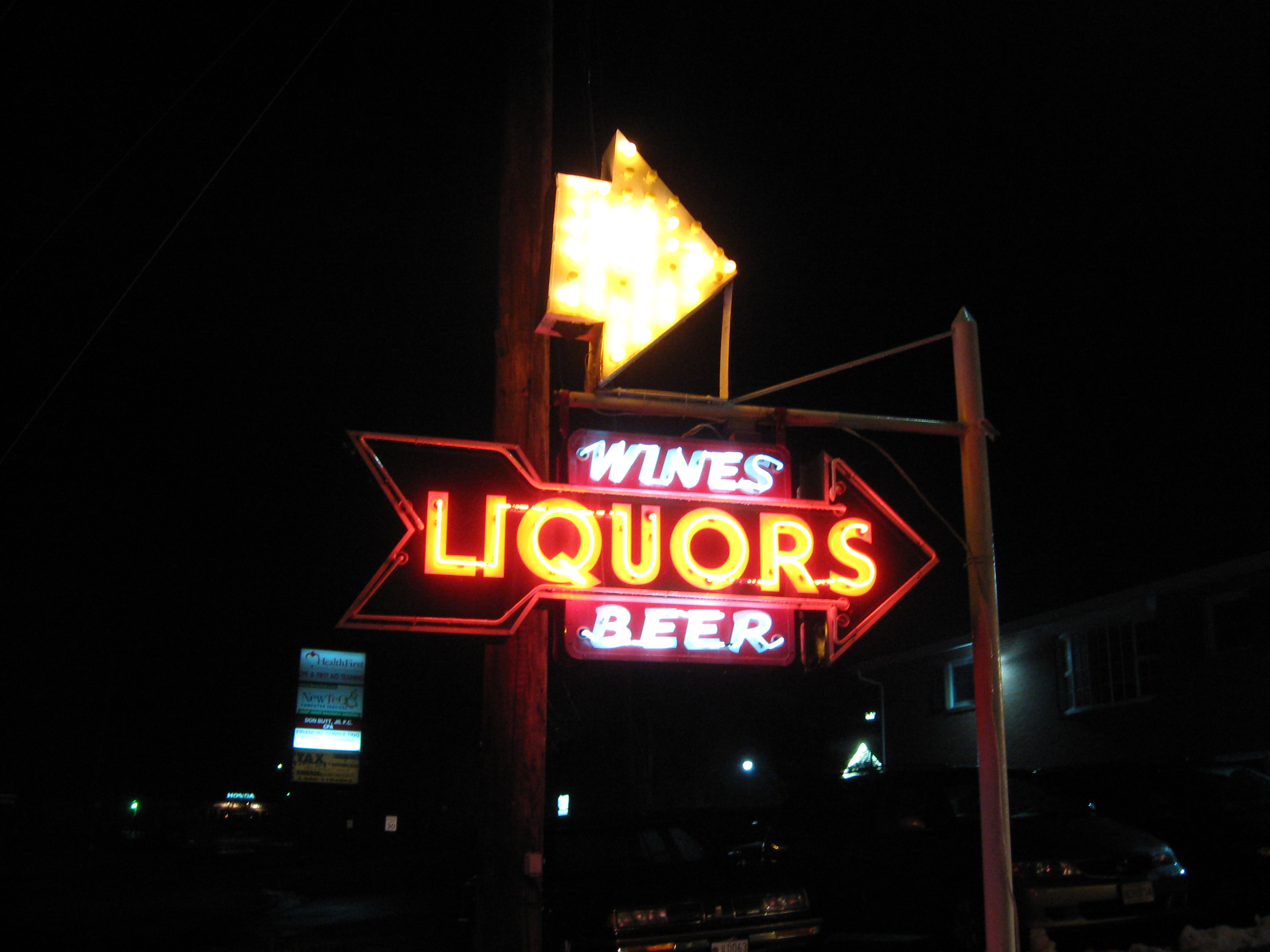
I have loved the air outside Shop-Rite Liquor
on summer evenings
better than the Marin hills at dusk
lavender and gold
stretching miles to the sea.

At the junction, up from the synagogue
a weeknight, necessarily
and with my father—
a sale on German beer.

Air full of living dust:
bus exhaust, airborne grains of pizza crust
wounded crystals
appearing, disappearing
among streetlights and unsuccessful neon.

(From Sleeping It Off in Rapid City: Poems, New and Selected © 2008 by August Kleinzahler. Reprinted by permission of Farrar, Straus, and Giroux. Photo by Flickr user guy schmidt)