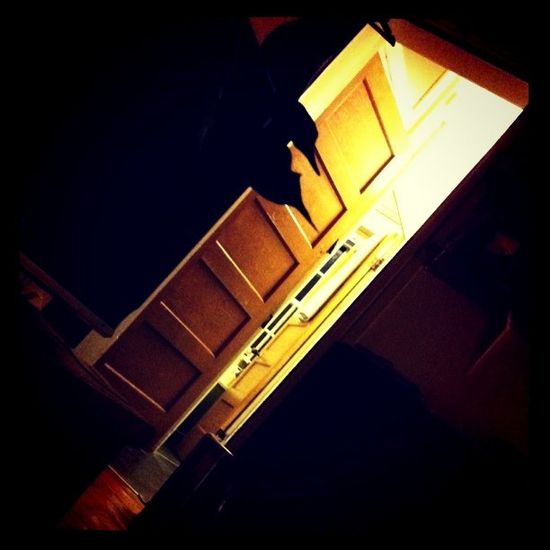
A Poem For Saturday

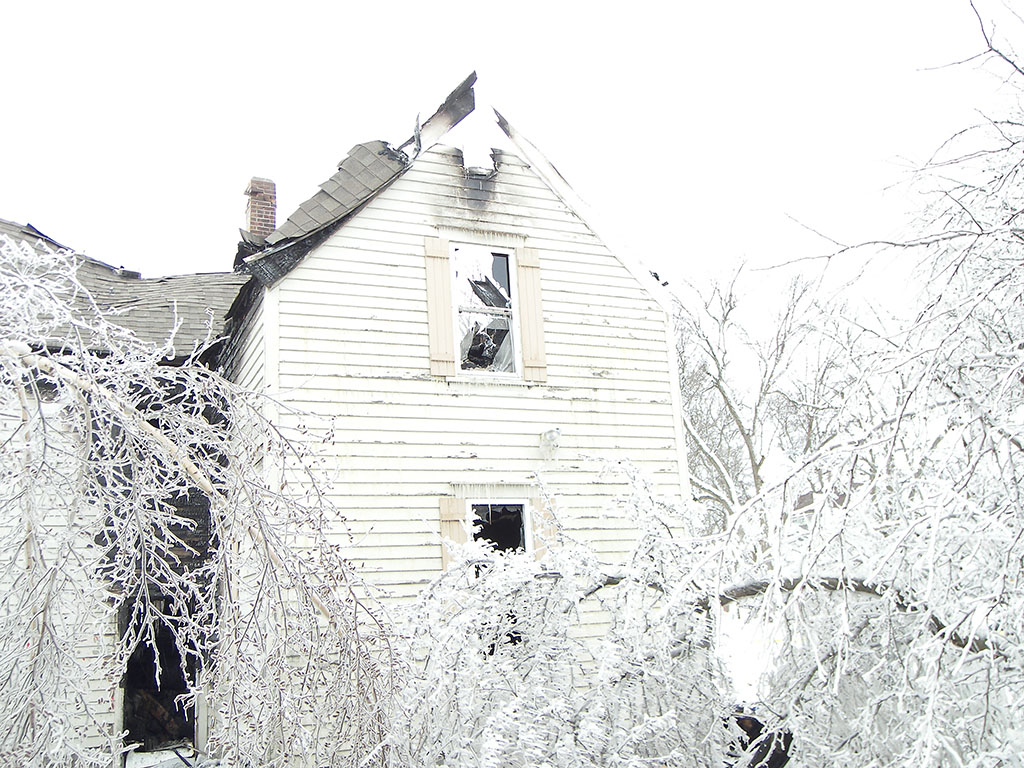
housefire

“Years of Reconciliation” by Dionisio D. Martinez:

The mime troupe is in town again. They want to reconstruct us
bit by bit.

This is where the house went up in flames.

This is how we walked away, trying to salvage nothing.

That’s us, building our separate houses in the aftermath.

There were ashes to be swept away, years of debris, pages and
pages of unresolved music.

Here we are, looking out of our respective windows at the
space between us.

Of all the illusions, forgetting is the most dangerous.

(From Bad Alchemy by Dionisio D.Martinez © 1995 Dionisio D. Martinez. Used by permission of W.W. Norton & Company. Photo by Flickr iowa_spirit_walker)

A Poem For Thursday

bourbon

“Time Is Polyphonic” by Ken Chen:

In those days after his father died, she came to learn that
when she could no longer hear what he was doing,
when she stopped hearing the turn of a page or typing in the other room
that he could only be weeping to himself. Sometimes she would wake in the
middle of the night and see the kitchen light on
and infer. Many years later, he sees a picture of himself:
so young and old and penitent that he feels a strange fondness for this other
person. He wonders half-humorously if he had grown wise through grief
(he is not wise now) though if anyone had asked, he would
have said, ‘I guess I was depressed. I don’t think I learned anything.’
They are in the bedroom. He passes
her a glass of bourbon and asks her what he was like then.
She says, ‘What, seriously?’
She sees from the whimsical look in his eye
that he no longer needed to be defended.
She takes a cold sip. ‘You crawled into yourself.
I was lonely sometimes.
You snapped at me a lot.’

(From Juvenilia, Yale University Press © 2010 by Ken Chen, Executive Director of the Asian American Writers’ Workshop. Photo by Flickr user opethpainter)

A Poem For Sunday

Hopkins

“In the Valley of the Elwy” by Gerard Manley Hopkins (1844-1899):

 I remember a house where all were good
To me, God knows, deserving no such thing:
Comforting smell breathed at very entering,
Fetched fresh, as I suppose, off some sweet wood.

That cordial air made those kind people a hood
All over, as a bevy of eggs the mothering wing
Will, or mild nights the new morsels of Spring:
Why, it seemed of course; seemed of right it should.

Lovely the woods, waters, meadows, combes, vales,
All the air things wear that build this world of Wales
Only the inmate does not correspond:

God, lover of souls, swaying considerate scales,
Complete thy creature dear O where it fails,
Being mighty a master, being a father and fond.

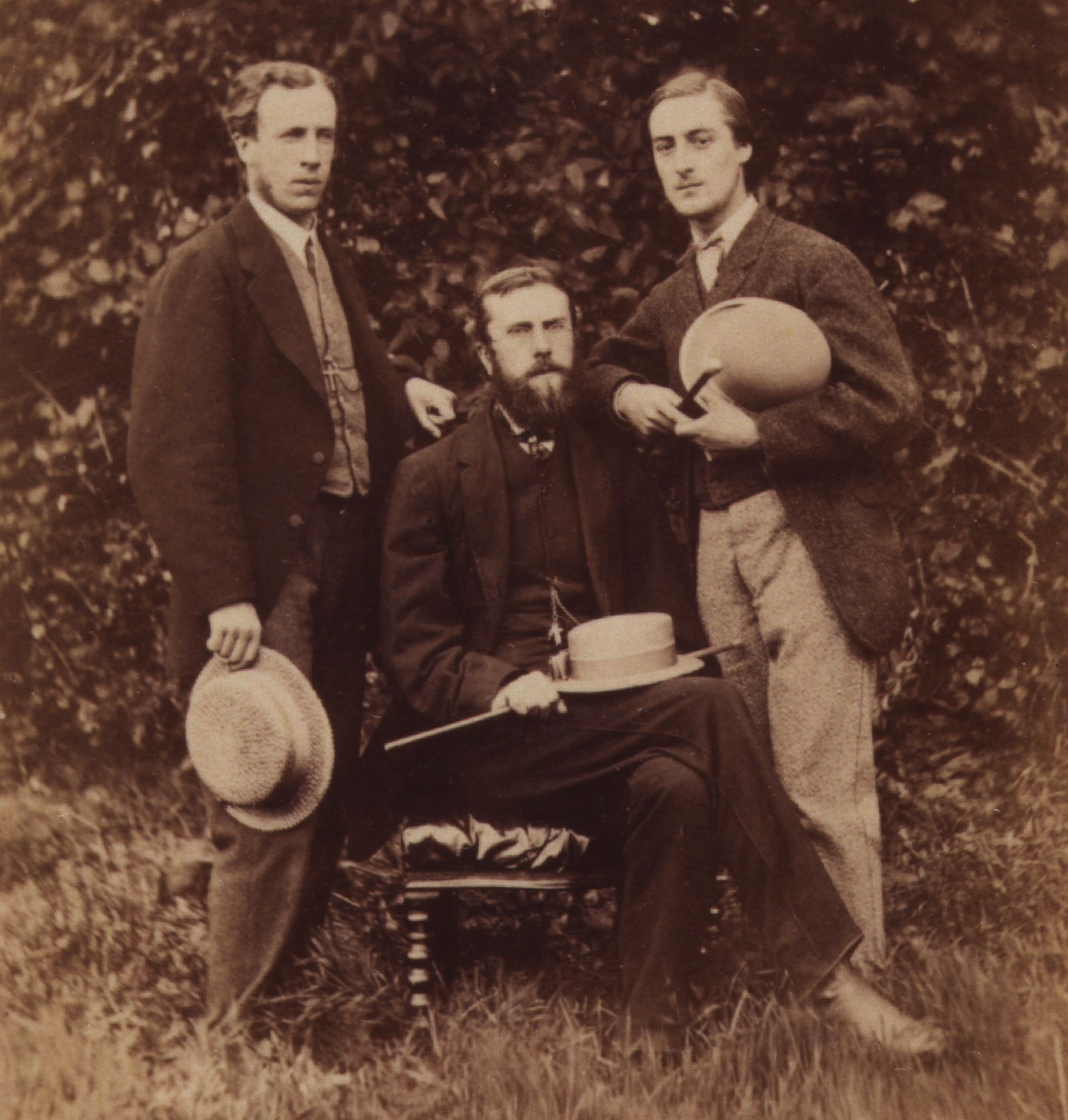
(Photo including Hopkins, on the far right,  circa 1866, via Wikimedia Commons)

A Poem For Saturday

6a00d83451c45669e2017ee823d65d970d-550wi

“Winter Carnival in a Small Flemish Town” by Emily Fragos:

On the iced-over, metal-gray pond, skaters are held
At beautiful angles by water and air. Such suppleness
Of limbs, spines, strong knees, and light, tilting heads
To balance their spinning bodies. Two boys are facing off;
One, about to touch the other’s nerve, sure to bring fists
Or tears, is pulling back from the brink he’ll never know.
The requisite music, a man with his lute. The selling of warm ale
In clay jugs and of spicy cakes. Under a huge, white ocean of sky,
A cow with frozen udders stands right of center, gazing past us
Like a worn-out party guest, listening to the moans of the winter dead:
Take shelter, dear people. Swathe your children, bolt your doors,
And stoke y our fires. Get off that softening pond. Quick!

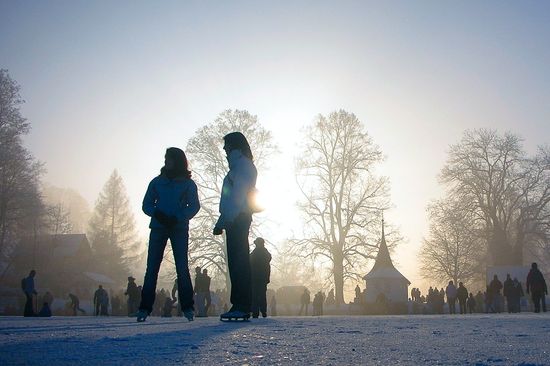
(From Hostage: New & Selected Poems © 2011 by Emily Fragos. Reprinted with permission from The Sheep Meadow Press. Photo by Flickr user Kecko)

A Poem For Sunday

6a00d83451c45669e2017ee7e6678c970d-550wi

“Another Song” by Samuel Daniel (1562-1619):

   Are they shadowes that we see?
And can shadowes pleasure give?
Pleasures onely shadowes bee
Cast by bodies we conceive,
And are made the thinges we deeme,
In those figures which they seeme.
But these pleasures vanish fast,
Which by shadowes are exprest:
Pleasures are not, if they last,
In their passing, is their best.
Glory is most bright and gay
In a flash, and so away.
Feed apace then greedy eyes
On the wonder you behold.
Take it sodaine as it flies
Though you take it not to hold:
When your eyes have done their part,
Thought must length it in the hart.

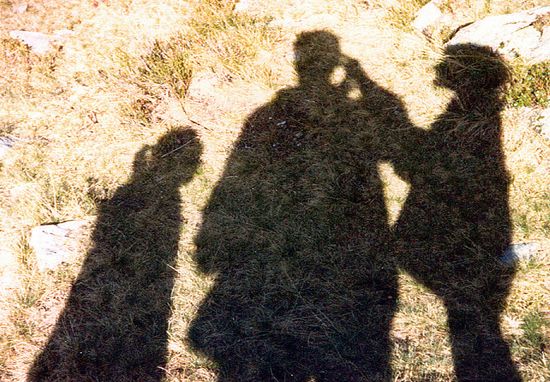
(From Daniel’s Tethy’s Festivall, published in 1610. Photo by Flickr user angelocesare)

A Poem For Saturday

6a00d83451c45669e2017d40726417970c-550wi

“Unfinished Sonnet” by Mary Stuart, Queen of Scots (1542-1587):

O you High Gods, have pity, and let me find
Somehow some incontestable way to prove
(So that he must believe in it) my love
And this unwavering constancy of mind!
Alas, he rules already with no let
A body and a heart which must endure
Pain and dishonor and worse things yet.

For him I would account as nothing those
Whom I named friends, and put my faith in foes:
For him I’d let the round world perish, I
Who have hazarded both conscience and good name,
And, to advance him, happily would die. . . .
What’s left to prove my love always the same?

(Painting of Mary, Queen of Scots in “white mourning” attire, circa 1559–1560, by François Clouet via Wikimedia Commons)

Poem For The Day

What else?

One sun rose on us today, kindled over our shores,
peeking over the Smokies, greeting the faces
of the Great Lakes, spreading a simple truth
across the Great Plains, then charging across the Rockies.
One light, waking up rooftops, under each one, a story
told by our silent gestures moving behind windows.

My face, your face, millions of faces in morning’s mirrors,
each one yawning to life, crescendoing into our day:
pencil-yellow school buses, the rhythm of traffic lights,
fruit stands: apples, limes, and oranges arrayed like rainbows
begging our praise. Silver trucks heavy with oil or paper — bricks or milk, teeming over highways alongside us,
on our way to clean tables, read ledgers, or save lives — to teach geometry, or ring up groceries as my mother did
for twenty years, so I could write this poem.

All of us as vital as the one light we move through,
the same light on blackboards with lessons for the day:
equations to solve, history to question, or atoms imagined,
the “I have a dream” we keep dreaming,
or the impossible vocabulary of sorrow that won’t explain
the empty desks of twenty children marked absent
today, and forever. Many prayers, but one light
breathing color into stained glass windows,
life into the faces of bronze statues, warmth
onto the steps of our museums and park benches
as mothers watch children slide into the day.

One ground. Our ground, rooting us to every stalk
of corn, every head of wheat sown by sweat
and hands, hands gleaning coal or planting windmills
in deserts and hilltops that keep us warm, hands
digging trenches, routing pipes and cables, hands
as worn as my father’s cutting sugarcane
so my brother and I could have books and shoes.

The dust of farms and deserts, cities and plains
mingled by one wind — our breath. Breathe. Hear it
through the day’s gorgeous din of honking cabs,
buses launching down avenues, the symphony
of footsteps, guitars, and screeching subways,
the unexpected song bird on your clothes line.

Hear: squeaky playground swings, trains whistling,
or whispers across cafe tables, Hear: the doors we open
for each other all day, saying: hello, shalom,
buon giorno, howdy, namaste, or buenos días
in the language my mother taught me — in every language
spoken into one wind carrying our lives
without prejudice, as these words break from my lips.

One sky: since the Appalachians and Sierras claimed
their majesty, and the Mississippi and Colorado worked
their way to the sea. Thank the work of our hands:
weaving steel into bridges, finishing one more report
for the boss on time, stitching another wound
or uniform, the first brush stroke on a portrait,
or the last floor on the Freedom Tower
jutting into a sky that yields to our resilience.

One sky, toward which we sometimes lift our eyes
tired from work: some days guessing at the weather
of our lives, some days giving thanks for a love
that loves you back, sometimes praising a mother
who knew how to give, or forgiving a father
who couldn’t give what you wanted.

We head home: through the gloss of rain or weight
of snow, or the plum blush of dusk, but always — home,
always under one sky, our sky. And always one moon
like a silent drum tapping on every rooftop
and every window, of one country — all of us —
facing the stars
hope — a new constellation
waiting for us to map it,
waiting for us to name it — together

A Poem For Sunday

6a00d83451c45669e2017ee79cce49970d-800wi

“Fiction” by Mark Strand:

I think of the innocent lives
Of people in novels who know they’ll die
But not that the novel will end. How different they are
From us. Here, the moon stares dumbly down,
Through scattered clouds, onto the sleeping town,
And the wind rounds up the fallen leaves,
And somebody—namely me—deep in his chair,
Riffles the pages left, knowing there’s not
Much time for the man and woman in the rented room,
For the red light over the door, for the iris
Tossing its shadow against the wall; not much time
For the soldiers under the trees that line
The river, for the wounded being hauled away
To the cities of the interior where they will stay;
The war that raged for years will come to a close,
And so will everything else, except for a presence
Hard to define, a trace, like the scent of grass
After a night of rain or the remains of a voice
That lets us know without spelling it out
Not to despair; if the end is come, it too will pass.

(From The Continuous Life by Mark Strand © 1990 by Mark Strand. Used by permission of Alfred A. Knopf, a division of Random House. Photo by Flickr user BinaryApe)

A Poem For Saturday

Saturday_Poem

“Categories of Understanding” by Catherine Barnett:

I’m studying the unspoken.
“What?” my son asks.
“What are you  looking at?”
But there is no explaining.
I can only speak the way light
falls, the way the cotton sheet
lays itself over his sleeping or resting
or dissolving body, touching him with
its ephemera, its oblivion.

(From The Game of Boxes by Catherine Barnett © 2012 by Catherine Barnett. Reprinted by permission of Graywolf Press. Photo by Flickr user quinn.anya)

A Poem For Tuesday

Doorway

"From the Doorway" by Catherine Barnett:

The night is covered
in books and papers and child

and I like having him here,
sleeping loose and uninhibited.

The room fills with sleep
and the poor dummy heart

already straining at my seams
makes the tearing sound.

Fear. Or laughter.
Love,

The strangest
of all catastrophes.

(From The Game of Boxes: Poems © 2012 by Catherine Barnett. Reprinted by permission of Graywolf Press. Photo by Flickr user Hannah & Noah)