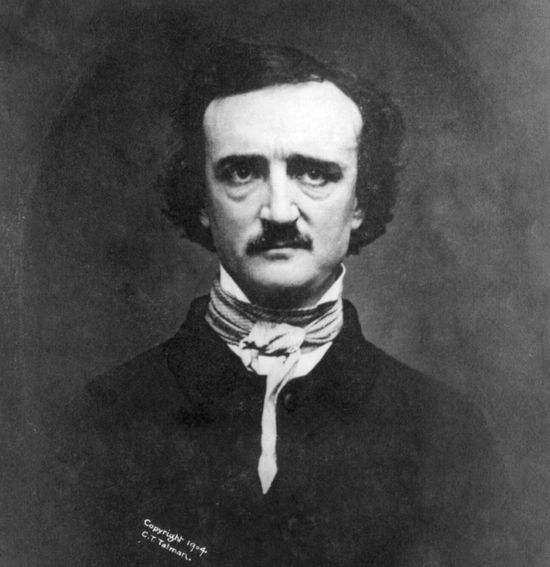
From childhood’s hour I have not been As others were; I have not seen As others saw; I could not bring My passions from a common spring. From the same source I have not taken My sorrow; I could not awaken My heart to joy at the same tone; And all I loved, I loved alone. Then—in my childhood, in the dawn Of a most stormy life—was drawn From every depth of good and ill The mystery which binds me still: From the torrent or the fountain, From the red cliff of the mountain, From the sun that round me rolled In its autumn tint of gold, From the lightning in the sky As it passed me flying by, From the thunder and the storm, And the cloud that took the form (When the rest of Heaven was blue) Of a demon in my view.
O José can you see… that’s how I sang it, when I was a cubanito in Miami, and América was some country in the glossy pages of my history book, someplace way north, everyone white, cold, perfect. This Land is my Land, so why didn’t I live there, in a brick house with a fireplace, a chimney with curlicues of smoke. I wanted to wear breeches and stockings to my chins, those black pilgrim shoes with shiny gold buckles. I wanted to eat yams with the Indians, shake hands with los negros, and dash through snow I’d never seen in a one-horse hope-n-say? I wanted to speak in British, say really smart stuff like fours core and seven years ago or one country under God, in the visible. I wanted to see that land with no palm trees, only the strange sounds of flowers like petunias, peonies, impatience, waiting to walk through a door someday, somewhere in God Bless America and say, Lucy, I’m home, honey. I’m home.
Previous Dish coverage of Blanco, the poet for Obama’s second inauguration, here.
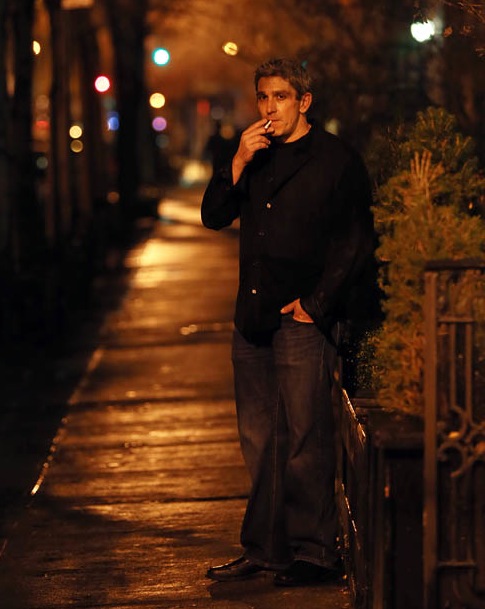
This week saw the announcement of Richard Blanco, who is both Cuban-American and gay, as the Inaugural poet. Katy Waldman describes the task before him as perhaps "the trickiest of all" for a poet, "requiring a kind of ringing, triumphal, sentimental tone that seems at odds with the evasions and double-backs of so much good poetry." She elaborates:
Blanco must address not only Obama but the entire world. He confided in an NPR interview that his main hurdle will be to "maintain sort of that sense of intimacy and that conversational tone in a poem that obviously has to sort of encompass a whole lot more than just my family and my experience." Walking such a tightrope—the poet as creative individual, the poet as mouthpiece for something bigger—should test Blanco in interesting ways, especially given that his self-image as an outsider provides a through line for much of his work.
Well he couldn't be worse than Maya Angelou. In an interview with the Poetry Society of America, Blanco described how he approaches politics:
Being a Cuban-American from Miami many people presume that I am a hard-core right-wing conservative; on the other hand, as a queer poet, many immediately think I am a total left-wing liberal.
I resent these assumptions; and—like most artists, I suppose—I rebel against expectations and stereotypes…My poetry and I are not exclusively aligned with any one particular group—Latino, Cuban, queer, or "white." Though I embrace and respect each one, I prefer wading in the middle where I can examine and question all sides of all "stories."
I was inclined to say that my poetry is apolitical, but thinking about it more carefully here, instead I would say my work may be pan-political. By this I mean that I am interested in many political angles, often contradictory ones, whether describing my destitute Tía Ida living in a Cuba crippled by Socialism, or the broken spirit of a small town in Italy erased by run-a-muck Capitalism. Regardless, one thing is clear to me: rather than "talk" politics in my work, I prefer to "show" the consequences of politics through portraits of people and places. I am more interested in the effects than the causes, in discovering how we survive and make sense of all the suffering the world throws in our faces over and over again, rather than finding a politicized reason for the chaos or pointing a finger at someone or something. For me, it's not about finding blame or solutions; it's narrating the stories of survival and, hopefully, triumph of the human spirit.
in the great house to which I belong only a table remains, surrounded by boundless marshland the moon shines on me from different corners the skeleton’s fragile dream still stands in the distance, like an undismantled scaffold and there are muddy footprints on the blank paper the fox that has been fed for many years with a flick of his fiery brush flatters and wounds me
and there is you, of course, sitting facing me the fair-weather lightning that gleams in your palm turns into firewood turns into ash
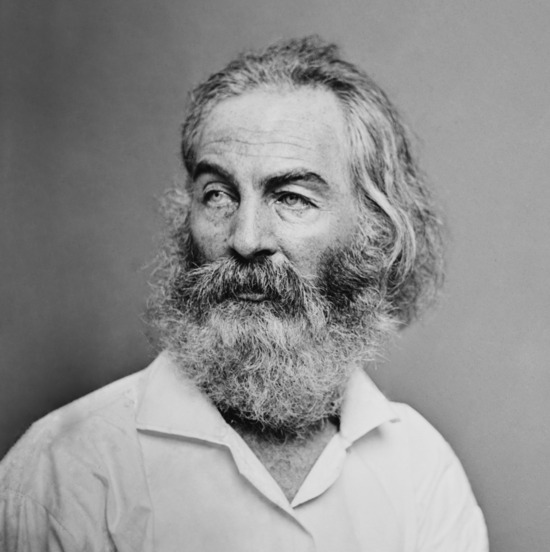
Full of life now, compact, visible, I, forty years old, the eighty-third year of the States, To one a century hence or any number of centuries hence, To you yet unborn these, seeking you.
When you read these I that was visible am become in- visible, Now it is you, compact, visible, realizing my poems seek- ing me, Fancying how happy you were if I could be with you and become your comrade; Be it as if I were with you. (Be not too certain but I am now with you.)
We weren’t supposed to touch the guns lined up under our parents’ bed, rifles for hunting, pistols for protecting our home. The carpet was burning lava, we’d dangle our feet, the barrels mysterious beneath us. Headstands on the floor, inches from accident, from sadness, and always we knew not to tell. Nobody home, I lay my body the length of the bed, all the barrels facing out. I pressed my back against their silent ends, metal tips poking neck and spine—a firing squad! a stickup! Sometimes I’d face them, a microphone, or love their tiny lips—tongue-deep between my teeth—practicing the first kiss the way my sister used her fist.
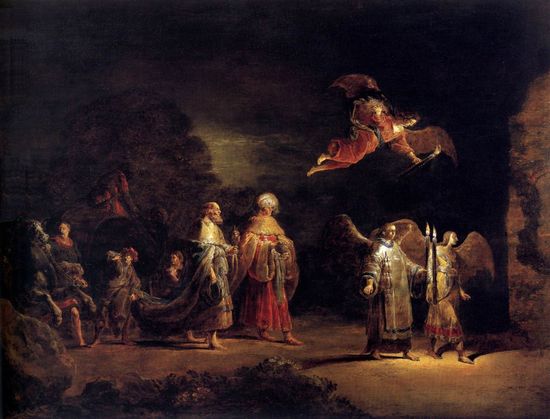
Now as at all times I can see in the mind's eye, In their stiff, painted clothes, the pale unsatisfied ones Appear and disappear in the blue depth of the sky With all their ancient faces like rain-beaten stones, And all their helms of silver hovering side by side, And all their eyes still fixed, hoping to find once more, Being by Calvary's turbulence unsatisfied, The uncontrollable mystery on the bestial floor.
(Image: "Journey of the Three Magi to Bethlehem" by Leonaert Bramer, circa 1639, via Wikimedia Commons)
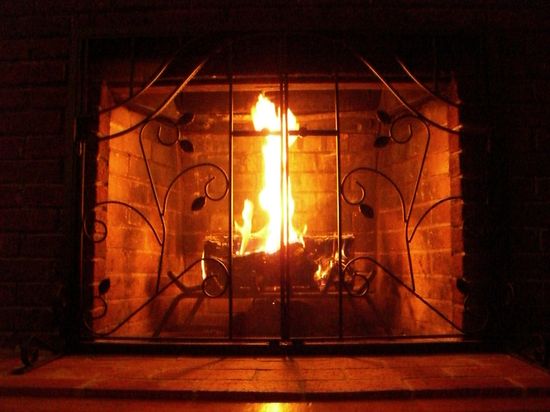
Christmas Eve, and twelve of the clock. "Now they are all on their knees," An elder said as we sat in a flock By the embers in hearthside ease. We pictured the meek mild creatures where They dwelt in their strawy pen, Nor did it occur to one of us there To doubt they were kneeling then. So fair a fancy few would weave In these years! Yet, I feel, If someone said on Christmas Eve, "Come; see the oxen kneel "In the lonely barton by yonder coomb Our childhood used to know," I should go with him in the gloom, Hoping it might be so.
I am no priest of crooks nor creeds, For human wants and human needs Are more to me than prophets’ deeds; And human tears and human cares Affect me more than human prayers.
Go, cease your wail, lugubrious saint! You fret high Heaven with your plaint. Is this the “Christian’s joy” you paint? Is this the Christian’s boasted bliss? Avails your faith no more than this?
Take up your arms, come out with me, Let Heav’n alone; humanity Needs more and Heaven less from thee. With pity for mankind look ‘round; Help them to rise—and Heaven is found.
The little toy dog is covered with dust, But sturdy and staunch he stands, And the little toy soldier is red with rust, And his musket moulds in his hands. Time was when the little toy dog was new, And the soldier was passing fair; And that was the time when our Little Boy Blue Kissed them and put them there.
“Now, don’t you go till I come,” he said, “And don’t you make any noise!” So, toddling off to his trundle-bed, He dreamt of the pretty toys; And, as he was dreaming, an angel song Awakened our Little Boy Blue— Oh! The years are many, the years are long, But the little toy friends are true!
Aye, faithful to Little Boy Blue they stand, Each in the same old place— Awaiting the touch of a little hand, The smile of a little face; And they wonder, as waiting the long years through In the dust of the little chair, What has become of our Little Boy Blue, Since he kissed them and put them there.


 The Dish