A Poem For Sunday

Water

“A Brief for the Defense” by Jack Gilbert:

Sorrow everywhere. Slaughter everywhere. If babies
are not starving someplace, they are starving
somewhere else. With flies in their nostrils.
But we enjoy our lives because that’s what God wants.
Otherwise the mornings before summer dawn would not
be made so fine. The Bengal tiger would not
be fashioned so miraculously well. The poor women
at the fountain are laughing together between
the suffering they have known and the awfulness
in their future, smiling and laughing while somebody
in the village is very sick. There is laughter
every day in the terrible streets of Calcutta,
and the women laugh in the cages of Bombay.
If we deny our happiness, resist our satisfaction,
we lessen the importance of their deprivation.
We must risk delight. We can do without pleasure,
but not delight. Not enjoyment. We must have
the stubbornness to accept our gladness in the ruthless
furnace of this world. To make injustice the only
measure of our attention is to praise the Devil.
If the locomotive of the Lord runs us down,
we should give thanks that the end had magnitude.
We must admit there will be music despite everything.
We stand at the prow again of a small ship
anchored late at night in the tiny port
looking over to the sleeping island: the waterfront
is three shuttered cafes and one naked light burning.
To hear the faint sound of oars in the silence as a rowboat
comes slowly out and then goes back is truly worth
all the years of sorrow that are to come.

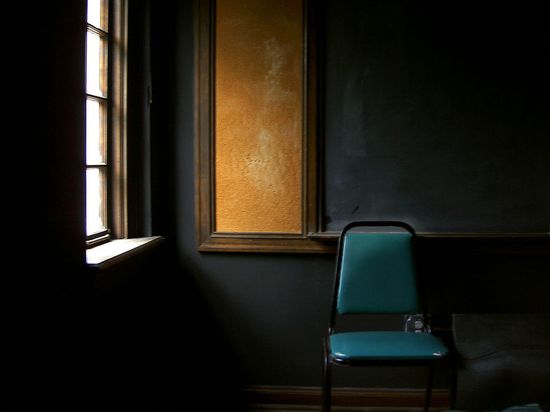
(Reprinted from Collected Poems © 2012 by Jack Gilbert. Used by permission of Alfred A. Knopf, a division of Random House. Photo by Flickr user the_toe_stubber)

A Poem For Saturday

This embed is invalid

This week, the great American poet, Jack Gilbert, passed away at age 87. John Penner's LA Times essay on Gilbert summarized the man and his writing this way:

Of Gilbert’s favored words, probably none conveys better the poet–his life, his work, his ambitions for both–than magnitude. "Poetry, for me," he declares in a 1965 essay, "is a witnessing to magnitude." In poems he sings of a "magnitude of pain, of being that much alive," and "a magnitude of beauty that allows me no peace."

Read his Paris Review interview here. When asked about the subjects of his poems, he responded not just with a comment on his literary preoccupations, but with a meditation on living:

Those I love. Being. Living my life without being diverted into things that people so often get diverted into. Being alive is so extraordinary I don’t know why people limit it to riches, pride, security—all of those things life is built on. People miss so much because they want money and comfort and pride, a house and a job to pay for the house. And they have to get a car. You can’t see anything from a car. It’s moving too fast. People take vacations. That’s their reward—the vacation. Why not the life? Vacations are second-rate. People deprive themselves of so much of their lives—until it’s too late.

This spring the Dish featured his remarkable poem, "Tear It Down," here. Our poetry editor, Alice Quinn, remembered him here. This weekend, to honor Gilbert's work, we'll be running three of his poems. The first of these is "Failing and Flying":

Everyone forgets that Icarus also flew.
It’s the same when love comes to an end,
or the marriage fails and people say
they knew it was a mistake, that everybody
said it would never work. That she was
old enough to know better. But anything
worth doing is worth doing badly.
Like being there by that summer ocean
on the other side of the island while
love was fading out of her, the stars
burning so extravagantly those nights that
anyone could tell you they would never last.
Every morning she was asleep in my bed
like a visitation, the gentleness in her
like antelope standing in the dawn mist.
Each afternoon I watched her coming back
through the hot stony field after swimming,
the sea light behind her and the huge sky
on the other side of that. Listened to her
while we ate lunch. How can they say
the marriage failed? Like the people who
came back from Provence (when it was Provence)
and said it was pretty but the food was greasy.
I believe Icarus was not failing as he fell,
But just coming to the end of his triumph.

(Reprinted from Collected Poems © 2012 by Jack Gilbert. Used by permission of Alfred A. Knopf, a division of Random House.)

A Poem For Monday

Flowerstable

"Table Setting" by Rebecca Dinerstein:

I am always falling in love when I have work to do.

But there are other distractions, if you don’t pull through:
roll of red ribbon, green candle on a crystal stand,
orange cup of unground salt, violets with furry leaves.
Map of the north cape with tunnel directions.

And there are finer pairs than you and I would make:
pale tablecloth with pink flowers,
pale sky with pink sky at mountain height,
brown teacup and saucer, golden honey jar
and golden space between one mountain and another.

A golden green night field. No finer solitude.
Here lies the field with the sun on its forehead;
there goes the man with the sun in his mouth.

(Reprinted from Lofoten © 2012 H. Aschehoug & Co. (W. Nygaard), Oslo, with permission of the author and publisher. Photo by Flickr user Powellizer)

A Poem For Sunday

Emptyapt2

"Cleaning Out Your Apartment" by Elizabeth Alexander:

A fifty-year-old resume
that says you raised delphiniums.
Health through vegetable Juice,
your book of common prayer,

your bureau, bed, your easy chair,
dry Chivas bottles, mop and broom,
pajamas on the drying rack,
your shoe-trees, shoe-shine box.

I keep your wicker sewing kit,
your balsa cufflink box. There’s
only my framed photograph to say,
you were my grandfather.

Outside, flowers everywhere,
The bus stop, santeria shop.
Red and blue, violent lavender.
Impatiens, impermanent, swarm.

(From Crave Radiance: New and Selected Poems 1990-2010 © 2011 by Elizabeth Alexander. Reprinted with the permission of The Permissions Company, Inc. on behalf of Graywolf Press. Photo by Flickr user puuikibeach)

A Poem For Saturday

"The Great Figure" by William Carlos Williams:

Figure_Five_WikiAmong the rain
and lights
I saw the figure 5
in gold
on a red
firetruck
moving
tense
unheeded
to gong clangs
siren howls
and wheels rumbling
through the dark city.

(From Selected Poems of William Carlos Williams © 1985 by New Directions Publishing Corp. Used by permission of the publisher. All rights reserved. Image of the painting, "I Saw the Figure Five in Gold," by Charles Demuth via Wikimedia Commons. The poem inspired the painting.)

A Poem For Sunday

Hurricanemary

From "The Day of Doom" by Michael Wigglesworth (1631-1705):

Like as of old, when Men grow bold
   God's threatenings to condemn,
Who stopped their Ear, and would not hear,
   when Mercy warned them:
But took their course, without remorse,
   till God began to power
Destruction the World upon
   in a tempestuous shower.

(Photo: A Virgin Mary is all that remains from a home which was destroyed during Hurricane Sandy in Breezy Point, Queens on October 30, 2012. By Spencer Platt/Getty Images)

A Poem For Saturday

155031393

"The World Is Too Much with Us" by William Wordsworth (1770-1850):

The world is too much with us; late and soon,
Getting and spending, we lay waste our powers:
Little we see in Nature that is ours;
We have given our hearts away, a sordid boon!
This Sea that bares her bosom to the moon;
The winds that will be howling at all hours,
And are up-gathered now like sleeping flowers;
For this, for everything, we are out of tune;
It moves us not.–Great God! I'd rather be
A Pagan suckled in a creed outworn;
So might I, standing on this pleasant lea,
Have glimpses that would make me less forlorn;
Have sight of Proteus rising from the sea;
Or hear old Triton blow his wreathed horn.

(Photo: A man wades through flood waters on Hylan Boulevard on Staten Island on October 30, 2012. By Victor J. Blue/Bloomberg via Getty Image)

A Poem For Sunday

Emptyroom

Written by Eugenio Montale and translated, from the Italian, by Jonathan Galassi:

–The hope of even seeing you again
was leaving me;

and I asked myself if this which shuts me out

from every sense of you, this screen of images,
is marked by death, or if, out of the past,
but deformed and diminished, it involves
some flash of yours:

(under the arcades, at Modena,
a servant in gold braid dragged
two jackals on a leash).

(From Collected Poems 1920-1954 by Eugenio Montale, translated and edited by Jonathan Galassi ©1998, 2012 by Jonathan Galassi. Used by permission of Farrar, Straus and Giroux, LLC. Photo by Flickr user timsamoff)

A Poem For Saturday

Bat2

“To the Bat” by Ann Radcliffe (1764-1823):

From haunt of man, from day’s obtrusive glare,
Thou shroud’st thee in the ruin’s ivied tower,
Or in some shadowy glen’s romantic bower,
Where wizard forms their mystic charms prepare,
Where horror lurks, and ever-boding care!
But, at the sweet and silent evening hour,
When closed in sleep is every languid flower,
Thou lov’st to sport upon the twilight air,
Mocking the eye, that would thy course pursue,
In many a wanton-round, elastic, gay,
Thou flitt’st athwart the pensive wanderer’s way,
As his lone footsteps print the mountain-dew.
From Indian isles thou com’st,  with summer’s car,
Twilight thy love—thy guide her beaming star!

(Photo by Flickr user eschipul)

A Poem For Sunday

Street

"Street" by George Oppen:

Ah these are the poor,
These are the poor—

Bergen street.

Humiliation,
Hardship…

Nor are they very good  to each other;
It is not that. I want

An end to poverty
As much as anyone

For the sake of intelligence,
‘The conquest of existence’—

It has been said, and is true—

And this is real pain,
Moreover. It is terrible to see the children,

The righteous little girls;
So good, they expect to be so good…

(From Collected Poems © 1975 by George Oppen. Reprinted by permission of New Directions Publishing Corp. Photo by Flickr user andrewmalone)