A Poem For Saturday

From Dish poetry editor Alice Quinn:

I’ve been reading The Collected Poems of Lucille Clifton 1965-2010 for weeks and am mesmerized by the beauty and power, the humor, complexity, and charge of her poems, often bringing to mind the work of another great, canny contemporary poet, the Nobel Prize winner Wislawa Szymborska.

Toni Morrison wrote the forward to the book, and I’ll quote some lines I treasure. “The love readers feel for Lucille Clifton – both the woman and her poetry – is constant and deeply felt….Her devoted fans speak often of how inspiring her poetry is – life-changing in some instances….I read her skill as that emanating from an astute, profound intellect.”

Just months before her death, Lucille Clifton learned that she had been awarded the Frost Medal for Lifetime Achievement in the Art by the Poetry Society of America. At the awards ceremony that spring, the poet Cornelius Eady, standing beside Lucille’s beautiful daughters, accepted the award on her behalf, reading remarks she had composed for the occasion.

Two of my favorite short poems of hers can be described as self-portraits – one of spirit, the other of fidelity to poetry. The first is “We Do Not Know Very Much About Lucille’s Inner Life”:

from the light of her inner life
a company of citizens
watches lucille as she trembles
through the world.
she is a tired woman though
well meaning, they say.
when will she learn to listen to us?
lucille things are not what they seem.
all all is wonder and
astonishment.

The other is “the making of poems”:

the reason why I do it
though I fail and fail
in the giving of true names
is I am Adam and his mother
and these failures are my job.

We’ll feature her poems today and over the weekend.

“in the evenings” by Lucille Clifton:

i go through my rooms
like a witch watchman
mad as my mother was for
rattling knobs and
tapping glass. ah, lady,
i can see you now,
our personal nurse,
placing the iron
wrapped in rags
near our cold toes.
you are thawed places and
safe walls to me as I walk
the same sentry,
ironing the winters warm and
shaking locks in the night
like a ghost.

(From The Collected Poems of Lucille Clifton 1965-2010, edited by Kevin Young and Michael S. Glasner with a foreward by Toni Morrison © 2012 by The Estate of Lucille Clifton. Used by permission of BOA Editions, Ltd.)

A Poem For Friday

15542276956_ff746840a6_k

“Tinsel” by Robin Robertson:

Tune to the frequency of the wood and you’ll hear
the deer, breathing; a muscle, tensing; the sigh
of a fieldmouse under an owl. Now

listen to yourself—that friction—the push-and-drag,
the double pulse, the drum. You can hear it, clearly.
You can hear the sound of your body, breaking down.

If you’re very quiet, you might pick up loss: or rather
the thin noise that losing makes—perdition.
If you’re absolutely silent

and still, you can hear nothing
but the sound of nothing: this voice
and its wasting, the soul’s tinsel. Listen . . . Listen . . .

(From Sailing the Forest: Selected Poems by Robin Robertson © 2014 Robin Robertson. Used by permission of Farrar, Straus and Giroux. Photo by Andrey Solovev)

A Poem For Sunday

3727970809_14383ee409_b

“Swimming in the Woods” by Robin Robertson:

Her long body in the spangled shade of the wood
was a swimmer moving through a pool:
fractal, finned by leaf and light;
the loose plates of lozenge and rhombus
wobbling coins of sunlight.
When she stopped, the water stopped,
and the sun re-made her as a tree,
banded and freckled and foxed.

Besieged by symmetries, condemned
to these patterns of love and loss,
I stare at the wet shape on the tiles
till it fades; when she came and sat next to me
after her swim and walked away
back to the trees, she left a dark butterfly.

(From Sailing the Forest: Selected Poems by Robin Robertson © 2014 by Robin Robertson. Used by permission of Farrar, Straus and Giroux. Photo by Justin Henry)

A Poem For Saturday

Dish poetry editor Alice Quinn writes:

I introduced the Scottish poet Robin Robertson at the 92nd Street Y this past Monday, where he read with another wonderful poet, Carolyn Forché. Reading his poems beforehand for days and days (and I’ve been reading his work for years) reinforced my sense that he is writing some of the best poems we have in English today—musical, stirring, and beautifully conceived. We’ll feature several this weekend from his newest book, Sailing the Forest: Selected Poems.

“Artichoke” by Robin Robertson:

The nubbed leaves
come away
in a tease of green, thinning
down to the membrane:
the quick, purpled,
beginnings of the male.

Then the slow hairs of the heart:
the choke that guards its trophy,
its vegetable goblet.
The meat of it lies, displayed,
up-ended, al dente,
the stub-root aching in its oil.

(From Sailing the Forest: Selected Poems by Robin Robertson © 2014 by Robin Robertson. Used by permission of Farrar, Straus and Giroux.)

A Poem For Friday

7444621308_b248e3775d_b

Dish poetry editor Alice Quinn writes:

The Pulitzer Prize-winning poet Galway Kinnell died last week. He loved the poems of his predecessors, Emily Dickinson and Walt Whitman, whose line from “Out of the Cradle Endlessly Rocking” we post in his honor.

“I, chanter of pains and joys, uniter of here and hereafter.”

“Blackberry Eating” by Galway Kinnell (1927-2014):

I love to go out in late September
among the fat, overripe, icy, black blackberries
to eat blackberries for breakfast,
the stalks very prickly, a penalty
they earn for knowing the black art
of blackberry making; and as I stand among them
lifting the stalks to my mouth, the ripest berries
fall almost unbidden to my tongue,
as words sometimes do, certain peculiar words
like strengths or squinched or broughamed,
many-lettered, one-syllabled lumps,
which I squeeze, squinch open, and splurge well
in the silent, startled, icy, black language
of blackberry eating in late September.

(From A New Selected Poems © 2000 by Galway Kinnell. Used by permission of Houghton Mifflin Harcourt. Photo by Jared Smith)

A Poem For Sunday

9779177515_7e45834603_b

“Saint Francis and the Sow” by Galway Kinnell (1927-2014):

The bud
stands for all things,
even for those things that don’t flower,
for everything flowers, from within, of self-blessing;
though sometimes it is necessary
to reteach a thing its loveliness,
to put a hand on its brow
of the flower
and retell it in words and in touch
it is lovely
until it flowers again from within, of self-blessing;
as Saint Francis
put his hand on the creased forehead
of the sow, and told her in words and in touch
blessings of earth on the sow, and the sow
began remembering all down her thick length,
from the earthen snout all the way
through the fodder and slops to the spiritual curl of the tail,
from the hard spininess spiked out from the spine
down through the great broken heart
to the sheer blue milken dreaminess spurting and shuddering
from the fourteen teats into the fourteen mouths sucking and blowing
beneath them:
the long, perfect loveliness of sow.

(From A New Selected Poems © 2000 by Galway Kinnell. Used by permission of Houghton Mifflin Harcourt. Photo by Sonny Abesamis)

A Poem For Sunday

6417157733_4cb9831a04_b

Dish poetry editor Alice Quinn writes:

I found this declaration on the website of the Poetry Foundation, where so many satisfying capsule biographies of poets can be found along with reference to relevant and available scholarship. “Modern readers looking for [Adelaide] Crapsey’s work are hard-pressed to find it in any anthology printed after 1950.” That’s why the recent publication of Modernist Women Poets: An Anthology, edited by Robert Hass and Paul Ebenkamp is so significant today.

In her preface to the book, C.D.Wright notes that Crapsey, who was diagnosed with tuberculosis of the brain lining in 1911 when she was thirty-three, “was not afforded a long lifeline. She went to college, studied in Rome and taught at Smith, but mostly she watched the world from her Brooklyn window and kept a bracing seasonal vigil over her own dying. She applied an economy of words uncommon for her time coupled with a stoic yet revealing level of restraint.” We’ll be featuring selections from Verse, a well-regarded collection of sixty-three poems, published shortly after her death in 1915.

Three short poems from Adelaide Crapsey:

“November Night”

Listen..
With faint dry sound,
Like steps of passing ghosts,
The leaves, frost-crisp’d, break from the trees
And fall.

“The Guarded Wound”

It it
Were lighter touch
Than petal of flower resting
On grass, oh still too heavy it were,
Too heavy!

“The Warning”

Just now,
Out of the strange
Still dusk.. as strange, as still..
A white moth flew. Why am I grown
So cold?

(From Modernist Women Poets: An Anthology © 2014 by Robert Hass and Paul Ebenkamp. Reprinted by permission of Counterpoint Press. Photo by Martin Fisch)

A Poem For Saturday

5589340129_1ba427175c_b

Dish poetry editor Alice Quinn writes:

Counterpoint Press has just published an important anthology, Modernist Women Poets, edited by Robert Hass and Paul Ebenkamp, featuring the work of sixteen avant garde artists born near the close of the nineteenth century and forging their way in the transformative early years of the next. A number of them are famous still—Gertrude Stein. H.D., Marianne Moore, Djuna Barnes, Mina Loy, and a little less so, Laura Riding. But many have slipped out of view in spite of the consistent or intermittent devotion of scholars.

In her preface to the book, C.D.Wright introduces the group, “Only one was born in the South and stayed rooted in her native state. Only three of them had children. Five of them preferred women to men. Most traveled extensively or relocated far from their origins. Many of them lived long and calamitously and struggled with poverty, disease, divorce, and, in one instance, rape and likely incest. Two died very prematurely, one of tuberculosis and one of scarlet fever ….Within a wide span of intensity and yield, they all felt compelled to write poetry.”

We’ll focus on three this weekend, starting with Angelina Weld Grimke, daughter of the second African American to graduate from Harvard Law School. With the exception of a few years separation, Grimke, born in 1880, lived with her father until he died in 1930. Her mother committed suicide when she was a child. It is said that her father insisted she renounce her love of women in favor of their bond, and the wistfulness of the delicate, deliberate poem below seems to speak of that unfulfilled longing.

“Grass Fingers” by Angelina Weld Grimke:

Touch me, touch me,
Little cool grass fingers,
Elusive, delicate grass fingers.
With your shy brushings,
Touch my face—
My naked arms—
My thighs—
My feet.
Is there nothing that is kind?
You need not fear me.
Soon I shall be too far beneath you,
For you to reach me, even,
With your tiny, timorous toes.

(From Modernist Women Poets: An Anthology © 2014 by Robert Hass and Paul Ebenkamp. Reprinted by permission of Counterpoint Press. Photo by Kitty Terwolbeck)

A Poem For Sunday

14511414531_0d6227e3d6_o

Dish poetry editor Alice Quinn writes:

James Laughlin, the founder and publisher of New Directions from 1936 until his death in 1997, was also a prolific poet, who established his style with some guidance from William Carlos Williams, one of his most distinguished authors. In Peter Glassgold’s introduction to The Collected Poems of James Laughlin, 1935-1997, the omnibus volume he has edited, I learned that Laughlin dubbed it “typewriter metrics.” Glassgold describes it thus: “The lines in any given stanza could not vary in length more than one typewriter character.” Laughlin said that he was after “an effect of tension from the war between the strictly artificial pattern and the strictly natural spoken rhythms.”

The poem below was written in the mid-30s, around the time he took a trip to Key West to try to talk Elizabeth Bishop into joining his list. She didn’t say yes, but there’s an enchanting picture of her on the steps of a brothel where they were treated to tea, and, as Laughlin recalled, “Oreo cookies, my favorites.”

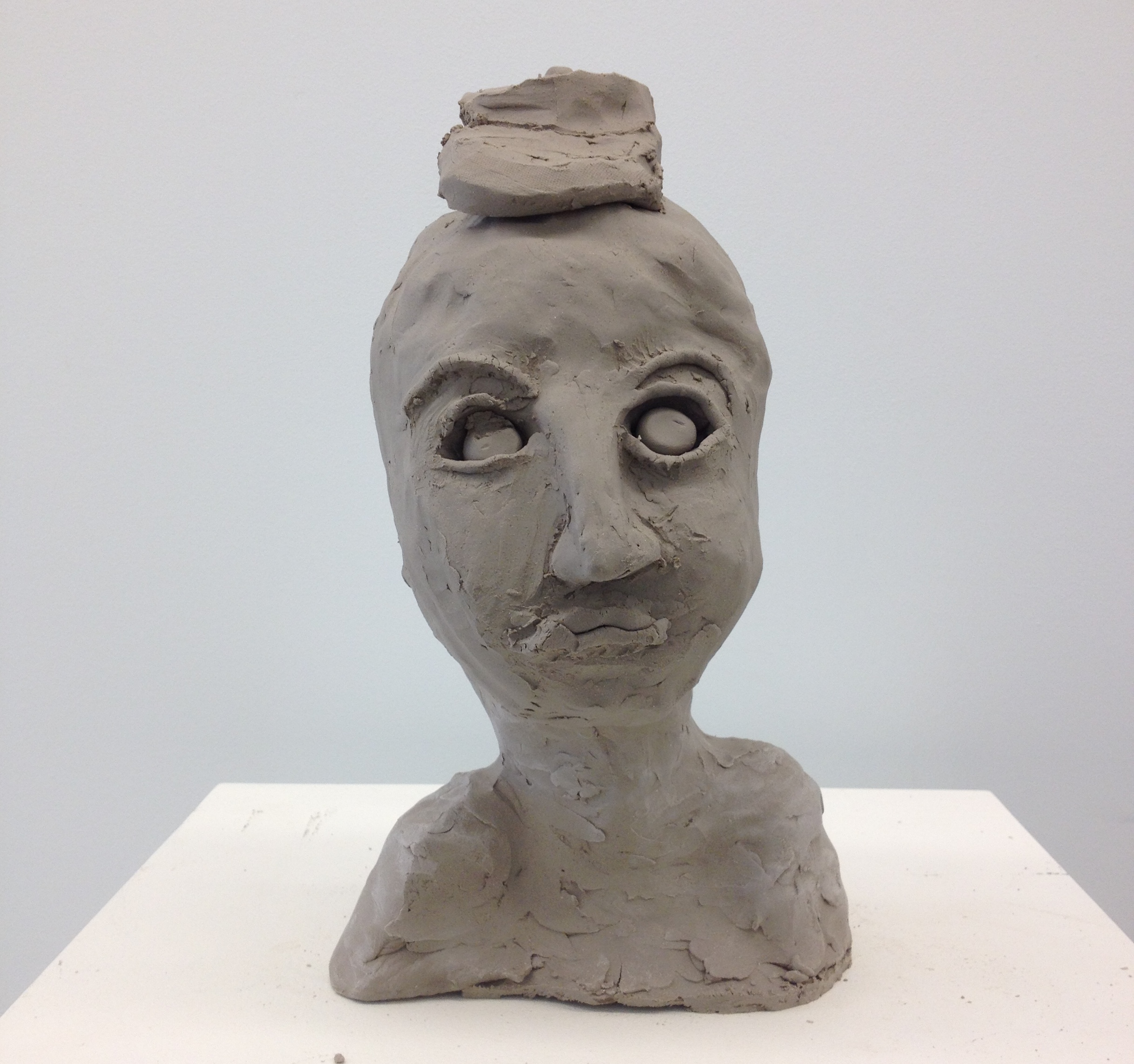
“What My Head Did to Me” by James Laughlin:

I guess I like myself
pretty well anyway I
wanted a statue of my-
self so I had a woman

make one it was a head
and she modelled it in
clay then one night I
dreamed I’d killed my

very best friend and
there was my head right
there ready to tell on
me when the police came

I tried to destroy the
face so they wouldn’t
know it was me but my
hands stuck tight in

the clay I couldn’t
tear them loose and
there I was when the
police came held by my

own head with the body
of my friend multi-
plying itself like
endless mirrors down

the street that’s the
thing my head did to
me but of course it
was only a dream see.

(From The Collected Poems of James Laughlin, 1935-1997, edited with an introduction and notes by Peter Glassgold © 1995 by James Laughlin. Used by permission of New Directions Publishing Corporation. Photo by Lori Leaumont)

A Poem For Saturday

3824326434_d48d848445_b

Dish poetry editor Alice Quinn writes:

James Laughlin, the founder and publisher of New Directions, shepherded a list, from 1936 until his death in 1997, which Peter Glassgold describes in his introduction to The Collected Poems of James Laughlin, 1935-1997 as one that “steadily expanded to include an astonishing pantheon of contemporary authors, primarily of the Modernist avant-garde, and quite literally changed what educated Americans read and the way American writers wrote and the kinds of poetry and fiction that were taught in our schools.” Today, ND is just as vital a force in contemporary literary culture, and the backlist is, of course, astounding.

Laughlin considered himself primarily a love poet and was encouraged by a number of his treasured authors—among them William Carlos Williams, Thomas Merton, Kenneth Rexroth, and Guy Davenport, who has praised his poems as “witty, elegiac, sexy, satiric, naughty, poignant, wise.” But Ezra Pound whose “Ezuversity” in Rapallo, Italy proved foundationally crucial to Laughlin’s literary education “ruled them hopeless,” he recalled. When prodded as to what path he should take, Pound replied, “ Go back to Haavud to finish up your studies. If you’re a good boy, your parents will give you some money and you can bring out books.” And so they did, launching one of the great publishing houses of the century.

Glassgold tells us that more than three-quarters of the 1,250-odd poems in the new volume date from Laughlin’s last fifteen years. When I was at The New Yorker, we published a number of his poems, which I found so captivating and dear. I loved the one below, which we wanted to publish but couldn’t because I discovered it had already appeared in a book. When I called to give J (as he was called) the sad news, he replied, mischievously, “Poor Gramps—ejected on a technicality!”

“Grandfather” by James Laughlin:

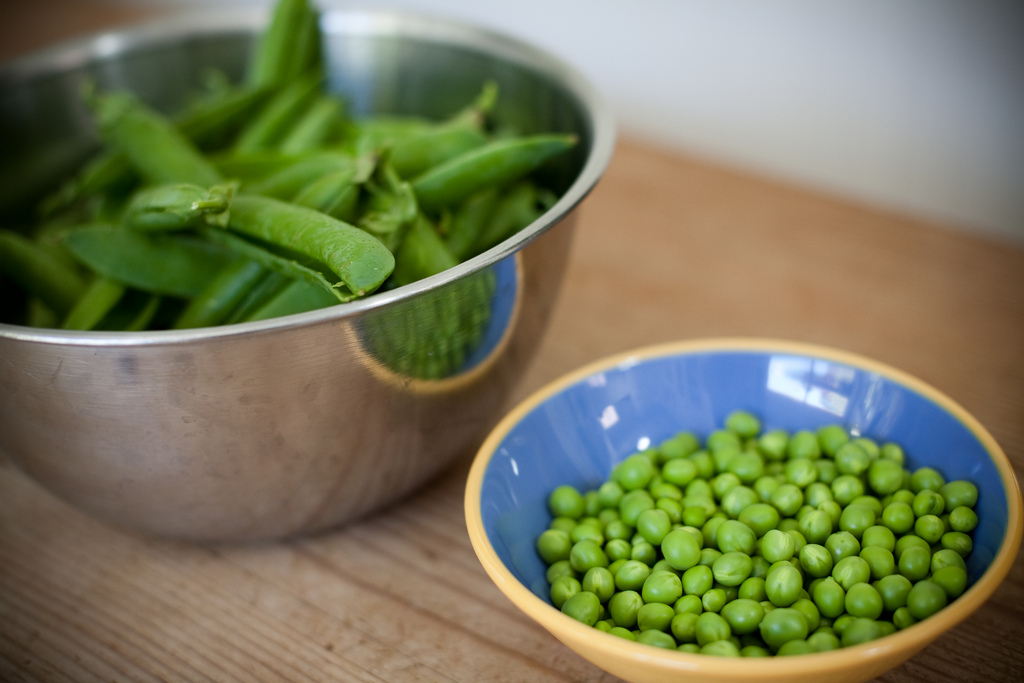
Sits on a chair at the
Kitchen table shelling
Peas into a bowl. He
Looks contented, even
Happy, smiling as he
Works. If you ask him
A question he probably
Won’t answer. He has
No idea what my name is,
Or even, I guess, that
I’m his grandson. He’s
93 but he has to be kept
Busy or he’ll start to
Root around in closets
All over the house. What
Does he think is lost?
No matter, he has been
Asked to shell peas.
He’s happy doing it. And
We’ll have peas for lunch.

(From The Collected Poems of James Laughlin, 1935-1997, edited with an introduction and notes by Peter Glassgold © 1995 by James Laughlin. Used by permission of New Directions Publishing Corporation. Photo by Nicki Dugan Pogue)