A Poem For Saturday

9594448945_e66e73e753_o

Dish poetry editor Alice Quinn writes:

The English poet Ted Hughes presented a series of BBC programs in the 1960s addressed primarily to children to help them feel at home with writing poetry. “In these talks,” he wrote, “I assume that the latent talent for self-expression in any child is immeasurable.” These were later anthologized in a book very much worth looking for titled Poetry in the Making: An Anthology of Poems and Programmes from ‘Listening and Writing’. In it, he outlines all sorts of valuable poetic exercises and comments on poems that illustrate his points. From the chapter, “Writing about People”:

From time to time I have read a good deal about Sir Francis Bacon, the great Elizabethan statesman and philosopher. . . . I read a lot about him while just searching for the clue that would tell me what he was really like. At last I found it. I read that he had peculiar eyes—eyes, we are told, like a viper…. At once I was able to feel I knew exactly what that man was like. I felt to be in his presence. And everything that I could remember about him became at once near and real. And this is what we want.

Elizabeth Bishop felt that her poem “Sandpiper” (1962) was an accurate self-portrait. Accuracy was one of the three qualities she admired, she said, “in the poetry I like best.” (The others were spontaneity and mystery.) Reading this poem I always feel her presence “at once near and real,” yielding a strong sense of what she was “really like.”

“Sandpiper” by Elizabeth Bishop:

The roaring alongside he takes for granted
and that every so often the world is bound to shake.
He runs, he runs to the south, finical, awkward,
in a state of controlled panic, a student of Blake.

The beach hisses like fat. On his left, a sheet
of interrupting water comes and goes
and glazes his dark and brittle feet.
He runs, he runs straight through it, watching his toes.

–Watching, rather, the spaces of sand between them,
where (no detail too small) the Atlantic drains
rapidly backwards and downwards. As he runs,
he stares at the dragging grains.

The world is a mist. And then the world is
minute and vast and clear. The tide
is higher or lower. He couldn’t tell you which.
His beak is focused; he is preoccupied,

looking for something, something, something.
Poor bird, he is obsessed!
The millions of grains are black, white, tan and gray,
mixed with quartz grains, rose and amethyst.

(From Poems by Elizabeth Bishop © 2011 by the Alice H. Methfessel Trust. Used by permission of Farrar, Straus & Giroux. Photo by Ashley Harrigan)

A Poem For Friday

6221020167_6258285c0c_b

“Exegesis” by Kevin Simmonds:

There was nothing trivial about the
Thai masseuse who slid his vertical
along my vertical, the power
outage, or those extra minutes
without charge. I cannot say he
wasn’t God. What I felt then, what
I feel with a man’s body on mine, is
holy, holy the way I imagine it is
right & without damage, worth
thanks   &   remembrance   &
justification for.

(From Bend to It © Kevin Simmonds, 2014. Reprinted with permission by Salmon Poetry. Photo by Daniel Spiess)

A Poem For Sunday

2410771182_33507e1383_b

“Soon I will be done” by Kevin Simmonds:

Negro Spiritual

I go down where it’s still sung
by the mother of the block
lifting her tremulous contralto
from the screened porch that leans
such that the latch won’t lock

I’ve grown mean without its milk
that saved masters from their slaves
salve rubbed into the pink tears
where rot should’ve set in
the revolt

Ask some black kid if they know it
& they might say the title
rings a bell but that doesn’t matter
it runs mad in the ruby fractals
of their capillaries & in their spit

Never mind the tempo, child
the stride began with Soon
from your upbeat
of breath & the ancestors
already galloping

(From Bend to It © Kevin Simmonds, 2014. Reprinted with permission by Salmon Poetry. Photo by Jennie Zell)

A Poem For Saturday

Dish poetry editor Alice Quinn writes:

A new volume of poetry by Kevin Simmonds, Bend to It, arrives with praise from the celebrated California poet D.A.Powell, winner of both the National Book Critics Circle Award and the Kingsley Tufts Award, who has said of Simmonds’ new poems, “Piercing the veil of a culture of silence, Kevin Simmonds brilliantly fuses quiet meditative traditions with a courageous impulse to dare beyond the boundaries of convention, to combine the bel canto of Italian art songs with the dynamic energy of James Brown; the tranquility of the zen masters with the fire and heat of the enraptured body.” We’ll post three of Kevin Simmonds’ poems this weekend.

“Lie” by Kevin Simmonds:

I’d write fewer poems
for my father to say
over the flat cell phone
he’s thinking of me
remembers some vital time
now history
when I was a small brown promise
with his wide nostrils     flat feet

just like his daddy
all the women would say & feel good
about saying it

I would give up all the mouths
I’ve fallen into
even the soft ambulance
of a man’s body

(From Bend to It © Kevin Simmonds, 2014. Reprinted with permission by Salmon Poetry)

A Poem For Friday

8552674800_4d07606148_b

Another selection from Patrizia Cavalli translated, from the Italian, by Gini Alhadeff:

I had cut my hair, darkened my eyebrows,
adjusted the right fold of my mouth, thinned
my body, raised my height. I had even lent
the shoulders a triumphant bent. A girl
boy
again, on the streets, a workman’s gait,
no superfluous embellishments. But I hadn’t forgotten
the languor of the chair, a clouded vision.
And I distributed caresses, not knowing I did. My secret
body untouchable. In the lower back
expectation condensed without satisfaction; in the gardens
long walks, advice repeated,
the sky sometimes blue
sometimes not.

(From My Poems Won’t Change the World: Selected Poems of Patrizia Cavalli, edited by Gina Alhadeff. Translation © 2013 by Gini Alhadeff. Reprinted by permission of Farrar, Straus & Giroux, LLC. All rights reserved. Photo by Lauren Finkel)

A Poem For Sunday

4504988933_ba25c25a59_b

Another selection from Patrizia Cavalli translated, from the Italian, by Gini Alhadeff:

I cannot love what you are, no,
what you are is indeed a mistake.
But there is in you a grace that surpasses
what you obstinately are.
Something that’s yours and doesn’t belong to you,
in you from the start but separate from you,
that draws towards you cautiously, afraid
of its own uncontainable splendor.

(From My Poems Won’t Change the World: Selected Poems of Patrizia Cavalli, edited by Gina Alhadeff. Translation © 2013 by Gini Alhadeff. Reprinted by permission of Farrar, Straus & Giroux, LLC. All rights reserved. Photo by Joel Olives)

A Poem For Saturday

3306277484_48bd1c5946_b

Dish poetry editor Alice Quinn writes:

We post poems by gay poets all year long, naturally, and this weekend and next, we’ll feature three each by the Italian poet Patrizia Cavalli, who lives in Rome, and Kevin Simmonds, an American who lives in San Francisco.

Cavalli has been a favorite of many friends of mine for decades—poets, writers, and others notably devoted to the arts. Among her admirers are Eliza Griswold, several of whose translations,  I Am the Beggar of the World: Landays from Contemporary Afghanistan, we featured in March, Maxine Groffsky, an exceptional literary agent, the memoirist and novelist Edmund White (“Look at her closely: it’s as if you were seeing Sappho in the flesh.”), and Marilyn Goldin, a brilliant screenwriter who wrote with and for such luminaries as Bernardo Bertolucci and Agnes Varda and who died some years ago in her home in upstate New York near a monastery where she served the Swami as a scholar and writer. (I delight in every chance to celebrate this extraordinary woman.)

The Pulitzer Prize-winning novelist and story writer Jhumpa Lahiri expresses best why we have chosen the poems we have to represent this Italian poet’s limpid, mischievous, and perhaps above all, abundantly (and winsomely) genuine work, “She articulates with disarming precision, the instability, the absurdity, the exquisite anguish, of love. Perhaps her poems can’t change the world, but they have changed my life.”

Our first selection from Patrizia Cavalli translated, from the Italian, by Moira Egan and Damiano Abeni:

Love not mine not yours,
but the fenced-in field that we entered
from which you soon moved out
and where I’d lazily made my home.
I watch you from the inside, you out there,
strolling distracted on the outskirts
and coming closer now and then to check
whether I’m still there, stopped and stunned.

(From My Poems Won’t Change the World: Selected Poems of Patrizia Cavalli, edited by Gina Alhadeff. Translation © 2013 by Moira Egan and Damiano Abeni. Reprinted by permission of Farrar, Straus & Giroux, LLC. All rights reserved. Photo by Henry Burrows)

A Poem For Saturday

Dish poetry editor Alice Quinn writes:

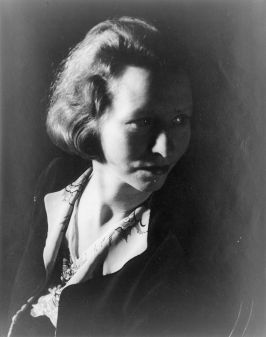
From May 17th through September 7th, The New York Botanical Garden in the Bronx presents Great American Gardens and The Women Who Designed Them, an exhibit Edna_St._Vincent_Millayhighlighting the achievements of some of the most prominent women in early 20th century landscape design.
A poetry walk on the grounds features poems by Edna St. Vincent Millay, who was the star poet of their generation. She was the first woman to win the Pulitzer Prize for poetry in 1923, and in the middle of the Great Depression, her collection Fatal Interview, published in 1931, sold 35,000 copies within a few weeks of its release.

Nancy Milford, author of Savage Beauty, a superb biography of Millay, describes the poet as the herald of the New Woman, “She smoked in public when it was against the law for women to do so, she lived in Greenwich Village during the halcyon days of that starry bohemia, she slept with men and women and wrote about it in lyrics and sonnets that blazed with wit and a sexual daring that captivated the nation…. Her performing self made people feel they had seen the muse alive . . . .”

This weekend we’ll feature some of the poems on the grounds of The New York Botanical Garden from now until September 7th beginning with a mock self-portrait, Millay as seen by a neighbor. Her poems compliment a riveting historical exhibit in the library rotunda and a spectacular floral exhibit in the conservatory, a recreation of Beatrix Farrand’s 1926 masterpiece in Seal Harbor, Maine, the Abby Aldrich Rockefeller Garden.

“Portrait by a Neighbour” by Edna St. Vincent Millay:

Before she has her floor swept
Or her dishes done,
Any day you’ll find her
A-sunning in the sun!

It’s long after midnight
Her key’s in the lock,
And you never see her chimney smoke
Till past ten o’clock!

She digs in her garden
With a shovel and a spoon,
She weeds her lazy lettuce
By the light of the moon,

She walks up the walk
Like a woman in a dream,
She forgets she borrowed butter
And pays you back cream!

Her lawn looks like a meadow,
And if she mows the place
She leaves the clover standing
And the Queen Anne’s lace!

(From Collected Poems by Edna St. Vincent Millay. Reprinted with the permission of The Permissions Company, Inc., on behalf of Holly Peppe, Executor, The Millay Society. All rights reserved. Photo is Carl Van Vechten’s 1933 portrait of Millay, via Wikimedia Commons)

A Poem For Friday

3461566074_70b6cf441a_b

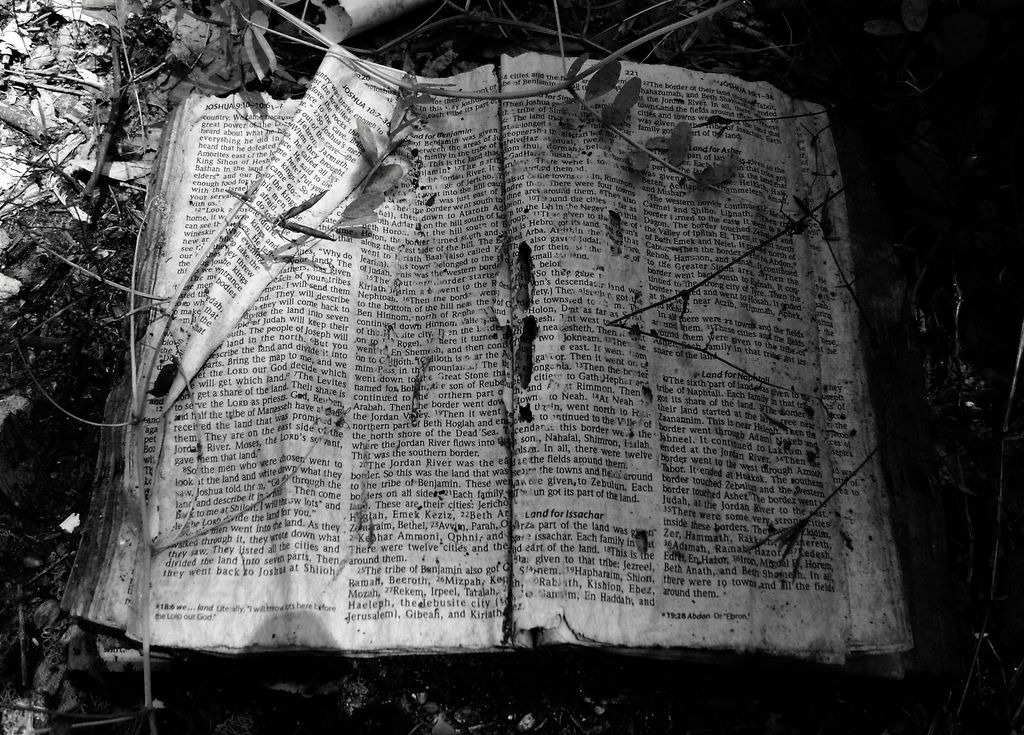
“My Great-Grandmother’s Bible” by Spencer Reece:

Faux-leather bound and thick as an onion, it flakes—
an heirloom from Iowa my dead often read.
I open the black flap to speak the spakes
and quickly lose track of who wed, who bred.
She taped our family register as it tore,
her hand stuttering like a sewing machine,
darning the blanks with farmers gone before—
Inez, Alvah, Delbert, Ermadean.
Our undistinguished line she pressed in the heft
between the testaments, with spaces to spare,
and one stillborn’s name, smudged; her fingers left
a mounting watchfulness, a quiet repair—
when I saw the AIDS quilt, spread out in acres,
it was stitched with similar scripts by similar makers.

(From The Road to Emmaus © 2014 by Spencer Reece. Reprinted by permission of Farrar, Straus & Giroux. Photo by Patrick Feller)

A Poem For Sunday

6186207976_b29da5e9a6_b

“1 Corinthians 13” by Spencer Reece:

How long do we wait for love?
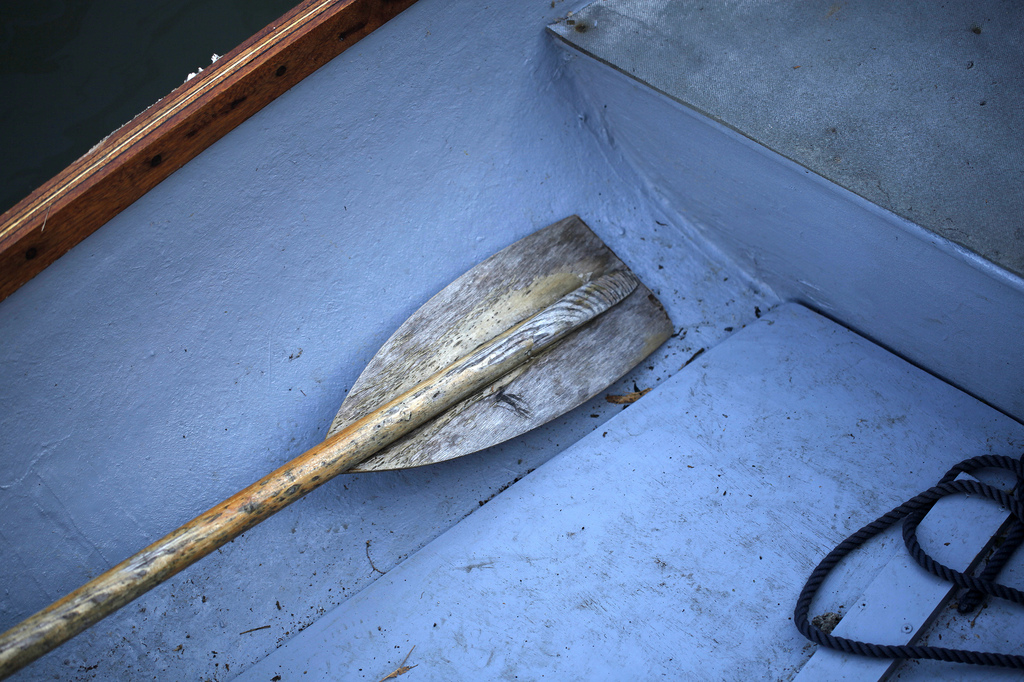
Long ago, we rowed on a pond.
Our oars left the moon broken—
our gestures ruining the surface.
Our parents wanted us to marry.
Beyond the roses where we lay,
men who loved men grew wounds.
When do we start to forget our age?
Your husband and I look the same.
All day, your mother confuses us
as her dementia grows stronger.
Your boys yell: Red Rover!
We whisper your sister’s name
like librarians; at last on the list,
her heart clapping in her rib cage,
having stopped now six times,
the pumps opened by balloons,
we await her new heart cut
out from the chest of a stranger.
Your old house settles in its bones,
pleased by how we are arranged.
Our shadow grows like an obituary.
One of us says: “It is getting so dark.”
Your children end their game.
Trees stiffen into scrapbooks.
The sky’s shelves fill with stars.

(From The Road to Emmaus © 2014 by Spencer Reece. Reprinted by permission of Farrar, Straus & Giroux. Photo by Jenny Downing)