The Weekly Wrap

AngryBird

(Dan Kitwood/Getty Images)

Friday on the Dish, Andrew cut to the heart of Lance Armstrong’s maliciousness, which was not the athlete’s doping but his vicious campaign against those brave enough to speak the truth. He reflected on David Remnick’s latest dispatch from Israel and discussed with readers his reaction to Jon Stewart’s interview with Zero Dark Thirty’s lead-actress Jessica Chastain. Elsewhere, Andrew gaped at the latest conspiracy theory from the far right and picked apart Piers Morgan’s rather suspect claim to represent journalism before pre-empting the talk show host’s next insult in today’s Angry Bird Watch.

In political coverage, we assembled reax to the news of a freshly raised debt ceiling, debated the importance of Obama’s inaugural speech, and shook our head as the GOP picked a strange location for their upcoming meeting on minorities. Gopnik expressed optimism regarding America’s gun problems, Mike Riggsenriched Rolling Stone’s list of famous prohibitionists, Phil Plait refuted a persistent trope of global warming skeptics, and a reader clarified the government’s role in informing the makers of Zero Dark Thirty. We heard from other readers who didn’t sympathize with Aaron Swartz’s means to free up information, while the young man’s trial led us to scrutinize the rationale behind plea bargaining as Balko showed how overbearing laws enable overbearing prosecutors.

On the foreign beat, we rounded up reactions to French intervention in Mali, as Marc Lynch repeated his view that a similar operation by the US in Syria would be a quagmire, which Waldman demonstrated by tallying up the costs of 136 months in Afghanistan.

In miscellanea, we met gold medalist Nicole Cooke, a cyclist whose accomplishments served a noble cause rather than an ego trip, collected some reader thoughts on the curious case of Manti Te’o, as Mona Gable wrestled with the likelihood of inheriting a family illness. Helen Rittelmeyer saw flashes of Dostoyevsky in Arrested Development, readers fact-checked an old story about the origin of the piggy bank, and we zeroed in on the human body’s smelly allele.

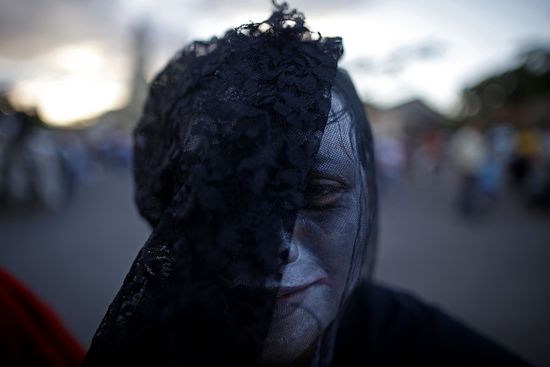
After the Dish earned a hat tip from Roger McNamee, we wondered if Heaven is here online, before John Tooby gave us a stellar reason to lose sleep tonight. We also tracked further developments in online-education, observed the self-correcting tendency of science, as Nilofer Merchant thought up ways to avoid the health risks of prolonged sitting. An Indonesian businessman trudged through flood water in the Face of the Day, we sang the blues of a hound dog during the MHB, watched the clouds rush over Rio de Janeiro, Brazil and spent a moment with a brave reader in Chicago during today’s VFYW.

– B.J.

The rest of the week after the jump:

Dad's Flight Crew

Thursday on the Dish, Andrew tried to make sense of the Daily Show’s recent segment on Zero Dark Thirtyexpressed his disgust with the double standards of the DOJ, and called out the MSM for not quizzing McChrystal on his alleged involvement in torture. Andrew kept pushing Dreher on the normalization of pot and stood by Goldblog as he faced slander from left and right. He also answered more reader emails about Jodie Foster’s speech, assured heterosexual readers that they understand more about gay love than they know, and nodded in approval at a sexy gallery of beards.

In political coverage, we gathered a stack of reader emails about the NRA’s latest ad and rounded up reax on Obama’s ideas for sensible gun reform. We then charted the recent rightward drift of the GOP, traced the decline of cap-and-trade, and looked ahead at the future of the abortion debate. Douthat issued a word of wisdom to both Democrats and Republicans comfortable with the ongoing brinkmanship, offered a two-part reality check on both Obama’s favorables and party alignment since the election, assessed the current gains and losses for labor in a world of runaway technology, and cringed at a WSJ cartoon feeling sorry for wealthy people paying a little bit more in taxes.

We also surveyed a horrifying week’s worth of grinding violence in Syria, poked a hole in the logic behind persecuting Bradley Manning, and Jonnie Freedland expertly analyzed the disconnect between American and European understanding of anti-Semitism.

In assorted coverage, we wondered how the media botched the Manti Te’o story and tried to size up Te’o’s own role in the mess. James Wolcott suited up with digital trackers during exercise, Alex Klein chronicled Scientology’s latest shameful scheme, and readers voiced strong thoughts regarding Jon Brodkin’s piece on the future of broadband. We aired the dispute over Amazon’s trickle-down partnerships, discovered a non-boozy use for the breathalyzer, and spotted heavy fracking activity from space. Later we fleshed out a reader’s story about his war hero father, got lost in a purple trance during the MHB, and spent a crisp moment in Burlington, Vermont for today’s VFYW. Finally, we continued our direct discussion with readers about the future pay-meter of the new Dish, which you can still become a part of here.

Wednesday on the Dish, Andrew pursued the larger implications of “native ads” after The Atlantic’s apology for its Scientology spot. He digested Kathryn Bigelow’s remarks on Zero Dark Thirty’s veracity, and asked her whether she appreciates all the praise from torture-mongers like Hannity. Disgusted by Egyptian President Morsi’s unearthed remarks on Isrealis, Andrew lamented the effect of the Hagel smears on calling out real anti-Semitism. He also took on more readers for his criticism of Jodie Foster, and introduced us to his friend Norma Holt.

In political coverage, we assessed both the past and future of Obama’s debt-ceiling strategy and wondered whether the return of pork might satisfy Congress’s appetite for progress. Frum and Tomasky counted the ways the NRA blew their latest anti-Obama ad, but not without some pushback from readers. Meanwhile, Jamelle Bouie wasn’t ready to count the South out of politics, Drum took his lead-crime argument all the way to the question of race and Yglesias pondered the economic effects of a super-sleep drug.

On the foreign beat, we looked at why Malians are supporting French boots on their ground, Michael J. Totten weighed the benefits of monarchy against democracy, and Liam Hoare traced the latest spat over the Falkland Islands. Also, we studied Israel’s increasing drift to the right and remembered a time when American cities looked quite a bit like smoggy Beijing.

In assorted coverage, we reflected on the real crux of the Lance Armstrong scandal, figured out what to make of Coke’s fresh ad campaign, and promised that this video from NASA will keep you glued to the screen. Trevor Butterworth envisioned the death of punditry in the new era of automated content analysis, as Tom Vanderbilt explored the streaks of bigotry in Google search queries. Rebecca Greenfield waxed pessimistic about Amtrak’s WiFi overhaul while Aymar Jean Christian downplayed the potential for web series to innovate TV.

While Shalom Auslander struggled to reconcile his rabbis loving words with his awful deeds, Rebecca J. Rosen glanced at the new biggest object in the universe. We witnessed film critics and skateboarders overcome their blindness, and Freddie searched the English language for the singular “their.” We trekked up to Fairbanks, Alaska for today’s VFYW, watched an old game take on a new rhythm in the MHB, and had to tip our hat to The New York Post’s penchant for black comedy.

Atlantic-Sponsor

Tuesday on the Dish, Andrew recoiled at The Atlantic’s egregious Scientology advertorial, voiced his discomfort at the dark side of “native advertising” in general, and made note of one crucial Hagel endorsement. He agreed with Blake Hounshell about the perils of withdrawing from Afghanistan but urged a stoic departure in the face of danger. Andrew also responded to more reactions over his critique of Jodie Foster’s coming-out, turned up the pressure on Dreher’s agnosticism on pot legalization, and joined George Packer in bemoaning Dixie’s long-term effects on the GOP.

In political overage, Bill McKibben singled out climate change as an exponentially worsening policy problem, while we brought some of the nuances of climate change debate into focus and tried to measure the effects of NYT’s shaking up its environment desk. The US manufacturers’ lobby ended up buying Chinese while Llewellyn Hinkes-Jones shined a light on the seedy business of incarceration. We glanced at the scoreboard of the debt ceiling standoff and made use of a handy death-calculator to look at the Supreme Court’s future.

Later we read a first hand account of the human aspect to the drug war and walkedthrough the average day of an addict in the city. We were also pleased to help circulate the petition to unseat Aaron Swartz’s prosecutor, and we rubbed our eyes in disbelief at a sober, reasoned exchange on gun control. Looking abroad, Evan Osnos coped with some particularly bad air in Beijing, we took Tunisia’s post-authoritarian temperature, and watched U.S. guns spike the homicide rate in Mexico.

In miscellania, Tim De Chant reimagined local newspaper coverage while Martyn Daniels revealed that Ebooks hovers over our shoulders as we read. Alyssa Rosenberg praised FX for shows’ honesty about the modern male and Erika Christakis reviewed proper sneezing etiquette. We enjoyed The Onion’s red carpet realism, confirmed the toxicity of comment sections, and discovered that the metric system may rest on shaky ground. We peeked into a garden in Cardiff by the Sea, California, surveyed the south of France from Mirepoix in announcing this week’s VFYW winner, pulled quite a stunt during the MHB, and welcomed nightfall with a poem by Catherine Barnett.

Fry-Meme

Monday on the Dish, Andrew denounced the undue viciousness of Aaron Swartz’s prosecutor at DOJ, and wondered whether academic literature could be made a public good. He applauded Matt Stone and Trey Parker breaking free of Hollywood studios and called out Jodie Foster on her narcissistic coming-out speech at the Golden Globes. He chided Dreher and Frum on their arguments to shield the poor from pot, continued to ruminate on the legacy of Richard Nixon and sang the praises of DC bear culture. Elsewhere he urged popular opposition to the GOP’s ongoing economic terrorism, which will likely earn them the scorn­ of the public.

In political coverage, we questioned whether or not guns are a safeguard against Big Brother and circled back to Drum’s original evidence connecting lead and crime. We juxtaposed two quotes in which a former member of the Knesset sighedat Israel’s swing to the right while an American senator called Israel our hands-down greatest ally. Seth Masket joked about Obama’s vulnerability on intergalactic defense, readers sounded off on Anne Lowrey’s unkind portrait of the nation’s capital, and we revisited the data about movies and violence in light of Tarantino’s recent outburst on the subject.

In assorted coverage, we compared the hazards of driving drunk to driving stoned, got a taste of the power of tea in Pakistan, and revealed the one word that will burn Brits’ grits. We remained diligent about flu vaccination, and kept up with the debate over the benefits of bare feet while running. Jane Shilling argued that power of the Internet would make Socrates glow, while Geoffrey Nunberg saw Amazon users’ book annotations as a window into their collective consciousness.

Meanwhile, we rounded up some more insightful reader reax to impending Dish independence, followed a famed photographer duo as they scouted locations via Twitter, all as the great showdown between mutant ducks and tiny horses raged on. An old MHB received an update from a talented music class, while we gazed over the red rooftops of Malacca, Malaysia in the VFYW and watched the doors of a health clinic close on the Face of the Day.
Swartz

Last weekend on the Dish, Andrew castigated Piers Morgan’s “dumb, disgusting desperation” and defended Washington, DC, from its condescending critics. We also provided our customary coverage of religion, books, and culture, high, low, and in-between.

In matters of faith, doubt, and philosophy, David Bryant elaborated on faith in an unknowable God, Mark Galli meditated on grace and parenting, and Casey Cep remembered the idiosyncratic Christianity of Reynolds Price. John Jeremiah Sullivan considered his secular appreciation of gospel music, Lorin Stein praised the understanding God of Psalm 139, and Justin Erik Haldór Smith ruminated on the unlikely places he finds God. Jim Shepard thought about Flannery O’Connor and epiphanies, Richard Feynman riffed on the beauty of a flower, and Daniel Baird wondered just what justice requires.

In literary and arts coverage, David Mikics uncovered how Emerson and Freud compete for Harold Bloom’s soul, Greg Olear argued that Nick Carraway of The Great Gatsby was gay, and Anthony Paletta detailed Oscar Wilde’s trip to America. Rebecca Lemon showed how Shakespeare deployed alcohol in his plays, James Hall traced the difficulties the artist Raphael poses for biographers, Emily Elert highlighted the experiences for which English has no word, and Marcy Campbell plumbed her book club for insight into today’s literary market. Megan Garber found a novel in your outbox, Michael Thomsen was disappointed by drug writing’s inability to capture the psychadelic experience, readers continued our thread on fonts, and Stephen Marche believed the art bubble might be ready to pop. Read Saturday’s poem here and Sunday’s here.

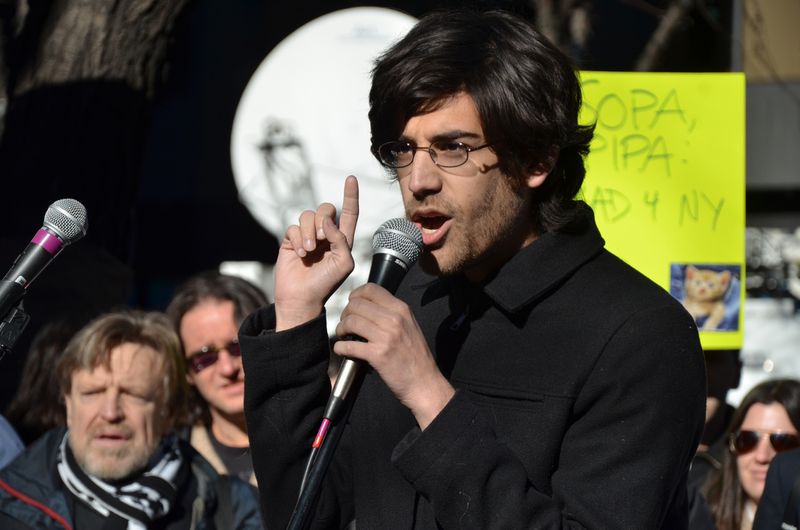
In assorted news and views, a Dish reader honored the activist and polymath Aaron Swartz, Joshua Coen appreciated the public beauty of Central Park, and Dave Bry earned an Yglesias nomination for his thoughts on Chief Keef’s latest album. The White House dashed the hopes of Star Wars fans, Daven Hiskey let down drinkers who think booze can keep them warm, and Devendra Banhart narrated the story of a great and crazy soul singer. Julian Baggini theorized why Nespresso won a taste-test, Gregory Ferenstein offered a cautionary tale about Wikipedia, Jon Brodkin reported on satellite companies providing broadband Internet access, and Derek Workman mused on the vagaries of foosball in a flat world.

We asked the Leveretts anything here and here. MHBs here and here, FOTDs here and here, VFYWs here and here, and the latest windown contest here.

– B.J. & M.S.

The Weekly Wrap

Today on the Dish, Andrew raved about the "Book Of Mormon," weighed in on homophobia's evolutionary roots, and countered Damon Linker on the fascistic undertones of neoconservatism. Andrew defended the duty of opinion bloggers to take a stand and cheered the unbelievable Arab Spring and the real American exceptionalism being helmed by Obama. NATO is taking control of the no-fly zone, Babak Dehghanpisheh visited a Benghazi prison camp, and Andrew debated Scoblete about whether Bill Kristol really believes Iraq was a victory. Larison challenged Kristof on humanitarian gains, Liz Sly expanded on Qaddafi's supporters, and the unrest in Syria spread. Andrew followed this week's violence in Israel, and the resultant neo-fascist laws. Frum outed Al Qaeda as being mobile, Newt blathered on, and Freddie DeBoer reminded us that this war will never be the last time we play sheriff.

Andrew called out Palin on her mixed David and Goliath metaphors, and Michelle Bachmann inched closer to the Washington elite. The Catholic tides shifted, the US Hispanic population surged, Scott Morgan tracked the emerging cannabis markets, and J.F. at DiA grappled with drug courts for addicts. Kate Sheppard mapped nuclear danger zones, Helen Epstein tracked the political problem of malaria, Haiti beat Japan in donations, and Dave Roberts contemplated the harder virtues to celebrate.  Barry Eisler opted to self-publish for more money, history turned us on, grammar made us laugh, and Hitchens was always two steps ahead. Readers dished on Pawlenty's Minnesota disappointments and rebutted Paglia on today's curvy women, and Andrew tube-crushed. Money made rich people sad, baldness made Andrew exotic and erotic, and unlike mole rats, humans need to be alone sometimes.

Classified ad of the day here, creepy ad watch here, quote for the day here, VFYW here, MHB here, and FOTD here.

Vfyw
Ventura, California, 8 am

Thursday on the Dish, Andrew deconstructed the divisions on the right's foreign policy, Wilkinson weighed the suffering factor in Libya, Julian Sanchez connected Bush and Obama on universal morality, and Andy Bacevich concentrated on removing Qaddafi. Andrew began to understand his pessimism as stemming from the Irish belief in Sod's law, and wondered if Obama had meep-meeped him again. Larison abandoned hope for an anti-war right and theorized why Germany didn't veto the UN resolution, and Rory Stewart stuck it to both pro and anti-interventionist sides. Ackerman wanted us to call the war in Libya a war, Adam Garfinkle critiqued our slipshod strategy, and Fox battled CNN on the other Libyan front. A new report outlined the torture under Bush as a form of warfare, rather than an attempt to stop a ticking time bomb, and Heather Hurlburt distrusted the Libyan endgame. Misurata took a turn for the worse, the rebel force is smaller than expected, and Libya isn't WWII. Twenty thousand may have marched in Syria, Assad may be caving, but the violence ratcheted up.

Catholics favor gay marriage (even the ones who attend church weekly), and Andrew held out hope for a change in DOMA and immigration policy. Andrew soaked up the results of the Coalition government's austerity measures, Nick Clegg left his mic on, and Andy Sumner examined international poverty. A straight, Catholic Republican student in Indiana supports gay marriage, Pareene got giddy over gay Republican candidate Fred Karger, and readers didn't underestimate T-Paw. Julian Sanchez pondered copyright and Google Books, Caitlin Truman endorsed euthanasia for the dead relationship, and a judge grappled with sentencing based on numbers alone. LSD confronts you with yourself, Arizona brought a tank to stop a cockfight, Dana Goldstein admired a charter school's dedication to diversity, and Andrew was off to celebrate the new pro-faith show of "Book Of Mormon." Groupon offered solutions for being hungry or bored, Camille Paglia praised Liz Taylor's body, and Lileks found a man who'd never heard of an iPad. A paywall is less humiliating than a pledge drive, and this doctor wanted to solve your symptoms the tech way.

Chart of the day here, quotes for the day here, here, here, and here, VFYW here, MHB here, and FOTD here.

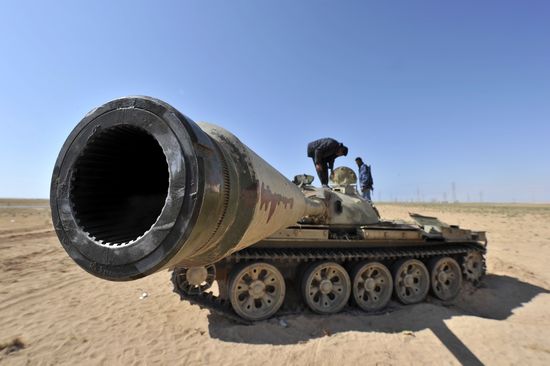
Tank
By Aris Messinis/AFP/Getty Images

Wednesday on the Dish, Andrew urged Obama to avoid leadership and to let Sarko own it, while questioning the very nature of the uprising in Libya. Andrew chastised those who would support this war as if Iraq never happened, reacted to the Obama Undoctrine of pragmatism, and Ezra Klein went after Wieseltier. Qaddafi supporters scared us more than Fox News, Stephen Budiansky understood the military's limits in tactical regime changes, and Andrew called bullshit on "logistical contributions" from Kuwait and Jordan. Readers differentiated between Libya and the Greek War for Independence, and the Arab League's bets could backfire. Adam Rawnsley decoded "Operation Odyssey Dawn," Qaddafi exposed himself, and Syrian crackdowns escalated. Matt Steinglass characterized the vague goals of "winning" as being intentional on the administration's part, and a dispatch from Misurata praised the positive effect of the strikes. The kidnapped NYT reporters recounted their harrowing tale, while the NYT still refused to call what we do at Guantanamo torture. The Tea Party turned nationalist for the Libyan war, Gingrich flip-flopped, and Matt Larimer questioned how the GOP morphed into the party of perpetual war.

Palin skirted the shores of Jews For Jesus, illegally fished for life, and Andrew guffawed at Janet Malcolm's review of Sarah Palin's Alaska. Huckabee challenged Pawlenty on being the most anti-gay candidate there is, and conservatives cooed over non-procreative marriages of old people as long as they weren't gay. GDP output exploded, tax fundamentalism ruled the GOP, and a town paid rent on an empty Borders store. A Mexican police chief tortured to curtail the corruption, and new nuclear reactors are built smaller.  Bloggers debated final chapters, HuffPo landed Balko, and a reader explained that the BBC isn't free. Lewis Black cautioned everyone over smallpox, the gallows humor kept rolling in, and Christians pole-danced for Jesus. People envy their neighbors more than millionaires, policies change when rich opinions do, and Scott Adams taught us how to fall asleep. Readers called us on our frog necrophilia, and Andrew marveled at a new model for Ken the ideal boyfriend, Kurtis Taylor, a mountain of mocha muscle.

Tweet of the day here, quotes for the day hereherehere, how to have a rational discussion here, cool ad watch here, VFYW here, MHB here, and FOTD here.

Face_day
By Eric Feferberg/AFP/Getty Images.

Tuesday on the Dish, Andrew magnified Frum's examination of why Obama didn't ask Congress for approval, and examined his own scars from Iraq and the last ten years. Obama promised a hand-off soon(ish), and Andrew praised Egypt's huge steps towards democracy. Bill Kristol loved war, Obama supported most US military interventions, Romney didn't like nuance, and Douthat didn't defend Bush. Larison feared we were encouraging weak rebellions, Tom Ricks demolished the idea of an exit strategy, and Freddie DeBoer skewered the colossal arrogance of any interventionist logic. A reader tracked Joe Biden's role in the resolution, and Dylan Matthews policed Leon Wieseltier's fight with Ezra Klein. A reader offered 1831 as a better example than Arab 1848, and Andrew wished for Secretary of State John Quincy Adams' response. Libya adventure has already cost more than the discretionary spending cuts desired by the GOP, Reihan considered the astronomical costs, and rebels ate Snickers.

Palin skipped the West Bank possibly because she forgot it isn't part of Israel, broke the rules and offended the Republican Jewish Coalition, and a reader berated her for sporting a Star of David. We sized up Pawlenty's presidential bid, Johann Hari interviewed Gideon Levy, and Charlie Chaplin narrated events in the Middle East. The Economist tallied Japan's earthquake damage as the costliest ever recorded, Richard Posner considered the politics of unlikely disasters, and since no one has gotten a lethal dose of radiation from this nuclear meltdown George Monbiot now supports nuclear energy. Readers skirted the NYT paywall and offered other fundraising alternatives, Timothy B Lee wanted to support real reporting elsewhere, and Andrew posed questions behind a paywall. The Argentine military stole babies in the 1970s, Andrew was grateful for modern medicine, and the week's news was too much for some. Politicians lagged behind public opinion in Indiana on gay marriage, Meghan bought a house to live in, and healthcare opinions haven't changed. Katie Roiphe wrote recommendations for 18-month olds and real talent requires grit.

Cool ad watch here, question of the day here, answer here, chart of the day here, headline of the day here, Yglesias award here, quotes for the day here, here, here and here, map of the day here, FOTD here, MHB here, and VFYW here, and VFYW contest winner #42 here.

Monday on the Dish, Andrew considered this war's effect on Jihadism, and historic predecessors like British Foreign Secretary Lord Palmerston who exercised restraint in aiding others' democratic movements. Chait, Klein and Andrew asked why intervene this time, Goldblog's jaw remained dropped, and the right sniffed Obama's blood in the water. Andrew couldn't get behind Marc Lynch's argument that Libya determines how other dicatators act in the Middle East, PM Carpenter believed in Obama's character, and Ambinder parsed Clinton's developing doctrine. John Lee Anderson interviewed one of Qaddafi's fighters and shook hands with the rebels, Issandr El Amrani questioned the non-violent intentions of Libyan rebels, and Megan Scully and Exum calculated the cost of this war. Andrew meditated  on the tao of Derb, Peter Beinart reminded us we can't control the rebels, Manzi warned of an international arms race, and insurgencies started. The African Union and Putin echoed the Arab League, the UAE balked, and the British split, confused over Resolution 1973. Weigel didn't foresee a congressional vote, Yglesias demeaned the "better than Iraq" yardstick, and David Boaz missed the anti-war movement in lieu of an anti-war president. Public support dwindled, Tripoli quieted down, and Alan Taylor viewed the war through the photographer's lens. Yemen's regime may be approaching an end, and Steven L. Taylor saw Libya as an incentive for dictators to go nuclear. Frank Gaffney jumped from Libya to Israel, and Palin plastered herself with Israeli flags.

Seth Masket compared Japan to New Orleans, we viewed the tsunami from a boat, and XKCD charted radiation dosages. Schools traded calories for IQ points, Simone Eastman bemoaned being the poster couple for gay marriage, and Freddie DeBoer wondered why a longread on gentrification didn't feature any poor people. Readers fell on opposite sides of tasteless jokes, medical workers shared tales of laughter in hardship, and Felix Salmon argued the paywall will prevent people going to the NYT in an emergency. Andrew 80's-gasmed, and the arms trade landed in stoners' hands.

Billboard of the day here, quotes for the day here and here, nit-pick of the day here, chart of the day here, Malkin award here, MHB here, FOTD here, and some pure joy here.

–Z.P.

The Weekly Wrap

Today on the Dish, Andrew found Obama's reasons for Libya disturbingly empty. We rehashed the Libya reax, Goldblog asked if there even is a strategy, and Andrew raised other questions from analysis around the blogosphere. Qaddafi's forces violently pressed on in Misrata, Steve Negus mapped Libya's hotspots, and readers pushed back against Andrew's concerns. Dov Zakheim called for a limited US role, Julian Borger laid out the logistics of a UN no-fly zone, and Marc Lynch examined our gamble on the ground. Crowley inquired whether Romney, Palin, and Huckabee support the war, Greg Scoblete countered Shandi Hamid's reasons for intervention, and Greenwald insisted congress must vote. Thoreau reminded us how well no-fly zones worked in Iraq, New York Times reporters were missing in Libya, and no one called for airstrikes against the Ivory Coast's civil war. Yemen forces perpetrated the worst slaughter since the Arab 1848 began, Ackerman pinpointed Yemen's cozy relationship with the US, and Bahrain's government destroyed the pearl of the revolution.

Bradley Manning's treatment and the larger surveillance state appalled Jack Balkin, and Greenwald profiled the Ugly American. Earthquake alarms could save lives, Americans should not buy radiation pills, and Andrew praised Catholics and the majority of Americans for supporting gay marriage. Frum chastised society for putting all our debt on the young, a reader defended tasteless jokes in times of tragedy, reactions poured in on the NYT's paywall, and SWAT teams needed something to do once crack wasn't a problem. Palin snubbed the Indian press, a reader revealed more about Rebecca Mansour, and Bernstein and Silver parsed Palin's numbers. 

Worst roommate ever here, dissents of the day here, quote for the day here,  VFYW here, FOTD here, and MHB here.

Vfyw

New York, New York, 1.49 pm: "View from UN office as Libya is being discussed in security council"

Thursday on the Dish, US intervention in Libya loomed, and Andrew asked some dire questions about this imminent war, and the other wars we're still engaged in. The ironies mounted, Exum had questions, Dick Lugar brought some sanity to the debate, and then we found out they briefed Congress in secret. Larison demolished David Kopel's paper tiger, Les Gelb explored an Arab League no-fly zone, and Douthat kept his eyes on what would happen after the intervention. Vivienne Walt explained the tribal loyalties keeping Qaddafi in power, and Scoblete looked to Iraq's example for what happens next. Andrew built on Reihan's assessment of America's relative decline and the right's amnesia about the last ten years. Nick Kristof reported on the scary sectarian riffs in Bahrain, Iraq cracked down on free speech, and Jill Goldenziel updated us on Egypt's long constitutional road ahead. Andrew noted the shift in GOP rhetoric on Afghanistan, Palin planned her visit to Israel and Andrew braced himself for a civilizational war against Islam. Greg Ip charted economic upheavals after terrorist attacks and natural disasters, Will Wilkinson looked to Japan's economic recovery, Euan Mearns eulogized nuclear energy, and the body count grew. Readers testified to looting in Japan, Chris Beam explored the crime aspect, Jesse Walker reminded us that solidarity is the norm, and finally we got some good news.

Andrew applauded the NYT's blogger-friendly paywall, Alexis found the cracks, and Felix Salmon scratched his head. Bradley Manning was chained, Scott Morgan analyzed what's at stake in Montana's marijuana raids, and Robert Shrimsley spoofed Obama's foreign policy. We gawked at Rebecca Mansour, Palin's right-hand gal, and stood in awe before the GIF wall of Judge Judy. Palin played the international circuit, Felix Salmon explained why we'll wait to be seated, and Americans wanted more debt. Readers enlightened us on the backwoods of disability pay, and Andrew marveled at a century of taxation that favored the rich. O'Keefe's antics exhausted James Poniewozick, Avent outlined the job of economists, and calling it a drug war actually kills people. Yglesias and Klein debated serious journalism, we celebrated Bayard Rustin's birthday, and Noah Millman reviewed Irving Kristol's writings. Comstock took issue with Andrew's framing of his MPAA project, marriage equality became a wedge issue, and readers mouthed off on Gilbert Gottfried's tasteless jokes.

Charts of the day here and here, quote for the day here, dissent of the day here, VFYW here, MHB here, FOTD here, history of St. Patrick here, basset hounds in flight here, and guilty dog here.

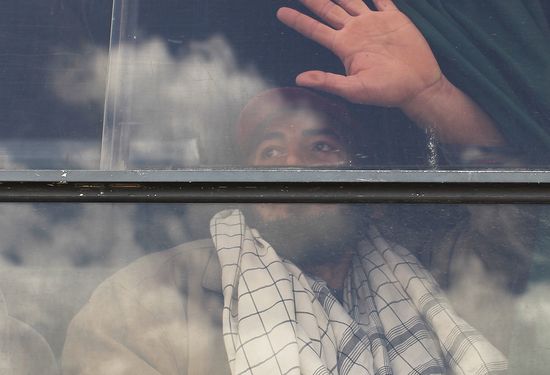
Face
By Noah Seelam/AFP/Getty Images.

Wednesday on the Dish, Andrew urged the right to give precedence its Oakeshottian tendencies, and backed up Michael Cohen on Afghanistan's bunk PR cycle, and Haley Barbour deviated from the party line. Al Qaeda tried to woo Libya, Max Boot and the rest of the armchair generals got a chubby for war, and Douthat compared US intervention to adopting Libya as a child. Graphic and shocking videos arrived from Bahrain, and Syria heated up.

Conor considered the victims as global neighbors, readers reflected on architecture after the earthquake, the Wikileaks trove held info on Japan's nuclear plants that weren't earthquake-safe, we examined the economics of nuclear power, and Gregg Easterbrook feared an anti-nuclear backlash. Readers explained why the Japanese don't loot, Eamonn Fingleton worried about economic reverberations, and the cold could kill more than the quake. GiveWell advised on the best ways to aid Japan, and Andrew saluted the Japanese workers trying to save the day.

Andrew kept his guard up on Palin's enthusiastic base, Bernstein trailed the GOP death spiral, and Limbaugh led the Tea Party delusion train. Some people abused disability pay, readers called their bluff, Kathy Ruffing explored the limits of means-testing social security, and Ezra Klein kept on Evan Bayh's ass for his performance art on Fox. Victims fought back against their bullies, Balko wanted to shield forensics from bias, and Reihan learned long division from his sister. Avent and Meghan battled over NYC's density, an architect enlightened us on Portland's earthquake prep,  divorce could literally kill you, celebrities tweeted their suicide attempts, and Gilbert Gottfried made tasteless jokes.

Chutzpah watch here, VFYW here, MHB here, FOTD here, Sergio encore here, quotes for the day here and here, and dissents of the day here.

Tuesday on the Dish, Saudi Arabia invaded Bahrain, and Andrew raised red flags looking back to Kuwait, and ahead to the world's oil supply. In Libya, Hitchens itched for intervention, Peter Feaver took issue with Obama's laissez-faire policy, and neocons ignored how the other two wars in the Middle East went. Marc Lynch warned Arab leaders don't want real American military intervention, a reader proposed an Arab League-funded no-fly zone, squatters took over Qaddafi's UK mansion, and Babak Dehghanpisheh wondered whether Libyan rebels can hold their ground. NHK live-streamed updates in Japan, Godzilla lived in Japan's memory of Hiroshima, Sharon Begley warned of radioactive pools, and Clive Crook voiced fears of the spent fuel factor. Seattle prepared for a quake of their own, Evan Osnos kept an eye on China's nuclear plants, the tsunami hit the global economy, and Tyler Cowen encouraged you to donate to Japan. The Japanese didn't loot, we relived the mountain of water hitting, and your reassuring quote of the day is here.

Andrew examined tax breaks and how they affect the debt crisis, and countered Mark Levin as he chronicled the war over Palin on the right. Huckabee rode the wave, Palin flailed for attention on energy policy, and Yglesias fumed at Evan Bayh's new Fox gig. Romney's healthcare vote troubled voters more than his Mormonism, Bachmann urged a Tea Party revolt, a reader refuted Limbaugh with his own disability story, and a slew of anti-evolution bills crushed the social issues truce. Avent explained why NIMBYism is bad for the environment, California was two-faced, and the DEA went after Montana's medical marijuana. News travelled via new media, a sane conservative blog comforted Andrew, and Rummy regretted FOIA. Catherine Rampell described the unhappiest person in America, Alexis glimpsed a DIY appendix removal, and a reader hatched the ultimate rich girl's American Idol. Tom Waits appreciated mishearing, Joel Johnson confessed his tech guilt, we watched Pokemon backwards, and Beard Madness began.

Malkin awards here, here and here, hathos alert here, chart of the day here, FOTD here, MHB here, VFYW here, and VFYW contest winner #41 here.

Help

Monday on the Dish, we tracked the latest from Japan, a man survived two days at sea, and we gathered info on how to help. China reacted, and Mark Vernon intuited the religious meaning of the wave. Boing Boing explained power plants, Michael W. Golay assessed implications for the US, and Andrew favored nuclear energy to cut down on our carbon intake. Qaddafi's forces moved east, Niall Ferguson proposed a Helsinki Final Act, and John Lee Anderson reported from the front lines. Contra Mark Steyn, Andrew assessed Obama's temperament, Greenwald called Obama out on being untrue to his word, and the US aped torture methods from the show 24.

Brave voices on the right unleashed on Palin, Larison parsed the timing of their turn against her, but Rush came to her defense. Judd Gregg didn't underestimate her, Keith Humphreys predicted religion would derail some candidates, and Americans do want a truce.  Ronald Reagan supported collective bargaining, Heather Mac Donald applauded Wisconsin's Republicans, Haley Barbour's press secretary let loose, bias is hard to admit, Readers defended one man's confession of infidelity, John Corvino applied the monogamy debate to gays, and Alex Massie kept tabs on the Lib Dems. Standardized testing is a farce, female teachers helped women choose math and science, and Alan Jacobs wanted to end year-end student evaluations. DC commuters hitched a ride, cupcakes and gang violence overlapped, and children love cartoons more than they love sugary cereals. Ta-Nehisi demystified White Flight, digital storage shrunk, and Will Wilkinson qualified the happiness of the happiest man in America.

Photos of where children sleep here, non-racist jokes here, quotes for the day here and here, correction of the day here, life through a dog's eyes here, Malkin award here, Goldblog bait here, headline of the day here, VFYW here, MHB here, and FOTD here.

–Z.P.


The Weekly Wrap

Today on the Dish, we live-blogged the earthquake and tsunami in Japan. We gathered sources from around the web, readers marveled at Japan's preparations (compared to Katrina and Haiti), and we resolved whether there are more major earthquakes today. Alan Taylor curated the photography as it came in, and Juan Cole urged humans to unite around the disaster. Ackerman deconstructed the no-fly zone, Douthat opposed one, we rounded up opinions on US policy towards Libya. Andrew Exum unearthed stats on Iraq's Libyan insurgents, Anderson Cooper tracked Qaddafi, and Leon Wieseltier mounted his high horse to blame Obama. We stayed on top of Iran, and these are the hearings King should have held. Andrew prayed for David Kuo and saluted a soldier and his dog.

Palin and Huck could sit out 2012, Obama death-hugged Huntsman, and Bristol kept it classy. Andrew Sprung reformed the budget by fiat, Ezra Klein called Boehner out on taxes, and a reader schooled Limbaugh on drunks on disability. Teacher pay peaked late, a SWAT raid killed grandpa, and the more educated a Republican the less likely they are to believe in climate change. Jay Rosen played doctor to NPR's wounds, Heather Mac Donald was underwhelmed by the scandal, and a reader pestered them to relinquish their federal funds. The drug war is real and deadly serious even outside the Wire, players kept feeding arcade machines, and advice for economists continued coming. We tracked gay marriage in Maryland, readers blasted a non-monogamous confession, and penises can be weapons. Flying cars exist, Cassidy drove his car against bike line traffic, and Andrew hugged it out.

Charts of the day here and here, Yglesias awards here and here, poseur alert here, comment of the day here, VFYW here, MHB here, and FOTD here.

Absolutely Cuckoo Cats from SINLOGO on Vimeo.

Thursday on the Dish, Andrew clarified his position on indefinite detention and torture to Greenwald, a reader gave the military their due, and a new paper revealed the conditions that make states stop torturing. Andrew countered Fareed on supplying arms to Libya, Graeme Wood humbled the US, Steven Cook urged us to have a light touch in Egypt, and we parsed Khamenei's continuing purge. Andrew backed Bagehot in treasuring others' right to offend, we tracked King's crusade, Tyler Cowen glimpsed the fiscal endgame, and the US was slowly becoming Greece. We rounded up Wisconsin reax, and Nate Silver predicted a backlash.

Massie prodded Romney's robot exterior, we poked his plastic veneer, and wondered if Limbaugh could back him. John Phillips ordered the Palin Caramel Macchiato, Bernstein un-victimized her, and Eminem could challenge her. Ezra Klein made the case for bike lanes as pro-car, Republicans prevented ex-felon votes based on partisanship, and Andrew wondered whether James O'Keefe was a journalist or a prankster with a knack for entrapment. Wilkinson brutalized Brooks, Limbaugh discovered unemployment benefits and didn't approve, and even bloggers on the right don't read many right-leaning voices. Steve Cheney rebelled against Facebook comments, industrial agriculture danced with nature American Beauty style, and Arnold Kling advised economists.

Brigham Young professors had to remind students to shave, beards don't mix well with fire-breathing, and lost and found is fun. A reader confessed his own marriage infidelities, another wanted NPR to embrace their bias, and we remembered David Broder. Eve Conant updated us on the final death throes of DADT, Andrew picked American Idol favorites, Goldblog made love to America, James Franco's brother gay-dueled, and straight men made out for celery. Yglesias award here, creepy ad watch here, hand-drawn New York here, chart of the day here,  yesterday's chart reconfigured here, history of science fiction here, VFYW here, FOTD here, and MHB here.

Vfyw
Brooklyn, New York, 8.45 pm

Wednesday on the Dish, Andrew rebuked Hitchens and his "Do Something" brigade on Libya, Leslie Gelb made the case for staying out, Lexington and Scoblete considered America's Iraq Syndrome, and food aid was on its way. J. Dana Stuster warned of nuclear war between India and Pakistan, Issandr El Amrani wanted an Egyptian truth commission on crimes, a former Iraqi PM laid the truth down, and Ackerman kept tabs on the steady number of Afghan insurgents. The torture that sustained Gitmo in the Bush era ended, but that didn't solve the question of the remaining prisoners.

Andrew explained why NPR's liberal bias is different than FNC's on the right, and Peter King dug himself deeper. Palin fans didn't like Newt, but it was more about the arrogance than the infidelity. Steve Kornacki eyed Romney's chances, Douthat awarded him the win by default, and Limbaugh's second caricature of Obama contradicted his first. Bernstein countered Ezra Klein on whether Republicans need their own healthcare plan, readers shared their own views of American inequality, and the economy doesn't always represent how much (or what) people consume online. Prison rape could be prevented, but Balko wasn't impressed with government efforts to do so. A new paper questioned the emotional and economic rewards of having children, and Andrew engaged Dan Savage on his conservatism and the human capacity for monogamy

Dish readers gave the beard nod, the Sullivan nod helped sell wine, Andrew studied up on a scientific approach to beards, and Jesus was probably clean-shaven. Seattle could have shared Detroit's fate, Angry Birds saved a company, cycling was the new parcour, and bicyclists weren't to blame for traffic. The great debate over rural versus urban continued, and the only way to stop humming Britney Spears is to come to terms with it. We meditated on Lent, Andrew allowed for forgivness for Newt's sins, a reader gave up the Dish, and a four-year old answered all of life's questions.

Chart of the day here, email of the day here, dissents of the day here, VFYW here, MHB here, and FOTD here.

Face_day
By Ahmad Gharabli/AFP/Getty Images.

Tuesday on the Dish, Andrew rebutted a reader on military intervention in Libya, while others assessed what's in it for the U.S. Qaddafi attempted to starve rebel strongholds, threatened the Guardian's Peter Beaumont with death, and ramped up attacks. Roger Cohen viewed American intervention with pessimism, a Muslim cleric argued extremism was a reaction to the violence of the state, and Anderson Cooper was on Qaddafi's trail of his lies. Issandr El Amrani laid out press lessons from Tunisia and Egypt, Egyptians stormed the secret police HQ with cell-phone cameras, and Peter Beinart called out homeland security for singling out Muslim Americans for terror. Obama reversed his Guantanamo decision, John Yoo took advantage, and Bradley Manning's torture depressed Alex Knapp.

Andrew reveled in 18 minutes of pure Palin and made her enemy list, while the rest of the blogosphere placed their 2012 bets. Josh Green went with darkhorse Santorum, Romney puzzled everyone, Frum had second thoughts on Pawlenty, and Mitch Daniels resembled the President's barber. Drezner downplayed the Tea Party's foreign policy, and a journalist duked it out with a cabinet member on rural interests. Andrew urged Obama to bring back the Reagan era tax rates to make heads explode and Limbaugh's staff laughed at him. Brigham Young outlawed beards for Mormons, mostly because of the hippies and Matt Zwolinski contemplated legal prostitution. Andrew defended the libertarian plan for healthcare reform, and a Republican state senator came out in favor of civil unions. Andrew gave some ground on marital monogamy and those who wait, Andrew Stuttaford cheered Christians for not reading the bible, and a pastor outed Dan Savage as a reality-based conservative. Arcades didn't last even with Canada's loonie, poison squads used to keep America's food safe, and we examined urinal cakes and the economy. Bieber calculated his YouTube persona, no one can mention love at a congressional hearing, and NPR is run by liberals.

Map of the day here, quote for the day here, dissent of the day here, Malkin award here, chart of the day here, parliamentary jamming here, freelancer's invoice here, Sully bait here, Douthat bait here, tatooed story here, MHB here, FOTD here, VFYW here, and contest winner #40 here.

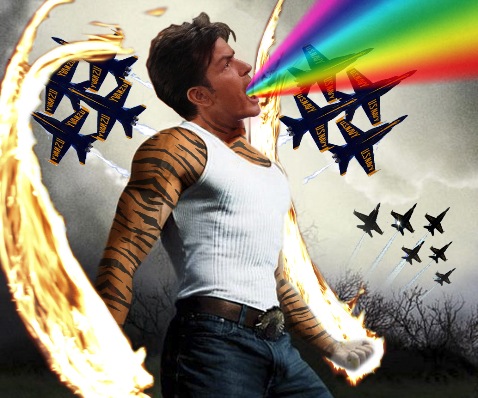
Monday on the Dish, Andrew reengaged Palin on her life as a redacted "open book." Andrew deconstructed the empty GOP field for 2012 (read: blame shameless Fox and Palin), and, with the help of Aristotle, denounced inequality in America and the right.  Andrew offered support for Bailey's libertarian healthcare mandate, and Tom Coburn stood up to Hewitt on housing and the deficit. Andrew sided with Gates against Kristol's cheap shots, Obama gained ground over Walker, and Doug Elmendorf revealed the advantages to tackling the debt now. Glenn Reynolds preferred a syphilitic camel over Obama, the GOP lusted after styrofoam cups and pulled a Charlie Sheen in #winning. Mickey Kaus defended John Edwards, David Brooks got a blog, and gay marriage mattered less to black voters. Ross categorized everyone's sex lives into two camps, readers responded with their own tales of premature monogamy, Saletan inquired about lesbian anal, and Mike Huckabee vibrated.

Andrew urged caution in the face of John McCain and John Kerry's calls for a no-fly zone and Arab regimes realized the status quo cannot be maintained. Black African migrants were rounded up and forced to be mercenaries in Libya, and food shortages affected rebel forces. We charted the timeline of psychology and torture, and former Guantanamo prosecutor Morris Davis called out Obama for standing on a rocky pedestal, re: Libya. Afghanistan's mission to protect wasn't clear cut, and Saudi Arabia turned ripe for revolution. Some countries will always lead the world, gays wore plaid, and a blind man could see your crappy parking job. Arcades died without dollar coins, the era of cheap food ended, and humans liked avatars the more they look like us. James Parker unpacked Bieber's appeal, and an artist ordered flowers for all the mental health patients who never received them.

MHB here, VFYW here, FOTD here, chart of the day here, quotes for the day here and here, and dissents of the day here.

–Z.P.

The Weekly Wrap

Today on the Dish, Andrew commended Obama for not taking sides (or credit) for the Arab 1848, but kept at his heels for blowing it on the debt. Boehner stepped up his deficit game, Paul Miller urged Obama to not let the media influence his policies in the Middle East, Haaretz struggled, and Deborah Fallows considered China's little people. Petraeus offended Afghan parents, IEDs continue to go off in Iraq, and future Days Of Anger may brewing

Andrew dashed Newt's chances, the radio right lusted after Chris Christie, and Huckabee dissed Natalie Portman. We collected reax to the new jobs report, Andrew apologized to Ryan Lizza, Rotary clubs support exchange student programs, and Dodd switched sides for lobbying. Bad teachers could take five years to fire, E.D. Kain defended their protections, and readers weighed in. Will Wilkinson birthed Bleeding Heart Libertarians, and Reason once advocated for a libertarian healthcare mandate. Ezra Klein scoffed at government bureaucracies on film, the Air Force taught that Harvard can be a terrorist-training camp, and the GOP didn't want a government shutdown. Cyber threats were hard to trace, cell phones changed Africa, and Qaddafi's family had their own Buster Bluth. Hipsters made it cool for young men to rock beards, we recapped a great (yes) Nascar race, Andrew revealed which Angry Birds he hates most, and this Twitter feed tells you when movies expire from Watch Instantly.

Charts of the day here and here, dissents of the day here, tipping infographic here, profiles in courage watch here, poster of the day here, poseur alert here, MHB here, VFYW here, and FOTD here.

Shinkansen ver.2 from daihei shibata on Vimeo.

Thursday on the Dish, Rush Limbaugh and Donald Trump wanted big American balls, Palin's excesses helped her, while most politicians distance themselves from the crazies. Ramesh Ponnuru predicted a Palin-Romney smackdown, Ailes ruled the primary, and Andrew scoffed at Huckabee on imperialism. Indonesia boasted more Boy Scouts than the US, some world leaders exit gracefully, and Andrew and Lizza went another round on journalists publishing other journalists' emails. Andrew Romano weighed a Christie candidacy, high gas prices might not hurt Obama, and Newt kept flirting with America.

The blogosphere parsed the economics of state pensions, Bernstein debated the political identity of union members, and polls confirmed Walker's over-reach. Republicans believed climate change but not global warming, tea partiers wanted to solve the debt without losing their entitlements, and Noah Millman fingered bad principals. Andrew ruminated on lessons learned from Charlie Sheen's drug escapades, Tyler Cowen heralded the golden age of non-fiction, and recovery remained slow. Internet porn didn't kill marriage,  cancer rates don't change for whales, recent graduates don't always get counted as unemployed, and Americans fetishized "Made in America."

Baghdad abused prisoners, Mubarak's thugs may have scapegoated Al-Qaeda, and Simon Henderson didn't see protests spreading to Saudi Arabia. The right debated Israel's reaction to revolutions across the Middle East, no countries wanted Qaddafi, and Serbia offered a better example on no-fly zones than Iraq. Quotes for the day here and here, VFYW here, MHB here, FOTD here, chart of the day here, and a poem for Thursday here.

Charlie

Wednesday on the Dish, explosions rocked Tripoli on the 17th day of protests in Libya, Benghazi fell into a suspended state, and a Muslim dating site offered sanctuary for revolutionaries aiming to topple Qaddafi. Mark Thompson reminded us of No-Fly Zones from the past, the National Review opposed military intervention, and non-violence works.  Petraeus finally apologized for the murder of Afghan children, and Andrew consulted the Church's history on Jews and killing Jesus.

Andrew quibbled with Douthat on the Tea Party's fiscal conservatism, Joe Klein dismissed Huckabee for his old timey racism, and Ohio balanced the budget by banning same sex marriage. John Payne tracked the history of American conservatism, and the Onion nailed its youthful vigor. Readers came back hard against Andrew's teacher accountablity post, and small class size doesn't correlate with high achievement. Andrew still wasn't a fan of journalists publishing other journalists' emails to sources, but Ryan Lizza was. American confidence fed itself off of cheap gasoline, corporate tax revenues hit a new low, and intellectuals loved to bash intellectuals. Readers remembered European Imperialism, the third world wasn't prepared for treating cancer, and Gates called out Rummy's foreign policy. ClimateGate could never be undone, and the Obama-Palin poll gap was too close for comfort for Andrew.

Andrew eulogized the late Reverend Gomes, and celebrated gay milestones (and beagle owners) across the world. Technology can't replace face time (but it could troll your Facebook page), cities whooped the suburbs, and medieval scholars remembered more. Nick Carr tried to wrap his head around measuring information, and peak iPad may have already arrived. Charlie Sheen made for great New yorker cartoons and became almost indistinguishable from Qaddafi and Glenn Beck. Galliano succumbed to a vision of human beauty not dissimilar to Nazi eugenics, but Andrew was still glad he lived with America's distorted version of free speech rather than France's. Knut the cute polar bear evolved into a publicity addicted psycho, and Andrew loved his body traps.

Hewitt award here, VFYW here, MHB here, and FOTD here.

Face_day
By Farooq Naeem/AFP/Getty Images.

Tuesday on the Dish, Andrew challenged Niall Ferguson on whether McCain or intervention could help America's cause or the well-being of people in the Middle East. We tracked Tehran's heavy clashes and escalated repression, and Joel Wing traced Iraq's protests back to the Day of Rage. Richard Florida assembled the index of political unrest, Qaddafi was the sort of dictator to hang students in a university's main square, and according to the military, a no-fly zone would be a military operation. Egypt and Tunisia could learn from Asian revolutions and the small window of democratic opportunity that followed, Facebook mattered, and Egypt's military crafted their media campaigns.

Andrew demolished Huckabee's insane birther gaffe, Palin was still making Andrew nervous, and the Palestinian Prime Minister was following her Facebook model. Julian Assange pulled a Helen Thomas, and John Galliano pulled a Mel Gibson. Andrew still had problems with teachers' concessions as part of a larger union problem, even as they were winning the debate. Mickey commended MoveOn as the new union model, Wilkinson debated Ezra Klein on whether big labor is green, others argued public sector unions may be headed for the door, while Drum sounded the alarm for the GOP. Serwer called out Newt the culture warrior, Seth Masket argued you can't run government like a business, evangelicals wanted to cut spending for the poor, and the rich vote like rich people. Economists could be the new climatologists, and Noah Millman pondered American aversion to inflation.

Musical chairs continued at the NYT, Alexis unmasked Twitter's MayorEmanuel, and the publisher could die at the hands of a 26-year-old self-publishing author. CEOs with daughters paid female employees more, child brides had lower literacy rates, and Carol Joynt confessed how breast cancer is a swim in quicksand. Dish readers loved cock and boner too much to go along with the new rules, while Beast readers bemoaned Andrew's loyalty to the Pope. Bush gave the original King's Speech, people should write like they talk, and beards were mysterious and practical. 

Hewitt award here, quote for the day here, FOTD here, MHB here, VFYW here, and VFYW contest winner #39 here.

Vfyw
Port of Spain, Trinidad, 4.30 pm

Monday on the Dish, we shared some exciting home news and readers reacted. Andrew debated fear versus hope in the Arab 1848, and investigated how Bush's torture regime could have contributed to the uprisings. The wave reached Oman, Tehran tightened its grip, and another prime minister bit the dust in Tunisia. Edward Rees explored Libyan logistics for a no-fly zone, James Traub explored Qaddafi's former appeal, and the right lumped together all Muslims. Egyptians queued up for simple things like a bus, and hit a bump in the sectarian road.

Andrew established new rules for Boner (Boehner) and Cock (Koch), and Chait tested the Kochs' libertarian commitments.  Will Wilkinson connected the Tea Party to leftist protests in Wisconsin, and Nate Silver calculated their political power. Hertzberg traced Wisconsin's fault lines, Reagan appreciated a compromise, and evangelicals looked down on debt as a sin. Christians needed to accept the normalization of gay marriage, Boehner promised a DOMA decision this week, and David Link unraveled Newt's take on Obama's gameplan. Doug Mataconis celebrated the condoms, the ACLU defended the Ten Commandments, A. Barton Hinkle made the liberal case for property rights, and Calculated Risk summed up the jobs we've lost. The NYT changed with the times, gender gaps plagued journalism, and Rumsfeld condescended to Condi.  GPS stopped kids from playing hooky, sidewalk rage helped society, and nuns had suffrage before many women. Facebook captivated the world, one man converted to a beard devotee, and some dogs are dumber than other dogs.

Chart of the day here, quote for the day here, Malkin award here, VFYW here, MHB here, and FOTD here.

–Z.P.

The Weekly Wrap

Today on the Dish, Qaddafi remained amid ongoing violence, a Libyan prayed for help while trapped in his house, and Alexis explained why technology isn't good, bad or neutral. David Ignatius believed Qaddafi has been high on drugs, Exum played mad-libs with Obama's thoughts, and Larison argued intervention could lead to more slaughter. A reader questioned casualty numbers in Libya, while another found encouragement in Egypt's progress. Protests finally arrived in Iraq, 23 streets lead to Tahrir Square, and J. Scott Carpenter reminded us about Tunisia.

Andrew urged Congressman Broun to resign, after today's Tuscon Relapse Watch. We untwisted test scores from collective bargaining, and Andrew explained the enhanced scrutiny on public sector unions in hard times. Ira Stoll spun the Koch-backlash, and Scott Walker had never even met the man. Andrew connected the turning tides in Wisconsin to gay marriage in the US, readers nailed Obama's DOMA decision, and Misty Irons connected it all back to Prop 8. We peered into Mitch Daniels' cannabis closet, the movement right attacked, but Andrew praised Daniels for his pragmatism on right-to-work legislation. Fox News distorted the GOP primary by paying candidates, National Journal measured today's record partisan gap, and Andrew called out Huckabee on his radical pandering to Israel. We rounded up reax to the psy-ops expose, and Spain allowed a trial on Gitmo's torture. Tim Lee thought through grocery store express lanes (for a price), TNC rejected racial hopelessness, and Matt Yglesias compared today's unmarried men to those of the 1890s. We watched the shuttle launch from a Dish reader's window, and Americans thought Obamacare was already repealed. Pickpockets were dying out, holograms could teach classes, and Andrew appreciated John Travolta's new do.

Beard PSA here, dissents of the day here, charts of the day here and here, Yglesias award here, Malkin award here, skidmarks on water here, creepy ad watch here, VFYW here, MHB here, and FOTD here.

Face_day
By Spencer Platt/Getty Images.

Thursday on the Dish, Andrew picked apart Obama's marriage decision. Linda Hirshman saw a trap for Republicans, Jonathan Turley said it was still up to the Supreme Court, and Fox News reported blatant untruths about the decision's implications. Ilya Somi questioned what Obama has to defend, Jason Mazzone called it a gamble, and David Link narrowed it back to the question on Section 3. Civil unions arrived in Hawaii, and Timothy Kincaid envisioned what happens if Congress doesn't defend DOMA.

We took a step back to get perspective on the Arab 1848 and how long it's been brewing; day 11's full recap and analysis is here. Qaddafi went off the deep end (by phone), Drudge swallowed his poison, and some predicted the end is nigh. Beinart questioned the conservative's ability to accept democracy in the Middle East, Robert Fisk reported on the quiet in Tripoli, and Libya's effect rippled through the oil markets. The American public wanted the US to leave Arab countries alone, and we dug up the right's reactions to Bush's second inaugural speech and its call tyranny in the world. John Bohannon examined whether war is irrational, and Exum wondered who was really in charge. Americans lobbyists represented Qaddafi, EA caught up with Egypt, Santorum defended the Crusades, and Tom Friedman mixed his metaphors. 

We debated whether state workers are underpaid or overpaid, but closed the case on whether breaking teacher's unions aids education. Josh Sides compared unions and state debt, Rhodes Cook looked to Wisconsin's influence on 2012, and Weigel read the mood on the Kochs from Wisconsin. Reihan said Walker is just like any other politician fawning after celebrities and donors, Abe Lincoln once fled, and another insane attorney-general staffer bit the dust.  The US got served in the cannabis research race, North Korean kids didn't weigh up  to their South Korean counterparts, and robot journalists waved from the horizon.

Charts of the day here and here, experiment in beardage here, Palin crack here, Yglesias award here, VFYW here, MHB here, and FOTD here.

Wednesday on the Dish, we tracked Libya's tenth day of protests, from early morning all the way to tonight, while Qaddafi's own soldiers refused to kill their fellow Libyans. Alexis charted Libya's plummeting oil production, and Abigail Hauslohner confirmed Facebook's central role in their revolution. Tribal structure mattered in Libya, Larison considered the US citizens trapped there, and we examined the list of Qaddafi's dwindling allies. A reader translated a French doctor's account of the mounting carnage in Libya, while another reader gave a deep read to Bahrain's constitution. Andrew kept an eye on the Saudis, Ahmadinejad threw stones while sitting in his glass house, and Iranian television sounded eerily similar to Glenn Beck.

Obama decided to no longer defend DOMA. Ambinder translated what that means, while some prepared for Y2Gay. The full web reax is here.

Walker got pranked, lost Clive Crook, and maintained his "campaign promises" despite facts to the contrary. Nate Silver sifted the Wisconsin polls, Ozimek stood by his stance on unions by citing education reform, and Wilkinson added his voice on what he called the left's Tea Party. Andrew bashed the House Republican budget, John Yoo flashed his chutzpah, Rumsfeld revealed Bush's plans for Iran and was a little too honest about why we went to Afghanistan. Andrew got his Palin fix, she denied her fake Facebook account, but readers pointed to the cunning way she handled it. We weighed Mitch Daniels' merits, Jason Kuznicki linked freedom and spending, China needed water to succeed. Police dogs aimed to please their owners, Andy McCarthy duked it out with Sanchez some more on the Patriot Act, and Seattle Times favored legalization. Crime shows are politically purple, Sarah McLachlan knew how to ruin your day, and bees don't need warrants to search your house.

Quote for the day here, tweet of the day here, dissent of the day here, Tucson relapse watch here, VFYW here, MHB here, and FOTD here.

Vfyw
Atlanta, Georgia, 10 am

Tuesday on the Dish, mercenaries attacked protesters and defected military, we gawked at cuckoo Qaddafi (the short version), and our jaws dropped as he rambled on. We weighed options for what the international community could do, Andrew balked at Wolfowitz's calls for a no-fly zone over Libya, and Larison argued against it. Andrew Solomon itemized Qaddafi's mistakes, and Evgeny Morozov fingered why social networks can be dangerous when governments don't fall. The first Western journalist entered Libya, John Barry enlightened us about "coup-proofing," and Andrew Barwig cautioned us to examine future electoral reform. The 1848 analogy gained steam, we previewed Iraq's day of rage, and full coverage from the long and violent weekend is here.

Andrew called Walker on his campaign promises to end collective bargaining for public sector unions, and found serious flaws in his budget. Ezra Klein asked if the GOP's hardball would pay off, Andrew called it over-reach, and Will Wilkinson questioned the left's back-up plan. The National Review offered a platform to the ever-incendiary Breitbart, and Rush Limbaugh went there. Maryland moved closer to marriage equality, Bruce Barlett examined tax trends, and Sanchez rebutted Andy McCarthy on Patriot Act wiretaps. Noah Millman chose foodie curiosity, and Felix Salmon raised renting over ownership as the next American Dream. Palin liked herself on Facebook, the Internet betrayed its partisanship, and Andrew unpacked her lies about reading all the newspapers.

Memo of the day here, quotes for the day here, here, and here, the future of eco-trash here, MHB here, FOTD here, VFYW here, and VFYW contest winner #38 here.

Flag

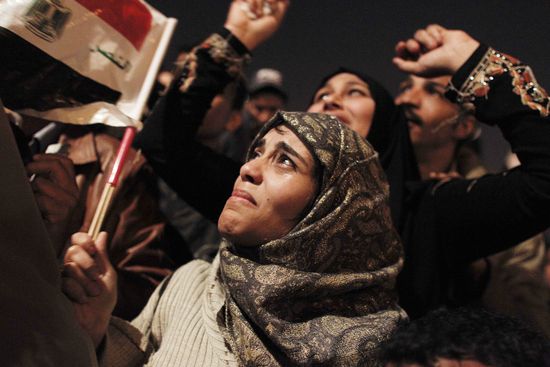
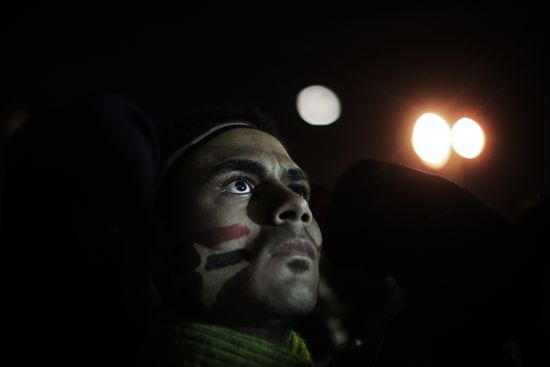
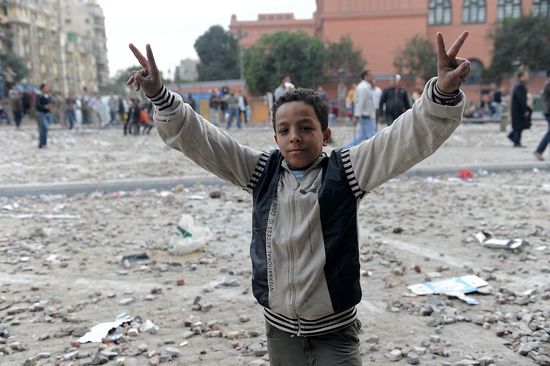
Monday (and over the long weekend) on the Dish, Bahrain, following a week of violence, took a big turn for the better on Saturday as security forces ceded Pearl Square to the protesters. Nick Kristof conveyed the joy of the crowd but cautioned against declaring victory just yet. Andrew hoped that calls for a constitutional monarchy come through and wondered about Obama's behind-the-scenes role. A young Bahraini girl smiled with guarded optimism, a Bahraini boy signaled victory, and a Muslim boy joined the cause against extremism.

Meanwhile, the brutal violence in Libya continued to escalate. Massacres carried over into Sunday, spreading from Benghazi to the capital city of Tripoli. Qaddafi's son took to the airwaves that night to threaten an even bigger crackdown. The people reacted with rage while a group of prominent Muslim leaders implored the regime to refrain from violence. Those calls went unheeded as the bloodshed poured into Monday. Disturbing reports and graphic images here, here, here and here. As military commanders defected to the West and ambassadors abandoned their posts, Qaddafi appeared to be in his last throes.

A big reax of Libya analysis here. Marc Lynch pushed for US and UN intervention, Daniel Byman assessed American interests in Libya, and Ryan Avent fretted over the economic shocks. Andrew compared the Arab uprisings to the European revolutions of 1848 and pondered the impact that Bush and other neoconservatives may have had on the former. A glance at the far right's reaction here. Lucan Way described the vulnerability of regimes based on patronage while Graeme Robertson examined how protests topple regimes in general.

The Green Movement in Iran had another big day of protests on Sunday; read our news roundups here and here; watch footage from the streets here and here. Yet another Muslim nation, Morocco, joined in the democratic uprisings; read a roundup here and watch footage here and here. There were even some rumblings in China.

In Egypt coverage, the Dish took a long, comprehensive look at the country's future. We also kept an eye on Sheikh Qaradawi – a guru for the Muslim Brotherhood who just returned from exile – and dug up some disturbing data. Ian Johnson sharpened our view of the Brotherhood. Jeff Strabone addressed the post-Mubarak impact on Israel.

On the media front, Morgan Meis praised Al Jazeera's oil-financed integrity, Dan Drezner delved into the disastrous message control of Arab regimes, Andrew Exum emphasized the role of cell phones in the uprisings, Clay Shirky talked sense on the impact of Twitter and Facebook, and Malcolm Gladwell's thesis crumbled even more.

A reader commented on our coverage. Another provided a placid view of Isfahan, Iran.

— Z.P. & C.B.

The Weekend Wrap: Revolution In The Air

AP110220028721_

A lot happened over your holiday weekend. Bahrain, following a week of violence, took a big turn for the better on Saturday as security forces ceded Pearl Square to the protesters. Nick Kristof conveyed the joy of the crowd but cautioned against declaring victory just yet. Andrew hoped that calls for a constitutional monarchy come through and wondered about Obama's behind-the-scenes role. A young Bahraini girl smiled with guarded optimism, a Bahraini boy signaled victory, and a Muslim boy joined the cause against extremism.

Libyaflag

Meanwhile, the brutal violence in Libya continued to escalate. Massacres carried over into Sunday, spreading from Benghazi to the capital city of Tripoli. Qaddafi's son took to the airwaves that night to threaten an even bigger crackdown. The people reacted with rage while a group of prominent Muslim leaders implored the regime to refrain from violence. Those calls went unheeded as the bloodshed poured into Monday. Disturbing reports and graphic images here, here, here and here. As military commanders defected to the West and ambassadors abandoned their posts, Qaddafi appeared to be in his last throes.

50780409

A big reax of Libya analysis here. Marc Lynch pushed for US and UN intervention, Daniel Byman assessed American interests in Libya, and Ryan Avent fretted over the economic shocks. Andrew compared the Arab uprisings to the European revolutions of 1848 and pondered the impact that Bush and other neoconservatives may have had on the former. A glance at the far right's reaction here. Lucan Way described the vulnerability of regimes based on patronage while Graeme Robertson examined how protests topple regimes in general.

The Green Movement in Iran had another big day of protests on Sunday; read our news roundups here and here; watch footage from the streets here and here. Yet another Muslim nation, Morocco, joined in the democratic uprisings; read a roundup here and watch footage here and here. There were even some rumblings in China.

109330491

In Egypt coverage, the Dish took a long, comprehensive look at the country's future. We also kept an eye on Sheikh Qaradawi – a guru for the Muslim Brotherhood who just returned from exile – and dug up some disturbing data. Ian Johnson sharpened our view of the Brotherhood. Jeff Strabone addressed the post-Mubarak impact on Israel.

On the media front, Morgan Meis praised Al Jazeera's oil-financed integrity, Dan Drezner delved into the disastrous message control of Arab regimes, Andrew Exum emphasized the role of cell phones in the uprisings, Clay Shirky talked sense on the impact of Twitter and Facebook, and Malcolm Gladwell's thesis crumbled even more.

A reader commented on our coverage. Another provided a placid view of Isfahan, Iran.

— C.B.

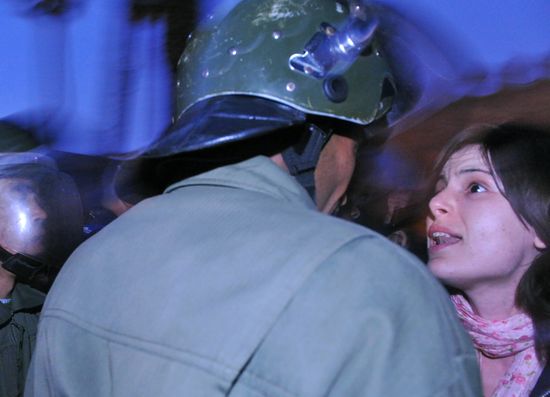
(Photo of celebrating Bahraini protesters by Hasan Jamali/AP; Libya's new flag by khalidalbaih, via BoingBoing; photo of Qaddafi by Mark Renders/Getty Images; video of Iranians chanting “Independence! Freedom! Iranian Republic!”; photo of a demonstrator arguing with a police officer in Rabat, Morocco by Abdelhak Senna/AFP/Getty Images)

The Weekly Wrap

Today on the Dish, Andrew differed with Larison on the future of protests in Iran, and protesters planned for a bloody Sunday. The Bahrain monarchy gunned down protesters by helicopter, Twitter tracked the voices on the ground, and doctors appealed for help. Jacqwi Campbell captured the protests and the police force, we analyzed the religious split, Mark LeVine assessed the US' interests, Ashley Bates provided a primer, and the crackdown continued. We tracked the aftermath of the rage still simmering in the Middle East, Libya sounded off, Nathan Brown glimpsed Egypt's future, and Najla Abdurrahman worried about Libya's invisibility. Gregg Easterbrook hoped for the end of family rule, Fareed Zakaria tracked the Mid East's youth bulge, and Western influence in the region crumbled.

Jacob Stokes lambasted defense budget hawks, we imagined taxes solving the deficit, and Ezra Klein asked progressives to compromise on it now rather than later (without Obama). GOP Senators caved, and partisanship prevailed. Andrew took Joe Klein's view on Wisconsin, and Adam Ozimek considered the drug war's casualties. Andrew admired the political spectrum reimagined, but didn't buy Palin's Birther dismissal. Jennifer Rubin dismissed Newt for 2012, and Palin crumbled under the media boycott. Nina Shen Rastogi exposed Bieber fandom's darkside, Evan Osnos perused Harvard lectures in Chinese, and hello used to imply surprise. The New Yorker fact-checks poems, and women earn more but don't spend it on dress socks.

Cool ad watch here, Moore award here, Yglesias award here, quote for the day here, FOTD here, MHB here, and VFYW here.

Bahrain
By John Moore/Getty Images

Thursday on the Dish, Andrew inquired as to just when the adult conversation on the budget might begin. He tackled Medicare cuts, and others even if they might hurt people now, because they'd hurt more later. Heather Mac Donald urged Obama to call the GOP's bluff, Andrew examined debt in the Golden state, and parsed Wikileaks on Uganda and the gays. We kept tabs on the protests across Bahrain, Yemen and Libya. Mousavi went missing, and Joshua Tucker tallied the lack of violence that usually characterize successful revolutions. Andrew downed Clive Crook's straw man attacks on Facebook, Amy Davidson marveled at the moving Twitter cloud of Mubarak's resignation, and Anand Gopal reported on strikes across Egypt. Ursula Lindsey catalogued sexual harassment in Egypt (readers wrote in about the US), John R. Guardiano reminded us that Muslims saved her, and Ann Friedman argued female journalists also get greater access to stories. Hamilton Nolan broadened the debate,

Frum outed Chris Christie as the RINO-proof nominee, we dug deeper into the Patriot Act reauthorization, and Birtherism is a shibboleth. The GOP's foreign policy muscles deteriorated, FBI may have fooled us twice, and Palin was still thinking about running. John Cassidy viewed the deficit through the bond market lens, and Bruce Bartlett urged Republicans to take a big bite out of the apple. Edward Glaeser pointed to urban schools as the great challenge of our era, Norm Geras weighed voting for convicts, and Mike Konczal exposed why the budget can't help reform prison policy. Reihan applauded the advantage of the English language, gay marriage isn't a slippery slope, and Seth Godin was curious about your overlooked gems. Readers nerded out on Watson, Ken Jennings relived his battle, Keisel sacrificed his beard for charity, and we checked out the Asscam.

Cool ad watch here, app of the day here, FOTD here, MHB here, VFYW here, and the real recipe for Coke here.

Face_day
By Esteban Felix/AP.

Wednesday on the Dish, Andrew chided Obama for being more neocon than the GOP on the military budget, and wagged his fingers at Americans for being closet socialists. Andrew joined Frum in itemizing the right's budget delusions, and Ezra Klein clung to his optimism. We examined how Americans view defense spending, Kay McDonald blamed high food prices on corn ethanol, and Howard Gleckman continued to lay into Obama. Nyhan yawned at Silver's 2012 predictions, and Larison worried over Mitch Daniels' penchant for pandering. We photo-hunted the two-faces of National Review, and the right thought Islamists were infiltrating their ranks. Goldblog wasn't laughing at rape jokes, young conservatives shamed an old racist dude, and Dan Savage's Santorum prank lived on.

Libyans took to the streets, Tom Kutsch assessed regimes' stick and carrot methods to try to stop protests, and a reader gave us the insider baseball dish on Egypt. Andrew shed light on the disproportionate killings leaked in the Gaza memo, and Iraq's dysfunctions ran deep. Readers rebutted Gladwell, Brian Fishman contemplated al Qaeda's tone-deaf response to the revolutions, and not all Islamists are created equal. Andrew tested Beiber-Gaga magic, and previewed Matt and Trey's "The Book Of Mormon," Pinker didn't trust Watson to do more than play Jeopardy, and Jim Behrle prayed for a human win.

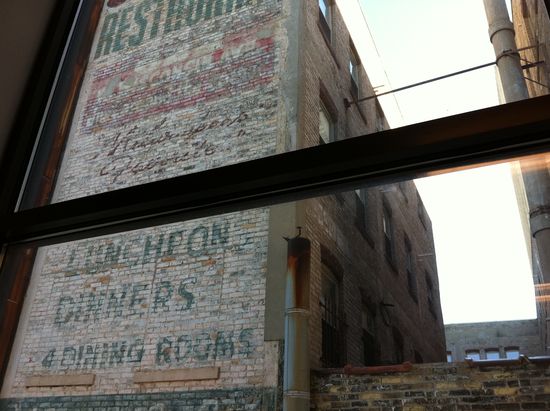
The best Mac apps here, ghost signs of Chicago here, content farm here, quote for the day here, dissent of the day here, Malkin award here, Moore award here, MHB here, FOTD here, VFYW here and unofficial contest here.

Vfyw
Milwaukee, Wisconsin, 3 pm

Tuesday on the Dish, Andrew bore down hard on Obama for wimping out on the budget. Howard Gleckman joined the pile-on, Ezra Klein called it a spork for its ineffectiveness, and Annie Lowrey put the budget in a manageable perspective. Andrew nudged Paul Ryan to step up to the plate, the right debated entitlements, and Yglesias and E.G. argued Social Security for different generations. Andrew's eyes widened at Obama's delusions, but he wasn't breaking up with him yet.

Andrew remained optimistic but not delusional on Egypt, the Internet graded Obama's performance, and Obama just couldn't win with the right. Mohammed Ayoob feared military regimes, Wendell Steavenson reported the tenet of the revolution was holding, and Erik Voeten charted today's coups that lead to competitive elections. We took stock of yesterday's protests in Iran, where the government isn't beholden to American aid, and Persiankiwi tweeted again. Thomas Ruttig reminded us of Afghanistan's mini-Mubaraks, Joel Wing kept an eye on Iraqi protests, and Robert Mackey compiled the footage and accounts of Bahrain's protests.

Andrew demolished Gladwell's thesis on the Civil Rights Movement and social ties, and Kevin Drum countered David Carr on why Twitter didn't kill online news. Nate Silver compared Sarah Palin to Al Sharpton, and she spurred the voting Birthers on. The CPAC war raged on, fueled by a diminishing Limbaugh, and Julian Sanchez eviscerated the Heritage folks on the Patriot Act. Families defended their gay relatives, the internet needed display ads, and Watson would never make for great TV.

Malkin award here, sane conservatism watch here, creepy ad watch here, FOTD here and reaction to yesterday's here, quotes for the day here, here, and here, dissents of the day here and here, MHB here, a heartbreaking VFYW here, and VFYW contest winner #37 here.


Monday on the Dish, Andrew defended Anderson Cooper for calling out Mubarak's lies and pushed back against those who insist on the irrelevance of social media. Jeff Jarvis likened Zuckerberg to Gutenberg, Andrew responded to renewed calls for neoconservatism, and Ellis Goldberg considered a slow-motion coup. Cairo quieted down, Algeria got active, Bahrain erupted, and Iran ignited. Graeme Wood updated us on post-Mubarak emotions in Egypt, Twitter funneled viewers to Al Jazeera, and Frum insisted too much is unknown. Egypt reminded a reader of the birth of a child, and the revolution could be connected to sex. Bruce Riedel highlighted al Qaeda's irrelevance in Egypt, Heather Mac Donald upended America's obsession with foreign terror, and Dexter Filkins compared Afghanistan to Egypt under Mubarak. Olivier Roy argued Iran isn't a model because jobs can't be found in the Koran, Larison distinguished Iran from Egypt, and we kept tabs on the country's dramatic protests into the night.

Andrew informed anyone under 30 that Obama just threw them under the bus with his budget.  Andrew applauded Mitch Daniels for his CPAC dose of reality and praised Ron and Rand Paul for their candor and dissents. HuffPo profited off of vain writers willing to give it up for free, and Glenn Greenwald got targeted by a firm for supporting Wikileaks. Conspiracies don't die, stocks declined, and the Pigford case soaked up reactions from readers and in the blogosphere. Video games mirrored reality, Tyler Cowen shrugged over the new Ayn Rand trailer, O'Reilly got meme-ified, the Internet aged gracefully, and Andrew thanked everyone and Aaron

Quotes for the day here and here, chart of the day here, MHB here, FOTD here, and VFYW here.

–Z.P.

The Weekly Wrap

Today on the Dish, Mubarak resigned. We tracked the full resignation reax and the celebrations in Cairo. State TV admitted mistakes and joined the protesters, the military moved in, and history was made. Amy Davidson parsed the implications of a figurehead stepping down, Haroon Siddique looked at this day in history, and Larison and Goldblog feared the road ahead. Fred Kaplan kept an eye on the future, Bush may have helped the revolution after all, and Marc Lynch praised Obama's Egypt strategy. Max Boot advised terrorists to protest instead, Hugh Miles examined Al Jazeera in Saudi Arabia, and David Rothkopf chastised the Obama administration. Drudge celebrated freedom, readers praised the demonstrators dedication to peace, doubted the narrative developing, and defended the US reaction. Twitter proved invaluable, we tracked Mubarak's booty, Will Wilkinson couldn't help but get emotional, and we all tried to know hope. Single-serving site of the day here, with more analysis here, here, here, and here. Back in the US, Reason crashed CPAC, where Mubarak's resignation barely made a ripple.

Malkin award here, Von Hoffmann award here, quote for the day here, tweet of the day here, FOTD here, here and here, MHB here, and VFYW here.

Face_day
By Tara Todras-Whitehill/AP.

Thursday on the Dish, we tracked the rumors of Mubarak stepping down and of a military coup, and wrangled the liveblogs when he announced he wasn't. His constitutional reforms meant nothing, and he essentially threw gas on the fire. Graeme Wood put the onus on the protesters to move the uprising past the carnival stage, and protesters played the numbers game, and promised to do it all again if Suleiman took over. HRW revealed truths about the military's relationship to the protesters, Egyptians reiterated this isn't an Islamic uprising, and Eric Trager examined the Muslim Brotherhood's long game. Andrew Mack expressed cautious optimism about the slow march to global peace, Andrew Masloski re-prioritized aid to Egypt, and faces of the fallen circled the Internet. Alan Abramowitz revisited past presidential turnovers, and CIA promotions for torturers could affect more than Panetta's reputation. Protests spread to Iraq, Islamist terrorism fell to .34% of all attacks, and we explored Afghanistan's attitudes toward democracy.

Conor pummeled David Horowitz, sympathized with Rich Lowry's tough predicament, and explored what a normal conservative would learn from NRO on Limbaugh. Chinese gays attended fake marriage markets, US math scores are actually improving, sex in movies went for lust over love, and some divorce for the tax break. Conor nominated one news organization for achieving ideological innovation in online journalism, and Republicans still had it out for Planned Parenthood. Foul grossout material died on the Internet, but inaccuracy and untruths were still very much alive, and Andrew couldn't believe he missed a revolution.

VFYW here, Sully bait here, FOTD here, Yglesias award here, dissents of the day here, and protest sign of the day here.

History
By Marco Longari/AFP/Getty Images

Wednesday on the Dish, Chris covered the new face of Tahrir Google exec Wael Ghonim, Derek Vertongen recalled an older Egypt, and Chris collected the dirt on Mubarak's consigliere Suleiman. Reza Aslan wondered if Egypt would reignite Iran's Green Movement, Sumit Ganguly predicted Pakistan wouldn't follow the rush of uprisings, and Eurabia was farther way than assumed. Samer Shehata dissed the dialogue Suleiman had set up, and Tel Aviv was going to miss Mubarak.

Republicans stood up to the Patriot Act, the CIA promoted torturers in their ranks, and Afghanistan was heating up. Conor urged conservative media to let their viewers in on the joke, Reagan wouldn't have had gay marriage as a litmus test for conservatism, and Rumsfeld was Teddy Roosevelt in reverse. Massie outed fake Reaganism, oil peaked early, the market didn't react, and Savage sighed over Iowa's Jim Crow bill for gays. Paywalls could mean HuffPo beating the NYT, sexting in Texas was outlawed, and professional licensing does some harm consumers. Police officers can legally lie to you, humans may not be wired for war, and Conor wasn't going clubbing here. Self-promoting women are looked down upon, all the low-hanging scientific facts have been found, and Will Wilkinson defined the pwn. Great writing doesn't happen on the first try, Nicholas Lemann mastered the observation, and the past beckoned (but not for a memoir). Lovers don't usually marry for the tax break, but some Dish readers do.

Amazing photos from Egypt here, VFYW here, commentary on the contest here, map of the day here, MHB here, blind visual artist here, and FOTD here.

V
Durham, New Hampshire, 7.16 am

Tuesday on the Dish, we took stock of Egypt. Claudio Gallo sounded a despondent note, Robert Springboard listed businesses owned by the army, and Marc Lynch sized up Obama's options. Mark Thompson identified Washington's pickle, Joshua Foust found Yemen a ripe candidate for revolution, protesters relieved themselves in creative ways, and coffee revolutionized the Middle East. We caught up with Southern Sudan, Richard Posner pinned down why autocratic governments fail, and Iran's Green Movement got involved with Egypt.

Patrick zoomed out on Glenn Beck's spat with Bill Kristol, Goldblog parodied, and Conor pushed back against Frum on Bush's torture arrest. We eulogized the Democratic Leadership Council, Conor would have asked Obama tougher questions than O'Reilly, and Hendrik Hertzberg urged Ron Reagan to run. Our collective heads hit the desk for voters who still think Obama is a Muslim, and Conor considered local governments, reenvisioned Social Security, and picked at public employee unions. Britain banned sex for a low IQ, Conor evaluated teachers, and Serwer skewered Pawlenty on repealing repeal. Profits don't apply to libraries, Huff-Po owned the search engine optimization, and more voices in the blogosphere are better. Christopher Guest made funny, non-P.C. commercials, Tony Comstock blogged for Atlantic, and prostitutes loved Blackberrys. Intelligence wasn't only in the eyes, skyscrapers kept housing affordable, and Pippi Longstocking's house, horse, monkey and gold held many political secrets.

Tweet of the day here, quote for the day here, email of the day here, creepy furniture watch here, app of the day here, MHB here, FOTD here, VFYW here, and VFYW contest #36 here.

Monday on the Dish, the uprising slowed, Chris summed up today's atmosphere and political developments, and Patrick picked apart the manufactured safety of the Egyptian army. The Muslim Brotherhood promised not to field a candidate in Egypt, and Reuel Marc Gerecht didn't find them a grave threat. We assessed the mystery of assasination attempt of Suleiman, Scott Lucas parsed the opposition talks and feared Tahrir as a tourist trap, and Palin weighed in with some gibberish. Salwa Ismail translated Egypt's class war, revolution rippled in Bahrain, Ammar Abdulhamid didn't foresee an uprising in Syria, and Parmy Olson calculated Egypt's bill for shutting down the Internet. Beinart advised Israel to get used to Arab democracies, Frum urged America to resume its food aid to Egypt, and protesters laughed off the Kentucky Fried Chicken scandal. Sheila Carapico captured what television couldn't, Limbaugh mocked roughed-up NYT reporters, and the US could have restored internet service in Egypt.

Palin tried to trademark her name, AOL acquired the Huffington Post, and Julian Sanchez didn't appreciate balancing metaphors. Conor remembered Reagan at 100, explained why bloggers avoid Israel, and joined Joyner in ragging on the right's dependence on Rush. Glenn Greenwald reminded us of the travesty of Guantanamo, James Gibney analyzed militarized nation-building, Jeb Bush might run, and judges favor lawyers and a more complex legal system. Plundering the lottery isn't as lucrative as consulting, grain production mattered, and Andrew took a couple more days to get better. L.A. supported long-form writing, Bristol planned to pen a memoir, and marriage is a science of its own. Nick Denton reads his news on Facebook, Scientology still creeped us out, and a Dish reader explored the science of looking smart.

Cannabis Closet: Family Feud edition here, Superbowl's best commercials here, single-serving blog of the day here, headline for the day here, VFYW here, MHB here, and FOTD here.

–Z.P.

The Weekly Wrap

Today on the Dish, Scott Lucas caught us up to speed on the Day of Departure, with a full recap of the day/ night here. Kristof captured the determination of the protesters, and Graeme Wood witnessed the same resolute spirit. Michael Scherer encapsulated the tough spot Obama finds himself in, Joshua Tucker sized up the Muslim Brotherhood's popularity, and Fareed Zakaria examined the economics of uprisings. Al Jazeera's traffic squared up to the New York Times' and its coverage increased identification as Muslim and Arab. Photojournalists donned helmets, protesters thanked Facebook, and Johann Hari shared harsh words for governments who supported Mubarak. Protests used poetry, Yglesias raised concerns over the connection between Mid-East politics and gas prices, and Larison disagreed that we're all Egyptians now. Last week's horrifying hit and run here, camel and catapult chaos here, Mubarak's monetary worth here or maybe not, revolution's origins hypothesis here, and singing in the square here.

Conor dared Limbaugh to an Internet debate, applauded the idea of a Huntsman nomination, and defended foreign reporting from indefensible attacks. Ed Glaeser explained cities to the left and right, NOM got rainbow-pranked, and the Redskins owner exhibited the ultimate stupidity. Conor questioned why it matters that women don't contribute as much to Wikipedia, Derek Thompson investigated progressive spending cuts, and Conor assessed academia and the press.

Football killed more people than raw milk, Michael Lewis mastered Ireland's crash, and crowds mostly made people act like idiots. Hollywood recycled plots, sports couldn't accomodate its oldest players, and DC couldn't sustain a mafia.

VFYW here, MHB here, FOTD here, skin gun here, and Andrew was set to return on Monday.

Face
By Miguel Medina/AFP/Getty Images.

Thursday on the Dish, we chronicled the chaos in Cairo as it unfolded, with more reports of bloodshed here, here, and here. The regime sent texts and thugs to target and harass, assaulted reporters. Graeme Wood praised the Mr. Cleavers of Cairo, and the army appeared to side with Mubarak. The regime accused protesters of being dangerous foreign elements and closed off any other political option, but secular solidarity prevailed. We sought to understand nations in transition, details on the dictator's son, and how the US measures up to Egypt's inequality. Yemen kept heating up, we kept tabs on the US response, and we considered Al Jazeera's coverage if protests spread throughout the Mid-East. Marc Lynch urged the US to send a loud and clear message to the army, and Scott Horton explained exile isn't what it used to be. Gladwell stuck to his guns, despite evidence to the contrary that Twitter did help. Michael Wahid Hanna feared for the Egypt after the cameras stop rolling, Thoreau had hope for democracy, and Gregory Djerejian pleaded for humility.

Conor expanded his attack on Andy McCarthy's sophistry, kept at the Fox's insinuation machine, and calculated traditional health care in a world where we could know when we'd die. One-armed citizens could carry switchblades, libertarians can't get by only on principles, and a high-functioning, meth-using Dish reader enlightened us.

Dissents of the day here and here, creepy ad watch here, chart of the day  here, cool ad watch here, the week in photos here, quote for the day here, FOTD here, VFYW here, and MHB here.

Wednesday on the Dish, clashes broke out in Egypt, even reporters were attacked, and we followed the chaos here, here, here, here, here, and video here. Steve Negus feared a culture of criminality, Andrew McGregor ran through future scenarios, and Patrick pointed out the Glenn Beck divide. Conor called out Thomas Friedman's nonsense, and deflated the National Review's shoddy logic on the Muslim Brotherhood.

Ambinder picked apart what the US wants, Larison had doubts about Egyptian democracy, and we explored what it meant for oil. Scott Horton considered Mubarak's fear: hate ratio, Graeme Wood offered perspective on Tahrir square, and Shadi Hamid charted the two routes to Arab democracy. Exum explained why the US is so close with Egypt's army, Egypt was more equal than the US, even though wellbeing was declining as its GDP went up, and a blogger explained how not to say stupid stuff about Egypt. Yemen appeared shaky, but Joshua Foust argued it didn't have to do with Egypt.

Conor mourned the fact that controversial blogging and careers don't mix, and annihilated the broken logic of torture advocates. Conor doled out advice for gender conferences, Yglesias seconded Conor on Beck's craziness, and outlawing Sudafed wasn't going to stop meth users. AOL explained how to make money on the web, Conor weighed in on the new governor of the Golden State, Boehner tried to redefine rape, and this is how to look smart. Houses sat empty, cooking could be easy, and a young man stood up for his two mothers.

Interactive global map of unrest here, chart of the day here, MHB here, FOTD here, VFYW here, poignant VFYW observation here, Palin's phrenology here, and Milbank fail here.

Egypt
Alexandria, Egypt, 8 am

Tuesday on the Dish, Chris blogged the path of the protests at dawn. Mubarak fans were laughed off, protesters ignored the Internet black out, and police cross-dressed in plainclothes. Many protesters congregated in Tahrir square, the march began, and deviated from the script. Peter Bouckaert covered the scene in Alexandria, protesters banded together, and we tried to keep track of the numbers. People wanted Mubarak to resign immediately, but he opted not to. Mubarak's speech didn't please the public or the US government, and we mulled his legacy as he followed Ben Ali's template, and apparently wasn't too big to fail. Conor read the right's spin on Obama's direction, Max Fisher relayed the latest on US opinions behind the scenes, and Islamists got shouted down. Hitchens advised despots on what not to do, Colum Lynch considered ElBaradei's role, and we tried to understand the Muslim Brotherhood.  We looked ahead to Friday, things almost turned violent, protests were wearing on the population, but there was a wisdom to the crowd.

Alan Jacobs refused to categorize the general effect of social media, Egypt's own media shifted, and Jeremy Scahill chronicled the Bush smear on Al-Jazeera. Alex Massie wondered if the world had peaked, and Larison remained pessimistic about the stability of change. The tsunamai reached Jordan, Israel feared for the future, and Evan Osnos fingered China as the next possible uprising. Dana Stuster weighed the options for Yemen, Ingrid Rowland searched Egypt's history, and Conor wondered if Roger Ailes and Glenn Beck ever had grandparents. Conor railed against a new bill that would give the President power over the Internet, and responded to readers complaints about the left's protest against the Koch brothers.

Egyptian protest signs here, army background here, tweets from the ground here, and a visual argument for democracy here. Quote for the day here, chart of the day here, FOTD here, VFYW here, VFYW contest winner #35 here.

Face
By Peter Macdiarmid/Getty Images.

Monday on the Dish, Chris traced Egypt updates throughout the night, including poetry as protest, and the army officer who joined the protests. Al Jazeera reporters were arrested (and released), protests were planned for Tuesday, and Friday flagged as the "Friday of Departure" for the army. Protesters cleaned the streets and cheered Al Jazeera, and we dissected rumors of army orders to fire on protesters. Women manned the front lines, graffiti painted tanks, libraries were guarded, and late today a total Internet blackout fell over Egypt. Israel defended Mubarak, Syria's President vowed to reform, and we tracked how Egypt was playing in Iran. China censored the Egyptian upheaval, Osama bin Laden seemed irrelevant, and Egypt's economy teetered. Brian Ulrich gauged the military leaders' motives, Philip Giraldi examined our spending abroad, and the web assessed the Muslim Brotherhood. The US dispatched a former Ambassador to Egypt, but we remembered that it's the US that outsourced its torture to Egypt. Breitbart's Big Peace published all kinds of crazy, Palin was happy to not get blamed for Cairo, and Douthat took the long view: history makes fools of us all.

A new 2012 GOP contender baffled the blogosphere, Frum parsed the report on what caused the Financial Crisis, and Conor noted that the GOP isn't necessarily the party for liberty-minded individuals. Conor questioned the protesters outside the Koch brothers' retreat, a man tried to blow up a Detroit mosque with fireworks, readers ripped apart Rand Paul's budget cuts, and church abuse takes advantage of adults too. Harper's Magazine struggled, Afghanistan suffered a major blow to its image and stability, and marriage equality mattered. The clothing industry needed its own Michael Pollan, Herman Melville loved beard euphemisms, and Americans were obsessed with white meat. Life imitated Four Lions, cooking was for eating, and Andrew's still on the mend.

Quote for the day here, MHB here, FOTD here, VFYW here, chart of the day here, (with correction here).

–Z.P.