“Profoundly Disturbed”

Cheneyjscottapplewhiteap_1

That’s one description of Dick Cheney’s response to the firing of Donald Rumsfeld. Money quote from Evans-Novak:

"On the day after the election, Rumsfeld had seemed devastated – the familiar confident grin gone and his voice breaking. According to Bush Administration officials, only three or four people knew he would be fired – and Rumsfeld was not one of them."

I wonder if Cheney was one of them. I hope he wasn’t. And I further hope his marginalization continues apace. Almost every decision Cheney has taken in the past six years has been disastrous for the country and his own administration. The weaker his grip on power, the better for all of us. But I suspect his being "profoundly disturbed" is also about the removal of his last shield. Once Gates finds out what the Pentagon has done these last few years, Rumsfeld might not be the only one scared to leave the country for the indefinite future. (More from Novak here.)

(Photo: J Scott Applewhite/AP.)

Quote for the Day

Goldwater_5

"Mark my word, if and when these preachers get control of the [Republican] party, and they’re sure trying to do so, it’s going to be a terrible damn problem. Frankly, these people frighten me. Politics and governing demand compromise. But these Christians believe they are acting in the name of God, so they can’t and won’t compromise. I know, I’ve tried to deal with them…

There is no position on which people are so immovable as their religious beliefs. There is no more powerful ally one can claim in a debate than Jesus Christ, or God, or Allah, or whatever one calls this supreme being. But like any powerful weapon, the use of God’s name on one’s behalf should be used sparingly. The religious factions that are growing throughout our land are not using their religious clout with wisdom. They are trying to force government leaders into following their position 100 percent. If you disagree with these religious groups on a particular moral issue, they complain, they threaten you with a loss of money or votes or both. I’m frankly sick and tired of the political preachers across this country telling me as a citizen that if I want to be a moral person, I must believe in ‘A,’ ‘B,’ ‘C,’ and ‘D.’ Just who do they think they are? And from where do they presume to claim the right to dictate their moral beliefs to me? And I am even more angry as a legislator who must endure the threats of every religious group who thinks it has some God-granted right to control my vote on every roll call in the Senate. I am warning them today: I will fight them every step of the way if they try to dictate their moral convictions to all Americans in the name of ‘conservatism.’" – Barry Goldwater, prophet.

Madonna – Banned in Tennessee

Confessionstour

A reader writes:

For those who believe Bob Corker won because of racism, rest assured he won on religious fundamentalism. Proof in point: last night in Chattanooga, TN (Bob Corker’s hometown) NBC aired "Ferris Bueller‚Äôs Day Off" instead of the Madonna concert. Our children and grandchildren learn to cut school, be cool, borrow Dad’s Ferrari and tell a few harmless lies. But by the Grace of God, our community protects impressionable youth from that sexual and religious deviant Madonna. Our children will know only the true Virgin Madonna not the "Like-A-Virgin" Madonna.

Just as an aside, Chattanooga has progressed some. I am an avid hockey fan. Every time the major networks broadcast the Stanley Cup Finals, area stations always air a Billy Graham Crusade around 1970. So Ferris is a big step forward in a little step town!

The Madonna NBC concert was, to my mind, astonishingly good. I’d seen the concert live, but the filming took concert-movies to a new level. Stuart Price’s remixes of old Madonna songs were also easier to appreciate. It was like a two-hour music-dance-video. I should also add that I believe Madonna is often an authentically Catholic pop-artist. Case in point: a whole set last night focused on chidren orphaned by AIDS in Africa, and used as its leitmotif a verse from Matthew’s Gospel. Here is a pop performer, reaching millions, and proclaiming the Gospel of Jesus Christ. (It was, in my view, more effective by omitting Madonna’s gratuitously provocative appearance on a crucifix.) The simple image of the cross on stage as the Gospel injunction to help the poor and feed the hungry was displayed in words above it was one of the most effective fusions of Christian evangelism and pop-culture I have ever seen. And yet she is banned in Tennessee. As a reader once put it to me, these fundamentalists may believe in Jesus, but many sure don’t believe Jesus.

Madonna is closer to Jesus’ authentic teachings in this respect than many Christianists.

Federalism and Limited Government

A reader adds to our recent debate:

Your reader’s critique,

"At what point do individual rights, as protected at the federal level, expand to the extent that state governments are non-entities?"

Tcscover_28 makes the very common mistake of forgetting there are more than ten amendments to the US Constitution. The point the writer seeks occured on 9 July, 1868, with the ratification of the 14th Amendment. The one that extended all the rights and privileges gauranteed in the US Constitution to residents in every state. People often forget that one when it gets in the way of their prejudices. And you should be taken to task for letting "At what point does the federal government shoulder such a burden of protecting rights, so conceived, that limited government becomes unworkable?" slip by without a suitable bitchslap. It is farcical to argue for "limited government" while at the same time arguing the government right to intrude upon consensual, private behavior. Too many conservatives have a limited idea of what constitutes limited government.

Things To Be Thankful For (2006 Edition)

There has been no 9/11-style attack on the U.S. homeland in over five years.

Bird-flu has not broken out into a full-scale epidemic.

Torture is now illegal again in the U.S. military.

Donald Rumsfeld is no longer defense secretary.

Washington has divided government.

The self-destruction of Mel Gibson and Tom Cruise.

Saddam found guilty in a reasonably fair trial.

Kids can still fly kites in Kabul.

Jim Webb and Bob Casey Jr.

Air-conditioning.

Downloading the new Pet Shop Boys album onto an iPod.

The exposure of Ted Haggard and Mark Foley.

Netflix.

The quiet car on Amtrak.

Patrick Fitzgerald.

Dolly Parton.

South Park is as good as ever.

YouTube’s early days.

Protease inhibitors.

Federalism and Conservatives of Doubt

Another book-reader adds more criticism:

On the whole, the book is a very solid account of what you term "the conservatism of doubt." Your first principle, that we cannot know the will of the Divine, leads very logically to what I call a theistic libertarianism. That is, in the absence of concrete mandates from God, each person should be free to follow what their own conscience dictates.

You contrast this with fundamentalism, the strain of thought that holds a Divine Truth is knowable, understandable to humans, and (most importantly) permanently applicable to human organization. The book does its best work when it pokes and prods the inconsistencies of this doctrine: you debunk "natural law" as an all-encompassing regimen in a particularly adept passage.

But there are bumps.

When you discuss the political origins of the country, I fear you conflate the objectives and limitations of the nascent federal government with the objectives and limitations of the several states. Yes, it is very true that – as you state on Page 131-132, for example – the U.S. Senate did not hold the new American government to have been founded on Christian religion. But it would be a stretch to apply this same principle to the individual states! At the time of the ratification of the Treaty of Tripoli, the state of Massachusetts was still a legal theocracy. In fact, Massachusetts kept Congregationalism as its established denomination until the 1830s.

So while the federal goverment was, from the outset, designed to be religion-free and kept out of sectarian squabbles, this was not the case for the states. One could go a step further and say the separation of church and state was created at the federal level precisely to preserve the unity of church and state at lower levels. Connecticut didn’t want its theocratic preserve overthrown by Virginians, nor did Maryland want its religious laws undone by, say, Vermont.

This is significant because it is the very foundation for the federalist experiment. And here the "conservatism of doubt" has its greatest tension. It must be allied with Tcscover_27 federalism and the principle that government closest to the ground is best. But can it then allow an unflinching application of this principle? In discussing morals legislation, for example (page 126), you refer to the government’s ability to "criminalize private, adult consensual activity," as though ‘the government’ referred strictly to the federal branch. True, the federal branch does not have – and should not have – the authority to criminalize masturbation, sodomy, or pornography. But it simply doesn’t follow that the states are held by identical strictures. Until 2003, as you well know, they weren’t.
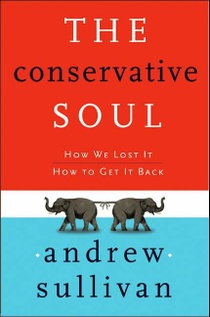
Under what interpretation, then, would the Lawrence decision – which essentially mooted morals legislation at the state level – be considered one in line with the conservatism of doubt? Can you take away another element of local self-government, as Lawrence did, and still have a functioning federalism? At what point do individual rights, as protected at the federal level, expand to the extent that state governments are non-entities? Apply these same principles to the economic sphere and you have an inkling of the dangers presented: once something is a federal right, local self-determination is gone. At what point does the federal government shoulder such a burden of protecting rights, so conceived, that limited government becomes unworkable?

This unresolved tension leads one to believe that while limited government and federalism are suffering sudden death at the hands of the current Administration, a conservatism of doubt would subject them to the death of a thousand cuts.

I’m really grateful for such a smart and insightful critique. The reader is right that this is a real source of tension in the book and in my own thinking. I’ve even experienced this as a political actor – in weighing states rights and individual autonomy with respect to marriage equality. My answer, such as it is, is that the federal Supreme Court, as much as the federal government, should be extremely leery of intervening at a state level. My position is Goldwater’s.

I guess what I’m saying is that I favor minimal interference with states’ rights, and I would prefer even the states to have a minimal interference with individual liberty. Would a conservative of doubt be able to endorse "morals legislation" at a local level? I think so – as long as the laws were reasonably congruent with a reasonable social objective. And the judgment of the reasonableness of such a congruence will vary from state to state and from time to time. What might seem eminently reasonable to one generation may not to the next one. The conservative of doubt will carefully navigate these changing social and cultural waters. The fundamentalist will simply insist an on eternal and unalterable moral order, from which all laws should flow. That’s the difference.

Christianism Watch

An evangelical student burns down an Episcopalian church for its theological waywardness. Money quote:

Cleveland said Lussier confessed to robbing the Christ Church and setting fire to both houses of worship. He also allegedly admitted to sending threatening letters to three churches in his hometown. He was charged with two felony counts of third-degree burglary and a count of third-degree arson, a felony.

"He didn’t think they were following the Bible the way they thought they should," Cleveland said. "He holds to the principle, but he said he went about it in the wrong way."

Why has this not been national news? This really was a church-burning. Does it have to have racial overtones to make the news?