Pater Et Filius

Marcusaurelius

A reader sees an analogy to the tortured relationship between Bush father and son I describe in this column:

With all the talk of the Bush family drama, I’m reminded of the exchange between Commodus and Marcus Aurelius in the movie Gladiator:

Commodus: You wrote to me once, listing the four chief virtues. Wisdom, Justice, Fortitude and Temperance. As I read the list, I knew I had none of them. But I have other virtues, father. Ambition, that can be a virtue when it drives us to excel. Resourcefulness. Courage. Perhaps not on the battlefield, but there are many forms of courage. Devotion, to my family, to you. But none of my virtues were on your list. Even then, it was as if you didn’t want me for your son.

Marcus Aurelius: Oh, Commodus, you go too far.

Commodus: I searched the faces of the gods for ways to please you, to make you proud. One kind word, one full hug while you pressed me to your chest and held me tight, would’ve been like the sun on my heart for a thousand years. What is in me that you hate so much?

Marcus Aurelius: Shh, Commodus.

Commodus: All I’ve ever wanted was to live up to you. Caesar. Father.

After that, in the movie, Commodus kills Marcus Aurelius. In real life, mercifully, W just calls up James Baker.

Quotes for the Day

"Evil is rarely defeated by people who are unsure they are right," – Jonah Goldberg, on conservatism of doubt.

"‚ÄòTo realise the relative validity of one‚Äôs convictions‚Äô, said an admirable writer of our time, ‚Äòand yet stand for them unflinchingly is what distinguishes a civilized man from a barbarian.‚Äô" – Isaiah Berlin, "Two Concepts of Liberty."

Burke And Torture, Ctd.

A reader writes:

Regarding your recent post on Burke and torture, perhaps an elaboration is due. Nothing that Burke says in that passage would not receive equal acknowledgement from an Burke_9 American who thinks that torture is necessary (although it would obviously be futile for them to try to express this in words as eloquent as Burke’s).

Key quote:

"I acknowledge indeed, the necessity of such a proceeding in such institutions; but I must have a very mean opinion of institutions where such proceedings are necessary."

So he has a mean opinion but he thinks they are necessary nonetheless.

Burke well understood the relationship between justice and necessity. He, like Hume, acknowledged that justice may need to be put aside in times of necessity:

"And were a civilized nation engaged with barbarians, who observed no rules even of war, the former must also suspend their observance of them, where they no longer serve to any purpose; and must render every action or recounter as bloody and pernicious as possible to the first aggressors. Thus, the rules of equity or justice depend entirely on the particular state and condition in which men are placed, and owe their origin and existence to that utility, which results to the public from their strict and regular observance."

I’d say that Burke absolutely saw the need for torture in police states. But he despised both police states and the practice of torture. As for the quote from "Enquiry Concerning Principles of Morals," the key phrase here is, to my mind:

"where they no longer serve to any purpose"

My own view is that there is still a critical purpose to retaining the moral high-ground in a long war with religious terrorism. It comes from the recognition that we are fighting a generational battle of ideas for the moderate Muslim and Arab world. We are trying to show the benefits of free and democratic societies. But by mirroring the ethics of the enemy, by practising torture, we allow them to claim their moral equivalence as a matter of degree rather than of kind. And so we lose in the long run. We weaken our alliances across the world. We get poor intelligence. And, by authorizing torture as a regular part of the government’s activities, in a war that is defined as endless, we are in danger of permanently becoming the very police state Burke despised.

An emergency tactic for a short period of time out of actual necessity is different than institutionalized torture policies, designed to continue indefinitely, against an unnamed enemy whose threat is inherently nebulous. The latter, alas, is what this president initiated.

Email of the Day

A reader writes:

I just followed the link to see the conversation between you and Governor McGreevey. What a fascinating conversation. I loved the dialogue about growing up gay and the role of spirituality. It is so interesting how those of us who grew up Catholic and gay encountered the same experiences and the same struggles as we attempted to integrate our faith with the emerging truth that we were different, horribly different. In my own life that took me to the priesthood, the perfect camouflage. I recently left, unable to take the hypocrisy of the institution and unable to live in the dysfunction any longer and wanting to be free as a gay man to live a life of integrity.

Both your work and that of Governor McGreevery have moved me so much, bringing me down memory lane (I grew up in Northern Ireland) and touching sweet moments as well as bringing up tearful wounds.  Most of all it reminded me of this journey of grace we are all on and the hope we are called to.

Fundamentalists vs Conservatives

A reader writes:

If anyone asks for the difference between a conservative and a fundamentalist, please use this:

A conservative writes the traffic law so you may turn right on red.

A fundamentalist is the driver behind you, honking his/her horn to make you turn right on red.

With corner cops down the street if you choose wrong.

Don and Ken

Government is full of human beings, not robots. We can forget that. I’ve personally known both Donald Rumsfeld and Ken Adelman for a long time. My brutal criticism of Rumsfeld ended, as I knew it had to, our acquaintanceship, although it did not end my personal fondness for him and his family. But I was a tiny satellite in Rummy’s orbit. Ken Adelman was very close. He is also a man of great intellectual honesty. And he could not defend the actions of this administration as soon as its Iraq war strategy unfolded into chaos and irresponsibility. Jeffrey Goldberg has a touching piece in next week’s New Yorker on the disintegration of a friendship. Money quote:

"[Don] was in deep denial‚Äîdeep, deep denial. And then he did a strange thing. He did fifteen or twenty minutes of posing questions to himself, and then answering them. He made the statement that we can only lose the war in America, that we can’t lose it in Iraq. And I tried to interrupt this interrogatory soliloquy to say, ‘Yes, we are actually losing the war in Iraq.’ He got upset and cut me off. He said, ‘Excuse me,’ and went right on with it."

For the impertinence of raising a voice of dissent, Rumsfeld wanted Adelman fired from the Defense Policy group they had both been on for years. Adelman wouldn’t quit. Just before the election, as one of his last acts as SecDef, Rumsfeld fired him (although it hasn’t been processed and won’t now happen).

"I’m heartsick about the whole matter," Ademan said. He does not know what to make of the disintegration of Rumsfeld’s career and reputation. "How could this happen to someone so good, so competent?" he said. "This war made me doubt the past. Was I wrong all those years, or was he just better back then? The Donald Rumsfeld of today is not the Donald Rumsfeld I knew, but maybe I was wrong about the old Donald Rumsfeld. It’s a terrible way to end a career. It’s hard to remember, but he was once the future."

Adelman is not the only Rumsfeld acquaintance to say to me shortly after the Iraq invasion: "Don’s not the same." Something got to him. Absolute power, perhaps?

Blowing the Straw Men Away

After the elections, we have some hard reality to tackle. This Camus-inspired blogger gets it exactly right, I think:

[T]he recent election proved little to me other than that Americans tend to be centrist and materialist at the end of the day, and to correct any very strong swings in ideological directions … I’m happiest that we’ll now have divided government, because I think the majority opinions of the country – especially in the younger generations – are not reflected by the likes of Rick Santorum and others who seem to think less that Jesus’ law should rule the land than that they bodily represent Jesus in much the way Jesus claimed to represent God.

But do I buy all of the ‘new dawn’ talk that’s making the rounds in New York (and elsewhere, I’m sure)? Please. Have any of you heard Nancy Pelosi? This is not Voltaire, people. Some things are bound to improve, from a blue perspective, but I don’t think our knottier global problems – many of them, gasp, not lovingly crafted by W. – are going anywhere. It will just be harder now to blame them on straw men. And that‚Äôs an improvement, too.

Amen. Your move, Mr president. But the Democrats now have to buy in. They have to take real responsibility for the war on Islamist terror for the first time. It’ll do them good too.

Books for Burma Update

The organizers write:

I just wanted to follow up and thank you for posting about our project. Thanks to you we have recruited several volunteers doing books drive in other multiple cities and have even received some $ donations. You have really made a difference.

The readers made a difference. Thanks for your generosity. Volunteering time is the best gift many can give. More info here.

Jonah on Marriage

In today’s Corner, Jonah Goldberg posits himself as the true conservative on an issue like gay marriage, contrasting his moderation with yours truly. Money quote:

I favor civil unions and it’s my guess that gay marriage is ultimately inevitable. And yet, I still oppose it. Why? Truth be told, my primary ‚Äî but not sole ‚Äî objection isn’t Jonahcover religious. Rather, it’s that, unlike some relevant advocates of same-sex marriage, I am humble and skeptical about the extent of what I can know. I work from the Hayekian assumption that there is a vast amount of social-evolutionary knowledge and utility embedded in traditional marriage that should be respected even if I cannot tell you what it is… Sullivan’s argument for gay marriage is a Progressive one at its core (though of a conservative bent). He wants to use the insitution of marriage to change gay people. And in truth, that’s always been the most persuasive argument for gay marriage in my opinion. In short, my objection to gay marriage isn’t primarily principled in the sense that my objection really has nothing to do with my attitudes toward homosexuality per se. It has to do with my views toward the pace of change itself. Gay marriage is a very, very, new idea. My view/hunch is that implementing it too quickly is a bad idea (for all sorts of obvious and unobvious reasons).
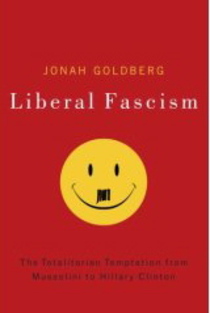
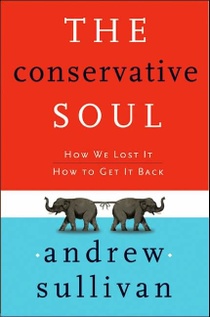
Now Jonah has read my book, and so he knows, I think, that my position and his are close to identical. The Conservative Soul, despite some claims on the right, has a mere handful of paragraphs about gay marriage in 300 pages. But they’re worth citing here. I speak first of the emerging social and cultural fact of more openly gay people, gay couples, and so on, in the last three decades. This is one of the largest social changes in recent times. It cannot be denied. What’s a conservative to do? Here’s my take:

A conservative in government expects such changes in society as time goes by. His job is to accommodate them to existing institutions. He might come up with some solution Tcscover_21 like civil unions; or, worried that setting up a less demanding institution might undermine marriage, he might argue for coopting gay couples into the existing social institution in one fell swoop. He might think it’s wise to try this out in a few states first. But he will understand that some adjustment is necessary, because the world changes; and the job of the conservative is to adjust to such changes as soberly and prudently as possible.
Notice what this isn’t. It’s not a declaration about the ultimate morality or otherwise of marriages for gay couples. That is left to the churches or synagogues or mosques or university seminars. It’s not an assertion that gay couples have a God-given or naturally-required "right" to marry, as some liberals might argue. It’s simply tending to a felt social need by an imaginative political adaptation. It is a conservative move. A radical may want to abolish or privatize civil marriage. A fundamentalist will assert, as president Bush did, that civil marriage is a "sacred" institution, ordained by God, and that the civil laws, regardless of social reality, must conform to Biblical revelation. A conservative will escape both traps.

My book is a statement of classical conservatism in this respect. (You can also judge by this passage whether its tone is "shrill," as Jonah claims.) Jonah also knows that I have never argued for judicial imposition of marriage rights across the whole country. I have argued for federalism, while believing, as he does, that marriage rights are indeed inevitable. I have preferred legislative action to judicial power, but, unlike some on the right, I also believe that courts have a role to play in protecting the rights of minorities. This messy acceptance that both courts and legislatures have a role to play in forwarding this debate is also, I’d argue, well within the conservative tradition.

Now, as a gay man who went through the AIDS epdidemic and saw the human wreckage that the lack of civil marriage compounded, I have some personal passion on the subject of gay integration. I don’t want to see another catastrophe among my brothers. I don’t think, by the way, my opponents begrudge that or fail to realize why it makes me sometimes sound like a progressive on the subject. But given my passion, my insistence on gradualism, moderation and federalism seems to me the sign of a strong commitment to conservatism, even when it doesn’t give me all I want. Given my passion, my defense of federalism, and my support for a president who opposed marriage rights in 2000 are telling in my defense, I think. Yes, I drew the line at a federal constitutional amendment. But that was a conservative line, not a gay one. Ask all the other straight conservatives who opposed it as a step too far. That Bush went there proved to me he was a religious radical, not a political conservative.

Some on the right are portraying my book as somehow extreme or angry. It is neither. While being honest about my own biases and personal history, it’s a constructive attempt to go back to conservative first principles and re-imagine a conservative future. If you’re a conservative wondering where this debate goes next, I hope you give it chance.