Contraception or Abortion?

That’s the effective choice for the theocons. The latest data on unintended pregnancies and abortions are not so great. Money quote:

Among sexually active women who were not trying to get pregnant, the percentage of those not using contraception increased to 11 percent from 7 percent from 1994 to 2001, the latest data available, according to numbers Guttmacher analyzed from the National Survey of Family Growth, a federal study.
The rise was more striking among women living below the poverty line: 14 percent were not using contraception in 2001, up from 8 percent in 1994. Better-off women ‚Äî those who earned more than twice the poverty rate ‚Äî were also less likely to use contraception: 10 percent did not use any in 2001, up from 7 percent in 1994… The rate of unintended pregnancies, which had declined 18 percent from the early 1980’s to the mid-1990’s, has leveled off since about 1994. That reflects a diverging trend: among poor women, the rate rose 29 percent, but among better-off women, it declined 20 percent.

So the Catholic church’s ban on all contraception (even if it would prevent AIDS) and the now-fashionable emphasis on abstinence in sex education may have contributed to more abortions in this country than would otherwise be the case. Once again, as in their opposition to an HPV vaccine, the pro-life movement turns out to risk being pro-death in practice. A comprehensive strategy to reduce abortions would not be obsessively focused on criminalizing it altogether, as the theocons want. It would center on a massive effort to get contraception out to sexually active women, especially the poor and black who may not be able to force their sexual partners to use condoms. It would provide Plan B over the counter, no questions asked. Then you need a much more ambitious adoption program, that includes all potential adopters, i.e. gay and lesbian parents as well. Many on the religious right would rather see abortion rates rise or stay stable than concede on these issues. Which reveals what really motivates them: a hostility to sexual freedom as much as a desire to protect life.
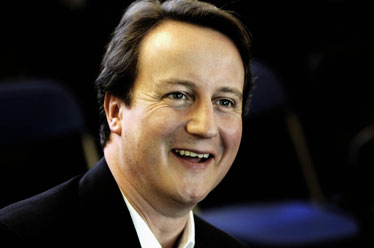
Tory London

Cameronandrewparsonsafpgetty

David Cameron’s new, more urban-friendly conservatism had its best showing last night in London. Elsewhere, fine but not spectacular. But the London vote matters. The Tories cannot regain national power or a majority without winning over the middle class professionals, especially in urban areas, who have supported them in the past. They’re beginning to do that. What they need now is a broad philosophical definition, gathered, in my view, around the theme of expanding individual freedom, to cement their gains. As for Blair, he saw his party reduced to third place, at 26 percent, far behind the Tories on 40 percent. These are local elections and may well not represent a solid national pattern for the next election. But if the anti-Tory parties split as evenly in the future as they did last night, then the uphill battle for Number 10 may be less onerous for Cameron than might be expected. Blair has just fired a bunch of cabinet members and reshuffled his team. Think of thm as deck-chairs. It would be better for him and his party if he didn’t drag his own scheduled resignation out for much longer.

(Photo of David Cameron by Andrew Parsons/AFP/Getty).

Tory! Tory! Tory!

A great result in Britain for the newly rebranded Conservative party. As of this writing, they won 39 percent of the vote in the local elections to Labour’s and the Liberal Democrats’ 27 percent a piece. Good for Cameron, the new leader. All he needs now are some … policies. For Blair: a rubbishing, as the Brits might say. I give him twelve months at most.

Colbert Nation?

A reader writes:

I think that members of the press, such as Cohen, have completely missed the point with respect to the Colbert performance. Among my friends and family, I am known as the one who follows current events and politics. Although I try to get them involved, I would describe most people I know as apolitical. They catch the really big stories and might have what I would consider to be fairly incoherent opinions, but for the most part if an issue doesn‚Äôt directly affect them, then they won‚Äôt know anything about it. Sadly, I think in this regard they are fairly typical Americans. But here is the thing: everyone I know has been talking about this Colbert performance. My parents; my in-laws; my disaffected and apolitical friends; my colleagues; simply everyone I know. And while I would describe many of these folks as committed liberals and Democrats, they certainly aren’t all like that. And I don’t even need to bring Colbert up; these generally apolitical people are spontaneously asking me for my take on it. The buzz on his speech is tremendous. I can’t remember anything quite like it.

I think Colbert really touched a nerve. I suppose it is no surprise that many people are excited about what Colbert did. After all, we know from polls that most Americans no longer trust or approve of Bush. But I think this whole episode illustrates just how dissatisfied people are with both the President and the press. I think people are tired of his talking points and bullshit non-answers and are delighted that someone had the courage to call him on it to his face. For Cohen and others to dismiss the event in the way that they have (‘he wasn‚Äôt funny!’)‚Ķ well ‚Äì based on the reaction that I‚Äôve seen from virtually everyone I know, who are by-and-large ordinary, middle-class Americans ‚Äì I think they just don’t get it, still.

Wahhabism’s Funniest Home Videos

Zarqawi can’t get his gun to work right. Heh.

Update: a reader comments:

Yes, it’s quite funny that Zarqawi can’t fire that weapon properly, but what’s not so funny is the fact that if this is the caliber (pardon the pun) of the enemy we’re fighting, what does it say about our ability to catch the guy? Do you think the Pentagon’s spinmeisters thought about that before releasing the video? As you’ve said before, Fire Rumsfeld Now.

Quote for the Day

"I don’t think there’s anything wrong with singing it in Spanish. The point is it’s the United States’ national anthem. And what people want is it to be sung in a way that respects the United States and our culture. At the same time, we are a nation of immigrants. We are a nation of many, many languages," – Laura Bush on Larry King. She also said she thought the national anthem should be sung in English.

They Knew

Remember when Rumsfeld and Bush professed shock, shock at the abuses at Abu Ghraib, when they were revealed? Among the latest cache of released government docs, we discover the following:

Agblood_2 The ACLU also released an Information Paper entitled ‘Allegations of Detainee Abuse in Iraq and Afghanistan’ dated April 2, 2004, two weeks before the world saw the pictures of torture at Abu Ghraib prison. The paper outlined the status of 62 investigations of detainee abuse and detainee deaths. Cases include assaults, punching, kicking and beatings, mock executions, sexual assault of a female detainee, threatening to kill an Iraqi child to ‘send a message to other Iraqis,’ stripping detainees, beating them and shocking them with a blasting device, throwing rocks at handcuffed Iraqi children, choking detainees with knots of their scarves and interrogations at gunpoint.
The ACLU said the document makes clear that while President Bush and other officials assured the world that what occurred at Abu Ghraib was the work of ‘a few bad apples,’ the government knew that abuse was happening in numerous facilities in Iraq and Afghanistan. Of the 62 cases being investigated at the time, at least 26 involved detainee deaths. Some of the cases had already gone through a court-martial proceeding. The abuses went beyond Abu Ghraib, and touched Camp Cropper, Camp Bucca and other detention centers in Mosul, Samarra, Baghdad, Tikrit, as well as Orgun-E in Afghanistan.

In one document, Sanchez is said to have given orders to take prisoners to "the outer limits" in interrogation. One investigation, to pick one out of dozens underway before Abu Ghraib was exposed, involved the following:

[A] doctor cleared a detainee for further interrogations, despite claims he had been beaten and shocked with a taser. The medic confirmed that the detainee’s injuries were consistent with his allegations, stating, "Everything he described he had on his body." Yet, the medic cleared him for further interrogation, giving him Tylenol for the pain. There is no indication that the medic reported this abuse.

Why would he, when abuse was policy? As at Gitmo, the medical professionals were brought into the abuse process, to determine how far prisoners could be tortured without dying. No, this is not Serbia or Saddam’s Iraq or Burma. This is the United States.

The War and Oil

Many of you disagree with me. Here’s one typical but eloquent email:

I don’t think that those who say that the war was "about oil," literally think that we decided to invade Iraq in order to secure supplies and lower the price of crude. No one expected that the full invasion of an oil rich country in the heart of the Arab world was going to causes prices to drop, at least not right away. So in this sense, we did not go to war in Iraq in an attempt to get cheap oil right off the bat.
But are you arguing that oil played no part in our decision to go to war? I think most people look at the regime in Iraq and have a hard time distinguishing it from others around the world. Libya, Sudan, North Korea, Syria – all dictatorships, all enemies of the United States, all suspected of WMD’s, all with potential connections to Al Qaeda – yet we pick Iraq?
If we went to war to "transform the middle east" then we went to war over oil. The only importance the Middle East ever had, and will ever have, as far as the U.S. is concerned, are its massive oil reserves. You don’t hear neocons talking about transforming Africa or intervening militarily to oust dictators in nations with no vital natural resources – but you hear endless talk about transforming the Middle East. We’re trying to bring democracy to the region because we believe democracy equals stability, and stability equals cheap and free flowing supplies of oil.

Not so fast. The dreaded neocons supported intervention in Bosnia and Somalia, and I see no oil there. Many neocons support intervening in Darfur. Ditto. Of course, some weight must be given to a region with so much leverage over the essential substance for the world economy. But before 9/11, we have no evidence that Bush was seriously planning on war against Saddam. Al Gore was more vocally anti-Saddam than Bush was, and favored more defense spending. I stick to my point. This was about national security. Oil is a part of that, but it was never the primary mover behind the Iraq war.

Yglesias Award Nominee

"On television, Colbert is often funny. But on his own show he appeals to a self-selected audience that reminds him often of his greatness. In Washington he was playing to a different crowd, and he failed dismally in the funny person’s most solemn obligation: to use absurdity or contrast or hyperbole to elucidate — to make people see things a little bit differently. He had a chance to tell the president and much of important (and self-important) Washington things it would have been good for them to hear. But he was, like much of the blogosphere itself, telling like-minded people what they already know and alienating all the others. In this sense, he was a man for our times. He also wasn’t funny," – Richard Cohen, alienating many liberal readers, Washington Post today.