The Morality Of Obama’s Afghan Surge

korengaljohnmooregetty.jpg

I have very little but extreme admiration for Bob Gates, as a human being and as a defense secretary. He has always seemed to me a very level-headed, pragmatic and sane realist – the kind of conservative that would bring me back to the GOP if there were more like him. So why is his book so baffling? Greg Jaffe puts his finger on one core flaw:

[Gates] recounts his thoughts during a tense 2011 meeting with Obama and Gen. David H. Petraeus, then in charge of U.S. and NATO forces in Afghanistan, in the White House Situation Room: “As I sat there I thought: The president doesn’t trust his commander, can’t stand Karzai, doesn’t believe in his own strategy and doesn’t consider the war to be his. For him, it’s all about getting out.” …

Gates’s problem with the president is less about strategy or substance than about heart. “I myself, our commanders, and our troops had expected more commitment to the cause and more passion for it from him,” Gates writes. He compares Obama unfavorably with Bush, who “had no second thoughts about Iraq, including our decision to invade.”

That last formulation is close to deranged. Better to have a true believer pursuing impossible goals than a sober skeptic trying to make the least bad call? Dreher rightly asks why Obama’s skepticism is so scandalous:

Obama’s judgment of the sleazy Karzai was correct, Obama knew the war was unwinnable, Gates thinks Obama made the right calls — but he faults the president for not being a True Believer? As if George W. Bush’s unwillingness to reassess American strategy in light of cold, hard experience is a sign of wisdom and character! I suppose Gates has a point if he’s faulting Obama for pursuing a military strategy that he (the president) didn’t believe in, but does Gates believe that an immediate withdrawal from Afghanistan would have been the better strategy, even if it had been politically feasible (which it may not have been)?

Like almost everyone else, I’m relying on reports about the book, not the thing itself. But here’s my gut sense of where this deeply honorable man is coming from. By the time of Obama’s first inauguration, the only way to describe the Global War On Terror was what David Brooks recently called (about Israel/Palestine) a “tragic situation.” There were no good options. The idea of staying there for ever – the neocon fantasy – was simply inconceivable in a democratic society long appalled by the cost of war. A decision to suddenly get out would have compounded the failure. Obama’s response in Af-Pak was Bush’s in Iraq: a face-saving surge in order to get the fuck out of there without too much collateral damage. The killing of Osama bin Laden made it all a lot easier and the logic of withdrawal all the more compelling.

But there is a deep moral issue behind sending young Americans to die in order for a country to save face. I have to say that the Afghan surge remains to me the most morally disturbing of all Obama’s decisions in office. He knows his Niebuhr, and is clearly aware of the horrible but necessary decisions presidents have to make that can lead to the deaths and brutal injuries of many young patriots. Between 2009 and 2011, over a thousand Americans died in a war to save face. Obama sent many more soldiers to their deaths in Afghanistan than Bush did. I know there are no morally easy calls in wartime, and perhaps this was a defensible move in terms of global strategy and domestic politics (which has to be a part of any national security debate in modern times). But I can very well understand how Bob Gates, knowing all this, felt increasingly emotionally wrung out by sending so many men to die for one last push that, in the end, failed. The emotion in the book and, apparently, raging in his psyche all along, is perhaps best understood in that way. I find it admirable that a human being in such a position can feel that powerfully about the horrors of war.

But, on the broader picture, as Gates concedes, Obama was right.

Amy Davidson points out that Obama was shrewd to be suspicious of Karzai, noting that he has “not yet signed a bilateral security agreement on the status of American forces in Afghanistan after 2014” because he would like to wait, “maybe until after his country’s next Presidential election, in April”:

The arguments about staying in Afghanistan all have to do with not squandering what we have supposedly won there. That might better be protected by going, if it has anything to do with the rule of law. Why, after all, would Karzai want to wait until after the Presidential elections? He can’t run again, because of term limits—so why is he holding on to a bargaining chip in a game he should, by then, no longer be in?  … There are close to a dozen candidates, a number of them Karzai’s allies, among them his brother, Abdul Qayum Karzai. The dread one has is that Karzai wants to make sure that he has leverage to insure we tolerate a fixed election. Is that the sort of player we want to be, and is that why Americans died in Afghanistan? Is that what we can stand?

Ambers ponders Gates’ comments:

The whole project of getting into these wars and staying, leaving a big American footprint — that’s what Obama ran against. He ran to get out of that.

What was up for debate was the mechanism of withdrawal, or how long it would take. Obama’s principle priorities were two: The safety of redeploying American troops and ensuring that al Qaeda could not be reconstituted in the region.

Why Gates should be surprised by this is difficult to tell from the excerpts. He is smart enough to have interpreted Obama’s campaign rhetoric realistically. He is also, funnily enough, convinced that Obama made the right calls.

Memoirs, and memory, are curious things.

Mark Thompson notes that Gates doesn’t spare Congress:

The fact is, Congress as a whole is a far bigger problem than Gates’ dealings with the White House. Executive branch relations can change with an election or new Cabinet secretary, but the congressional modus operandi that Gates cites is pathological. In concert with their uniformed Pentagon allies, lawmakers in key slots on the armed services and appropriations committees block progress and succor sloth through both their action and inaction. It has led to an immensely inefficient defense establishment, flabby in the wrong places and gaunt where it should be muscular.

Sprung flags Thom Shanker’s NYT review of the book:

My impression of Shanker’s review is that systemic dysfunction dominates Gates’ narrative: the book may portray a collective tragedy, a nation that can no longer govern itself effectively. As Shanker notes, Gates does not spare himself from criticism. There’s a dysfunctional Congress, a dysfunctional Pentagon, and two administrations that went severely awry, in his telling, in different ways. Contrast this collective dysfunction with his earlier portrait of five or six administrations that tacked left and right but ultimately hewed to a successful Cold War consensus strategy.

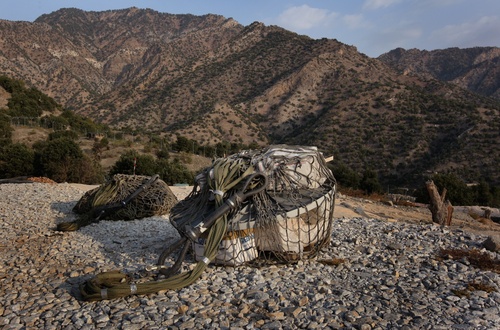
(Photo: A large load of mail sent to soldiers killed or wounded in action sits awaiting transport out of the Korengal Outpost October 29, 2008 in the Kunar Province of eastern Afghanistan. U.S. Army Viper Company of the 1-26 Infantry, based in the battle-scarred Korengal Valley, has had 6 solidiers killed since the unit deployed there in mid-July. Because of the delay in transporting items to such remote outposts, mail for soldiers killed in action often arrives many months after they died. By John Moore/Getty Images.)

The Character Of Chris Christie

New Jersey Governor Chris Christie Holds Election Night Party

Perhaps it is no big surprise to discover that governor Chris Christie is a vindictive, petty egomaniac contemptuous of the people he serves. But it’s hard to avoid that conclusion when you’ve pored over the new tranche of emails that show how he and his staff made life miserable for a large number of New Jerseyans – and, yes, trapped unnecessarily in traffic is misery, even when you have the gorgeous scenery of the George Washington Bridge to absorb. The point was punishment of a mayor who didn’t endorse the governor, whose re-election was cruising for a landslide victory in any case.

The small details of the email exchanges between Christie staffers are a little insight into the mindset of the men and women Christie surrounds himself with. It’s not a pretty picture. The few that leapt out at me:

“Time for some traffic problems in Fort Lee,” Bridget Anne Kelly, one of three deputies on Christie’s senior staff, wrote to David Wildstein, a top Christie executive at the Port Authority, on Aug. 13, about three weeks before the closures. Wildstein, the official who ordered the closures and who resigned last month amid the escalating scandal, wrote back: “Got it.”

What strikes me about this is the Soprano-style archness of it all, the sense of total impunity in vindictiveness, as if this is the way politics is always played in Christie-land. When the traffic jams orchestrated by Christie’s staff snarled up even school buses, we get this:

“I feel badly about the kids,” the person replied to Wildstein. “I guess.” “They are the children of Buono voters,” Wildstein wrote, making a reference to Barbara Buono, the Democratic candidate for governor, who lost to Christie in a landslide in November.

“I guess.” Fuck the kids – let’s get even, when we have no real need to. Christie has more than one problem here. He has been revealed as a deeply petty man, willing to sacrifice the public good to pursue narrow political vendettas – not exactly a qualification for a president. But he has also repeatedly denied all of this. Is he a bully? Or a liar? Or both?

(Photo by Kena Betancur/Getty Images)

Will Legalization Hurt Poor Minorities?

Frum and I debate the question:

This embed is invalid


Reihan opposes full commercial legalization because he fears it will harm the poor and black:

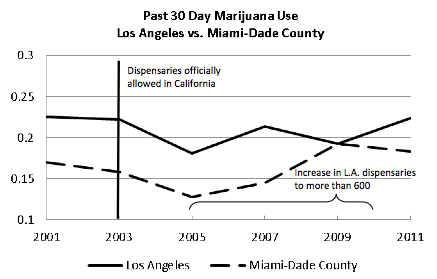
To say that we ought to legalize marijuana because marijuana doesn’t hurt anyone is to discount the fact that legalization will cause a collapse in the price of marijuana and that this price collapse will lead to an increase in consumption that will have unpredictable, Screen Shot 2014-01-06 at 7.20.41 PMand uneven, consequences. Right now, the uneven consequences of marijuana criminalization are particularly insidious. Though incarceration for marijuana consumption is rare, the enforcement of marijuana laws harms poor people far more than rich people, and black people more than non-black people. It seems likely, however, that a post-legalization world would also harm poor people more than rich people, and black people more than non-black people, albeit via different channels. In both cases, it is people raised in chaotic households, people who suffer from poor impulse control, and people who live in violent, high-poverty neighborhoods who will suffer the most. That is why the way we regulate marijuana should be informed by an effort to protect these populations. Full commercial legalization is not the best way to do that. And if you find this notion paternalistic, well, you’re on to something. The reason I oppose full commercial legalization is that I have enormous faith in the ability of entrepreneurs to stimulate demand, and I think it is absolutely right and appropriate for governments, ideally local and state governments, to be able to apply the brakes.

I don’t think it’s crazy to think that legalization will increase marijuana use. I think it’s highly likely – and that it’s something we need to think creatively about. But the data from nearly-legal California these past few years does not suggest the worst scenario Reihan worries about. He concedes that the cost of Prohibition is felt most acutely by the very populations he worries about. He favors rather small-scale Uruguay-style mom-and-pop and personal pot growing rather than commercialization. I’m afraid that rather lovely Jeffersonian idea won’t fly in modern capitalist America.

The possibility that there will be substitution of pot for booze is a real one – and that mix would be a terrific thing for poor families and kids. But that too is not really knowable in advance. My view is that the best response to these kinds of conundrums is federalism. We can watch Colorado and Washington closely; we can assess their responses to contingent and unexpected consequences (of which there will be some). We can see how this works on a small scale. When you’re dealing with this kind of social change, gradualism is necessary. That’s why I remain a federalist on marriage equality. These things take time – or rather they take their own time in the minds and souls of citizens.

Which is where I would challenge Damon Linker on his argument that neither marriage equality nor marijuana legalization are conservative positions.

If your view is that conservatism opposes all change, period, he’s right. But that’s a caricature. Burkean conservatism is defined in some part by the insight that sometimes you have to change something for the society to stay the same. When a new social cohort emerges – like out gay people in large numbers – you can ignore it, you can oppose any legal or social adjustment to the new reality, or you can try to integrate it into the current way of life of a society in a way that disrupts it the least. In my mind, opening the institution of civil marriage to gay people – and doing so gradually through federalism and public debate – is a quintessentially conservative position.

Ditto marijuana legislation. When a majority of Americans favor it, when the costs of Prohibition are wrecked lives by the hundreds of thousands, when that wreckage is racially biased to an insane degree, and when you can try things out slowly – first with medical marijuana and now with federalism – then this is a conservative position. Hey, even National Review (thanks to the legacy of WFB) supports it.

Conservatism is not about resisting all change; it’s about adjusting to constantly changing human culture in as careful and as humane and as realistic a manner possible. Of course we can disagree about whether this issue or that is the right one. But Edmund Burke, to cite the father of modern conservatism, favored much more freedom for the American colonists, serious reform of imperial malpractice. By Damon’s light, only reactionaries have a right to call themselves conservatives. I beg to differ.

Quote For The Day

“Gates 1996 and Gates 2014 are rather like America 1996 and America 2014. The first, ebullient, a tad triumphal, serenely confident that U.S. policymaking will be driven by countervailing democratic pressures both to express the will of the people and to secure order in the world as well as national security. The second, embittered, exhausted, fearful that the country has lost its capacity for problem-solving,” – Andrew Sprung.

The GOP’s Talking Points On Poverty

Philip Rucker and Robert Costa report that “there is deep disagreement among Republican leaders and strategists over whether to embrace an economic-mobility agenda in the 2014 midterm campaigns.” But some prominent Republicans are beginning to address the issue:

Sen. Marco Rubio (R-Fla.) will give a speech Wednesday that aides said will lay out changes to federal programs to help people climb out of poverty permanently. In the weeks to come, Rubio also plans to introduce ideas to make it easier for mid-career adults to go back to college or learn new job skills at vocational schools. Rep. Paul Ryan (R-Wis.), the 2012 vice-presidential nominee, has been traveling to impoverished areas and meeting with community organizers. He plans to address poverty in an interview with NBC’s Brian Williams on Thursday.

A third potential GOP presidential candidate, Sen. Rand Paul (R-Ky.), is also putting a renewed emphasis on the poor, traveling to Detroit to pitch a plan to revitalize urban centers through “economic freedom zones.” Paul has given his message on income inequality an ideological edge — mixing lofty, empathetic language with anti-government broadsides. House Majority Leader Eric Cantor (R-Va.), who has been visiting urban schools, will give a speech Wednesday promoting school choice as a way to address poverty. And Sen. Mike Lee (R-Utah) has proposed increasing the child tax credit as a means of blending social conservatism with anti-poverty policies.

York advises the GOP against “a high-profile Republican campaign on poverty — a campaign launched without the party’s internal agreement on a specific anti-poverty agenda”:

Contrary to critics on the left, there’s little doubt that for many Republicans, the initiative is heartfelt. But going forward without a plan leaves the GOP open to the critique that it’s all talk. And even if it were all talk, the new strategy ignores the (at least rhetorical) lesson of the Democrats’ recent successes: When it comes to winning votes, it’s all about the middle class.

Barro reviews the Republicans’ anti-poverty ideas, or the lack thereof:

The Republican theory seems to be that if the government “just got out of the way” by cutting taxes, spending and regulation, then labor market would magically tighten, people would get jobs, and wages would rise. Empirical evidence for this proposition is lacking. … On the long-run side, Republican policies are again nominally aimed at raising long-run GDP growth. They do not address the question of how the returns from such growth are distributed. They don’t necessarily promote a tighter labor market or stronger wage growth. Even if that agenda is a growth agenda (dubious) that doesn’t make it an agenda that is effective at growing low or moderate market incomes.

Alec MacGillis piles on:

Saying that the Republicans lack an agenda to address poverty does not necessarily mean that they need to endorse every Democratic proposal—even back in the heyday of the George Romney moderates, Republicans opposed some New Deal and Great Society measures as too top-down or unwieldy or big-government. But, unlike today, they proposed real alternatives. If Republicans today believe that raising the minimum wage is too much of a burden on small business, they could pass a major expansion of the earned-income tax credit, as conservative economist Greg Mankiw suggests. If they believe that extended unemployment benefits are discouraging some workers from taking available jobs, they could seek to more narrowly target extended benefits to make sure they’re available to those who the data shows have the cards most stacked against them—say, by age or location. If they believe the food stamp program and other elements of the War on Poverty really have failed—despite ample evidence to the contrary—they can go back to the Nixon or Romney toolbox of the ‘60s and early ‘70s for the approaches they think may have worked better.

But aside from the occasional highly touted speeches by a senator here or there, there are no active efforts along these lines …

Sargent thinks the GOP must respond to these issues eventually:

Democrats are going to do everything they can to shift the Obamacare debate into a broader economic context on their own terms — highlighting stories of Americans being helped by the law, arguing that Republicans would take away its benefits and protections, and tying it to broader GOP resistance to policies that would help struggling Americans, such as the minimum wage hike and unemployment extension. Tying Obamacare to this broader debate will be a major goal in Obama’s upcoming State of the Union Speech, which might get a bit of media attention. Also, it isn’t as if Republicans can avoid having a poverty agenda. Soon enough, they’ll have to decide whether to kill the extension of unemployment benefits and block the minimum wage hike. These votes will happen, whether or not Republicans roll out a broader agenda.

We Aren’t Reinvading Iraq

IRAQ-CONFLICT-KIRKUK

Michael Crowley lays out how Obama will and won’t respond to a resurgent al Qaeda in Iraq. He says “the White House’s game plan involves better arming Maliki to repel al-Qaeda forces from his country”:

With America out of Iraq, disillusioned with Afghanistan, and clearly opposed to intervening in Syria, the opposition to a direct re-engagement in Iraq could be intense. Even McCain and Graham don’t propose it. And the administration now says it supports repealing the war authority Congress granted George W. Bush in the fall of 2002, which in theory might be used to justify renewed military action there. “It would take nothing short of a catastrophic attack on the United States at home to get U.S. forces back into Iraq,” says Daniel Benjamin, formerly the Obama State Department’s top counter-terrorism official and now at Dartmouth’s John Sloan Dickey Center for International Understanding. ”The American public has zero appetite for engagement in Iraq.”

Totten sees no easy way to destroy al Qaeda, in Iraq or elsewhere:

Al Qaeda has such a wide theater to operate in that counterinsurgency is a game of planet-wide whack-a-mole. Booted out of Afghanistan? Go to Iraq! Defeated in Iraq by the Americans? Move to Mali! Kicked out of Mali by the French? Go to Libya! It’s like using radiation and chemotherapy against a cancer that won’t stop metastasizing.

I’d love to be able to say we should do x, y, and z and Al Qaeda will eventually cease to exist, but there are no x, y, and z. The world may have to wait for this scourge to extinguish itself like communism did in Europe. That hardly implies we should do nothing in the meantime—we did not sit passively by until the Soviets self-destructed—but our options are limited and it will likely take decades.

(Photo: The roof of vehicle is partially destroyed following of a suicide car bomb that detonated outside a central police station in the northern Iraqi city of Kirkuk on January 7, 2014, killing two people and wounding some 52 others. By Marwan Ibrahim/AFP/Getty Images)

Is Success Always Deserved?

The rich certainly seem to believe so:

[Researchers Michel] Kraus and [Dacher] Keltner found that the higher people perceived their social class to be, the more strongly they endorsed just-world beliefs, and that this difference explained their increased social class essentialism: Apparently if you feel that you’re doing well, you want to believe success comes to those who deserve it, and therefore those of lower status must not deserve it. (Incidentally, the argument that you “deserve” anything because of your genes is philosophically contentious; none of us did anything to earn our genes.)

Higher-class Americans may well believe life is fair because they’re motivated to defend their egos and lifestyle, but there’s an additional twist to their greater belief in a just world. Numerous researchers have found that upper-class people are more likely to explain other people’s behavior by appealing to internal traits and abilities, whereas lower-class individuals note circumstances and environmental forces. This matches reality in many ways for these respective groups. The rich do generally have the freedom to pursue their desires and strengths, while for the poor, external limitations often outnumber their opportunities. The poor realize they could have the best genes in the world and still end up working at McDonald’s. The wealthy might not merely be turning a blind eye to such realities; due to their personal experience, they might actually have a blind spot.

What’s In A Black Name?

Freddie deBoer discusses how kids with characteristically black names become objects of derision:

Being born in 1981 and attending an elementary school that was about a third black, I grew up around many peers who had African or African-inspired names, names like Qualisha and Kamika and Kareem. The mid-80s was a period of racial optimism, in many ways, and a time when the black pride movement had become somewhat depoliticized but far more ubiquitous. I grew up among black children who, whether their parents were poor or middle class, were raised to feel pride in their African heritage, and who expressed that pride in their dress and the way they decorated their homes.

But even then, it was clear that black names were not valued.

I remember many times that substitute teachers would complain openly about their difficulty in pronouncing these “crazy” names. In my class one year, I had peers named Tamisha and Tashima. One sub, incredulous, asked them in front of the class if their parents had planned that out. I’m not quite sure what grade it was, but they couldn’t have been older than 7 or 8 or 9. Looking back, it’s a extraordinarily elegant way to degrade a pair of children, to mock their names, and with them, their identities. And it was also one of the countless little ways in which white kids like myself, whatever the good intentions of teachers and parents, were subtly indoctrinated to believe in black inferiority.

Like so much within racism, this disrespect towards black names carries with it the most important tool in an ostensibly post-racial but actually deeply racist culture: plausible deniability. That sub, I’m sure, did not think she was being racist. She was merely reacting to the oddity of those names! She was not ridiculing those children. She merely thought there was something uniquely funny about their names.

One of Freddy’s readers isn’t so sure:

There is some oversimplification going on in this post, along with a large grain of truth. A lot of middle-class black people also laugh at names like Sharkeisha and Latrina–but their own children might bear real African names like Kweku or Thandiwe. You can project self-loathing racism on them if you want. I wouldn’t. At lot of middle-class white people laugh at “soap opera names”: Madisons and the like. (If you look at such names on the SSN website, you’ll see that they go out of vogue in about 10-15 years–basically laughed out of existence.) To make the parallel more precise, I have heard another term for “soap opera names”: “trailer park names.” In either case, girls have it worse than boys. You can argue that Latrinas have it worse than Madisons, and you’re probably right. But I’m not sure I would build a charge of racism on such flimsy foundations, not when classism explains almost as much.

There is better evidence for name racism. It comes not from a weird black name like Sharkeisha, but rather a non-weird black name like Tyrone. Many more people laugh at Tyrone Jackson’s given name than Tyrone Power’s.

Sometimes a cigar is just a cigar. Sometimes a weird name is just a weird name.

Would You Gamble $10 On A Coin Toss?

Adam Alter explains why only 1 in 20 people would take him up on the offer:

Until recently, it was difficult to measure how painfully losses stung and for how long, but a recent paper suggests that the gamblers and teachers were wise to be cautious. Five European economists and psychologists measured how 50,000 German and British workers responded when their incomes rose and fell between 1998 and 2009. At the end of each year, the German respondents indicated how happy they were on a scale that ranged from “totally unhappy” to “totally happy.” The British sample completed the General Health Survey, which measured the presence of 12 signs of psychological distress.

Both groups were sensitive to changes in their income, but a loss of $1,000 was more than twice as damaging as a gain of $1,000 was helpful. I mentioned earlier that the people I surveyed were unwilling to play a fair gamble unless the prize for winning was two-and-a-half times greater than the punishment for losing – and that pattern resonates with the outcomes of the European study. The researchers were careful to consider a long list of factors that may have magnified the impact of losses, including the possibility that people who earned less had lost their jobs or marriages, or were caring for more dependents than were the people whose income had risen. The pattern held even when those factors were ruled out.

These results suggest that our collective fear of losses is grounded in wisdom: losing money really hurts us more than winning money helps.

The Technology Gimmick Show

Victoria Turk yawns at the hype of the Consumer Electronics Show (CES), singling out one of this year’s buzzy gadgets, an app-enabled toothbrush:

CES always seems to bring out these sort of “wow look, a random everyday object—but connected!” kind of products, and they inevitably get a disproportionate amount of hype. Remember the HAPIfork from last year? The “smart fork” that measures how fast you eat ended up plastered across the media as if it were the greatest invention since the internet. What good is your smartphone anyway, if it won’t wirelessly connect with your silverware? Or, indeed, your toothbrush? …

I’d almost guarantee that you won’t see many people using “connected” toothbrushes anytime soon. I’ve written before about how calling something “smart” doesn’t automatically make it so, and I’m afraid the toothbrush could be a victim to that mindset. While the company claims in their promo video that “Kolibree helps you outsmart your dentist,” the truth is that it doesn’t do much more than you could with a regular toothbrush, a stopwatch, and maybe a mirror. Or alternatively, just that common sense you’ve hopefully gained after decades of brushing practice.

Also noting the proliferation of wearable technology at CES, Leonid Bershidsky wonders when, or whether, someone will develop this market’s “killer app”:

The smartphone market took about 10 years to get to the point where consumers could make sense of what was on offer. Now there’s just Android and Apple’s iOS. If you want to be generous, there’s also Windows Phone, which Microsoft says is outselling Apple in a number of countries but which still has less than 4 percent market share. All the platforms offer a more or less identical list of functions and plenty of apps.

The wearable market offers no such clarity and standardization. “We expect every smartwatch provider to build their own app store, and consumers to experience a lawless jungle by 2015,” the Finnish wearable software company Koru, headed by Nokia Lifeblog creator Christian Lindholm, predicted in a December presentation. It is still an open question what a wearable device should really do. Is it OK simply to tell time and interact with a smartphone, showing messages and push notifications on a smaller but more accessible screen and using voice commands to manage the phone? Or should it also have the functions of a fitness band, tracking workouts, counting calories and analyzing sleep patterns? Does a person need a watch and a wristband?