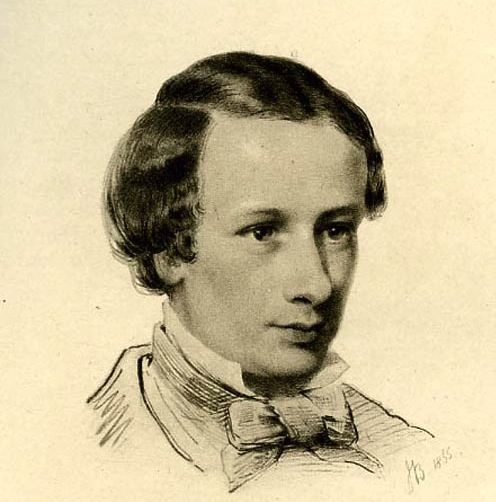
Joshua Kotin praises the recently released second volume of Ernest Hemingway’s collected letters – which cover the years he spent in Paris, Toronto, and Spain as a young writer on the cusp of greatness – as a “real time version of A Moveable Feast.” One of the topics Hemingway covers? Bullfighting:
“It isnt just brutal like they always told us,” he writes his friend William D. Horne Jr. “It’s a great tragedy — and the most beautiful thing I’ve ever seen and takes more guts and skill and guts again than anything possibily could. It’s just like having a ringside seat at the war with nothing going to happen to you.” Bullfights will dominate his letters for the next two years. In 1924, he tells [Ezra] Pound that the bullring “is the only remaining place where valor and art can combine for success. In all other arts the more meazly and shitty the guy, I.E. Joyce, the greater the success in his art. There is absolutely no comparison in art between Joyce and [the matador] Maera — Maera by a mile.”
Kotin marvels at how the letters display Hemingway’s prose chops:
The letters to Pound are especially fascinating — despite their virulence or, perhaps, because of it. “You go on and learn everything,” he tells Pound. “I cant. I’m limited. But I’m going to know about Fucking and fighting and eating and drinking and begging and stealing and living and dying.” The sentence captures the form and content of Hemingway’s best work. All Hemingway fans — not only completists — will want to read the letters.
Late last month, a federal judge ruled (pdf) that Sherlock Holmes and Dr. Watson are now public domain characters. The plaintiff, publisher Leslie S. Klinger, celebrated the ruling:
Sherlock Holmes belongs to the world. This ruling clearly establishes that. Whether it’s a reimagining in modern dress (like the BBC’s Sherlock or CBS-TV’s Elementary), vigorous interpretations like the Warner Bros. fine Sherlock Holmes films, or new stories by countless authors inspired by the characters, people want to celebrate Holmes and Watson. Now they can do so without fear of suppression by [Arthur] Conan Doyle’s heirs.
Jesse Walker calls the decision “mostly good news”:
I call this mostly good news because the judge sided with the Doyle estate when it came to elements of the Holmes mythos introduced after 1923. Those are still under copyright protection in the U.S., so if you want to publish a story that mentions, say, Dr. Watson’s career as a rugby player, you still need to pay a fee to Doyle’s heirs.
Gavia Baker-Whitelaw considers the implications for “countless fan writers” over the last 125 years:
In the world of fanfic, Sherlock Holmes is the oldest and greatest source of what we think of as modern fandom, a culture that primarily subsists on the discussion and exchange of fanfiction and other transformative works. When Conan Doyle was still alive, readers often sent him samples of their own Holmes fanfiction, many of which he personally acknowledged. This even includes a Holmes parody by Peter Pan author J.M. Barrie, The Adventure of the Two Collaborators, which was originally thought by many readers to be the work of Doyle himself.
Zooming out, Michelle Dean takes a moderate view on the ruling:
I certainly agree that people’s great-grandchildren, and frankly corporations, are not entitled to unending streams of license revenue. But there is a significant constituency of people in between, say the recently widowed partners of artists, who I think have a case that they deserve some money. And the easiest way to achieve that is to extend a finite amount of protection after someone’s death. If that puts people, like the complainants in this case, at a disadvantage when they put together anthologies of Sherlock Homes stories knowing full well that such stories wouldn’t sell if they were called Herlock Sholmes stories, so be it. At least, for a while.
Meanwhile, M.H. Forsyth assesses the Victorian sleuth as “the Messiah who can save us all from Modernism”:
To Sherlock Holmes, there are no fragments. To Sherlock Holmes, there are no strangers. The signature action of Sherlock Holmes is his ability to tell a visitor his whole biography after mere glance, as he does at the opening of almost every tale. All stories are completed for him. There are no more fragments. This is why we remember Sherlock Holmes much more than we remember any particular crime that he solves. Sherlock Holmes is a vision of how modern man can cope with the modern city. He is an idea and an ideal. Through Sherlock Holmes, the Modern Condition of fragments and incomplete stories is vanquished. He is another way of looking at the city.
(Video: The BBC’s newest “mini-episode” of Sherlock, “Many Happy Returns”)
Here, in this little Bay,
Full of tumultuous life and great repose,
Where, twice a day,
The purposeless, glad ocean comes and goes,
Under high cliffs, and far from the huge town,
I sit me down.
For want of me, the world’s course will not fail;
When all its work is done, the lie shall rot:
The truth is great, and shall prevail,
When none cares whether it prevail or not.
A series of articles by Steve Johnson about “tools and strategies” for the writing life prompted Alan Jacobs to notice a deeper problem would-be writers tend to ignore:
[L]et me encourage you to look again at Johnson’s posts. He tells you how to “keep your hunches alive,” how to use e-book annotations, how to keep researching as you write, and so on. All very good in its way. But: What if your ideas are crap? What good does it do — for you or the world — if you are clever and efficient in communicating thoughts that are carelessly arrived at, or ill-formed and incompletely worked through, or utterly unimaginative repetitions of what people in your would-be peer group have already said? … [I]f you want to do really good work, intellectually and/or artistically substantive work, then your first question can never be “How do I express my ideas?” but rather “How can I acquire ideas that are worthy of being expressed?”
In a follow-up post, Jacobs takes a stab at the latter question, imploring writers, “get out of your comfort zone, your echo chamber”:
But don’t do so by seeking out the crowd-pleasers and rabble-rousers from outside your typical group (unless you’re trying to understand sociological phenomena). If you’re a conservative who wants to understand liberalism, don’t bother with Michael Moore; if you’re a liberal who wants to understand conservatism, don’t bother with Sarah Palin; if you’re an unbeliever who’s curious about Christianity, ignore Joel Osteen; if you’re an orthodox Christian trying to get a fix on atheism, steer clear of Bill Maher.
If you seek out what’s strange to you in its better expressions, several things will happen. First of all, you’ll court being changed by the encounter, having your views altered, perhaps in significant ways. You’ll learn that the people who disagree with you are almost certainly, taken as a whole, morally and intellectually the equal of the people you agree with. … You’ll probably come to realize that any question that is fiercely debated is fiercely debated because there aren’t simple and obvious answers to it. … [I]f you want to have thoughts worth expressing, you’re going to have to take the risk of being slowed down and even seriously altered.
You have until noon on Tuesday to guess it. City and/or state first, then country. Please put the location in the subject heading, along with any description within the email. If no one guesses the exact location, proximity counts. Be sure to email entries to contest@andrewsullivan.com. Winner gets a free The View From Your Window book or two free gift subscriptions to the Dish. Have at it.
Mat McDermott explains how and why cleaner cookstoves in the developing world aren’t delivering on their health and environmental promises:
It turns out that, at least in this circumstances examined by the study authors, the subsistence farmers of Nana Kenieba decided to put their cleaner cookstoves to use how they thought was best, and it wasn’t really the way they were intended (which was as a replacement for open fire stoves). Instead of turning their backs on open fire stoves, the women in this village—all the cooking there is done by married women with children—who had a cleaner cookstove simply used the new device as a supplement to their traditional cooking methods. It’s something the authors call “stove stacking.” They make the apt comparison to how pretty much no one who has a microwave or toaster oven uses it as a replacement for their stove top or regular oven. Even though in an absolute sense you could cook all your meals with any one of them alone, you quickly learn that some things cook best in one or the other.
J. Hoberman highlights one of Jean-Luc Godard’s most distinctive innovations – treating the trailers for his films as works of art themselves. Hoberman argues that Godard “would seem to be the only major filmmaker who regularly assumed responsibility for cutting (and occasionally shooting) his advertisements for himself—developing a form that was aesthetically more advanced than the features they publicized”:
Predicated on a rhythm as relentless as that of Tony Conrad’s Flicker, Godard’s Breathless trailer is a barrage of three-second shots with voice-over captions: “the pretty girl,” “the bad boy,” “the revolver,” “the police.” That the voice is female is characteristic of Godard’s trailers (and one of many things that distinguish his from Hollywood’s). The montage of attractions is intermittently interrupted by a title card and the voice of Godard bestowing credit on friends François Truffaut (for the screenplay) and Claude Chabrol (as technical adviser), as well as identifying himself and the movie’s stars.
Even more than Breathless, its trailer is a kind of manifesto. Narrative parameters established, its subsequent attractions include both the specific (“Humphrey Bogart,” “Picasso,” Jean Seberg’s “nice buns”) and the abstract (“tenderness,” “adventure,” “love,” the last accompanied by the image of a book of photographed nudes), and it ends with the filmmaker’s ringing declaration that Breathless is the “best film out now!”
Pearl Sydenstricker reports on the rising number of Han Chinese tourists in Tibet and the politics behind it:
It’s government policy: tourism is an officially designated “pillar of the economy” in Tibet. The goal is to attract fifteen million tourists a year by 2015 in the so-called “Tibetan Autonomous Region,” which has a population of only three million. In the first half of 2013, tourist visits to Lhasa surged by 36 percent, according to state media. Rather than threatening Tibetan monks with army troops, the government is smothering them with throngs of pushy tourists, who show their sympathies with their fashion statements: green camouflage is in. On recent summer and autumn days, they wore camo hats, camo hoodies, and even camo leggings, as if each were playing a part in the paramilitary.
In the Chinese media, Tibetans are always portrayed as the poor beneficiaries of Chinese aid.
Their costumes are funny, their cultural beliefs hopelessly “backward,” tourists tell me. One villager I speak with in Hebei, thousands of miles away, complains that his taxes are going for charity for this distant group. The government seems to have drawn up a caricature—somewhat like Ronald Reagan’s “welfare queens”—depicting Tibetans as lazy. No surprise, then, that Han Chinese carry on loud cell phone conversations in prayer halls and walk counterclockwise against the flow of pilgrims, deliberately interrupting these “superstitious” rituals. As I walk through the Barkhor, the newly reconstructed “Old Quarter” of Lhasa—one of the holiest sites and top tourist destinations in all of Tibet—armored vehicles rumble past souvenir stands. I count forty-seven police stations in half a square mile, all of them clearly marked on the tourist maps set up in the streets, like at Disneyland. Tourists may fulfill their role in the soft-power paramilitary, but it’s no secret that the real paramilitary is here too.
A related Dish thread, “Why Do Chinese Tourists Have Such A Bad Rap?,” is here, with a post specifically addressing Tibet here.
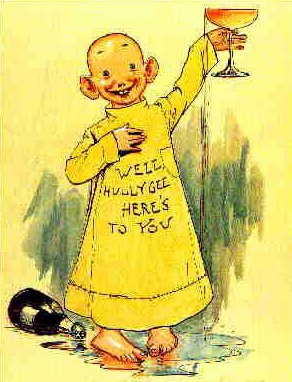
The comics were the high-tech weapon of the great newspaper circulation war and tumult, if not violence, was the new medium’s stock-in-trade. The term “yellow journalism” itself derived from the first comic-strip star, a denizen of the teeming, single-image slum tableaux Hogan’s Alley, who became known as the Yellow Kid. This jug-eared, barefoot urchin, draped in a canary-colored nightshirt, was created by thirty-three-year-old magazine artist Richard Felton Outcault at Pulitzer’s New York World….
Although replete with racial and ethnic stereotypes, the first newspaper comic strips were not so much an extension of vaudeville as precursors of the equally déclassé and temperamentally anti-authoritarian motion picture. The early strips thrived on choreographed violence, including runaway horse carts, baroque streetcar collisions, and a panoply of what [newspaper magnate William Randolph] Hearst might have termed polychromous explosions.
In an October review of Maresca’s book, Steven Heller summed up how the genre got its start:
The genesis of Sunday funnies began with technology providing a way to cheaply produce color newsprint pages, and out of a desire for an outlet to lampoon new social developments in transportation, communication, power. This was also a period of huge immigration, particularly from the poorer countries in Europe where English was limited and accents were the fuel of comic and stereotypical ridicule. A growing working class from different backgrounds shared a thirst for entertainment.
“With the masses specifically in mind, newspaper comics became the first popular culture as we know it today: synchronous, predictable, ephemeral, and with a near-universal appeal, well before cinema, radio, and TV,” Maresca says.
(Image of The Yellow Kid by Richard Felton Outcault, 1897, via Wikimedia Commons)