Why Is It Always About Sex?

168290943-SD

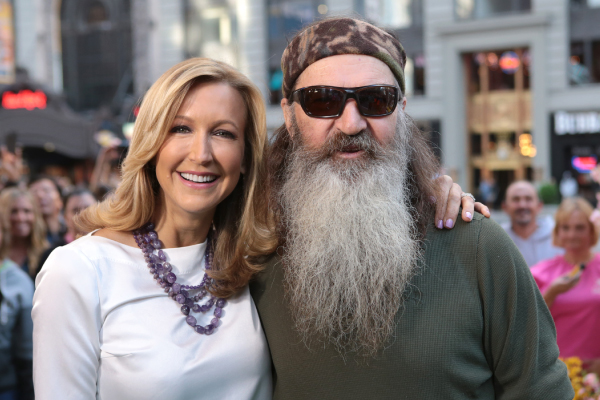
Phil of the Duck Dynasty reiterates the fundamentalist view of sin:

The acts of the sinful nature are obvious. Sexual immorality, is number one on the list. How many ways can we sin sexually? My goodness. You open up that can of worms and people will be mad at you over it. I am just reading what was written over 2000 years ago. Those who live like this will not inherit the kingdom. All I did was quote from the scriptures, but they just didn’t know it. Whether I said it, or they read it, what’s the difference? The sins are the same, humans haven’t changed […] But there’s a way out, do you want to hear the rest of the story or what? Jesus will take sins away, if you’re a homosexual he’ll take it away, if you’re an adulterer, if you’re a liar, what’s the difference?

In that last round-up of sins, Robertson puts homosexuality first, then adultery, then lying. The last two are actually in the Ten Commandments – and yet “homosexuality” is on their level, along with the view that somehow homosexual orientation can be prayed away (something that the largest Christian denomination on earth, the Catholic Church, denies). And this fundamentalist psychology then deepens:

If you break one sin you may as well break them all. If we lose our morality, we will lose our country. It will happen.

Again, as Christian doctrine, this is bonkers. There are obvious levels of sinfulness; the smallest white lie is not the same as a rape, and committing one does not mean committing them all. But you can hear the rhythms of the terrified fundamentalist psyche behind all these words. It is not enough for sins to occur (because that would make our time no different than any other); it is always the case that we are confronting a crisis of sinfulness, and that crisis is always spinning out of control into apocalyptic scenarios. So you give in to the gays, you give in to everything evil, because “if you break one sin you may as well break them all.” And if you break them all, America ceases to exist.

To recap: fundamentalism is not the same as Christianity. It has certain psychological tropes. The first is to see sexual sin as by far the worst of them and the root of all of them. The second is to see gays – whose very being represents sexual sin – as an enemy class within a society bringing about its destruction if they are not stopped or converted (see: Jews, Europe, circa 1300 – 1945). The third is to see these gays as opening the door to every other sin and evil. The fourth is to “lose our country.”

There are many varieties of Christian experience. Let’s just say I prefer the Pope’s.

Will Digital Dollars Run The World?

Carl Miller ponders a future when “normal people like you and me” commonly use digital currency like Bitcoin. “When bitcoin does indeed step over the threshold and into our world as a living currency,” he writes, “the possible challenges will make Silk Road trading seem like small fry”:

Peer-to-peer currencies reduce the ability of central banks to manipulate the money supply; have significant implications for how to track illegal transactions and may erode tax raising powers. Rubbing salt into the wound, it is now bitcoin miners, not Governments that receive ‘seigniorage‘, revenue earned by issuing the currency. Many bitcoiners are avid anarchists, who may wish and actively work to keep bitcoin separate.

In truth, no-one can be sure what will happen. Chinese authorities have in the last few days banned their banks from handling bitcoin and, anyway, it may not be bitcoin that eventually triumphs. Peercoin, Anoncoin, Zerocoin, Litecoin are all bring different strengths and benefits, from privacy and anonymity to the efficiency of the transaction. What bitcoin is however showing us is that Vires in Numeris [“Strength in Numbers”] is not ringing hollow. We will likely wake up to a world that uses currencies secured by cryptographical systems, and it is time that our social and political institutions seriously consider what this will mean for them and the people they protect and represent.

But, for Alec Liu, China cracking down proves that Bitcoin has a long way to go toward becoming a respectable currency:

[A]s much as the Bitcoin world loves to tout the latest store to accept Bitcoin, its utility in buying regular things still lags behind traditional currencies and platforms.

As we’ve already seen, Bitcoin’s ability to circumvent regulation is the sort of stuff governments won’t put up with for very long, and given Bitcoin’s reliance on centralized exchanges, it’s only a matter of time before those gateways are closed. China’s out, too. Hopeful Bitcoiners looking to India as the new hotbed of demand from a populous developing nation will likely be disappointed. The world’s second largest country by population will presumably follow the lead of its peers, while its relatively low per capita means that its citizens wouldn’t have the appetite or disposable income to make a real dent anyway. The only solution then is for Bitcoin to actually become useful.

Yglesias adds that Bitcoin has always relied on the laxity of regulators:

By using a bitcoin exchange as an intermediary, a Chinese person could sell yuan and a non-Chinese person could buy them. But this was going on more or less because the Chinese government was letting it go on. Like one of those “tax loopholes” that stays open because members of congress agitate in favor of keeping it open. Now the Chinese government has decided to close it—BTC China, the country’s main exchange won’t be taking any new deposits—and bitcoin prices are tumbling. Now if this does manage to play out that somehow the technology behind bitcoin is so sound that the PRC government can’t stop people from using it to implement exchange controls, that’ll be interesting (and probably unfortunate—judicious use of capital controls is good policy). But as of [last Wednesday] morning it looks like the party is over.

Previous Dish on Bitcoin here, here, and here.

Commuting By Color

Christopher Jobson captions:

In this new video art clip from San Diego-based filmmaker Cy Kuckenbaker, we watch as a 4-minute shot from the Washington Street bridge in San Diego is deftly edited, sorted, and compressed resulting in perfectly color-coded traffic. Kuckenbaker notes:

The source footage for this video is a 4-minute shot from the Washington Street bridge above State Route 163 in San Diego captured at 2:39pm Oct 1, 2013. My aim is to reveal the color palette and color preferences of contemporary San Diego drivers in addition to traffic patterns and volumes. There are no CG elements, these are all real cars that have been removed from one sample and reorganized.

Have We Lost Our Offline Lives?

Soraya Roberts fears we have. Clive Thompson is far less bleak:

There’s been a flood of handwringing op-eds lately about how glassy-eyed mobile-phone zombies are ignoring each other at the restaurant instead of talking to another another. I think these pundits are somewhat overblowing the frequency of this behavior, frankly. Very similar alarms were raised about the wave of supposedly society-ending isolation that would wreaked by previous newfangled media — like the telephone in the late 19th century, and the Walkman in the 80s. We didn’t suffer a social apocalypse then, and I don’t think we’re going to suffer one now.

That said, I actually think the op-ed handwringing is useful in its own way. It’s part of how a society creates social codes around new technologies. When mobile phones inched into the mainstream in the 90s, people who bought them used to answer them, every single time they rang, whenever and wherever they rang: At the dinner table, at the funeral, while having sex. It took about a decade of this behavior peaking before society collectively began to realize this was kind of terrible behavior, and we starting poking fun at it — you saw lots of jokes about it, like that “inconsiderate cell phone man” ad that used to run before movies. And eventually we moved away from the behavior. We’re probably in the middle of this curve with social media.

The Best Of The Dish This Weekend

merrill

In writing and thinking about the first and last things, it’s often the turn of phrase that lingers.

And so Leonard Cohen on the saint: “He rides the drifts like an escaped ski.”

T. S. Eliot on Mary: “the hint half guessed, the gift half understood.”

Nathan Schneider on the real reason for faith among male philosophers: “the whispers of their mothers.”

Flannery O’Connor on writing religiously: “you can do whatever you can get away with, but nobody has ever gotten away with much.”

James Merrill on a breakup: “Love buries itself in me, up to the hilt.”

Or a tweet from the frontlines of a civil rights movement: “Husband and husband….in Utah. :)”

The most popular post of the weekend was A&E Cannot Bear Very Much Reality, followed by my essay on the meaning of Pope Francis: Untier of Knots.

See you in the morning.

(Photo by Jonas Bengtsson)

The Calamitous First Christmas

Reflecting on the first Christmas, Matt Emerson urges us to resist “sugary exhortations about love and goodwill” that usually accompany the holiday, adding that “so secure are our lives and fortunes, so long have we connected Christmas to parties and candy canes, we rarely wrestle with the reality of what happened”:

The news of Jesus’ arrival confused Mary; caused Joseph to consider divorce; and, in King Herod, commenced a genocidal fury. Once Jesus is born, Mary and Joseph have to flee Bethlehem to evade Herod’s assassins. The Holy Family wait there until an angel tells Joseph to return; but Joseph, fearful of Herod’s son, and warned by another angel, decides to head to Nazareth. That’s the first Christmas. It rattles a marriage. It exiles a family. It endangers lives. And it provokes a madman to murder. The brisk descriptions in the New Testament fail to capture what must have been, for Mary and Joseph and many others, a bewildering, terrifying ordeal.

Email Of The Day

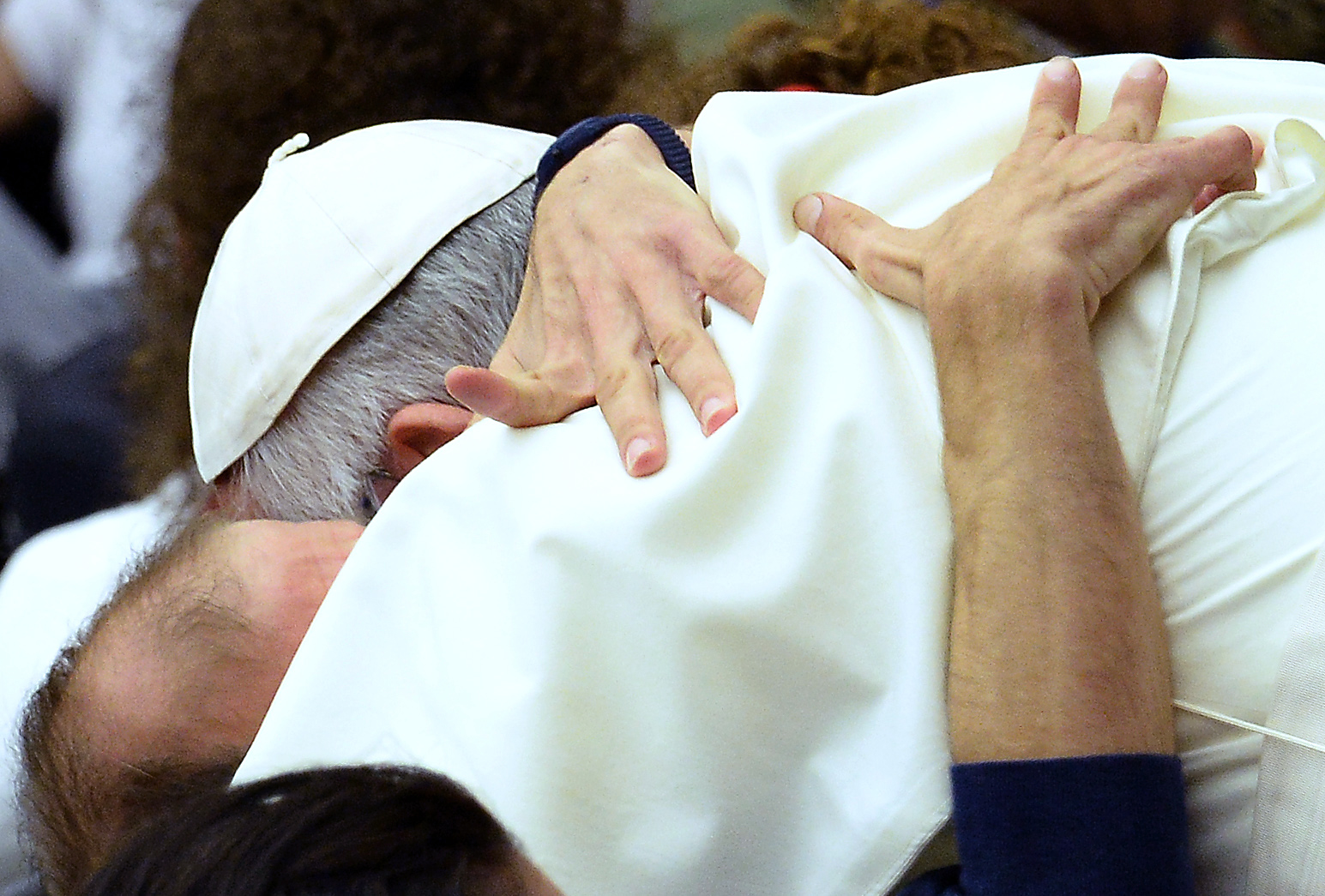
VATICAN-RELIGION-CHRISTIANITY-POPE-UNITALSI

A reader writes:

My dear Andrew:

Knots woke me early this morning, as they often do. Knots of worry about my children, knots of stress about work, knots of perseveration about decay and death.

The house was still. The bed was dark. Sheets were twisted, pillows clumped. My love slept beside me.

I read your Francis piece.

As I read, the pre-dawn light filtered through the bedroom curtains. A sense of peace filtered through my brow. Unknotted it.

You’re right. You don’t have to be a believer to recognize a moment of grace.

The Groundwork For God

Kenan Malik breaks down what monotheists inherited from their Greek forebears:

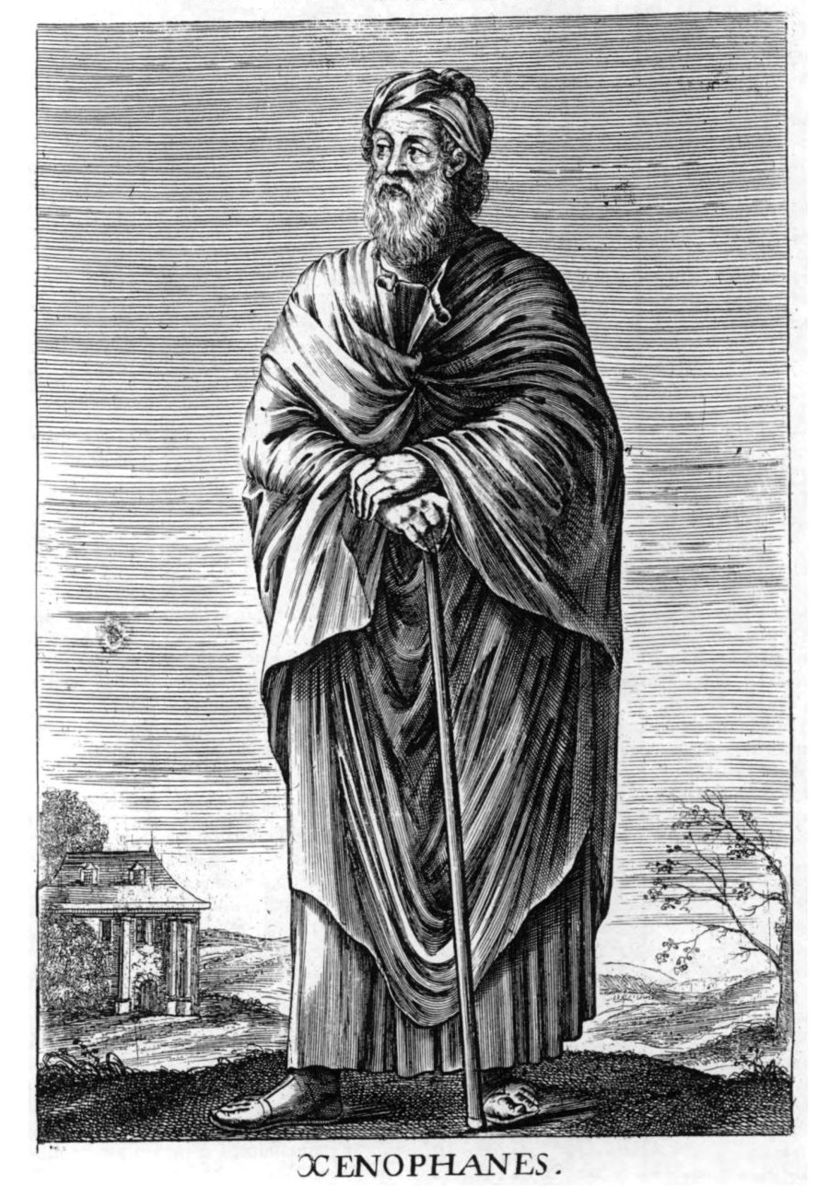
In redrawing the line between humanity and God, monotheism both adopted and discarded major themes in Greek philosophy. Greek philosophers had recognized human dish_xenophanes moral frailties, but had also believed that through reason and education some individuals at least could overcome the lure of the baser aspects of the soul. It was in the use of reason to accommodate life to the exigencies of fate that human dignity lay. At the same time, there was a strand within Greek philosophy that helped make more profound the distinction between Man and God. The distaste for the idea of capricious gods, and the desire for naturalistic explanations, evident from the Presocratics onwards, led some, like Democritus, to dismiss the very idea of gods and to insist on a purely materialist universe. Others redefined the nature of godliness. …

Xenophanes (c 570-476 BCE), one of the earliest of the Presocratics, savaged Homer and Hesiod for ‘attributing to the gods everything that men find shameful and reprehensible – stealing, adultery and deceiving one another.’

Humans possessed false ideas of gods because they fashioned them in their own image. So, ‘Ethiopians say their gods are flat-nosed and black, and Thracians that theirs have blue eyes and red hair.’ And if horses and cows possessed gods, they would undoubtedly be ‘horse-like gods, cow-like gods’.

There could only be one God, Xenophanes insisted, ‘since it is sacrilege for any of the gods to have a master’. This God could be ‘in no way similar to mortal men in body or in thought’. God must have always existed, for there is nothing superior that could have created Him, and He could not have been created by an inferior being. He is a living being but unlike like organic beings there are no parts in Him. He has no physical contact with anything in the world but ‘remains for ever in the same place, entirely motionless’ and ‘effortlessly, he shakes all things by thinking with his mind.’ This notion of a wholly simple God came to be important in both Islam and Christianity.

(Image of Xenophanes from Thomas Stanley’s The History of Philosophy, c. 1655, via Wikimedia Commons)