Diversify In The Sky

Armed with a new Rand study (pdf), Mark Thompson argues that the ”one-size-fits-all-services” F-35 fighter was a $400 billion mistake:

The real danger of relying on a single aircraft is that it could endanger its pilots. “During the Korean War, the U.S. Air Force was able to rapidly upgrade one of its four jet fighters, the F-86 Sabre, to meet the surprise introduction of the Russian Mikoyan-Gurevich (MiG)-15, a Soviet-designed fighter that was more capable than any other U.S. fighter in the Air Force or Navy inventory,” Rand says. “Had the Air Force and Navy relied exclusively on a single joint fighter other than the F-86, it might not have been able to respond quickly to the unanticipated new threat posed by the MiG-15.”

The fundamental challenge of building a multi-service fighter is that one size doesn’t fit all in the war-fighting business. “They are separate airplanes,” Thomas Christie, the Pentagon’s chief weapons tester from 2001 to 2005, told Time earlier this year of the F-35’s three variants. “We would have been better off if we’d let the services go off and do their own thing.” A bonus would have been multiple plane builders—instead of a single contractor—to keep the companies on their toes, he added.

Dave Majumdar explains the risks of using the F-35 in situations better suited to the faster F-22 Raptor:

Both China and Russia are developing these so-called fifth-generation fighters, which feature high speed, maneuverability and radar-evading stealth. The Chinese have their Chengdu J-20 and Shenyang J-31 prototypes. Russia is working on the Sukhoi T-50. Both the Russian and Chinese aircraft might have the potential to match certain aspects of the Raptor’s performance. By contrast, there are troubling questions as to how well the F-35 would fare against the new foreign fighters. While the F-35 has air-to-air sensors and can carry air-to-air missiles, it does not have the kinematic performance of the F-22. It’s simply sluggish in comparison. The Raptor was designed from the outset as an air-to-air killer par excellence—the F-35 was not. The Raptor combines a very stealthy airframe with a high altitude ceiling and supersonic cruise. Further, the F-22 possesses excellent maneuverability for close-in visual-range dogfights.

Crueler Than Fiction

Andrew Cohen marks the 40th anniversary of the release of the film Papillon with an article on the use and abuse of solitary confinement in American prisons:

Pick a state, any state, and you will find prisoners who are being treated as poorly, or worse, than were the prisoners depicted on Devil’s Island. … For example, in Colorado, as I wrote last month, state officials placed Sam Mandez into solitary confinement when he was just 18 years old. Not because he had tried to escape or because he was violent with his guards. But for petty offenses. Sixteen years later, he is still in confinement, made mentally ill by the isolation, and yet still without the proper medical attention the Constitution requires him to receive. What made moviegoers grimace in 1973 when they saw McQueen mistreated in that cell hardly makes them take notice today.

Last month, Cohen provided more details on Mandez’s case.

Classroom Clockwatchers

Amanda Ripley urges education policymakers to take boredom seriously:

When Gallup asked American teenagers to choose three words that best described their typical feelings in school from a list of 14 adjectives, “bored” was chosen most often—by one out of every two students. (“Tired” came in second, chosen by 42 percent of teenagers surveyed.) And boredom is global. Across 32 countries, nearly half of 15-year-olds said they often felt bored at school on average, according to a 2000 OECD survey. (Ireland did worst of all, with 67 percent of teenagers reporting frequent boredom, compared to 61 percent in the U.S.) …

The research on boredom in school is surprisingly scant—perhaps because boredom, unlike anger or defiance or other, less common schoolhouse emotions, does not directly disrupt the classroom. It is more of a latent virus, less likely to provoke adult interest. “Test anxiety has been examined in more than 1,000 studies to date,” Ulrike Nett and her colleagues noted in a fascinating 2010 study on boredom in school, “yet only a handful of studies have explored boredom.”

The Best Of The Dish Today

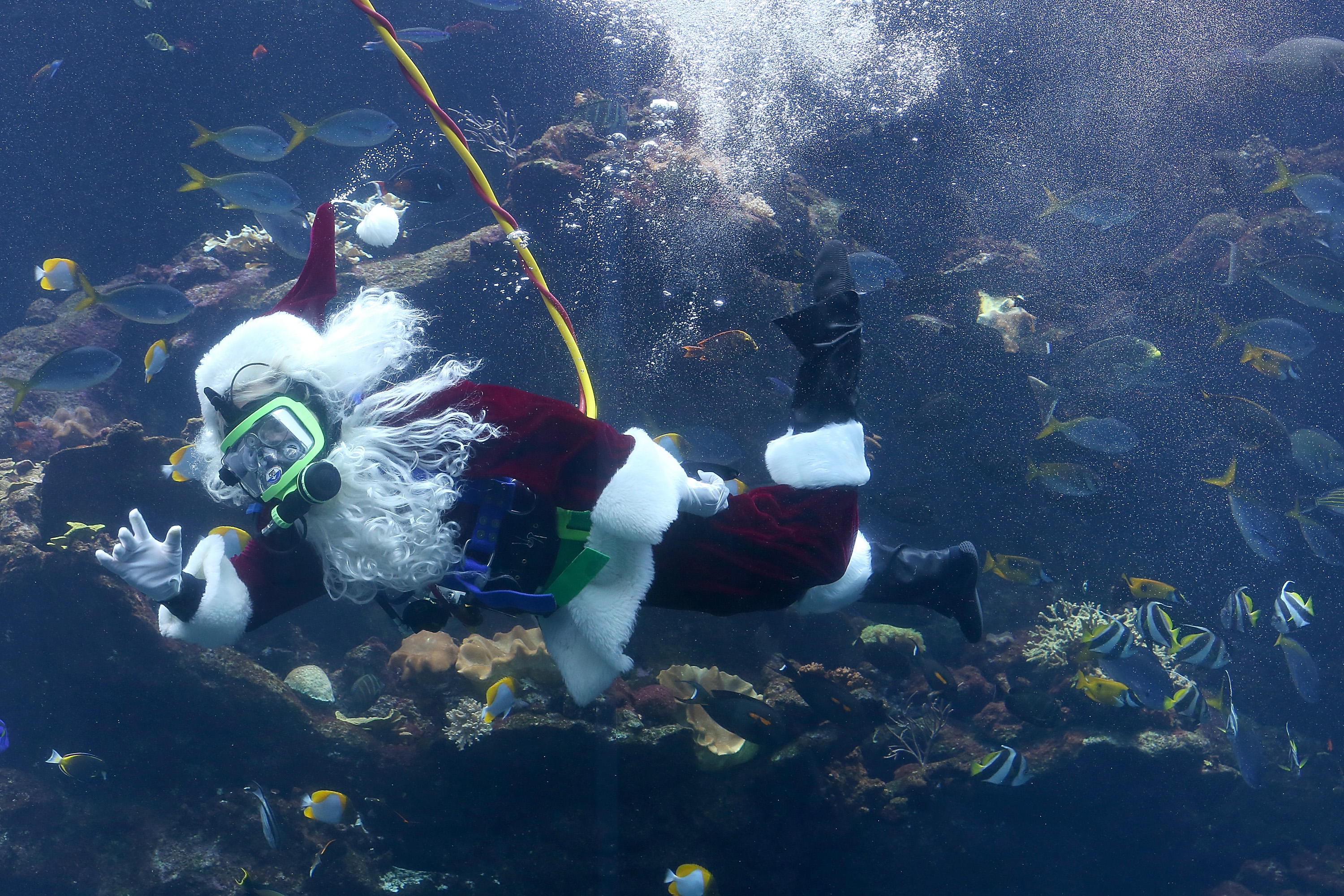
Scuba Santa Claus Explores Massive Coral Reef Tank In San Francisco

Big Duck/Beard Day here at the Dish – but I have to give the prize of this culture war explosion to Rush Limbaugh. It really is a quote of the year:

Well, I just found out what a butt plug was. I didn’t even know.

Yeah, right. You want to know what I think? Leave. Phil. Robertson. Alone. Or stop using rednecks for ratings.

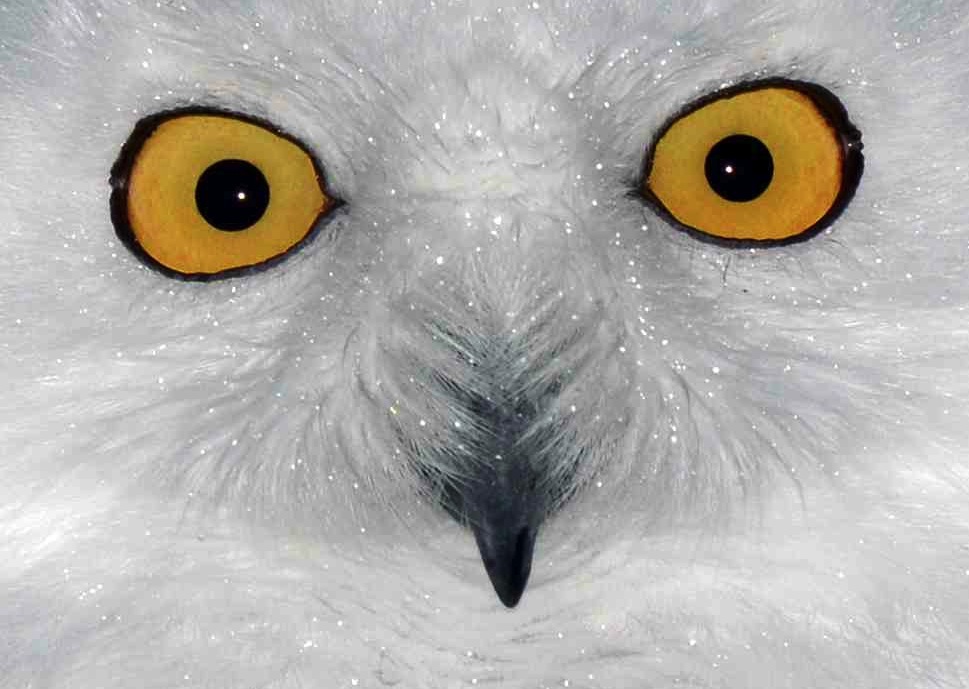
Three posts worth revisiting: a haunting avian Face of the Day; the (misleading) stats on teen pot use; and why that Obamacare “death spiral” is largely hype. Bonus late-night link: Pareene’s genius Mike Allen parody. 

The most popular post? A&E Cannot Bear Very Much Reality. Second? My Deep Dish essay on the meaning of Pope Francis: Untier of Knots.

See you in the morning.

(Photo: California Academy of Sciences diver George Bell wears a Santa Claus suit as he dives in the Academy’s Philippine Coral Reef tank on December 19, 2013 in San Francisco, California. By Justin Sullivan/Getty Images)

Last-Minute Shopping: Give The Dish!

dish-gift-dog-cartoon

[Re-posted from earlier today]

A reader asks:

Quick question … Is there a way to purchase a subscription for a friend as a Christmas gift?

You’re in luck! Tinypass, our e-commerce partner, just released an updated version of our gifting service, in time for Christmas. Now you can schedule the delivery of a gift subscription to the day. Just buy it now and have it automatically emailed to your friend or family member on Christmas Day. You can also add a personalized message to the gift email. Just go here to fill out a quick form for a one-year gift subscription – which, remember, is a one-time purchase that won’t recur next year. The price is just $19.99 – or more if you want to give a little extra to the Dish this year.

And if you’re one of our 35,000 Dishhead free-riders, who still haven’t subscribed, why not give yourselves and us a present? Subscribe [tinypass_offer text=”here”]. One who did last week:

Uncle. I give up. You win. I purchased a subscription. It was never about the money. Twenty bucks for a full year of Dish? Are you kidding me? Worth every penny and then some. I’ll pay the twenty bucks for the same reason that I subscribe to the New York Times. In some way you and your colleagues have become indispensable to my daily routine. And I don’t like being blocked once I’ve filled my quota. And I can’t STAND another fucking window popping up asking me to subscribe.

Stop those pop-ups and get rid of all those house-ads by subscribing [tinypass_offer text=”here”]. We also have a monthly option of $1.99 for those who don’t want to spend twenty bucks upfront. Another new subscriber writes:

After reading this morning, the new posts, the continuing threads (especially about miscarriage and lying about Santa), I realize that I land on the Dish for my daily dose of Sanity. Sane people, having Sane thoughts, having Sane questions and conversations. Daily. I love the Dish so much that I am looking forward to renewing my subscription in February. That’s a new concept for me: looking forward to renewing a subscription. Bless you people. Bless you for what you have managed to create and sustain. The Dish is better than church.

Obama Rights Drug War Wrongs

The president is commuting sentences for eight victims of unfair crack sentencing laws:

Obama said he was granting clemency to the eight inmates and commuting their sentences, and that he would also give pardons to 13 convicts who have already been released. He said he would retroactively apply new sentencing guidelines and drug laws to the eight convicted felons who are still serving time, and six will be released by April 17. Under current law, Obama said, “many of them would have already served their time and paid their debt to society.”

Sullum applauds Obama for using his clemency power and hopes that he will exercise it more often in the future:

Families Against Mandatory Minimums estimates that 8,800 federal crack offenders are serving prison terms that could be shorter if they had been sentenced under current law. As of today, Obama has used his clemency power to help 0.1 percent of them.

Obama nevertheless deserves credit for acting, albeit belatedly and timidly, on his avowed belief that thousands of people in federal prison do not belong there. In addition to issuing these commutations, he has endorsed the Smarter Sentencing Act, a bill co-sponsored by Sens. Mike Lee (R-Utah) and Richard Durbin (D-Ill.) that would allow some crack offenders convicted before 2009 to seek shorter sentences. But as Obama demonstrated today, he does not have to wait for congressional action. It is completely within his power to free any federal prisoner whose sentence he deems unjust. If he exercises that power a little more, he will not be in danger of going down in history as the least merciful president ever.

Videogames As Art, Ctd

Yesterday, the Smithsonian American Art Museum announced that two videogames, Flower and Halo 2600, have joined their permanent collection, saying the acquisitions “represent an ongoing commitment to the study and preservation of video games as an artistic medium”:

In a statement, the museum called Flower — in which players control the wind — “an entirely new kind of physical and virtual choreography.” Interactivity was also cited as a reason for its inclusion in the collection, with the museum saying “the work cannot be fully appreciated through still images or video clips; the art happens when the game is played.” Halo 2600, developed in 2010 to work on the 36-year-old Atari 2600, is less obviously beautiful. Instead, it “deconstructs the gamers’ visual and virtual experience” by re-imagining the 3D shooter on a 2D plane, displaying “the ever-changing relationship between technology and creativity.”

Philippa Warr weighs in:

Other museums and arts-based institutions have already begun adding videogames to their collections, but not always as artworks. The Museum of Modern Art in New York has acquired Space Invaders, Minecraft, EVE Online, The Sims and many other games for its own collection, but as examples of world-class interaction design rather than fine art. … As cultural institutions begin adding games to their collections it will be interesting to see how they approach the technical side of medium — preservation of source code, whether updates, patches, DLC and special events are encompassed in that holding, how to make the work available to visitors and researchers and so on. Which specific titles are acquired will also be revealing both of individual institutional collection policies and the ways in which we choose to define art.

Previous Dish on the subject here, here, and here.

The Original Welfare Queen

Josh Levin profiles Linda Taylor, the real-life Chicago “welfare queen” who inspired Ronald Reagan’s infamous invective:

It’s impossible to define the exact scope of welfare fraud in America then or now. A 1983 publication sponsored by the Department of Justice, for example, estimated annual Aid to Families With Dependent Children overpayments at between $376 million and $3.2 billion—not exactly a precise range. What’s clear, though, is that Linda Taylor’s larger-than-life example created an indelible, inaccurate impression of public aid recipients.

The plural of anecdote is not data. The plural of the craziest anecdote you’ve ever heard is definitely not data. And yet, the story of the welfare queen instantly infected the policy debate over welfare reform. Sociologist Richard M. Coughlin notes that in 1979, AFDC families had a median of just 2.1 children and a very low standard of living compared to the average American. In 2013, Bureau of Labor Statistics data continue to bear out the stark economic gap between families on public assistance and those who are not. Linda Taylor showed that it was possible for a dedicated criminal to steal a healthy chunk of welfare money. Her case did not prove that, as a group, public aid recipients were fur-laden thieves bleeding the American economy dry.

Taking A Scroll Outside

9271577463_23ca3c3ced_b

The virtual outdoors can be good for your health:

In the 1980s, experimental psychologists Rachel and Stephen Kaplan studied the effects of nature on people. They found that small glimpses of the natural world – “nearby nature” – could have measurable effects on well-being. Even an insignificant or faraway sight, such as a few trees viewed through a window, could still give us a good feeling. The Kaplans found that people with access to nearby natural settings were healthier than those without. And these subjects also experienced increased levels of satisfaction with their home, job, and life in general.

Nearby nature does not have to be beautiful or complex. And, surprisingly, you do not have to be actually outside to gain the benefits. Many studies that have looked at this have taken place indoors, using images rather than the real thing. The effect is still potent when viewed through a window or seen in a photograph or video. … I called this phenomenon “technobiophilia” – the innate attraction to life and lifelike processes that are found in technology. Images of nearby nature on our phones and computers can alleviate mental fatigue. They enhance our attention, help us cope with distraction, and generally improve our well-being.

For more on the subject, check out Sue Thomas’ book, Technobiophilia: Nature and Cyberspace.

(Image of a landscape from Grand Theft Auto V by Smade Media)