Mark Yakich ponders “poetry’s contemporary predicament: a poem that is so strange, so other, is also a poem many feel they might as well ignore”:
Here’s a poem from the 1960s by Aram Saroyan:
lighght
Yes, that’s the whole poem. I know, it seems asinine. When I wrote it on the board and asked my students to examine it, one said, “How do you even read it aloud?” When we tried, we began to understand the intent of the poem. The word “light” seems to be implied, but what’s with the apparent typo? After a long silence, another student said, “That’s the point—in the ordinary word ‘light’ we don’t pronounce the ‘gh’—the ‘gh’ is silent, and the double ‘gh’ makes us realize that even more.” The poem calls attention to the system of language itself—the stuff of letters in combination—and the relationship between sound and sense. The familiar—a plain word such as “light”—has been made new if only for a brief moment. In Saroyan’s own words: “[T]he crux of the poem is to try and make the ineffable, which is light—which we only know about because it illuminates something else — into a thing.” When we come across a poem—any poem—our first assumption should not be to prejudice it as a thing of beauty, but simply as a thing.

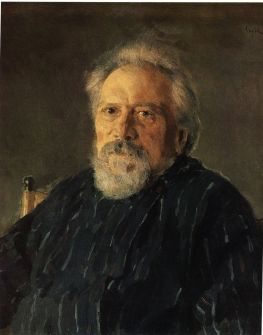 inspired by things he saw and heard while spending an intense two years travelling throughout old Russia as a young man. He was a natural sponge, eyes out onstalks, missing nothing and grasping the essential ambivalence of life and art. Structure and form did not interest him; his impulse was to hold an audience. … Leskov was religious yet detested ecclesiastical bureaucracy just as he resented political oppression. When his travelling came to a[n] abrupt end – he had been working for his uncle, who could no longer afford to employ him – Leskov moved to St Peterburg and became a prolific journalist.