Jerry Saltz urges all but the wealthiest young artists to stay away from MFA programs, which after two years are “hovering near a quarter-million dollars” in cost. And besides, students have to deal with “a lot of bullshit”:
Iffy artist-teachers wield enormous artistic and intellectual influence over students, favors are doled out in power cliques. Zealous theoreticians continue to scare the creativity and opinions out their third generation of young artists and critics. Too many students make highly derivative work (often like that of their teachers) and no one tells them so. A lot of artists in these programs learn how to talk a good game instead of being honestly self-critical about their own work.
… I’ve taught at institutions across the prestige spectrum. Truthfully? Students who go to high-profile schools get a subtle eighteen-month bump after they graduate, in part because dealers and collectors (oy) see their MFA shows. However, once this short-term advantage dissipates, the artist becomes one in a crowd, with a mountain of debt, and may need to have a full-time job indefinitely to pay it off. There’s no surer way to throw away that early advantage than getting a job that saps their art-making energy.
Saltz also recommends a new essay by artist Coco Fusco, who “pulls back the curtains on the risky business and chancy racket of the Master of Fine Arts degree.”
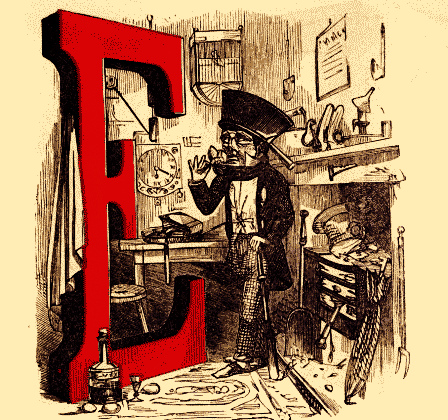
Joshua David Stein chronicles how the letter is used less and less on the Internet:
[I]n 2004, Stewart Butterfield and Caterina Fake founded Flickr, a photograph-sharing application, without the standard penultimate E. “The most compelling reason to remove the E,” explained Ms. Fake, “was that we were unable to acquire the domain Flicker.com … The rest of the team were more in favor of other options, such as ‘FlickerIt’ or ‘FlickerUp’ but somehow, through persuasion or arm-twisting, I prevailed.” It was good news for the company but bad news for the letter. A year later, the company was acquired by Yahoo for $35 million.
Soon many startups began jettisoning their Es like toxic assets. In 2009, Grindr, a geosocial network application for gay men, chose to make do without the letter E. Membership quickly swelled. Myriad other brands followed suit, including Blendr, Gathr, Pixlr, Readr, Timr, Viewr, Pushr.
And of course, there is the blogging platform Tumblr, whose launch in 2007 may have marked the true end of E. “There are a variety of reasons why Tumblr contains no E, from branding considerations to environmental factors (fewer letters mean lower power consumption by our servers),” said the company’s editorial director, Christopher Price. “At the end of the day, however, it all comes down to one simple, absolute truth: Tumbler.com looks fucking stupid.”
Charles Kenny proposes that we export the growing ranks of unemployed Americans to other countries that need more workers, pointing to Chile, Hong Kong, Indonesia, Mexico, and South Korea as potential destinations:
According to the State Department, only about 6.3 million U.S. citizens live abroad, or around 2 percent of the domestic population. In relative terms, that’s pathetic. About 5.5 million British people live permanently abroad, almost five times the U.S. level in per capita terms. Maybe they’re trying to escape the lousy weather, but it isn’t like Brits have natural advantages over Americans as travelers. British people are almost as bad at speaking other languages as Americans are, and in terms of haughty isolationism and disdain for foreigners, surely Brits are worse. (I’m allowed say this — I’m British.) So why shouldn’t America send out some huddled masses for once?
But would these other countries want American workers?
It is true that Gallup polls suggest only 14 percent of U.S. citizens claim they can speak Spanish well enough to hold a conversation. Look at any other language and the numbers become truly dire… The good news is that English has official or special status in countries that are home to 2 billion people, and one in four of the world’s people speak English to some level of competence. And though it’s true that jobs are hardest to come by for the least educated Americans, it’s still not a pretty picture for recent grads. The unemployment rate for those ages 20 to 29 who had graduated from college in 2011 was 12.6 percent as of October 2011. But even young Americans who haven’t made it to university have received a quality of education considerably higher than that of most people in emerging economies.
Noting that Qatar “is estimated to have recently spent well in excess of $1 billion on Western art,” James Panero considers the implications:
On the one hand, Qatar’s art initiatives can be seen as a modernizing force, one that could liberalize the tribal attitudes of the country’s native population and pave the way for further political reform. On the other hand, contemporary art may merely serve as a cover for further repressive policies. This artifice of modernism mirrors Qatar’s other contradictory diplomatic positions. An ally to the United States and host of U.S. Central Command, Qatar nevertheless reportedly helped Khalid Sheikh Mohammed escape U.S. capture in the 1990s, may have been paying protection money to al Qaeda, and is currently arming radical Syrian rebels and offering safe haven to Egypt’s Muslim Brotherhood.
The terrible history of Iran demonstrates what can happen when a modernist culture merely overlays a repressive regime. In such circumstances, artists and organizations might profit by spreading modernity, but they are also abetting a compromised state.
(Photo of skyline in Doha, Qatar, as seen from the Museum of Islamic Art, by Mark Pegrum)
One reason, according to Singer, that people are so hesitant to give is they think their kindness will not matter. This tendency to think that one can’t do very much, or to dismiss all forms of aid as useless, is what researchers call “futility thinking:” What difference can one person even make? Research indicates that money makes people more individualistic and less altruistic. In other words, as societies become wealthier, their citizens become more individualistic and depend less upon one another. Self-interest becomes the norm.
But one antidote against futility thinking is to carefully research charities and organizations—something that Singer’s $100 donation experiment allowed students do. They were presented with four organizations, asked to research and discuss their merits, and vote on where the $100 should go. They applied the lessons they’d learned in the course: that not all donations are equal, and that some donations have a measurably more positive impact than the same amount donated elsewhere…. They learn that their money will always go much further overseas: that a very small amount of money for an American can be life-saving to someone who is desperately poor. In other words, they learn about the tenets of effective altruism: how to evaluate organizations for transparency and benefits, and figure out which forms of aid are the most cost-effective. This is information that tends to inspire more giving.
Allow me to recommend Jim Fallows’ latest post on freedom of speech and Max Blumenthal’s grueling book about the extremist elements in contemporary Israel, Goliath. The core point is that, whatever you believe about the arguments of the book, or of its author, it remains a powerfully reported account of actual people currently living in Israel, their attitudes and beliefs. You might imagine that Blumenthal’s selection of racist, extremist elements in Israeli culture obscures a larger truth, as we noted recently. But, even then, it is still a lesser truth that should be engaged, not ignored. He marshalls facts. He talks to people directly. The idea that a book that delves into such empirical questions must somehow be repudiated or ignored is a deeply illiberal idea.
Jim argues:
[Blumenthal] has found a group of people he identifies as extremists in Israel—extreme in their belief that Arabs have no place in their society, extreme in their hostility especially to recent non-Jewish African refugees, extreme in their seeming rejection of the liberal-democratic vision of Israel’s future. He says: These people are coming, and they’re taking Israeli politics with them. As he put it in a recent interview with Salon, the book is “an unvarnished view of Israel at its most extreme.” Again, the power of his book is not that Blumenthal disagrees with these groups. Obviously he does. It comes from what he shows.
To see for yourself, just watch a few minutes of the video Blumenthal and his associates made a few months ago, about recent anti-African-immigration movements. The narration obviously disapproves of the anti-immigrant activists, but that doesn’t matter. The power of the video comes from letting these people talk, starting a minute or so in.
I don’t know how you can watch the video above without thinking of previous attempts in human history – a “cancer on our body!” – to demonize, persecute and expel marginal minorities in defense of a racially homogeneous country. Period. In a particularly glaring twist, the New York Times commissioned the video then simply refused to air it.
Now I know I can be tedious about this kind of thing, and one shouldn’t engage a book merely because some want it branded anathema. But nonfiction is at its most urgent when forcing us to confront uncomfortable reality.
You can and should criticize that reality for being untrue, or deceptive, or simply false. But not engaging it at all on empirical grounds is a sign of fear, not wisdom. That was my argument for airing “The Bell Curve” a couple of decades ago; it’s my argument for presenting Steve Jimenez’s reporting on the tragedy of Matthew Shepard on the Dish. It’s why my instinctive response to those who want a book ruled out of the discourse, is to read it as a human being or air it as an editor.
It’s staggering to me that the New York Times, for example, has not reviewed (even critically) either Goliath or The Book of Matt. Why not? Either because they are cowards or because they genuinely believe that examining arguments that undermine core factions or lobbies – gay or Jewish – is somehow offensive in itself. Neither of these is a good argument. Both sustain denial.
Aeon captions the above short film, “Unusual Choices”:
In this gentle and honest portrait, Buddhist nun Ani Chudrun explains what led her away from a life of celebrity, drugs and materialism to one of reflection, compassion and ritual. Shot at Ani’s home in a forest in Sussex, the film shows how one person can radically transform their life in the search for meaning.
In the midst of a review of Francis Spufford’s Unapologetic, Alan Jacobs relays the story of a summer he spent teaching a course called “Practical Apologetics” to a group of Christian pastors in Africa. When they spurned his advice on how to reach out to Muslims, he realized there was something missing from his suggestions – as Jacobs puts it, there was “a human dimension to this enterprise that I had failed to take into account”:
Would-be apologists cannot think only of the needs of their audience; they must think also of their own limitations. Those limitations may be intellectual: as Sir Thomas Browne wrote in the 17th century, “Every man is not a proper champion for truth, nor fit to take up the gauntlet in the cause of verity. Many from the ignorance of these maxims, and an inconsiderate zeal unto truth, have too rashly charged the troops of error, and remain as trophies unto the enemies of truth.” They overrate their own intellectual capabilities, and embarrass not just themselves but the faith they had planned to defend.
But equally important are emotional or spiritual limitations. ‘I have found that nothing is more dangerous to one’s own faith than the work of an apologist,” [C.S.] Lewis wrote in 1945, when he was at the apex of his career as defender of the faith. “No doctrine of that faith seems to me so spectral, so unreal as the one that I have just successfully defended in a public debate.” The key word in that second sentence is “successfully”: the greatest spiritual danger presents itself not to the one who has manifestly failed (in Milton’s phrase) “to justify God’s ways to man,” but to the one who succeeds, or thinks he succeeds. And the greatest danger is not even pride: it is the discovery that a doctrine put into cold print, or into one’s own (fallen, fallible) mouth, loses much of its reality and power.