
A 3D-printed 1:1 scale mask of President Barack Obama is on display at the Smithsonian Castle in Washington, DC on December 5, 2014. By Alex Wong/Getty Images.
A 3D-printed 1:1 scale mask of President Barack Obama is on display at the Smithsonian Castle in Washington, DC on December 5, 2014. By Alex Wong/Getty Images.
A rare sentiment from the in-tray:
I am having trouble understanding why you and many of my friends are so exercised about this case. Yes, it is a tragic accident, but, when I watch the video, I don’t see a murder, or even manslaughter. What I see is a big man resisting arrest and a police officer trying to restrain him. It is hard to tell from the video, but it does not appear to me that the officer continued to apply the “chokehold” (a label that may have been inaccurately applied to this case) after Garner said he could not breathe. It looks to me as if that officer grabs him around the neck for only a few seconds, and then, while Garner is still conscious and speaking, tries to restrain him by holding his head in place.
There have been a lot of comments online about whether the officer should have been trying to arrest someone for selling “loosies” on the street. The fault for that doesn’t lie with the officer, but the politicians who wrote the law and the officer’s superiors who insist that the law be enforced in this particular way. Imagine you’re that officer, and your job is to arrest someone twice your size who is resisting arrest. How would you do it? Pepper spray or a taser? We know how controversial that is. Is it fair to send this guy to jail for honestly trying to do his job? I don’t think so.
Another reader quotes me:
But there was no way to interpret [Megyn] Kelly’s coverage as anything but the baldest racism I’ve seen in a while on cable news. Her idea of balance was to interview two, white, bald, bull-necked men to defend the cops, explain away any concerns about police treatment and to minimize the entire thing. Truly, deeply disgusting.
I didn’t see Kelly that day. But I caught her show yesterday and she was very forthright in condemning the police. The only point she made is that she didn’t see proof that the excessive force used against Garner was motivated by racism. I tend to agree with her.
The police made clear their intent to arrest Garner for legitimate, albeit minor reasons. At that point Garner started arguing loudly, and he clearly had no intention of submitting. If he was going to be arrested, it was going to involve a struggle. He pretty much said exactly that.
I don’t know what the law is regarding the rights of people about arrested to quarrel with the cops, or physically resist. But I do know, from a purely common sense standpoint, that there’s no way to win that fight. You can’t argue with cops. Talk yes, argue no. If you argue like Garner did, you’re going to jail no matter what race you are.
I believe a white, Asian, or Hispanic male (of his size) would have been treated the same way. Maybe that’s wrong, but that’s the way it is. Everyone knows it. I’ve never understood why a lot of black men don’t get this fairly ordinary bit of common sense. Given the minor nature of the charges, Garner might have been able to talk his way out of arrest. But the minute he raised his voice, he was headed for the station. Most likely he would have been i-bonded out soon after arrival.
Of course, nothing excuses the subsequent use of clearly excessive force.
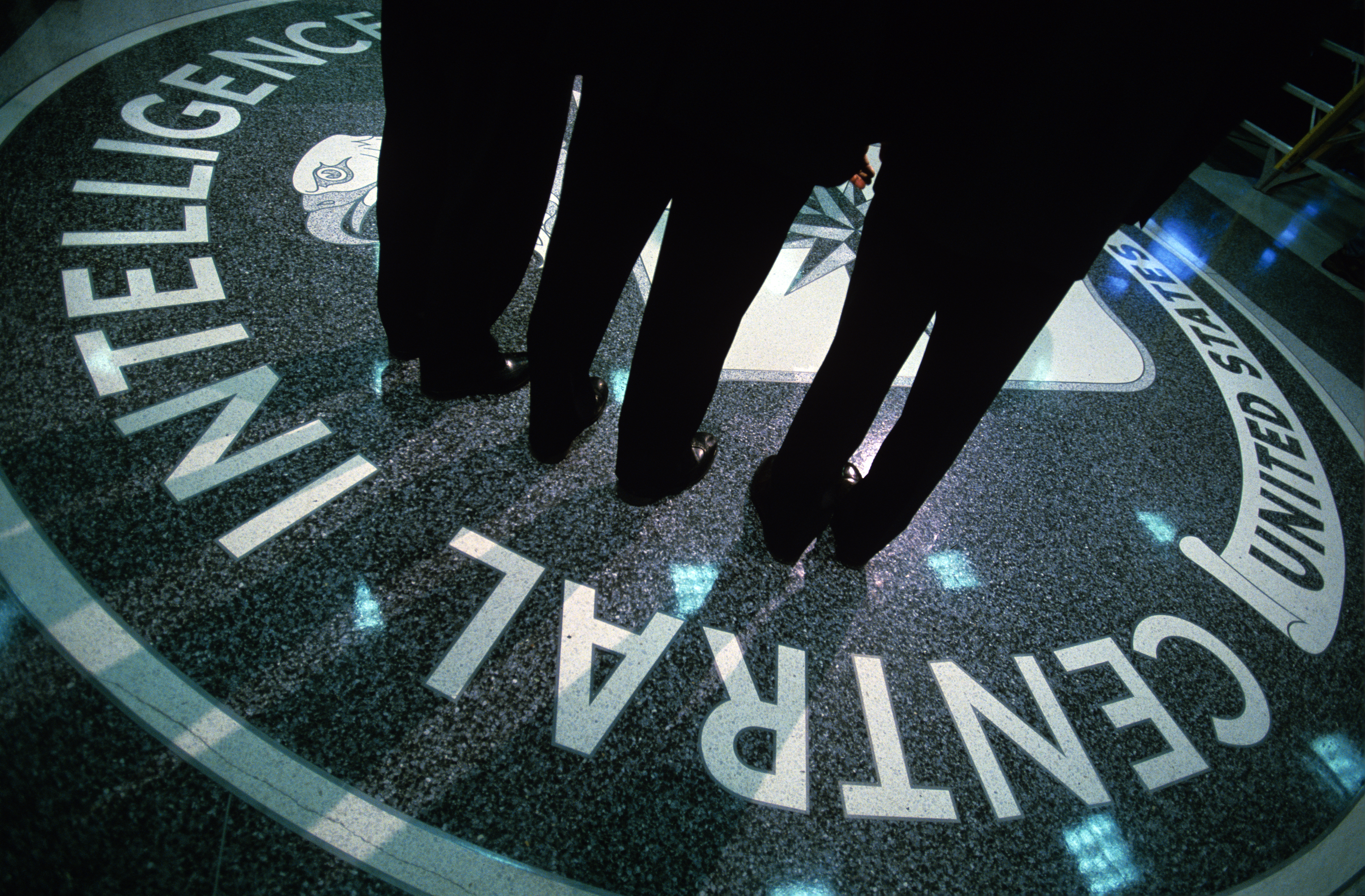
This is an outrage:
Secretary of State John Kerry personally phoned Dianne Feinstein, chairman of the Senate Select Committee on Intelligence, Friday morning to ask her to delay the imminent release of her committee’s report on CIA torture and rendition during the George W. Bush administration, according to administration and Congressional officials. Kerry was not going rogue — his call came after an interagency process that decided the release of the report early next week, as Feinstein had been planning, could complicate relationships with foreign countries at a sensitive time and posed an unacceptable risk to U.S. personnel and facilities abroad.
First, the Obama administration set up a white-wash, in the form of the Durham investigation; then they sat back as the CIA tried to sabotage the Senate Select Committee on Intelligence; then Obama’s chief of staff prevented the report’s publication for months, by insisting on redactions of the report to the point of it being near-unintelligible; and now, with mere days to go, the administration suddenly concludes that a factual accounting of this country’s descent into barbarism poses “an unacceptable risk” to US personnel abroad. Now, after this report has been stymied for two years; now, just days before its scheduled publication; now, because if the administration can prevent its publication this month, they know full well that the Republicans who will control the committee in January will bury the evidence of grotesque and widespread torture by the US for ever.
Of course this complicates relationships with foreign countries; of course it guts any remaining credibility on human rights the US has; of course the staggering brutality endorsed by the highest echelons in American government will inflame American enemies and provoke disbelief across the civilized world. But that’s not the fault of the report; it’s the fault of the torture regime and its architects, many of whom have continued to operate with total impunity under president Obama.
Make no mistake about it: if this report is buried, it will be this president who made that call, and this president who has allowed this vital and minimal piece of accountability to be slow-walked to death and burial, and backed the CIA every inch of the way. But notice also the way in which Kerry’s phone-call effectively cuts the report off at its knees. If it is released, Obama will be able to say he tried to stop it, and to prevent the purported damage to US interests and personnel abroad. He will have found a way to distance himself from the core task of releasing this essential accounting. And he will have ensured that the debate over it will be about whether the report is endangering Americans, just as the Republican talking points have spelled out, rather than a first step to come to terms with the appalling, devastating truth of what the American government has done.
I’m genuinely shocked by this last-minute attempt to bury the truth. Does anyone doubt that one agency in that inter-agency review is the CIA itself? And can anyone seriously believe that if this moment passes, we will ever know what happened? I have confidence in Senator Feinstein’s backbone on this. I wish I had confidence in the president’s.
So let me make one last appeal: Mr President, make the right call. Release the report. Let the facts be in the sunlight. It’s what you promised. And it’s the least this country deserves.
Update from a reader:
I think you may be interested in what Democratic Senator Mark Udall told Esquire in an interview conducted on November 21 and scheduled to run in the January 2015 issue. Esquire decided to release a portion of it today:
… obviously, if it’s not released, then I’m gonna use every power I have, because it’s too important. It’s too historic. And we can’t afford to repeat the mistakes to let this slide.
(Photo by Charles Ommanney/Getty Images)
Well ok, New York isn’t always shitty:
Though, for the record, that’s Brooklyn.
A reader shifts the focus away from the risk of HIV among gay Americans:
What about the ban on British blood, due to fears of mad cow disease? I’ve not been able to give blood for over 10 years due to this ridiculous ban.
Another is also barred:
It’s annual Xmas blood drive time, and I’m again reminded that I can’t give, because I lived in the UK for more than three months between 1980 and 1996. (Hard not to have done so, since I was born there.) The reason is Variant Creutzfeldt-Jakob Disease, better known as mad cow – a scourge which has affected 229 people in all of recorded history. British beef appears to be the vector. The net cast to prevent vCJD transmission is extremely wide, and among things it rules out just about every adult European now living in the U.S. and just about every American servicemember who was stationed in Europe during the last decade of the Cold War. That’s surely millions of people.
It really seems – on vCJD, gay sex, and other risk factors – the Red Cross uses an awfully big hammer to bury some awfully small nails. With all our medical advances, there must be better tools available today than these blanket bans.
Relatedly, Brian Resnick explains the importance of veterinarians in preventing disease in humans:
“Often, infectious diseases circulate in animals for a long time before they cause outbreaks in humans,” says Wondwossen Gebreyes, the director of Global-Health Programs and a professor of molecular epidemiology at Ohio State University. “To prevent disease in humans, we should be able to address what’s happening in the animal world and what is happening in the environment,” Gebreyes says. Human and animal health are irrevocably linked. As a veterinarian, he says, “I’ve always been interested in saving human lives.”
Seventy-five percent of newly emerging diseases are zoonotic, meaning they can be spread between animals and humans. And they wreak havoc: People fall ill having no natural defenses, and there is often no medicine to fill the gap. It’s estimated that between 1997 and 2009, the cost of these diseases amounted to $80 billion worldwide. Every year, there are 2.5 billion cases of zoonotic illnesses in humans, resulting in 2.7 million deaths.
This concept – connecting human medical and veterinary science – is called One Health. And in this framework veterinarians are the sentinels, monitoring the animal kingdom for potential threats to humans.
https://twitter.com/ajam/statuses/540896096302944256
Leaders of Hong Kong’s protest movement are mulling whether to keep going, shift tactics, or retreat after two months of street demonstrations failed to persuade authorities to hold an open election for the city’s leadership in 2017:
The Hong Kong Federation of Students will decide in the next week whether to call on protesters to pull up stakes from camps which straddle some of the Chinese-controlled city’s main thoroughfares and have tried residents’ patience. Chan Kin-man, joint founder of the “Occupy Central” protest movement that has called for the students to pull back, said the federation had a “very major decision” to make. …
Benny Tai, another joint founder of Occupy Central, reiterated calls for students to leave and pondered where the disobedience movement could go next. “Blocking government may be even more powerful than blocking roads,” he wrote in the International New York Times. “Refusal to pay taxes, delaying rent payments by tenants in public housing … along with other such acts of non cooperation, could make governing more inconvenient.”
Whichever way the movement goes from here, Rachel Lu calls this round for Beijing:
Everyone in Hong Kong will probably emerge from the Occupy movement a bit bruised, either physically or mentally, but some in Beijing might be smiling. China’s central government has stood fast on the core issue — that Beijing will vet the slate of nominees for Hong Kong’s chief executive in the 2017 election. Years (if not decades) of “united front” work, a term used by China’s ruling Communist Party to describe efforts to hew non-party elites close to its goals, seem to have paid off. Beijing has proven that it knows how to pull the right levers in Hong Kong to wield considerable influence — all of the local government officials toed the line, tycoons spoke out against the occupation, and grassroots groups staged counterprotests. When one businessman took the position that Leung should resign, he was swiftly removed as a delegate to the Chinese People’s Political Consultative Conference as a form of discipline and censure.
The ranks of the pro-establishment camp will likely tighten, while the opposition pro-democracy camp is left in disarray amid infighting.
“This is really, really bad. It means, of course, that when I dismissed Richard Bradley and Robby Soave’s doubts about the story and called them ‘idiots’ for picking apart Jackie’s account, I was dead fucking wrong, and for that I sincerely apologize. It means that my conviction that Sabrina Rubin Erdely had fact-checked her story in ways that were not visible to the public was also wrong. It’s bad, bad, bad all around,” – Anna Merlan, Jezebel. Award glossary here.

Tomasky doubts it will arrive:
Ask yourself: What would it take, really, for your average white cop not to see your average black male young adult as a potential threat? Because we can pass all the ex-post facto laws we want, and we can even convict the occasional police officer, which does happen from time to time. But that’s not where the problem starts. The problem starts in that instant of electric mistrust when the cop reaches for his gun, or employs a homicidal chokehold. That moment is beyond the reach of legislation, or of any punishment that arrives after the fact.
McWhorter rejects such pessimism:
Are we trying to create a humanity devoid of any racist bias, or are we trying to stop cops from shooting black men?
The two aren’t the same. A world without racism would be a world without dirt. A world where episodes like what has happened just this year to Garner, Brown, John Crawford, Akai Gurley, and Tamir Rice is much more plausible. We need special prosecutors, body cameras, and, if you ask me, an end to the war on drugs.
As such, we must be pragmatic. I know the people protesting Michael Brown’s death nationwide are sincere. But it’s easy to forget that in cases like this, sincerity is supposed to be forward-focused. It’s all too human for people to end up mistaking the heightened emotions, the threats, the media attention, the catharsis, as progress itself. But drama alone burns fast and bright. Think about how Trayvon is already—admit it—seeming more like history than the present.
He insists that “Ferguson was the spark, but Garner was ‘it'”:
Here is where I am quite sure Reverend King and Bayard Rustin would be planning not just statements and gestures, but boycotts. The recording of Garner’s death has the clear, potent and inarguable authority of the Birmingham newsreels. We must use that. Yes, use—we are trying to create change, not just perform.
A reader points to a performance:
I’ve never emailed you, though I am a long-time reader and admirer (and, more recently, a subscriber). But if you want something to lift your spirits a bit about Garner, take a look at this. It’s a protest organized by the Black Law Student Association at Yale Law School and joined by much of the law school community. During this silent protest, hundreds of students, faculty, and staff joined hands and created a human chain between the law school and New Haven’s Courthouse. Everyone then staged a “die in” for 4 1/2 minutes. It was a remarkably moving event, all the move moving given that it was organized entirely by young people who’d been buffeted by the news of Ferguson and the Garner verdict and are doing their best to be successful law students at a top law school. Want to know something else? Not only did the New Haven police facilitate the protest, but the Chief of Police showed up in support, cheering the dean of the law school as he passed.
(Photo: On December 4, 2014 in Oakland, California Michaela Pecot wears a sign on her hat that reads ‘I can’t breathe’ in front of City Hall on the second night of demonstrations following a Staten Island, New York grand jury’s decision not to indict a police officer in the chokehold death of Eric Garner. By Elijah Nouvelage/Getty Images)
Our Asian-American Harvard grad writes back:
1. Let’s look at DeBoer’s core argument:
I have no doubt that Asian Americans suffer from racism and oppression in this country. No doubt at all. However, they don’t suffer from systematic exclusion from American colleges in general or from elite colleges specifically. On the contrary: in both cases, Asian Americans represent a higher percentage of college students than they do the population writ large.
This is, frankly, codswallop. DeBoer ignores the fact that Asian-Americans admitted to selective schools must have higher academic qualifications than Whites! This, not crude proportional representation, is the very essence of discrimination.
Of course, DeBoer’s “out” is that he doesn’t believe in academic qualifications or merit, because he doesn’t believe that “standardized tests and grades can be objective and separated from socioeconomic context.” But the fact is that test scores/grades are the most accurate predictor of academic success that we have. The fact that they correlate with socioeconomic status doesn’t change this fact. Far less does it mean that anyone, least of all Asian-Americans, simply absorb academic ability through some sort of magical force field that permeates their homes.
There is a subtle subtext to being Asian-American in this country that goes something like this:
even if you were born in the Midwest and speak English without an accent, mainstream American will always consider you somewhat of an outsider, a foreigner, or, at best, robotic, automaton-like, part of an undifferentiated mass. Therefore, you must work very hard to excel in areas in which your ability will be obvious and objectively verifiable. Under no circumstances should your prospects depend on people (read: White people) liking you personally or finding you relatable (e.g. sales, entertainment, middle management, or even practicing law in front of a judge or jury).
This (fading) subtext, in part, explains the high prevalence of Asians-Americans in technical and STEM fields and in higher education in general. It may also have socioeconomic benefits for Asian-Americans, on average. But it is perverse to visit race-based collective punishment on the basis of hard work. This, frankly, is part of what grinds my gears: DeBoer’s sanctimonious, hand-wringing concern for “real people” over “abstractions.” We are real people.
2. It is true that good universities (including my alma mater among many others) have world-class academic departments while practicing affirmative action on an university-wide admissions-level. But the critical point is that no physics, chemistry, or any other rigorous academic program practices affirmative action at a departmental level – classes are graded and standards applied without taking race into account. This inevitably generates racial disparities.
This is why STEM graduates, as an overall class, are demographically different from university graduates in general (in a way that makes them, yes, more closely resemble the student body of Cal Tech). This is also a large problem with affirmative action practiced at the admissions level: at some point, the race-based, thumb-on-the-scale must be lifted, with predictable results. Advocates rarely acknowledge this.
For example, passage rates for medical board exams show racial disparities for underrepresented minorities – this on top of the fact that medical schools don’t practice strong affirmative action (Blacks and Latinos are significantly under-represented at med schools to begin with). Thus, if we look at the data, it seems that the ability to earn a medical license cannot be “objective and separated from socioeconomic context,” under Freddie’s criteria. Should affirmative action apply here as well?
The standard liberal position on this issue is untenably crude and not comprehensively thought through.
Another reader joins the debate:
A number of comments suggested that Caltech could easily implement affirmative action without compromising the rigor of their program. Harvard has some of the nation’s best science departments and they practice affirmative action, so why can’t Caltech?
I have no idea if the broader point stands, but this argument isn’t particularly convincing. Remember: everyone at Caltech has to take a core curriculum of mathematics and physics. The relevant question is not how diverse Harvard is, but how diverse the math and physics majors at Harvard are.
There is a relatively well-known phenomenon of women and minorities who begin college with plans to major in a STEM field sorting out of these fields as they progress towards their degrees. Here is one recent paper. There are undoubtedly many forces at work here: discrimination and a lack of role models to name a few. But at the margin, it’s at least possible that affirmative action could play a role.
If you enter university less mathematically well-prepared than your peers, it’s inevitable that you’ll struggle in certain courses. We’d like to think that we grade against an objective standard, but there’s always an implicit curve: we determine what is reasonable to expect of an undergraduate from the undergraduates we teach!
I would by no means characterize the humanities as “soft” or “easy” subjects: indeed my classics and philosophy courses as an undergrad were extremely challenging. But it is certainly true that some majors are less demanding than others and the easier majors tend not to have a quantitative focus. If minority students know they will be disadvantaged relative to their peers in certain disciplines, they may well switch majors. The end result may be fewer minorities in the sciences: at a slightly lower-ranked institution, say a top state school or liberal arts college, these students very well might not have switched out of the sciences. Indeed, the overall quality of instruction is likely higher at such schools than it is at Harvard. (On a personal note, I am extremely glad that I didn’t attend a brand-name undergrad institution; if I had, I sincerely doubt that I would have become a professor.)
If using affirmative action to increase the number of minorities with Harvard degrees means fewer minorities in the sciences, which should we choose? I honestly don’t know, but it’s a question worth thinking about.
Daniel Engber reviews The Philosophy of Beards, a recently reissued 1854 manifesto:
Described by its U.S. distributor, the University of Chicago Press, as a “truly strange polemic” from 1854 that’s “[s]ure to be popular in the hipper precincts of Brooklyn,” it contains a lecture on the beauty and importance of the whiskered chin. The volume’s author, an Ipswich muck-a-muck and chief bank cashier named Thomas S. Gowing, lays out a vigorous Victorian defense
against “the unnatural custom” of the razorblade. The beard “has in all ages been regarded as the ensign of manliness,” while “the absence of Beard is usually a sign of physical and moral weakness.” His argument appeals at times to history and liturgy, dwelling on a dictum in the Bible, thou shalt not mar the corners of thy beard, that’s often cited by Hasidic Jews in support of growing sidelocks. But Gowing’s just as wedded to claims by certain doctors that beards prevent sore throats and filter filthy moisture from the air. More than that, he says, the beard provides a natural framing for the manly face, “covering, varying and beautifying, as the mantling ivy [does for] the rugged oak.”
Since the book will be given and received in jest, perhaps one needn’t worry that it’s racist. Gowing holds the white man as a paragon of beardliness and contrasts him with the smooth-faced men of certain “degenerate tribes wholly without, or very deficient.” (These latter have “a conscious want of manly dignity, and contentedness with a low physical, moral, and intellectual condition.”) Nor should readers be upset by Gowing’s fulminations on the “effeminate Chinese.” Remember that he put this down on paper just two years before the British navy launched its largely unprovoked bombardment of Canton.

 The Dish