Views Differ On Meaning Of “Sexual Assault” Ctd

A reader comments on this post:

The excerpt from Elizabeth Nolan Brown quotes “increasing progressive activism around the idea that drunk people can’t give consent.” I’m troubled by this.  The fact is, people can (and do) give consent while intoxicated.  Intoxication does not render one a zombie or possessed by a demon.  In fact, many would argue that one’s words and actions while intoxicated reveal more of your true self than when sober (think of the guy who goes off on a racist tirade while drunk, but would never be caught saying those things out loud when sober).

The notion that a woman (or man) should be absolved of all responsibility for their sexual actions while drunk is preposterous.  Yet it seems that this is exactly what high school and college campuses are now telling their students.

But let’s look at it this way: If a female college student were to go to a frat party, get sloshed, and then – instead of climbing into bed with a frat guy – climbed into the driver’s seat of her car, took off and went on to kill someone with it, nobody would be suggesting that she was not responsible for her actions while drunk.  Why should her ability to make a judgment concerning sex while drunk be any different than if she drove a car?

Here’s another example: Let’s say a guy gets drunk and has sex with a woman without a condom and she gets pregnant.  Nine months later should he be absolved of his responsibility to provide for the child just because his judgment in deciding whether to use a condom was impaired at the time of intercourse?  Please.

Update from a reader:

The “increasing progressive activism around the idea that drunk people can’t give consent” runs smack into this reality (emphasis mine):

Typically, if either the victim or the perpetrator is drinking alcohol, then both are. For example, in Abbey et al. (1998), 47% of the sexual assaults reported by college men involved alcohol consumption. In 81% of the alcohol-related sexual assaults, both the victim and the perpetrator had consumed alcohol. Similarly, in Harrington and Leitenberg (1994), 55% of the sexual assaults reported by college women involved alcohol consumption. In 97% of the alcohol-related sexual assaults, both the victim and the perpetrator had consumed alcohol. The fact that college sexual assaults occur in social situations in which men and women are typically drinking together makes it difficult to examine hypotheses about the unique effects of perpetrators’ or victims’ intoxication.

That’s a problem. Unless, of course, the activists want to establish that men are supposed to be the guardians of helpless women’s virtue at all times, which doesn’t sound particularly progressive to me. In fact, it sounds … what’s the word I’m looking for … ah! Patriarchal.

At some point, today’s feminism and yesterday’s Victorianism will reach a perfect convergence. But the new feminists will have to impose their idea of male virtue by force of law.

QE, We Hardly Knew Thee

iUG0KbcZS9cc

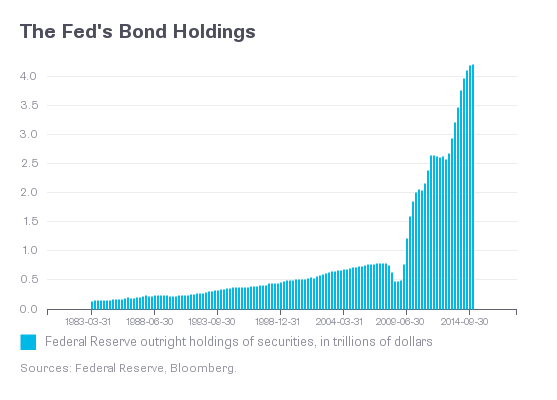
Yesterday, the Federal Reserve announced that it was halting the bond-buying program known as “quantitative easing”, the third round of which had begun in September 2012. While the Fed won’t divest itself of the more than $4 trillion in bonds it has accumulated, and has no immediate plans to raise interest rates, it won’t buy any more. Matt O’Brien fears that the Fed is sending the wrong signals as the economy remains lethargic:

The fact that it’s ending QE3 despite still-low inflation and still-high, though declining, unemployment, signals that the Fed is eager to return to normalcy. So does changing its statement from saying there’s a “significant underutilization of labor resources” to it “gradually diminishing.” The Fed, in short,  looks much more hawkish. And that’s not good, because, as Chicago Fed President Charles Evans explains, the “biggest risk” to the economy right now is that the Fed raises rates too soon.

QE isn’t magic — far from it — but it is, as Boston Fed President Eric Rosengren told me, “quite effective.” Especially at convincing markets that the Fed won’t raise rates for awhile, which is all it should be saying right now. Because the only thing worse than having to do QE is having to do QE again. The Fed, in other words, should do everything it can to make sure the economy lifts off from its zero interest rate trap before it pulls anything back. Otherwise, we might find ourselves back in the same place a few years from now.

Justin Wolfers stresses that this isn’t really “the end” of QE, since the assets the Fed holds will continue to have a stimulative effect:

Of course, the aspect of Wednesday’s Federal Reserve decision that has captured the most attention is its decision to stop purchasing further long-term securities. But don’t confuse this with a monetary tightening. It’s hanging on to the stock of securities it currently holds, and the Fed’s preferred “stock view” says that this is what matters for keeping longer-term interest rates low. By this view, the Fed’s decision to end its bond-buying program does not mark the end of its efforts to stimulate the economy. Rather, it is no longer going to keep shifting the monetary dial to yet another more stimulative notch at each meeting. The level of monetary accommodation will remain at a historical high, even if it is no longer expanding.

Over recent years, policy makers have also worked to lower long-term interest rates by shaping expectations about future monetary policy decisions, in a process known as forward guidance. Today’s statement continues this policy, repeating recent guidance that the Fed expects interest rates to remain low for “a considerable time.”

But Ylan Mui suggests that higher rates may not be as far off as promised:

The debate over when to raise rates, which has already begun, will prove tricky for the Fed — and likely the biggest challenge of Janet Yellen’s tenure since she took over as head of the central bank early this year. Fed officials, who have suggested that the move could come in the middle of next year, hope that it causes little disruption. But achieving that delicate balance is the most basic dilemma of central banking. If the Fed moves too soon, it could undermine the recovery. If it waits too long, it could breed the next financial bubble as investors take too many risks backed by the belief the Fed will always be stimulating the economy.

When Fed officials suggested in the past that they may withdraw stimulus from the economy faster than anticipated, markets have swooned and interest rates have popped up. That’s one reason central bank officials have been preaching patience in responding to the strengthening recovery — but some investors believe they will not be able to wait much longer.

The Bloomberg View editors revisit the debate over whether QE worked. They maintain that it was the right call:

Exactly how much QE has helped the economy remains a matter of debate. Former Fed Chairman Ben Bernanke said in 2012 that the Fed’s first two rounds may have boosted output by 3 percent and added more than 2 million jobs. In a more recent paper, San Francisco Fed President John Williams said such estimates were uncertain; he also noted the risks to the financial system posed by so large an intervention. Some believe QE has gradually diminishing effects; others that it has no positive effect at all.

Regardless, the gamble was justified. After the crash a persistent slump in demand hobbled the recovery and drove up long-term unemployment, threatening great and lasting economic damage. With inflation low, the risks of QE were small in relation to the possible gains. The benefits weren’t confined to the direct effects of the Fed’s purchases: Even more important, QE bolstered confidence that the central bank was willing to do everything in its power to revive the economy.

Danielle Kurtzleben also defends the program:

One key thing to consider with QE3 is the counterfactual — what would the economy have looked like had it never been put into place? One of the big benefits of QE3 was that it counteracted a Congress that insisted on holding back spending, even while the economy was sluggish. As Fed Chair, Bernanke was constantly chiding Congress for dragging on the economy, encouraging them to save deep spending cuts like those under sequestration for later.

So though 2013’s economic growth wasn’t exactly stellar compared to 2012’s, it’s important to consider how bad it could have been, says [economist Paul] Edelstein. “I mean, 2012 GDP growth was two and a quarter percent. 2013 comes, we have all the sequester-related spending cuts, and we have QE3. The result: GDP growth of two and a quarter percent,” he says. “Is two and a quarter percent good? Not really. But clearly again it could be a lot worse if we didn’t have fiscal drag.”

The Dems’ Playbook Is Getting Stale

Joe Klein is struck how Democratic candidates have “emphasized women’s issues–equal pay, parental leave, abortion rights–in the hope of luring undecided, independent women to the fold”:

[Campaigning on women’s issues] has been effective and still may be–but it has never before carried the electoral burden that it does this year. The alleged toxicity of Barack Obama has made it unsafe for Democrats to discuss much else.

The party was boosted by the failed Bush wars in 2006, 2008 and 2012, but Democrats have been boggled by what to say about ISIS in 2014. They’ve had no significant new ideas, foreign or domestic, on offer. And they’ve been too afraid to tout Obama’s complicated successes–the stimulus package that prevented a depression, the health care plan that may actually be working, and relative order at the border (a result of many years of security enhancements and a diminished flow of illegals during recent rough economic times). The argument on women’s economic issues is strong. It remains to be seen whether baby boomers who boast remarkable three-month, 3-D sonograms of their grandchildren will be quite so militant about abortion rights in the future. The fate of women’s issues, in the South and elsewhere, will have an impact on whether the party has to start rethinking its message going forward. It may not be able to count on Republicans’ continuing their boorish ways. Unless, of course, the conservatives win and overread the results this year.

Elizabeth Nolan Brown identifies why the Democrats’ War on Women demagoguery isn’t working very well:

As many political strategists, writers, and pundits have noted over the past few weeks, issues like birth control and abortion simply rank low among the list of current concerns for female voters. This likely isn’t an expression of how important women consider their availability—the vast majority of American women will use birth control in their lifetimes and one in three will have an abortion—but the fact that they genuinely aren’t pressing political matters right now at Congressional level.

The federal Life at Conception Act—which several Democrats have used as a cudgel against GOP opponents who did (Gardner) or do (Ernst) support it—has about as much chance of being enacted as your dog does of becoming president; it would take passing both chambers of Congress with two-thirds support and ratification by 75 percent of state legislatures. And as George Will noted in a recent Washington Post column, “access to contraception has been a constitutional right right for 49 years” while “the judiciary has controlled abortion policy for 41 years.”

The idea that this country will ban birth control entirely or amend the Constitution to define fertilized eggs as people is simply not plausible.

The Case Against A Clinton Coronation

Charles Pierce doesn’t want Hillary to get the nomination without a fight. He identifies “the worst thing about accepting as axiomatic the notion of the cleared field”:

It makes effective coalition-building beyond the mainstream impossible. Change within nothing but acceptable parameters is stillborn, and the really serious problems affecting the country get sanded over and obscured by tactics. People whose lives have been ground up over the past decade have their appeals drowned out by the hoofbeats of the horse race. …

To accept the idea that Hillary Clinton has cleared the field is not merely to put the Democratic party on the razor’s edge of one person’s decision. It also is to give a kind of final victory to tactics over substance, to money over argument, to an easy consensus over a hard-won mandate, and ultimately, to campaigning over governing. It is an awful, sterile place for a political party to be.

Meanwhile, Haberman and Thrush report on a meeting between Hillary and former Obama campaign guru David Plouffe. They discussed why she lost in 2008:

Plouffe told Clinton and two of her closest advisers—longtime aide Cheryl Mills and John Podesta, Bill Clinton’s chief of staff and now Obama’s White House counselor—what she needed to do to avoid another surprise upset. His advice, according to two people with knowledge of the session, looked a lot like Obama’s winning strategy in 2012: First, prioritize the use of real-time analytics, integrating data into every facet of her operation in a way Clinton’s clumsy, old-school campaign had failed to do in 2008. Second, clearly define a rationale for her candidacy that goes beyond the mere facts of her celebrity and presumed electability, rooting her campaign in a larger Democratic mission of economic equality. Third, settle on one, and only one, core messaging strategy and stick with it, to avoid the tactical, news cycle-driven approach that Plouffe had exploited so skillfully against her in the 2008 primaries.

In Plouffe’s view, articulated in the intervening years, Clinton had been too defensive, too reactive, too aware of her own weaknesses, too undisciplined in 2008. His team would goad her into making mistakes, knowing that run-of-the-mill campaign attacks (like Obama’s claim she merely had “tea,” not serious conversation, with world leaders as first lady) would get under her skin and spur a self-destructive overreaction (Clinton responded to the tea quip by falsely portraying a 1990s goodwill trip to Bosnia with the comedian Sinbad as a dangerous wartime mission). She was too easily flustered.

Plouffe’s last and most pressing point was about timing. … Plouffe, with the politesse of a man accustomed to padding around a president,  implored her to start assembling a campaign as soon as possible and to dispense with the coy fiction that she’s not running in 2016. “Why not?” he asked. “They are already going after you.”

Catching Catcalls On Camera, Ctd

A reader pinpoints another unintentionally revealing aspect of that Hollaback video:

The elephant in the room here that no one is discussing is the racial aspect.  It’s pretty clear that the vast majority of men catcalling in that video, and the most egregious examples, are displayed by minorities – either African-American or Latino men. I’m not saying that harassment like this is exclusive to non-whites, as any women that has encountered a gaggle of drunk frat boys can attest. But whether intentional or not, the video presents a particular theme that people seem to be conveniently avoiding discussing. This is somewhat reminiscent of the inconvenient truth of minority support of Prop 8.

Many more readers comment along those lines:

The desire to criminalize catcalling is a classic example of two progressive causes heading on a collision course, because it would almost certainly have a disproportionate impact on young minority males, particularly African Americans.

I can’t be the only person to notice that a lot of the catcalling in that video was done by black males.  I’m not claiming that we got a representative sample from the video, but it showed 23 encounters, of which I identified 10 of the males as black and 6 as white (the other 7 I counted as ambiguous, either because the male was off screen or his ethnic background wasn’t clear to me by his appearance).  In an area of New York that is (according to Wikipedia) 13% black, 43% of the “assailants” I could identify were black.  In the two creepiest cases, where the man followed the woman down the street for some distance, both men where black.

Mark my words, if Hollaback gets its way and catcalling becomes a crime, within 10 years we’ll be reading reports of how negatively the law is affecting minority youth.  And the irony is that the people who are most the most concerned about that disproportionate impact will probably be the ones who are the most concerned about street harassment today.

Another cites the reaction of Hollaback:

The creator of the video has protested that, sure, they got white guys on camera doing this but there was always something wrong with the shot, like a siren blaring in the background, etc. But does that sound credible to you?

Unless this was a specific attempt to paint blacks and Latinos as particularly prone to this type of harassment, which I doubt, my bet is that based on the neighborhoods they chose to film in, there simply weren’t as may white harassers. So why didn’t they go into stereotypical white/middle to upper class areas? But what if they did so, or had done so – and also didn’t get as many catcallers?

In other words, is this a class issue? Are men from the lower economic rungs of society more apt to call out to women this way? If that’s the case, can we be grown-up enough to admit that, or do we instead ignore that and insinuate that “all men” do it, that catcalling is equally distributed along the spectrum? And if we do that, isn’t the message that this isn’t OK ultimately going to be too diffuse to really hit home where it needs to be heard the most?

The race/class issues inherent in the catcalling video is unavoidable – though I think liberals in particular will strain themselves to avoid it.

Another drills down on the class issue:

I fear that middle- and upper-class progressives are once again taking up a very difficult cause whose primary aim is policing the internal mores of working-class life, mores that offend the sensibilities of the wealthier and better educated because it occasions one of the few cross-class interactions where the middle classes don’t have a home-field advantage. As ever, it centers on different understandings of what is and is not acceptable to do in public space.

Living in working-class areas of south Brooklyn, I’ve been struck both by how common it is for a man to catcall and the fact that the women in these areas engage with it as a normal part of life. Something you often hear when this topic comes up is “What one earth are these guys thinking? This never works!”

But you know what: it does work. I’ve seen it often enough trudging back from the subway. A guy hanging with his friends outside of their building calls out at a girl. Often enough, she stops for a bit and has a laugh. Or she yells back a joke and keeps on. Or tells him to go fuck himself. But what I rarely see is anyone just completely blanking the guys and keeping their heads down.

This isn’t to say that women who object to catcalling just need to learn to grin and bear it, or convince themselves that yelling on the street is actually a charming practice. It’s not, and I’ve had to coach myself to not flush and feel intimidated when I, a 6’4″ man, gets yelled at when I’m waiting for a bus. But it is to say that changing this won’t be easy when what’s at stake here isn’t just a question of how men treat women, but also the differing understanding of how to act in shared spaces.

Another is more succinct:

She is walking through neighborhoods where the cultural norms don’t match those she grew up with, and she is demanding that those people change their everyday behavior, in their own neighborhoods, where she is a guest, because it inconveniences her. It all smacks of white privilege to me.

Follow the whole discussion here. And for another long thread from readers, check out “The Terror of Catcalling“, with examples far more intimidating than the ones presented in that Hollaback video.

What Do These Midterms Mean?

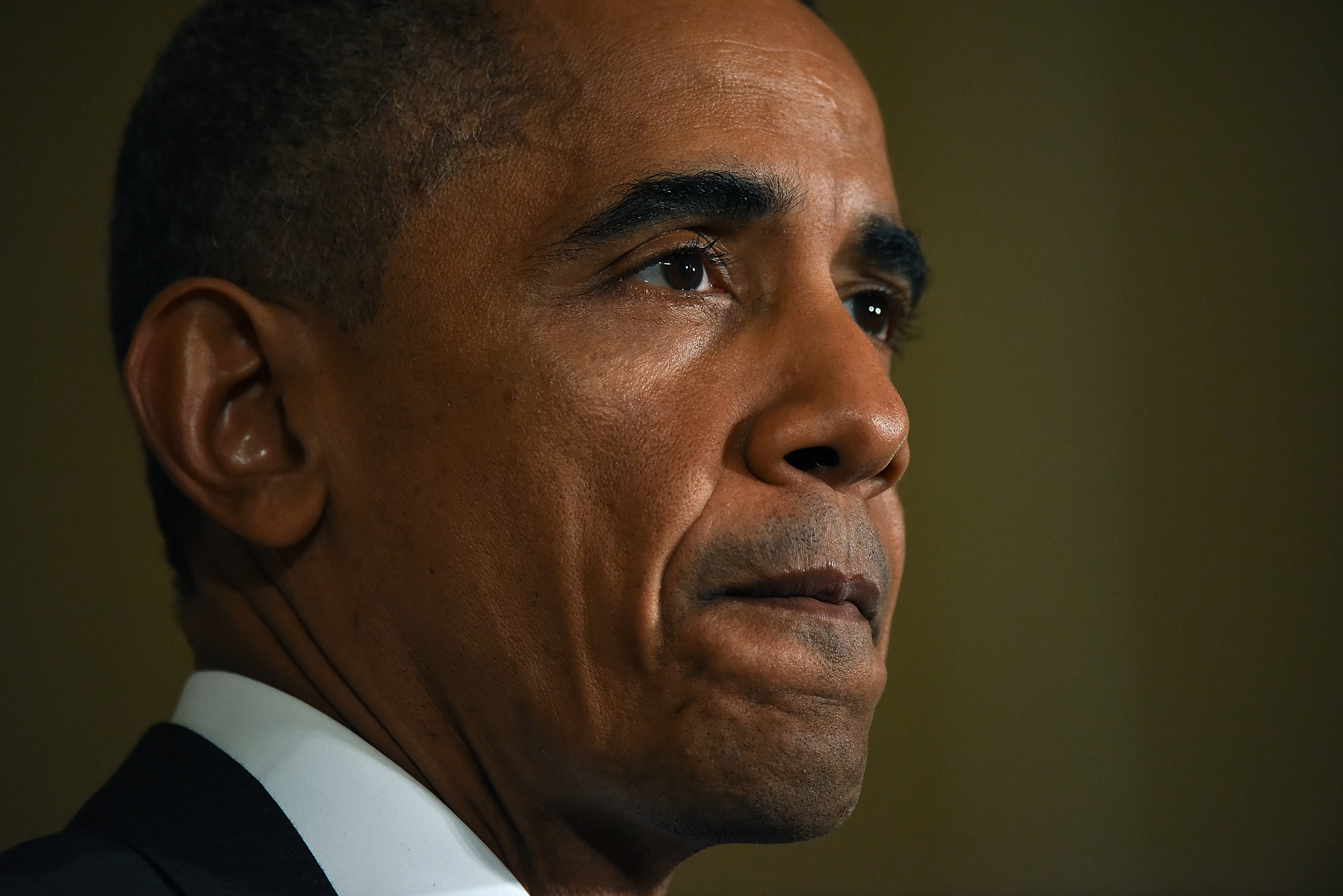
President Obama Delivers Statement In East Room Of White House

It seems safe to say that the GOP will pick up the Senate this year. No one can quite know the details yet, and the scale and extent of the wave (or not) remains again up in the air. But what this actually means – for policy and this presidency – is a more complicated question.

Here’s what we know empirically. The public is underwhelmed by these elections and engagement is low; the average Senate seat gain for a midterm in a second presidential term is six seats for the opposing party (which is a highly likely scenario right now); the president is unpopular and many Republican candidates have made this election about him, while most Democrats (as is their wont) are running fast away; the GOP itself remains, however, also deeply unpopular; wrong-direction numbers are at a high. No great policy debate has defined these races, and when such issues have risen – such as illegal immigration or the ACA – they tend to be virulent reactions to existing law or proposed changes, rather than a constructive, positive agenda. I see no triumph for conservative or liberal ideas here, no positive coalition forming, no set of policies that will be vindicated by this election.

So these midterms mean nothing? That can’t be right either. They seem to me to be reflecting at the very least a sour and dyspeptic mood in the country at large, a well of deepening discontent and concern, and a national funk that remains very potent as a narrative, even if it has become, in my view, close to circular and more than a little hysterical. So what is the reason for this mood – and why has Obama taken the biggest dive because of it?

Here’s my stab at an answer. Even though the economic signals in the US are stronger than anywhere else in the developed world, even as unemployment has fallen, and as energy independence has come closer than anyone recently expected, the underlying structure of the economy remains punishing for the middle class. This, in some ways, can be just as dispiriting as lower levels of growth – because it appears that even when we have a recovery, it will not make things any better for most people. This shoe falling in the public psyche  – a sense that we are in a deep structural impasse for the middle class, rather than a temporary recessionary hit – means a profound disillusionment with the future. And the fact that neither party seems to have a workable answer to this problem intensifies the sense of drift.

Events overseas have had another, deeply depressing effect.

The last great triumph of the US – the end of the Cold War, the liberation of Central Europe, the emergence of a democratic Russia – is now revealed as something more complicated. If Americans thought that the days were long gone that they had to worry about Russian military power, they’ve been disabused of that fact this past year. Then the other recent success: getting out of Iraq and defeating al Qaeda. For many of us, this was one of Obama’s greatest achievements: to cauterize the catastrophe of the Iraq War, to decimate al Qaeda’s forces in Af-Pak, and to enable us to move forward toward a more normal world. The emergence of ISIS has dimmed that hope as well. It does two things at once: it calls into question whether our departure from Iraq can be sustained, and it presents the threat of Jihadist terror as once again real and imminent. So ISIS is a reminder of the worst of 9/11 and the worst of Iraq. Any sense that we have moved beyond those traumas has been unsettled, at the very least.

So the core narrative of the Obama presidency – rescuing us from a second Great Depression and extricating us from a doomed strategy in response to Jihadism – has been eclipsed by events. And that’s why Obama has lost the thread. He has lost the clear story-line that defined his presidency. And he has, as yet, been unable to construct another, consumed, as he has been, by the pragmatism of the moment.

You can argue, and I would, that Obama is not really responsible for the events behind this narrative-collapse. The forces that have suppressed the median wage in this country for decades now are beyond his or any president’s power to change – and his economic record is about as impressive as it gets under the brutal circumstances he inherited. Putin, for that matter, was emerging as a neo-fascist dictator in the Bush years, and the roots of his rage lie, in many ways, in events in the 1990s. As for Iraq, another bout of sectarian warfare was utterly predictable, given the inevitable failure to construct a multi-sectarian government in the wake of our decapitation of the Iraqi state in 2003. The Sunni insurgency that we fought for ten years has just bided its time and is now back again in our absence. Did anyone but fantastists like McCain ever really doubt this would happen?

But most Americans are not going to parse these trends and events and come to some nuanced view. They see the economy as still punishing, Jihadist terror just as frightening, and they are increasingly unable to avoid the fact that we lost – repeat, lost – the Iraq War. They’re also aware that the US, after Iraq, simply has historically low leverage and power in the world at large, as the near-uselessness of our massive military in shaping the world as we would like has been exposed in the deserts of Iraq and mountains of Afghanistan. Now throw in a big bucket of Ebola, and what on earth is there to be cheerful about? And who else do you hold responsible if not the president?

All of this has been exacerbated by the natural inclination of the opposition party to pile on and use this to promote their favorite themes, if not their actual policies. They want to create a Carter-like narrative that can bring down the Democrats and turn the Obama presidency into an asterisk. But the difference between now and the late 1970s is that Obama is not a Carter and the GOP have no Reagan, or, more importantly, no persuasive critique of Obama that is supplemented by a viable alternative policy agenda that isn’t just a warmed-over version of the 1980s. Rand Paul’s foreign policy vision is the exception to this rule – which is why he probably has no chance in the primaries against the Jacksonian blowhards who command a belligerent majority of the base.

Hence the mood, I’d argue. And the depression behind it. The future as yet seems to contain no new or rallying figure to chart a different course. Ever-greater gridlock seems the likeliest result of the mid-terms; polarization continues to deepen geographically and on-line; the Democrats have only an exhausted, conventional dynasty to offer in 2016; and the Republicans either have dangerous demagogues, like Christie or Cruz, or lightweights, like Walker or Rubio or Paul, or, even another fricking Bush.

So I see this election as more of a primal moan than anything else. Its core meaning is both hard to pin down and yet all around us. Maybe venting will make the atmosphere a little less gloomy. That’s one function of elections, after all. But after that, the harder but more vital task of deciding how to address that gloom with policy and direction is up for grabs. And it is not too late for Obama to lead the way, to construct a new narrative that is as honest and as realist as it is, beneath it all, optimistic. It’s a hard task – but since his likeliest successors are failing to do so, he has as good a shot as any. In these circumstances, treating the last two years of a presidency as irrelevant could not be more wrong. They could, with the right policies and the right message, be the most relevant of them all.

(Photo: U.S. President Barack Obama delivers remarks on the U.S. government’s response to the Ebola virus during an event in the East Room of the White House October 29, 2014 in Washington, DC. Obama praised efforts by members of the American medical community in the fight against Ebola during his remarks. By Win McNamee/Getty Images.)

The Gluten-Free Fad

This embed is invalid


Michael Specter tackles it:

While there are no scientific data to demonstrate that millions of people have become allergic or intolerant to gluten (or to other wheat proteins), there is convincing and repeated evidence that dietary self-diagnoses are almost always wrong, particularly when the diagnosis extends to most of society. We still feel more comfortable relying on anecdotes and intuition than on statistics or data.

Since the nineteen-sixties, for example, monosodium glutamate, or MSG, has been vilified.

Even now, it is common to see Chinese restaurants advertise their food as “MSG-free.” The symptoms that MSG is purported to cause—headaches and palpitations are among the most frequently cited—were initially described as “Chinese-restaurant syndrome” in a letter published, in 1968, in The New England Journal of Medicine. The Internet is filled with sites that name the “hidden” sources of MSG. Yet, after decades of study, there is no evidence that MSG causes those symptoms or any others. This should surprise no one, since there are no chemical differences between the naturally occurring glutamate ions in our bodies and those present in the MSG we eat. Nor is MSG simply an additive: there is MSG in tomatoes, Parmesan, potatoes, mushrooms, and many other foods.

Our abject fear of eating fat has long been among the more egregious examples of the lack of connection between nutritional facts and the powerful myths that govern our eating habits. For decades, low-fat diets have been recommended for weight loss and to prevent heart disease. Food companies have altered thousands of products so that they can be labelled as low in fat, but replacing those fats with sugars, salt, and refined carbohydrates makes the food even less healthy.

Always Tell Kids The Truth? Ctd

Dahlia Lithwick argues that it’s no longer possible to hide scary news from one’s children:

At a dinner party recently, pondering the tsunami of bad and worse news this summer, a group of parents I know wondered whether the world is just a much more terrible place than it used to be (ISIS, Ebola, Hannah Graham, Ray Rice, Ferguson, Ottawa) or whether our parents just did a better job of lying to us as kids (Watergate, the Challenger crash, the Easter Bunny, Iran-Contra). The consensus seemed to be that lots of awful stuff happened when we were children too, but access to information was limited and slow, and schools and parents managed crises in such a way as to shelter us from the gruesome details.

Those times are decidedly over.

… We are no longer the gatekeepers of our children’s nightmares, nor are their schools. They are now, instantly and irrevocably, as well-informed as their most connected classmate and neighbor. (Or they are that classmate/neighbor.) As we make decisions about how we are going to protect them from the dangerous world in which they reside, we should understand that we can’t manage the information they receive. Different people may feel differently about how much information you need to convey to a child about an ongoing crisis. But we no longer have the luxury of being the first responders when it comes to breaking down complicated and frightening ideas for our kids. By the time they get home from school it’s already too late. They already know more than we would have ever shared.

The Dish’s thread on lying to children is here.

The Chances Of The Midterms Going Into Overtime

Races Called When

Silver calculates them:

Our model estimates that while Republicans have a 64 percent chance of winning the Senate eventually, there’s only a 27 percent chance they’ll be able to claim their victory within the first 24 hours or so after polls close on Nov 4. Democrats are even less likely to win a quick victory — they have just a 12 percent chance. The other 60 percent of the time, it will take days or weeks to sort everything out. The chart [above] lists the states that are the biggest part of the problem.