
Ashkelon, Israel, 2.27 am
Ashkelon, Israel, 2.27 am
Patience Schell considers research that says overwork actually makes us dumber:
The authors of Scarcity: Why Having Too Little Means So Much (2013), Sendhil Mullainathan and Eldar Shafir, demonstrate that the chronically busy work less efficiently owing to a profound shortage of cognitive capacity, resulting in poor decision-making. Their research indicates that this shortage of cognitive capacity, caused by extreme lack of time (it can also be caused by extreme lack of money), measurably reduces an individual’s fluid intelligence, hampering performance. Without what they call the mental “slack” of time away from work and away from thinking about work, we will make poor decisions. We’re dumber when we don’t take a break, and it shows.
Reviewing a study published in the Stanford Social Innovation Review (“Reversing burnout,” Winter 2005), Schell finds that even disaster response workers are advised to take breaks while tending to emergencies:
[The study] uses the American Red Cross’ new management approach to highlight the necessity of breaks, even among disaster response workers. Before, Red Cross workers put in as many hours as necessary until the job was finished. Now the Red Cross recognises that workers need breaks in order to be able to respond effectively to the humanitarian crises they face. The new approach follows advice given by the American Psychological Association, whose mental health workers had supported Red Cross disaster response teams. So even the Red Cross, in emergencies, recognises that without breaks, leisure and time off, we don’t work as well as we could, we are less intelligent, we make poor decisions and we are at risk of hurting ourselves and shortening our lives.
Cody Delistraty also condemns the cult of overwork:
Busyness implies hard work, which implies good character, a strong education, and either present or future affluence. The phrase, “I can’t; I’m busy,” sends a signal that you’re not just an homme sérieux, but an important one at that. There is also a belief in many countries, the United States especially, that work is an inherently noble pursuit. Many feel existentially lost without the driving structure of work in their life—even if that structure is neither proportionally profitable nor healthy in a physical or psychological sense.
Everyone would likely agree with Aristotle that “we work to have leisure, on which happiness depends.” The motivation for employees to work hard is the carrot of a relaxing retirement. Yet this cause-and-effect often gets flipped such that we fit our lives into our work, rather than fitting our work into our lives. The widespread belief that happiness and life satisfaction can be found exclusively through hard work is at a heart more a management myth meant to motivate workers than it is a philosophical truism.
#ISIS captures key #Syria army base #ISIS #Iraq – http://t.co/YobEyo95Jq. pic.twitter.com/qjNbYVuRyj
— Al Arabiya English (@AlArabiya_Eng) August 9, 2014
Aki Peritz believes that ISIS poses a genuine terrorist threat to the US, and on that basis, suspects that Obama will eventually see fit to target the group in Syria as well as Iraq:
It is well and good that the president said he won’t “rule out anything,” but the reality is that multiple jihadist groups already have a permanent foothold in Syria. … Will ISIL, or another Syria-based jihadi group, try to strike American targets before Obama leaves office in January 2017? If past actions predict future behavior, then the answer is probably yes. Would the administration respond to a terror attack on America or Americans with airstrikes—or perhaps more—of its own? That too is likely in the cards, given that the United States just bombed Islamic State positions to help our Kurdish allies.
Hopefully, America’s airstrikes near Irbil will prove to be the high-water mark for ISIL’s ability to export its fanatical ideology. But the group has shown itself to be an adaptable, ruthless foe bent on destroying its enemies—including the United States. Since that’s the case, it’s only a matter of time before this White House decides that America must strike Syria as well.
And maybe it will, but the argument that it should fails on two levels. First, if ISIS wants to attack Americans, deploying more American soldiers in its areas of operation makes the targeting of Americans more likely, not less (and creates a justification for it, at least in the militants’ own view). And second, if ISIS wants to carry out an attack on US soil, it won’t do so with the soldiers and materiel in Syria that Peritz would have us bomb. Rather, that threat would likely take the form of a few fanatics with American or European passports, and I don’t see how airstrikes would address that, short of killing every single ISIS member and sympathizer in Syria and Iraq (and not only there – Peritz might want to start ginning up support for airstrikes on London and New Jersey as well).
No, this conflict is not ultimately about US homeland security; it remains, first and foremost, a regional power struggle. Certainly, some of the Syrian rebels would like us to get involved:
Moderate Syrian rebels argue that, in order to challenge ISIS in Iraq, it would be necessary to tackle them in Syria too. “To protect [the Iraqi city of] Irbil from ISIS, you need to hit ISIS hard in the Euphrates river valley in Syria,” said Oubai Shahbandar, spokesman for the opposition Syrian National Coalition. “Stopping ISIS expansion requires a ground game. U.S. needs to coordinate with the tribes and the Free Syrian Army that have been fighting ISIS since January.”
“Airstrikes won’t deny ISIS territorial gain,” Shahbandar said. “U.S. needs to support those forces like FSA and tribes in Syria already on the ground fighting ISIS.”
But others, Hassan Hassan reports, appear to have joined forces with the jihadists:
According to Samer al-Ani, an opposition media activist from Deir Ezzor, several fighting groups affiliated to the western-backed Military Council worked discreetly with Isis, even before the group’s latest offensive. Liwa al-Ansar and Liwa Jund al-Aziz, he said, pledged allegiance to Isis in secret, with reports that Isis is using them to put down a revolt by the Sha’itat tribe near the Iraqi border.
He warned that money being sent through members of the National Coalition to rebels in Deir Ezzor risks going to Isis. Another source from Deir Ezzor said that these groups pledged loyalty to Isis four months ago, so this was not forced as a result of Isis’s latest push, as happened elsewhere. Such collaboration was key to the takeover of Deir Ezzor in recent weeks, especially in areas where Isis could not defeat the local forces so easily.
This complication reveals how facile and ignorant the neo-neocon case for intervention in Syria is. Simply sussing out who our friends and enemies are within the fragmented rebel “coalition” has always been a much more daunting task than the hawks were willing to admit. We don’t have the intelligence to conduct such an intervention, well, intelligently, and there’s just no getting it now. Compare that to Iraq: it’s a mess, sure, but at least our friends (Kurds), enemies (ISIS), and liabilities (Baghdad) are much more clearly defined. That’s why Michael Totten finds the question in the headline of this post sort of boring:
The Kurds of Iraq are our best friends in the entire Muslim world. Not even an instinctive pacifist and non-interventionist like Barack Obama can stand aside and let them get slaughtered by lunatics so extreme than even Al Qaeda disowns them. There is no alternate universe where that’s going to happen. Iraqi Kurdistan is a friendly, civilized, high-functioning place. It’s the one part of Iraq that actually works and has a bright future ahead of it. Refusing to defend it would be like refusing to defend Poland, Taiwan, or Japan. We have no such obligation toward Syria.
That’s it. That’s the entire answer. Washington is following the first and oldest rule of foreign policy—reward your friends and punish your enemies.
In any case, ISIS’s positions in eastern Syria are already being bombed by the Assad regime, with much collateral damage:
Militants from the Al-Qaeda splinter group are fighting on a multitude of fronts in Syria’s complex civil war – against an array of rebel groups, regime forces, and the Kurdish YPG militia – while also being targeted by locals in the eastern province of Deir al-Zor. When ISIS entered Deir al-Zor last month, it seized a number of towns and villages along the Euphrates River, often by making agreements with locals. Since then, attacks have been staged against the jihadists, who have been accused of breaking their word and detaining residents of the area. Regime forces have only recently begun targeting ISIS positions in several provinces, while anti-regime activists say the strikes have led mainly to civilian casualties.
That’s another reason why, I suspect, Obama remains set against getting involved. A war of attrition between Assad and ISIS is very bad news for the Syrian people, but as soon as American bombs begin to fall, those civilian deaths accrue to us, and those terror attacks on Americans that Peritz fears start looking like a much more attractive option for ISIS and its allies.
At first I didn’t believe it. But it’s true. RIP Robin Williams. The world will miss you dearly pic.twitter.com/ym5iNcqKIv
— Ryan Malaty (@ryanmalaty) August 11, 2014
Oh my god. Robin Williams found dead in his home. Apparent suicide, per @MarinSheriff. He was 63. http://t.co/zhDhYKFfy2
— Neetzan Zimmerman (@neetzan) August 11, 2014
RIP Robin, Nanoo Nanoo Mork. Another sad sad loss. Amazing man, so tragic. #RobinWilliams pic.twitter.com/RxRC5WtM8s
— John Lennon (@JLennon_Quotes) August 11, 2014
An Evening with Robin Williams http://t.co/opC42AL02V
— Josh Greenman (@joshgreenman) August 11, 2014
Robin Williams always seemed like someone so full of life it was bursting out of him in all directions. Totally devastating.
— Dan Amira (@DanAmira) August 11, 2014
Here’s Robin Williams’ first appearance on Johnny Carson :-( http://t.co/Q4aWOOaOYk
— Liam Stack (@liamstack) August 11, 2014
You never had a childhood if you didn’t watch Mrs Doubtfire, Jumanji, Hook or Flubber. Robin Williams touched so many of our lives. RIP. 😔
— paulie (@Trendeh) August 11, 2014
One of the greatest scenes from Good Will Hunting with Robin Williams talking about meeting his wife. http://t.co/cMMU0UjwDN
— Sam R. Hall (@samrhall) August 11, 2014
RT @jbenton .@marcmaron’s hour-long interview with Robin Williams about his demons, from 2010 http://t.co/P6SSSbx0nx
— Robert A. George (@RobGeorge) August 11, 2014
RIP, Robin Williams. However much pain you felt, you brought joy to hundreds of millions. That’s a life well-lived.
— Ramez Naam (@ramez) August 11, 2014
RIP Robin Williams pic.twitter.com/d2nfUUSueI
— Nicolas♛ (@y0nicolas) August 11, 2014
Can we have a global re-enactment of this scene please? https://t.co/0THmvXhOEx #RobinWilliams #CaptainMyCaptain
— Johann Hari (@johannhari101) August 11, 2014
According to Theodore Johnson’s fascinating study of three West African countries that formally apologized for their role in the slave trade, Ghana’s 2006 mea culpa was “largely a business decision”:
It formed part of a strategy to forge a stronger tourism economy, and closer ties to America, by making it easier for black Americans to visit, emigrate, own land, invest, and start businesses in Ghana. The initiative, called Project Joseph after the biblical character sold into slavery by his brothers, sought to portray Ghana to black Americans as Israel presents itself to the Jewish diaspora. Ghanaian tourism companies even offer “ceremony of apology” packages that black Americans can purchase to accompany visits to ancient slave castles.
Explaining that healing and reconciliation would play a prominent role in the 50th-anniversary celebrations of the country’s independence in 2007, Emanuel Hagan of Ghana’s Ministry of Tourism and Diasporean Relations told a local news organization that the history of slavery was “something that we have to look straight in the face because it exists. So, we will want to say something went wrong, people made mistakes, but we are sorry for whatever happened.” And Ghana’s efforts worked. Around 10,000 black Americans visit the country every year, and around 3,000 now live in Ghana’s capital—triple the number estimated to have lived in the entire country in 2007.
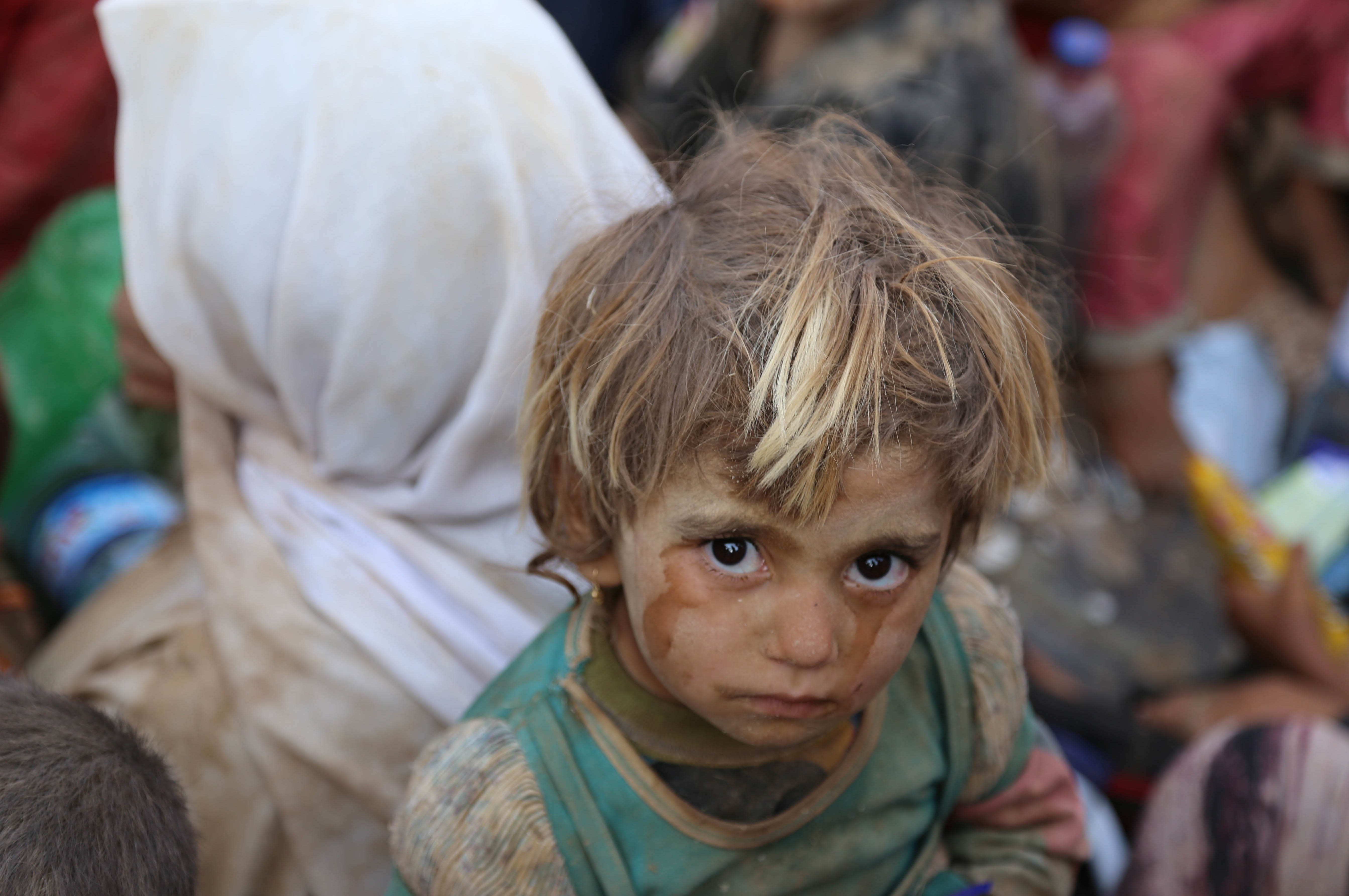
Thousands of Yezidis trapped in the Sinjar mountains without food and water for days, due to the Islamic State (IS) violence, formerly known as Islamic State of Iraq and the Levant (ISIL), arrive in Haseki city of Syria on August 10, 2014. By Feriq Ferec/Anadolu Agency/Getty Images.
My earlier post on female sexual fluidity-or-lack-thereof has caused some controversy on Twitter. Some are upset that I’m questioning the caller’s own label:
People should, of course, identify as they see fit, and that includes Zen Heathen. I’d merely point out that a) the caller expressed 0% sexual interest in men (we don’t learn what she thinks about the 10% of the time she’s not thinking of women – for all we know it’s that she has to pick up her dry-cleaning – and she could well be with a man because of the social pressures to be with one), and b) if you’re pairing off with someone, and their variant of bisexuality involves preferring the gender you are not virtually all the time, this is maybe a red flag. Or maybe not – by all means, if you find the one person of a particular gender you’re attracted to, enjoy! – but people certainly think so when it comes to men.
Others point out that fantasies don’t necessarily reflect what people want:
This is a fair point. What was clear from the call, but not my post, is that this is a woman who has wanted to date women for years but been too shy. That’s a little different from someone simply having this or that pop into their head during sex. I’d also repeat here, though, that I wonder how blasé and hey-people-fantasize we’d be if this were a man fantasizing 90% of the time about other men. I’d also, while I’m repeating myself, reiterate that fetishes, etc., are different from sexual orientation. Someone might fantasize about scenarios or individuals they’d want nothing to do with in real life. But always picturing men, or always women, or close-to-always, would seem to indicate something.
Oh, and allow me a starstruck moment: Savage himself replied!
Since these other responses arrived only after Savage’s tweets, I for a moment wasn’t quite sure what he meant by “shit storm”-producing “#bisexual activists.” Then I was accused of not believing anyone could be bisexual by a bunch of Twitter users, all because I didn’t think this one woman sounded like she had any interest in men, and of hating bi people and gay people and women and… I think I see what he meant:
https://twitter.com/MegKBax/status/498892998865084416
Noted.
So how might Savage have answered the call differently, without bi-erasing anyone’s experiences? He might have done what another Twitter user suggests:
The idea isn’t for the caller to be officially declared a lesbian (as if such a thing were possible), but for her to consider – and, if she sees fit, to reject! – the possibility. She is, after all, soliciting advice. But the main thing I’d have emphasized is that this call would have been received entirely differently if it had come from a man. I mean, there might have been a nod to the possibility that the man was bisexual, but a nod would also surely have been given to the ever-so-slight chance that a self-identified bisexual man with a female partner, but who can’t stop thinking about Idris Elba, is in the closet. I find it hard to believe that – outside whichever limited sphere of bisexual activists – anyone would object to throwing “gay” out there as a possibility.
If you died, which picture would the media use? #IfTheyGunnedMeDown #MikeBrown http://t.co/lJMM9a0owk pic.twitter.com/YYxIbPB0xA
— The Root (@TheRoot) August 11, 2014
Mark Berman summarizes the big news out of Ferguson, Missouri:
An unarmed black teenager named Michael Brown was shot and killed Saturday by a police officer in suburban St. Louis. People protested Saturday and Sunday, with large crowds of protesters and police facing off multiple times since the shooting. Some rioting and looting also broke out late Sunday night. Federal authorities are monitoring the shooting as groups and officials call for investigations.
The circumstances surrounding the shooting appear to be somewhat unclear. Police said Saturday that the shooting followed an encounter involving a police officer, Brown and another person Saturday afternoon, but additional confirmed details are scarce. Jon Belmar, chief of the St. Louis County police, said that the episode began with “a physical confrontation.” Belmar did not explain what prompted the confrontation, but he said that the officer was pushed back into his squad car during the episode and that one shot was fired from the officer’s weapon inside the car. Brown was shot multiple times – “more than just a couple,” Belmar said – on the street nearby, and all shell casings matched the officer’s gun. It’s not known yet why the officer shot him, nor why lethal force was used.
Jonathan Capehart hears echoes of the Trayvon Martin shooting:
When I wrote first wrote about Martin’s killing, I said that one of the burdens of being a black male was bearing the heavy weight of other people’s suspicions. The McBride murder shows that such suspicion knows no gender. I also wrote about the lessons my mother taught me growing up. How I shouldn’t run in public, lest I arouse undue suspicion. How I most definitely should not run with anything in my hands, lest anyone think I stole something. The lesson included not talking back to the police, lest you give them a reason to take you to jail – or worse. …
When you’re black and especially male – in the United States – you have to go to these seemingly overboard, extra lengths in the off-chance they might save your life. But none of those things would have helped me if I were in the shoes of Michael Brown or Renisha McBride or Trayvon Martin. We don’t know yet if Brown was asked for identification, but we know the other two weren’t. Perhaps their assailants saw all they needed to know. What frightens me more than anything in the world is that the chances are very high that one day I might be in their shoes and might meet their tragic end. The so-called victims of the nonexistent “war on whites” have absolutely NO idea what living under that kind of siege, that kind of very real threat, is like.
Capehart also has some choice words for the looters:
This is not how you protest the shooting of an unarmed teenager. This is not how you show support for his grieving family. This is not how you make authorities understand your anger and concern. This is not how you get others to join your cause. Perhaps I’m being too generous when it comes to those knuckleheads who used a tragedy to trash businesses and scurry off with bottles of wine, among other things. Perhaps I’m giving the looters too much credit by presuming they actually care about what happened to Michael Brown and how to prevent it from happening again. But there are plenty of people who do care and want answers. The actions of selfish and opportunistic looters must not distract us from getting them.
Meanwhile, Bill Chappell examines the rise of #IfTheyGunnedMeDown:
The use of different photos to portray shooting victim Michael Brown, who was killed by a police officer Saturday, prompted an interesting phenomenon on Twitter Monday: Users are posting “dueling” photos of themselves – one where the subject looks wholesome, and another where the same person might look like a troublemaker – with the hashtag #IfTheyGunnedMeDown. Behind the trend is the question of which photo the media would seize upon, if the posters had a run-in with police. For some, it’s another way this episode calls to mind the shooting death of Trayvon Martin – and the various photos used to portray both the teenager and his killer, George Zimmerman.
James Poniewozik calls #IfTheyGunnedMeDown a “a simple, ingenious DIY form of media criticism”:
It was a brilliant media critique, and while Twitter and other platforms may have no magical power to stop shootings or catch warlords, one thing they are very good at is catching the attention of the media. Journalists pay attention to Twitter–disproportionate attention, maybe–and that makes it a very, very good place to deliver the modern version of a letter to the editor. You could say similar of #YesAllWomen, or of the #BringBackOurGirls hashtag of earlier this year: no, it didn’t have the power to free the Nigerian schoolgirls abducted by Boko Haram, but it did put the story on homepages and newscasts often resistant to overseas news, especially from sub-Saharan Africa.
Yesha Callahan sighs:
It’s safe to say that Brown has become a victim of what I like to refer to as the “Trayvon Martin effect” in the media. Trayvon, who was killed by George Zimmerman, was depicted as a gold-grill-wearing, weed-smoking teenager in the photos used by the media. There were no photos of Trayvon smiling with his family members or being just your average happy teen, which his family members said he was. Similarly, the photos of Brown that have been picked up by the media included him throwing up a peace sign, which conservative media has translated into a “gang sign.” You’d be hard-pressed to find mainstream media showing Brown at his high school graduation or with members of his family. … Unfortunately, because of Ferguson police, we’ll never be able to see a photo of Brown attending his first day of college today.
Dougherty decries it:
It’s easy to write them off as just another bunch of opportunists. But the endemic corruption of this movement should trouble the American right, if not the American conscience. The conservative diagnosis of Washington’s brokenness is that Americans have outsourced the task of self-government to a managerial class in Washington, a corruption that has transformed our nation’s capital into “the Beltway,” a shorthand for D.C.’s toxic culture of cronyism.
The populist right’s instinctive response — the Tea Party — immediately became just another added layer of cronyism. A grassroots corruption. Really, a weed. If the American people have outsourced their self-government to Washington, the conservative movement made another dirty deal, allowing itself to be entertained in outrage carnivals run by for-profit activists. Excepting the exceptions, the populist right’s response to dishonesty and graft was to generate another set of swindlers who wear flag-lapel pins, lie to their faces, and help themselves to the cash.
More than half of the 40,000 Yazidis trapped on Mount Sinjar by ISIS militants have managed to escape through a safe passage opened by Iraqi and Syrian Kurdish militias, but many still remain in danger:
The refugees, all members of the Yazidi sect, began streaming back into Iraqi Kurdistan on Sunday after a perilous journey past Islamic State militants who had vowed to kill them and had surrounded their hideout on Mount Sinjar after storming the area. The day-long trek took them first over a mountain range into Syria, then through the Peshkhabour crossing three hours north-west of Irbil, where Kurdish officials were rushing to provide food and shelter.
Fleeing Yazidis said their escape had been aided by the YPG, a Syrian Kurdish rebel faction, and by US air strikes on Islamic State (Isis) positions which had forced the jihadists to withdraw for around six hours on Saturday. Their retreat gave a window for thousands of Yazidis, all desperately low on food and water, to begin streaming down the mile-high mountain and north across the Nineveh plains, which have been an ancient homeland of Iraqi minorities.
It’s important to remember that “rescuing” the Yazidis means, for now, sending them to save havens far from home. They are refugees, part of a massive wave of displacement, and will require consistent support while in exile and at some point (hopefully) in returning to their homes. I stress this because refugees have a tendency to get buried in our consciousness of protracted conflicts, especially in the Middle East. Esther Yu-Hsi Lee tallies the Iraqis displaced in the current conflict, who number over 1 million:
Just this week alone, the rapid advance of ISIL forces in several cities of Iraq has forced the internal displacement of about 195,000 refugees, including adherents of the religious Yazidi sect, Palestinians, and Turkmen living in Iraq — a move that has sent neighboring countries and international agencies scrambling to accommodate the refugee crisis within Iraq. …
Overall, nearly 200,000 internally displaced people have fled away from major cities, like Qaraqosh, the largest Christian city captured by ISIL this week, with the greatest concentration of people fleeing towards the northern provinces of Dahuk, Erbil, and Kirkuk, and Sulaymaniyah, near Turkey. Between January and July, there were at least 1.2 million displaced refugees within Iraq. And in June, the United Nations upgraded Iraq’s crisis to a level 3 humanitarian disaster — the most severe rating it has.
There’s really no overstating how catastrophic this situation is. Hundreds of thousands of refugees is one thing; hundreds of thousands more refugees, on top of multiple, unresolved refugee crises involving millions of people, is quite another. The sheer scale of the displacement is hard for us as Americans to comprehend, which makes it equally hard to appreciate the outsized role refugees have played in the history of the modern Middle East and the conflicts playing out there today. Some Arab communities, particularly the Palestinians, have suffered the trauma of being shuffled from one conflict zone to another over the course of three generations. That has to take a toll on one’s psychological wellbeing as well as one’s worldview: it’s really no shocker that people in such an intractable predicament are prone to radicalization and have a hard time building democratic states and civil societies.
 The Dish