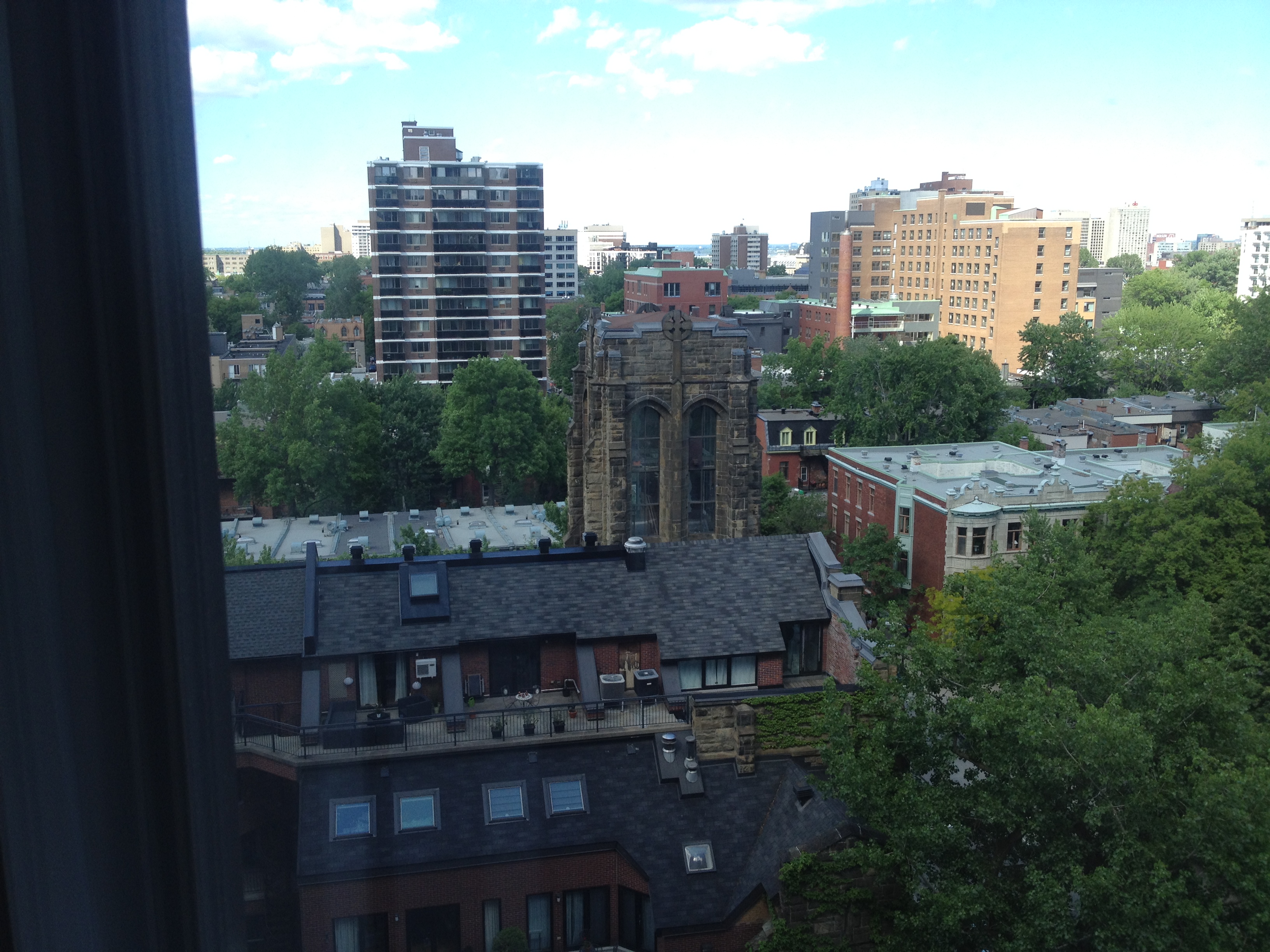
A Poem For Sunday

13928246418_82885f7780_k

Dish poetry editor Alice Quinn:

This poem by an anonymous author, framed as a riddle as so many early lyrics are, is from Volume One of Poets of the English Language: Langland to Spenser, edited by W.H. Auden and Norman Holmes Pearson and published in 1950 in The Viking Portable Library.

I persist in thinking the knight has posed four questions.

“The Riddling Knight”:

There were three sisters fair and bright,
Jennifer gentle and rosemaree,
And they three loved one valiant knight.
As the dew flies over the mulberry tree.

The eldest sister let him in,
And barred the door with a silver pin.

The second sister made his bed,
And placed soft pillows under his head.

The youngest sister, fair and bright,
Was resolved for to wed with this valiant knight.

“And if you can answer questions three,
O then, fair maid, I will marry with thee.

“What is louder than an horn,
And what is sharper than a thorn?”

“Thunder is louder than an horn,
And hunger is sharper than a thorn.”

“What is broader than the way,
And what is deeper than the sea?”

“Love is broader than the way,
And hell is deeper than the sea.”

“And now, fair maid, I will marry with thee.”

(Photo by T. Kiya)

Where Are All The Catholic Marriages? Ctd

A number of readers shared their stories that might help explain the decline of Catholic marriages. One suspects “the rise of interfaith marriages” has played a role:

I’m Catholic, and my wife is Hindu. Since we were both active duty military officers, I had to apply for dispensation for disparity of cult (to marry a non-Christian) from the Archdiocese of the Military. We also had to get permission from the diocese where the wedding was to be held, since the original plan was to have both a Catholic and a Hindu ceremony.

The local diocese flatly refused to grant permission for my father, a Catholic deacon, to perform the ceremony outside of a church. This had nothing to do with Church policy writ large; it was just the local bishop’s personal hangup. Permission for similar situations is granted routinely in our home diocese. Since we were unwilling to relocate the ceremony, we were formally married by the Hindu priest and my father did a short Catholic blessing afterward. My marriage is still valid according to the Church, since I obtained dispensation, but I was unable to have a Catholic wedding without relocating the ceremony.

If this all sounds bitter, it’s not intentional. I think having the ceremony in a neutral setting was the right choice, allowing both families to feel comfortable. Still, I don’t think it’s an uncommon story. Since interfaith marriages are on the rise, it’s often easier for the couple to default to the non-Catholic’s tradition for the ceremony, since the Catholic Church requires you to navigate a lot of wickets to deviate from the standard.

Another reader claims that the Church is “completely out of step with the meanings that couples seek to create in their wedding ceremonies, as well as current social trends (e.g., couples living together before marriage)”:

When my wife and I got married in 1991, we chose a younger priest because he was supposedly in tune with young couples who believed in the social justice emphasis of the church. Instead, we got a curmudgeon who was suspicious that we dated for just five months before getting engaged — never mind that we scored in the 95th percentile on the compatibility test he used, and weren’t getting married for a full year after our engagement date. He was obsessed with finding out if we were living together (technically, we were, but we still had separate apartments to keep up appearances — what a waste of money for a young couple). He forced us to go through the full weekend-long pre-cana, where we slept in separate beds (of course) and wwhich was a complete waste of our time. (It also happened to be the first weekend of the Gulf War, and we were told to not worry about the news — the leaders would keep us posted. A bunch of us snuck down at midnight to watch the news.)

We weren’t allowed to use a Peter Gabriel song during the ceremony because it’s not part of the canon. He phoned in a generic homily instead of using anything that he learned about our goals, dreams, and interests over a year of meeting. And so on.

For a young couple who led an Amnesty International chapter and who were (and still are) dedicated to working for social justice, it was the last straw for us. We left the Catholic church after our marriage and have never looked back.

As a sociologist, I know to look for patterns, and yes, this is a data point of one. But I also know from talking to dozens of friends, students, and work colleagues over the years that our experience is not the exception to the rule.

Oh, and don’t get me started on the time that a priest wouldn’t let a bagpiper inside the church during a funeral, which was my dying father-in-law’s last wish. Instead, he had to play outside of the church after the official end of the mass, in a downpour.

Screw those guys.

“Metaphor Is Our Only Hope”

Drew Calvert explores the idea of the angelic in Rilke’s poetry:

What kind of metaphor are Rilke’s angels? At first, they sound like a Christian believer’s answer to modernity, and it’s true that Rilke was on a quest for an antidote to his anxious times. He sought out Russian spiritualism, the prophecies of Islam, the legacy of Orpheus, and various modes of aestheticism, but nothing satisfied him completely. … Rilke’s angels aren’t reducible to those flitting through the Christian tradition. In 1921, he wrote in a letter that he was becoming anti-Christian—in fact, he was studying the Koran:

Surely the best alternative was Muhammad, breaking like a river through prehistoric mountains toward the one god with whom one may communicate so magnificently each morning without this telephone we call “Christ” into which people repeatedly call “Hello, who’s there?” although there is no answer.

Are Rilke’s angels Islamic, then? Maybe, but that’s obscuring the point. They seem instead to stand for a higher order of reality, and they offer Rilke a chance to imagine the world from beyond the ranks of humans. W. H. Auden saw this clearly: “While Shakespeare, for example, thought of the non-human world in terms of the human, Rilke thinks of the human in terms of the non-human, of what he calls Things (Dinge).” Language, of course, is a human thing we use to express the more-than-human. Metaphor is our only hope. As Stephen Mitchell puts it, Rilke’s angels are “embodied in the invisible elements of words.”

Face Of The Day

dish_fotdsun10

Miho Aikawa photographs the “private dinner moments” of New Yorkers. In an artist’s statement, she explains what the project means to her:

Growing up, both of my parents had full­time jobs and it was difficult for us to spend time together. They decided that we will try to have dinner together as often as possible to share time among the family. … Having dinner is not just about eating food, and dinner time portrays many aspects of our lives more than lunch or breakfast would, since the term “dinner” refers to the main meal in a day. … My theme is to propose thinking what a dinner should be by objectively seeing different dinner situations. Dinner can be a social activity but for my project I wanted to focus more on private dinner moments which takes place regularly and more often. So I always ask my subject to have dinner in the manner they normally would.

My photo project has a voyeuristic perspective and it’s one of the key elements. Dinner time is usually private and shows a part of the person’s life style. My attempt is to capture such subtle as well as important moments that pass by our daily lives and convey them through the form of photography.

See more pictures from the series here, and check out her other work here.

The Young And The Memory-Less

Annie Sneed highlights the work of neuroscientists Paul Frankland and Sheena Josselyn that might explain why we can’t remember being babies – “the rapid birth of many new neurons in a young brain blocks access to old memories”:

In a new experiment, the scientists manipulated the rate at which hippocampal neurons grew in young and adult mice. The hippocampus is the region in the brain that records autobiographical events. The young mice with slowed neuron growth had better long-term memory. Conversely, the older mice with increased rates of neuron formation had memory loss.

Based on these results, published in May in the journal Science, Frankland and Josselyn think that rapid neuron growth during early childhood disrupts the brain circuitry that stores old memories, making them inaccessible. Young children also have an underdeveloped prefrontal cortex, another region of the brain that encodes memories, so infantile amnesia may be a combination of these two factors.

Covering similar ground, Kristin Ohlsen explains why, to form long-term memories, “an array of biological and psychological stars must align, and most children lack the machinery for this alignment”:

The raw material of memory – the sights, sounds, smells, tastes and tactile sensations of our life experiences – arrive and register across the cerebral cortex, the seat of cognition. For these to become memory, they must undergo bundling in the hippocampus, a brain structure named for its supposed resemblance to a sea horse, located under the cerebral cortex. The hippocampus not only bundles multiple input from our senses together into a single new memory, it also links these sights, sounds, smells, tastes, and tactile sensations to similar ones already stored in the brain. But some parts of the hippocampus aren’t fully developed until we’re adolescents, making it hard for a child’s brain to complete this process.

‘So much has to happen biologically to store a memory,’ the psychologist Patricia Bauer of Emory University told me. There’s ‘a race to get it stabilised and consolidated before you forget it. It’s like making Jell-O: you mix the stuff up, you put it in a mould, and you put it in the refrigerator to set, but your mould has a tiny hole in it. You just hope your Jell-O – your memory – gets set before it leaks out through that tiny hole.’

Where Are All The Black Atheists? Ctd

Noting that “an astounding 85 per cent of non-Hispanic blacks [identify] as Christian (Pew Report, 2007),” Dale DeBakcsy talks to Mandisa Lateefah Thomas, who founded Black Nonbelievers, Inc. in Atlanta in 2011:

As Thomas explains it, “Because of the historical role that religion and the church played in the black community, many tie in belief as being inherently part of black identity. Therefore, to be someone that doesn’t believe in God is to be considered a traitor. Most of our community – from the people to the leaders – incorporates belief in almost every aspect of their lives, and it is assumed (and sometimes expected) that we all do. So it can be extremely intimidating and stigmatising to openly admit to being a nonbeliever.”

But why does Christianity still have this allure after having been forcefully foisted so many centuries ago? “The historical aspect of Christianity’s influence in the community plays a huge role in why many blacks still believe. While it was used to justify slavery and was imposed on people of color, the church also served as a system for support at a time when legislation discriminated against blacks. So there is a strong loyalty, although the doctrine is very detrimental to growth and development.”

DeBakcsy, a humanist, believes programs like Black Nonbelievers, Inc. will help spread a secular message:

“We are in the process,” Thomas reveals, “of creating a program that will assist ex-convicts and at-risk youth develop professional skills which will help them find jobs and start their own businesses. We also want to intermittently help nonbelievers who need assistance if they lose jobs, or face financial challenges as a result of losing business or a loved one due to being a nonbeliever.” This is critically important work, not only for the cause of humanism, but for that of humanity. If they are successful in creating their support group for ex-cons and youths, it could go far to rewriting how the South interprets its sense of self. This is new ground for a secular group to tread there, and few areas of the nation need it more.

Listen to a recent interview with Thomas here. The long-running Dish thread, “Where Are All The Black Atheists?”, can be read here.

All Sail And No Anchor?

800px-Cincinnatus_in_retirement

Reviewing David Bromwich’s The Intellectual Life of Edmund Burke, David Womersley raises the vexed question – familiar to any student of the British statesman – of his consistency:

A frequent emphasis in the radical ripostes published in the early 1790s to Burke’s Reflections on the Revolution in France, such as those written by Mary Wollstonecraft and Tom Paine, is that Burke had no consistency as a political thinker. In the 1790s with his attacks on revolutionary France he had emerged as a defender of monarchy and the hereditary principle; but previously (as in Thoughts on the Cause of the Present Discontents) he had been acutely critical of the growing influence of the British Crown under Bute and George III. In the 1770s and 1780s Burke had been the advocate of the American colonists and had urged Britain towards policies of peace and conciliation, but in the 1790s he had become the unappeasable enemy of the French revolutionaries and the unflinching spokesman for a regicide war to be pursued à l’outrance. The passage of less than a decade had transformed (so it seemed to the radicals) the indignant champion of the Indians suffering under the despotic administration of the East India Company into an apologist for Europe’s ancien régime who had nothing but indifference for the hardships imposed on the French people by an absolute monarchy.

How Bromwich answers those charges:

Bromwich identifies two areas of important recurrent concern. The first is a nuanced formulation of the proper role of the people in the political life of a nation. As one might expect, it is a position tensed between two simpler, but more damaging, poles:

The people, says Burke, should not be trusted as advisers on policy or even necessarily as true reckoners of their interests in the short run, but they are always the best judges of their own oppression — so much so that we ought to fear any power on earth that sets itself above them.

The second is Burke’s undeviating commitment to justice. And it is in relation to the theme of justice that we encounter moments when Bromwich — himself a respected commentator on contemporary American politics — allows his exposition of the 18th-century British scene to resonate with our present discontents. Sometimes these connections with the present are introduced gently by way of an explanatory analogy, as in this helpful guidance about how to grasp Burke’s insistence that, in politics, the means must justify themselves, and that consequently means “always alter the character of the actor”:

Thus, if you justify the torture of suspects in order to assist a war against a wicked enemy, you will find that in doing so you have incorporated torture in your idea of justice.  You have come to an understanding with yourself, and the utmost savagery will be compatible with your nature thereafter.  You have become one of those who can acquit themselves of any wrong by appealing to a result in a plausible future.

(“Cincinnatus in Retirement” by James Gillray, 1782, a cartoon that caricatured Burke’s support of rights for Catholics, via Wikimedia Commons)

Quote For The Day

“I am once again in the wagon, traveling on the dusty road along the side of the mountain. The sun has vanished behind the summit…

Down below the broad, roaring waves of the sea break against the deep foundation of the rock. But high above the mountain, the sea, and the peaks of rock the eternal ornamentation blooms silently from the dark depths of the universe.

Is it not obvious that when primitive peoples, with their childish and impressionable minds, viewed such magnificence, they would intuit and discern the divine, that they would worship and pray to it as manifested on the towering heights of this mountain, in the powerful cleft of this ravine and rock? Do we not find here the root of religion?

No. We do not find the root of religion here. Maybe those primitives were children. But then again, listen to the children outside. They are interested in little dogs and our chocolate bonbons, in the traps with which they catch the gray-green canary birds, and their musical tops. But they are indifferent to the divine splendor that surrounds them. A child does not notice the greatness and the beauty of nature and the splendor of God in his works. Human beings do not experience these things at the beginning but at the end of their lives, when they have become mature and deep in the course of their personal histories. Furthermore, there are probably a thousand different ways in which the aesthetic experience of nature modulates into religious experience, for it is related to religious experience in its very depths. But aesthetics is not religion, and the origins of religion lie somewhere completely different. They lie… — anyway, these blooms smell too sweet and the deep roar of the breaking waves is too splendid, to do justice to such weighty matters now,” – Rudolf Otto, writing in his journal while traveling across Morocco in early May, 1911.

(Hat tip: John Benjamin)