The Genetics Of Mental Health

Jane C. Hu presents new research that found “autism is 55 percent heritable,” which is higher than previously thought:

The most surprising finding in this study is that the genetic risk for autism lies mostly in variations of common genes, and not specific mutations. A small mutation in a single gene can cause a disease such as Huntington’s, and mutation of the BRCA1 gene increases a woman’s chance of developing breast cancer. These sorts of mutations account for only 2.6 percent of autism risk, according to the new PAGES study, compared with 52 percent accounted for by common genes. In the vast majority of cases of autism, there is no one errant gene that codes for the disease, but rather a combination of common variations predicts autism risk. “You get a lot of the bad side of the coin and eventually push you into a disease,” says [Kathryn Roeder, a Carnegie Mellon University statistics and computational biology professor who led the study].

Our understanding of schizophrenia is also improving:

It took 80,000 genetic samples, seven years and the work of 300 scientists from around the world, but scientists now have the most complete dossier on schizophrenia ever. In an historic paper published in the journal Nature, the Schizophrenia Working Group of the Psychiatric Genomics Consortium identified 108 new regions on the genome linked to the psychiatric disorder, which is associated with hallucinations and psychotic episodes and affects about 1% of people worldwide.

Tom Insel, director of the National Institute of Mental Health, is excited about this research:

It may seem as if psychiatric genetics has gone from too few clues to too many. In fact, these new findings in schizophrenia and autism place these disorders squarely in the field of complex genetic disorders, disorders in which scores or hundreds of variants, both common and rare, contribute to risk. This recent progress is indeed a giant step forward for the field, but it is one step on a long journey. In truth, we do not have a rapid means to pivot from a genomic association to a target for treatment development. And complex genetic disorders, by definition, will not yield a simple genetic test for diagnosis. But these findings do suggest a way forward. By identifying the molecular pathways of risk, using cell-based studies with those pathways manipulated, and filling in the gap between molecular neuroscience and brain function, these new findings become part of the foundation for translational science.
Underwear In Orbit

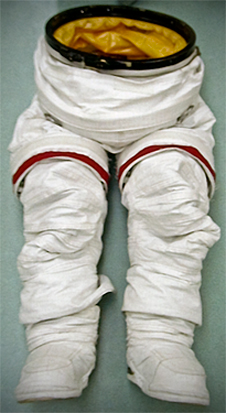
“Space underwear have come a long way since their first use fifty years ago,” observes Alyssa Shaw in a review of “Suited for Space,” an exhibition at the Chemical Heritage Foundation in Philadelphia:

On display in the quirky exhibition are a few different models of spacesuit underwear, dish_nasasuit including a beige cotton one-piece with coil spacers affixed strategically to allow airflow. “Such underwear,” the suit’s caption reads, “was an absolute necessity; it kept an astronaut from overheating in a completely airtight spacesuit.”

And an absolutely necessity it was. A sketch from 1965 shows the Gemini EV spacesuit with its many layers, the first of which labeled “underwear,” others including “comfort layer,” “pressure bladder,” and “restraint layer.” In the late 1960s, Atlas Underwear Corporations designed the Apollo 11 “biobelt,” a soft layer worn against astronaut’s skin designed to monitor things like blood pressure, but not necessarily designed with the wearer’s comfort in mind. Commander Chris Conrad of the Apollo 12 mission wasn’t a fan of the biobelt. He mused, “It looks like I’ve got poison ivy under these things.”

But decades of research have improved the situation:

In 2009, [Japanese astronaut] Koichi Wakata wore the same pair of underwear for nearly a month while on the International Space Station. The material tested was alleged to be sweat-wicking, odor resistant, and insulating, qualities needed in closed quarters during those oh-so-cold space nights. Wakata later attested to their success, having had no complaints from his fellow astronaut travelers of odd smells coming from his trusty drawers.

(Image via NASA)

No Meds? Go Directly To Jail

Sarah Kliff flags a study suggesting that a decade-old Medicaid cost-saving move may have shunted mentally ill people into prisons:

About a decade ago, Medicaid programs were struggling to keep up with skyrocketing prescription drugs costs. Between 1997 and 2002, drug spending in the program for low-income Americans grew by about 20 percent annually, hitting $23.7 billion in 2010. Medicaid directors began looking for ways to tamp down on those costs. One of the most popular policies was something called “prior authorization” for a new wave of more expensive, anti-psychotic drugs used mostly to treat schizophrenia and bipolar disease. These policies, in a sense, worked: they helped rein in how much Medicaid spent filling prescriptions.

But in another sense, they may not have worked at all: a growing body of research has begun questioning whether restricting drug spending may have just shifted costs elsewhere – particularly, into the prison system. A team of researchers published data Tuesday in the American Journal of Managed Care showing that prior authorization policies in Medicaid programs have significantly higher rates of severe mental illness in their prison populations. Schizophrenics living in states with prior authorization requirements in Medicaid were 22 percent more likely to be jailed for a non-violent crime than those in states without those restrictions.

The Best Of The Dish Today

I needed that.

I read two essays today from Israel that deepened my understanding of the current darkness. One by Gershom Gorenberg is unsparing in its criticism of Netanyahu – a tough, and honorable, position to take in wartime. The other by David Horovitz conveys the acute sense of beleaguerment and bitterness with which Israel is confronting the latest evidence that it has yet to overcome the profound resistance of those whose country and land were taken from them decades ago now. Together, the two pieces are bookends of despair. There is much more carnage ahead – paid for, in part, by you and me.

You can see some of the effects in the latest CNN poll on the subject. Among Democrats, 49 percent say they have mostly or very favorable views of the Jewish state; but 48 percent have mostly or very unfavorable views – it’s split down the middle. On the question of whether Israel was justified “in taking military action against Hamas and the Palestinians in the area known as Gaza”, Democrats are also split 45 to 42 percent. There’s also a generation gap: among those over 50, an overwhelming majority – 65 – 26 – believe the Gaza campaign is justified; among the under 35, it’s an even split: 47 – 45. I’d say this is a problem for the Greater Israel lobby. The differential between their lock-step Democratic support in the Congress and the real divisions in the party at large may soon become much harder to disguise.

Today, we rounded up the facts, data and opinions on the latest threat to the ACA; we pondered the long-term futility of endlessly bombing Gazans to smithereens; I wondered not for the first time why the Democrats are unable to make an aggressive, positive case for their policies; and remembered a time when a Republican president could tell Israel (and Britain and France) to go take a hike. To puncture some of the humid summer gloom, we also launched a contest for the best cover song of an original hit. Speaking of which:

The most popular post of the day was For Israel, There Is No Such Thing As An Innocent Gazan; next up: Some Clarity On Russia and Ukraine.

Many of today’s posts were updated with your emails – read them all here.  You can always leave your unfiltered comments at our Facebook page and @sullydish. 27 32 more readers became subscribers today to bring us to 29,690. You can help us get to 30,000 here – and get access to all the readons and Deep Dish – for a little as $1.99 month. Gift subscriptions are available here.

See you in the morning.

An Executive Solution To Immigration?

In the face of a hopelessly deadlocked Congress, Ronald Brownstein expects Obama to act alone on the border crisis and on immigration reform more broadly. His chosen course of action, Brownstein adds, could have major consequences for the Republicans:

The president can’t provide [illegal immigrants] citizenship without action by Congress. But using the same theory of “deferred action” that he employed in 2012 for children brought to the U.S. illegally by their parents, he could apply prosecutorial discretion to allow some groups of the undocumented (such as adults here illegally with children who are U.S. citizens) to obtain work permits and function openly. Though the administration is still debating the reach of Obama’s authority, some top immigration advocates hope he could legalize up to half of the undocumented population.

Such a move would infuriate Republicans, both because the border crisis has deepened their conviction that any move toward legalization inspires more illegal migration and because the president would be bypassing Congress. They would likely challenge an Obama order through both legislation and litigation. Every 2016 GOP presidential contender could feel compelled to promise to repeal the order. Those would be momentous choices for a party already struggling to attract Hispanics and Asian-Americans.

Francis Wilkinson agrees that executive action is the only way forward, even though it will infuriate conservatives:

If Obama defers deportation for a large number of undocumented immigrants, calls for his impeachment may expand beyond the back benches of Congress. But Obama has already deferred deportation for the young “Dreamers” who qualified for his 2012 Deferred Action for Childhood Arrivals. When House Speaker John Boehner outlined his proposed lawsuit against the president for allegedly exceeding his powers, Boehner, no doubt mindful of his party’s poor reputation among Hispanic and Asian voters, focused on Obama’s implementation of the health-care law and left DACA out of the complaint.

A broad amnesty would no doubt inspire legal actions and political recriminations. But Obama is already reviled by anti-immigration activists and Republicans, who will be no more willing to compromise tomorrow than today. Perhaps foolishly, Obama whetted the appetites of pro-immigration forces for bold executive action. Their energy and expectations are high. With Democrats on the cusp of solidifying Hispanic support, perhaps for a very long time, the prospect of alienating Hispanic voters through timidity or inaction may now be the more dangerous route.

Face Of The Day

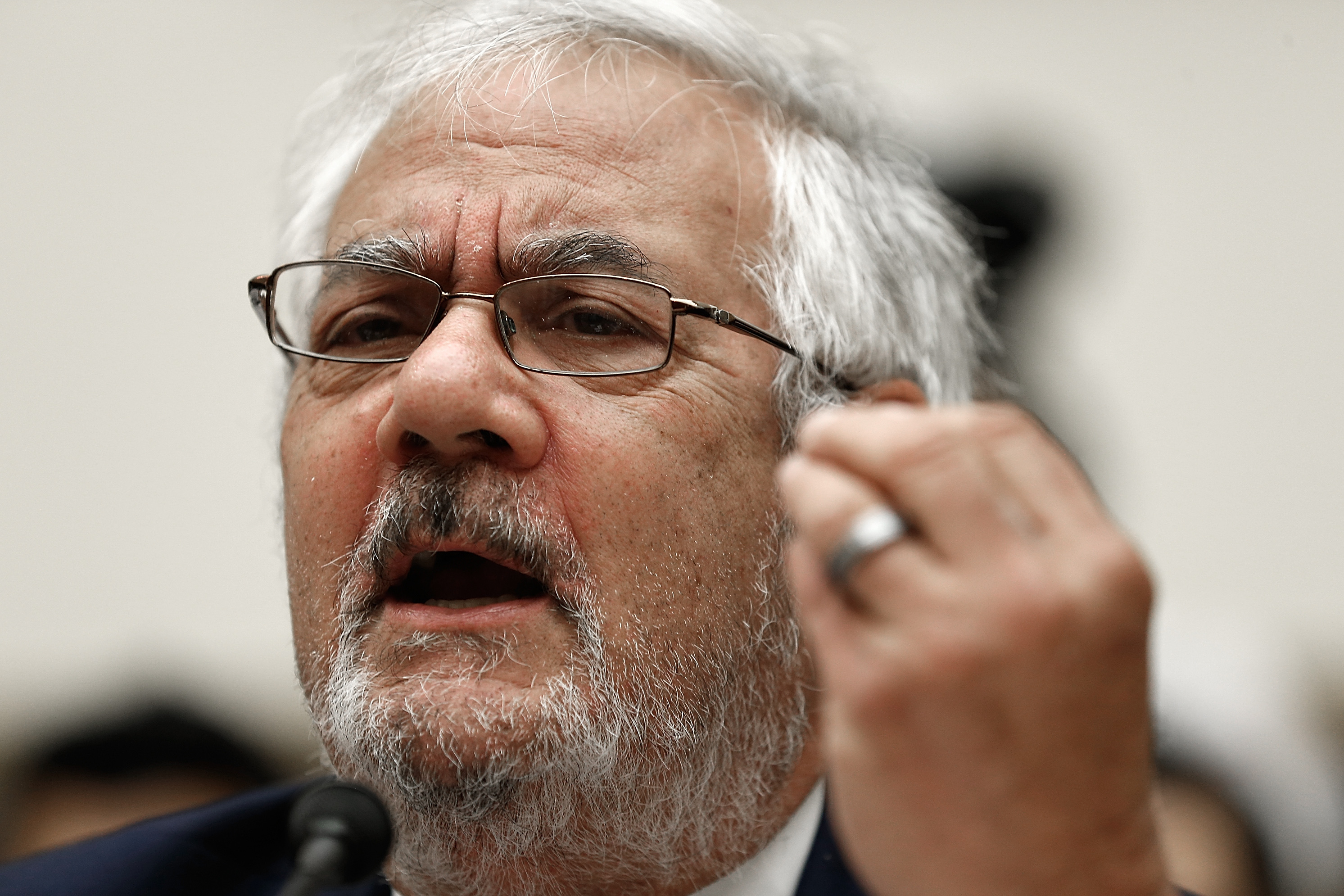
House Financial Services Cmte Holds Hearing On Impact Of Dodd-Frank Act

Former House Financial Services Committee chairman Barney Frank (D-MA) testifies before the House Financial Services Committee on July 23, 2014. Frank testified during the committee’s hearing on “Assessing the Impact of the Dodd-Frank Act Four Years Later.’ By Win McNamee/Getty Images. Dish coverage of the anniversary here. Watch Barney address critics of the law in our Ask Anything series.

The Aftershocks Of Russian Decline

Josh Well tries to make sense of Putin’s appeal within Russia. During his travels there, Well detected “an undercurrent of aggrievement; a sense of having to restart after seven decades of the Soviet State, having to retrace steps back to the path the rest of the world had been on—and then struggle to catch up; a feeling that the chance for Russia to remake itself had been hampered by the hegemony of the West; a knowledge that the county was less than it could be, should be”:

That’s a feeling a great number of Americans can relate to: not only the frustration with growing inequality, but the sense that our country is also somehow becoming smaller than it should be. Here, when our sense of self is threatened, we turn to historical mythology that buttresses our belief in who we are: The American Dream, our forefathers wrestling with what that would be, the presidents who, through our beloved democracy, shaped how we understand it now—FDR, JFK, Reagan. We look for the next in that mold.

But Russians don’t have that history.

Theirs is one in which revolutionary uprisings led to instability before being channeled by a system of control; one in which democracy is associated with a time of devastating economic collapse. We all know the long history of Russian strongmen—from Ivan the Terrible to Joseph Stalin—but can you imagine having that history as our own, having those leaders to look back on? Can you imagine our own country collapsed, our own inequality increased, our own dreams squeezed? Maybe you can, all too well. Now imagine that we had a leader who not only gave us hope, promised us change, but delivered.

Given that state of affairs, Keating is unsure “that U.S. and European leaders hoping to alter the Russian government’s behavior can count on public opinion working in their favor.” What might make a difference:

The bigger concern for Putin may be reports that Russian business leaders are furious about the economic impact of the war in Ukraine, Western sanctions, and Russia’s increasingly isolated political position. So far we haven’t seen any major business or political figures publicly breaking ranks. If that starts to happen, it will be time to start talking about whether this was a game-changer.

Paying For Israel’s Permanent War

fy2015foreignaid

Reminding us that the US subsidizes Israel to the tune of over $3 billion a year, Jesse Walker scrutinizes the case for this assistance and finds it lacking:

You hear two sets of arguments for the aid packages. The first is the one you’d expect: With some exceptions, which we’ll note in a moment, people who back Israeli policy tend to want America to fund it. The second comes from the folks who feel the aid gives Washington leverage that it can use to work for peace. America’s checks do give D.C. a greater ability to insert itself into the conflict, a fact that has led a number of Israel’s supporters as well as its critics to call for ending American aid. (Needless to say, that doesn’t mean they’d want the money to stop while the war is in progress.) Despite that power, Washington’s ability to tamp down the tensions has been, shall we say, rather limited. As my colleague Shikha Dalmia wrote a few years ago, “If money could buy peace, Israelis and Palestinians would now be holding hands and singing kumbaya.” Instead we’ve been subsidizing war.

We also pay for the clean-up afterward, David Corn adds, pointing to the $47 million humanitarian aid package the State Department announced on Monday:

According to the UNRWA, 75 of its facilities in Gaza, including schools and warehouses, have been damaged in the fighting. Presumably, some of the $15 million being sent to the agency by the United States—which covers a quarter of an emergency appeal for $60 million issued by the UNRWA—will be used to repair or replace UNRWA installations destroyed by the US-funded Israeli military.

The new package of US assistance includes $3.5 million in funding for Mercy Corps, Catholic Relief Services, and other nongovernmental organizations. According to the State Department, Mercy Corps will use some of this money to supply non-food items to displaced Palestinians and extend a short-term employment program for 3,000 people in Gaza and a “psycho-social support program” assisting about 2000 families. Catholic Relief Services will provide medical supplies and fuel for medical facilities.

(Chart via Yglesias)

Father Time’s Racial Bias

Tom Jacobs highlights new (but not the first) research showing that African-Americans “age” faster than those of other races:

“On average, the biological age for blacks was 53.16 years,” compared to 49.84 years for whites, the researchers report. After controlling for socioeconomic status and health behaviors (they note that obesity rates are higher for blacks than whites, and excess weight can “contribute to progressive breakdowns in biological tissues and systems”), this gap shrank somewhat, but was still pronounced: 52.72 years for blacks, compared to 49.89 years for whites.

Previous researchers have pointed to the corrosive influence of racism as a possible explanation for the poorer health of blacks in America. A small study released in January found blacks who had experienced racism and come to accept (even unconsciously) the concept of racial inferiority had shorter leukocyte telomeres—a different biomarker of aging.

Levine and Crimmins did not attempt to measure negative health effects of racism, but their results are consistent with the theory.

The World’s Third-Largest Democracy Votes, Ctd

The final results of Indonesia’s presidential election came in yesterday, and Jakarta Governor Joko “Jokowi” Widodo won with 53 percent of the vote. All is not yet settled, however, as his opponent Prabowo Subianto intends to challenge the election in court:

A case would test the institutions of Indonesia’s young democracy, especially the Constitutional Court. Set up after the fall of Suharto, its reputation suffered a severe blow earlier this year when Akil Mochtar, its former chief justice, was imprisoned for life after being convicted of graft—for rigging rulings in disputed local elections. His successor, Hamdan Zoelva, used to belong to one of the six parties that backed Mr Prabowo. Their association makes many Jokowi supporters uneasy.

Still, it is hard to see how a challenge could succeed. The court would have to find evidence that more than 4m votes had been tampered with to overturn Jokowi’s victory. Some irregularities in the counting process have come to light, but Mr Prabowo has produced no evidence of fraud on the scale he alleges. And while the court may have the final say on the election, the political mood already seems to be turning Jokowi’s way.

Assuming Prabowo’s challenge fails, Jokowi will become the first Indonesian president not plucked from the country’s political or military elite. Yenni Kwok calls his election the start of a new chapter in Indonesian history:

Unlike many established figures who dominate the political arena, the 53-year-old Jokowi came from a humble provincial background: he grew up in a riverside slum in Solo, Central Java, and does not have ties to an influential family. After a career as a furniture entrepreneur, he started in politics as mayor of his hometown less than a decade ago — and this rapid rise, along with the level of electoral enthusiasm and volunteerism his candidacy generated, has invited comparisons to U.S. President Barack Obama (the two were even born in the same year). Many see Jokowi’s win as an augury for a more mature era in Indonesian politics.

“His candidacy would have been improbable just a few years ago,” says Aaron Connelly, East Asia research fellow at the Lowy Institute in Sydney, who focuses on Indonesian politics. “This has not historically been a country in which parents told their children that they could grow up to become President.”

Ariel Heryanto attributes Jokowi’s success to the unpaid, unorganized grassroots movement that supported him:

Jokowi’s success is hugely a result of the spontaneous popular support from largely non-organised groups of ordinary Indonesians. They converged in various forms, with a high degree of fluidity. Famous artists and public intellectuals form parts of it, but the majority are everyday commoners. … As a candidate, Jokowi had limited resources and interest to mobilise the masses to support him. From early on his supporters impatiently pressed him to run for president. In contrast to the flow of the familiar “money politics”, individual citizens proudly published bank slips on social media, showing off their tiny share of donations to Jokowi’s election campaign. Jakarta’s pro-Jokowi July 5 concert attracted over 100,000 people. Unpaid volunteers with no political party affiliation designed and ran the event.

But the new president won’t have much time to bask in the glory of his victory, however historic it may be. James Lindsay rolls out the long list of problems he has to contend with:

Economic growth is slowing, inflation and interest rates are rising, the currency is weakening, and investment is falling. Economists expect things to get worse before they get better, largely because Indonesia’s commodity exports are fetching lower prices in world markets. The Indonesian government is running a substantial budget deficit, in good part because of overly generous fuel subsidies that amount to nearly $12 per day per driver in the country. The resulting surge in domestic demand for gasoline is one of the reasons why the former member of OPEC has become a net importer of oil. The cost of fuel subsidies is also keeping Indonesia from making desperately needed investments in infrastructure. Jokowi probably won’t be able to make much progress on any of these problems if he doesn’t do something about the country’s long history of government corruption. And you thought you had a lot of things on your to-do list?