Holding Corpses Hostage

UKRAINE-RUSSIA-POLITICAL-CRISIS-MALAYSIA-ACCIDENT-CRASH

I’ve not yet weighed in on Russia’s response to the downing of MH17, partly because it beggars belief. The staggering insouciance, the prickly denials of the bleeding obvious, the corrupt and foul attempt to shift the blame, and the shameful refusal to allow international flight inspectors into the area as swiftly as possible: which realm of barbarism do these goons of Putin’s invention come from? And now this:

Separatists controlling the area of the MH17 wreckage have declared that they can only ensure international investigators will have access to the crash site if Ukraine agrees to a truce: “We declare that we will guarantee the safety of international experts on the scene as soon as Kiev concludes a ceasefire agreement,” said Andre Purgin, a senior leader of the self-declared Donetsk People’s Republic. The declaration amounts to blackmail, as Nina Ivanovna put it. The separatists are holding the bodies of MH17 passengers hostage in exchange for territory.

I find myself agreeing with Roger Cohen:

This mass murder is an outrage that should not stand. Falling military budgets have reduced the Dutch special forces to a paltry remnant. Russia would veto any United Nations Security Council Resolution authorizing force for a limited mission to recover the bodies and the evidence. But Ukraine, on whose territory the debris and dead lie, would support it. The American, British, Dutch and Australian governments should set an ultimatum backed by the credible threat of force demanding unfettered access to the site. Putin’s Russia must not be permitted to host the 2018 World Cup. A Western priority must be to transform the Ukrainian army into a credible force.

The principle of non-intervention in distant civil wars is not harmed by this kind of resolve. What just happened over the skies of Eastern Ukraine was an attack on the far more important principle of free travel across the globe. If Russia’s thugs can down a civilian airliner  – can kill hundreds of European civilians – with impunity, then we have permitted a deeply damaging precedent for chaos and disorder to take root. Russia has crossed a Rubicon and should really now be deemed a rogue neo-fascist state that requires containment.

That cannot happen without European unity and resolve – without, that is, a far more stringent and focused response than we have seen so far. It means that Germany and Britain in particular must accept some sacrifice for the maintenance of a global order they rely on. If the Europeans do not enact sanctions at the level of America’s and more, their appeasement of this strutting, irresponsible tsar of disorder will come back to haunt them – and sooner than they might think. Russia is not a stable international actor, it is not a stable economy, it is rather an oligarchy kept together by ever-more inflammatory moral and xenophobic panics. There is no stable state to partner with.

The latest on the situation:

Four days after the tragic crash of Malaysia Airlines Flight 17, Dutch forensics experts are finally being allowed onto the scene. However, the site is still being guarded by armed rebels, who are making it very difficult for investigators to move in and out. The rebels also control much of the access to the bodies, most of which have been moved, decomposed, or otherwise tampered with. These Dutch experts have arrived to review remains of the victims, that is, if they can get to them.

The forensic experts are in the town of Torez, where many of the bodies have been put onto refrigerated rail cars. However, the train cannot leave, as Ukrainian prime minister Arseniy P. Yatsenyuk says the rebels controlling the area are preventing the train from moving. Thus far, the experts have only been able to inspect the bodies on the train.

(Photo: Bodies of victims wrapped in bags wait to be collected by rescuers at the site of the crash of a Malaysia Airlines plane carrying 298 people from Amsterdam to Kuala Lumpur in Grabove, in rebel-held east Ukraine, on July 19, 2014. By Dominique Faget/AFP/Getty Images.)

One Nation, Under Dog

5497656061_27b204fa60_b

Tom Junod tells the story of his pet pit bull, Dexter – a story he places at the center of the country he sees America becoming:

[B]ecause Dexter is a pit bull, this is also a story about the American dog, because pit bulls have changed the way Americans think about dogs in general. Reviled, pit bulls have become representative. There is no other dog that figures as often in the national narrative—no other dog as vilified on the evening news, no other dog as defended on television programs, no other dog as mythologized by both its enemies and its advocates, no other dog as discriminated against, no other dog as wantonly bred, no other dog as frequently abused, no other dog as promiscuously abandoned, no other dog as likely to end up in an animal shelter, no other dog as likely to be rescued, no other dog as likely to be killed.

In a way, the pit bull has become the only American dog, because it is the only American dog that has become an American metaphor—and the only American dog that people bother to name. When a cocker spaniel bites, it does so as a member of its species; it is never anything but a dog. When a pit bull bites, it does so as a member of its breed. A pit bull is never anything but a pit bull.

Extensive Dish coverage on the breed here.

(Photo by Matthew Roth)

Nothing To Sniff At

Katherine Templar Lewis examines the rise of pheromone dating parties:

The concept is simple: Bring along a slept-in T-shirt and quite literally hang out your dirty washing for all to see. Eager daters (70 men, 70 women) take it in turns to open the numbered bags and sniff the contents. If you find one that smells alluring, you hold it up for a cheerful snap which is then projected onto a screen. Then it’s a matter of casually waiting for the number on said bag to materialize in human form and reveal themselves to you.

The theory is that various animals are attracted to potentially viable partners by their smell, and the same may be true for humans. We subconsciously pick up on pheromones, chemicals secreted in sweat, which could affect our response to the person emitting them. Some studies suggest, for instance, that an attraction to someone’s pheromones could indicate reproductive suitability (though quite what role, if any, pheromones play in human sexual attraction is controversial).

One idea holds that the body odours correspond to a person’s set of genes called the Major Histocompatibility Complex (MHC), which plays a role in the immune system. Evolutionary theory suggests that finding a mate with a complementary immune system would increase offspring’s resilience and thus increase their chance of surviving. … Interestingly, another study found that women taking the oral contraceptive pill actually chose males with a similar and therefore non complementary immune system. Highly disadvantageous!

Peace Has A Good Chance

Flower_Power_demonstrator

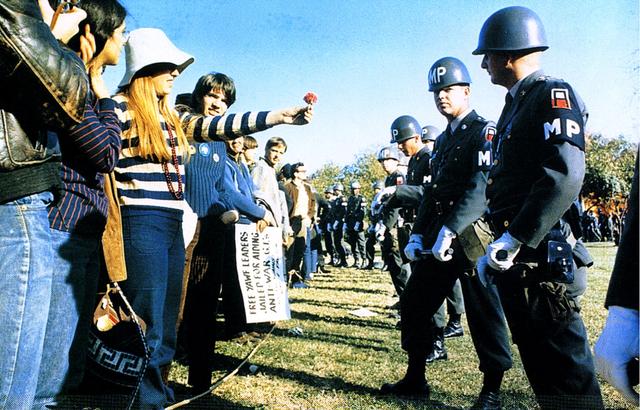
Noting how it “seems that at any given moment, thousands of people are mobilizing for change somewhere in the world,” Erica Chenoweth and Maria J. Stephan marshal evidence that non-violent civil resistance is more effective than taking up arms:

A longer view is required to see the real potential of nonviolent resistance, which is evident in a historical data set that we assembled of 323 campaigns that spanned the twentieth century — from Mahatma Gandhi’s Indian independence movement against British colonialism, which began in earnest in 1919, to the protests that removed Thai Prime Minister Thaksin Shinawatra from power in 2006. This global data set covers all known nonviolent and violent campaigns (each featuring at least 1,000 observed participants) for self-determination, the removal of an incumbent leader, or the expulsion of a foreign military occupation from 1900 to 2006. The data set was assembled using thousands of source materials on protest and civil disobedience, expert reports and surveys, and existing records on violent insurgencies.

Between 1900 and 2006, campaigns of nonviolent resistance against authoritarian regimes were twice as likely to succeed as violent movements. Nonviolent resistance also increased the chances that the overthrow of a dictatorship would lead to peace and democratic rule. This was true even in highly authoritarian and repressive countries, where one might expect nonviolent resistance to fail. Contrary to conventional wisdom, no social, economic, or political structures have systematically prevented nonviolent campaigns from emerging or succeeding. From strikes and protests to sit-ins and boycotts, civil resistance remains the best strategy for social and political change in the face of oppression. Movements that opt for violence often unleash terrible destruction and bloodshed, in both the short and the long term, usually without realizing the goals they set out to achieve.

(Photograph of a Vietnam War protestor offering a flower to a Military Police Officer, October 21, 1967, via Wikimedia Commons)

As If You Needed Another Reason To Feel Paranoid …

Governments in the Middle East and elsewhere are investing in spyware, sometimes to use against their own citizens:

On June 24th Citizen Lab, a Toronto-based cyberspace security outfit, said it had detected specialized spyware being used in Saudi Arabia – the first time it has seen such sophisticated software in that country. (The Saudi authorities have not responded to these allegations).

The software, known as a remote control device (RCS), can hack into mobile phones, giving the government access to all the user’s information – what he or she has looked at or written online and the call history, for example. Unlike basic surveillance software, the RCS can also transform the device into a monitoring tool by switching on and controlling the camera and microphone, without the user noticing. … Until recently such technology was only used by governments with a long history of expertise in spying, such as Russia, says Bill Marczak of Bahrain Watch, an NGO that monitors human-rights violations in Bahrain. “Now any government that is willing to spend several hundred thousand dollars can acquire these hacking tools and get the training they need,” says Cynthia Wong, who researches internet violations for Human Rights Watch. That leaves activists more exposed than ever.

The spyware was apparently bundled with “Qatif Today,” a legitimate news app. Some 60 countries are reportedly using what Citizen Lab describes as “malware sold to governments.”

The Elusiveness Of Hitler’s Evil

In an afterword for the new edition of his Explaining Hitler, Ron Rosenbaum reflects on one of the central puzzles driving examinations of Hitler’s life – “why that innocent infant evolved into a genocidal monster”:

[S]omething or some things made Hitler want to do what he did. It wasn’t a concatenation of Adolf Hitler, Kinderbildimpersonal, external forces, a kind of collective determinism. It required his impassioned personal desire for extermination, even at the potential cost of defeat for Germany. It required him to choose evil. It required free will.

It required Hitler to make a continuous series of choices, the ultimate source of which may always be shrouded in mystery. We will likely never know, for instance — barring some discovery in a “lost safe-deposit box” — what went on between Hitler and the alleged hypnotist, Dr. Forster, said to have treated him at the time of the World War I German surrender and instilled in him a will to avenge the (baseless) “stab-in-the-back” myth of German defeat. We have only Ernst Weiss’s fascinating novelistic speculation (The Eyewitness) to go on, and it can’t be counted as proof, although it may be the unsolved Hitler mystery I’d most like an answer to. In fact, we lack proof, and the most salient clues might be lost in the mists of history. We just may never know with certainty what made Hitler Hitler. And worse, we may never know why we don’t know: whether it’s because of a missing piece of biographical evidence, or an inability to evaluate the evidence we have. It’s beyond frustrating not knowing whether we might.

Update from a reader:

Long-time reader and subscriber.  Your post on “why that innocent infant evolved into a genocidal monster” I would highly recommend reading Robert G. L. Waite’s The Psychopathic God, which does a pretty good job of showing how documented accounts of his childhood history correlate to his compulsions later in life.

I read this at university as a student of central European history in the 19th and 20th century. Our professor warned us that psycho-history was scorned in academic historian circles but offered it as a perspective.

Interestingly, I later connected his work with that of the Swiss-German psychologist Alice Miller who wrote extensively about parental child abuse. In her work For Your Own Good she covers very similar ground as Waite, but as a trained psychoanalyst.

My belief is that sociopaths and psychopaths are largely made by their environment, but imagine there’s a bell curve with some individuals at one tail coming through trauma to lead relatively normal lives and others, at the other tail becoming “exceptional” monsters. Hitler arrived on the world stage in a time, place and context that would celebrate and willingly participate in his monstrosity.

So, I don’t find Hitler as monster so puzzling. Parents create them every day, but only rarely do they get to act out there pathologies in such a world-historical way.

(Image of Adolf Hitler as an infant, 1889–1890, via Wikimedia Commons)

Zen For Capitalists

Jacob Rubin defends books like Dan Harris’ 10% Happier that argue that spiritual practices like meditation and mindfulness make good business sense:

One might … claim that Harris’s watered-down vision of Buddhism, with its emphasis on career advancement, will encourage misuse. This may be fair enough, but it’s not an especially revealing criticism. After all, one of the first things that people do with any tool or philosophy is misuse it. A history of Christianity is largely a history of the abuse of Jesus Christ’s teachings; Buddhism is not exempt from such misprision. On the spectrum of misappropriation, using self-advancement as a lure seems forgivable enough if it leads people to try a technique as subtly transformative as mindfulness. (Indeed, if personal betterment is America’s religion, such an approach might be seen as syncretic.) What can be lost by broadening access to a philosophy of liberation, even if a majority of people conflate it with the more vulgar priorities of our culture?

Tracing Our Steps

The makers of an iPhone app that tracks exercise have transformed big data into beautiful GIF maps:

Using data collected from the Human smartphone app, major urban centres such as dish_humanappLondon, New York and Amsterdam have been drawn with pixels created by the movement of inhabitants that use the app. “We visualised 7.5 million miles of activity in major cities all across the globe to get an insight into Human activity,” said the team. “Walking, running, cycling, and motorised transportation data tell us different stories.”

The iPhone app was originally designed to encourage users to undertake at least 30 minutes of exercise each day. Using the phone’s location services and movement sensors while sat in a pocket or bag, it records the wearer’s type of movement and tots up the amount of activity completed. … As well as the city maps, the information was also used to rank the cities in percentage order of their residents’ most common means of transport. Amsterdam topped the list for cycling, Washington for walking, Berlin for running and Los Angeles for motorised transport.

Mark Byrnes recommends the video visualization seen below the jump:

The city-by-city results are perhaps most fascinating when viewed as a video. Displaying minute-by-minute data from each location, Human shows how the volume of movement around different parts of each place changes throughout the day:

Write Wingers, Ctd

Recently the Dish featured Adam Bellow’s manifesto urging conservatives to engage with popular culture, especially novels, as a way of spreading their message. Adam Kirsch, however, argues that “a conservative literary revival, along the lines Bellow desires, is not going to happen.” The reason? He sees too much anger and resentment driving the proposal:

[A]nger is a not a conservative emotion. Genuine conservatism is something much broader and deeper than a political orientation; it is a temperament, one that looks to the past with reverence and the future with trepidation, and which believes that human nature is not easily changed or improved. Defined in this way, conservatism is in fact a major strain in contemporary American literature. David Foster Wallace, the leading novelist of his generation, was a champion of earnestness, reverence, self-discipline, and work—never more so than in his last, unfinished novel, The Pale King, whose heroes are hard-working accountants. Dave Eggers made his name with a memoir about raising his younger brother after his parents died, a hip but deeply earnest hymn to family values. Zadie Smith excels at the conservatism of comedy, which resolves differences in laughter and exposes human follies with an indulgent understanding.

Kirsch goes on to pan Bellow’s new site for conservative fiction, Liberty Island, which describes itself as a place where “good still triumphs over evil, hope still overcomes despair, and America is still a noble experiment and a beacon to the rest of the world“:

The problem is not that these are conservative ideas, but that they are simpleminded ideological dogmas, and so by their very nature hostile to literature, which lives or dies by its sense of reality. If you are not allowed to say that life in America can be bad, that Americans can be guilty as well as innocent, that good sometimes (most of the time?) loses out to evil—in short, that life in America is like human life in any other time or place—then you cannot be a literary writer, because you have censored your impressions of reality in advance.

Micah Mattix adds:

Kirsch is right that conservatism is much more than patriotism or a defense of individual freedom, even if he also overestimates how many “conservative” works of fiction are published today (only two of the novelists he cites are actively writing; Wallace, Malamud, and Bellow are dead, of course), and even if has a rather rose-colored view of the commitment of liberal writers to art above politics. …

I’d like to see more conservatives write good fiction and poetry, not in order to win the culture war, but in order to have better fiction and poetry. There are number of conservative positions that are true and that are often ignored in fiction and poetry today. In Rod’s article last year on conservatives and storytelling, I noted one of these: The belief that evil is rooted in individuals and not in the structures of society (the church, schools, property ownership).

The Best Of The Dish This Weekend

Tensions Remain High At Israeli Gaza Border

There are times, I suppose, when our weekend reflections might seem out of place in a busy, bruising, secular world. And that might have seemed all the more true these past two summer days, thick as they have been with the hubris of Putin, the nihilism of Hamas, and the collateral massacre of the innocent that is happening in Gaza, as I write these words.

But I would offer a mild disagreement. When there is nothing you or I can actually do about the disgusting criminality of the Russian separatists and goons in Eastern Ukraine, or the cynical, smug Hamas theocrats lobbing useless rockets, or the persistence of the Israeli military past the corpses of dozens of children, we can nonetheless find ways to live among it. It says so much more about the civilizing skepticism of Montaigne, for example, that he was making the case for doubt as the religious wars of absolute certainty were getting underway in his own country and beyond. It speaks to me, at least, that a Muslim cleric could also make the case, during Ramadan, that

oppression attempts to strip the oppressed of their rights and dignity; whereas oppressing strips the oppressor of their very own humanity.

He wasn’t referring to Israel’s endless mowing of the human lawn, but he surely might have. It helps too, I’d argue, to counter the more high-minded counterpoints to the horror to remember that war-makers are seeking peace as well, in their own way:

People who choose to participate in military action are more likely to be altruists than egotists: they are prepared to sacrifice their own lives for the sake of something that transcends them, such as their country or their religion, or socialism, secularism or democracy, or a world where peace and tolerance will reign in perpetuity.

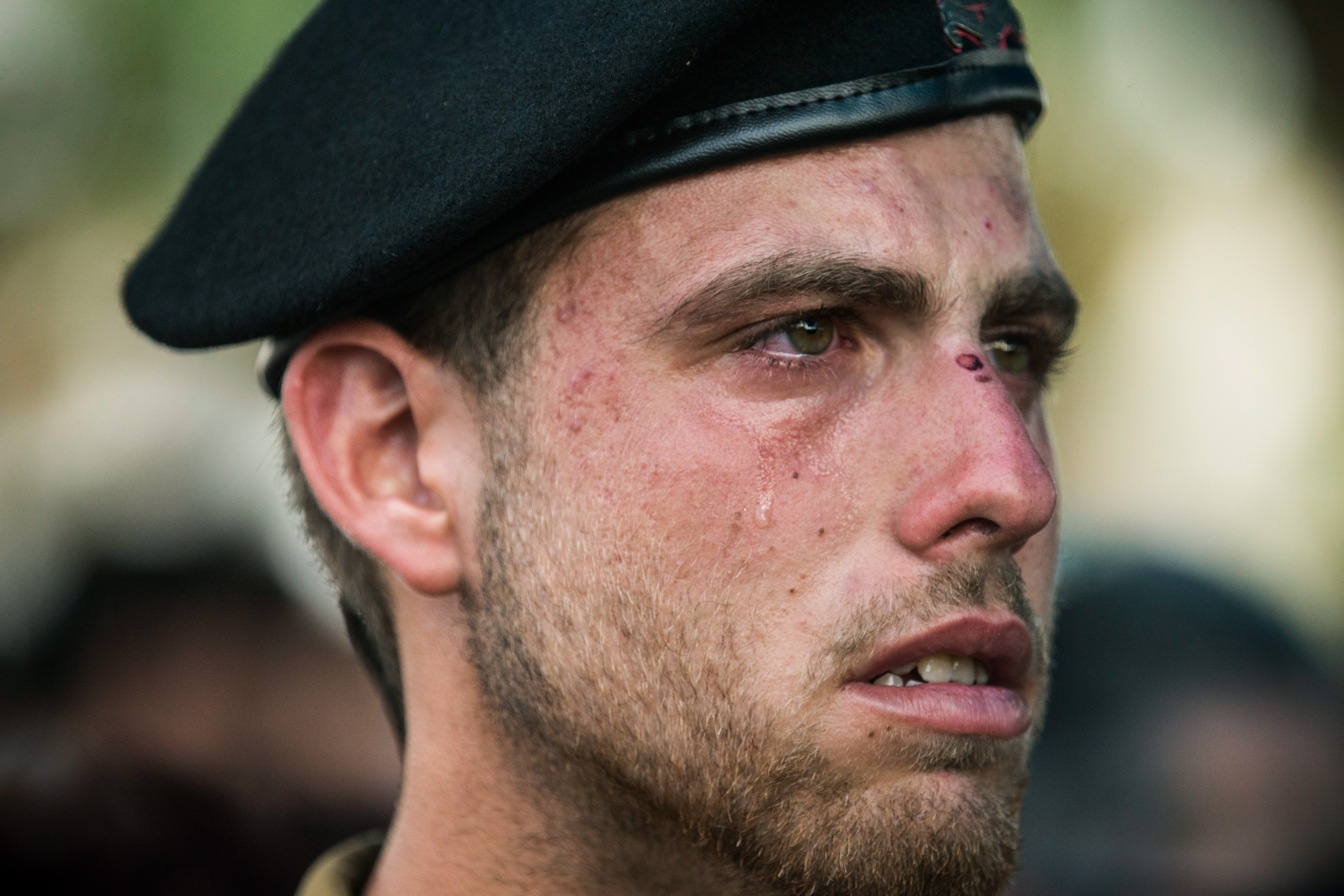
What is Zionism if not a utopian desire for a peaceful, promised land – a desire now etched for ever in the blood and bitterness of so many – and that you see today in the bloodied tears of the Israeli soldier above?

This weekend, we further explored what makes life worth living – in the acerbically honest poems of Deborah “working girl” Garrison; in sex after sixty (I think); of sex between races – perhaps the best rebuke one can make to war between Jews and Muslims; in an escape from reality like Burning Man, seen here from a drone above – or in a post-acocalyptic Eden in Vanuatu. It was fitting too as children were blown apart by bombs, that I spent hours today reading a terrific book about Montaigne (the book club discussion is imminent – buy the book here), whose sanity and spirit reaches us across the centuries, and helps keep me sane, and even happy, although I am simultaneously distracted and distraught.

The most popular post of the weekend was A Game-Changer For Ukraine; followed by The Oldest Depiction Of Sex On Record.

This last week was the most trafficked since February; and brought in the most new subscribers in the same period. Join the 29,616 subscribers here. Or if a friend has a birthday coming up, buy a gift subscription here.

And see you in the morning.

(Photo: An Israeli soldier weeps at the grave of Israeli Sergeant Adar Barsano during his funeral on July 20, 2014 in Nahariya, Israel. Sergeant Barsano was killed along with another IDF soldier on the twelfth day of operation “Protective Edge,” when Hamas militants infiltrated Israel from a tunnel dug from Gaza and engaged Israeli soldiers. By Andrew Burton/Getty Images)