The Many Sides Of Kierkegaard

Though Søren Kierkegaard wrote his theological works attached to his own name, he “published each of his philosophical texts under a different identity, each with a unique perspective, background, and set of beliefs — which may or (more likely) may not be those of Kierkegaard himself.” Eric Thurm explains:

Heteronymity, or the publication of works under an assumed identity constituting an entirely different character, distinguishes itself from pseudonymous works that dish_kierkegaard express the author’s opinions under a different name. In a sense, heteronymity requires two acts of creation: the invention of an author and the text produced by that author, placing further distance between the original author and the final words in a text. There’s some history for the practice distinct from its pseudonymous cousin, most notably in the works of Portuguese writer Fernando Pessoa, who coined the word “heteronym” to refer to the many voices he used to write poetry and letters, each with their own biography, influences, and style.
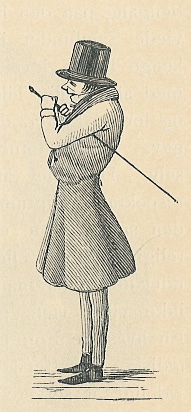

Kierkegaard’s work is particularly well suited to heteronymity’s abstraction from straightforward authorial intent. His intricate web of identities allowed him to tackle his central question — how to be a good Christian in contemporary Christendom — from a variety of perspectives, many of which openly disagreed, in the public sphere. (Were Kierkegaard alive today, he might well have been an avid user of multiple anonymous Twitter accounts.) Most of the heteronyms are in turn mocked, even while their arguments are serious — Johannes Climacus, who does not consider himself a Christian, recounts how he became an author through a winking “self-communion” and smoking multiple cigars, in which he decides to try to mimic those with worldly success “out of love for mankind.”

(Image of caricature of Kierkegaard, 1846, via Wikimedia Commons)

Do Christians Need To Be “Nice”?

Ellen Painter Dollar, a religion blogger, downplays “niceness” while contemplating how controversy plays out in the Christian blogosophere:

I resist the continual pressure from readers to be “nice,” which is frequently presented as the primary Christian value (it’s not) and a reason to avoid writing criticisms of Christian institutions, practices, or sociopolitical positions. Incensed readers hold up critique (miscast as un-Biblical judgment of fellow believers) as an affront to Christian unity.

Our deep cultural divisions, and an online milieu in which harsh name-calling and withering dismissal are the norm, do indeed challenge the unity to which Jesus called his followers. But unity achieved via tacit acceptance of other Christians’ opinions and practices, because to question them wouldn’t be “nice,” is not a valuable unity. Such superficial unity doesn’t require anything more than silence and good manners. True unity costs something; it happens in the midst of, not in the absence of, passionate disagreement and debate. …

It’s not that hard to manipulate the rampant divisions within American Christianity to benefit a writing career. It’s much harder to foster the thoughtful conversations that must happen for our faith to remain relevant and vibrant, because doing so costs something — a sharp retort held back because its target is someone I know, an opposing idea treated with respect instead of ridicule, my opinion offered to a diverse community of readers, knowing that some will reject me with the harshest language possible, in the hope that at least a few will engage with insight and kindness.

The Deadliest Day Yet

Shujaya neighborhood of Gaza full of dead bodies

(Photo: Paramedic team and few journalists access the Shujaya neighborhood of Gaza during the two-hour humanitarian ceasefire proposal from the International Committee of the Red Cross which was accepted by Israel on July 20, 2014. People frantically attempted to to pick up the dead and the wounded in the blood strewn area while plumes of smoke from the recent Israeli shelling lingered in the air. By Mahmood Bassam/Anadolu Agency/Getty Images)

A Man-Made Eden

4820634260_7b8109fdef_z

Trent Dalton visited the island of Espiritu Santo, Vanuatu, to talk with Steve Quinto, an American businessman who believes the world is “in the second phase of certain self-destruction.” But Steve and his wife, Ruth, aren’t worried – they’ve been building their dream retreat:

Steve’s utopia … [is] an 800ha living ark that he has spent the past eight of his 79 years creating, investing his life’s fortune in the shipment of 300 tonnes of materials from around the world to the very edge of human existence. Paradise. Salvation. A new world for when the old one dies. He calls it Edenhope.

Dalton goes on to describe his tour of Edenhope, which, Steve estimates, can comfortably accomodate 23 people:

The turning track straightens to a clearing and there it is:

the dream, Edenhope, a new world among the trees, a network of wooden bridges and paths and staircases weaving through manicured garden beds and rolling orchards with fruit trees in the hundreds and a kitchen hut and 10 octagonal bungalows made of high-end red hardwood timbers. The wondrous dreamscape includes wild blue flowers and bird of paradise plants and trees so big their root ­systems form houses of their own. There’s a communal library; a warehouse filled with ­endless tools and hardware; a surgery stocked with enough medicines to last two decades.

It’s a staggering work of human endeavour. Steve brought an earthmover and a front-end loader here from Canada. He rallied workers, paid and paid for their services for eight years; organised thousands of nine-hour sailing journeys back and forth between civilisation and sanctuary, hauling floors and sacks of concrete and machinery and miscellaneous goods in preparation for the apocalypse. He walks to a patch of dirt in the centre of his village. “It started here,” he says. “It was nothing but Ruth and I in two hammocks tied to trees.”

Steve closes his eyes and breathes his home in deep through his thin chest. “This is the birth of a new species,” he says. “This is the birth of beauty. This is the birth of dreams.”

(Photo of Vanuatu by Graham Crumb)

Quote For The Day

“Holy Writ declares those of us wretches who think well of ourselves: ‘Dust and ashes,’ it says to them, ‘what has thou to glory in?’ And elsewhere: ‘God has made man like the shadow, of which who shall judge when, with the passing of the light, it shall have vanished away?’ In truth we are nothing.

Our powers are so far from conceiving the sublimity of God, that of the works of our creator those bear his stamp most clearly, and are most his, that we understand least. To Christians it is an occasion for belief to encounter something incredible. It is the more according to reason as it is contrary to human reason. If it were according to reason, it would no longer be a miracle; and if it were according to some example, it would no longer be singular. God is better known by not knowing, says Saint Augustine; and Tacitus, It is more holy and reverent to believe in the words of the gods than to know them.

And Plato thinks there is some sinful impiety in inquiring too curiously into God and the world, and the first causes of things. And it is difficult to discover the parent of the universe; and when once you have discovered him, it is sinful to reveal him to the vulgar, says Cicero.

We say indeed ‘power,’ ‘truth,’ ‘justice’; they are words that mean something great; but that something we neither see nor conceive at all. We say that God fears, that God is angry, that God loves, Marking in mortal words immortal things (Lucretius). These are all feelings and emotions that cannot be lodged in God in our sense, nor can we imagine them according to his. It is for God alone to know himself and to interpret his works,” – Montaigne, “Apology for Raymond Sebond,” The Complete Essays of Montaigne.

A Poem For Sunday

3493333046_ee6f406674_b

“Husband, Not at Home” by Deborah Garrison :

A soldier, a soldier,
gone to the litigation wars,

or down to Myrtle Beach
to play golf with Dad for the weekend.

Why does the picture of him
trampling the emerald grass in those

silly shoes or flinging his tie over his shoulder
to eat a take-out dinner at his desk—

the carton a squat pagoda in the forest
of legal pads on which he drafts,

in all block caps, every other line,
his motions and replies—fill her

with obscure delight?
Must be the strangeness: his life

strange to her, and hers to him,
as she prowls the apartment with a vacuum

in boxers (his) and bra, or flings
herself across the bed

with three novels to choose from
in the delicious, sports-free

silence. Her dinner a bowl
of cereal, taken cranelike, on one

leg, hip snug to the kitchen
counter. It makes her smile to think

he’d disapprove, to think she likes him
almost best this way: away.

She’ll let the cat jump up
to lap the extra milk, and no one’s

home to scold her.

(From A Working Girl Can’t Win © 1998 by Deborah Garrison. Used by permission of Random House, an imprint and division of Random House LLC, a Penguin Random House Company. Photo by Jonathan Lin)

Nostalgic For Nietzsche, Ctd

This post on the intellectual shallowness of some New Atheists stirred a number of readers to write. One connects it to two other Sunday posts on meditation and mindfulness:

If Michael Robbins wants us to worry that the decline of organized religion implies some loss of certainty about the foundations of our ethics, we will need some data showing that religiosity correlates with ethical behavior.  Did the universal piety of the European Middle Ages really make that a more ethical time?  Today, as then, we live in a world of murderous crusaders, rapist priests, and covetous megachurches.  What’s different today is that we also have deeply ethical atheists, agnostics, and secularists who debate the fine points of moral behavior with as much rigor and passion as theologists do, and who are building great ethical revolutions such as environmentalism on the surprisingly robust foundation of a practical, secular ethics.

Much of this success rests on the self-explanatory Golden Rule.  No fear of damnation is needed to explain why it’s a good idea to treat others as you would like to be treated.  It’s a contract, and you get security and stability only if you obey it.  The obviousness of this contract also makes it a firm basis for moral innovation.  You can get 80% of the way to understanding environmentalism, for example, by seeing it as the application of the Golden Rule to more remote relationships, such as between a river polluter and fishermen far downstream, or between humans and animals, or between humans and the natural forces that sustain them.

Of course, there’s a deeper basis to secular ethics for those who seek it, and your back-to-back posts by Christopher Isherwood and Rowan Williams both refer to it.

It lies in the insight that our illusion of self or ego is the real foundation of evil.  Meditation, as Sam Harris argues in The End of Faith, can briefly relieve us of the sensation of “I.” What’s left is an emptiness (“the body as a sort of cave” as Williams puts it) out of which comes Isherwood’s certainty: “Supposed knowledge of individuality … is nothing but illusion and ignorance.”  If everything we are is relational, and there is no ego to defend, then to be good toward others arises out of the essence of what we are.  Call it the social contract, or call it a spiritual insight, or call it God, but it’s definitely not the infantilizing fear of damnation. What’s more, it’s working.

Isherwood, from the 1940s until the end of his life, was a devotee of Vedanta, a school of Hindu philosophy – you can read about it in his last major work, My Guru and his Disciple. And Williams is an Anglican priest, the former Archbishop of Canterbury. There may be a secular basis for the ethics both men point toward, but neither can be claimed for the atheist camp. Another reader:

The religion Robbins, Hart and their ilk describe is not the religion believed and practiced by the vast majority of the religious. Good grief, Christians are burning witches in Africa, the US is littered with creationist “museums”, and Robbins wants atheists to focus on “austere abdication of metaphysical pretensions”? When Robbins says his religious belief isn’t like belief in the Easter Bunny, I’m happy to agree. For the vast majority of the religious, it’s exactly like belief in the Easter Bunny.

The religious intelligentsia want to embrace the vast majority of Christians (who believe nothing like they do), as part of their faith, and at the same time decry atheists who focus on that vast majority as failing to engage “true” Christianity and the deep, meaningful arguments for the faith.

When Robbins writes: “Of course the dead in Christ don’t intervene with God to help you find your car keys, and of course the Bible is inconsistent and muddled (no matter what the Southern Baptists claim to believe), and of course I find it extremely unlikely that Mohammed flew to heaven on a winged horse”, that’s when he gets to criticize atheist focus.

And this from a reader who notes that it “always is your threads on belief and atheism that prompt me to write a grumbling missive to you”:

What Robbins, and by extension you and Nick Spencer, seem to want is a Christian monopoly on “good values” – charity, humility, self-sacrifice, concern for the downtrodden; essentially liberal humanism with the theological scaffolding still attached – such that an anti-Christian (opposite of Christian) morality is by definition against all of these things and for “bad values.” Nietzsche, for all his brilliance and insight, was a fiercely anti-democratic elitist who hated weakness and had no use for social justice (Ayn Rand aped much what Nietzsche was doing, but with far less wit and humor). Presumably Robbins wishes contemporary atheists would own up to this and get down with their bad selves. In value-neutral terms, he thinks Christianity is a cat and Atheism is a dog and modern “New” atheists are dogs that eat cat food.

This is wrong for at least two reasons. First is Nietzsche’s gross misreading of social history and his own time. He castigates Christianity for glorifying weakness and poverty across millennia, without noting that Europe’s nations and their institutionalized Christianity, whatever their rhetoric of altruism, operated by the values he extols: aristocracy, patriarchy, indifference to suffering. It was the conditions created by these values and systems that birthed socialism and communism, largely atheistic movements that Nietzsche loathed.The other, related reason Robbins is wrong is his ‘no true Christian’ assumptions. The Christianity of doubt that you and he seem to both favor is a lovely little thing, but it has little truck in the popular consciousness. Mainstream Christianity, especially that which is most influential in our politics, is as it ever was in Nietzsche’s time: mouthing pieties of love and sacrifice, while in practice giving cover to a plutocratic status quo, and holding contempt for anyone that doesn’t fit its definition of humanity.

It also has evolved a proud scientific illiteracy. Atheists spend so much time knocking down what Robbins thinks are self-evidently stupid ideas like Creationism, because those are the kinds of ideas that are being most advanced by American Christianity. If modern atheists are theologically illiterate, it is only because modern Christianity is too. These aren’t strawmen being knocked down; as the top comment on that Slate review points out, 46% of Americans believe in literal creationism. No atheists are going to meet Robbins in metaphysical combat, because the battle is being waged elsewhere.

To close, if atheists were the anti-humanists of the “true” Nietzschean type, there would be far fewer fellow advocates for the purported Christian values of human rights, social justice, and egalitarianism. You certainly won’t find them in the bulk of American Christianity.

How Theology Begat Geology

dish_bernardolippi

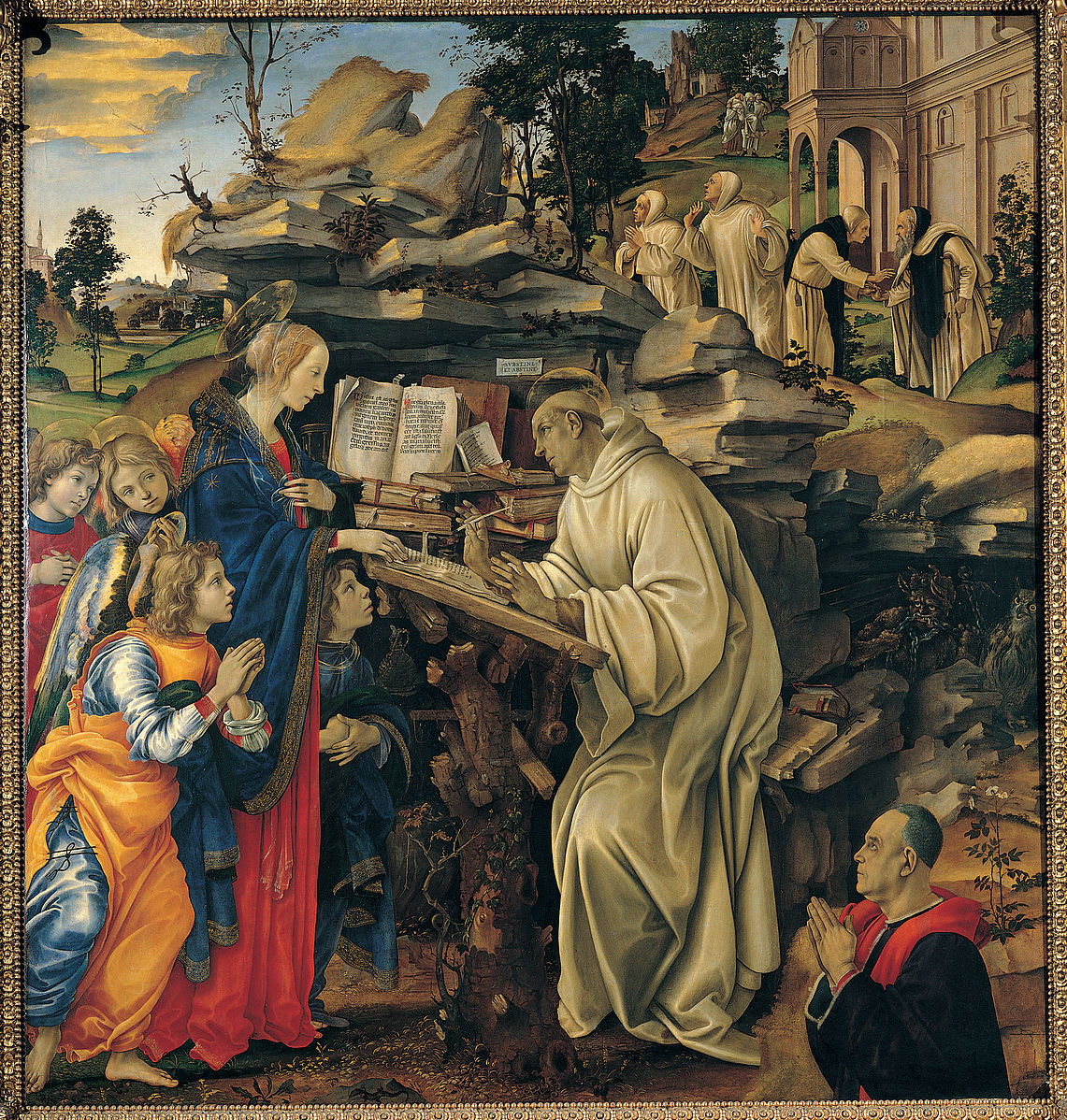
Carl Zimmer suggests that religion and science coexisted easily in many Renaissance minds. The developing science of geology, for example, was influenced by 16th- and 17th-century understandings of the divine:

You don’t have to page through old books to see just how geologically-minded people in the Renaissance had become. Their paintings show us where their eyes turned when they looked at landscapes. And remarkably often, they turned to rocks. A number of the finest painters of the Renaissance incorporated exposed layers of rocks in their pictures – the fruits of careful observation. They were looking at the intricate effects of millions of years of geological change. …

“The world is not eternal,” declared the Jesuit priest Benito Pereira in the 1570s. “From its beginning to those days no more than five thousand six hundred years have elapsed.” It turns out, however, that many philosophers didn’t follow Pereira example very closely.

They accepted that the Earth had not existed forever, but they saw it as lasting far longer than a few thousand years. Some treated Noah’s Flood as a real geological event, but merely as the most recent of many great cataclysms. And for all the vigor of the Counter-Reformation, no one was burned at the stake for such claims.

Writers in Italy and elsewhere continued to develop ideas about the history of Earth. They investigated fossils more deeply, they thought long and hard about how layers of rock formed, and they considered how volcanoes and earthquakes shaped the planet. By the 1700s, the outlines of modern geology were emerging. But the proto-geologists of the 1700s didn’t see their work as a fundamental break from the past. Instead, they saw a seamless connection reaching back centuries.

(Image: Apparition of The Virgin to St Bernard, showing rocks in the background, by Filippino Lippi, 1486, via Wikimedia Commons)

Blowing The “Mormon Moment”?

Last year, Kate Kelly, a human rights lawyer and Mormon, began a campaign to open the priesthood to female leadership. Ordain Women attracted support but also significant controversy within the community, and last month the Church excommunicated Kelly – a decision she’s appealing. Cadence Woodland, a lifelong Mormon, sees (NYT) such stifling of dissent as a sign that the Church’s “Mormon Moment” – “not just the frenzy of interest that rose (and largely faded) with Mitt Romney’s campaigns for the presidency, but a distinct period of dialogue around and within the Mormon community” – has faded. She explains she stopped attended services in December:

The church will continue to lose members like me until it realizes that messages about diversity and inclusion are hollow when excommunication and censorship are the responses to dissent. While the church invests in missionary work, especially overseas, an unwelcoming posture is likely to hinder its growth.

The true legacy of the Mormon Moment might just be that the church was given the chance that many religious institutions desperately need to stay relevant in the 21st century: the opportunity to open itself to criticism and inquiry. The church has chosen not to. And it has killed its own moment by doing so.

Citing Woodland, Hemant Mehta suggests that “Mormons aren’t alone in screwing up their golden opportunity”:

For all the power evangelical Christians, Southern Baptists, the Catholic Church, and the Mormons have today, can you imagine how much more they would have if they supported marriage equality and abortion rights a decade or two ago? Instead, their own actions have forced young people to leave the institutions, drop their religious labels, and search for more welcoming communities.

Woodland is upset about that. She shouldn’t be. She did herself a favor by leaving a Church that shows no desire to improve. If more people followed suit, maybe these institutions would finally rethink their policies.

But in an interview, Kelly explains that she hasn’t given up hope:

How has the campaign been received? Has there been much support within the Church?

We have had a huge outpouring of support from men and women in the Church. It has been amazing to watch this movement grow so quickly. There has also been negative feedback and repercussions, but the good outweighs the bad, by far.

Did excommunication come as a shock?

I was completely shocked. I have lots of faith in humanity and in justice. So, I thought there was no way they would excommunicate me. There was no way they would do something that was just so plainly wrong. …

Will you give up the Ordain Women campaign?

I will not give up speaking on behalf of female ordination. Not because I refuse to do so, but because I am not able to do so. I cannot live an inauthentic life and that is what my leaders are asking of me.