Dissents Of The Day

Collier may have missed our airing of dissents from transgender readers here. The Dish doesn’t duck from strong criticism. Another reader:

I disagree with your view on language as being harmless and that people should just get over being offended by the use of “tranny,” “faggot,” or whatever. We could have an interesting back-and-forth discussion about the power of language and it wouldn’t bother me if we vehemently disagreed.

What does bother me, and the reason I’m writing, is your use of your blog as a bludgeon against a college student who represents not the antithesis to your argument, but simply a young, naive strawman used to convey your disgust. Here’s how you describe them: “What I am interested is condemning this pathetic excuse for a student.” What I think is pathetic is your savaging of a random, young college student who embarrassed themselves rather than representing an honestly defensible position. If you’re going to attack and rant against a position, take on someone who can strongly defend it. Instead of boosting the strength of your argument, it makes you come off as a bully.

I think that’s condescending to the student. If you want an example of bullying, check out the petition organized by the student and their allies:

On Thursday May 22, The Institute of Politics hosted a seminar with Dan Savage, a gay advice columnist who has a history of making numerous misogynstic, biphobic, transphobic, and racist comments.

Note that these students have absolutely no compunction about accusing someone of being a racist and misogynist, but cower and complain that they don’t live in a safe space if someone neutrally uses a term they have decided is now verboten. I don’t have much sympathy for this kind of hypocrisy, intimidation and cant. Another reader:

I am with you when you say that trans folks (and lesbians, gays and everyone else) should get over the over-sensitive word policing. Yes, it is appalling that a student ran crying out of a lecture. I too dislike the idea of trigger warnings in lectures. And yes, Savage seems to be using this in an appropriate context. That being said, let me remind of your posts against one Alec Baldwin. You seem to argue that trans folks should just get over themselves when being presented with language that they don’t much like at the same time that you take Baldwin to task for deploying homophobic language. Want to explain that? Are you not living up the same standard that you expect of trans people?

You can read the blog for many years and find my position on free speech, including offensive speech, clearly and consistently applied. The Baldwin case was about the double standards of liberals. If you are going to present yourself as a crusading gay rights activist, then it’s perfectly legit for me to call someone out when he uses terms like “cocksucker” and “faggot”. Baldwin’s outbursts were also linked to physical threats, using the term “faggot” and “toxic little queen” to directly intimidate gay people. (Even then, as in the Jonah Hill case, I’m totally cool if someone acknowledges what they said and offers a clear apology – which Baldwin refused to do.) But none of that is the same as being able to use terms freely in a non-aggressive form, not directed as a slur at someone, but as part of a lively or challenging discussion. As I wrote yesterday:

I’m not talking about deliberate demonizing of others or threats of violence; I’m not talking about prejudice or bigotry. I’m talking about being able to say words freely in order to think more freely.

The student was engaged in an attempt to prevent that, to dictate by emotional blackmail which words can and cannot be used in a university. And its [sic] confreres tried to get Dan Savage indicted for a hate crime because he refused to obey. I’m sorry but this tendency is anathema to a liberal society. Another reader goes into greater detail on the college student and trigger warnings in general:

Wasn’t there some sort of famous quote from James Madison or John Adams or something, that he studied politics so that his descendants might study poetry? I’m glad the Stonewall Rioters did what they did, but it might also be that our ethical conversation about what can and cannot be done within the world of LGBT rights has progressed to the point where there is at long last some space for a new generation of campaigners to give thoughts to our emotions and our human selves. Human selves that are sometimes traumatized and re-traumatized by sloppy language – human selves which are thankfully now free enough of the oppressions of a world before Stonewall, but are still subject to the bare difficulties of living psychically in a world arrayed against us, even if only in subtle and often-invisible ways.

I don’t mean to defend this particular student – the description of the situation does seem to suggest Savage has the right way of it in this context – but your blanket condemnation of any respect given to the concept of a trigger warning itself is silly. Not only that, but it assumes that a trigger warning is given so that people can avoid ever having to see something that offends them.

For instance, I can get triggered by fat hatred. But you know what? This doesn’t mean that I don’t read things that contain it! If I’m reading a post that says “(TW: fat hatred)”, I steel myself. I know that I may get bothered; I know that my anxiety levels might jump through the roof; I know that I might feel my heart start to beat faster as memories of my abuse flood my psyche. But I read on anyway. And quite often I find that material that would have drained my emotional reservoirs had it come upon me as a surprise is actually easier to manage and sort through because I had just a moment or two to prepare myself.

Your idea about what a trigger warning is and why people want them is abject caricature. Very few people ask for them because we want to wall ourselves off from all possibility of taking offense. We ask for them because sometimes, just sometimes, going into a difficult situation knowing it will be difficult gives us the mental and emotional space to make fruitful contributions to the discussion and explore the subject matter with the correct distance required for academic, dispassionate perspective. While I lack any sort of study to prove this is the case, I know from my own anecdotal experience that no one in my wide circle of TW-savvy acquaintances and friends actively avoids all posts that contain their triggers. They might sometimes skip one because they’ve already engaged 10 that day and don’t have the energy for another one, but the idea that trigger warnings exist to wall off academic or critical inquiry is absurd. Trigger warnings exist because they often give people the mental and emotional space to actually engage in such inquiry with aplomb.

Previous Dish on trigger warnings here.

Putin Still Has Time To Persecute Gay People

His machinations in Ukraine may have stolen the spotlight, but Jay Michaelson reminds us that things are still very bad and getting even worse for Russia’s gays:

According to [Tatiana] Vinnichenko, [director of the LGBT organization Rakurs,] Russian authorities are putting pressure on all United Russia Party Congress Conveneskinds of institutions—banks, landlords, employers—not to do business with LGBT people and LGBT organizations. Because licenses are required for just about everything in Russia, this “pressure” is existential. Banks are being told, “Dump your LGBT customers, or we’ll shut you down,” she said.

In Vinnichenko’s case, the threat is immediate and personal. A mother of two, she works for the Northern Federal University. Her employers have been pressured from above and have in turn demanded that she stop her advocacy work. “I am going on leave, because you cannot be fired while on leave, but as soon as I return, I expect to be fired,” she said. How she will replace her lost income, especially as she is publicly blacklisted, she has no idea.

Rakurs’s bank and landlord have come under similar pressure.

This is a form of eliminationism, further evidence that Putin’s regime is effectively a fascist one.

Previous Dish on Putin’s anti-gay crackdown here and here.

(Photo: Sasha Mordovets/Getty Images)

Catholicism’s Crimes Against Humanity, Ctd

OLYMPUS DIGITAL CAMERA

Further reporting has somewhat taken the most appalling edges off the story of the 796 dead children, buried without markers in one of the 20th Century Irish gulags for the sexually sinful and their children. No one is disputing the missing 796 toddler corpses, nor that they were probably buried in a mass grave. But the septic tank where some children were buried may only have had a couple dozen corpses, with the rest buried elsewhere:

Barry Sweeney, now 48, who was questioned by detectives about what he saw when he was 10 years old, said: “People are making out we saw a mass grave. But we can only say what we seen: maybe 15 to 20 small skeletons.”

The historian who uncovered the tragedy also insists that she never used the word “dumped” to describe the bodies. What we obviously need right now is a full and objective investigation into the former home and grounds, and a much wider inquiry into all the other institutions where young women and their babies were made invisible and often ended up dead. Mercifully, that will now happen:

Irish Minister for Children Charlie Flanagan has announced a statutory Commission of Investigation into mother and baby homes in Ireland … Mr Flanagan told Irish state broadcaster RTÉ that the government will receive an initial report from the investigating team by 30 June. On Sunday, one of the most senior figures in the Catholic Church in Ireland said a full inquiry was needed. Archbishop of Dublin Diarmuid Martin said the truth must come out.

With any luck, we will get more clarity on the nature of the entire ghastly enterprise. Meanwhile, Fintan O’Toole has a must-read on the broader cultural context for the atrocities. In the Catholic mindset of the time, illegitimate children were regarded as physically and mentally weaker than other “virtuous” toddlers:

In 1943, the Joint Committee of Women’s Societies and Social Workers compiled a well-meaning memorandum on children in institutions. It noted of those in mother-and-baby homes that “These illegitimate children start with a handicap. Owing to the circumstances of their birth, their heredity, the state of mind of the mother before birth, their liability to hereditary disease and mental weakness, we do not get, and we should not expect to get, the large percentage of healthy vigorous babies we get in normal circumstances. This was noticeable in the institutions we visited.”

So the children were blamed for the consequences of their own mistreatment. It’s an insight into how Christianity’s sex-phobia so distorted the faith that it actually demonized children and excused their early deaths. And that, of course, was the reason for their not being buried individually, with markers. They were regarded as subhuman.

I repeat my view that when a doctrine begets this evil, there is something deeply wrong with the doctrine itself. When it leads to an inversion of Christianity’s deeper call to empathy, care for the vulnerable and love of children, it is objectively disordered.

(Photo: headpiece of the High Cross in Tuam, Ireland, by Clint Malpaso via Wiki)

Clinton’s Other Apology

It’s more emphatic, more convincing and less tortured than her pirouetting on the Iraq war – and it’s on her 2008 campaign:

[I lost] I think because I really didn’t have a good strategy for my campaign. I didn’t plan it the right way … As a candidate who was already so well known … I don’t think I ever said, ‘Yes, you may have known me for eight years, but I don’t take anything for granted. I have to earn your support.’

It’s a pretty clear admission that she expected to be coronated last time around. Which means she might not be so cocky this time around. Might.

Did The IMF Save The Global Economy?

Tim Fernholz discusses Daniel Drezner’s new book, The System Worked: How the World Stopped Another Depression. In it, Drezner posits that the global system of economic governance was to thank for preventing a major catastrophe in 2008. Fernholz:

But wait—wages, growth and jobs are still lagging in the United States and the European Union. That has a lot of those countries’ citizens blaming globalization and the institutions that support it, such as the International Monetary Fund. Don’t blame globalization, Drezner says: Blame your governments.

In the recovery stage of a financial crisis, growth is expected to be slow—clearing debt off balance sheets takes longer than responding to other kinds of shocks. Hastening growth requires policies that were not fully adopted in either the US or Europe, as austerity dominated policy debates. (It’s worth noting that the IMF was long a critic of US fiscal policy, calling for more near-term stimulus and longer-term efforts to deal with debt.) And the EU, with its mixed record of addressing its own debt crisis and recession—Drezner calls it “an unmitigated disaster”—is more of an actor in global governance than an example of it. …

There are good signs that global governance will get stronger. For one, institutions are adapting: the IMF has relaxed some of its traditionally neoliberal arguments and is a more broad-based institution; the G20 provides a platform for the BRICs and the G7 nations to coordinate; Basel III has put a floor on bank regulation. For another, countries are recommitting to the global system with a flurry of bilateral and regional trade deals under discussion, even if Edward Snowden’s revelations have clearly chilled US talks with Europe.

A Feather In His Stovepipe Cap

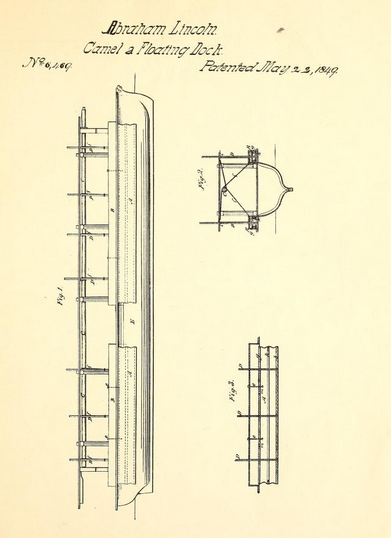
Abraham Lincoln was the only president with a patent:

It should not be too surprising that young Abe Lincoln shares more in common with Doc Screen Shot 2014-05-30 at 4.20.03 PMBrown than Van Helsing, but it has little to do with science fiction and everything to do with the US Patent Office. Specifically, US Patent No. 6,469: a device for “buoying vessels over shoals” according to its inventor, a 40-year-old Abraham Lincoln. Apparently, this self-taught prairie lawyer also taught himself how to buoy vessels in his early 20s, when a flatboat he worked on ran aground on a milldam in New Salem, Illinois. As retold by his friend and bodyguard Ward Hill Lamon: “the boat stuck for one night and the better part of a day … in momentary danger of breaking in two, or sinking outright.” Fortunately, the 23-year-old Lincoln was able to engineer his way out of the predicament with a “singular experiment” that everyone in New Salem apparently came to watch. Despite reading like a mix between a folk tale and a 19th-century episode of MacGyver, such is the fascinating history behind the device currently on display in the Smithsonian as the first and only patented invention attributed to a US president.

(Image via the Lincoln Financial Foundation Collection, Lincoln Library/Internet Archive)

Where Did Rhode Island Go Wrong?

Aaron Renn contends that over-regulation and generous government benefits have hampered the state’s economy:

Depending on the month, Rhode Island has either the worst or second-worst unemployment rate in the nation: 9.3 percent, according to the latest Bureau of Labor Statistics figures. Since 2000, the state has lost 2.5 percent of its jobs, and what jobs it has created are mostly low-paying. The job situation is so dire that entire local economies have become dominated by the benefits-payment cycle. In Woonsocket, for example, one-third of residents are on food stamps.

Rhode Island boosters cite its per-capita income of $45,877—4.9 percent above the national average and 14th-best in the country—as evidence of the state’s economic strength. But this number is misleading. It’s driven in part by high levels of government-transfer payments: everything from retirement and disability insurance to workers’ compensation and unemployment, veterans’ benefits, and the whole panoply of federal grants (Medicaid, food stamps, SSDI). Rhode Island ranks third in the country in such transfers per capita. Incomes have also been stagnant for decades. As late as the 1930s, Rhode Island’s per-capita income was nearly 50 percent greater than the national average. By the mid-1940s, though, it had declined to just a tick above the U.S. average, where it remains.

The Man Behind King

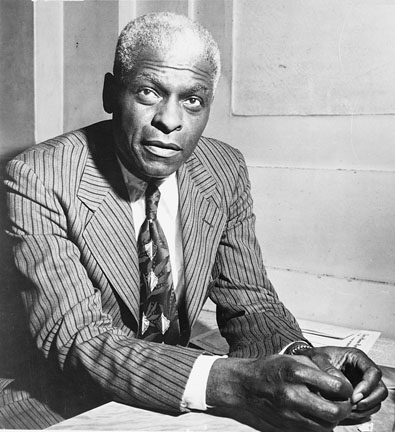
In an interview, Randal Jelks discusses his biography, Benjamin Elijah Mays: Schoolmaster of the Movement, about the Morehouse College president whom MLK Jr. considered his spiritual and intellectual father. How Mays laid the theological groundwork for the civil right movement:

He went to India and met and interviewed Gandhi in 1936 and came back and wrote about 19-301his encounter. He talked with Gandhi about what a nonviolent social movement looks like and how it should take place.

Martin King was 15 when he came to Morehouse. The war was beginning to affect enrollment, and Mays, at an all-men’s college, used early admissions to find talented teenagers to enroll. King and other students were often invited to Mays’ house to sit at table when dignitaries were visiting. The students had to learn about the visitor beforehand and were expected by Dr. and Mrs. Mays to ask questions. The great civil rights activist Dorothy Height remembers meeting Martin King at 15 sitting at the Mayses’ dining room table. This was not peculiar to King. Many other students tell you the same.

If Jelks’ biography discusses what came before Dr. King, Matthew J. Cressler argues that the religious dimension of debates about racial justice didn’t end with his death, but extended to what came after it – including the Black Power movement:

Journalists were quick to contrast what they took to be the irrational rage of urban youth shouting “Black Power!” with caricatures of a more palatable southern Christian nonviolence – needless to say, neither of these characterizations approximated the reality of either.

The first generation of post-civil rights scholarship reproduced this juxtaposition between secular anger and religious love, black violence and Christian nonviolence.  Even as more recent scholars have challenged many of the classic binaries separating Black Power from civil rights, the secular/religious divide usually persists since it serves as a convenient category for marking the elusive shift from one style of social justice struggle to another. (The convenience of this argument depends on presuppositions about the inherent peacefulness of “real” or “proper” religion that are built into the modern study of religion itself, but that is a conversation for another time.)

Convenience notwithstanding, Black Power was actually taken up by a number of black religious communities almost immediately after its first iteration.  On July 31, 1966, not long after Carmichael’s famous statement, the National Committee of Negro Churchmen published their own statement expressing deep disturbance over the manufactured controversy surrounding “Black power” and what they called the media’s “historic distortions of important human realities.”  They argued that “what we see shining through the variety of rhetoric is not anything new but the same old problem of power and race which has faced our beloved country since 1619.”  They identified the hypocrisy of “the assumption that white people are justified in getting what they want through the use of power, but that Negro Americans must, either by nature or by circumstance, make their appeal only through conscience.”  Two years later this same committee, now named the National Committee of Black Churchmen, officially affirmed emergent Black Theology as a “theology of black liberation.”

Even the Black Panthers – often presented as the paradigmatic foil for (the popular, sanitized version of) the Christian nonviolence of Martin Luther King – met in churches and collaborated with religious people and communities from the get-go.

(Photo of Mays via Wikipedia)