Face Of The Day

Screen Shot 2014-06-05 at 7.25.29 PM

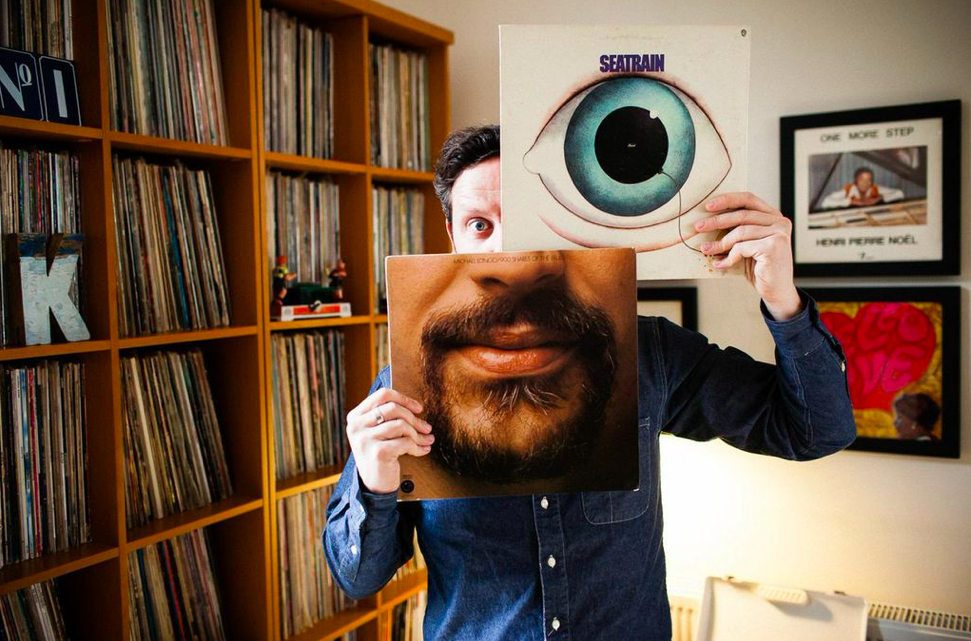
Eilon Paz focuses on old vinyl records and their owners:

Iranian photographer, Eilon Paz takes photographs of over 130 vinyl connoisseurs and their collections in the most intimate of environments, their record store rooms. Paz, a record collector himself, thought it might might be interesting to explore the people around him whose record collections are both larger and weirder than his own.The stunning, candid photos look at a variety of well-known vinyl champions as well as a glimpse into the collections of world-renowned and lesser-known DJs, producers, record dealers, and everyday enthusiasts.

In a 416-page coffee-table book, Dust and Grooves, Paz’s photographs are grouped together with compelling essays that closely examine the records and the people whom collect them. The book is divided into two main parts: the first features 250 full-page photos framed by captions and quotes, while the second consists of 12 full-length interviews that look deeper into the collectors’ personal histories and vinyl stories.

Buy the book here.

“Where Bad Taste Becomes Great Art”

It’s schlock music, according to Jody Rosen, who pens an impassioned defense of a tradition that “has given us our most indestructible songs, a tradition as time-honored, as sturdy, as it is maligned“:

Schlock is music that subjugates all other values to brute emotional impact; it aims to overwhelm, to body-slam the senses, to deliver catharsis like a linebacker delivers a clothesline tackle. The qualities traditionally prized by music critics and other listeners of discerning taste — sophistication, subtlety, wit, irony, originality, “experimentation” — have no place in schlock. Schlock is extravagant, grandiose, sentimental, with an unshakable faith in the crudest melodrama, the biggest statements, the most timeworn tropes and most overwrought gestures. Put another way: Schlock is Rodgers and Hammerstein, not Rodgers and Hart. It’s “Climb Ev’ry Mountain” and “You’ll Never Walk Alone,” not “Manhattan” and “My Funny Valentine.”

The word comes from the Yiddish shlak,meaning secondhand, or damaged, goods”:

Schlock has a close relative in another Yiddishism, schmaltz — a label often given to music that is swamped by goopy sentimentality, as a roast chicken is swamped by rendered fat. Much schlock music qualifies as schmaltz, or is at least very schmaltzy. But schlock is a broader category than schmaltz; it makes room for songs that are grandiose but less reliant on lachrymose sounds and sentiments. (Toto’s “Africa” is schlock but not schmaltz, concealing its torch-ballad bombast beneath a placid easy-listening arrangement.)

Other terms are sometimes used interchangeably with schlock: kitsch, cheese, camp. Schlock contains elements of these, but none are true synonyms. Schlock is more dignified than kitsch like “How Much Is That Doggie in the Window?” or Red Sovine’s tearjerker trucker ballad “Teddy Bear.” It is weightier, more substantial, than pure pop cheese like the Spice Girls’ “Wannabe” or novelty-song cheese Los del Rio’s “Macarena.” And while certain listeners embrace schlock, with both affection and condescension, as camp, schlock itself is allergic to the irony that is a prerequisite of camp. A karaoke singer might perform “The Rose” or “Every Rose Has Its Thorn” or “Kiss From a Rose” as a campy sendup, but Bette Midler and Poison and Seal take those songs seriously — offer up those roses on bended knee.

Schlock is earnest and solemn; it’s ambitious and aspirational and exalted. It shoots for the moon or, at least, for the penthouse suite.

(Video: “Until the Night,” Billy Joel’s surprisingly singular mention on Vulture‘s list of the 150 greatest schlock songs)

Pirate Captains Of Industry

James Surowiecki surveys America’s history of industrial espionage:

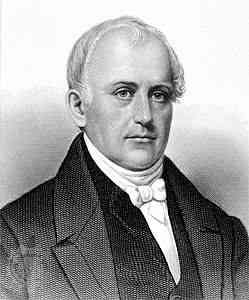
“The United States emerged as the world’s industrial leader by illicitly appropriating mechanical and scientific innovations from Europe,” the historian Doron Ben-Atar observes in his book “Trade Secrets.” Throughout the late eighteenth and early nineteenth centuries, samuel-slater-jpgAmerican industrial spies roamed the British Isles, seeking not just new machines but skilled workers who could run and maintain those machines. One of these artisans was Samuel Slater, often called “the father of the American industrial revolution.” He emigrated here in 1789, posing as a farmhand and bringing with him an intimate knowledge of the Arkwright spinning frames that had transformed textile production in England, and he set up the first water-powered textile mill in the U.S. Two decades later, the American businessman Francis Cabot Lowell talked his way into a number of British mills, and memorized the plans to the Cartwright power loom. When he returned home, he built his own version of the loom, and became the most successful industrialist of his time.

The American government often encouraged such piracy. Alexander Hamilton, in his 1791 “Report on Manufactures,” called on the country to reward those who brought us “improvements and secrets of extraordinary value” from elsewhere. State governments financed the importation of smuggled machines. And although federal patents were supposed to be granted only to people who came up with original inventions, Ben-Atar shows that, in practice, Americans were receiving patents for technology pirated from abroad.

(Portrait of Samuel Slater)

The Mysteries Of A Small Town Murder

This weekend Byliner has unlocked, for Dish readers, Rachel Corbett’s A Killing in Iowa, her memoir of a murder-suicide in the small Midwestern town where she grew up, committed by a man who lived with her and her mother when she was a girl. Near the start of Corbett’s search for what really happened, she describes the police arriving at the scene of the crime:

The doors were locked at 913, and the cops couldn’t see any movement on the main floor. The basement windows had been covered with blocks of Styrofoam. They knocked down the front door. The house was quiet; the kitchen looked undisturbed.

They checked the attic. It had been stripped down to the rafters and was stocked with grow lights and humidifiers. There were hundreds of potted psychedelic mushroom spores, thousands of marijuana seeds, and petri dishes and growing manuals.

When they descended into the basement, they entered a scene that would stay with police chief Jeff Tilson, as he said, “all my life.” All blood and hair and water. A woman, later identified as twenty-eight-year-old Crystal Hawkins, was floating naked in a rosy pool on the waterbed. A bullet had passed through her skull and punctured the mattress. She was so bloated from lying in the water that they could tell she’d been dead for hours.

A Doberman pinscher lay in the flood at the foot of the bed, also dead from a bullet wound.

The gunman, identified as Crystal’s twenty-seven-year-old boyfriend, Scott Johnson, was in the closet. Crumpled up, torn open. A vintage .44 Magnum was on the floor next to him. The cause of death was a single bullet wound to the head.

Chief Tilson told the neighbors not to worry. “Get some sleep,” he said. “It’s an open-and-shut case.”

To find out why it wasn’t, read the rest here.

When It Comes To Maps: Paper Or Plastic?

Map aficionados from the in-tray continue the debate:

As a former cartographer for the Department of Defense, I often heard the following sentiment:

A laptop (or a smartphone) with a bullet hole through it is now a paperweight.

A paper map with a bullet hole through it is still a map.

However, the digital maps of today are much easier to update and distribute, and the Army certainly appreciates not having to bring along a cumbersome printing press when they are deployed. My view is that one can appreciate both the advantages of modern computer map technology while still enjoying the artistry of many of the WWII-era maps.

Meanwhile, a paper partisan makes his case:

If I take reasonable care of the 70-year-old maps in my map collection – they are in a canvas bag that lives on my bookshelf – someone will be able to use them in 100 years. I don’t know if your KML file will be able to do that. Or if the hard-drive analog in your cell phone will still be working.

Another reader suggests that paper maps could have prevented a near-disaster in New Hampshire’s White Mountains:

These morons took a long hike with no maps, but trusty GPS. They were completely unaware of the risks they were taking, proceeded to ignore any warnings they were given and then not only pass the buck to the locals but go out of their way to do so in the largest newspaper in the region and who, at the end of the trip, wound up second-guessing their doctors.

From the article: “When his GPS died, he dug out the spare battery, but because of the cold, it would not turn on.” No one has ever had a map die, and no one has ever been unable to read a map because the map’s battery was too cold.

But another stands up for digital mapmaking:

There are many apps for Android and I-devices that allow one to preload maps, including full-detail topo-maps. From then on, one does not need a cell-phone connection, only GPS, which is available almost everywhere. Maps on a phone (or tablet) have the advantage of showing exactly where one is standing. This is particularly useful when navigating at night. I used to hike in the snow beginning many hours before dawn to get photos at sunrise in the Rockies, and if it weren’t for the maps on my phone my companions and I would have undoubtedly fallen off a cliff. One can also hike the trail in the day, save a record of the path, and then use it another day to hike in the dark.

The only major problem arises if one drops one’s phone into a lake (which I have done.)  A lake-soaked map is still usable, whereas a phone, it appears, simply gives up.

Previous Dish on cartographic controversies herehere, and here.

Face Of The Day

D-Day 70th Anniversary Commemorated At National World War II Memorial

American World War II veteran Henry Mendoza of Rancho Cucamonga, California, participates in the 70th anniversary D-Day commemoration at the WWII Memorial on the National Mall on June 6, 2014. Mendoza was a member of the U.S. Army 9th Air Force and gave air support to the invasion of Normandy by allied troops. By Chip Somodevilla/Getty Images.

Sleep Procrastination

It’s rampant:

As a personality trait, procrastination is closely tied to impulsiveness, lack of drive, and poor self-control, and while it has been studied at length in the context of how it affects work, its impact on health is an area that remains ambiguous. Though external factors such as noisy neighbors and snoring are often cited as the reasoning behind an inability to sleep well, [Utrecht University researcher Floor] Kroese’s study is the first to apportion blame to pre-bed procrastination. Twenty-eight percent of American adults report that they sleep for six or fewer hours each night in spite of the recommended amount being between seven and nine. The fact that we decide for ourselves when to hit the hay means we have a greater propensity for just, well, not doing what we’re supposed to.

One of the most interesting things Utrecht’s survey picked up is that while we usually waste time to avoid unenjoyable duties, going to bed does not fall into this category. This separates it from most other forms of procrastination, and lays blame upon our personal levels of self-control, which are deemed to be at their lowest at he end of the day when we go to bed.


An Anthology Of Other People’s Mail

234447967_516894d7fc_b

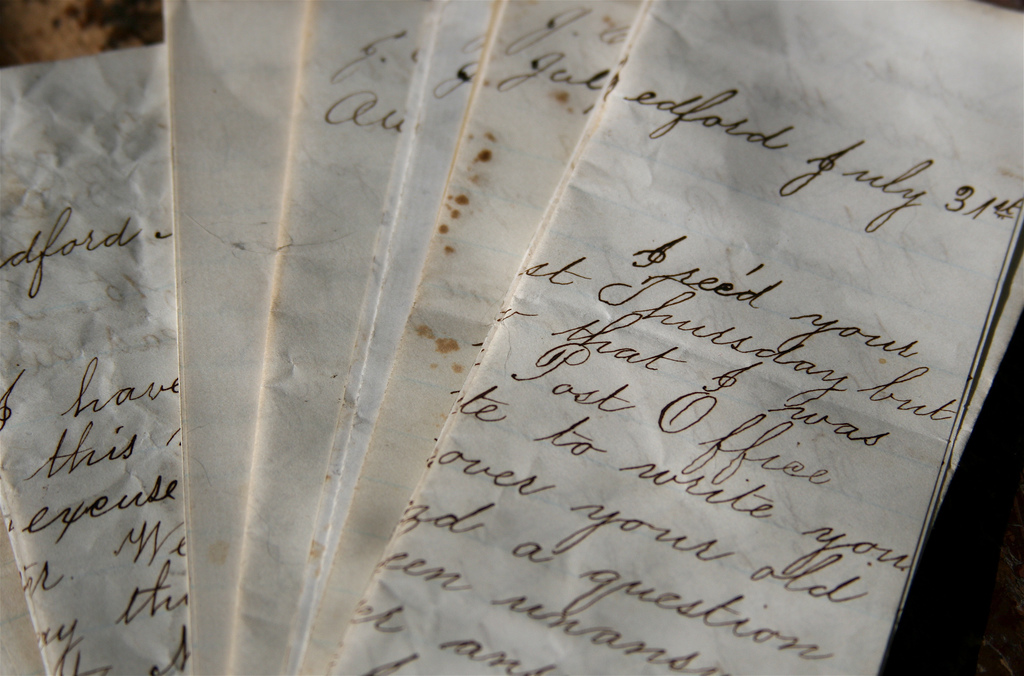
Katherine A. Powers reviews Letters of  Note: An Eclectic Collection of Correspondence Deserving of a Wider Audience, a volume that includes a wide-range of “personal letters, memos, telegrams, open letters written chiefly for political purposes, and a couple of form letters.” She notices that love and death stand out as themes in the first category:

Love letters, which I am guessing make up the majority of the personal letters written today (with letters of umbrage running second by a slim margin) are present, and they are, to say the least, fraught.

Emily Dickinson writes passionately to her sister-in-law, and a German woman in a mental hospital writes two words over and over to her husband: “Sweetheart, come.” Zelda Fitzgerald, after a blow-up with Scott, declares that she needs him so badly that she wouldn’t mind if he was “covered in sores like a leper.” Rebecca West, given the hook by that smug bounder H. G. Wells, combines love with acid: “Your spinsterishness,” she informs him, “makes you feel that a woman desperately and hopelessly in love with a man is an indecent spectacle and a reversal of the natural order of things.”

The selection shows again that absence strengthens love, and never more so when brought about by death. Heartfelt letters to dead lovers come from physicist Richard Feynman writing to his wife and Katharine Hepburn to Spencer Tracy. A pregnant sixteenth-century Korean widow implores her deceased husband to come to her in her dreams. In fact, death is all around us in this volume: other suicidal correspondents include a seventeenth-century Japanese woman writing to her slain samurai husband, saying she is going to kill herself to join him. Virginia Woolf writes to Leonard about how she can’t live with her madness, and a kamikaze pilot tells his two young children that he will be watching over them as a god and instructs his five-year-old son to “be an unbeatable person like your father and avenge my death.” Robert Falcon Scott, freezing and starving in the Antarctic, writes a farewell letter to his wife, and someone at the FBI (as it turns out) writes anonymously to Martin Luther King Jr., advising him to commit suicide.

Check out the book’s companion blog, Letters of Note, here.

(Photo by Liz West)

The Unfunny Fake News Racket

Emmett Rensin exposes it:

The Daily Currant is a fake-news site of a different stripe: one entirely devoid of jokes. Whether this humorlessness is intentional or notthe site’s founder contends his critics don’t have a sense of subtletythe site’s business model as an ad-driven clickbait-generator relies on it. When Currant stories go viral, it’s not because their satire contains essential truths, but rather because their satire is taken as truthand usually that “truth” is engineered to outrage a particular frequency of the political spectrum. As Slate’s Josh Voorhees wrote after Drudge fell for the Bloomberg story, “It’s a classic Currant con, one that relies on its mark wanting to believe a particular story is true.” …

The creators of these sites, when they can be identified at all, aren’t talking. With the exception of National Report, these sites don’t have mastheads. When they allow contact at all, it’s through blind submission formsnot always in Englishor generic email addresses. Most also use third-party services to mask the identity of the domain owner. Despite attempting to reach out to dozens of sites, I got only two replies. One was from Empire Sports News’s Aaron Smith, who said he was “possibly” willing to talk, but went silent at the first mention of ad revenue. Barkeley, of The Daily Currant, responded to my request for an interview with a brief email that read, “You’re more than welcome to do a takedown piece on our website. But you’ll have to do it without help. Good luck.” He ignored my follow-ups.

Daily Currant editor Daniel Barkeley writes in:

The passages you quoted seem to imply that we aren’t open with the media. That is 100% not true. I have done at least a dozen interviews with major news publications in the past few years. In this particular case, however, the journalist behaved in a manner I did not consider to be professional and wanted no part of the article.

It should be said that the Daily Currant has had some great parodies of Palin over the years – Dish links here and here.