NRO Veepstakes Picks

John O’Sullivan thinks Obama should pick Webb. My only worry with Webb is his very fraught past on women’s issues. I’m not sure it’s a good idea to beat a female candidate and pick a veep with this issue in his past:

On a related note, McCain is doing veep interviews this weekend. I’m not sure any of them are serious picks. Jindal is too young; Crist is too single; Romney is electoral poison.

Conservatives And The Wrong Problems

Ezra Klein:

The conservative movement has plenty of ideas for a certain universe of problems: Overly high taxes, say, or the need to respond to bluntly assert American power in response to foreign aggression. They have solutions for combating a culture that’s spun out of control and rebalancing a welfare state that’s too generous to minorities. They have solutions for restoring order when the law no longer contains the crime.

What they’re lacking, right now, are the appropriate problems. Because they don’t have solutions for 47 million Americans without health insurance. They don’t have solutions for a failing invasion that’s exposed American power as significantly more constrained that the world imagined it to be. They don’t have solutions for high gas prices, or a credit and mortgage crisis, or a dawning recognition that we’re ruining the only planet we have.

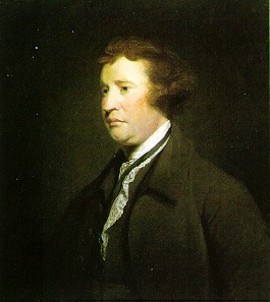
I think this gets things the wrong way round. In fact, the argumnent is framed in such a way as to violate conservatism’s core insight – and that was also the case with Packer’s article (and a lot of what my friends, David Brooks, Reihan Salam and Ross Douthat said in it). Conservatism is not, to my mind, about solving problems, which is why it Burke remains a very problematic governing philosophy for modern Americans.  It is about a modesty toward what problems government can ever solve. Its responses to emergent questions will not be an attempt to "solve" them, but to ameliorate them with a narrow set of tools. And the narrower the better.
To give one example: the gas and climate question. Conservatives will not deny the problem but nor will they impose an onerous or overly-ambitious solution. If the evidence emerges that our carbon dependence is both damaging our environment and empowering our enemies, then change is necessary. But an elaborate cap-and-trade government monitored and imposed scheme is not appealing; or a government-engineered switch to biofuels (unintended consequences). A clear, solid carbon tax that simply encourages individuals and companies to innovate and switch to renewable energy would be a conservative solution. Simple, transparent, and targeted correctly with a minimal growth in government power. If fiscal circumstances permit, you can balance such a tax hike by lowering income tax or providing safety-net subsidies to those most in need as a result. And a truly conservative president would not be afraid to say, in his or her best eat-your-vegetables tone, that this is the only workable solution and that the alternative is worse.

For conservatism to copy liberalism by always seeking "solutions" to problems and convincing "the right coalitions" of people to look to government for the satisfaction of their needs would be a mistake in my view. It may not be a mistake for Republicanism, an amorphous political entity that does what it wants in the pursuit of power. Maybe aiming for a "Sams Club" coalition or a Jewish-evangelical alliance or "durable majority" on Rove’s lines makes sense for a political party or movement trying out new policies for new clients. But conservatism as a pragmatic, minimalist sensibility toward governance, conservatism as a reflexive preference for freedom, conservatism as a school of thought defined by the view that solutions are often worse than the problems: not so much.

The Holy Guide To Sexual Positions

Tony Perrottet studies the Church’s ban on certain sexual positions during the middle ages. A guide to theocon heaven:

The handbooks listed recommended penance of bread, water, and abstinence for exotic congress. A consensus on the punishments included the following:

Dorsal sex (woman on top): three years
Lateral, seated, standing: 40 days
Coitus retro — rear entry: 40 days

Mutual masturbation: 30 days
Inter-femural sex — ejaculation between the legs: 40 days
Coitus in terga — anal sex: three years (with an adult); two years (with a boy); seven years (habitual); 10 years (with a cleric)

Theologians were divided on the punishment for coitus interruptus, the withdrawal method that frustrated procreation, arguing for a penance of between two and 10 years, while semenem in ore (semen in the mouth) could attract anywhere from three to 15 years.

McGurn’s Commencement Address

It’s been rightly praised here where I found it. This passage struck me:

First, who you marry is far more important than what career you choose. Over the course of a life that has taken me across three continents, I have met many accomplished men and women. And I have always been astonished by the number who give more thought to choosing the job they may hold for a couple of years than to choosing the spouse to whom they will pledge – before God and their friends – to remain with until death they do part.

I wonder if McGurn even thought for a second that for maybe 3 percent of his audience, "who you marry" is an illegal question. In Kansas, where he was speaking, three out of a hundred of the graduates he was addressing are barred from ever marrying the person they love by state constitutional amendment. And McGurn supported a president who wanted to make their potential marriages illegal not just in Kansas but in all fifty states in perpetuity as a matter of the federal constitution.

Actually, I don’t wonder. I don’t think such a thing even occurred to McGurn when he said it. Gay people are as invisible to him as they are to the president he served, a president who is supposed to serve all the people but couldn’t ever address a gay group or acknowledge gay people’s existence – unless explicitly asked – for almost eight years of his presidency.

But imagine if it meant you; that you are barred by law and by the state constitution from ever marrying the person you love. "Who you marry is far more important than what career you choose." How would that otherwise admirable piece of advice make you feel?

Hillary For SCOTUS??

A reader writes:

I come from the mainstream Republican Party and LOTS of people otherwise willing to sit on their hands or possibly vote for Obama would vote against him on that point alone.  If such an agreement were made public then it would become a rallying point.  He would lose a lot of his Republican support.

In the presidency she would be gone in 4 or 8 years, on the SC she would be round for 30 years and maybe have more long-lasting effect than as President.

Point taken. After this recent nuttiness, my airing of the idea of a fusion ticket no longer seems to me like even a sensible political concession. It would be regarded as appeasement by the Clintons. And God knows what they’d do if given a new lease on life.

The Florida Test

Noam writes:

A lot of people say that one benefit of the extended primary has been to force Obama to build organizations in states he might have neglected–or at least to build them earlier than he would have. I’ve always responded that Obama would have built organizations in key states whether or not he was contesting a primary there–that pretty much anything a contested primary forced him to do he could have done had he already wrapped up the nomination.

However you feel about this question, though, Florida should shed some light on it come November. I’d guess that the Obama organization there turns out to be just as strong as the Obama organization in, say, Ohio, which benefited from the contested primary. But we shall see.

Chickens, Roosts II

Because it appears we have to remind some people:

Hours after Senator Barack Obama of Illinois and former Senator John Edwards of North Carolina agreed to sign a loyalty pledge put forward by party officials in Iowa, New Hampshire, Nevada and South Carolina, Senator Hillary Rodham Clinton of New York followed suit. The decision seemed to dash any hopes of Mrs. Clinton relying on a strong showing in Florida as a springboard to the nomination.

“We believe Iowa, New Hampshire, Nevada and South Carolina play a unique and special role in the nominating process,” Patti Solis Doyle, the Clinton campaign manager, said in a statement.

The pledge sought to preserve the status of traditional early-voting states and bring order to an unwieldy series of primaries that threatened to accelerate the selection process. It was devised to keep candidates from campaigning in Florida, where the primary is set for Jan. 29, and Michigan, which is trying to move its contest to Jan. 15.