A reader writes:
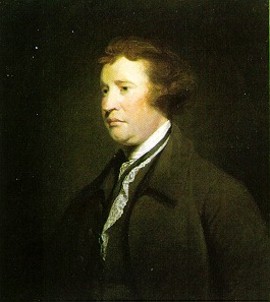
I have been giving some thought to the post on McCain and Burke. I recently read "The Impeachment of Warren Hastings," by Peter Marshall, in which Burke played the lead role and which consumed about 8 years of his political life. Hastings’ offenses, according to Burke, were that he engaged in unjustified war against neighboring 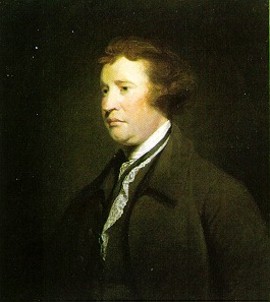 territories in India and that there was corruption in the East India Company. There were others, but these were the most serious. This raises interesting questions for those who analyze the Bush administration using Burke as a frame of reference. Certainly the Iraq war could be analogous to the situation Burke wanted to try Hastings for (i.e. an unjustified war of aggression.) And although it does not appear that Bush was personally engaged in any corruption, the favoritism showed to Cheney’s former company can be seen as analogous to the practices of the East India Company in the 18th century, updated to account for more stringent standards of the 21st. The differences between the two situations, politically, was that Burke was a member of the opposition at the time of Hasting’s impeachment and trial. Presumably, had he belonged to the party in power at the time, there would have been little incentive for him to undertake this long, arduous and ultimately politically damaging process. Perhaps more importantly, though, the lengthy and ultimately unsuccessful (from Burke’s point of view) trial of Hastings brought discredit upon impeachment as a remedy for political crimes. The British largely abandoned it in the 19th century.
So, one can ask, how would Burke approach the Bush administration’s war in Iraq?
Would he seek impeachment? Or would he look to alternative ways of addressing the issues raised by the war? It seems to me that, chastened by his experience with Hastings, he probably would be seeking an alternative way of addressing these issues.
According to Marshall, what Burke was confronting, in so doggedly pursuing Hastings, was the need to respect established institutions. He was suspicious of radical departures from tradition, whether those were the institutions of 18th century France being threatened by radicals there, or those of 18th century India being threatened by the East India Company.
The best case for opposition to the war in Iraq from a Burkean point of view, then, is to see the policies of the Bush administration as an attack on the constitution’s fundamental admonition to make sure power is divided among the branches so as to avoid its concentration in too few hands. The Bushies are surely radical in this sense and I would hope that Burke, were he a member of Congress steeped in the traditions of the Constitution, approach it much as Robert Byrd did in the lead up to the war and thereafter.
My own disdain at his administration’s detention, interrogation policies and Bush’s view of executive power is rooted, I hope, in a Burkean defense of American tradition and constitutionalism. McCain in this sense is much more Burkean than Cheney. But less Burkean than, er, Burke.