Raw Fish And Red Tape

by Tracy R. Walsh

Eveline Chao notes that health inspectors in major cities tend to come down hardest on ethnic eateries. For example, in New York City:

Chinatown’s 293 restaurants paid $600,000 in inspection-related fines from July 2012 to March 2013, versus $30.3 million paid citywide – a disproportionately high amount for such a small community, according to Rada Tarnovsky the president of Letter Grade Consulting (LGC), a company that helps restaurants navigate the grading scheme. … Chinatown is not the only community disproportionately affected by the grading system. A Huffington Post analysis found that the percentage of Chinese, Indian, Korean, Latin American, and African restaurants with grades below A hovered around the 30s. Worse, 54 percent of Pakistani restaurants and 58 percent of Bangladeshi restaurants scored as such. (It’s worth noting that Department of Health’s online food protection course is available only in English, Spanish, and Chinese.)

In addition to language barriers, Chao sees at root “a larger clash between tradition and bureaucracy”: Continue reading Raw Fish And Red Tape

Reading Down South

by Jessie Roberts

Ed Winstead contemplates what makes the fiction of the American South so distinctive:

In 2009 The Oxford American polled 134 Southern writers and academics and put together a list of the greatest Southern novels of all time based on their responses. All save one, The Adventures of Huckleberry Finn, were published between 1929 and 1960. What we think of when we think of “Southern fiction” exists now almost entirely within the boundaries of the two generations of writers that occupied that space. Asked to name great American authors, we’ll give answers that span time from Hawthorne and Melville to Whitman to DeLillo. Ask for great Southern ones and you’ll more than likely get a name from the Southern Renaissance: William Faulkner, Harper Lee, Flannery O’Connor, Walker Percy, Eudora Welty, Thomas Wolfe—all of them sandwiched into the same couple of post-Agrarian decades. …

“Southern,” as a descriptor of literature, is immediately familiar, possessed of a thrilling, evocative, almost ontological power.

It is a primary descriptor, and alone among American literary geographies in that respect. Faulkner’s work is essentially “Southern” in the same way that Thomas Pynchon’s is essentially “postmodern,” but not, you’ll note, “Northeastern.” To displace Faulkner from his South would be to remove an essential quality; he would functionally cease to exist in a recognizable way.

It applies to the rest of the list, too (with O’Connor the possible exception, being inoculated somewhat by her Catholicism). It is impossible to imagine these writers divorced from the South. This is unusual, and a product of the unusual circumstances that gave rise to them. Faulkner, Lee, Percy, and Welty were no more Southern than Edgar Allen Poe or Sidney Lanier or Kate Chopin, and yet their writing, in the context of the South at that time, definitively was. There’s a universal appeal to their work, to be certain, but it’s also very much a regional literature, one grappling with a very specific set of circumstances in a fixed time, and correspondingly, one with very specific interests: the wearing away of the old Southern social structures, the economic uncertainty inherent in family farming, and overt, systematized racism (which, while undoubtedly still present in the South today, is very much changed from what it was).

The Daring Book For Everyone

by Tracy R. Walsh

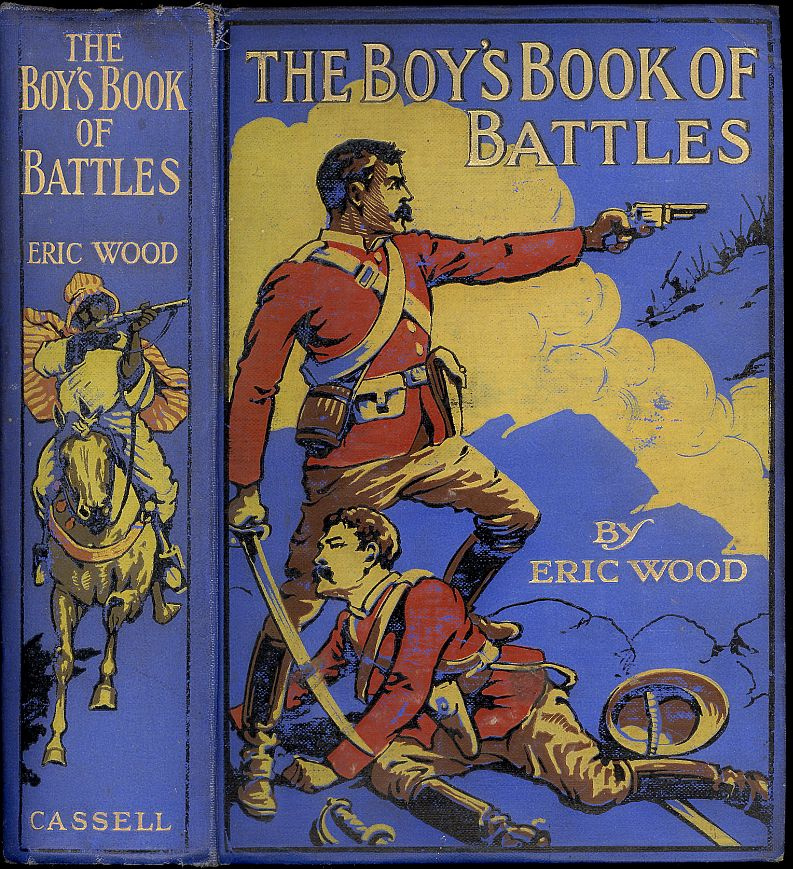
Hector Tobar reports that “a campaign in the United Kingdom that seeks to pressure publishers to stop titling and labeling children’s books as being ‘for boys’ and ‘for girls’ is quickly gaining momentum”:

“We’re asking children’s publishers to take the ‘Boys’ and ‘Girls’ labels off books and 9265589249_9ff49ca3ec_b allow children to choose freely what kinds of stories and activity books interest them,” says the statement by the Let Books Be Books campaign. Such labels, the organizers of the campaign say, “send out very limiting messages to children about what kinds of things are appropriate for girls or for boys.”

On Sunday, the campaign got an important boost when the newspaper the Independent announced it would no longer review such books, or even blog about them. … The Guardian reports that one of Britain’s biggest bookstore chains, Waterstones, as well as U.K. “Children’s Laureate” Malorie Blackman, and U.K. Poet Laureate Carol Ann Duffy have also announced their support.

Independent literary editor Katy Guest explains why she supports the campaign:

Splitting children’s books strictly along gender lines is not even good publishing. Just like other successful children’s books, The Hunger Games was not aimed at girls or boys; like JK Rowling, Roald Dahl, Robert Muchamore and others, Collins just wrote great stories, and readers bought them in their millions. Now, Dahl’s Matilda is published with a pink cover, and I have heard one bookseller report seeing a mother snatching a copy from her small son’s hands saying “That’s for girls” as she replaced it on the shelf. … What we are doing by pigeon-holing children is badly letting them down. And books, above all things, should be available to any child who is interested in them.

Happily, as the literary editor of The Independent on Sunday, there is something that I can do about this. So I promise now that the newspaper and this website will not be reviewing any book which is explicitly aimed at just girls, or just boys.

But some remain skeptical:

Catherine Pearlman, a social worker who works as an assistant professor at the College of New Rochelle and writes the periodic “Family Coach” column for Speakeasy, said via email that there is a “gender divide” across many children’s items like books, toys and clothes. But, Pearlman said, “I don’t think simply deciding not to review any book with a gender line solves the problem.”

“Maybe it would be more powerful to review a book and point out how much more interesting it could have been if marketed to both boys and girls,” Pearlman said. “Also just shunning ‘princess for girls’ books doesn’t eliminate the fact that so many girls love those stories. If they connect to reading through those stories what a shame to try to take that away.”

(Photo by Flickr user Book Life)

Feel This Book

by Jessie Roberts

Researchers at MIT have developed a wearable reading device called Sensory Fiction:

Sensory Fiction was inspired by two sci-fi visions of what media in the future will look like. The first is Neil Stephenson’s steampunk classic, The Diamond Age, a novel that features interactive books with built in AIs. (The book that is often seen as the fictional inspiration for many of today’s technologies, like the iPad and Siri.) The other is The Girl Who Was Plugged In, a 1974 novella by James Tiptree, Jr. about a future in which the desperate are allowed to pay to take over the bodies of attractive human vessels.

“You feel this story in your gut,” Hope says about The Girl Who Was Plugged In. “It is an amazing example of the power of fiction to make us feel and empathize with a protagonist. Because our imaginations and emotions were so strongly moved by this story, we wondered how we could heighten the experience.”

Kathleen Volk Miller shudders:

As the protagonist’s emotional or physical state changes, so does the reader’s, via ambient light, slight vibrations, and, get this: localized temperature fluctuations and constricting airbags that actually change the reader’s heart rate. The emotional response I’m getting right now, without wearing the device, is: fear. The device has airbags?

Let’s discuss the obvious. For instance: if a book is well-written, we don’t need a “shiver simulator.” I mean, no one told me to be sad when Anna threw herself in front of a train. Can a device make my heart feel scooped out like so many books have through the years (most recently, Jesmyn Ward’s Men We Reaped)? … I am no Luddite, but I see the very reason we go to books —to get lost in an different world, to empathize with an other, to escape — might get lost if our emotions and even our physical reactions are forced. Rather than transport us to another world, these reading augmenters force us into someone else’s perception of another world.

In January, Alison Flood remarked on how the concept resonated with other writers:

The Arthur C Clarke award-winning science fiction novelist Chris Beckett wrote about a similar invention in his novel Marcher, although his “sensory” experience comes in the form of a video game:

In the spare bedroom on the first floor a group of young men were gathered around a TV. They were all plugged into a device called a dreamer, very popular in that world, though unknown in this, and were playing the classic dreamer game called Ripper Killer. They had on 3D goggles and wore things called moodpads on their heads which gave low-voltage jolts to the hypothalamus in order to induce elation, longing or (as was famously the case with Ripper Killer) terror.

Adam Roberts, another prize-winning science fiction writer, found the idea of “sensory” fiction “amazing”, but also “infantalising, like reverting to those sorts of books we buy for toddlers that have buttons in them to generate relevant sound-effects”.

The View From Your Window Contest

vfyw_3-22

You have until noon on Tuesday to guess it. City and/or state first, then country. Please put the location in the subject heading, along with any description within the email. If no one guesses the exact location, proximity counts.  Be sure to email entries to contest@andrewsullivan.com. Winner gets a free The View From Your Window book or two free gift subscriptions to the Dish. Have at it.

The Conscience Of Carnivores

by Jessie Roberts

James McWilliams expands on the ethical conundrum raised by Bob Comis, a pig farmer who believes that “[w]hat I do is wrong, in spite of its acceptance by nearly 95 percent of the American population”:

Comis’s call for a more philosophical approach to animal agriculture is neither an arbitrary nor an academic appeal to an abstract notion of animal rights. Instead, it’s grounded in the humble workings of daily life, especially the humble, if complex, workings that bring to our plate animal protein—which has been shown to be not only unnecessary but often harmful to human health. A secular and religious consensus exists that living an ethical life means accepting that my own interests are no more important than another’s simply because they are mine. Basic decency, not to mention social cohesion, requires us to concede that like interests deserve equal consideration. If we have an interest in anything, it is in avoiding unnecessary pain. Thus, even though a farm animal’s experience of suffering might be different from a human’s experience of suffering, that suffering requires that we consider the animal’s interest in not being raised and eaten much as we would consider our own interest in not being raised and eaten. Once we do that, we would have to demonstrate, in order to justifiably eat a farm animal, that some weighty competing moral consideration was at stake. The succulence of pancetta, unfortunately, won’t cut it.

Previous Dish on the processing of livestock here, here, and here.

A Poem For Saturday

by Alice Quinn

?????????

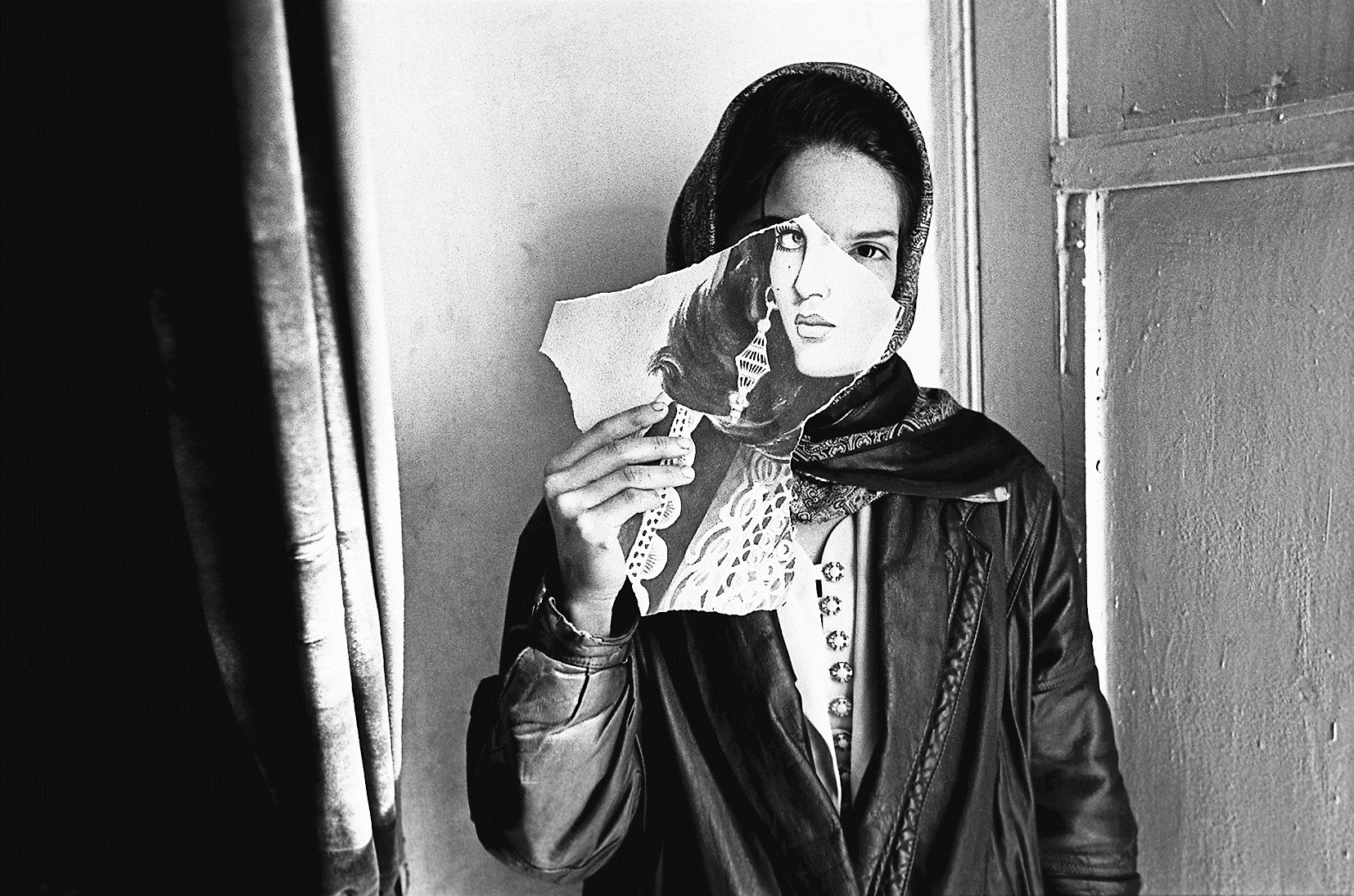
The poet and journalist Eliza Griswold is the editor and translator of the forthcoming volume I Am the Beggar of the World: Landays from Contemporary Afghanistan, with photographs by Seamus Murphy, to be published in April by Farrar, Straus & Giroux.

In her introduction to the collection, Griswold writes, “In Afghan culture, poetry is revered…. A folk couplet—a landay—[is] an oral and often anonymous scrap of song created by and for mostly illiterate people: the more than twenty million Pashtun women who span the border between Afghanistan and Pakistan. . . . Sometimes landays rhyme, but more often not. In Pashto, they lilt internally from word to word in a kind of two-line lullaby that belies the sharpness of their content, which is distinctive not only for its beauty, bawdiness, and wit, but also for its piercing ability to articulate a common truth about love, grief, separation, homeland, and war.”

Today and over the weekend, we’ll post sets of these landays, which Edward Hirsch, award-winning poet and President of the Guggenheim Foundation, praises for the way in which they enlarge “our sense of the work that poetry does in the world.”

On Thursday, April 3rd at 7PM, Eliza will be appearing at McNally-Jackson Books at 52 Prince Street in New York in conversation with the New York Times’ writer Elizabeth Rubin and Sonia Nassery Cole, and I will be on hand to introduce the event. Here’s the first selection from the book:

When sisters sit together, they always praise their brothers.
When brothers sit together, they sell their sisters to others.

*

My body belongs to me;
to others its mastery.

*

Don’t shout, my love, my father isn’t giving me to you.
Don’t shame me in the busy street by crying out, “I’ll die for you.”

(From I Am the Beggar of the World: Landays from Contemporary Afghanistan, translated and presented by Eliza Griswold, photographs by Seamus Murphy, to be published in April 2014 by Farrar, Straus and Giroux. LLC. Text copyright © 2014 by Eliza Griswold. Photographs copyright © 2014 by Seamus Murphy. All rights reserved.)

The New Longform

by Jessie Roberts

Last week, Teju Cole published a 4,000-word non-fiction essay on immigration, A Piece Of The Wall, entirely on Twitter. In an interview with BuzzFeed, he talked about why he chose to tell the story in tweets:

What made you decide that this specific essay would be best presented in this medium?

Teju Cole: I’ll answer that by saying I didn’t think this essay could be “best” presented in this medium, but I asked the opposite question:

Why does a serious longform investigative piece have to be in print in a major magazine? In various parts of West Africa, there are different iterations of the idea that “white people like paper so much that they even wipe their butts with it.” You know, you spend your life staring at paper, you spend paper money, proof of ownership of everything is on paper, you fill your house with paper, and when you die, the announcement is in the paper.

I love paper too. I love print. But maybe not everything has to be on it. And in the case of Twitter (and, before that, blogging), I just feel so strongly that there’s an audience here, and audience that deserves to be treated with the same seriousness as the paper crowd. …

I’m not getting my hopes up, but the point of writing about these things, and hoping they reach a big audience, has nothing to do with “innovation” or with “writing.” It’s about the hope that more and more people will have their conscience moved about the plight of other human beings. In the case of drones, for example, I think that all the writing and sorrow about it has led to a scaling back of operations: It continues, it’s still awful, but the rate has been scaled back, and this has been in specific response to public criticism. I continue to believe the emperor has a soul.

Earlier this month, Cole assessed (NYT) how Twitter has affected his writing, noting that “being active on Twitter … means that the literary part of my brain — the part that tries to make good sentences — is engaged all the time. My memory is worse than it was a few years ago, but I hope that my ability to write a good sentence has improved.” Follow Cole’s latest tweets here.