Kenya Diary

The Economist has a correspondent writing dispatches from Kenya. What’s happening there – the unraveling of a successful African country into a tribal stew – is a story somewhat eclipsed by the Middle East and the election. But the parallels to Iraq are striking. An excerpt:

Alan Ogot, one of Kenya’s leading historians, is the chancellor of Moi University in Eldoret…The biggest threat to the country, he says, will not come from Luo secession, or even from other tribes’ reprisals, but from crime. In Luoland over half the population is under 18 years old. Unemployment in Kisumu is already 70%. Without jobs, political lawlessness will harden into organised criminality.

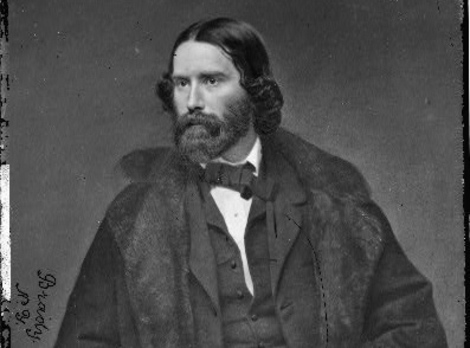
The History Of The Beard

Lowell

From Charles Dawson Shanley’s 1867 Atlantic article about hair:

At various periods beards were regulated by law. In 1533, Francis I. issued an edict ordaining that Bohemians, Egyptians, and other persons of that sort should be arrested, shaved, and committed to the galleys. It is said that the Parliament of Toulouse forbade the wearing of beards, and that, when a certain gentleman, furnished with a very long one, brought some claims before that body, he was told that they could not be entertained until he had shaven his face clean. Indeed, so much controversy took place at this time regarding the beard, that the learned doctor Gentien Hervet wrote a discourse upon the subject, which was printed at Orleans in 1536. He divided his discourse into three sections. The first maintained that all men ought to allow their beards to grow; the second, that all men ought to shave their beards off; and the third, that every man should do just as he pleases about his beard.

Twenty years later, beards were again much in vogue. They were worn in the swallow-tail cut now, and there were fan-tail beards to be seen also, as well as many other strange and grotesque devices in the arrangement of the facial hair. A great variety of unguents for the beard were also brought into use at this time, all of different colors and perfumes. The beard, at this period, was generally made up at night, and placed in a bag to prevent it from getting out of form. It became the proper thing now, in France, to carry a small brush for the purpose of arranging the mustache, an office which ladies would sometimes perform for their beaux, and great value was attached to a mustache that had been put in form for the wearer by some fair hand.

Pride

A twenty-one year-old reader writes:

There’s one salient reason why people of my age are supporting Obama and that’s because we feel that Obama will finally show us what it means to be proud of our president.

I read more than I should about politics and US history and am always confused as to how Americans can love their president so. Intellectually I understand why Americans love(d) Lincoln and the Roosevelts but I never felt why they did.

Andrew, people my age are too young to remember Bill Clinton. All we have is George W. Bush. The office of the President to us is a mockery. We don’t link President Bush to concepts such as leader, we link it to ignorance and idiocy. Most people my age have never felt proud of our President. We grew up on the Daily Show, we only know how to make fun of him and mock him.

I attended an Obama rally a few days ago and was amazed at how filled up with emotion I was. Halfway through his speech, other 21 year olds just like that filled the Hall were screaming their heads off, waving banners, and grinning. Everyone was giddy, hell even I was giddy. I was smiling and chanting along to "Yes We Can." I didn’t know what that feeling was because I had never felt it. But then I realized it. It was pride. I was proud of Obama.

I know you’ve felt proud of Reagan and others have felt proud of Bill Clinton. I can’t wait to actually know what it feels like to be proud of my President and not embarrassed by him. That’s why at least my generation is turning out in droves to make Obama president. We’ve finally got a taste of what it feels like to be proud of our President and we’re not giving that feeling up.

Stress Positions

A reader writes:

The first paragraph of the Wikipedia entry on Strappado:

Strappado is a form of torture in which a victim is suspended in the air by means of a rope attached to his hands which are tied behind his back, in which the arms are most likely dislocated. Weights may be added to the body. Other names for strappado include reverse hanging and Palestinian hanging. It is best known for its use in the Medieval Inquisition and has since been used by the governments of Turkey, Nazi Germany and the United States of America.

Granted Wikipedia is subject to all manner of mischief and manipulation but I believe that most Americans would be sickened, as I am, to see our country listed there.