What The Hell Just Happened In Sydney?

by Dish Staff

Monday morning (Sunday night in the US), a man wielding a gun and a black flag similar to that used by ISIS walked into the Lindt Chocolat Café in the Australian city’s central business district and proceeded to hold the customers and staff hostage for 16 hours before police stormed the shop around 2 am Tuesday, ending the standoff. According to the Sydney Morning Herald’s ongoing live coverage, the gunman and at least one other person are dead, with several others injured.

The gunman, an Iranian immigrant and self-styled “cleric” by the name of Man Haron Monis, tried to portray himself as an agent of ISIS but came off as more of a delusional, attention-seeking psychopath (though to be fair, those often go hand in hand):

Monis, also known as Sheik Haron, was convicted of sending offensive letters to the families of Australian soldiers who died serving in Afghanistan. He is out on bail as an alleged accessory to the murder of his ex-wife, as well as a string of 40 indecent and sexual-assault charges in connection to his time as a self-proclaimed spiritual leader. Monis used a YouTube account to post a series of three videos of hostages reciting his demands, which included the delivery of the black flag of ISIS. He asked “to please broadcast on all media that this is an attack on Australia by the Islamic State,” and to speak to Prime Minister Tony Abbott. The demands would be met with the release of more hostages, according to the videos. YouTube has since removed the videos from the account.

Juan Cole wishes the press would stop playing into the hands of such criminals by hyping them as terrorists, implicitly tarring innocent Muslims in the process:

Sydney had another hostage crisis, in 1984, in a bank. A formerly wealthy (secular) Turkish-Australian became unhinged at losing his fortune. Today’s incident is not more important than that one, which few now remember. Both of these hostage-takers were common criminals. Neither is a “terrorist.” Today’s Sydney hostage-taker is not representative of a new activity. He isn’t important, and ordering a black flag won’t make him so. The only one who can bestow recognition on this criminal is the mass media and the press. They shouldn’t do it. … Criminals and gangsters should not be fetishized as “terrorists.” It is just a way for them to inflate their egos.

Peter Hartcher excoriates the Australian media for doing just that, by rushing “to cheerlead the hype and to provide a ready platform to any politician who wanted to insert himself into the event”:

Terrorism is a tool of the weak against the strong. It is designed to turn the enemy’s strength against itself. One man showed how to get extraordinary attention and inflict serious disruption using only a gun and a Muslim prayer banner. Successful terrorism is so rare in Australia that the overreaction is perhaps understandable. The police response seemed exactly right. But our political and media systems need to get better at measured reaction.

Abbott said on Monday evening that the incident had been “profoundly shocking”. He added: “I think I can also commend the people of Sydney for the calmness with which they have reacted”. With no help from the politicians.

By comparison, this response from Sydney residents was spot-on:

A young Sydney woman, Rachael Jacobs, appears to have inspired the campaign after posting a moving Facebook status about her encounter with a Muslim woman earlier in the day. “…and the (presumably) Muslim woman sitting next to me on the train silently removes her hijab,” Ms Jacobs wrote. “I ran after her at the train station. I said ‘put it back on. I’ll walk with u’. She started to cry and hugged me for about a minute – then walked off alone.” The inspiring status quickly circulated on social media before inspiring the #illridewithyou hashtag.

Uber, meanwhile, came under fire yet again for turning on surge pricing during the crisis, charging users in downtown Sydney a minimum of $100 for a ride (they later backtracked, offering refunds to customers who had paid the extortionate rates and making all rides in the area free). That sounds pretty despicable, but Danny Vinik offers a qualified defense of the rideshare company:

I’m one of the few people here who doesn’t think Uber is actually doing anything wrong. A terrorist attack will understandably cause many people to try to get home at the same time and make many drivers fearful to go on the road. Raising rates will deter some people from using the service while incentivizing more drivers to get on the road. That’s simple supply and demand. Uber almost certainly earns higher profits as well.

Critics are right that this isn’t a fair systemthe rich will be able to get home easily in the case of a terrorist attack and the poor won’t. But you also have to look at the alternative. If rates stayed the same, fewer drivers would go on the road and wait times would increase. It would be harder for everyone to get home. People will differ on which they value more: economic efficiency or fairness. But there is an economic rationale behind Uber’s moves.

Update from a reader:

That’s some unqualified horseshit; Uber isn’t up front about it’s price-gouging. Unsurprisingly, it’s pretty hard to get an accurate estimate of just how much you’re getting screwed by them until after the fact. Passengers generally don’t realize they’ve had their pockets picked until well after they’ve arrived at their destination or checked their credit-card statements. The driver doesn’t tell you beforehand that you’ll be charged 3x, 4x, or 50x the standard rate. Most people treat hailing an Uber as one would hail a cab. Except, unlike with a normal cab, there’s a hidden danger of spending triple-digits on a short ride and not even knowing it, since no physical currency is handed over.

Another counters that reader:

That’s simply not true. Uber tells you when surge pricing is in effect. If you don’t believe me, here’s a photo of the type of message Uber provides its customers when surge pricing is in effect.

Another backs him up:

On two counts your “reader” is grossly misinformed. I suspect willfully so – for people of a certain politics its pretty fun to hate on Uber. But Uber actually does notify users when price surging is in effect. The app uses a surge confirmation screen. The user has to physically type in the surge pricing in effect. (This policy is on Uber’s page.) Pretty hard for people to claim afterwards “they didn’t know”.

And Uber also makes it easy to get an estimate of the fare you’re getting. You see when you get ready to order a car, there is a screen with a button called “Fare Estimate.” And yes, this is also clearly stated on Uber’s page.) After using Uber for several years, I’ve never had a fare be unreasonably outside the fare estimate. It’s probably about as reliable as a yellow cab driver estimating what my fare will be.

I’d give your reader a pass on surge pricing if he’s never used Uber in a New York snowstorm. But when he/she claims Uber doesnt make it easy to get a fare estimate? I’m thinking they’ve never used Uber in their life.

That Other Rape Crisis

by Dish Staff

Rape on college campuses is undoubtedly a real and serious problem, but as Michael Brendan Dougherty reminds us, it pales in comparison to rape in prisons, where victims get no publicity, no sympathy, and no justice. Hell, we even joke about it, even in children’s cartoons (as seen above):

In prison, men may become the victim of repeated gang rapes. Prisoners can be locked into cells with the men who prey on them. Some live under the constant threat of sexual assault for decades. Their efforts to report their rape are ignored or even punished, both by prison personnel and an inmate culture that destroys “snitches.” The threat of rape is so pervasive it causes some inmates to “consent” to sex with certain prisoners or officers as a way of avoiding rape by others.

Acceptance of prison rape is a stinking corruption. No conception of justice can include plunging criminals into an anarchic world of sexual terror. And obviously it thwarts any possibility of a rehabilitative justice that aims to restore criminals to lawful society. Inmates are not improved or better integrated into society through physical and psychological torture. Prison rape also vitiates any sense of retributive justice, since rape is not a proper punishment for a crime. Allowing prison rape is just a vindictive horror, and when accepted under the name of punishment makes criminals the victims of justice.

Sadly, some Senators are looking to defang the Prison Rape Elimination Act:

PREA required states to certify by May of 2014 that they were in compliance with the standards, or promise that they would eventually comply. States that refuse to do either can be penalized with a loss of five percent of their federal funding for prison-related purposes. But a proposal that originated in the Senate Judiciary Committee would almost completely eliminate financial penalties for states that defy the rape prevention law. The proposal, written by Senator John Cornyn, Republican of Texas — the most vocally defiant state — was agreed on by the committee in an after-midnight session in September and was attached to an unrelated bill.

The bill carrying the PREA amendment failed to pass, but members of the National Prison Rape Elimination Commission, a federal body that spent years developing the PREA standards, say efforts are already underway to reintroduce the amendment during the next legislative session.

A reader’s story of prison rape posted here. Update from another:

Thanks for posting that piece on prison rape.  I thought you might be interested in the following scene from Rectify, a TV drama about a death row prisoner who is exonerated after nearly two decades in jail.  It features the main character, Daniel, talking to his stepbrother, Ted, about his experience of being raped in prison.  This scene conveys a sense of visceral agony that reports and columns cannot and it helped me realize the extent to which prison rape is a silent crisis:

For a riveting memoir on the subject, check out Fish by T.J. Parsell, who was gang-raped upon entering prison at the age of 17.

Can Southern Democrats Still Compete? Ctd

Sean Trende weighs in on the question:

There are no permanent majorities in politics.  An unpopular Republican president would move the needle. A Democratic fundraising base that chose not to go nuclear on a Democratic candidate who opposed Obamacare or the stimulus would have done it. A more culturally “red” Democratic nominee would help.

The voters who elected Phil Bredesen governor of Tennessee by 40 points are largely still around, as are the people who elected Mike Beebe governor of Arkansas by 30 points in 2010 and 14 points in 2006. The same goes for the folks who sent Landrieu and Hagan back to the Senate in 2008, or Blanche Lincoln in 2004. The people who elected a swath of moderate-to-conservative Democrats in 2006 and 2008 are still there.

The party just has to try to appeal to them, or at least give more latitude to its candidates to appeal to them, as Rahm Emanuel did in 2006.

The bad news for Southern Democrats is that Democrats aren’t likely to do this anytime soon, and if they did, they’d pay a price. Politics, again, is about tradeoffs, and by appealing to a more downscale coalition, Democrats would sacrifice enthusiasm gains among their new coalition. As I’ve said before, if Hillary Clinton had been the nominee in 2008, Mitch McConnell might not have been a senator in 2009, but Gordon Smith might have survived in Oregon. National Democrats don’t seem inclined to make this tradeoff anytime soon (plus, the wipeouts have left Democrats without much of a bench in these states), and the zeitgeist seems to be against it.

The South isn’t a lost cause for Democrats if they don’t want it to be one.  Their problem is that the national party doesn’t seem to care right now if it is one, and there are clear electoral benefits from focusing elsewhere.

But Tomasky continues to argue that the South is a lost cause:

[T]he way the Democratic Party can best help the poor people of Mississippi is to control Congress and the White House. So the point is to win those. With respect to the White House, no one can guarantee anything of course, but at least the Democrats do have these days a built-in Electoral College advantage.

As for congressional majorities, I say it’s far more likely they’ll win them in the North and on the West coast, and to some extent in the Midwest and Rocky Mountain states, than via the South. And if they ever get that majority, they will (one hopes) pass progressive laws, and those laws will benefit the people who live in the South.

So I’m not for abandoning the people of the South. I’m just saying the best way to help them is by building a congressional majority in the quickest and easiest way possible, and that, alas, is not through the South.

Neal Dewing disagrees with Tomasky:

Naturally, in light of what I know to be true about Southern people, Tomasky’s article struck me as peevish and small-minded. Yet beyond the offense to honor he intended with his unfair description of Dixie, Tomasky seemed to be advising Democrats to abandon all strategic electoral sense along with the South. Far be it from me to offer aid and succor to my ideological opposites, but this idea just seems too ill-conceived to be allowed to live. The following may be a reductive assertion, and I invite any professional political operatives to correct my ignorance, but:

1. If you allow your opponent to march unopposed to victory in one area,

2. Then he is free to commit the resources he might have spent there to other areas, where he has a real fight on his hands,

3. Therefore, it is unwise to simply abandon the field.

Kilgore’s take:

Yes, the realignment of southern rural and small-town whites is now virtually complete. The possibility of a “replacement” Democratic coalition depends on how many retirees, secular suburbanites, transplants, knowledge workers, and of course minority voters are in any one place, and sometimes it also depends on real-life events such as GOP misgovernment. That’s another reason I see no need for Democrats to “Dump Dixie,” though they’d be foolish to consider most of it anything other than missionary territory at the moment.

Update from a reader:

Tomasky is right. The South is a lost cause for Democrats for the foreseeable future. Whether or not Johnson actually made his famous quote after signing the Civil Rights Act in 1964, the prediction of a mass migration in the South from D to R was uncannily accurate. In fact, it was probably an understatement.

Having lived in the South for much of my life, I’ve witnessed the transformation, which I attribute to the entire civil rights movement from Brown v Board of Education to Engel and Abington to the Civil Rights Act to school busing to Roe v Wade (yes, I think that fits within civil rights) to more recent developments like gay marriage. Sure, it took a couple of generations, but that has more to do with the habits of the American voter than anything else. All those older voters who voted down party lines for Democrats and would never dream of voting Republican (like my grandmother) had to die off while the generations that followed began Republican and will probably be so for life. It took 100 years or so after the Civil War for the South to start moving towards the Republicans, and I expect the current party affiliation of the South will outlive all of us. Bill Clinton blurred the lines a little bit in the ’90s, but Obama has successfully righted the narrative just by his existence.

So, why did civil rights prompt such a transformation? Well, racism. But that’s a little too easy. More broadly, fear. Economic insecurity. Fear of “The Other.” Fear of change. Fear of losing what they see as their God given prominence. That’s why the typical Southern voter, now a Republican, embraces the following sentiments:

1. Public education is bad. It’s poor quality, it’s dangerous for my children to attend, and it is a front for Godless liberal indoctrination. How dare they call the extermination of Native Americans genocide. Why are they talking about slavery so much, it was like 200 years ago? Why are they talking about natural selection and not creation? I want charter schools and school choice.

2. Christianity is the foundation of America and should be more heavily codified in schools and government, but liberals and activist judges have undermined Christianity’s rightful place as the national religion.

3. Science is its own religion. Evolution and global warming are hoaxes.

4. Gay marriage threatens civil society and is only talked about because the gay agenda is so good at propaganda and is supported by the liberals who control the federal government.

5. The Feds want to take away guns in order to exert further control over the population.

6. Obama hates America and white people, so it’s okay to hate him without being able to name a single thing Obama has done to justify that hatred.

7. I’m not racist. I have a black friend or two. I just think black people are lazy and entitled, and they’re just not generally as smart as other races, but the government gives them advantages over me out of guilt and to buy their votes. Black people and self loathing white guilt liberals are the real racists.

8. I’m fine with disparities in capital punishment, race based disenfranchisement, and police shootings of unarmed civilians. Those only happen to “The Other” anyway, and they probably deserve it. People should stop whining about the little things.

9. Obamacare is a government takeover of healthcare and a giveaway to minorities.

10. The Democrats are responsible for all of the above.

Sounds silly, right? Overstated? It isn’t. They’re deadly serious. I know many otherwise reasonable people who believe the above. Fear does that to people, even if that fear is unfounded. That’s why Tomasky is right, at least until demographics overwhelm the South later this century.

The UVA Story Unravels, Ctd

Mollie Hemingway reacts to the revelations we noted earlier today:

Yes, the latest shocking revelations about Sabrina Rubin Erdely and Rolling Stone’s journalism are stunning. They really, really messed up. Even more than we previously realized. They should receive every bit of oppobrium coming their way.

Margaret Hartmann takes stock of everything we know about the unraveling mess so far. Robby Soave keeps his focus on the real offenders – Rolling Stone, not Jackie:

The friends quoted in the latest article still say Jackie’s changed behavior that first semester is evidence of some trauma she sustained. That may be true, although it is difficult to say what, exactly, that might have entailed. There is not a shred of evidence to suggest such a trauma bears any resemblance to the incredible story told by Rolling Stone.

Lest anyone think that this debacle is solely the fault of someone who falsely claimed rape, keep in mind that these fraudulent charges were put forth by a national magazine that made no effort to verify them, and ignored every red flag in its haste to publish the story of the century—even when Jackie refused to name her attackers and attempted to withdraw her story. Whatever the truth is—whatever the excellent reporters at WaPost manage to uncover next—the fact remains that Rolling Stone and Erdely should have known better.

Meanwhile, Max Ehrenfreund and Elahe Izadi dig into research on false rape reports:

Much of the research into false allegations examines police cases. A 2010 peer-reviewed study published in the journal Violence Against Women reviews the scholarship to date, while assessing the flaws in existing studies. The authors estimate the prevalence of false allegations of rape is 2 to 10 percent of cases reported to police. The researchers also examined 136 rape cases at a major university in the northeast that had been filed between 1998 and 2007. The process took about two years, said lead author David Lisak. They classified complaints as false if there was “a thorough investigation” that resulted in evidence showing the assault never occurred — such as video evidence. Of the 136 cases on that college campus, eight were deemed false, or a rate of 5.9 percent.

Marcotte attempts some myth-busting on fabricated rapes:

Not only do people overestimate how many false rape reports there are, they often don’t even have the right idea of what happens when false rape reports do happen. Many people believe that false reports happen when a woman, angry about not getting a phone call after a one-night stand or ashamed of having had drunken sex, decides to accuse her consensual sex partner of raping her. This belief is rooted in long-standing misogynist stereotypes of “hell hath no fury like a woman scorned.”

The reality is a little different, according to a report for the National Center for the Prosecution of Violence Against Women, which is part of the National District Attorneys Association. “Despite the stereotype, false reports of sexual assault are not typically filed by women trying to ‘get back at a boyfriend’ or cover up a pregnancy, affair, or other misbehavior,” authors Kimberly Lonsway, David Lisak, and Joanne Archambault write. Instead, “the vast majority are actually filed by people with serious psychological and emotional problems” who lie for “the attention and sympathy that they receive.”

Back to the subject of real and credible rapes, Susan Dominus works through her own experience with sexual assault, pondering why some victims don’t resist their attackers the “right” way and are made to feel shame for that:

In 1993, one year after I graduated from college, Katie Roiphe published an incendiary op-ed in The New York Times called “Date Rape’s Other Victim,” in which she suggested that the issue of sexual assault on campus was overblown, that some feminists were casting women as passive victims in need of protection. She offered one way I could look at what happened to me that evening: “There is a gray area in which one person’s rape may be another’s bad night,” she wrote. I was no ingénue, and had had “bad nights”; and yet the night of the red cup stood out as something significantly more troubling than that.

The language we use for a given experience inevitably defines how we feel about it. I could not land on language that felt right — to me —about that encounter. I still cannot. Struggling to find language to define that experience after the fact left me longing for more words that could have been used in the moment. What I wish I had had that night was a linguistic rip cord, something without the mundane familiarity of “no” or the intensity demanded in “Get off or I’ll scream.” … What if every kid on every college campus was given new language — a phrase whose meaning could not be mistaken, that signaled peril for both sides, that might be more easily uttered?

Dish readers share their own experience with rape and sexual assault here and here. Update from a reader, who misreads our earlier post‘s comparison of Erdely to TNR editors, not to Glass:

I have to dissent from the comparison of Sabrina Rubin Erdely to Stephen Glass and your and others’ assertion that the “real offenders” are “Rolling Stone, not Jackie.” The comparison to Glass is very specious. Glass fabricated stories himself. He was a liar. Erdely may have been sloppy and unprofessional. She should have interviewed Jackie’s friends and the accused men. She should have considered not printing the story after Jackie asked her not to do so. But the lie at the center of the story is not Erdely’s, it’s Jackie’s.

Jackie has told multiple versions of this lie to several people over the last two years, and continued to tell the lie as recently as last week (to the Washington Post), when the story was already beginning to unravel. She has defamed innocent men. The men were defamed to Erdely, to Jackie’s friends, to campus anti-rape activists, to the university administration, and ultimately to the world, now that the real names of at least some of the men have been published online.

I find it maddening that the media want to treat this sorry series of events as a story about bad journalism. This is a story about a young woman who fabricated a rape allegation, first to induce empathy from a boy she liked, and later (I guess) to fit in with or be a star among other anti-rape activists.

Jackie had several opportunities to shut all of this down. She could have avoided repeating the lie to her roommate two years ago. She could have declined to repeat the even more embellished lie to campus activists. She could have told the truth when Erdely initially approached her. She could have told the truth when she asked Erdely to not print the story. And finally, she could have told the truth when she was interviewed by the Post. But she just kept lying.

Contra Marcotte, whatever the nature of “vast majority” false reports of rape, I find it very difficult to believe that Jackie suffers from “serious psychological and emotional problems.” She lied with motive and purpose, repeatedly over the course of two years, and then stuck with the lie to save face.  She lied without any regard to the way she was hurting other people.

When Erdely went to Charlottesville she did uncover an important story that goes something like this: Women on college campuses are sometimes raped. Colleges often do a very bad job of investigating alleged rapes and need to do better. But some of the rape allegations are false, which is why any investigation needs to be done professionally and with fairness to both the alleged victim and the alleged perpetrator.  That is not the story Erdely told, and it is not the story being told in the media even now.

We still don’t know exactly what happened, despite Jackie’s dropping credibility. She very well could have been raped. According to one of her three key former friends, even now:

“She had very clearly just experienced a horrific trauma,” Randall said. “I had never seen anybody acting like she was on that night before, and I really hope I never have to again. . . . If she was acting on the night of Sept. 28, 2012, then she deserves an Oscar.”

Let’s see what else the WaPo reports and how the rewrite of the Rolling Stone piece pans out before making any final judgments.

Team Torture

Noah Millman believes that our reasons for torturing weren’t based on torture’s effectiveness:

Willingness to torture became, first within elite government and opinion-making circles, then in the culture generally, and finally as a partisan GOP talking point, a litmus test of seriousness with respect to the fight against terrorism. That – proving one’s seriousness in the fight – was its primary purpose from the beginning, in my view.

It was only secondarily about extracting intelligence. It certainly wasn’t about instilling fear or extracting false confessions – these would not have served American purposes. It was never about “them” at all. It was about us. It was our psychological security blanket, our best evidence that we were “all-in” in this war, the thing that proved to us that we were fierce enough to win.

Larison agrees:

Because of the bias in our debates in favor of hard-line policies, preventive war and torture not only become acceptable “options” worth considering, but they have often been treated as possessing the quality–seriousness–that they most lack. The belief that a government is entitled to invade a foreign country and destroy its government on the off chance that the latter might one day pose a threat is an outstanding example of something that is morally unserious. That is, it reveals the absence or the rejection of careful moral reasoning. Likewise, believing that a government should ever be allowed to torture people is the opposite of what comes from serious moral reflection.

Update from a reader:

Thank you for your superlative torture coverage.  I am a writing to let you know of a revealing exchange I had recently on National Review Online. In reply to an article yesterday by David French accusing the torture report of being a “partisan mess,” and insisting on the usefulness of torture, I wrote the following:

If torture works, we want to be sure it works in the long run, not just the short run. I worry that even if via torture we foil a particular bomb plot in the short run, in the long run we will have just succeeded in making many more bombers, since the terrorists will successfully use the fact of American torture to recruit new terrorists.

One reply might be: so we should torture in secret. But that implies that everyone we torture must never tell about it. And the only way to guarantee THAT is to silence those we torture forever, by killing them or imprisoning them for life without trial. Is that where we really want to go as a country?

In reply, “Nightscribe” wrote:

I realize this is a waste of my time, but, the Republicans and I do NOT think interrogation/torture (if you like that word) is a recruitment tool for Islamic terrorists! It’s the WEAKNESS we show the world that we are willing to throw our military and their tactics under the bus for feeding them Ensure! For God Sake! Wake up!

And who gives a flying F*** if they tell anybody about it? We’re trading them off for deserters by the handful! They’re no doubt laughing so hard they can barely keep the blade straight on the next journalist’s neck!

I only hope the next torture tactic we use is eyeball with a grapefruit spoon! With VIDEO!

The rest of the comments contain many equally disturbing and deranged “hurray for torture!” claims. One common argument that crops up is the following:  (i) We are civilized; (ii) our enemies are not; so (iii) we should torture them.

Do such people really not see that (iii) refutes (i)?

Katherine Bigelow, Propaganda Tool

A reader writes:

Please take a minute if you haven’t already to watch the segment on the Daily Show last night where Jon Stewart asks Zero Dark Thirty director Katherine Bigelow about the Senate report on torture (she was scheduled to be on the show to promote her new documentary on the ivory trade and terrorism – the timing was a coincidence as far as I know).  When asked for her reaction to the revelation of the CIA’s lies and misrepresentations (particularly about whether the information gleaned from torture was of any use) her two word answer was: “It’s complicated.”

That’s it.

Nothing else from her.  No apology for the damage her movie did in conveying the idea to the average American that torture “works”.  No attempt to explain how she was deceived (of course it was public knowledge even then that the salient information came from un-tortured sources but many/most people don’t know or understand that), and no attempt at a defense by her either. And then no follow up from Jon Stewart. Just her “It’s complicated” and then on to something new (with new bad guys who aren’t us).

She was had. And she’s not strong enough to admit it. Her movie does show some of the milder torture the US inflicted on prisoners, and it has some worth for that. But its subtle attempt to say that it somehow played a role in getting bin Laden … well, we now know that is not true. Another scowls at Stewart:

I’ve never thought of Jon Stewart as a journalists. But you guys have often written about him in those terms. If Stewart is a journalist, he was David Gregory during the Bigelow segment.

Don’t be too rough on him. A reminder of the facts of the Senate report as it relates to bin Laden:

Did waterboarding and other coercive interrogation techniques that were used on al Qaeda detainees in CIA custody eventually lead to the Navy SEAL operation that killed Osama bin Laden in Pakistan early in the morning of May 2, 2011? The Senate Intelligence Committee report released Tuesday has a simple answer to that: Hell, no!

According to the Senate report, the critical pieces of information that led to discovering the identity of the bin Laden courier, Ahmed al-Kuwaiti, (Ahmed the Kuwaiti) whose activities eventually pointed the CIA to bin Laden’s hiding place in Pakistan, were provided by an al-Qaeda detainee before he was subjected to CIA coercive interrogation, and was based also upon information that was provided by detainees that were held in the custody of foreign governments. (The report is silent on the interesting question of whether any of these unnamed foreign governments obtained any of their information by using torture.)

Further critical information about the Kuwaiti was also provided by conventional intelligence techniques and was not elicited by the interrogations of any of the CIA detainees, according to the report.

Even worse for the CIA — which has consistently defended the supposed utility of the interrogation program, including in the hunt for bin Laden — a number of CIA prisoners who were subjected to coercive interrogations consistently provided misleading information designed to wave away CIA interrogators from the bin Laden courier who would eventually prove to be the key to finding al Qaeda’s leader.

Update from a reader with further media criticism:

I listened to “Morning Edition” this morning, very curious to hear their coverage on this important story. I was quite disappointed. First, they continued with the “enhanced interrogation” euphemism, refusing to call it torture. (She kept referring to it as “what some would call torture.”) But even more problematic was Renee Montagne’s interview with John Rizzo, former CIA General Counsel.

Their entire conversation centered on the specific practices that went beyond the authorized practices, with Rizzo emphasizing that when people exceeded the boundaries, they were reported (and punished). Montagne never asked him about the practices that were authorized, which is the much bigger problem at issue. Rizzo made it seem like there were two types of practices: (1) authorized practices that were effective (according to him); and (2) unauthorized, excessive practices. Montagne never asked him how or why practices like waterboarding, sleep deprivation, and keeping prisoners in stress positions were actually permitted, given that they have been legally prohibited previously. Nor did she ask if some of the other practices that were revealed in the report, such as “anal feeding,” were permitted (or were considered excessive according to the CIA guidelines he was defending).

Whitewash doesn’t even begin to capture what a lame interview it was (as most of the comments on NPR’s website point out).

Silence Audible

Senators Gather To Caucus Over Hagel Nomination

Hillary Clinton – surprise! – has said not a word about the torture report since yesterday. She’s on record supporting publication of the report and against prosecuting anyone for war crimes, but hasn’t uttered a peep since the damning evidence was laid out for all to see:

In her memoir about her time helming State, “Hard Choices,” Clinton adds: “There was no denying that our country’s approach to human rights had gotten somewhat out of balance” after the Bush administration. She also praised Obama’s order “prohibiting the use of torture or official cruelty,” using the term the Bush administration refused to use for the harsh interrogation tactics.

Then there is Rand Paul, famous libertarian. We have just read a report that shows that the US government tortured 26 innocent people – about as deep an attack on human liberty as can be conceived. And, so far, he has nothing to say. These individuals are almost as cowardly as our sad, defensive, equivocating excuse for a president at a moment when we need clarity and courage.

Update: Rand Paul did comment today, caught by a reporter:

As he strolled to his Senate office, Paul declined to characterize the report as an attack on Bush like so many of his colleagues.

Instead the Kentucky senator, who’s attempting to chart a less interventionist course for the GOP as he mulls a presidential run, expressed mixed feelings on the report’s release and what it says about the United States — a sharp break from his Kentucky colleague McConnell, who blasted Democrats’ work as “ideologically motivated.”

“It’s important that people take a stand and representatives take a stand on whether they believe torture should be allowed. I think we should not have torture,” Paul said. “Transparency is mostly good for government. The only thing I would question is whether or not the actual details, the gruesomeness of the details, will be beneficial or inflammatory.”

Update from a reader:

It has been 24 hours since publication of the Senate’s report.  Your visceral reaction to publications and politicians not responding to the report on your time line is unfair and obnoxious. This is an important document which requires a thoughtful, sober response.  Everyone should be thankful that, for example, two prime candidates for president aren’t running their mouth without thinking, which is what a 24 hour turnaround would be in this situation. Not everyone runs on a blogger schedule.

(Photo: Alex Wong/Getty)

Did Sweden Opening Its Borders Backfire?

In the wake of the Swedish government collapsing last week, Leonid Bershidsky reflects on the role played by anti-immigration sentiment:

Contributing to the crisis was the government’s decision to grant immediate residency to refugees from the Syrian conflict. Last year, Sweden took in a record 86,700 immigrants, the biggest number for a European Union country relative to its population, according to a recently released report by the Organization for Economic Cooperation and Development.

In part thanks to the EU’s free movement policy, in part because of the political establishment’s liberal values, European countries take in large numbers of immigrants. The U.S. only allowed in the equivalent of 0.3 percent of its population last year, compared with 0.9 percent for Sweden, 0.8 percent for Austria and 0.5 percent each for Germany, the U.K. and Spain. In absolute numbers, Germany, the U.K., France and Sweden together took in more immigrants than the U.S., though their combined population is 30 percent smaller.

Kaj Leers sizes up the situation:

A social problem is brewing in Sweden. The country has thus far been very welcoming to refugees from wartorn countries such as Syria. Former Prime Minister Fredrik Reinfeldt roused Swedes when he bluntly stated that Sweden should accept more asylum seekers, regardless of popular opinion. The Scandinavian country, however, seems stuck in the 1990s.

It continues to accept refugees from countries with different cultures, but it doesn’t seem to have thought through what to do with them. In 2013, riots hit the Stockholm suburbs, with many cars burnt throughout areas populated by refugees. The main reason: unemployment and frustration. Unemployment among asylum seekers and second-generation immigrants is rampant, and the economy isn’t providing enough jobs for all Swedes. Immigrants seem to be concentrated in small areas, creating pockets of discontent, much like in France.

This kind of discontent has proven to be fertile ground for populist far-right parties like the FPO in Austria, the Front National in France and the PVV in the Netherlands. Stefan Lofven – and anyone else hoping to win Swedish elections set for March 22, 2015 – would to well to heed the lessons of Western Europe of the past 20 years.

Joanna Kakissis reports on the Syrian immigrants in Sweden:

Sodertalje now has five Syrian Orthodox churches, two professional soccer teams, and a TV channel that broadcasts in Neo-Aramaic, Arabic and English to eighty countries. One third of the city’s population — 30,000 out of 90,00 people — now hails from all around the Middle East, says city manager Martin Andreae. … Sodertalje’s unemployment rate is twice as high as Sweden’s national rate. That’s partly because refugees are struggling to learn Swedish, a requirement for a job.

And Kay Hymowitz compares the fate of immigrants to Sweden with those to the US:

For much of modern Scandinavian history, immigration was rare. Those who did move to Stockholm or Oslo came from neighboring or other European countries—places with relatively similar cultural habits and understandings. Prior to the 1980s, for instance, Swedes often viewed the word “immigrant” as meaning Finns who had left the Soviet Union. …

In recent decades, Sweden has seen a large influx of immigrants from Iraq, Afghanistan, Somalia, and other non-Western countries. The Norface Research Programme on Migration finds that the children of uneducated, non-Western parents have considerably less success in school than their native counterparts in Sweden (and Denmark); once again, the gap is wider than that between native and non-Western immigrant students in the United States. Worse, and unlike in the United States, things don’t improve over generations. Many immigrants have arrived too recently to trace their children’s trajectory, but the most recent poverty rates for children with a Turkish background born in Sweden are three times higher than they are for native children. Unemployment and poverty are much higher in the immigrant group. “Poverty in Sweden has taken on an ethnic dimension,” Björn Halleröd, a sociology professor at the University of Gothenburg, told the Local, an English-language Swedish newspaper. Sweden remains egalitarian by international standards, but inequality grew by a third between 1985 and the late 2000s—faster than in any other OECD country.

Update from a reader:

The New Yorker firewalls it, but for subscribers, Jane Kramer’s “The Invandrare” (March 22, 1976, and anthologized in her collection “Unsettling Europe”) is worth directing Dishheads to. The boldface is mine and strikes me as as true of Republican America today as Kramer thought was true of Sweden then. Kramer:

Sweden, of course, is a notoriously provincial country. It has no history of cultural multiplicity and no real tolerance for it, and the stolid conformity that confounds tourists who come expecting a nation of sexy girls and broody, philosophical drinking partners is really a reflection of the Swedes’ profound uneasiness with difference. Sweden may produce its Strindbergs and its suicides, but the Swedes themselves seems to regard genius and madness alike as object lessons in the lamentable inability of some people to suppress their eccentricities and become cheerfully, comfortably, the same as everybody else.

Most Swedes, in fact, protectionist for centuries and secure by now in a benign but stultifying xenophobia, seem to regard foreignness itself as something insulting. Over the past forty years they have adopted the most liberal and humane immigration policies in Europe. But those policies, drafted in the name of the new social-democratic ideology, were based in large part on the conviction that the Swedish character and Swedish values, being the proper character and proper values, would instantly convert any foreigner—and that in admitting foreigners they were really adding to their sparse population hundreds of thousands of potential Swedes.

They had none of the Americans’ hard, practical dread of immigrants, nurtured by long and chaotic experience with melting-pot culture. And they had none of the cynicism about immigrants that a history of colonialism in Africa and Asia had developed in people like the French. The Swedes’ only serious colonial adventure in a millennium was a seven-hundred-year occupation of Finland, right next door. They were certainly not prepared for what they got when they began recruiting invandrare from the Mediterranean, and what they got they found unacceptable. They are uncomfortable with their new prejudice, which they suspect contradicts their image of themselves as flawlessly egalitarian, and so for the most part they do not express it. They simply defend themselves against the presence of so many stubbornly foreign foreigners with a kindly but invincible disregard.

Illiberal Feminism Strikes Again, Ctd

Judith Levine has a must-read on the intellectual climate that prompted some to attack any early skepticism of the Rolling Stone story:

On Jezebel, Anna Merlan expressed her opinion with characteristic Jezebelian eloquence: “‘Is the UVA Rape Story a Gigantic Hoax?’ Asks Idiot” And typically, readers chimed in with gender-baiting: “But never mind Erdely’s months of work. Two guys who have no idea what they’re talking about don’t believe it. Case closed.”  “Newsflash: Most libertarians are misogynist/racist white men.”

Lovely, innit? The way in which these individuals use race and gender as ipso facto damning aspects of people’s identities does not seem to jolt them into any self-awareness. These crusaders against bigotry are awfully fond of it when it can be used to dismiss critics. But what I see most acutely is the sense – prevalent on the left these days – that there are no fair-minded people out there, that all men are potential rapists or rape-denialists, that patriarchy is so powerful there’s no chance at all that someone could actually believe, say, that there is a serious rape crisis on many campuses but that the Rolling Stone story is too flawed a piece of journalism to defend:

Which is to say that these writers are not liberals in any meaningful sense of the word. Deep down, they simply don’t believe people are open to persuasion. Which is why they need to rely on graphic exaggerations, emotional blackmail or endless circles of victimology to make their case. So anyone who might question the specific details of an alleged rape are “rape-denialists” or “rape-truthers” rather than, you know, journalists. And that particularly includes women who may not tow toe the party line:

Vanquished bodies litter the blogosphere. Canadian journalist Anna Duckworth knew CBC radio host Jian Ghomeshi well; he’d been her generous mentor for years. So when accusations began to surface that he had sexually brutalized numerous women, she spoke up. She stressed that she didn’t think his accusers were lying. All she asked was that her friend be assumed innocent until proven guilty.

Duckworth’s attackers “made me feel great shame for coming to Jian’s defense,” she wrote on Huffington Post. “Some went as far as to call people like me misogynists, victim blamers and perpetrators of rape culture.” In a short piece, the word “shame” appeared six times.

Over the years, Cathy Young, a Newsday columnist and contributor to Reason, has written and spoken widely on false accusations of rape and the threats to justice in a kind of overzealous feminist jurisprudence. Young is a feminist who also cherishes individual liberty (you can’t blame her; she grew up in the Soviet Union). Her reporting is meticulous. She never claims that rape is not real, though she is interested in why someone might lie. But Young’s work is repeatedly twisted and she is tarred as, among other things, an “anti-feminist victim blamer.”

I also feel that this climate subtly makes errors like the Rolling Stone story more likely. And Lizzie Crocker fears that culture of victimhood is making it more difficult to find the truth behind stories like Jackie’s:

The problem with valorizing the victim, as a “victim culture” does, is that anything that runs contrary to the victim’s narrative is cast as an attack on that person. Question them, and you are colluding in exacerbating the awful effects of their trauma. Question their actions or motives and you are “victim shaming” and “victim blaming.”

Of course, the flip-side of a victim is a bully, and it is notable that today, everyone rushes to be a victim—the right wing under attack from the left, the left under attack from the right, bigots still seeking to attack gay people, and claiming they cannot voice their bigotry. “Playing the victim” used to be a term of scorn, now it’s a daily modus operandi to score any number of political and cultural points. Question those taking on the mantle of victimhood and you are immediately cast as some kind of aggressive, unfeeling oppressor.

The sad consequence of a culture of victimhood is that it obscures real victims and obscures the genuinely felt experiences of those victims, whatever they have endured.

Couldn’t put it better myself. Previous Dish on illiberal feminism here. Update from a reader, who notes the classy apology from Merlan (which we highlighted last week) and makes some key distinctions:

I appreciate this discussion, I really do.  But as a person who has voraciously consumed everything I could find on the UVA story, I feel it important to note that once the Rolling Stone story was retracted, Anna Merlan offered a sincere apology to both Richard Bradley and Robby Soave.  I think all of us have gone off half-cocked at some point in our lives, and Merlan showed some class by owning up to her mistake and apologizing.

I will add that that while there has been some of the usual illiberal ranting and raving (see e.g. Marcotte), there has also  been a lot of great writing on the RS piece by feminists and liberals at DoubleX, TNR, Feministing, and the New Yorker, among others.  It seems that quite a few liberals, leftists, and feminists still care about the truth.   That has been an enormous relief and so gratifying to see.  I had begun to wonder if the left believed the narrative really was more important than the truth.   I’m relieved to see that many people on the left still think the facts are important, and are still dedicated to getting those facts right.

I was one of your first subscribers, and I’ll be the last one to bail. Just keep doing what you’re doing.

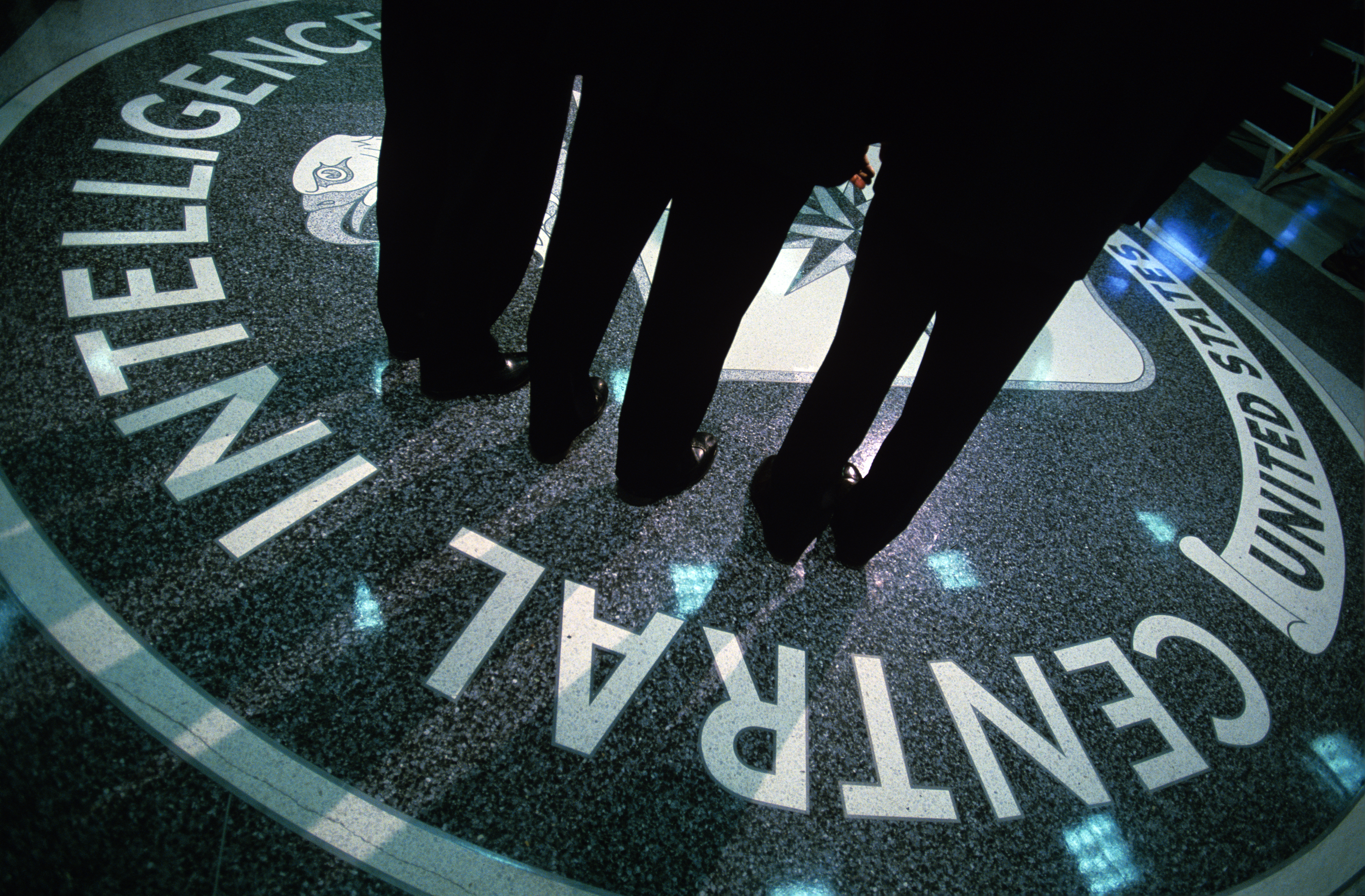
Will The Torture Report Be Buried After All?

CIA Report

This is an outrage:

Secretary of State John Kerry personally phoned Dianne Feinstein, chairman of the Senate Select Committee on Intelligence, Friday morning to ask her to delay the imminent release of her committee’s report on CIA torture and rendition during the George W. Bush administration, according to administration and Congressional officials. Kerry was not going rogue — his call came after an interagency process that decided the release of the report early next week, as Feinstein had been planning,  could complicate relationships with foreign countries at a sensitive time and posed an unacceptable risk to U.S. personnel and facilities abroad.

First, the Obama administration set up a white-wash, in the form of the Durham investigation; then they sat back as the CIA tried to sabotage the Senate Select Committee on Intelligence; then Obama’s chief of staff prevented the report’s publication for months, by insisting on redactions of the report to the point of it being near-unintelligible; and now, with mere days to go, the administration suddenly concludes  that a factual accounting of this country’s descent into barbarism poses “an unacceptable risk” to US personnel abroad. Now, after this report has been stymied for two years; now, just days before its scheduled publication; now, because if the administration can prevent its publication this month, they know full well that the Republicans who will control the committee in January will bury the evidence of grotesque and widespread torture by the US for ever.

Of course this complicates relationships with foreign countries; of course it guts any remaining credibility on human rights the US has; of course the staggering brutality endorsed by the highest echelons in American government will inflame American enemies and provoke disbelief across the civilized world. But that’s not the fault of the report; it’s the fault of the torture regime and its architects, many of whom have continued to operate with total impunity under president Obama.

Make no mistake about it: if this report is buried, it will be this president who made that call, and this president who has allowed this vital and minimal piece of accountability to be slow-walked to death and burial, and backed the CIA every inch of the way. But notice also the way in which Kerry’s phone-call effectively cuts the report off at its knees. If it is released, Obama will be able to say he tried to stop it, and to prevent the purported damage to US interests and personnel abroad. He will have found a way to distance himself from the core task of releasing this essential accounting. And he will have ensured that the debate over it will be about whether the report is endangering Americans, just as the Republican talking points have spelled out, rather than a first step to come to terms with the appalling, devastating truth of what the American government has done.

I’m genuinely shocked by this last-minute attempt to bury the truth. Does anyone doubt that one agency in that inter-agency review is the CIA itself? And can anyone seriously believe that if this moment passes, we will ever know what happened? I have confidence in Senator Feinstein’s backbone on this. I wish I had confidence in the president’s.

So let me make one last appeal: Mr President, make the right call. Release the report. Let the facts be in the sunlight. It’s what you promised. And it’s the least this country deserves.

Update from a reader:

I think you may be interested in what Democratic Senator Mark Udall told Esquire in an interview conducted on November 21 and scheduled to run in the January 2015 issue. Esquire decided to release a portion of it today:

… obviously, if it’s not released, then I’m gonna use every power I have, because it’s too important. It’s too historic. And we can’t afford to repeat the mistakes to let this slide.

(Photo by Charles Ommanney/Getty Images)