Intelligent Design 2.0? Ctd

7818362778_585518d876_k

Earlier this month we featured a number of critiques of Eric Metaxas’ assertion that recent developments in our scientific understanding of the universe points to the existence of God. Theoretical physicist Lawrence M. Krauss lays into Metaxas as well, asserting that his arguments about the improbability of any planet meeting all the criteria for supporting life makes the “familiar mistake of elaborating all the factors responsible for some specific event and calculating all the probabilities as if they were independent”:

In order for me to be writing this piece at this precise instant on this airplane, having done all the things I’ve done today, consider all the factors that had to be “just right”: I had to find myself in San Francisco, among all the cities in the world; the sequence of stoplights that my taxi had to traverse had to be just right, in order to get me to the airport when I did; the airport security screener had to experience a similar set of coincidences in order to be there when I needed her; same goes for the pilot. It would be easy for me to derive a set of probabilities that, when multiplied together, would produce a number so small that it would be statistically impossible for me to be here now writing.

This approach, of course, involves many fallacies. It is clear that many routes could have led to the same result. Similarly, when we consider the evolution of life on Earth, we have to ask what factors could have been different and still allowed for intelligent life. Consider a wild example, involving the asteroid that hit Earth sixty-five million years ago, wiping out the dinosaurs and a host of other species, and probably allowing an evolutionary niche for mammals to begin to flourish. This was a bad thing for life in general, but a good thing for us. Had that not happened, however, maybe giant intelligent reptiles would be arguing about the existence of God today.

(Photo by Paul Williams)

Burke Across The Pond

Reviewing Drew Maciag’s Edmund Burke in America, Bradley Baranowski details the complicated reception of the British statesman’s ideas on this side of the Atlantic:

While the goal is to say something about the national visions Americans have held, Maciag does illuminate much about how Burke’s ideas fared in the new world. Today most of us know Burke through his reaction to the French Revolution. That emphasis, however, is recent. Nineteenth century American Whigs such as Rufus Choate and Joseph Story downplayed the importance of Reflections on the Revolution in France (1790), largely ignoring the text. Other figures such as the historian George Bancroft followed the same pattern. While Burke’s cautious attitude toward social change and his call for prudent reforms were palatable to many, even conservative Americans knew better than to defend views that could undercut their nation’s own revolutionary founding.

Maciag’s approach also reveals a tradition of thought that does not easily fit within the contemporary liberal/conservative dichotomy.

Many of his figures combine political reformism with cultural conservatism, package in an understanding of society’s laws as expressions of underlying traditions. He provides a series of concise, well-written close readings of key figures to explicate this theme. Maybe the greatest strength of this approach is that it both revitalizes interest in figures that we are familiar with and revives figures who have largely languished at the fringes of American intellectual history. Cultural conservatism’s relation to political progressivism (of various stripes) appears as crucial to understanding the thought of Theodore Roosevelt and Woodrow Wilson. The Nation magazine, a crucial platform for cultural and political debate among Gilded Age liberals, was shot through with these Burkean themes during the final decades of the nineteenth century.

In all these examples, Burke functions not as a great preserver of tradition alone but as a crucial component in the “transition to modern America.” Burke’s whiggish views of history helped figures such as Roosevelt and Wilson reconcile their visions of America as an exceptional nation to the homogenizing forces of modernization. The relationship between progress and tradition was a balancing act rather than irreconcilable ideas. All it took was great leaders to keep the two in line.

Recent Dish on Burke herehere, and here.

Quote For The Day II

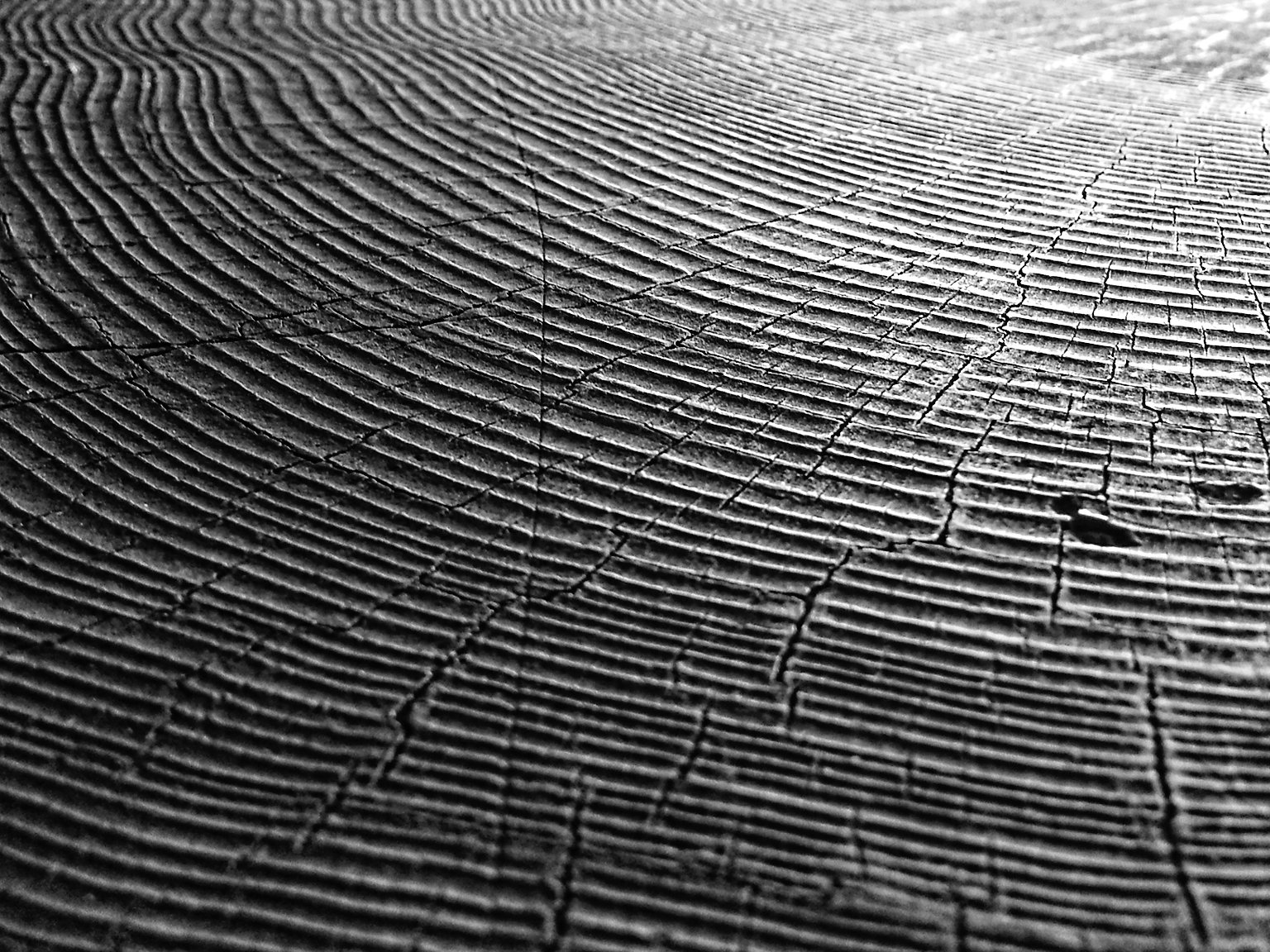
14258973936_92171f54ef_o

“For many folks, what’s most terrifying about death is the ending of their own being. Each of us is, naturally, at the center of a remarkably vivid life. We’re center stage in our own dramas of love and hardship, victory and defeat. The idea that it could just end, that we could just end, evokes nothing short of horror for many people. As Woody Allen famously put it: ‘Life is full of misery, loneliness and suffering — and it’s all over much too soon.’

This kind of existential terror never made a lot of sense to me. To explain why, I need you to know that when I was 9, my older brother was killed in an automobile accident. I saw him that afternoon, and he waved to me from across a field. Then I never saw him again. I was already an astronomically inclined kid, and that event, the most significant of my entire life, propelled me even deeper to questions about existence and time. Through all the grief and the questioning, one thought about death has always stayed with me:

I’m not concerned about the many years of my nonexistence before birth. Why then should I be concerned about the many years of my nonexistence that will follow death?

In other words, even though none of us existed 1,000 years ago, you don’t find many people worrying about their nonexistence during the Dark Ages. Our not-being in the past doesn’t worry us. So, why does our not-being in the future freak us out so much?

I am on record as being militantly agnostic about consciousness and death. I tend toward the ‘it’s all over when it’s over’ camp, but that, for me, is more of a hunch than a scientific position. Still, no matter how the universe is constructed with regard to death and its aftermath, empirically I think we can conclude that dread in any form is an unnecessary response. When it comes to our impending nonexistence, all we need do is let the past be our guide,” – Adam Frank, “What If Heaven Is Not For Real?

(Photo: Sequoia rings by Gabriel Rodríguez)

Thomas Merton At 100

http://youtu.be/2WXo4ktQrg8

Yesterday marked the Trappist monk and author’s centenary birthday. James Martin, a Jesuit priest, describes Merton’s spiritual autobiography, The Seven Storey Mountain, as a revelation to his younger self:

First published in 1948, Merton’s beautifully wrought story of a rather sad childhood, lonely adolescence and wild young adulthood, all of which led to a dramatic conversion to Catholicism and then a swift entrance into a Trappist monastery in Kentucky, was a surprise bestseller. Merton, a talented writer (and poet), spoke movingly about being lost and slowly finding his way to his vocation as a monk.

It’s hard to put a finger on why his most popular book continues to speak to people. Perhaps it’s the gorgeous prose. Perhaps it’s his transparency. Or perhaps it’s because so many people still feel lost. I know I did when I first read it at age 25. Stuck in a job I didn’t like, I needed someone to tell me it was okay to begin searching. In time, I ended up leaving General Electric and entering the Jesuit Order. His book changed my life.

Phil Cox Rose, however, reminds us that The Seven Storey Mountain ends with Merton still “an enthusiastic new monk” – but that later writings showed the complexities of his life at the Abbey of Gethsemani in Kentucky:

Merton kept writing throughout his life, though, including a second memoir just five years later in 1953, The Signs of Jonas, which far less enthusiastically relates the struggles of monastic life, especially Merton’s conflicts with authority. Merton spent much of his time as a monk wrestling with abbots over his desire to travel to attend conferences and meet with some of the many important friends he’d made through his work, and paradoxically over his desire to retreat into a more hermetic life to focus on his own writing and contemplation rather than having to engage in the daily activity of the monastery. These conflicts can be seen either as bureaucrats denying the world the gift of more engagement with Merton, or as a conceited young monk who didn’t have appropriate respect for his vow of obedience or his role in a communal order. Most likely it was some of both.

Either way, when a new abbot took charge in 1968 and loosened the reins, Merton embarked on a whirlwind first trip to Asia, in which he met key Buddhist leaders, including the Dalai Lama and Chatral Rinpoche. Through his letters from the trip we know he was thrilled by this work and looked forward to being in much deeper dialogue with Eastern faith leaders. In the midst of this adventure, at a hotel room in Thailand, he was accidentally electrocuted in the bath and died at 53, this latest part of his journey barely even started.

Reflecting on Merton’s impact on his own approach to the religious life, Parker J. Palmer underscores the way the “notion of paradox was central to Merton’s spiritual and intellectual life, not merely as a philosophical concept but as a lived reality”:

Merton taught me the importance of looking at life not merely in terms of either-or but also in terms of both-and. Paradoxical thinking of this sort is key to creativity, which comes from the capacity to entertain apparently contradictory ideas in a way that stretches the mind and opens the heart to something new. Paradox is also a way of being that’s key to wholeness, which does not mean perfection: it means embracing brokenness as an integral part of life.

For me, the ability to hold life paradoxically became a life-saver. Among other things, it helped me integrate three devastating experiences of clinical depression, which were as dark for me as it must have been for Jonas inside the belly of that whale. “My God, my God, why have you forsaken me?” was the question that came time and again as my quest for light plunged me into darkness. In response, Merton’s lived understanding of paradox came to my rescue. Eventually I was able to see that the closer I move to the source of light, the deeper my shadow becomes. To be whole I have to be able to say I am both shadow and light.

Danny Sullivan summarizes Merton’s efforts to reach out in dialogue with other branches of Christianity and world religions, one of the more fascinating and controversial aspects of his work:

He also engaged other Christians, hosting inter-denominational discussions at the monastery as early as the 1950s. Today, Merton is remembered in the Anglican calendar on December 10, the date of his death. Anglicans seem to have a more rounded approach to holiness in that they are concerned not with canonisations, but with the witness of people who are worth remembering, even though they have imperfections. That seems more real than the conviction that only perfection is worthy of imitation.

Merton also famously reached out to Muslims, Hindus and Buddhists. He had a particular affinity with the latter’s contemplative aspect and was regarded by Buddhists as one of the few Westerners who truly understood their tradition. Merton’s short preface in the book Thomas Merton on Zen is regarded as one of the finest summaries of the Zen tradition ever written.

While in Asia, he met the Dalai Lama three times. The meetings were marked by great friendliness and laughter. The Tibetan leader said it was only after meeting Merton that he began to fully appreciate Christianity. Whenever he is in America the Dalai Lama visits Merton’s monastery if he can and spends time at his grave.

Daniel P. Horan offers more on such efforts – which he believes is one of the reasons Merton still matters:

At the root of Merton’s engagement with people different from himself was the sense of “original unity,” which he recognized bound all people together as children of God. He understood that he could not have an authentic conversation about faith with others if he did not have a firm commitment and deep love for his own tradition. Before Vatican II promulgated “The Declaration on the Relationship of the Church to Non-Christian Religions,” Merton already understood that “the Catholic Church rejects nothing that is true and holy in these [other] religions” (No. 2).

There is much that can be said about the still timely insights Merton presents to us about engaging other religious traditions. Perhaps the most pertinent is the need to live honestly in the tension between maintaining one’s own faith commitments and humbly learning from the experiences of others, all the while holding onto the belief that we are indeed, somehow, “already one.”

The Dalai Lama wrote in an op-ed in The New York Times in 2010, “While preserving faith toward one’s own tradition, one can respect, admire and appreciate other traditions.” He went on to explain that it was none other than Thomas Merton, with whom he met personally in 1968, who offered him this insight. “Merton told me he could be perfectly faithful to Christianity, yet learn in depth from other religions like Buddhism. The same is true for me as an ardent Buddhist learning from the world’s other great religions.” For Merton then, as for the Dalai Lama today, compassion for and personal encounter with people of other faiths does not diminish one’s own religious convictions—if anything, it strengthens them.

Reviewing two books on Merton – John Moses’ Divine Discontent and Suzanne Zuercher’s The Ground of Love and Truth – Phyllis Zagano suggests that one of Merton’s poems reveals the deepest concerns of his life and work:

Merton wrote thousands of pages; his exegetes have written thousands more. The paradox of explaining simplicity is that it takes so many words. At the end of all the quotes and evaluations, in these two books and in the many others that look into Merton’s interior and exterior lives, the reader is left wondering: What is the measure of the man? What was he about? What was he looking for? What, in fact, did he do with his life?

Moses perhaps provides the answer with lines from Merton’s poem “St. John the Baptist”: “Waiting in darkness for the secret stranger / Who, like an inward fire, / Would try me in the crucibles of His unconquerable Law.” Only the darkness, the fire, and the crucible rend the soul of its sins and self, and allow a prophetic voice to emerge.

Recent Dish on Merton here.

(Video: footage of Merton’s final lecture given in Bangkok, Thailand, just one hour before he died of electrocution. His subject was “Marxism & Monastic Perspectives.”)

A Poem For Sunday

8937584537_1f5c0ca0a1_k

“Then Abraham” by Jean Valentine:

Then an old man came down out of the thicket,
with an axe on his shoulder, and with him

two people made out of light
–one a blameless son,

the other like a Vermeer girl,
on their way back down with the old man.

Still, all the history of the world
happens at once: In the rain, a young man

holds out a blue cloth
to caress her head

at the landing pier
of the new bride.

You can’t get beauty. (Still,
in its longing it flies to you.)

(From Break the Glass © 2010 by Jean Valentine. Reprinted by permission of Copper Canyon Press. Photo by Sigurdur Bjarnason)

A Blogger Breaks Free: Your Reactions, Sunday Edition

Sundays aren’t everyone’s favorite day of the Dish week, but many readers have written in expressing their dismay at the prospect of seeing it go. One implores:

Please consider continuing the “Sunday Dish”. The philosophical and religious discussions are unique, accessible, and my personal favorite part of the blog!

Another was irritated at first, but later felt “awash in a deep sense of gratitude”:

I’ve read your blog for the past fifteen years and at the start of that journey I was a closeted gay seminarian. I found your willingness to share your experience and strength, your struggle and hope, a life giving inspiration that it just might be possible to be honest with oneself, serious in ones thought, courageous and authentic in ones convictions, and yet somehow through the mystery of grace – joyful within the Church.  I thank you Andrew, you’ve been enormously helpful to me in learning to be compassionate to myself and, now as a Redemptorist priest, more compassionate to the people of God, especially to the most abandoned.

And there’s at least one non-believer who would miss the Dish on Sundays:

I am an atheist and I grew up in a secular household.  My mom’s family was southern Baptist and my father’s family is Jewish.  We never went to church and we never went to synagogue except for weddings or bar/batmitzvahs.  So I never personally had much direct experience with religion growing up.  In all honesty, the whole thing really mystifies me and seems incredibly silly.

However, I find the Sunday blog posts to be incredibly interesting and enlightening.  It gives me a glimpse into religionbeyond either stale history or attention grabbing headlines (always bad of course).  Over the years reading your blog I have definitely gathered a deeper understanding of religious people that makes me more understanding towards them than I may normally have been. There is none of the trying to convert people you see in many places, but just information.  If only many other religious people could act the same way.

Another reader adds:

I’ve only written to you a few times over the years, and it’s usually been about matters of faith.  I am a struggling Catholic.  I sometimes experience a spiritual emptiness that is simply paralyzing.  Your podcast with Wiman was a blessing, and I will miss sharing those moments with you, Andrew.  In the grand scheme of things, the daily political discourse is so meaningless and inconsequential compared to conversations about spirituality.  I hope you find some way to remain publicly engaged on matters of faith. I need your wisdom!

You have a lot of love in your heart, and that always seem to be the driving force in your musingseven your more combative ones.  I think that’s why I have always admired your work so much.  You start from a place of love, and maybe it’s because I was educated by the Jesuits, but I very much identify with that quality.

Good luck, thank you so much, and I look forward to your next adventure.

Our coverage has helped propel this reader’s faith:

What I will find irreplacable is more the depth of content, rather than the depth of coverage, specifically the Sunday posts on faith, spirituality, God, gods, grace, and peace. Though I don’t subscribe to any particular religion (other than maybe South Park), I have always been interested in religion, have very close friends who are (very) religious, and have been slowly inching away from agnosticism towards a very reticent faith in something. A huge amount of that progress has to be the reading I do (did) on The Dish on Sundays.

Another respects the Dish’s intellectual honesty:

You create a thoughtful internet – a place where someone might vote for Bush and then vote for Obama, a place where someone might love the Catholic church and be aware of its problems and mistakes, a place where someone might understand that spiritual seeking is an important part of an examined, scientific life. The mere fact alone that you highlight contrarian voices within our institutions creates space for people to change their mind and reconsider, which is so important.

Fun fact: when I started seeing a therapist for OCD related to anxiety about religion, my wife and friends said I had to stop reading Catholic blogs and sites, but they said you could stay!  This says a lot about your role in my life (that was 5 years ago – I’m a lot better now). If the Dish goes away I’ll have to try to recreate it for myself by tracking where the staff all end up and trying to assemble some sort of RSS folder to capture it all, but it won’t be the same.

And finally, a note of thanks from a Mormon reader:

I would like to leave you with two quick ways, among many, the Dish has been life-changing for me:

First, through your articulation of conservatism, I was able to give myself permission to shed the partisan labels and loyalties endowed to me by my upbringing and embrace conservative principles wherever they manifested themselves, even, and perhaps especially, when they appear in the views and policies where I’d least expect them.

Second, I am a 38 year-old active Mormon (1st Counselor to a local Bishop) who began reading your blog almost immediately upon returning home from my mission. The intellectual and spiritual honesty and vulnerability with which you have engaged questions of faith has helped me develop exactly the kind of critical-contemplative posture vis-à-vismy Mormonism that I now recognize as being an essential antidote to the dogmatic laziness that too often accompanies institutional religion.

I am profoundly grateful to you and The Dish staff. I wish you well in whatever your next endeavor may be. My next endeavor will be to try and fill the void that will be left as the sun sets on such an intellectually and spiritually stimulating place for sharing.