America And The Protestant Work Ethic, Ctd

Matt Steinglass is unfazed by the idea that Obamacare will enable some Americans to work less:

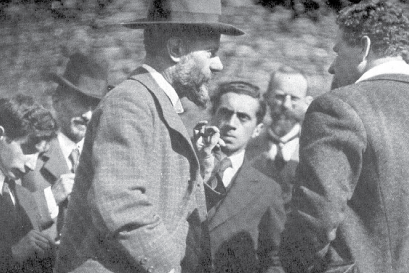
Americans work more hours per person than citizens of almost any other wealthy nation. If America suffered from a shortage of max_weber_1917-SD-thmblow-wage labour, we would likely see the evidence in the form of rising wages at the lower end of the spectrum. Instead, the opposite is true: wages for the bottom quartile did not even keep pace with inflation over the past ten years. It seems then that America has a surplus of low-wage labour. If some of those workers decide that, because they’re receiving a new benefit, they can work less and spend more time raising their kids, playing basketball, launching home renovation projects, taking night classes, cooking, going to church, playing video games, or whatever it is they want to do with their free time, I can’t see what the problem is.
Pareene thinks liberals should embrace an agenda of freeing people from work for work’s sake:

It’s easy for the thought-leader and executive classes to embrace a “do what you love and love what you do” philosophy when they are wealthy enough to work hard only voluntarily, and when their jobs grant them status. But this is a truth most Americans know in their bones: Most work sucks and people don’t like doing it. The song “Take This Job and Shove It” spent 18 weeks on the country charts in 1977. 1970s country music fans had a clearer understanding of the ennui of wage-slavery than modern elites.

Josh Marshall expands on the “wage slavery” metaphor:

Obamacare doesn’t create a disincentive to work. To be more precise is removes one incentive to work. And no, this is no mere semantic difference. One incentive that keeps some people either in their current job or in the labor market in general is the risk of themselves or their family facing a catastrophic health care situation without insurance.

One might note that abolishing slavery also removed a powerful incentive to work, namely whippings, torture, various deprivations and in some cases death. We could also incentive people to work by threatening them with the loss of their children if they did not hold full time jobs. But in a capitalist economy, the primary incentive to work is supposed to be money, not the risk of being prevented from purchasing a life saving commodity.

Chait thinks Republicans are being disingenuous:

One could easily imagine any number of legislative changes that might satisfy the right’s newfound concern for prodding the middle class to work harder. Republicans aren’t going to accept any such solution because the main impetus of its gleeful embrace of the CBO report is not any policy reform at all, but to generate a new message about Obamacare welfare queens mooching off your hard work.

Philip Klein proposes encouraging older Americans to work more and retire later:

One obvious move would be to gradually raise the Social Security and Medicare retirement ages and then index them to gains in life expectancy. Another option would be to change the way benefits are calculated to encourage Americans to work longer. A 2006 paper from researches at Stanford University described a number of disincentives to longer careers created by the Social Security system. For instance, Social Security calculates benefits based on an average of the highest 35 years of earnings and thus, “an individual who has already worked for 35 years has a diminished incentive to work an additional year.”

Lastly, Benjamin Kline Hunnicut looks at how the American approach to work has changed over time:

For more than a century before 1930, the average American’s working hours were gradually reduced—cut nearly in half. Labor played a part in these reductions, but they were largely a product of the free market, reflecting individuals’ choices to work less and less.

Most Americans approved, counting work reductions as the better half of industrial progress (higher wages and shorter hours). No one expected this progress would end. Quite the contrary. Through the last century, observers such as John Maynard Keynes, Julien Huxley, Dorothy Canfield Fisher and Eric Sevareid regularly predicted that soon America would enter an age of leisure in which we would chose to devote more and more of our lives to the “pursuit of happiness” promised in the Declaration of Independence.

Previous Dish on Obamacare and work here and here. My take is here.

Face Of The Day

Screen Shot 2014-02-10 at 11.38.04 AM

Adrian Chesser photographed friends and family right after revealing he’s HIV+:

When I tested positive for HIV and was diagnosed with AIDS, I had an extreme physical reaction whenever I thought about having to tell my friends and family. Looking at this reaction more closely, I realized that it was the same reaction I had as a kid whenever I had to disclose something uncomfortable to my parents, fearing rejection or even abandonment if larger secrets were revealed. It occurred to me that it might be possible to overcome this paralyzing fear by photographing my friends as I told them about my diagnosis. I invited each friend to come to my studio to have their picture taken, a simple head shot for a new project. They weren’t given any other information. For a backdrop I used the curtains from the living room of the house I grew up in. I put everyone through the same routine, creating a formal process that proved to be transformative. At the beginning of each shoot I would start by saying, “I have something to tell you”.

All of us who have this virus went through something similar. Twenty-one years ago, of course, the reactions were more extreme. I saw some faces look at me as if I were already dead. The shift in their expressions carried with them all the baggage of stigma, horror, and, worst of all, pity. My mum’s face barely changed – she simply refused to believe it, and went on for a while as if nothing had happened. My dad’s face fell like a sudden mini-avalanche. Every small point of animation collapsed. It registered in a second all the fear and terror and sadness I had been experiencing – and oddly made me begin to resist all three. If only to help my family cope.

More photos from the series here.

We Can’t Bend The World To Our Whim

Fred Kaplan defends Obama against the charge that he is too disengaged from global events:

No one country can shape the world the way it once did, because the world has grown less malleable. The turning point, in this regard, wasn’t 9/11 but 11/9—Nov. 9, 1989, the date the Berlin Wall fell, followed soon after by the collapse of the Soviet Union and, with it, the Cold War. The Cold War was a time of dread, but it was also the dominant feature of global politics since the end of World War II. It set the alliances, rules, and measures of power that fostered and fed America’s rise.

With the system’s implosion came a global diffusion of power. Take Egypt. In the mid-1970s, when President Anwar Sadat broke away from the Soviet orbit, he turned to the United States—and, as a consequence, had to change his country’s policies on a number of issues, especially relations with Israel—because he had no choice; he needed protection from one superpower or the other. In today’s multipolar (or, in some ways, polarless) world, Egypt’s ruling generals can pursue their own interests as they see them, consorting with and dangling a number of countries. If our interests collide with theirs, no American president can do much to rein them in.

Fully Loaded Home Decor

Screen shot 2014-02-05 at 5.21.07 PM

Jasper White photographed bedrooms of young Israeli soldiers:

In his series Young Guns, British photographer Jasper White gives us a peek inside the bedrooms of Israel’s young ‘fighters’ as they are called—the men and women who are required by law to enter into the military at age 18. At the time of this compulsory conscription, youth are issued guns that they must keep with them at all times during their three-year service. Working with a local assistant who had recently left the army, White gained access to the bedrooms of young fighters between the ages of 18 and 22.

Robert Epstein covered the project back in December:

The participants’ guns were placed by White in the centre of each scene, but as he explains, “It’s not meant to be a literal representation – nor is it meant to be sensationalist. It’s more about the idea.” The idea being the discrepancy between youthful innocence and the “everyday” quality of the weaponry.

(Photo by Jasper White)

China’s Bachelor Society

Nicholas Hune-Brown looks ahead to its consequences:

China’s unbalanced sex ratio has existed for years. Now, though, as that generation’s first group of men reach marrying age, we’re about to see the results. A recent study by Catherine Tucker and Jennifer Van Hook in Population and Development Review attempts to assess the seriousness of the problem. Gender imbalance at birth, after all, isn’t identical to imbalance at marriage. Men tend to have a higher mortality rate, and there’s usually an age gap between husbands and wives.

Examining the figures, however, Tucker and Van Hook come up with some scary predictions.

By 2030, they estimate, a full 25 percent of the male population will be single—a bachelor society of 30 million men. And even if sex-selective abortions stop tomorrow and the male-female ratios level out, it will take until 2050 for the percentage of single men to drop below 10 percent. What that kind of world looks like is hard to imagine. The authors muse about an increase in commercial sex, a rise in HIV/AIDS, widespread poverty, higher levels of criminality and violence. Certainly the loneliness and depression that marked the lives of many of the men living in North America’s bachelor societies will be reproduced on a vast, national scale.

How A Fruit Fly Could Save Your Life

Researchers are exploring how the sensitive olfactory systems of insects might help detect cancer in humans:

[P]erhaps the most promising method for using insects to diagnose tumors comes from a recent experiment carried out by researchers from the University of Konstanz in dish_fruitfly Germany and the University La Sapienza in Italy, which demonstrated that fruit flies can be genetically modified to glow the moment they come in contact with these volatile molecules.

It doesn’t get more straightforward than that. A fruit fly possesses less than half as many odor-sensing receptors as a bee, but its olfactory system is apparently still sensitive enough to distinguish cancerous cells from healthy ones, according to the team’s report. Moreover, the researchers found that the receptor neurons on the flies’ antennae were able to differentiate between five types of breast cancer.

For the study, detailed in the journal Nature, the investigators devised a machine that blew the odor emitted from five different strains of lab-grown breast cancer cells, along with healthy in vitro human breast tissue, over an area containing the flies. They then used a microscope to examine the fluorescent patterns that became visible on the flies’ antennae as their receptor neurons detected the odors.

(Photo of orange fruit fly by Chun Xing Wong)

Unfriending Facebook

A decade after the social network’s launch, Nicholas Tufnell has given up on the site, explaining that “there’s something about the relentless happiness of people on Facebook that I find monstrous”:

Everyone is apparently always somewhere better than I am and what’s more, they’re having a brilliant time.  My life is not like that. In reality, no one’s life is like that, these are of course constructed narratives, our “best ofs” — but sometimes it’s hard to reason to yourself that these people aren’t having fun all the time when all you ever see of them is pictures of them having fun all the time. I suddenly start to feel pangs of inadequacy and jealousy… and these people are supposed to be my friends. In this regard, Facebook is truly poisonous.

Some research indicates that Facebook may really lower the spirits of users:

[L]ast summer, a team of psychologists from the University of Michigan in Ann Arbor and the University of Leuven in Belgium decided to drill a bit deeper by evaluating how life satisfaction changes over time with Facebook use. Ethan Kross and colleagues questioned a group of people five times a day over two weeks about their emotional state. They asked questions such as “how do you feel right now?”, “how lonely do you feel right now?”, “how much have you used Facebook since we last asked?” and so on. This gave them a snapshot of each individual’s well-being and Facebook usage throughout the day.

The team found that Facebook use correlated with a low sense of well-being. “The more people used Facebook over two-weeks, the more their life satisfaction levels declined over time,” they said. “Rather than enhancing well-being … these findings suggest that Facebook may undermine it.”

Maria Konnikova examines common motivations for quitting Facebook:

At the University of Texas at Austin, [psychologist Sam] Gosling and one of his graduate students, Gabriella Harari, have been examining why people decide to leave Facebook. They have found three broad themes: people see Facebook as pointless and unnecessary, they see it as a problematic distraction, and they are worried about privacy. As you experience a constant stream of updates from more people, the possibilities for distraction or frustration at a pointless update (did I really need to know that her baby is now teething?) rise apace. And as you share more information with more people, it all becomes a window into who you are—even the parts you might prefer to keep private. The more publicly we form and affirm social bonds—and the more people we form and affirm them with—the more likely we are to see our mental bandwidth filled and our privacy eroded.

Peanut Portraits

Screen shot 2014-02-05 at 5.20.30 PM

Steve Casino creates them:

To begin, Casino studies images of the person he will paint. The next step is finding the peanut — the artist may sift through hundreds of nuts before he finds the perfect one. Once the perfectly-shaped peanut is found, the nut inside is extracted, and the shell is glued back together. A shell of wood filler is that spread onto the front, making for a smooth painting surface. Legs and  a stand are added, followed by the arms once the painting is completed.

How he got started:

Steve Casino became the “Painter of Nuts” on a snack-time whim. He sketched a quick self-portrait on a shelled peanut that he thought matched his shape, and his legume likeness cracked up his coworkers. Casino, a former New Yorker, then hurried to enshrine hometown heroes The Ramones, adding paint and limbs to peanut bodies. After a minor social-media explosion, Casino set about cashing in on the attention.

See more images from the series on the artist’s Facebook page.

(Photo by Steve Casino)

Profiting From Less Pollution

Cleaner air correlates with greater cashflow:

new paper suggests [one] measure to curb pollution that may have had beneficial long-term economic impacts for individuals. The paper’s authors, Adam Isen, Maya Rossin-Slater and Reed Walker, compared the adult labour-market outcomes of those born in counties in America where air pollution decreased as the result of the 1970 Clean Air Act to those born in areas where pollution did not fall in this period. They found that those who were born in counties that were forced to cut air pollution as a result of the legislation earned more by their thirties than they would have otherwise: gaining approximately $4,300 each in extra income over their lives.

At first, this result may seem a little strange. As dirty industries closed in many affected areas as a result of the Clean Air Act, one would expect incomes to fall as the result of increased unemployment. Yet the authors of the paper found the opposite: the long-term benefits of better childhood health on adult incomes outweighed the other negative immediate economic effects that may have resulted from the legislation.