Quote for the Day

"You know, you really have two choices here. I mean, either you push forward with the things that you were doing yesterday or you start dying. That seems to be your only two choices. If I had given up everything that my life was about – first of all, I’d let cancer win before it needed to. You know, maybe eventually it will win. But I’d let it win before I needed to. And I’d just basically start dying. I don’t want to do that. I want to live. And I want to do the work that I want next year to look like last year and… and the year after that and the year after that. And the only way to do that is to say I’m going to keep on with my life," – Elizabeth Edwards.

She’s absolutely right, or maybe I’m biased because I have gone through something similar. I learned then (from Anatole Broyard) that one of the most important things you want to be able to say in this world is a very simple thing: "I was alive when I died."

Over The Weekend

The Dish was busy. Two of the most linked-to posts in the blog’s history were about the dangers and toxicity of various drugs. Why are many of the most dangerous most toxic drugs legal, while all of the least toxic and least addictive are banned? There was also an elaborate debate between Stuart Hameroff and Sam Harris on the possibility of divine consciousness being discovered through quantum physics; a sashaying horse; and America’s Next Top Dead Model. Enjoy.

This Is A Religious War

There was a fascinating interview with one Hassan Butt, a former Qaeda trainee and organizer in Britain, on Sixty Minutes last night. It’s riveting not just because of the details of the terrorist network, but also his analysis of what really drives it: devout religious faith (and a nifty suspension of arranged marriages for the murderers). We are facing terrorism rooted in the deepest wells of religion and nowhere else. It spans across classes, cultures and countries. It is a theology – a manifestation of faith stripped of doubt, bereft of a loving God, and integral to Islam:

"The four men who blew themselves up [on 7/7] all came from good families, good homes, good educations. How do you explain what they did?" Simon asks.

"I mean, for me, they did it simply because they were convinced that they were doing something in the name of God, in the name of Islam. And they honestly believed they would obtain paradise from doing the activities that they carried out, the terrorist attacks that they carried out," Butt explains.

How does this extremism relate to Islam in general?

"The position of moderate Muslims is that Islam has nothing to do with terrorism. Do you buy that?" Simon asks.

"No, absolutely not. By completely being in denial about it’s like an alcoholic basically. Unless an alcoholic acknowledges that he has a problem with alcohol, he’s never gonna be able to go forward," Butt argues. "And as long as we, as Muslims, do not acknowledge that there is a violent streak in Islam, unless we acknowledge that, then we are gonna always lose the battle to the militants, by being in complete denial about it."

The current state of Islam is the problem; and only Muslims can find the solution.

Captured Brits

They are being "interrogated," apparently. The news reports put that word in quotation marks. I wonder if it emerges that they are being subject to George W. Bush’s preferred euphemism "coercive interrogations." And if that turns out to be the case, and we have to pray it isn’t, then what will the United States and its ally Great Britain say in complaint? After all, Iran is only doing to Western soldiers in captivity what the U.S. has been doing to "enemy combatants" since the war began. Then there’s a question of what kind of trial they might face. One in which their defense gets a chance to see all the evidence against them? Oh, wait … we don’t do that either.

The first strategic crisis created by the Bush-Cheney torture regime is now occurring. It won’t be the last. And if these British sailors are found to have been mistreated and their "trials" tainted, who in the international community is now going to come to Britain’s and America’s defense?

The Conservative Soul

The New York Review of Books has just reviewed "The Conservative Soul." If you’re interested, here it is. Money quote:

On climate change, government spending, stem-cell research, reproductive rights, and the Tcscover Iraq war, to name just a few of the triggering issues, self-styled conservatives find themselves at loggerheads with other self-styled conservatives, each claiming the mantle of true conservatism for himself. As both symptom and diagnosis of this interesting—one might say promising—development, Andrew Sullivan’s The Conservative Soul is as engaging as it is provocative…
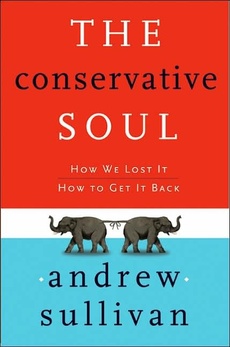
In The Conservative Soul, he attributes his change of heart to a belated return to rigorous Oakeshottian skepticism, and as he expounds Oakeshott, gracefully and in satisfying detail, one is almost won over. Certainly Oakeshott’s strictures on the dangers of overweening government power, harnessed to Rationalist dreams and visions, apply very well to the high-handed, high-spending near tyranny of the Bush administration before the midterm elections checked its progress, and Sullivan deserves thanks for bringing Oakeshott into the argument.

But his journalism belies his vaunted skepticism. There is in Sullivan’s makeup a most un-Oakeshottian quickness to take passionate sides, a schoolboy tendency to hero-worship (Thatcher… Reagan…Oakeshott…Bush…and now it seems he may be warming up fast to Barack Obama), and an Oxford debater’s ready access to the rhetoric of condescending scorn. Where Oakeshott stood self-consciously aloof from practical politics, Sullivan splashes excitedly about in them like a dog in a mud puddle, snarling ferociously at any other dog who challenges his position du jour. He’s less a skeptic than a mercurial, and somewhat flirtatious, born believer.

So it is — unsurprisingly — on matters of religion that he’s at his most persuasive. The book is grounded in Sullivan’s tenacious Catholicism, and, as a staunch atheist, I’m impressed by his ability to write plainly, unmawkishly, even movingly, of the intermittent presence of Jesus Christ in his life.

I take a few, and largely deserved, whacks at my solar plexus for various hyperbolic blog posts over the years. But I’m grateful that Raban treated the book in its own right as well. I have to say, however, that I don’t believe Oakeshottian political conservatism necessarily requires an even temper in the rest of life, a lack of passion, or disdain for the to and fro of political argument. In fact, the point of being a conservative in politics is precisely to allow for a passionate, energetic, envelope-pushing, un-conservative culture that doesn’t infect sensible, limited governance. In some ways, I am a conservative in politics so I may have the right to be a radical in every other human activity. This is not a contradiction, or even much of a paradox. Oakeshott himself was a very lively, mischievous, bohemian soul – who nonetheless didn’t want his rulers to be like him.

Still, in general, a writer could not ask for a smarter, fairer or more engaged review. I have a feeling the book’s actual moment was not its pre-election publication date – but now, as the implosion of conservatism becomes steadily more apparent, and people are beginning to ask themselves far more seriously why.