
Grand Rapids, Michigan, 3 pm.
Grand Rapids, Michigan, 3 pm.

Fitzgerald is forcing one almost to pity Scooter Libby:
[Libby] said that at a July 7 lunch with former White House press secretary Ari Fleischer, he didn’t remember them discussing Plame or her CIA role, but he did remember talk about the Miami Dolphins, a football team they both cheered for, and Fleischer’s future plans to start a consulting business.
Fitzgerald pressed Libby: "Isn’t it a fact that you told Mr. Fleischer at this lunch" that Wilson’s wife worked at the CIA "and that this was hush-hush, on the q.t?"
"I don’t recall that," Libby said, his voice turning quiet muted. "Yes sir, in that period I have no recollection."
Good grief. But the interesting aspect of the trial so far, to my mind, is how central Dick Cheney is to the charge of perjury. Fitzgerald’s record is of picking off underlings in order to get at the big prize. I have a feeling he has his sights set on Cheney. I hope he succeeds in exposing the most dangerous and incompetent vice-president in American history.
(Photo of Libby: Mark Wilson/Getty.)
The Southern Poverty Law Center has just put out a study of the most extreme fringes of American Catholicism. It isn’t pretty:
Few Americans defended Mel Gibson’s drunken rant about the evils of the Jews. But radical traditionalist Catholics did. A three-year investigation of this subculture by the Intelligence Report has found that these Catholic extremists, including the Gibsons, may well represent the largest population of anti-Semites in the United States. Organized into a network of more than a dozen organizations, scores of websites and several extremist churches and monasteries, radical traditionalists in the U.S. are preaching anti-Semitism to as many as 100,000 followers. A few, such as the lawyer for Terri Schiavo’s family, Christopher Ferrara, are even movers and shakers in important right-wing Republican circles.
You can read the whole thing here.
Clive Davis praises ex-England forward, Andy Ripley, who has some brutal things to say about what has happened to professional sports in the last couple of decades.

A reader writes:
If I am ever grasping for a concrete, unimpeachable criticism of you, I will always have this: "He wore briefs in Equus."
I am delighted by your dialogue regarding atheism and religious belief. I think my greatest problem with most religions – Christianity in particular (because it’s closest to me) – is the belief that God somehow is capable of/is interested in/exists on a level of decision-making and action-taking. It robs so much beauty from MY idea of God, which is a simpler, vaster, and more immediate energy binding the world. We cannot understand it, and making the attempt is immediately reductive. I believe our only imperative is to keep this energy moving, to help our fellows, our planet, everything living – even by (gasp!) raising taxes from time to time, if need be.
I hate this notion of God as "the Decider" because it lets so many people off the hook, setting them on a smug Slip-n-Slide into corruption. Why should we preserve our beautiful planet when Dad’s going to come down and Hoover us up to Heaven some day soon? Why should we be good to one another when all we have to do is follow God’s "laws" as we conveniently choose to interpret them?
I have no idea what religious category I fall into. I petulantly label myself "atheist" because such a roundly despised group must be good company. In practice, though, I’m not. Nor am I agnostic, because I do have a strong sense of spirituality that is my own. As certainly as you’ve never lived without belief in God, I have never lived without this idea of a gorgeous force binding us together. I believe we are nothing but energy and matter, but what energy we are! What matter!
God is not soothing because he boxes us in with laws, freeing us from decision-making and moral grappling. God is soothing in his warm, basic tremendousness, and our imperative is to work together and keep God as vibrant as possible. To allow suffering – to allow the movement of this energy to slow and cease – is to deny God. By following this imperative, a humane morality asserts itself.
To reduce God to our mean level of consciousness strikes me an insult – and that, to me, is the mark of most religious practice. When anyone thinks they know God, they’re lost.

A reader writes:
Without getting into the Harris-Sullivan debate, a short comment on a more critical issue that’s come up: Church hats. Your correspondent in "Tip of the Hat" writes:
"Yes, your faith is a lot like the church lady and her hat. Both of you are being very disingenuous when you claim to your questioners that you have no idea where they come from. The providence of that hat is no deep mystery. It was bought in a shop. It was acquired for reasons of vanity and adornment and to make the owner feel better than others."
He – and you can tell it’s a he, can’t you? and a squinchy-hearted dried-up little peckerwood, at that – he obviously knows very little about church ladies, hats, performance art or women. Do the hats have to do with vanity and adornment and pride and maybe a bit of oneupsmanship? You bet they do. And they are magnificent. Check out the book "Crowns: Portraits of Black Women in Church Hats". These women are queens. And they know it. If you can’t see God in this beauty, this dignity, this humanity, this art, you’re dead.
Mickey Kaus accuses Joe Klein of having it both ways on the Iraq war. I’d say that’s better than having no coherent position on the war at all, except fathomless bitchiness toward anyone who ever had the balls to take a stand. But that’s Mickey – circling the drain of his own irrelevance. And bitchily attacking anyone who’s trying honestly to do better.
Yes, I know it looks like I’m shilling for my new home. But the greatest gay American has been covered in the pages of this magazine for well over a century – and here’s a diverting account of the ups and downs of his literary reputation.
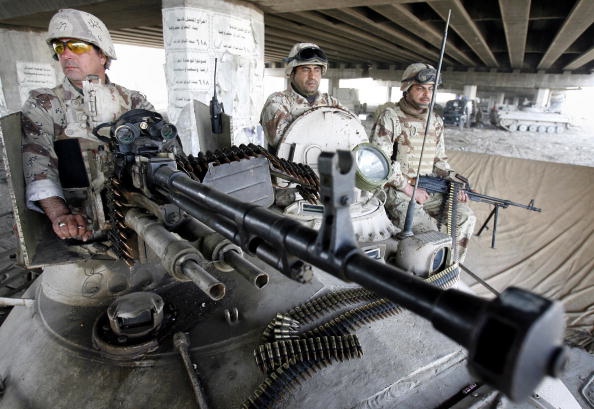
Once the decision was made to foment anarchy in Iraq – a decision made with clear foresight by Donald Rumsfeld, George W. Bush and Dick Cheney – the chance of Americans to influence events in a country they don’t begin to understand was thrown away. The great delusion of the pathetic rearranging of deck-chairs called "the surge" is that we are somehow supposed to believe that four years after we abandoned control of Iraq, we can regain it with a handful of new troops. We can’t. A civil war is underway in Iraq to test the real power of the various factions and sects in the country. There will be no peace until such a rebalancing of power is finished. That will mean, alas, ethnic cleansing, more violence, hideous atrocities and the risk of regional war. So be it. It’s already under way under American occupation; the only problem is that young Americans are – ludicrously – supposed to police it.
The alternative, sane option is laid out with characteristic lucidity today by Edward Luttwak in the NYT. It is to withdraw to the borders, Kurdistan or distant bases within Iraq and allow the war to sort itself out. Only then will real power-brokers emerge able to make a real deal; only then will the future of the deserts and cities of Iraq find a new political settlement. The only thing preventing this from occurring is president Bush’s pride and stupidity. But Iraq and America have each suffered both signature characteristics of George W. Bush for longer than either deserve. It’s long past time to cut our losses and acknowledge reality.
Would this lead to a regional war? It’s perfectly possible. But it could also lead to the powers of the region actually acting in rational ways to achieve a new and more stable balance of power. The culture of dependency on U.S. security guarantees has not helped Muslim moderation or Middle East peace over the last two decades. Such dependency gave us al Qaeda and 9/11. Slowly weaning the Saudis and Egyptians off such dependency could be a healthy move. Already, the Saudis, in the wake of U.S. withdrawal, are countering Iranian influence in the region with far more skill and sophistication than the Bush administration ever could. The U.S can still be a major player from the margins – just not the regional hegemon in the center.
This is the silver lining of Iraq’s disintegration. It could help rearrange the region to a more stable balance of power. It could do so by a brutal regional war; or by a slow, intermittently violent process of terror, diplomacy and strategic positioning. Either way, the less the U.S. is directly involved in one side or another, the more options we retain for the future. Disengagement, in other words, is defeat. But it is defeat in a war we have already lost. It could mean a gain in a war that is only just beginning. Which could mean victory in the end, whatever victory at this point can be understood to mean.
(Photo: Iraqi troops by Ahmad al-Rubaye/AFP.)
 The Dish